ADVENTIVE
Spodoptera exigua (Hübner, 1808)
Higher taxonomy: Noctuidae: Prodeniinae
Common name: beet armyworm
Spodoptera exigua is a cosmopolitan pest of numerous crops and ornamental plants, especially in the families Fabaceae and Poaceae, but also beets (Beta vulgaris L.), onions (Allium cepa L.), tomatoes (Solanum lycopersicum L.), potatoes (Solanum tuberosum L.), and many other vegetables. It was first reported in Hawaiʻi by Butler (1880)Butler (1880):
Butler AG. 1880. On two small consignments of Lepidoptera from the Hawaiian Islands. Entomologist's Monthly Magazine. 17:6–9.. It is the second most common species of Spodoptera in Hawaiʻi behind S. mauritia but largely restricted to low elevations, especially agricultural settings.
A detailed description of Spodoptera exigua is available in Pogue (2002)Pogue (2002):
Pogue MG. 2002. A world revision of the genus Spodoptera Guenée (Lepidoptera: Noctuidae). Memoirs of the American Entomological Society. 43:1–202..
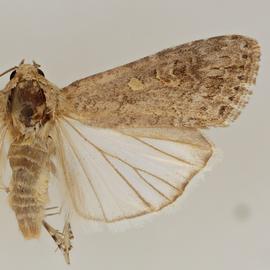
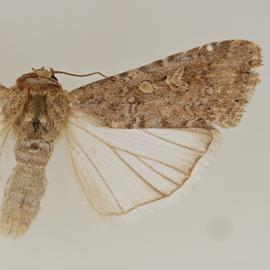
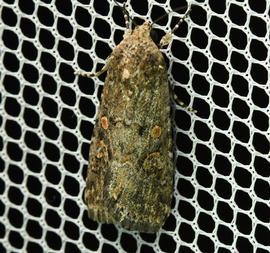
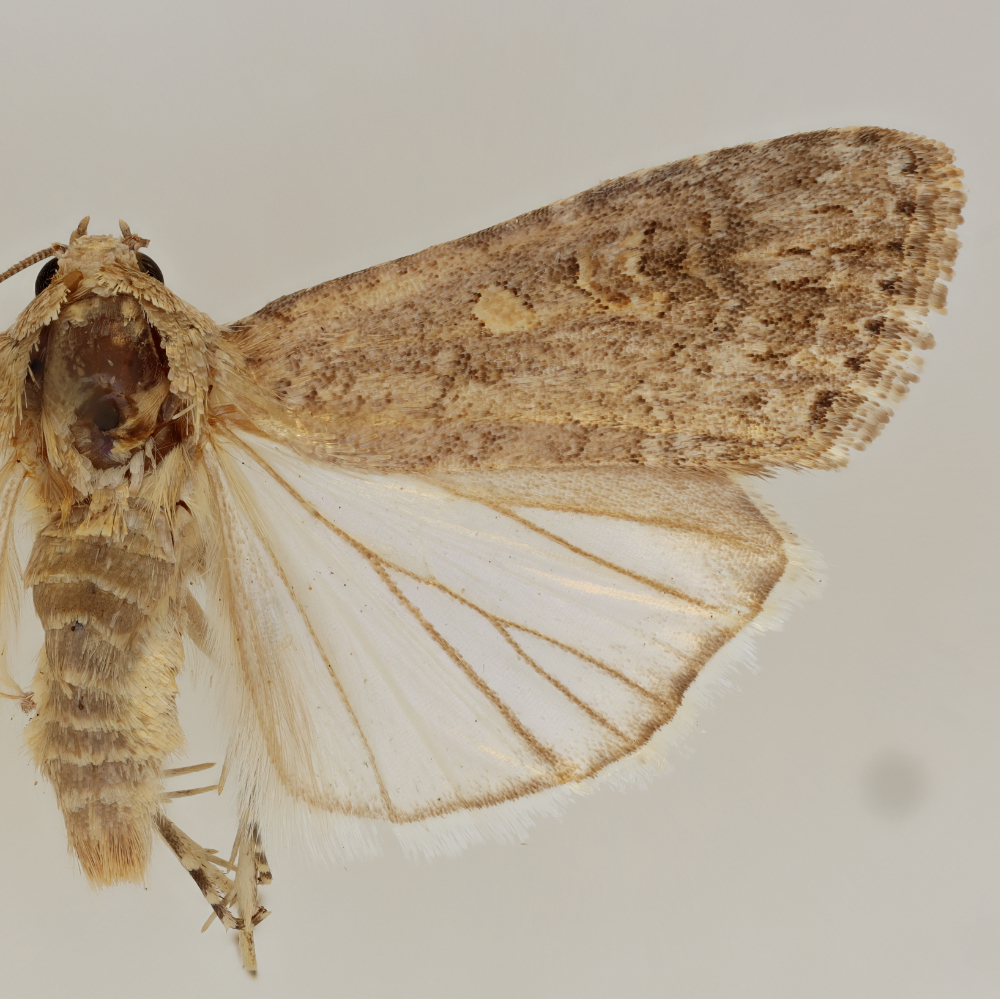
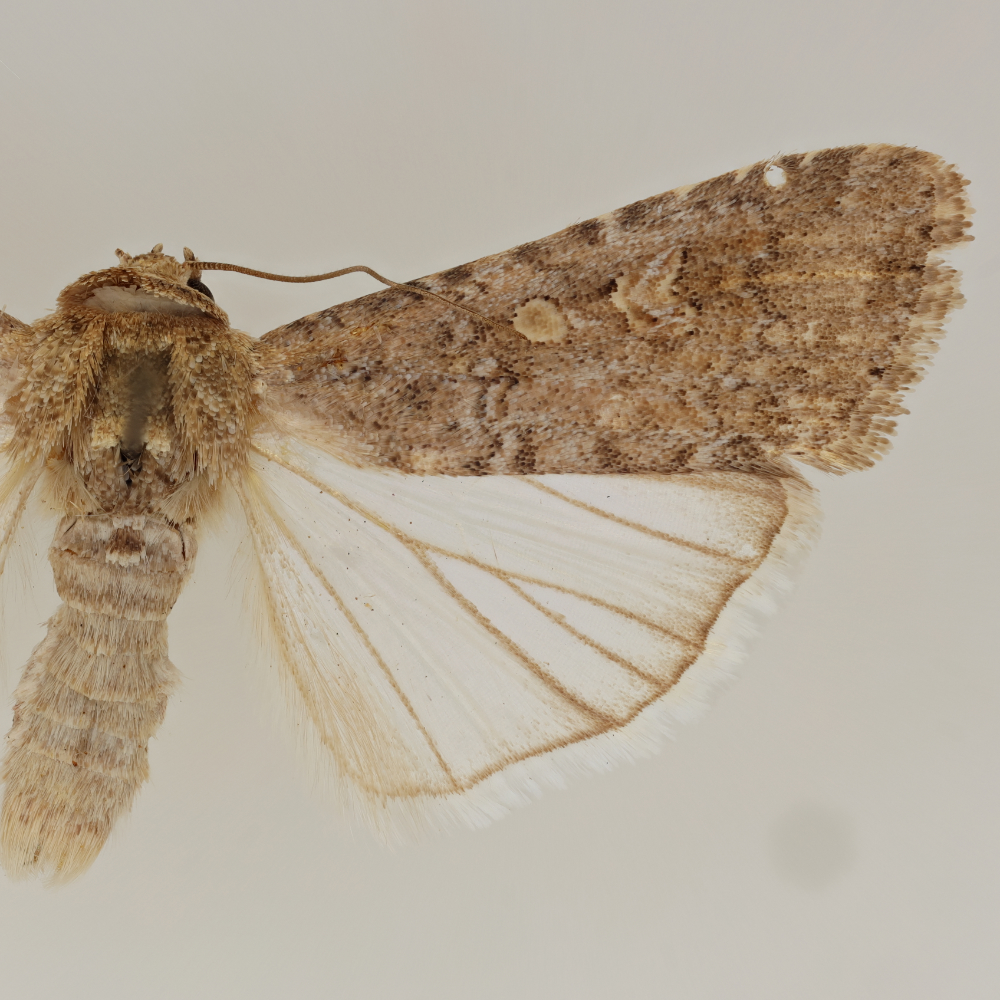
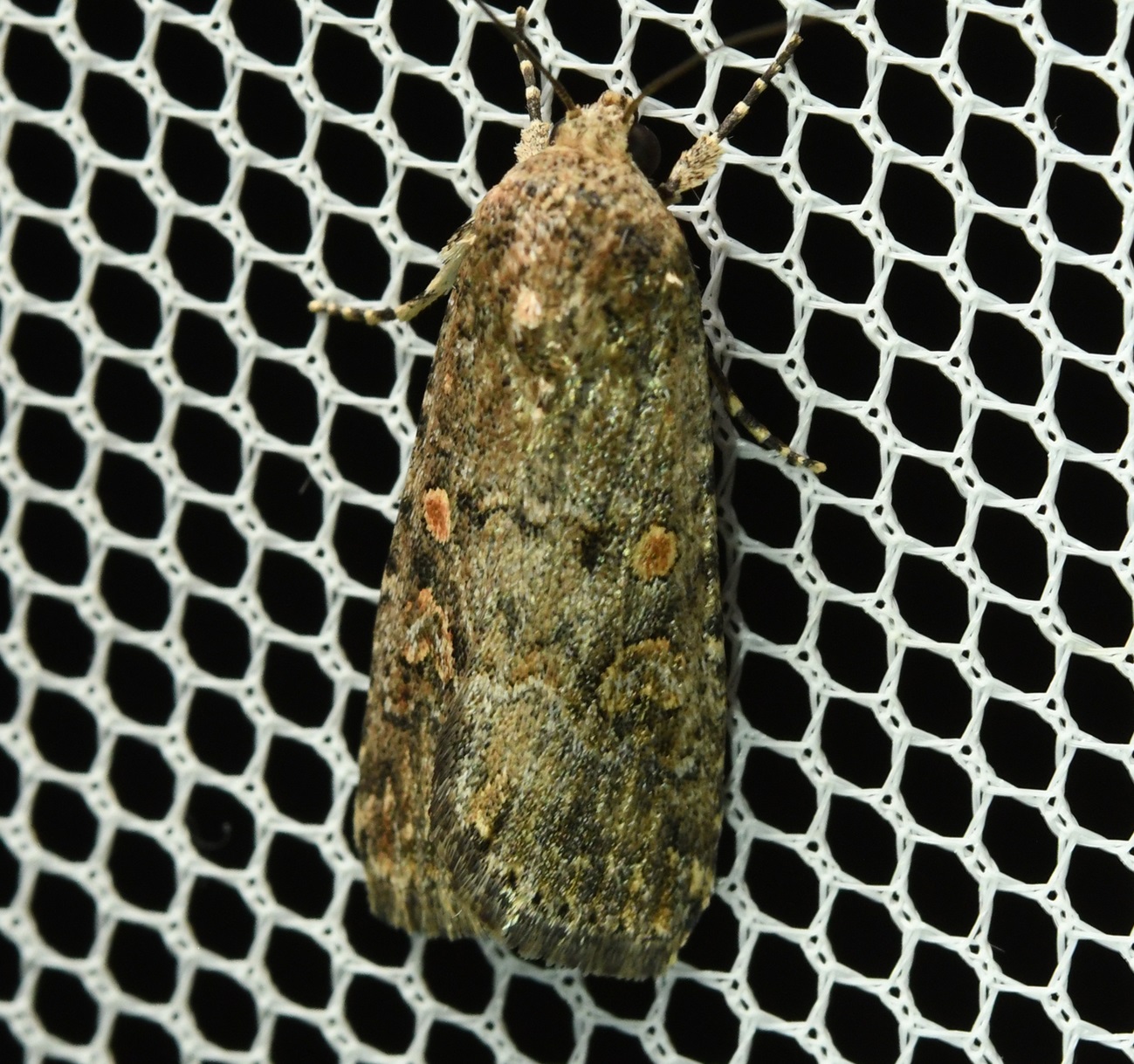
Spodoptera exigua is the smallest species of Spodoptera in Hawaiʻi (forewing lengthforewing length:
the distance of the forewing in a straight line from the base to the tip of the apex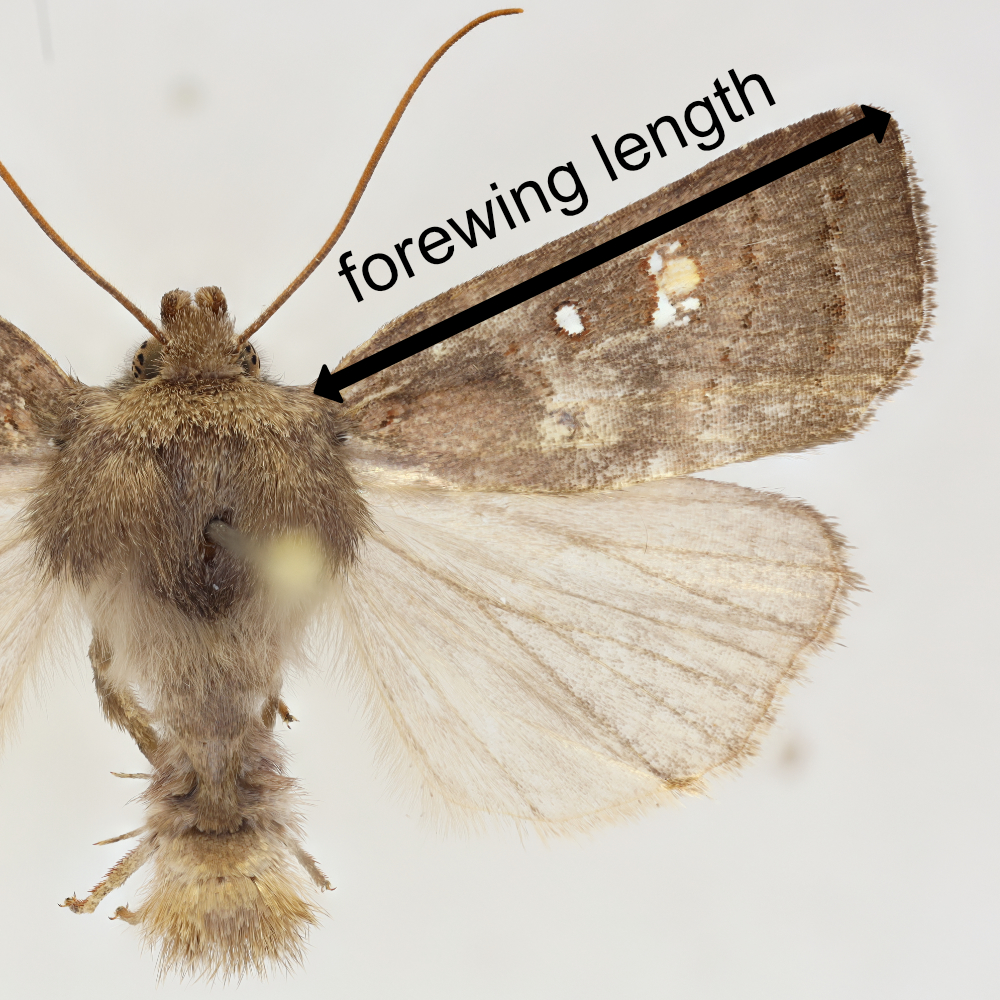 10–14 mm). Adults are not as strongly sexually dimorphic as other species of Spodoptera and are generally pale brown with a rounded orbicular spotorbicular spot:
a round or oval spot located in the middle of the discal cell of the forewing, between the antemedial and median lines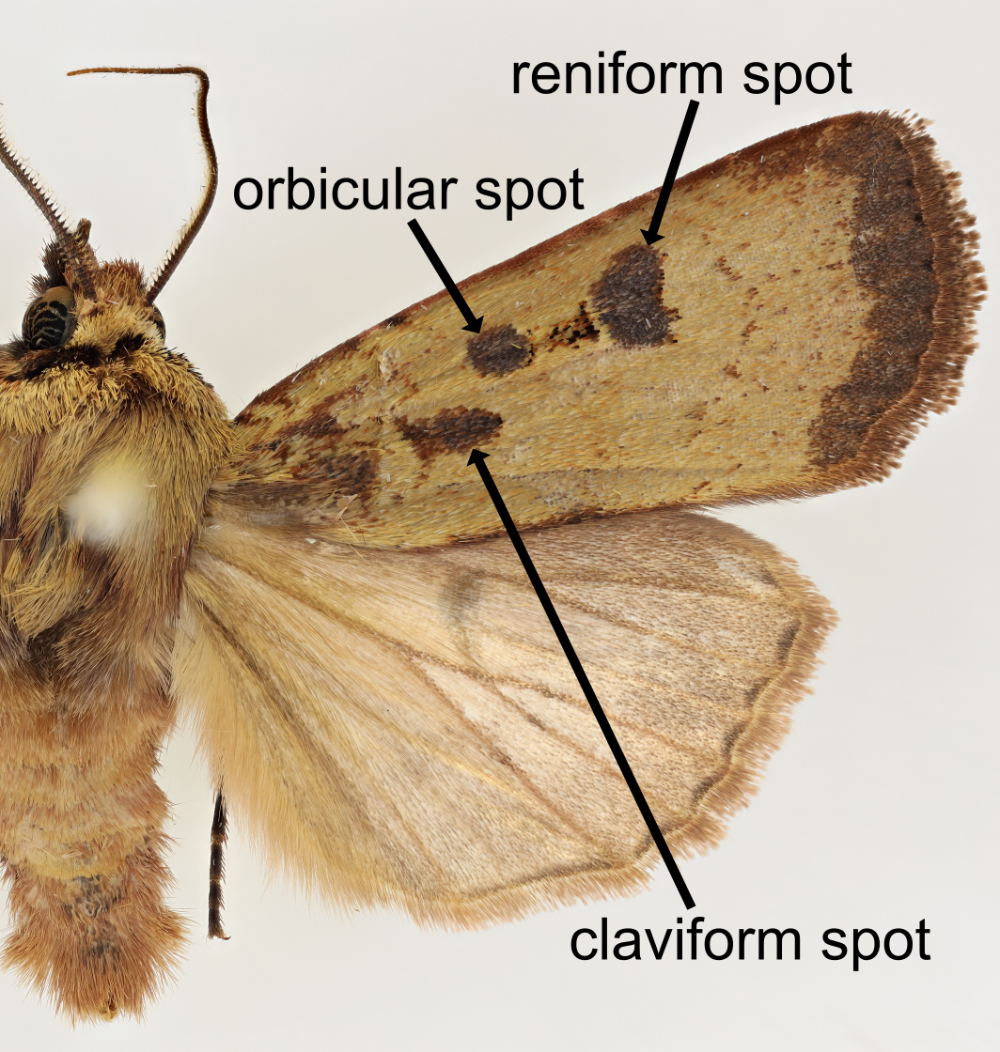 and a reniform spotreniform spot:
a spot, often broad bean- or kidney-shaped, found at the distal end of the discal cell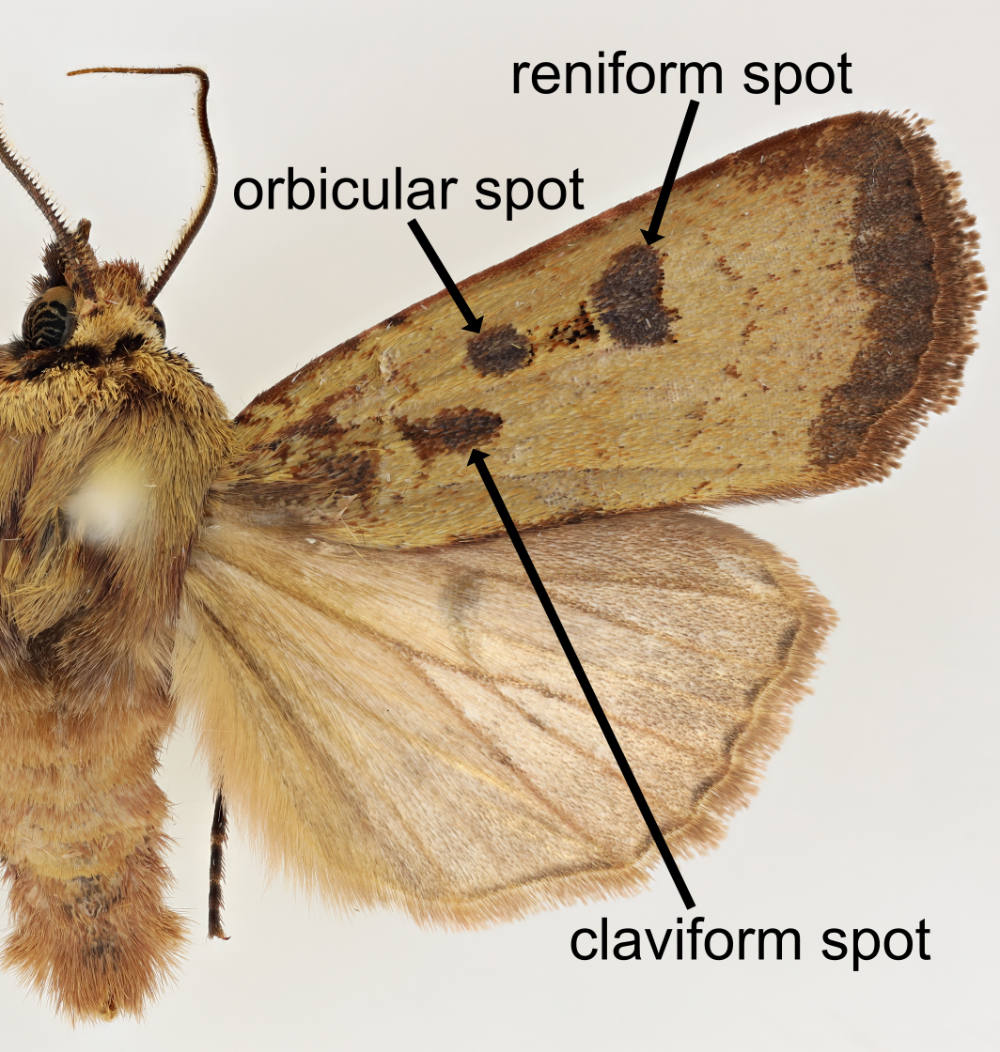 that is only slightly darker than the ground color of the forewingforewing:
the front wing of an insect; the wing attached to the second segment of the thorax (the mesothorax)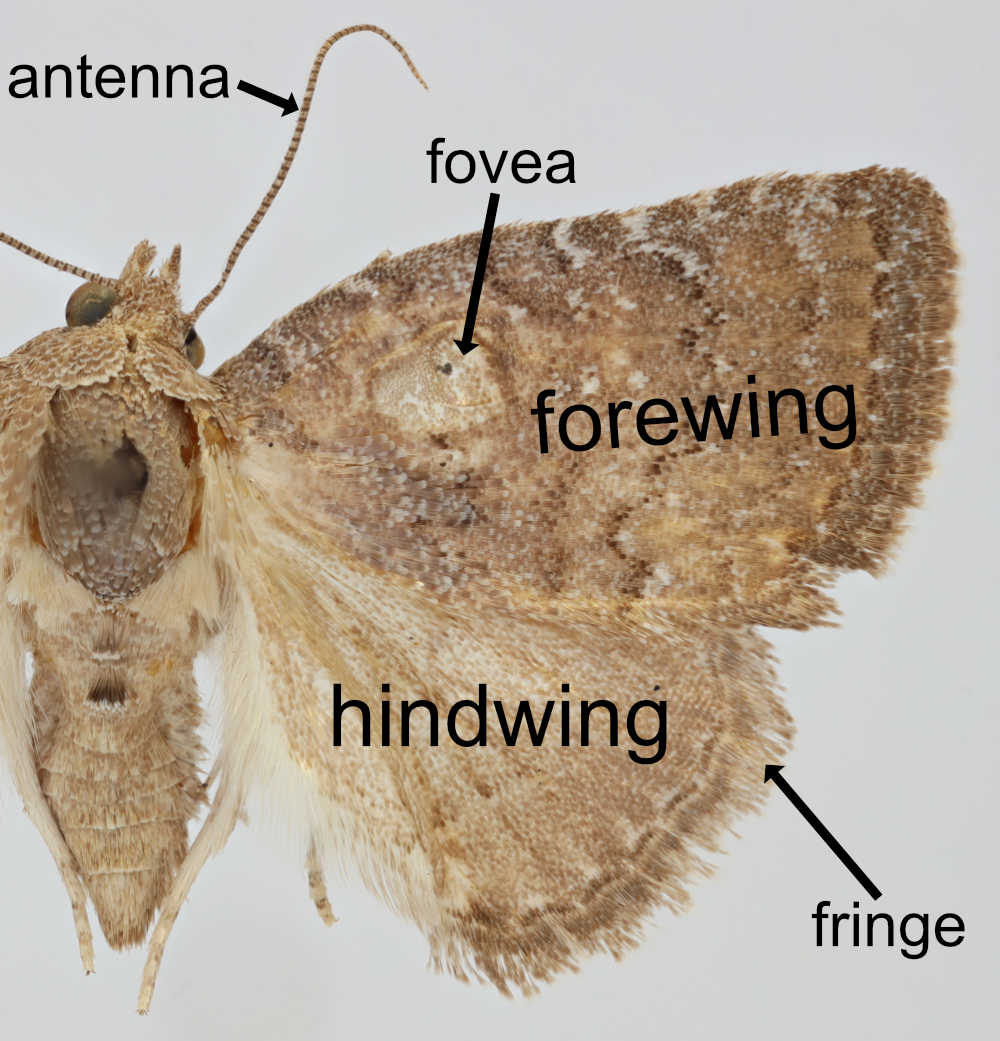 . There is no strongly contrasting diagonal band across the forewingforewing:
the front wing of an insect; the wing attached to the second segment of the thorax (the mesothorax) like in the other species of Spodoptera in Hawaiʻi. The hindwingshindwing:
the back wing of an insect; the wing attached to the third segment of the thorax (the metathorax)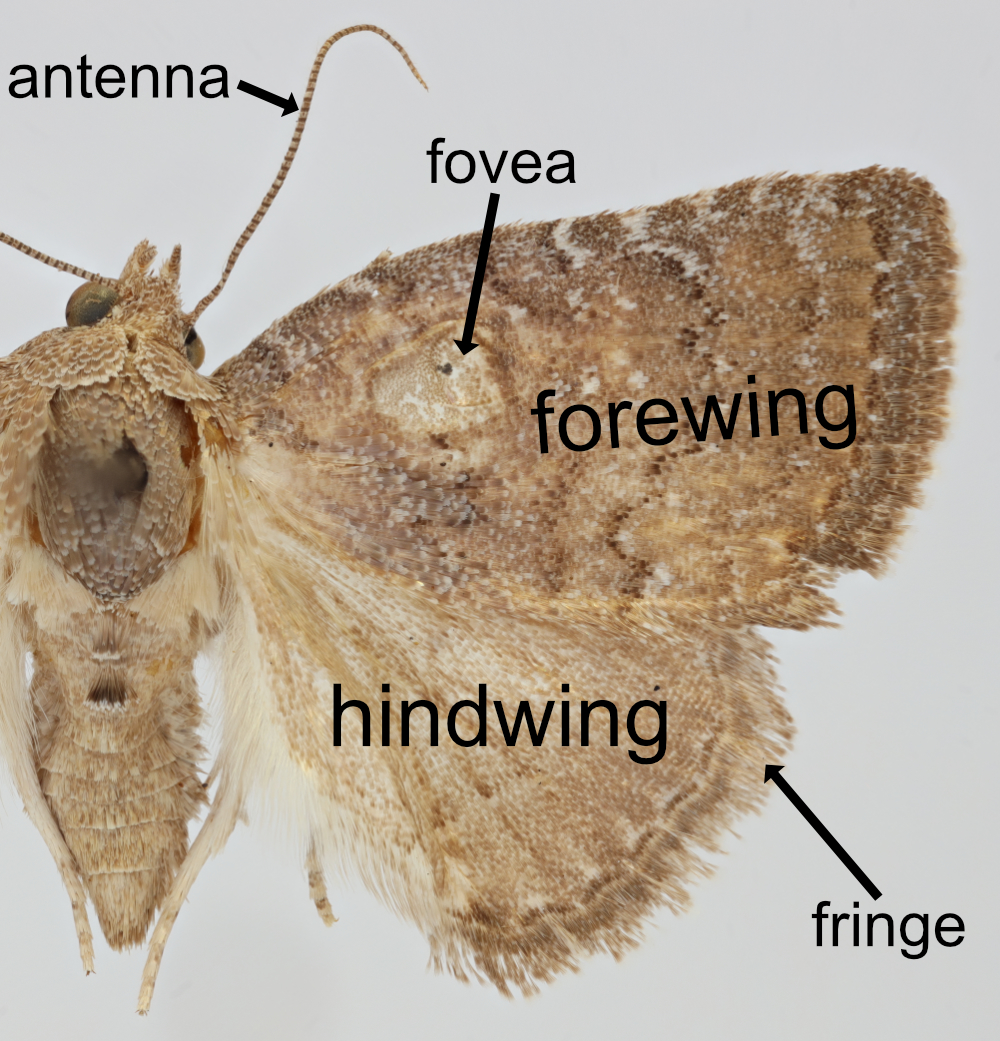 are white with darker scaling along the veins.
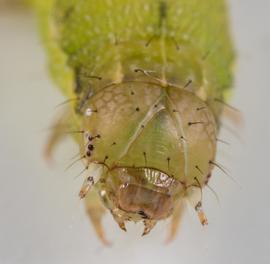
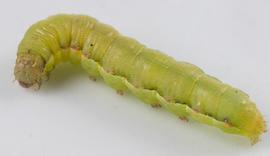
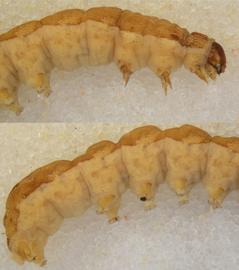
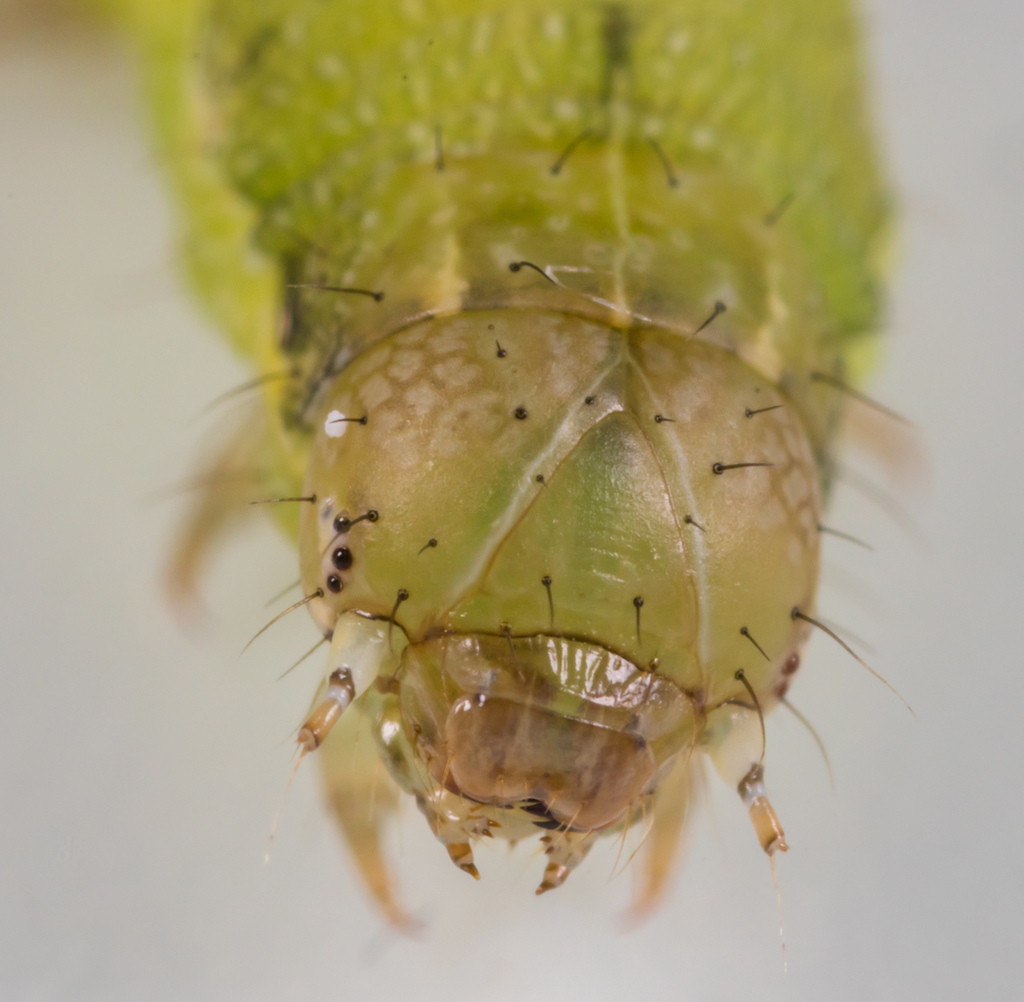
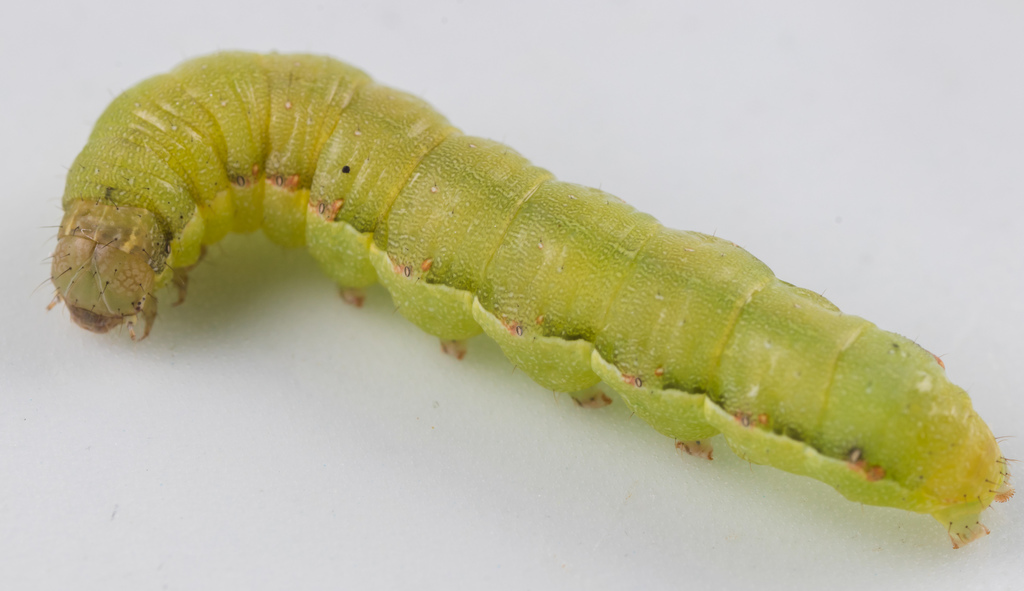
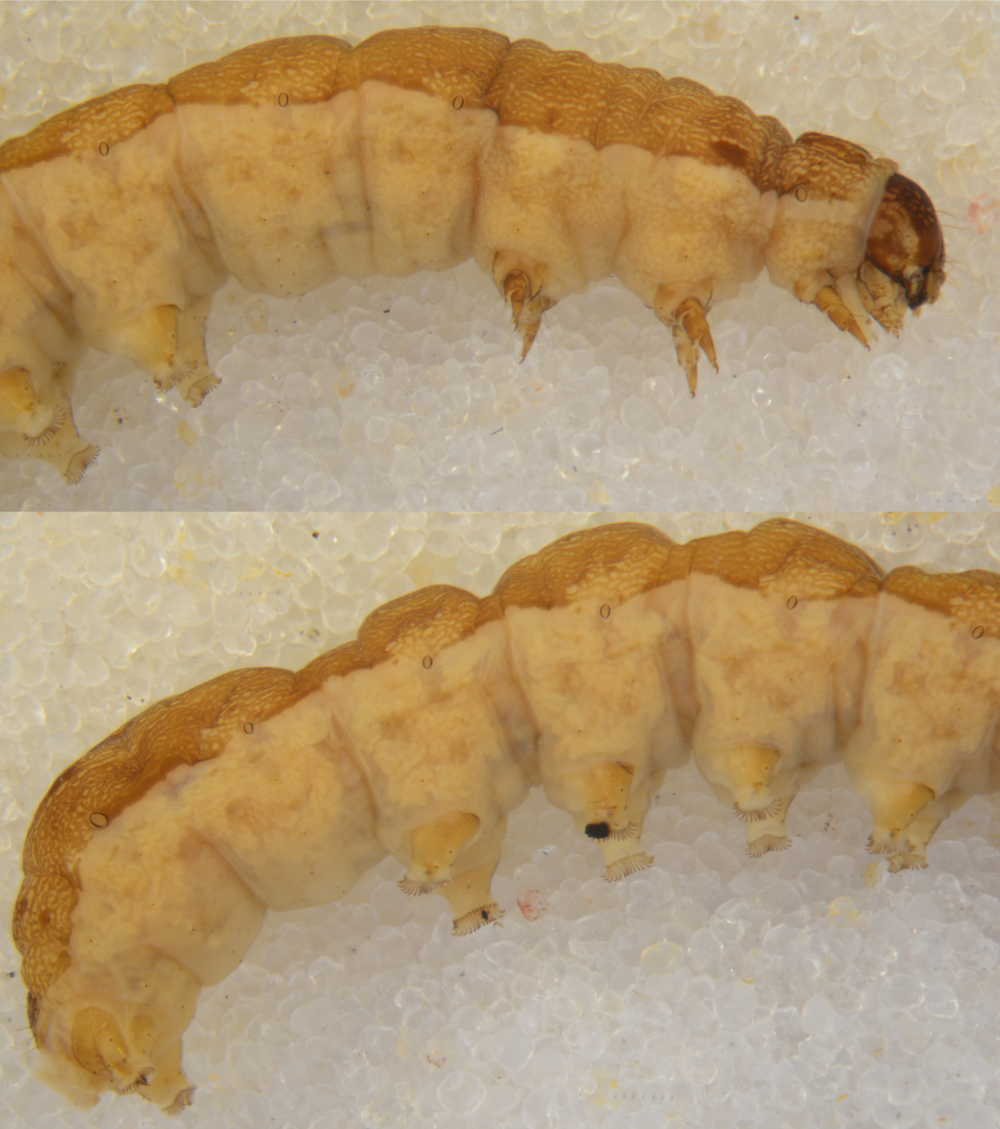
Fully grown larvae range from 25–30 mm in length. The head is pale with a solid area posteriorposterior:
the 'tail' end of an organism, as opposed to the anterior or 'head' end of an organism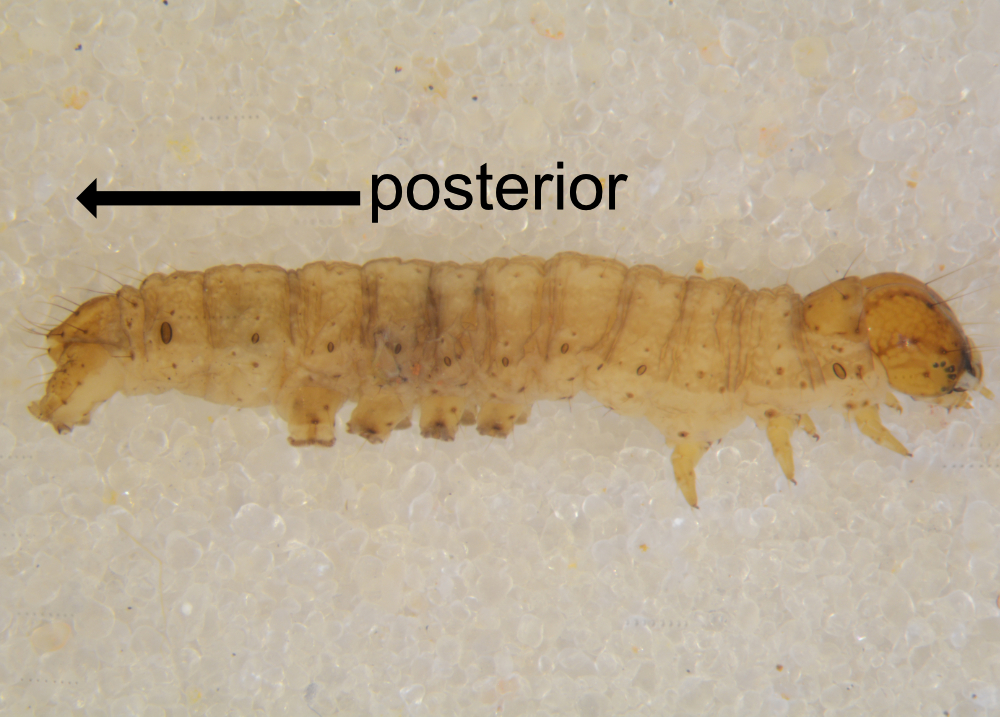 to the ocelli which is dark brown or black. The pronotal shield is brownish, often reticulated or mottled. The body color is highly variable, ranging from green to brown to pinkish brown to gray. The middorsal stripe is pale, nearly absent on the anterioranterior:
the 'head' end of an organism, as opposed to the posterior or 'tail' end of an organism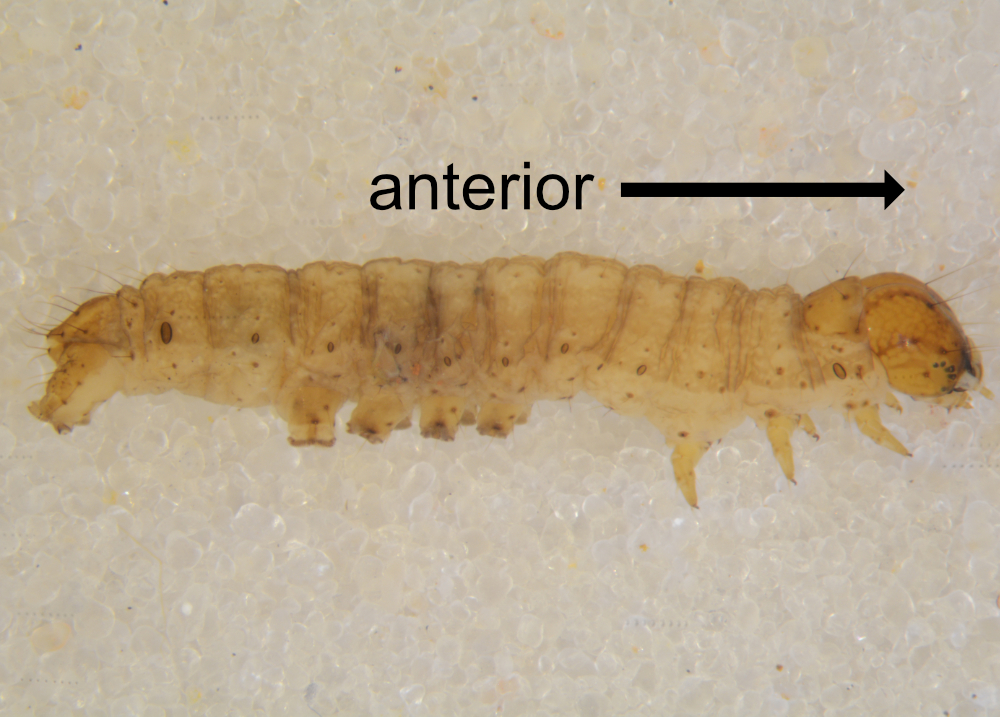 and posteriorposterior:
the 'tail' end of an organism, as opposed to the anterior or 'head' end of an organism portions of each abdominal segment by more intense darker markings; segmental spots black (when present); lateral band darker than dorsal coloration; lateral stripe white; spiracular band pale purplish to black; spiracles pale yellowish with dark rims; underside green, mottled with white (Swezey 1906Swezey 1906:
Swezey OH. 1906. Life history notes and observations on three common moths. Proceedings of the Hawaiian Entomological Society. 1(2):53–58., Pogue 2002Pogue 2002:
Pogue MG. 2002. A world revision of the genus Spodoptera Guenée (Lepidoptera: Noctuidae). Memoirs of the American Entomological Society. 43:1–202.).
More information available on LepIntercept.
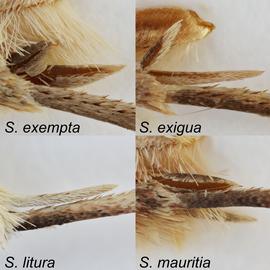
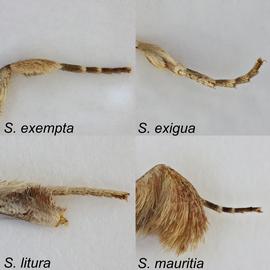
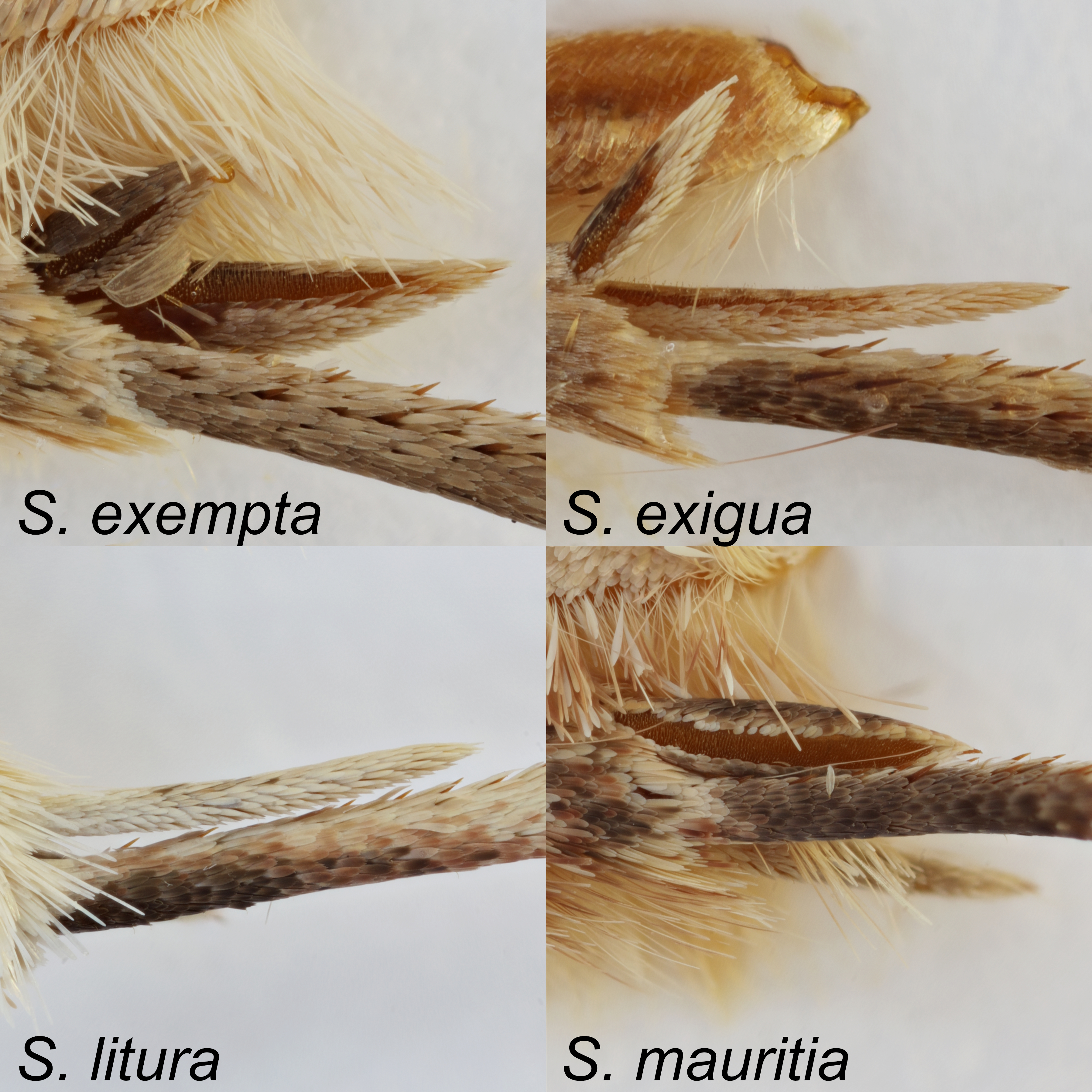
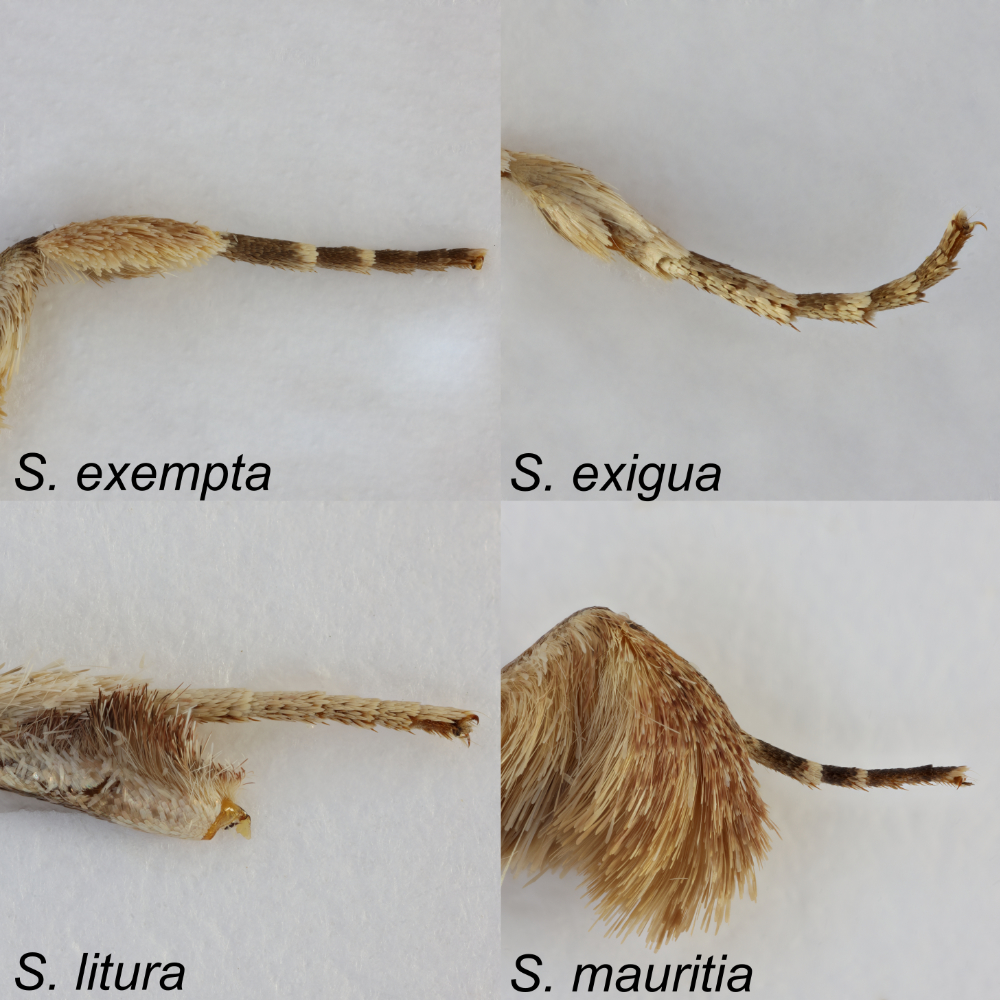
Spodoptera exigua is similar to other species of Spodoptera in Hawaiʻi but can be identified by their smaller size and less strongly contrasting forewingforewing:
the front wing of an insect; the wing attached to the second segment of the thorax (the mesothorax) coloration. The tibial spursspur:
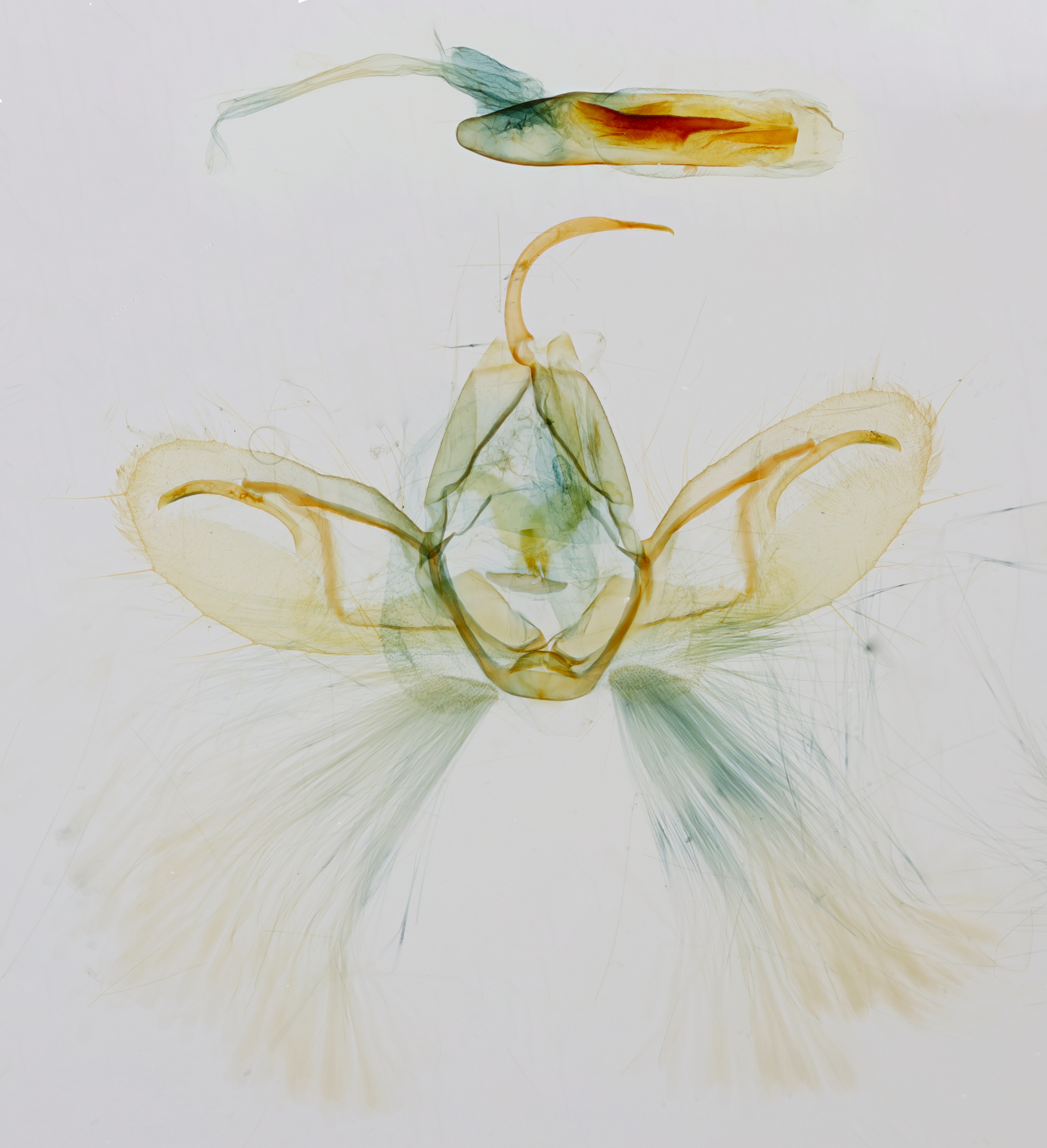
a moveable spine; often refers to an enlarged or otherwise modified spine on the legs of some moths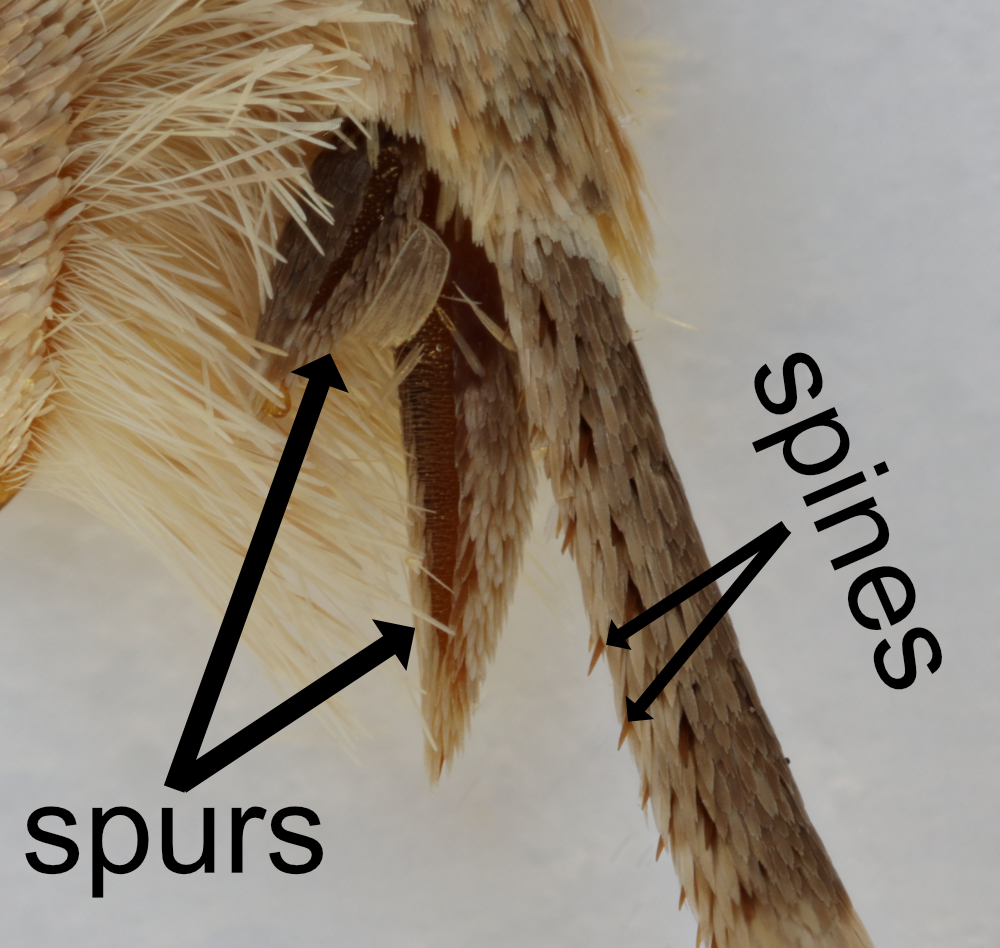 on the midleg of male S. exigua are roughly equal in length, thin, and without large, specialized setose areas. The foretibia of males lack a large patch of hairs and scales, never extending past the first tarsal segment (Zimmerman 1958Zimmerman 1958:
Zimmerman EC. 1958. Insects of Hawaii, Volume 7. Macrolepidoptera. University of Hawaii Press, Honolulu. 542 pp., Pogue 2002Pogue 2002:
Pogue MG. 2002. A world revision of the genus Spodoptera Guenée (Lepidoptera: Noctuidae). Memoirs of the American Entomological Society. 43:1–202.).
In larvae, the body is usually patterned with white dots and short lines. Paired dorsal markings on mesothorax are round (when present). The dark triangular subdorsal markings common in most species of Spodoptera are usually absent, if present, they are not triangular, but more elongate or rounded (Levy and Habeck 1976, Pogue 2002Pogue 2002:
Pogue MG. 2002. A world revision of the genus Spodoptera Guenée (Lepidoptera: Noctuidae). Memoirs of the American Entomological Society. 43:1–202.).
Spodoptera exigua is the only truly cosmopolitan species of Spodoptera. It has been found on all continents except Antarctica. It can migrate long distances and has been found in northern regions well outside the normal breeding range of S. exigua. In the New World this species can reach southern Canada and is found throughout the United States. It occurs throughout Mexico and as far south as French Guiana and Venezuela. In the Old World, it has been recorded throughout most of Africa, southern Europe, the Middle East, Asia, and Australasia (Pogue 2002Pogue 2002:
Pogue MG. 2002. A world revision of the genus Spodoptera Guenée (Lepidoptera: Noctuidae). Memoirs of the American Entomological Society. 43:1–202.).
In Hawaiʻi, S. exigua is known from Kauaʻi, Oʻahu, Molokaʻi, Maui, Hawaiʻi island, and Laysan (Nishida 2002Nishida 2002:
Nishida GM. 2002. Hawaiian terrestrial arthropod checklist. Fourth Edition. Bishop Museum Technical Report 22. 313 pp.). It has not been reported from Lānaʻi but probably occurs there as well. It primarily occurs in low elevation, coastal habitats, especially in agricultural settings, but does not appear to be a commonly encountered species presently (UHIM collectionUHIM collection:
UHIM collection. Based on identified specimens in the collection of the University of Hawaii Insect Museum, Honolulu, HI).
Spodpotera exigua is a significant economic pest throughout most of the world. Hosts include many crops in Fabaceae (peanuts, Arachis hypogaea L.; peas, Pisum sativum Lam.; beans, Phaseolus vulgaris L.; soybeans, Glycine max (L.) Merr.; lentils, Lens culinaris (L.) Coss. & Germ.; and alfalfa, Medicago sativa L.) and Poaceae (corn, Zea mays L.; millet, various Poaceae; oats, Avena spp.; wheat, Triticum spp.; rice, Oryza sativa L.; and sorghum, Sorgum bicolor (L.) Moench). Larvae also feed on a variety of horticultural crops including many species of cut flowers (Pogue 2002Pogue 2002:
Pogue MG. 2002. A world revision of the genus Spodoptera Guenée (Lepidoptera: Noctuidae). Memoirs of the American Entomological Society. 43:1–202.).
Swezey (1906)Swezey (1906):
Swezey OH. 1906. Life history notes and observations on three common moths. Proceedings of the Hawaiian Entomological Society. 1(2):53–58. reported them feeding upon the following plants: Adenostemma viscosum J.R.Forst. & G.Forst., Ageratum conyzoides L., Amaranthus spp., bean (Phaseolus spp.), beet (Beta vulgaris L.), cabbage (Brassica oleracea L.), Canna spp, cockle burr (Xanthium strumarium L.), Coleus spp., cotton (Gossypium spp.), Datura spp., Ipomoea spp., Pelargonium spp., potato, both Irish and sweet (Solanum tuberosum L. and Ipomoea batatas (L.) Lam.), bristle grass (Setaria verticillata (L.) P.Beauv.), sow thistle (Sonchus spp.), sunflower (Helianthus annuus L.), tomato (Solanum lycopersicum L.), wild yam (Dioscorea spp.), and a few other wild, undetermined plants.
Its life cycle in Hawaiʻi was described by Swezey (1906)Swezey (1906):
Swezey OH. 1906. Life history notes and observations on three common moths. Proceedings of the Hawaiian Entomological Society. 1(2):53–58.:
"The egg clusters were on the upper surface of a leaf. In one cluster, 40 eggs were counted. They were spherical, in regular rows, one layer deep, and the cluster densely covered with greyish hairs from the body of the moth. One cluster of 100 was found which had just hatched."
"The larvae were two mm long, green with black heads, and finely pubescent, each hair in a tiny black tubercle. While young they fed gregariously on the upper surface of leaf along a vein where the leaf was somewhat depressed, and they ate only the green substance of the leaf, leaving the lower epidermis. They were covered by a slight web. As they increase in size they become more separated, often feeding singly, but protected by a web, though not always. Finally, when about full grown, they were found without the protecting web; and they ate the leaf entirely, making ragged holes, not leaving the lower epidermis."
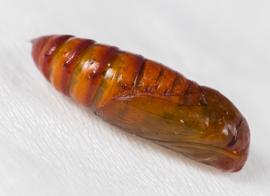
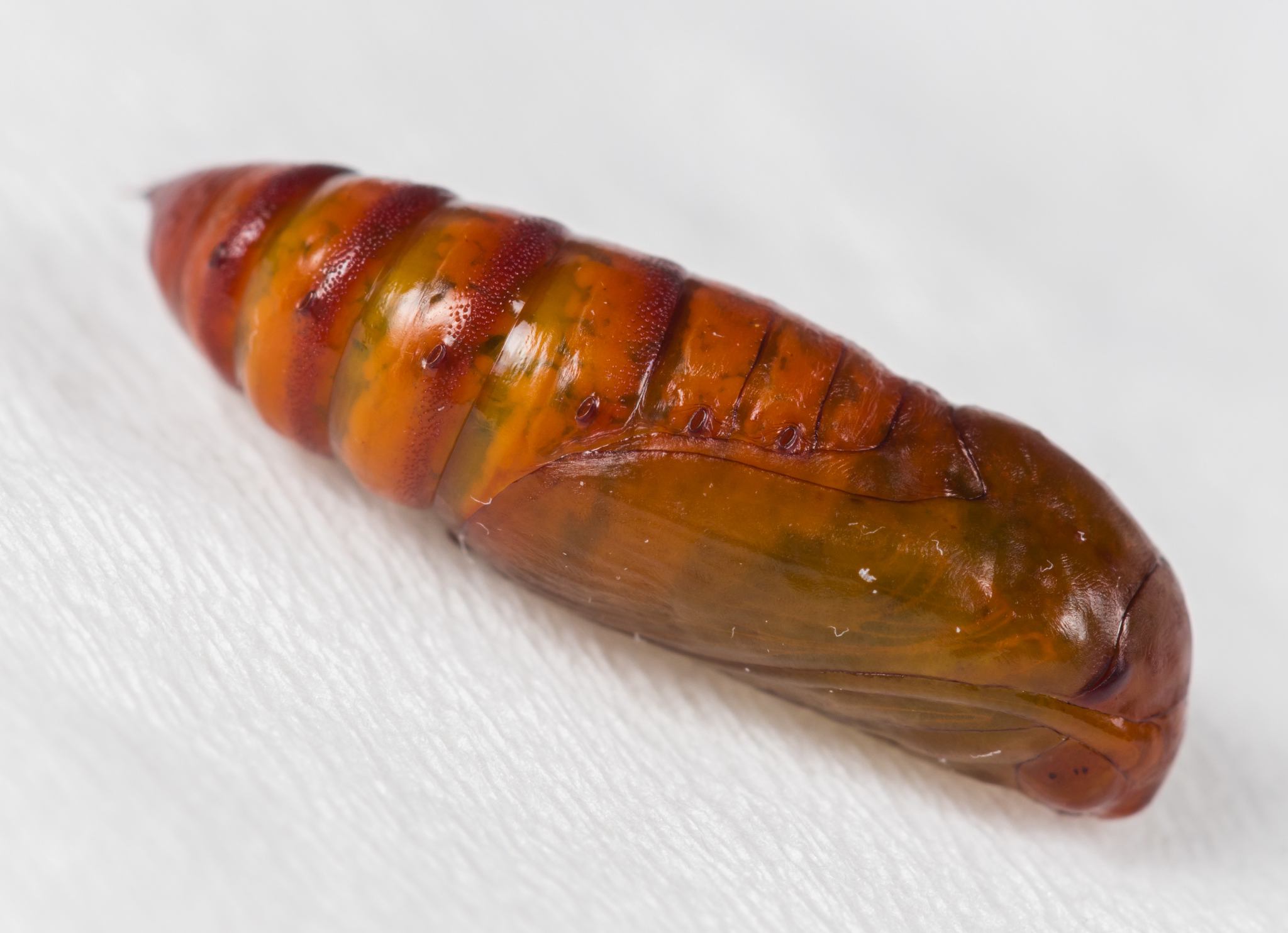
"They entered the ground to pupate. The pupa is 12 mm long; medium brown, with some greenish on wing and leg-cases; smooth, except a punctate band on anterioranterior:
the 'head' end of an organism, as opposed to the posterior or 'tail' end of an organism margin of segments 4, 5, 6, of abdomenabdomen:
the third and posterior-most body section of an insect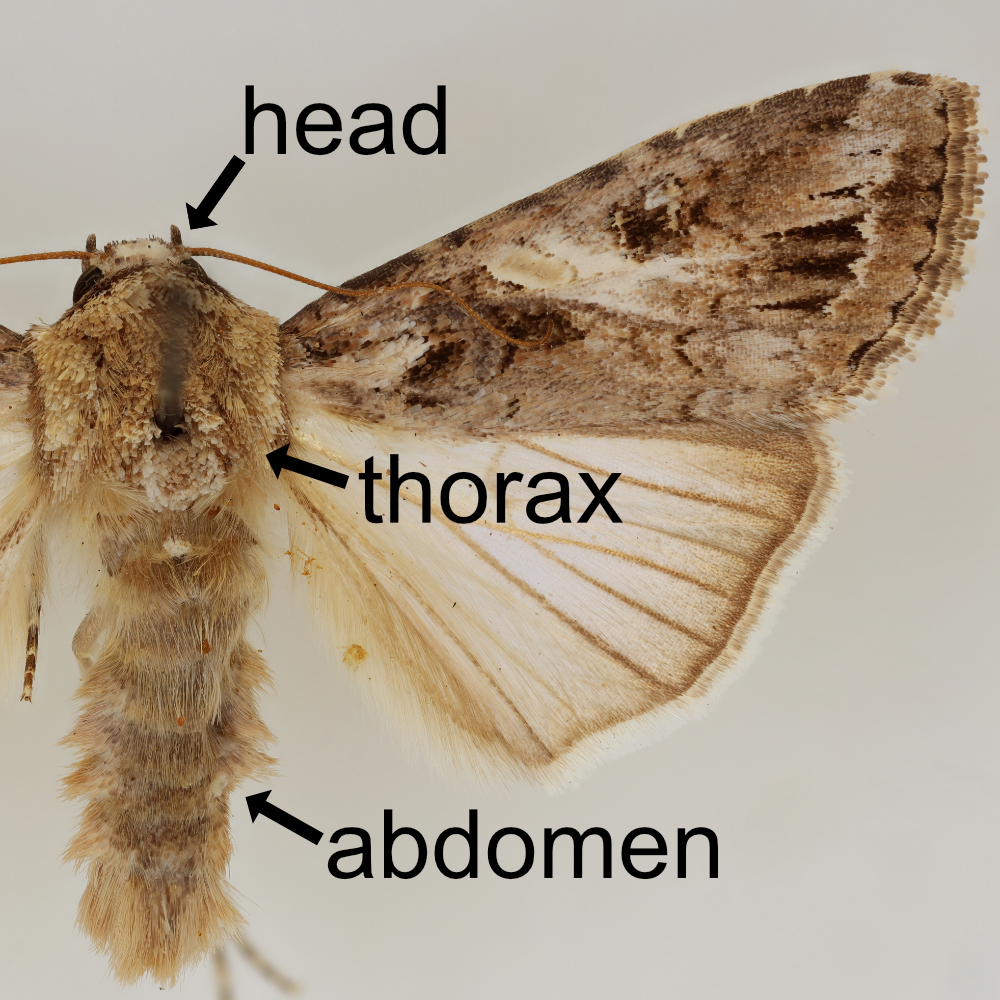 ; abdominal spiracles black, very slightly raised; cremaster two sharp-pointed spines. The pupal period was twelve to seventeen days" (Swezey 1906Swezey 1906:
Swezey OH. 1906. Life history notes and observations on three common moths. Proceedings of the Hawaiian Entomological Society. 1(2):53–58.).
Author: Kyhl A. Austin
Content last updated May 2026
idtools.org