ADVENTIVE
Mouralia tinctoides (Guenée, 1852)
Higher taxonomy: Noctuidae: Plusiinae: Abrostolini
Mouralia tinctoides is native to tropical and subtropical areas of the Americas. It is only known from two specimens from Hawaiʻi and may or may not be established in the state.
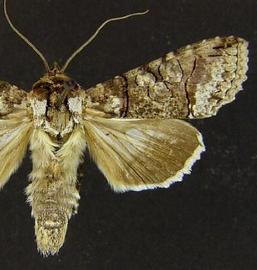
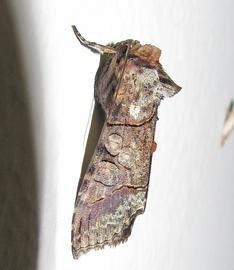
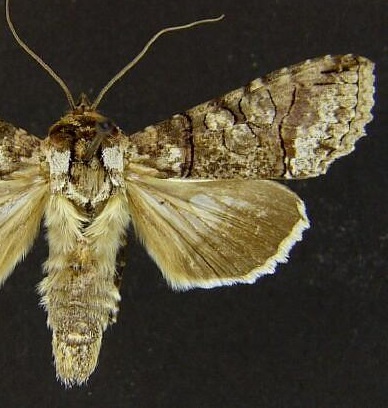
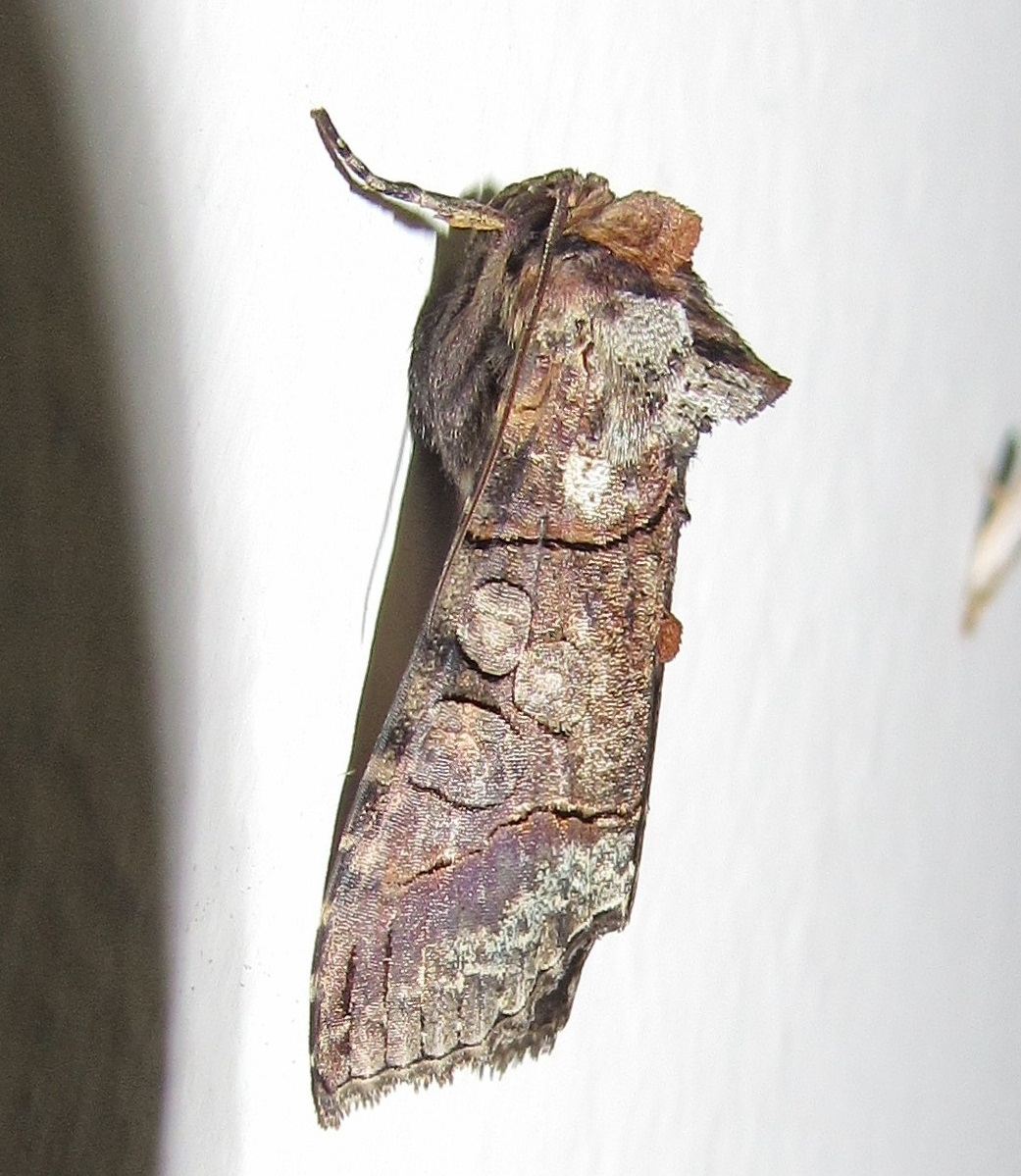
Mouralia tinctoides is a typical abrostoline plusiine in appearance. The forewingforewing:
the front wing of an insect; the wing attached to the second segment of the thorax (the mesothorax)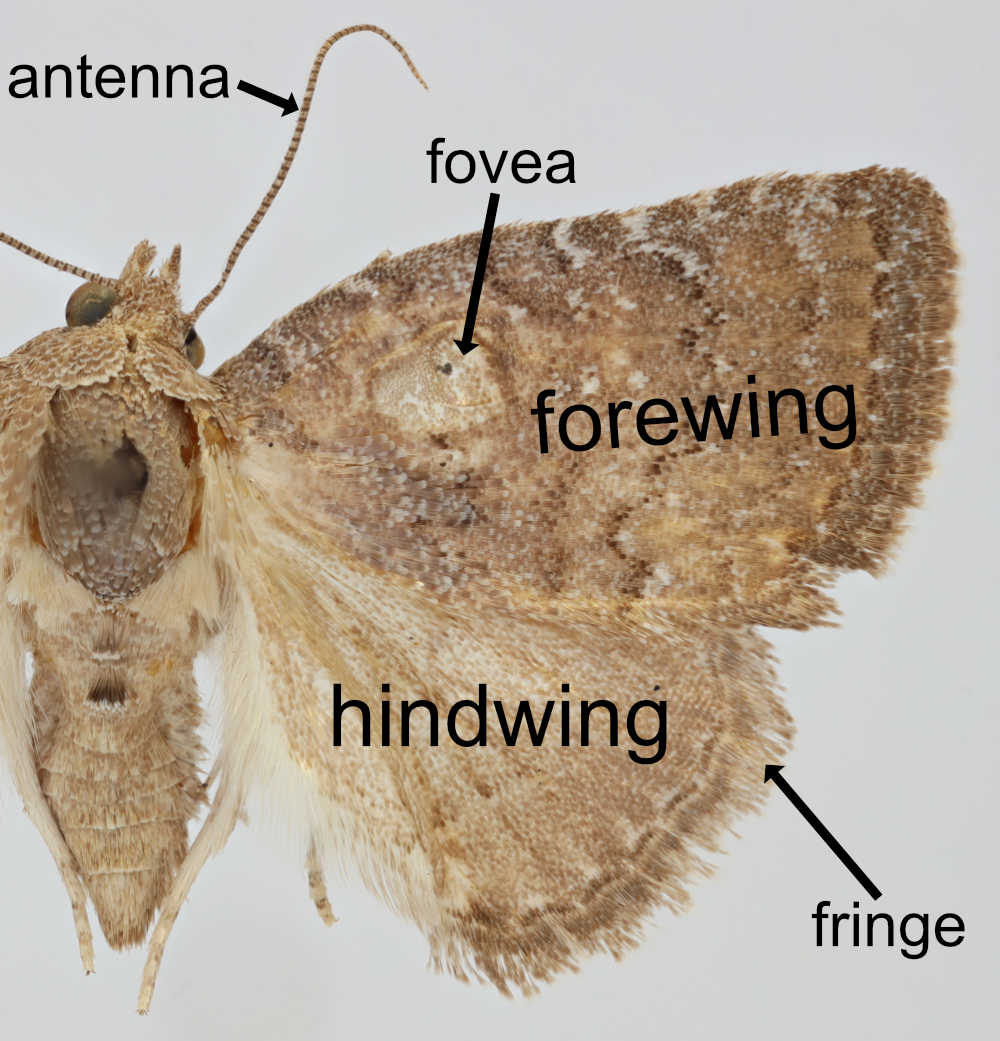 is long (17–20 mm), dark gray black, and pointed at the apexapex:
the point furthest from the base; the apex of the wing may be rounded, pointed, or falcate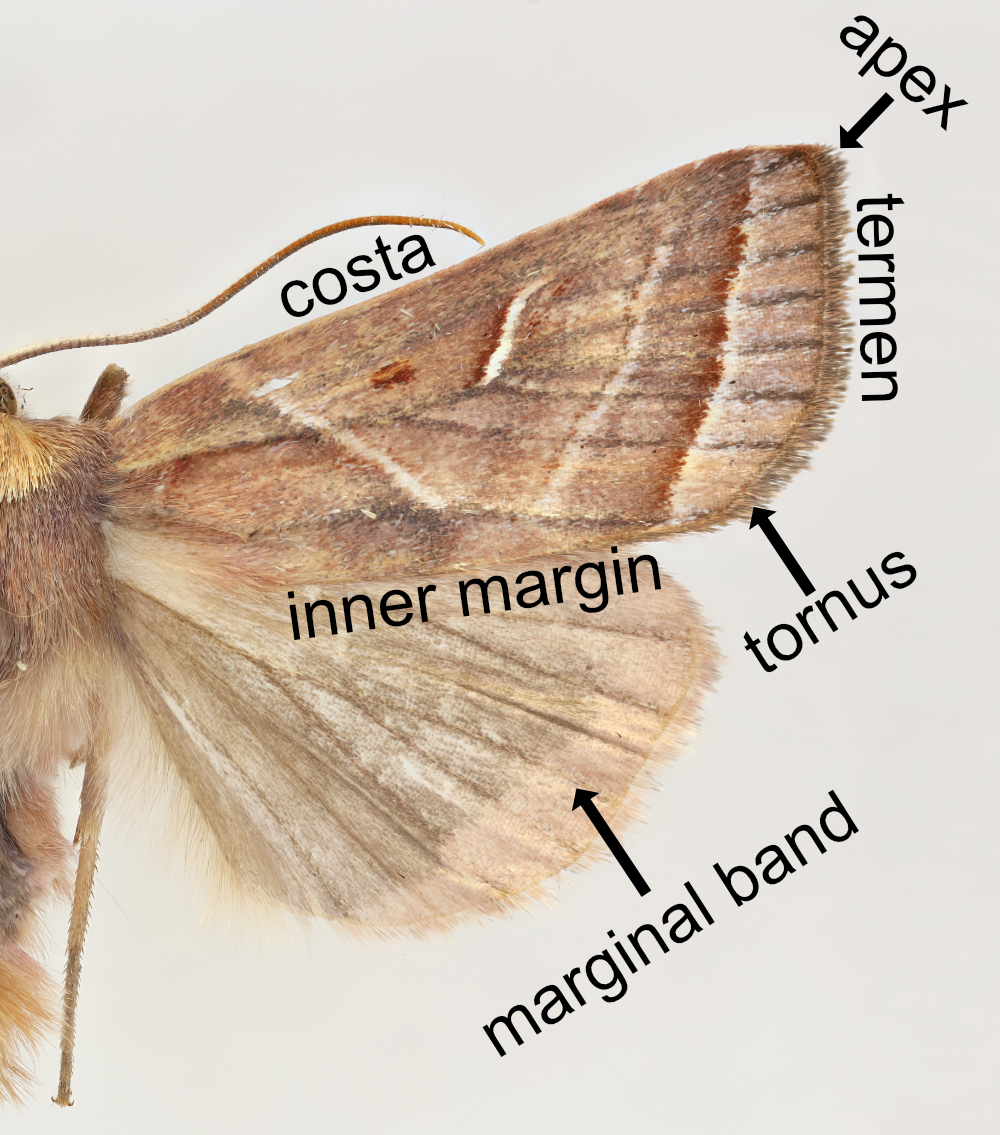 . Markings of the forewingforewing:
the front wing of an insect; the wing attached to the second segment of the thorax (the mesothorax) are defined by lines or clumps of erect black scales. The orbicular, claviform, and reniform spotsreniform spot:
a spot, often broad bean- or kidney-shaped, found at the distal end of the discal cell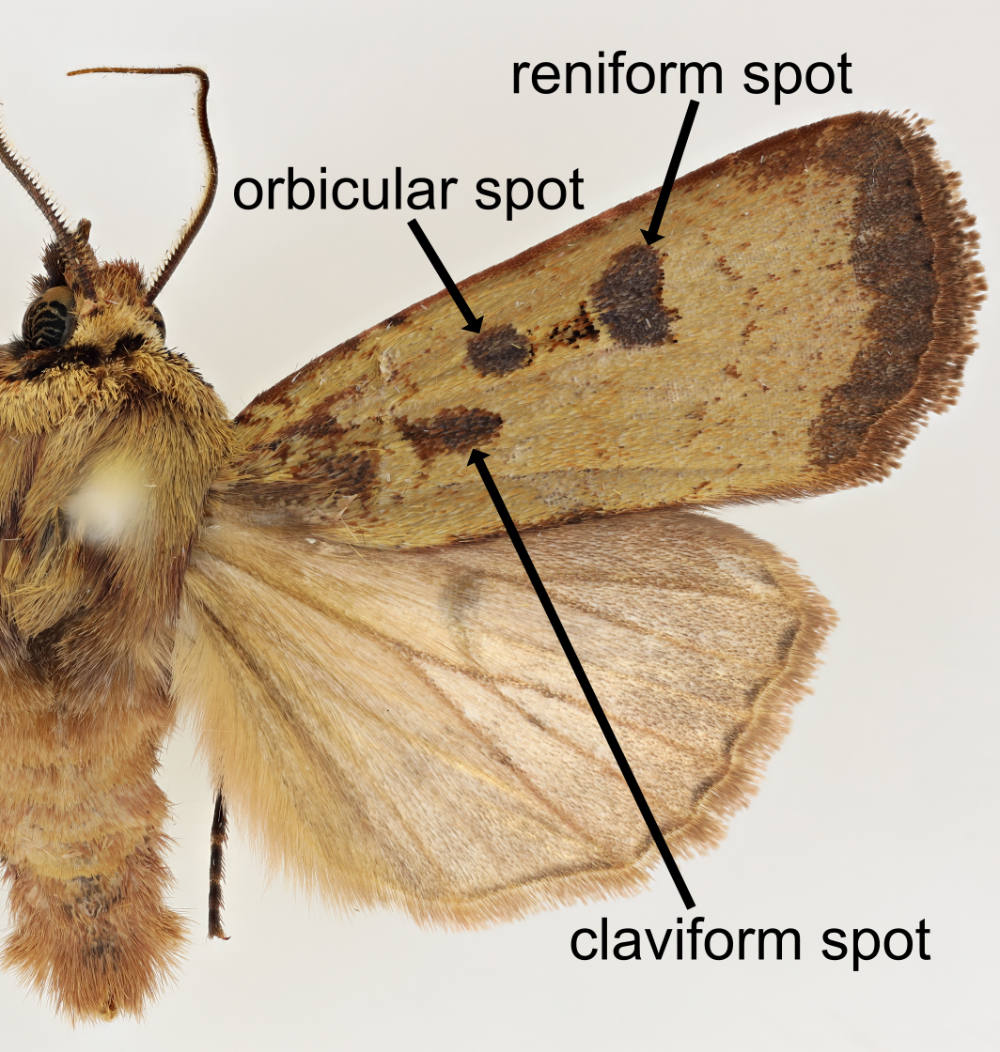 are large, circular, and nearly approximate to each other. The antemedial and postmedial linespostmedial line:
a thin, transverse line located distal to the reniform spot, typically on the distal third of the forewing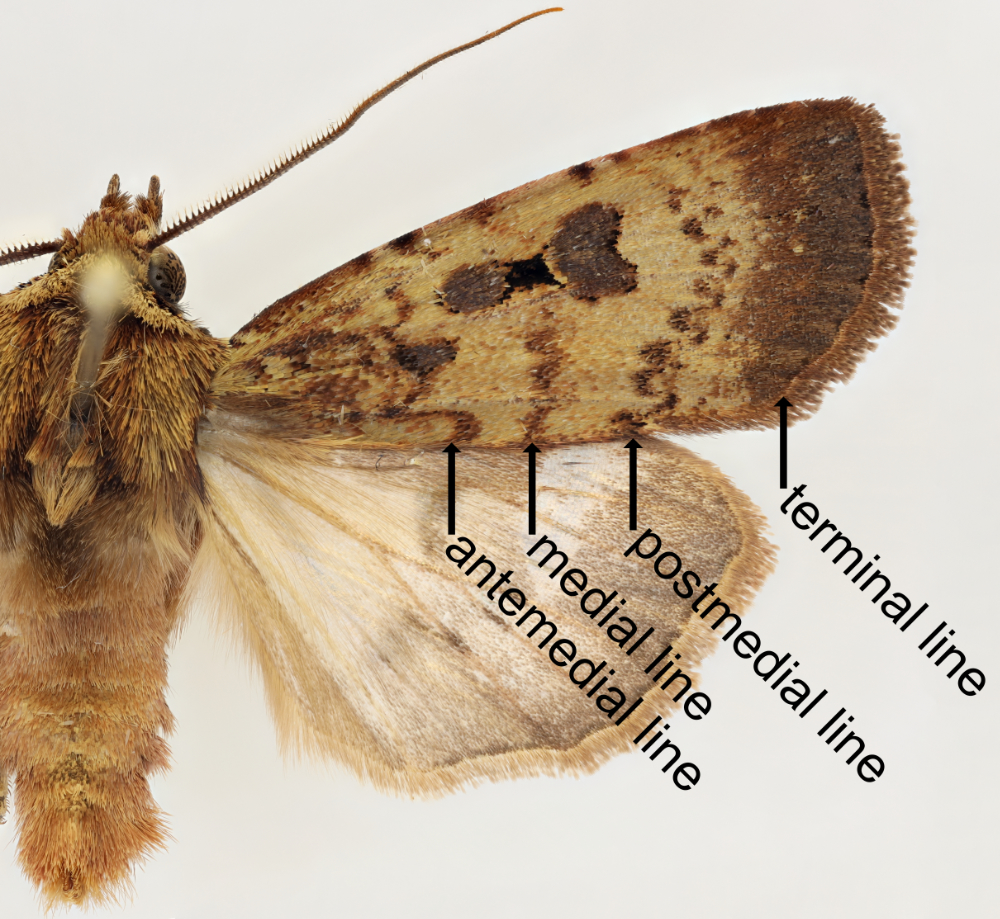 are dark, continuous, and well-defined. The hindwinghindwing:
the back wing of an insect; the wing attached to the third segment of the thorax (the metathorax)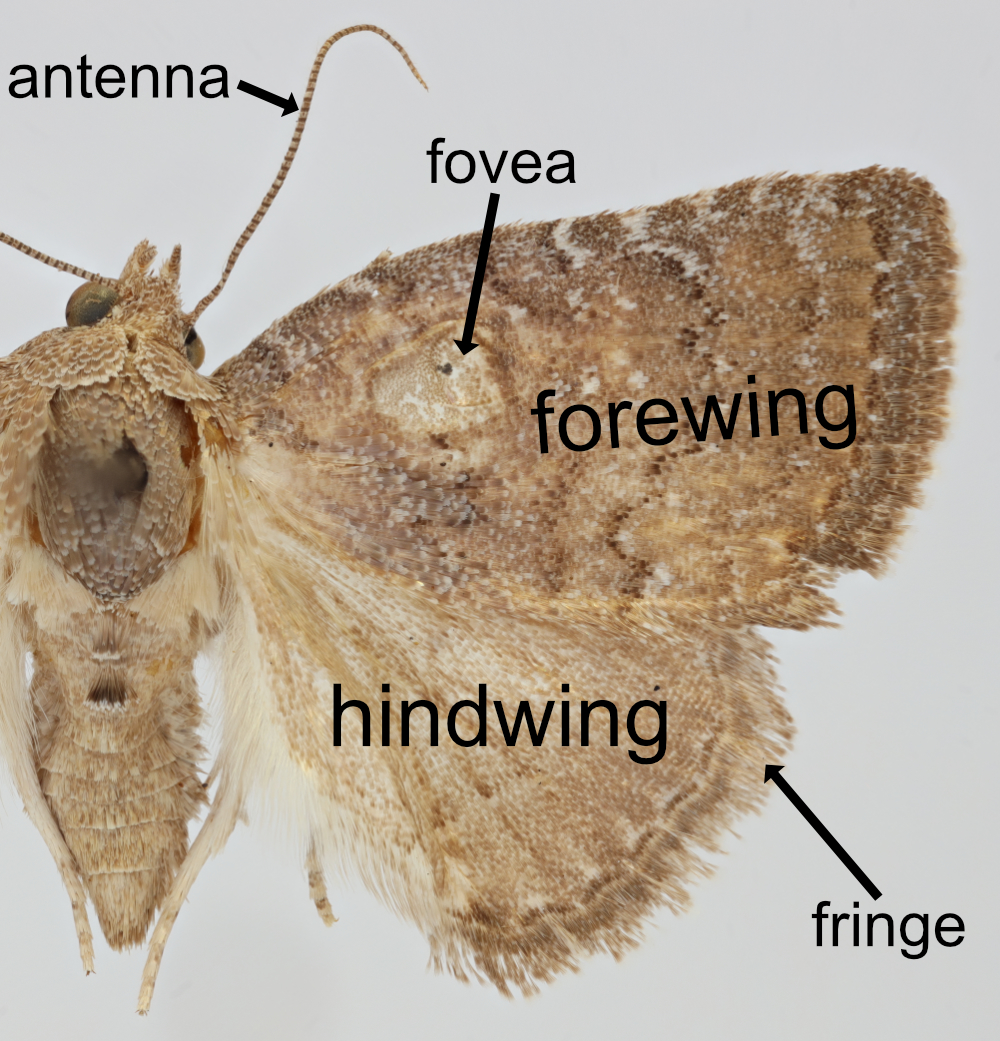 is dark gray but much paler basally (Lafontaine and Poole 1991Lafontaine and Poole 1991:
Lafontaine JD, Poole RW. 1991. The moths of America north of Mexico. Fascicle 25.1. Noctuoidea, Noctuidae (part), Plusiinae. The Wedge Entomological Research Foundation. 385 pp. ).
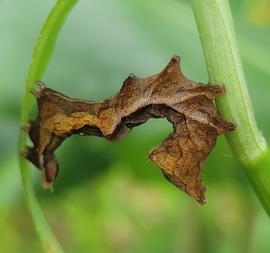
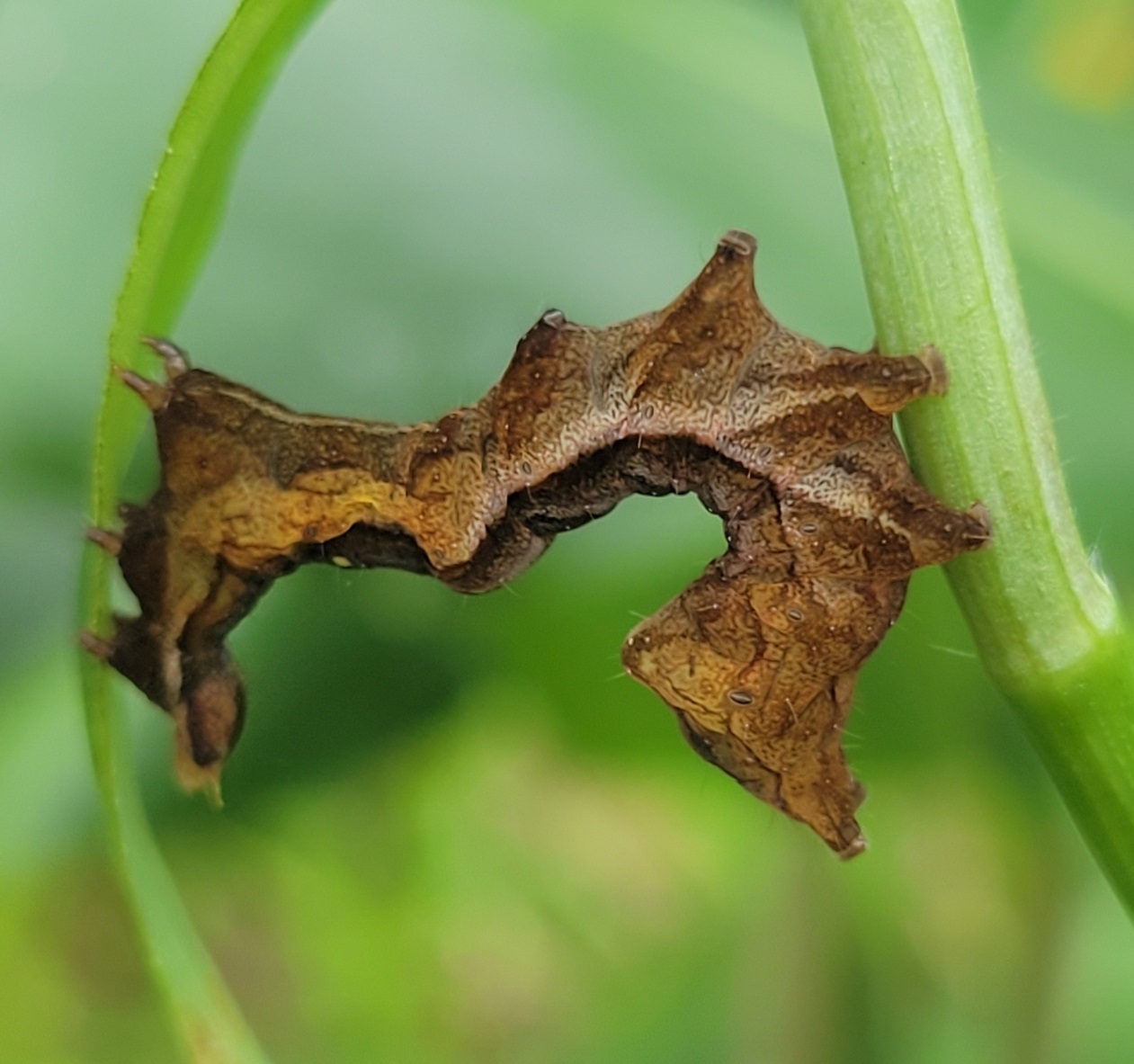
As in other abrostoline plusiines, the larva of Mouralia tinctoides has the full complement of abdominal prolegs on segments three through six (although the prolegs on abdominal segment three are slightly reduced in size). Young larvae are green before turning dark brown in the final instar. There is a distinct dark dorsal spot on the first and second abdominal segment (Lafontaine and Poole 1991Lafontaine and Poole 1991:
Lafontaine JD, Poole RW. 1991. The moths of America north of Mexico. Fascicle 25.1. Noctuoidea, Noctuidae (part), Plusiinae. The Wedge Entomological Research Foundation. 385 pp. ). Eggs, larvae, and pupae were described in detail by Comstock (1937)Comstock (1937):
Comstock JA. 1937. A new record and a life history (Lepidoptera). Bulletin of the Southern California Academy of Sciences. 35:169–174..
Mouralia tinctoides is unlikely to be confused with any other noctuid in Hawaiʻi but can look superficially similar to Stictoptera cucullioides Guenée, 1852 (Euteliidae) because of its large size, pointed forewingforewing:
the front wing of an insect; the wing attached to the second segment of the thorax (the mesothorax), and bicolored hindwinghindwing:
the back wing of an insect; the wing attached to the third segment of the thorax (the metathorax). However, S. cucullioides lack the large orbicular, reniform, and claviform spotsclaviform spot:
an elongate spot or mark extending laterally from the antemedial line into the median area, toward and sometimes reaching the postmedial line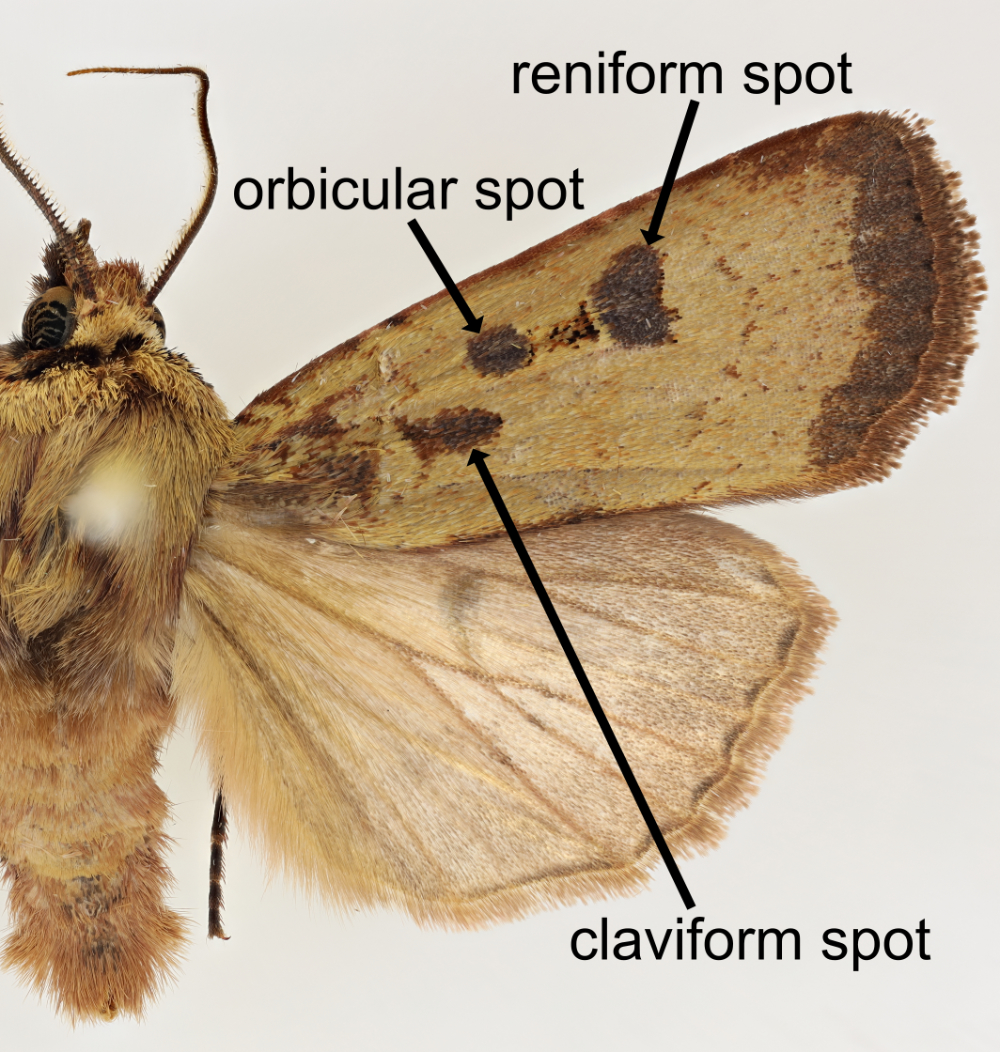 on the forewingforewing:
the front wing of an insect; the wing attached to the second segment of the thorax (the mesothorax) that are present in M. tinctoides.
Mouralia tinctoides is native to the tropical and subtropical regions of the Americas, from Florida and Texas south to Argentina and Uruguay. The population in southern California is probably the result of a recent introduction event (Lafontaine and Poole 1991Lafontaine and Poole 1991:
Lafontaine JD, Poole RW. 1991. The moths of America north of Mexico. Fascicle 25.1. Noctuoidea, Noctuidae (part), Plusiinae. The Wedge Entomological Research Foundation. 385 pp. ). In Hawaiʻi, this species was listed as “adventive, not established?” in Nishida (2002)Nishida (2002):
Nishida GM. 2002. Hawaiian terrestrial arthropod checklist. Fourth Edition. Bishop Museum Technical Report 22. 313 pp., where it was reported from a single specimen from Kauaʻi collected in 1982 (Riotte 1991Riotte 1991:
Riotte JCE. 1991. Reassessment of the Noctuoidea of the Hawaiian Islands. Bishop Museum Occasional Papers. 31:139–151.). Austin and Rubinoff (2022)Austin and Rubinoff (2022):
Austin KA, Rubinoff D. 2022. Eleven new records of Lepidoptera in the Hawaiian Islands including corrections to the Hawaiian terrestrial arthropod checklist. Bishop Museum Occasional Papers. 142:49–74. reported it from Oʻahu and considered it tentatively established in Hawaiʻi. A photo of a larva on iNaturalist suggests that it is present on Hawaiʻi island as well.
Mouralia tinctoides is known to feed on Tradescantia spp. (Commelinaceae) (Lafontaine and Poole 1991Lafontaine and Poole 1991:
Lafontaine JD, Poole RW. 1991. The moths of America north of Mexico. Fascicle 25.1. Noctuoidea, Noctuidae (part), Plusiinae. The Wedge Entomological Research Foundation. 385 pp. ). Many species of Tradescantia are cultivated in the Hawaiian Islands, several of which have become naturalized (Lorence and Flynn 1997Lorence and Flynn 1997:
Lorence DH, Flynn T. 1997. New naturalized plant records for Kauai. Bishop Museum Occasional Papers. 49:9–13., Wagner et al. 1999Wagner et al. 1999:
Wagner WL, Herbst DR, Sohmer SH. 1999. Manual of the flowering plants of Hawaii, revised edition. Bernice P. Bishop Museum special publication. University of Hawai‘i Press/Bishop Museum Press, Honolulu. 1919 pp.). It has also been reared from Commelina diffusa Burm.f. (Landolt 1993Landolt 1993:
Landolt PJ. 1993. Suitability of six species of Commelinaceae as larval hosts of Mouralia tinctoides (Lepidoptera: Noctuidae, Plusiinae). The Florida Entomologist. 76(4):572–576.).
Author: Kyhl A. Austin
Content last updated May 2026
idtools.org