ADVENTIVE
Leucania stenographa Lower, 1900
Higher taxonomy: Noctuidae: Noctuinae: Leucaniini
Common name: sugarcane armyworm
Note: this species was previously identified in Hawaiʻi as Leucania loreyi (Duponchel, 1827) by Beardsley (1979)Beardsley (1979):
Beardsley JW. 1979. New immigrant insects in Hawaiʻi: 1962 through 1976. Proceedings of the Hawaiian Entomological Society. 23:35–44., later reidentified as L. loreyimima Rungs, 1953 (Riotte 1991Riotte 1991:
Riotte JCE. 1991. Reassessment of the Noctuoidea of the Hawaiian Islands. Bishop Museum Occasional Papers. 31:139–151.). Edwards (1992)Edwards (1992):
Edwards ED. 1992. A second sugarcane armyworm (Leucania loreyi (Duponchel)) from Australia and the identity of L. loreyimima Rungs (Lepidoptera: Noctuidae). Journal of the Australian Entomological Society. 31:105–108. synonymized L. loreyimima with L. stenographa, which had gone unnoticed in the Hawaiian literature until pointed out by Austin and Rubinoff (2024a)Austin and Rubinoff (2024a):
Austin KA, Rubinoff D. 2024a. New records of introduced Lepidoptera in the Hawaiian Islands for the year 2023. Bishop Museum Occasional Papers. 156:111–121..
Leucania stenographa is a moderately common species in Hawaiʻi, primarily occurring in dry, disturbed grasslands and pasturelands on the leeward side of some islands. It was first detected in Hawaiʻi from Oʻahu in 1975 and has since spread to some, but not all of the main Hawaiian Islands. It is known as a pest of sugarcane (Saccharum officinarum L.) and certain pasture grasses in Australia.
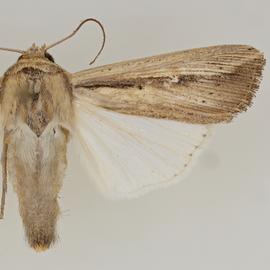
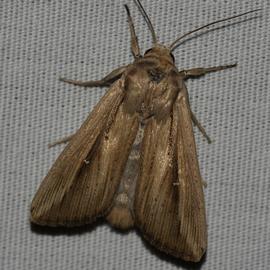
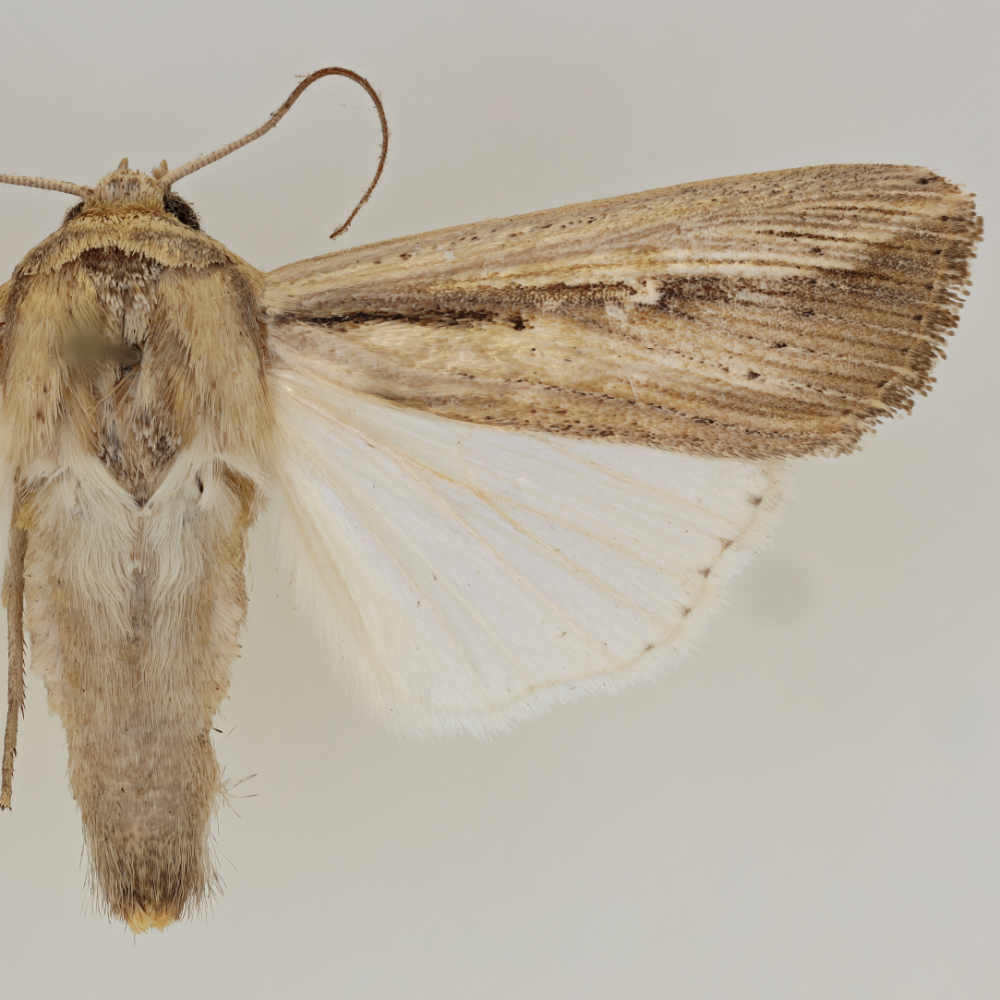
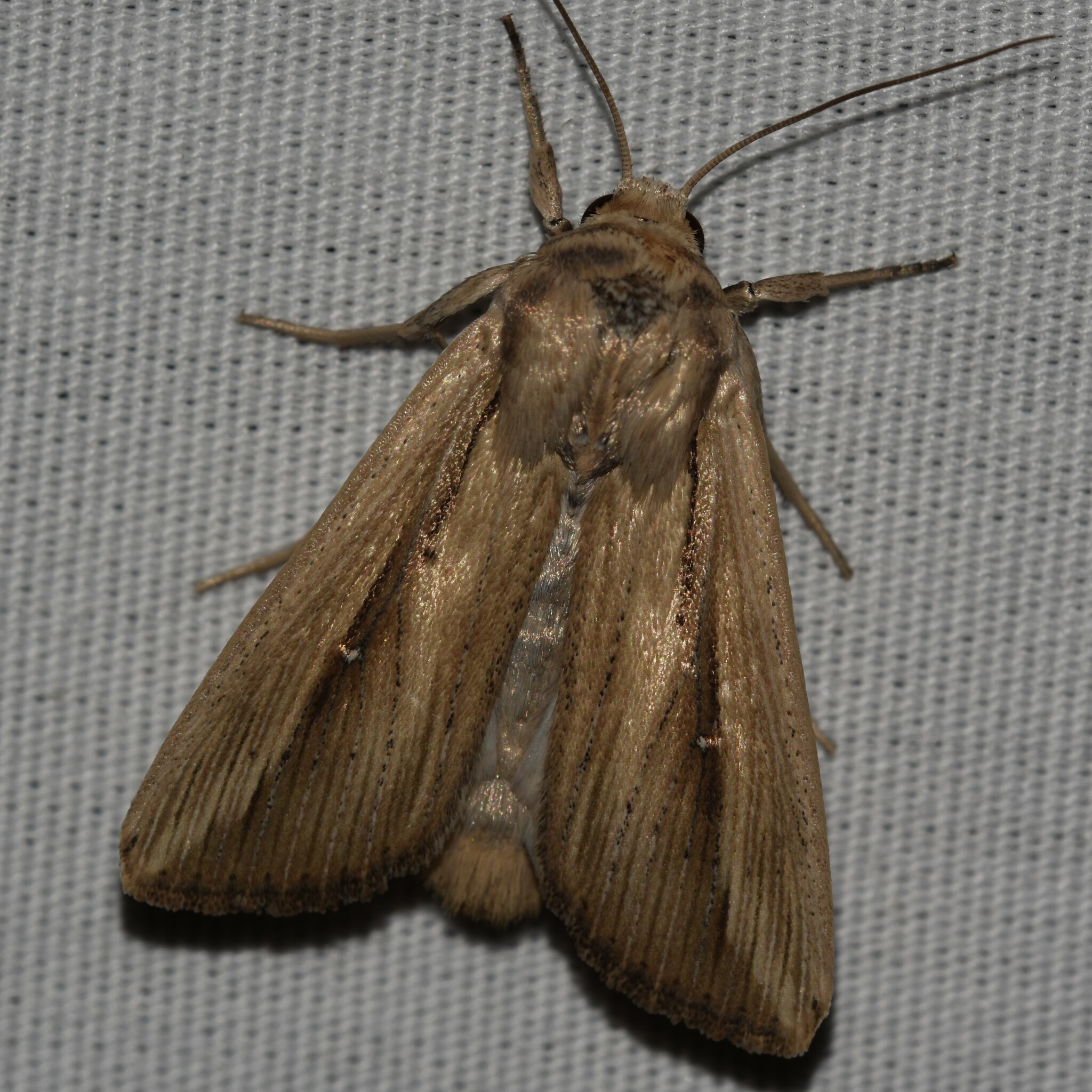
Adults of Leucania stenographa are medium-sized noctuids (forewing lengthforewing length:
the distance of the forewing in a straight line from the base to the tip of the apex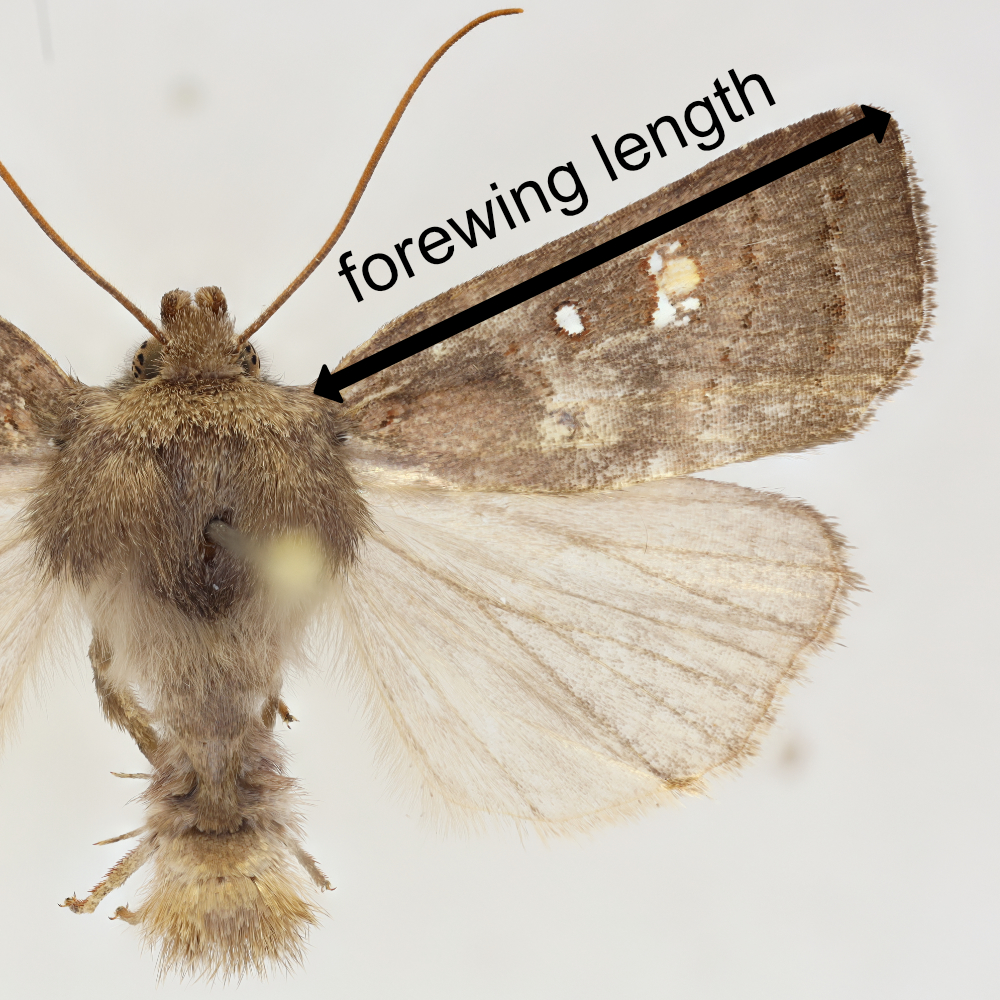 12–17 mm) characterized by a pale brown and straw yellow forewingforewing:
the front wing of an insect; the wing attached to the second segment of the thorax (the mesothorax)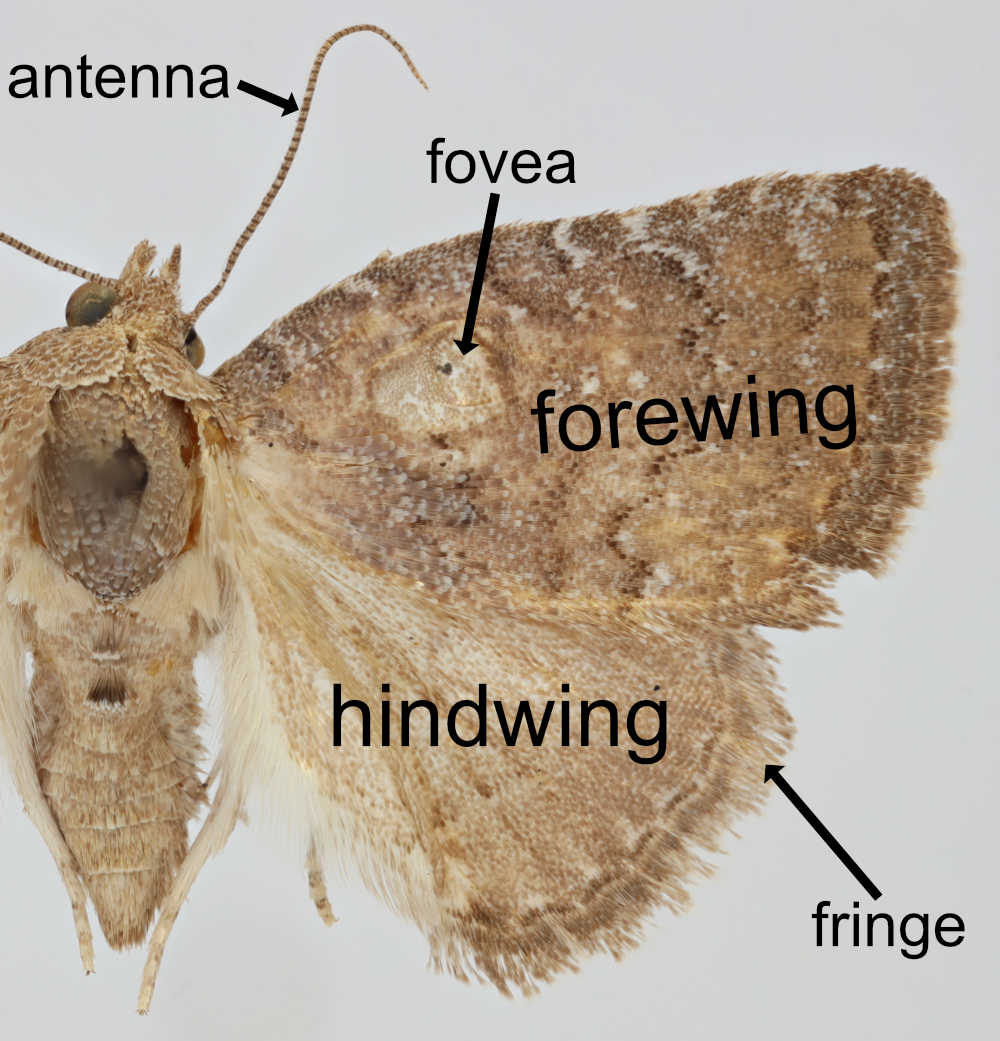 with a distinct black basalbasal:
the part of an appendage nearest to where it connects to the body; often referred to as 'proximal'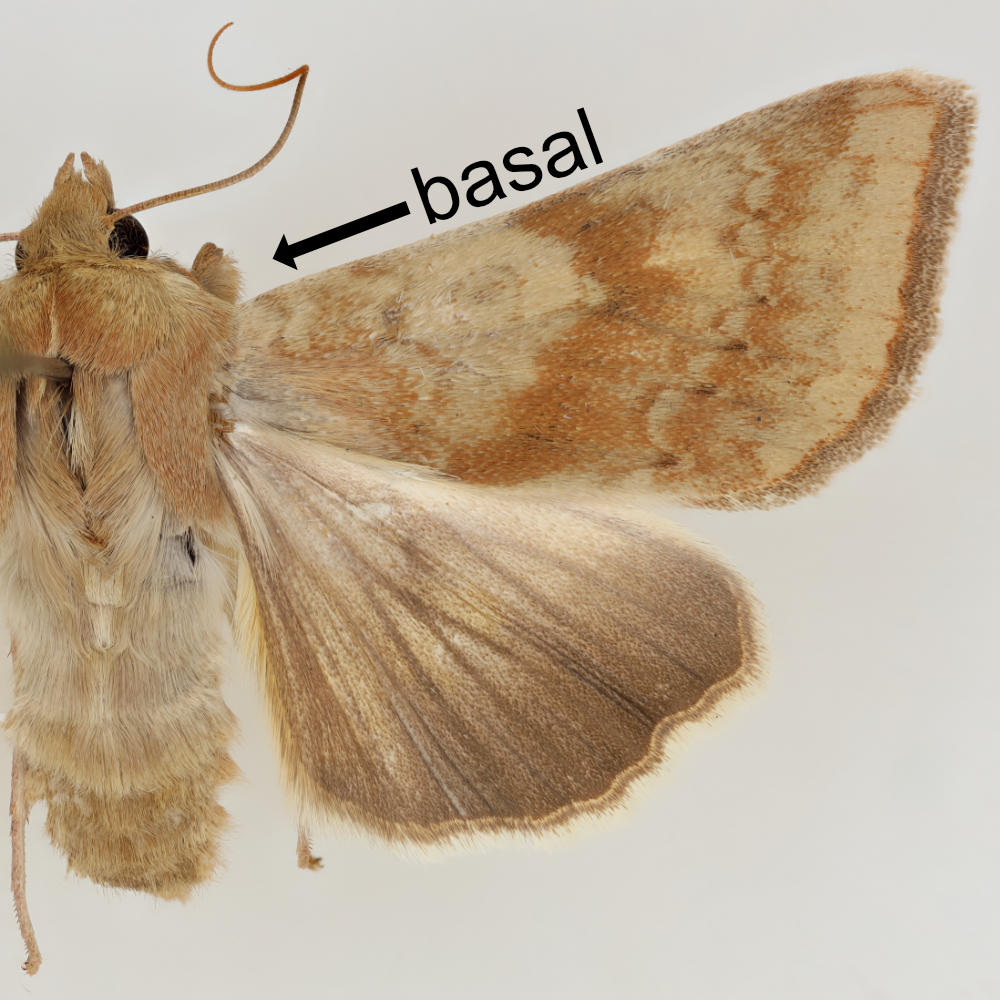 streak, a white spot at the end of the discal celldiscal cell:
a large, central compartment on the wing surrounded by veins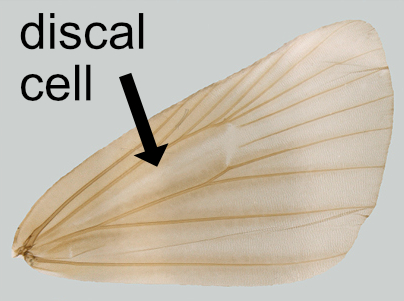 , and a postmedial linepostmedial line:
a thin, transverse line located distal to the reniform spot, typically on the distal third of the forewing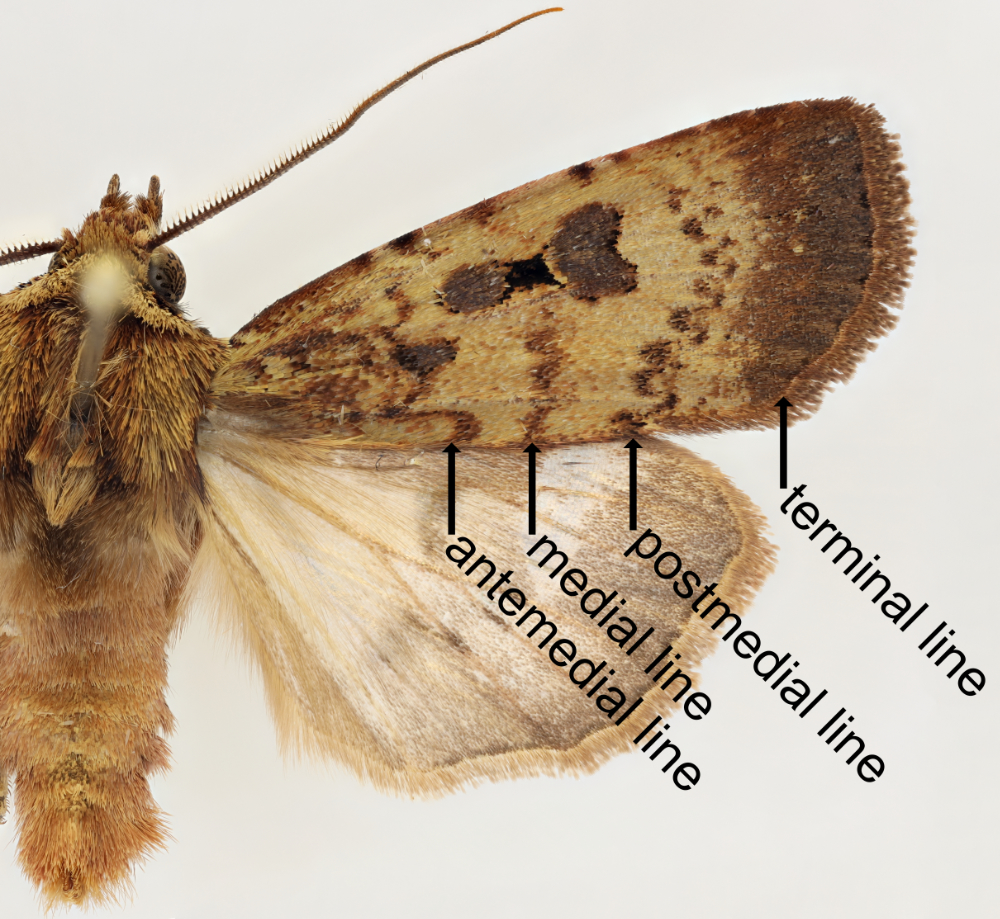 reduced to a series of black dots along the veins. The hindwinghindwing:
the back wing of an insect; the wing attached to the third segment of the thorax (the metathorax)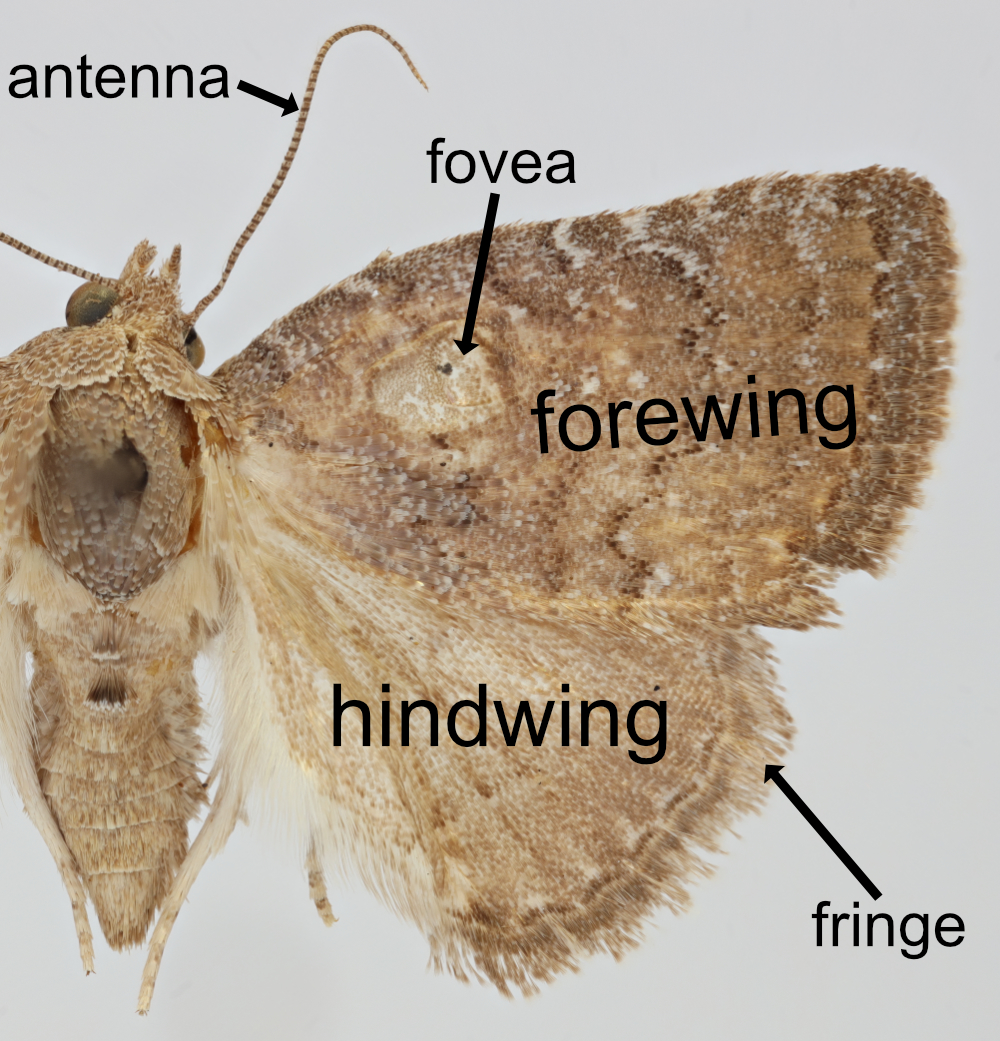 is white with small black dots near the fringefringe:
the scales, setae, or hairs that extend beyond the edge of a wing membrane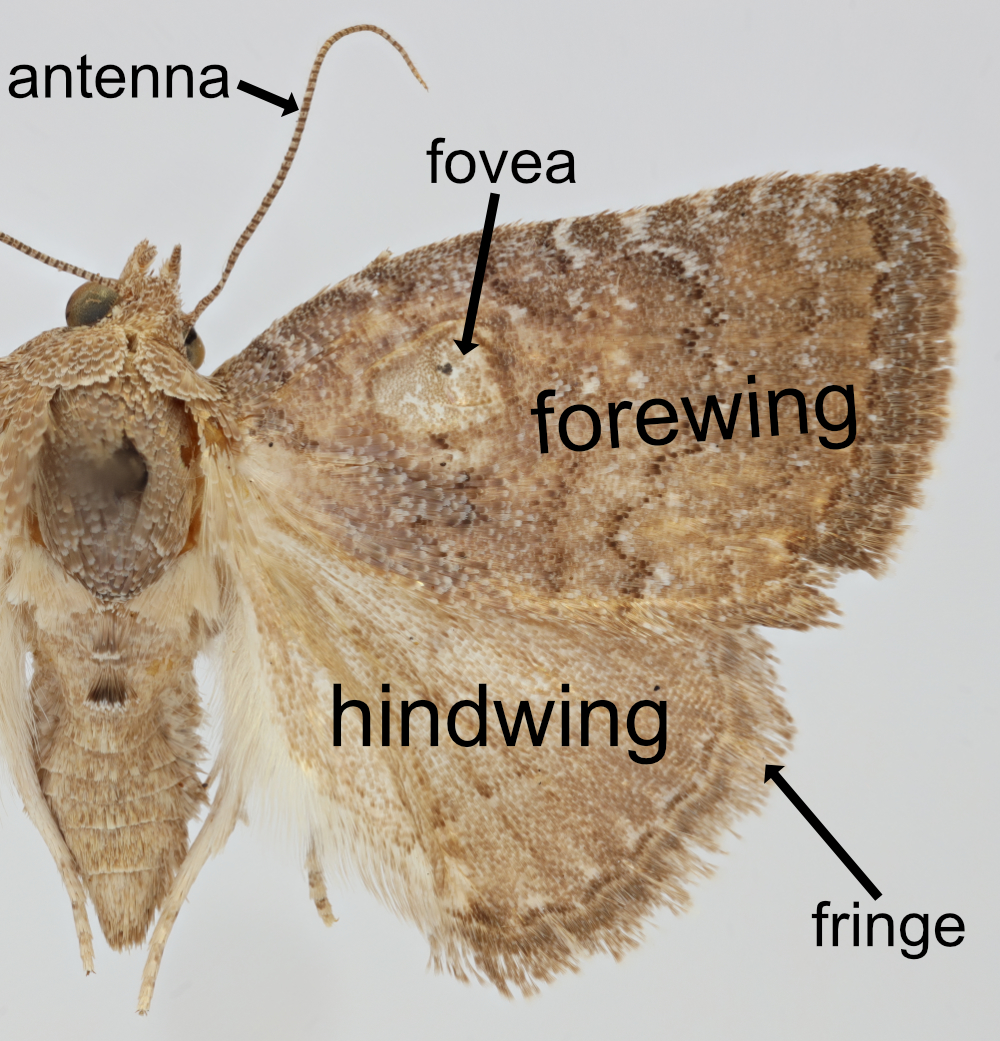 .
.
Larvae of Leucania stenographa have not been formally described but likely resemble other species of Leucania.
In Hawaiʻi, Leucania stenographa closely resembles L. striata, but L. stenographa has a paler hindwinghindwing:
the back wing of an insect; the wing attached to the third segment of the thorax (the metathorax), less distinctly marked veins on the forewingforewing:
the front wing of an insect; the wing attached to the second segment of the thorax (the mesothorax), and only a single row of black spots on the postmedial linepostmedial line:
a thin, transverse line located distal to the reniform spot, typically on the distal third of the forewing.
Leucania stenographa is native to Australia but has been introduced to New Zealand and the Cook Islands.
In Hawaiʻi, Leucania stenographa is known from Kauaʻi, Oʻahu, Maui, Hawaiʻi Island, as well as Nihoa and Midway (Nishida 2002Nishida 2002:
Nishida GM. 2002. Hawaiian terrestrial arthropod checklist. Fourth Edition. Bishop Museum Technical Report 22. 313 pp., Howarth et al. 2012Howarth et al. 2012:
Howarth FG, Preston DJ, Pyle R. 2012. Surveying for terrestrial arthropods (insects and relatives) occurring within the Kahului Airport Environs, Maui, Hawai‘i: Synthesis report. Final report submitted to EKNA Services Inc. and State of Hawaiʻi, Department of Transportation, Airports Division. Bishop Museum Technical Report 58. 215 pp., Austin and Rubinoff 2022Austin and Rubinoff 2022:
Austin KA, Rubinoff D. 2022. Eleven new records of Lepidoptera in the Hawaiian Islands including corrections to the Hawaiian terrestrial arthropod checklist. Bishop Museum Occasional Papers. 142:49–74.). It has been recorded from sea level to ca. 1300 meters elevation but appears to be most common in drier, lower elevation habitats, especially on the leeward side of the islands.
Leucania stenographa is known to feed on sugar cane (Saccharum spp.) and other grasses (family Poaceae). Little is known of its life cycle, but larvae feed nocturnally (Samson et al. 2019Samson et al. 2019:
Samson P, Sallam N, Chandler K. 2019. Pests of Australian sugarcane: field guide. Indooroopilly, QLD, Australia: Sugar Research Australia. 96 pp.).
Author: Kyhl A. Austin
Content last updated May 2026
idtools.org