ADVENTIVE
Ctenoplusia albostriata (Bremer and Grey, 1853)
Higher taxonomy: Noctuidae: Plusiinae: Argyrogrammatini
Common name: eastern streaked plusia
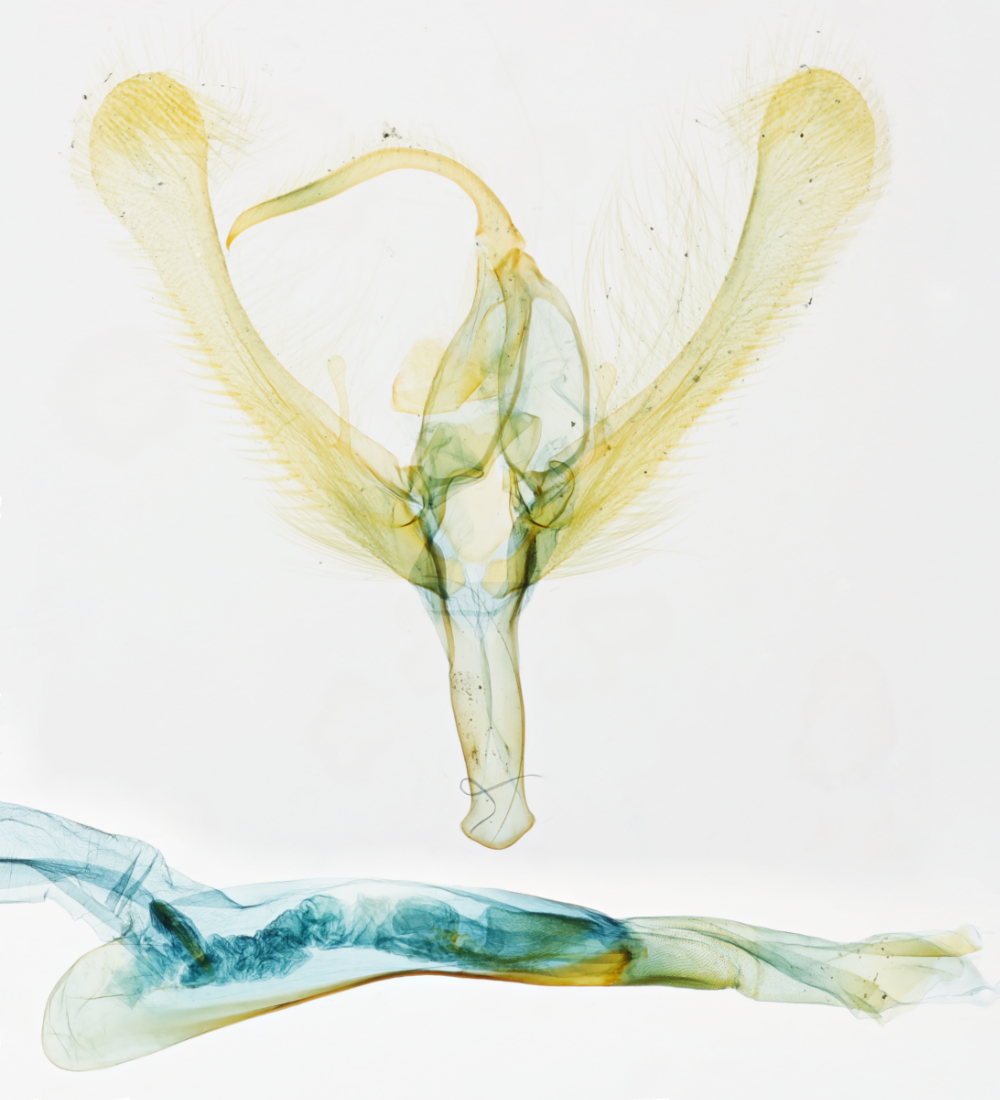
Ctenoplusia albostriata is a rarely collected non-native noctuid in Hawaiʻi. It is only known from a handful of specimens since it was first detected on Maui in 1999. It does not appear to be a significant pest in the state.
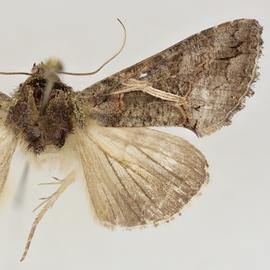
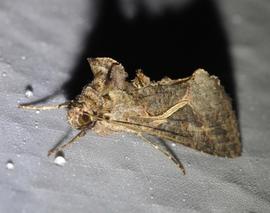
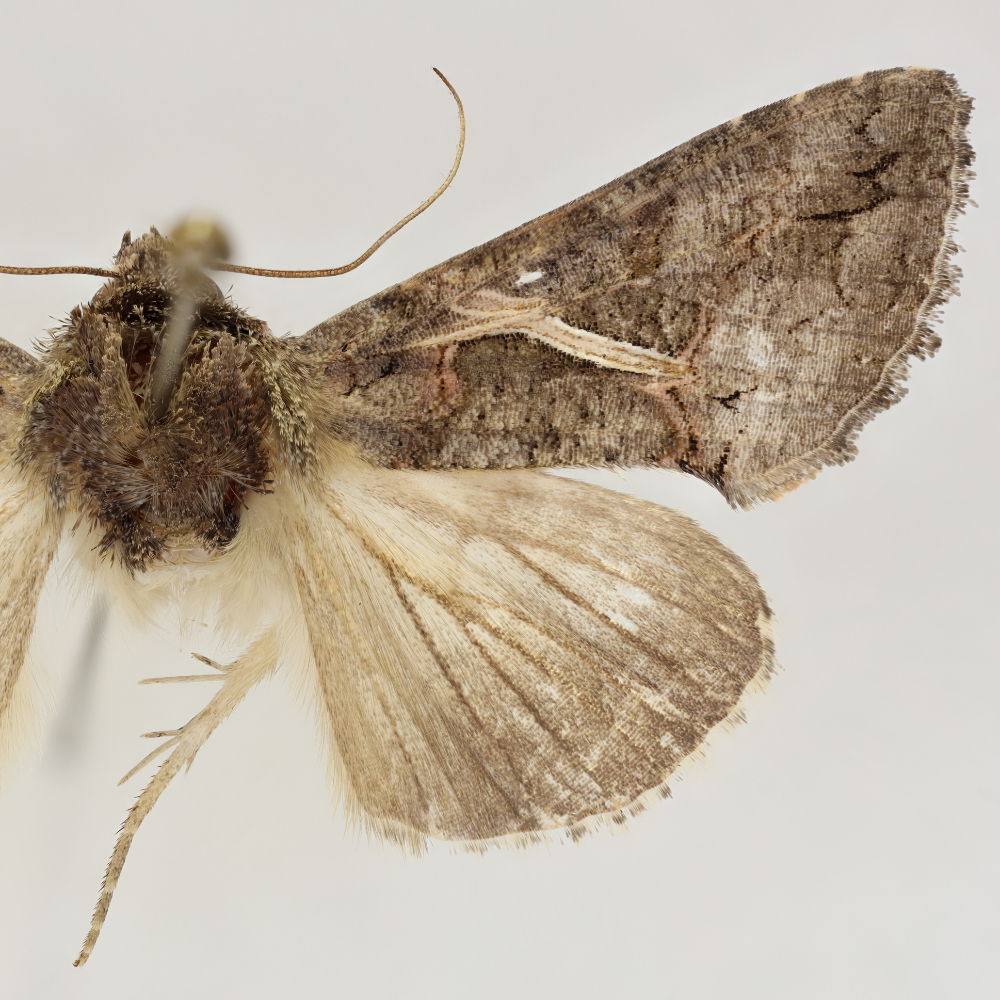
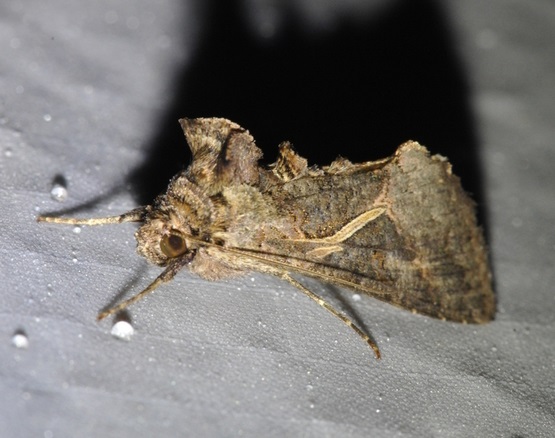
The adult of Ctenoplusia albostriata is a typical plusiine noctuid, moderate in size (forewing lengthforewing length:
the distance of the forewing in a straight line from the base to the tip of the apex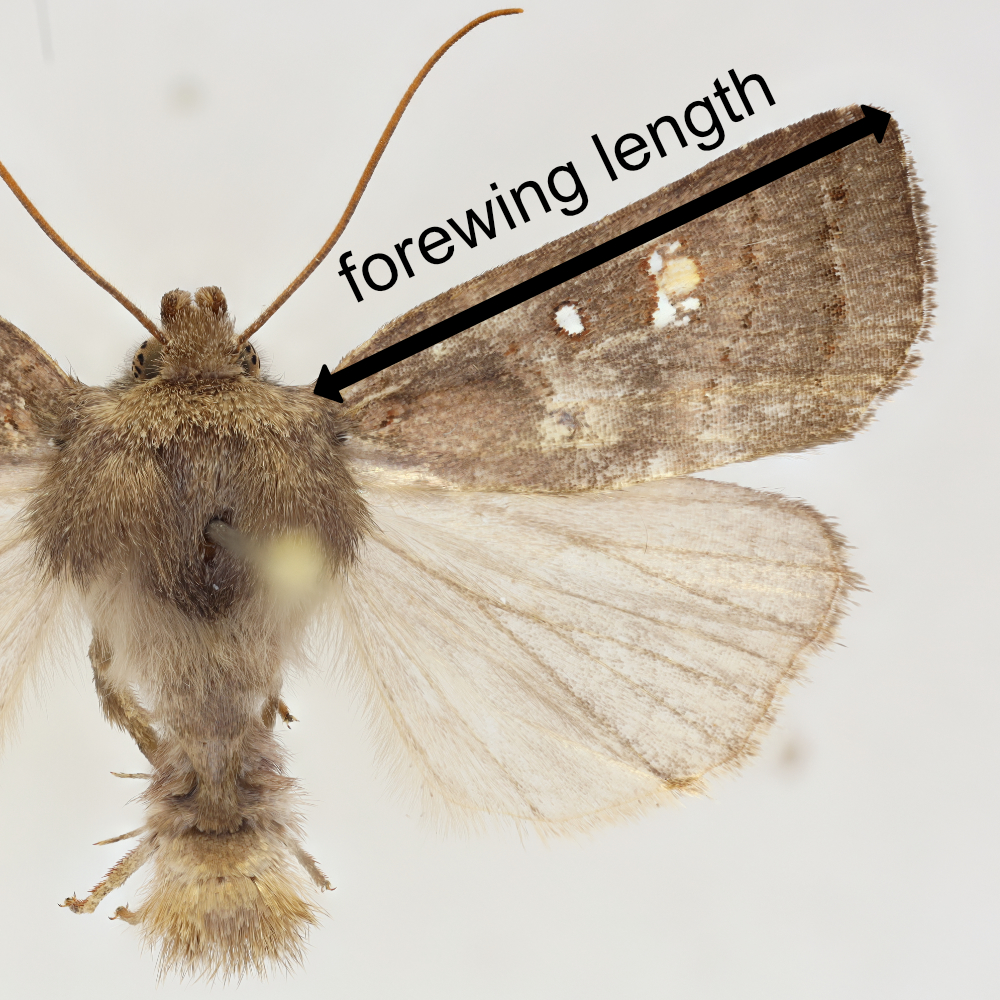 12–15 mm), with a dark brown forewingforewing:
the front wing of an insect; the wing attached to the second segment of the thorax (the mesothorax)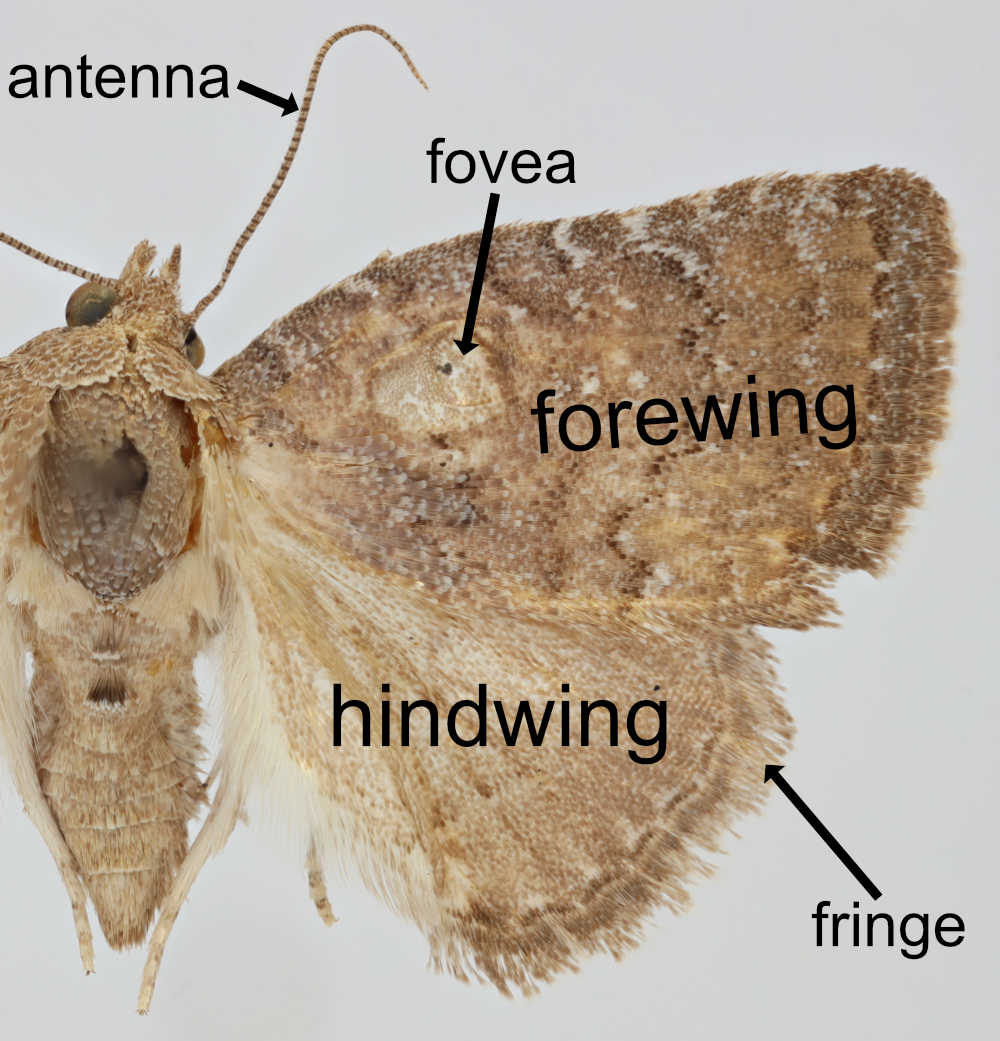 , paler in the basalbasal:
the part of an appendage nearest to where it connects to the body; often referred to as 'proximal'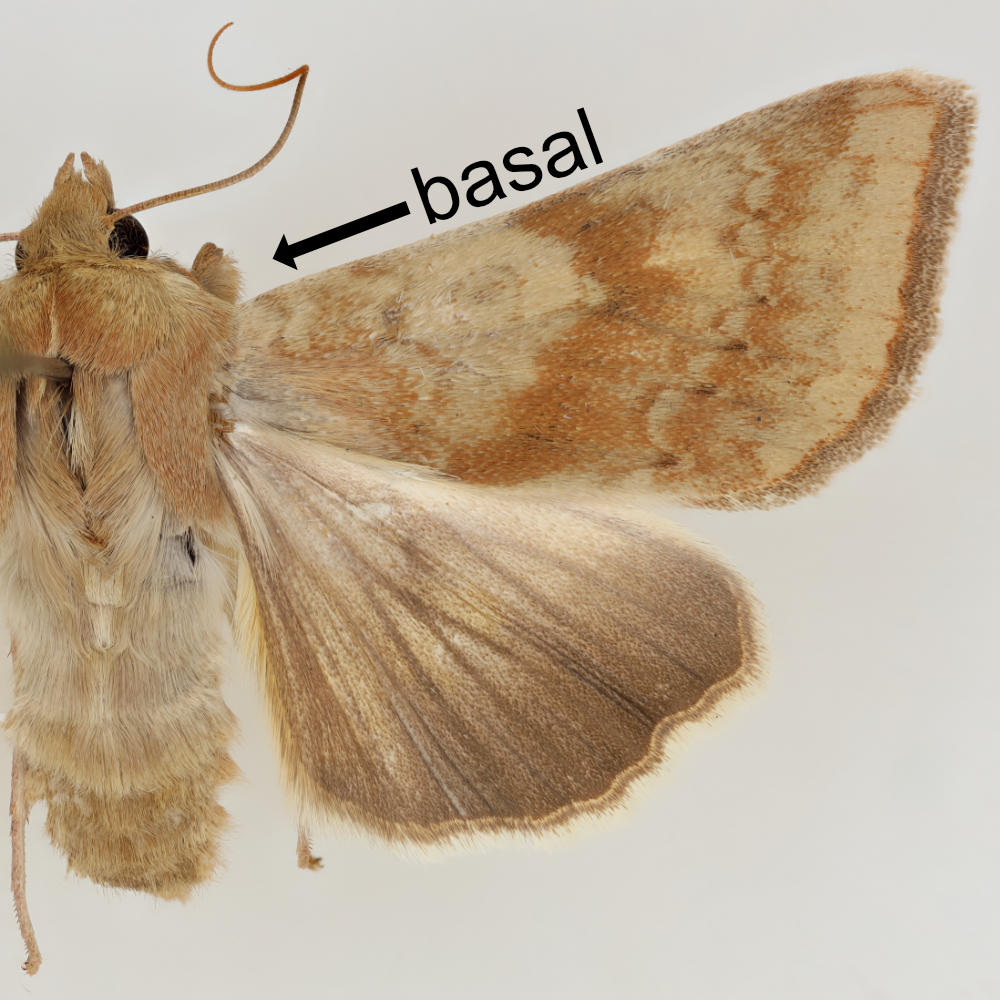 and terminal areasterminal area:
the portion of the wing that is located distal to the subterminal line and basal of the terminal line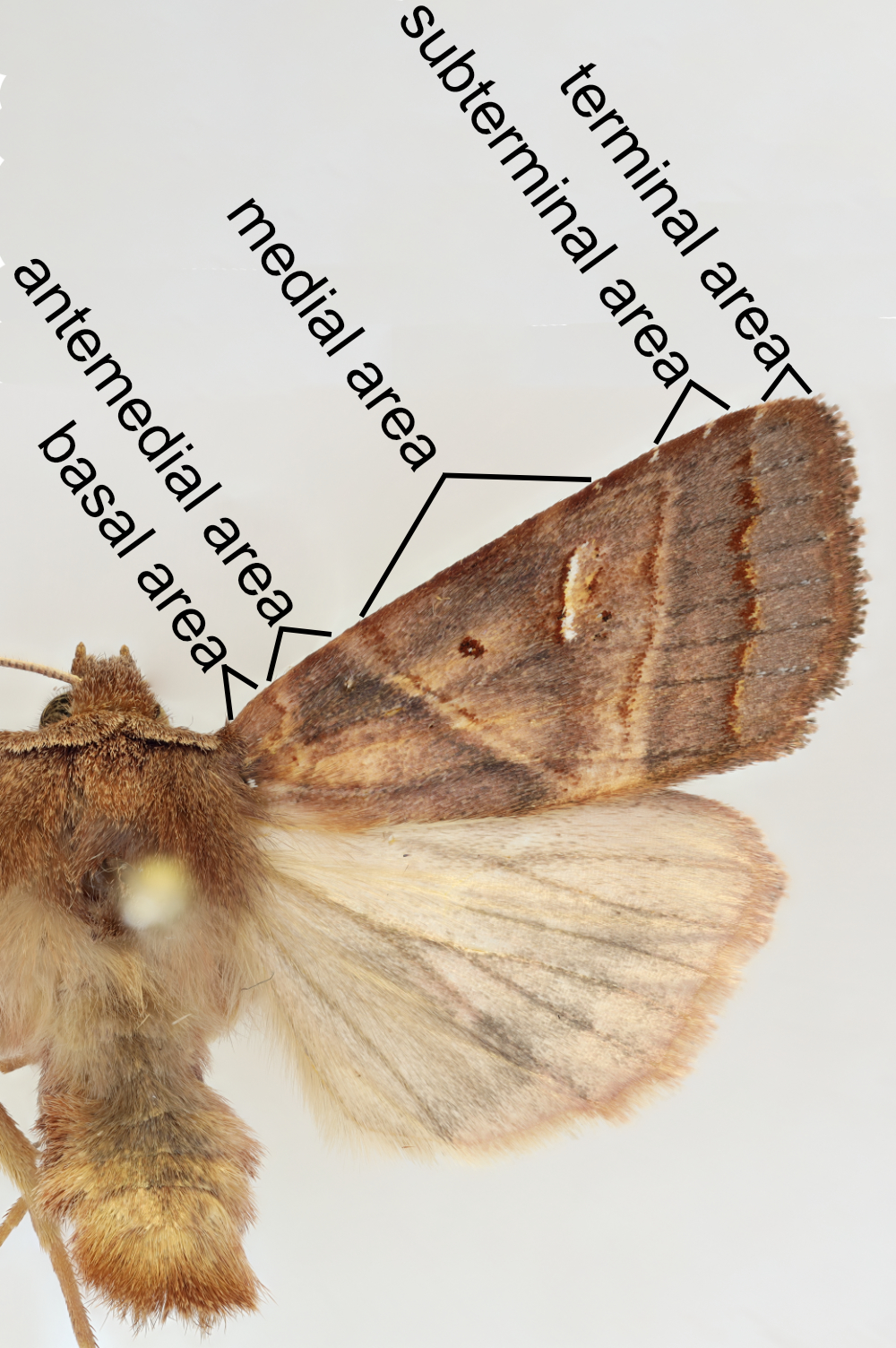 . The most diagnostic character in the forewingforewing:
the front wing of an insect; the wing attached to the second segment of the thorax (the mesothorax) is the shape of the stigmastigma:
a distinctive metallic, often silver or gold-colored, marking on the forewing in many species of Plusiinae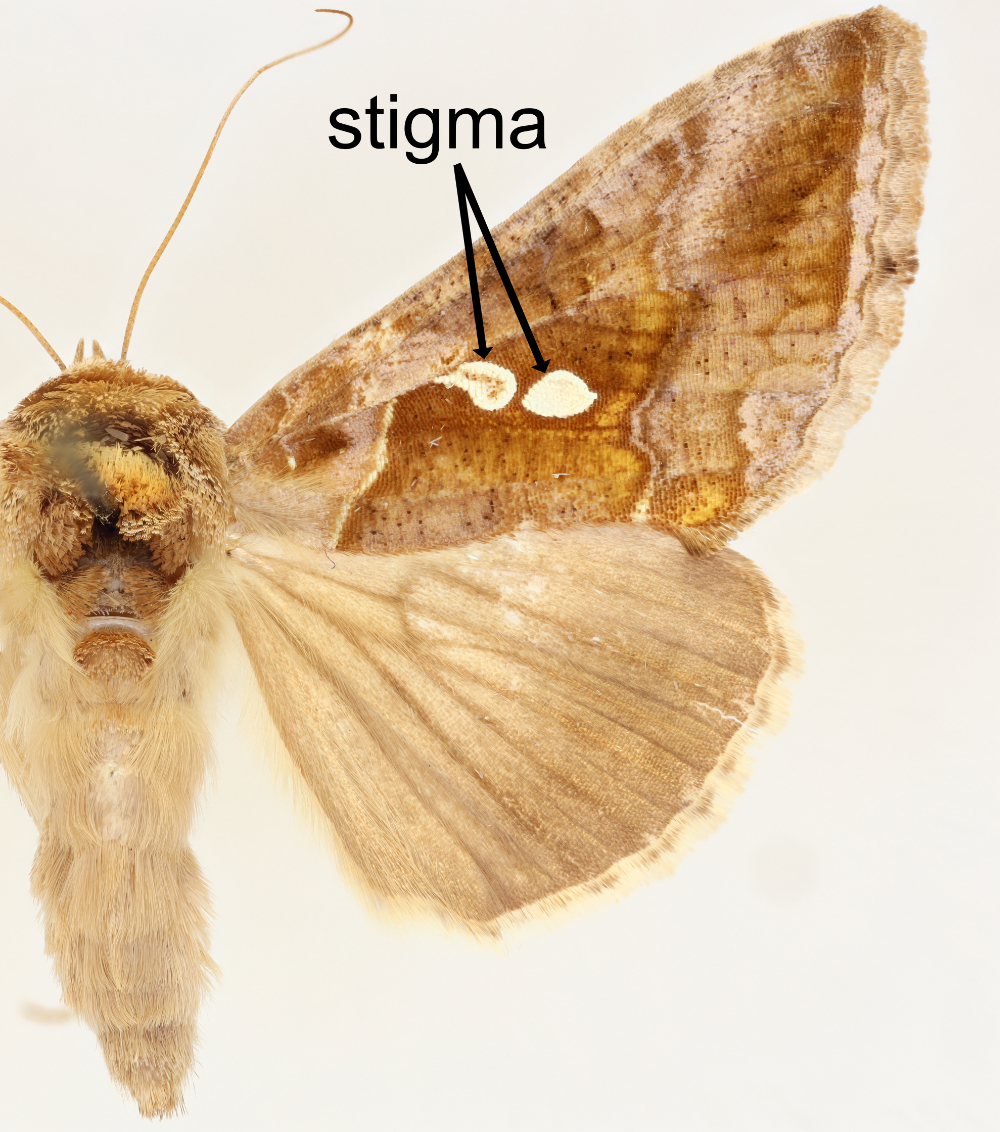 : long, narrow, and dagger-shaped, pointed towards the forewing tornustornus:
the disto-posterior corner of the wing; also called the 'anal angle'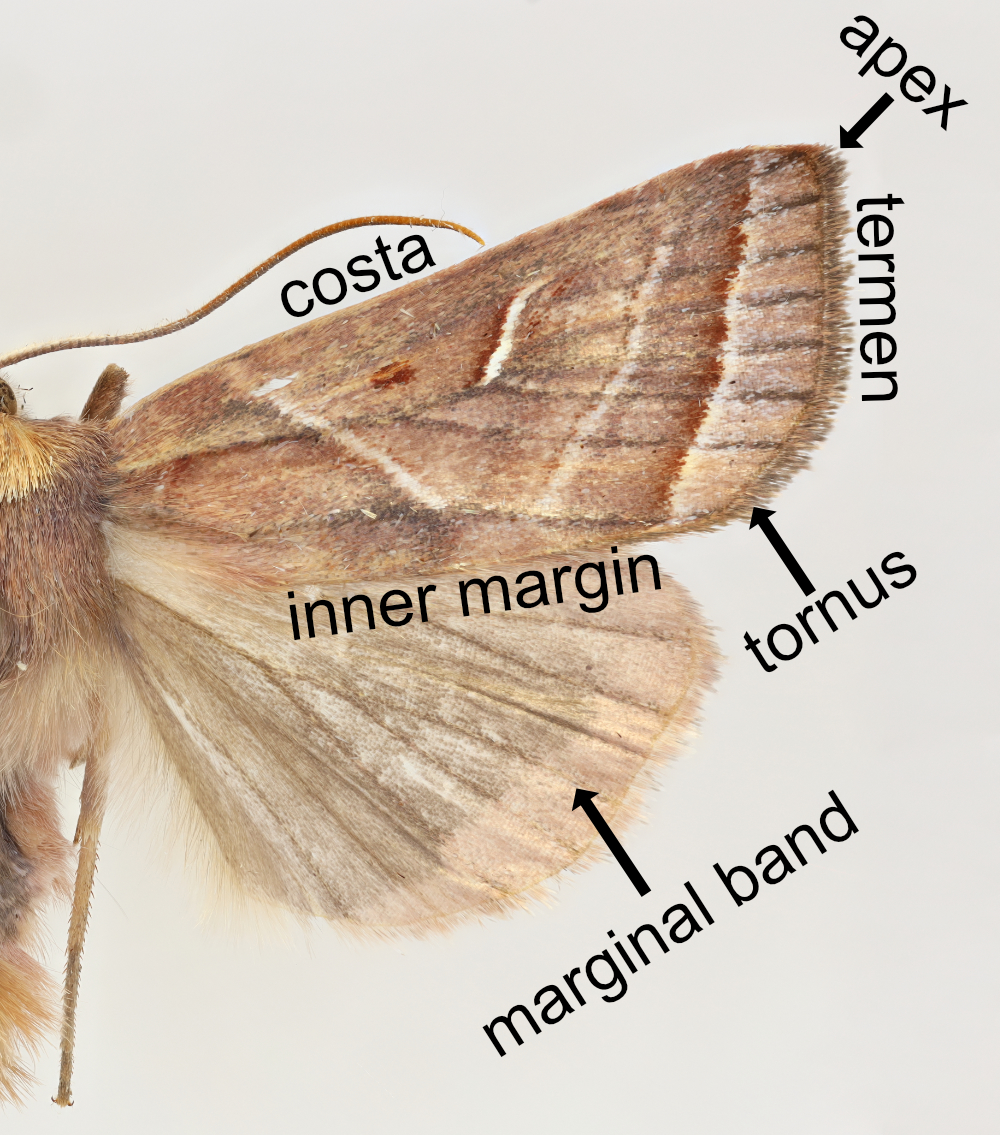 . The subterminal linesubterminal line:
a thin, transverse line situated near the distal end of the forewing between the postmedial and terminal lines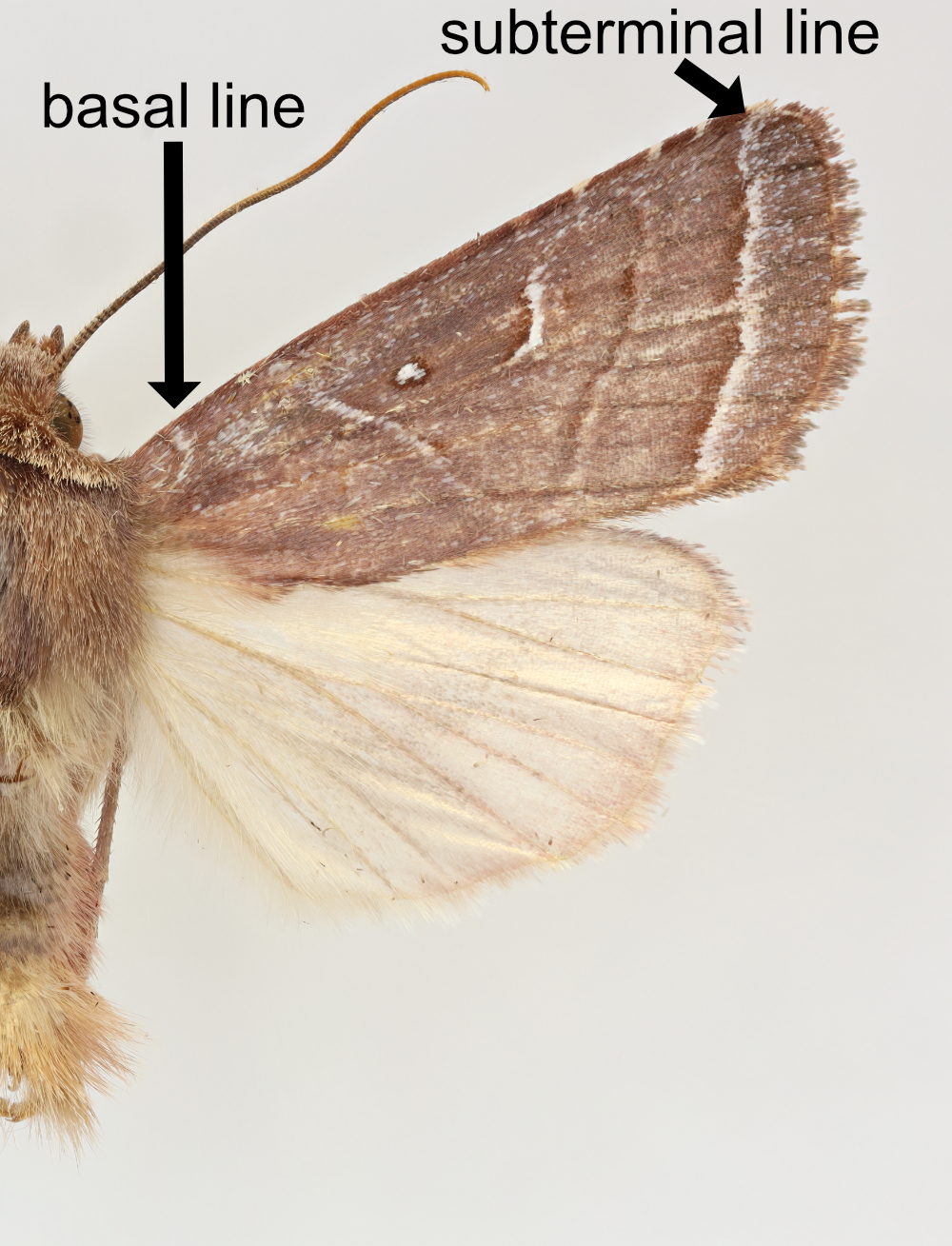 is jagged and often incomplete. The hindwinghindwing:
the back wing of an insect; the wing attached to the third segment of the thorax (the metathorax)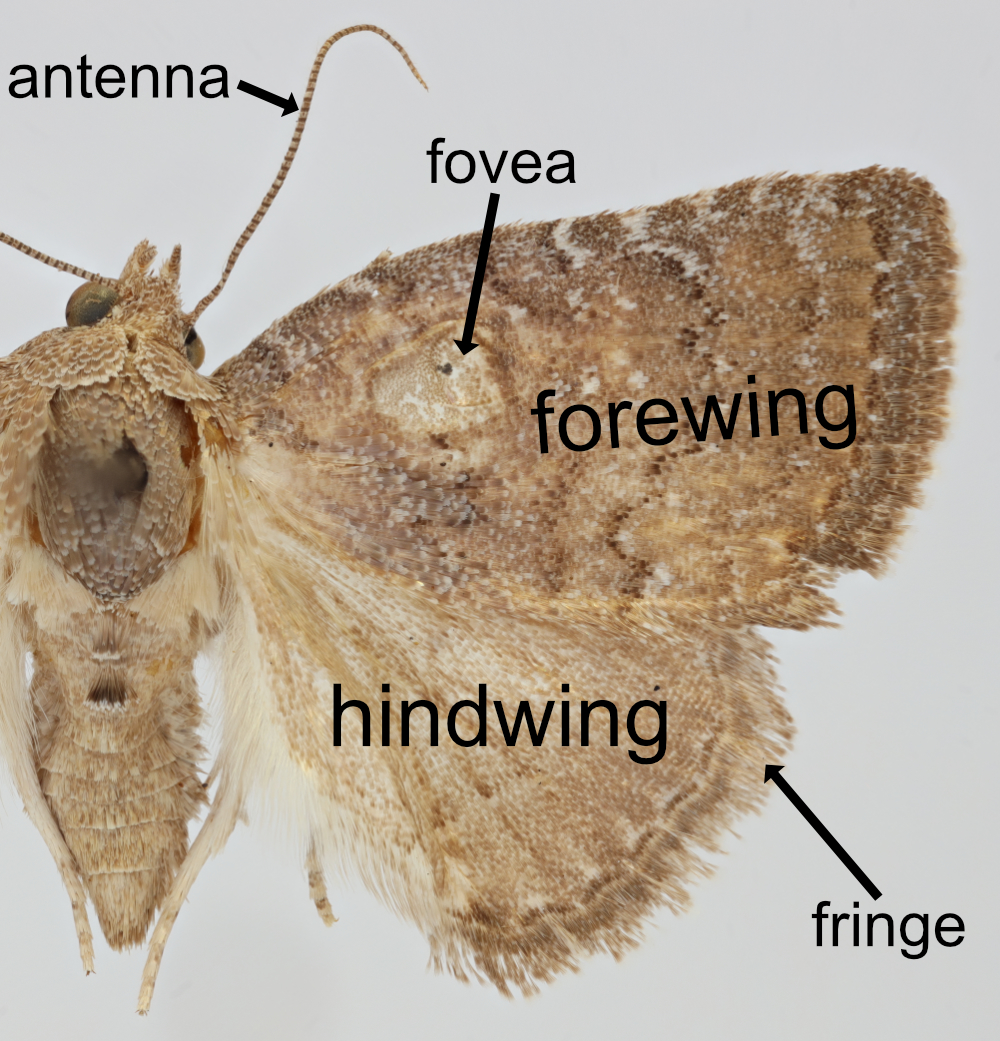 is brown, paler towards the base.
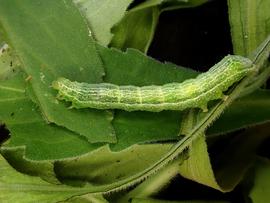
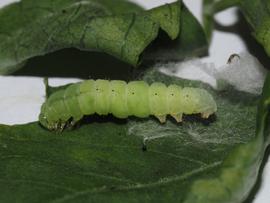
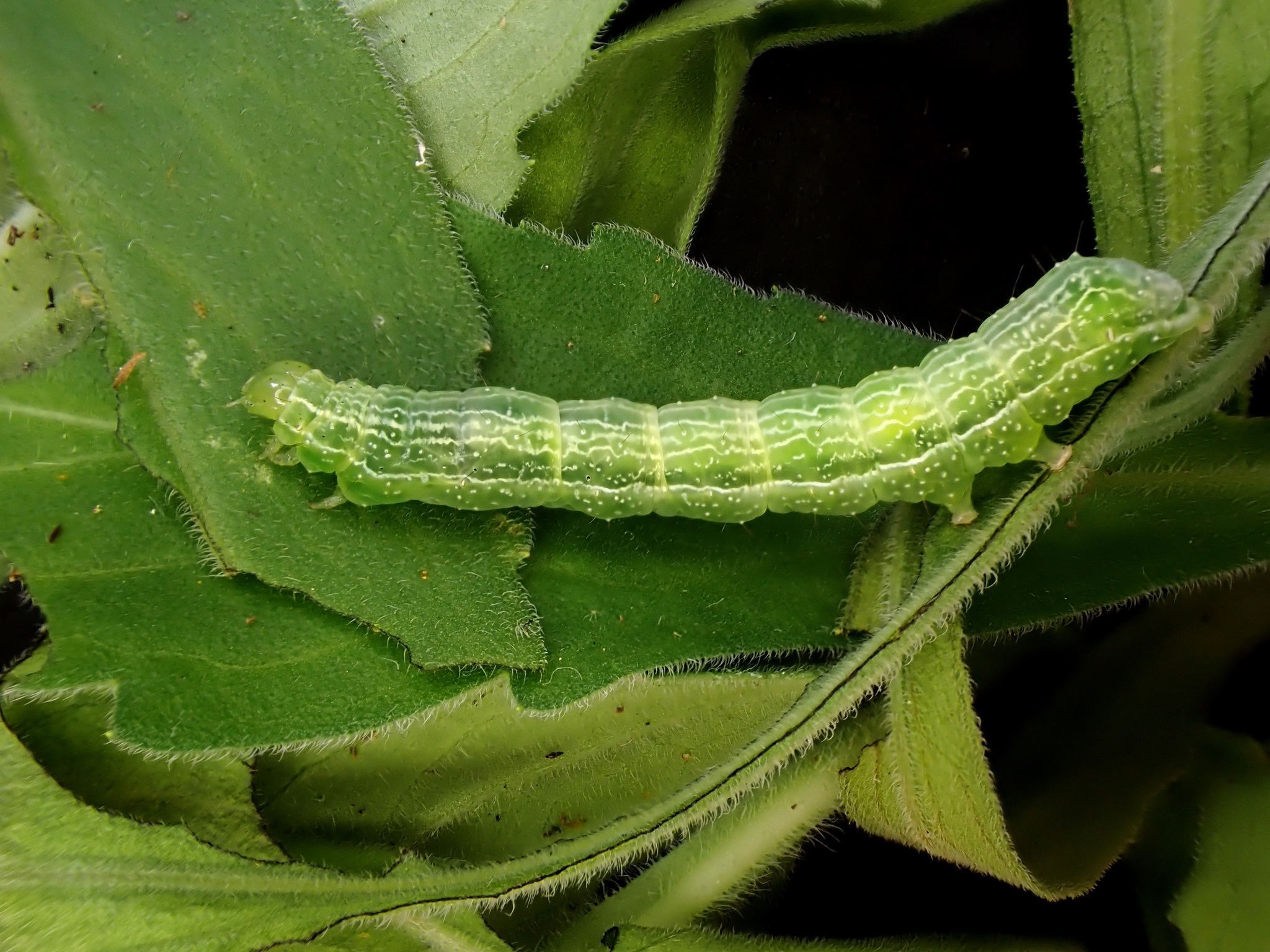
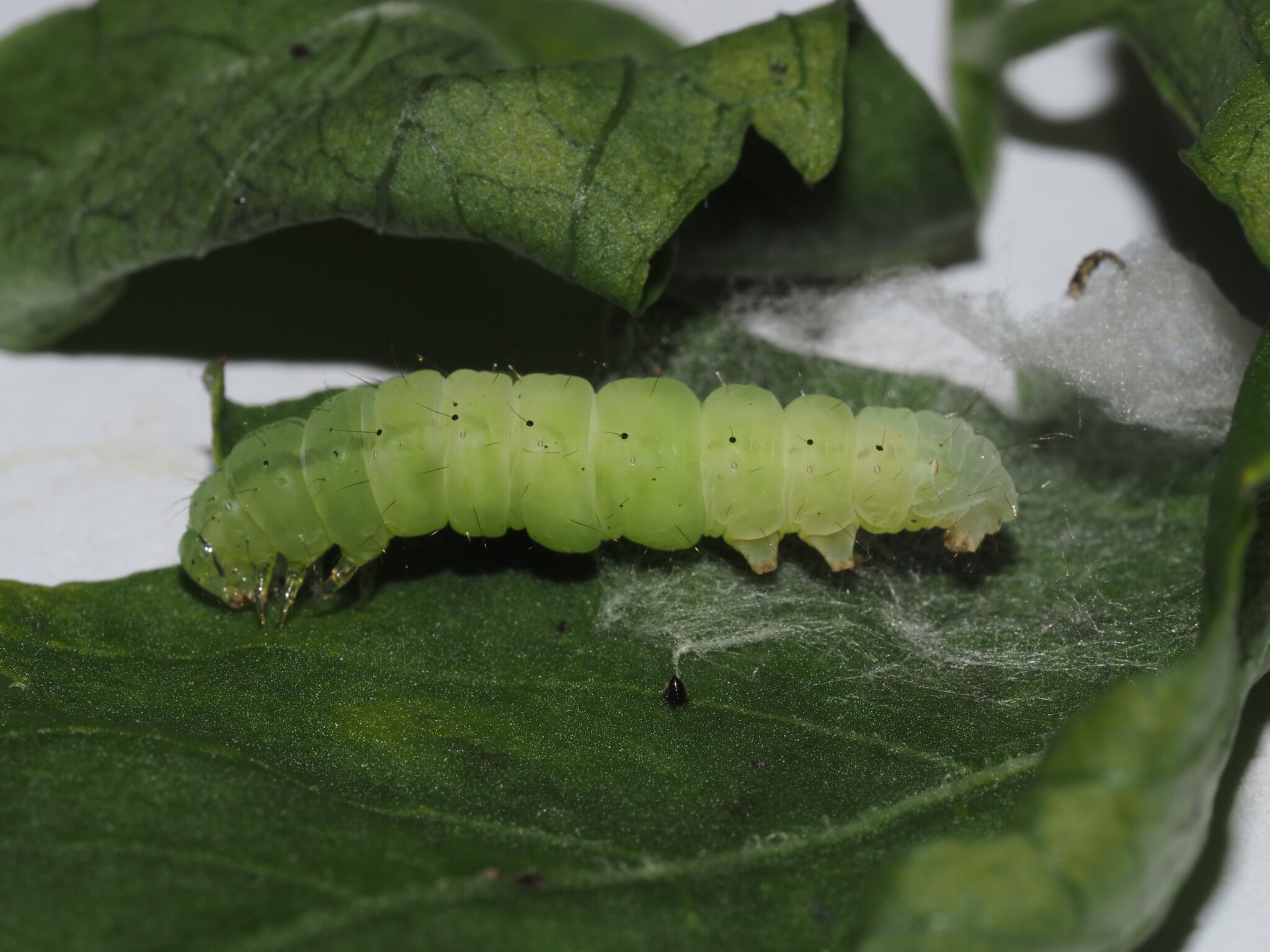
The larva of Ctenoplusia albostriata is typical of a plusiine, with only two pairs of abdominal prolegs and relatively simple body patterning. The body is green, slightly darker dorsally, with thin, jagged, white lateral lines running the entire length of the body and scattered small white dots throughout.
The unique shape of the stigmastigma:
a distinctive metallic, often silver or gold-colored, marking on the forewing in many species of Plusiinae in Ctenoplusia albostriata should render it immediately recognizable in Hawaiʻi. Some forms of C. albostriata have a missing or reduced stigmastigma:
a distinctive metallic, often silver or gold-colored, marking on the forewing in many species of Plusiinae, but these forms appear to be absent in Hawaiʻi. Identification of larvae may be more difficult, as there are few immediate characters to separate plusiine larvae in Hawaiʻi. Knowledge of the host plant may help to narrow down the possibilities, but DNA or rearing to adulthood may ultimately be required.
The native range of Ctenoplusia albostriata includes South and Southeast Asia, Melanesia, Australia, and some islands in the western Pacific. It is an introduced species in New Zealand.
In Hawaiʻi it is known from Maui and Oʻahu.
Holloway (1985)Holloway (1985):
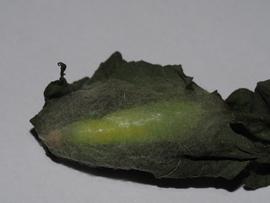
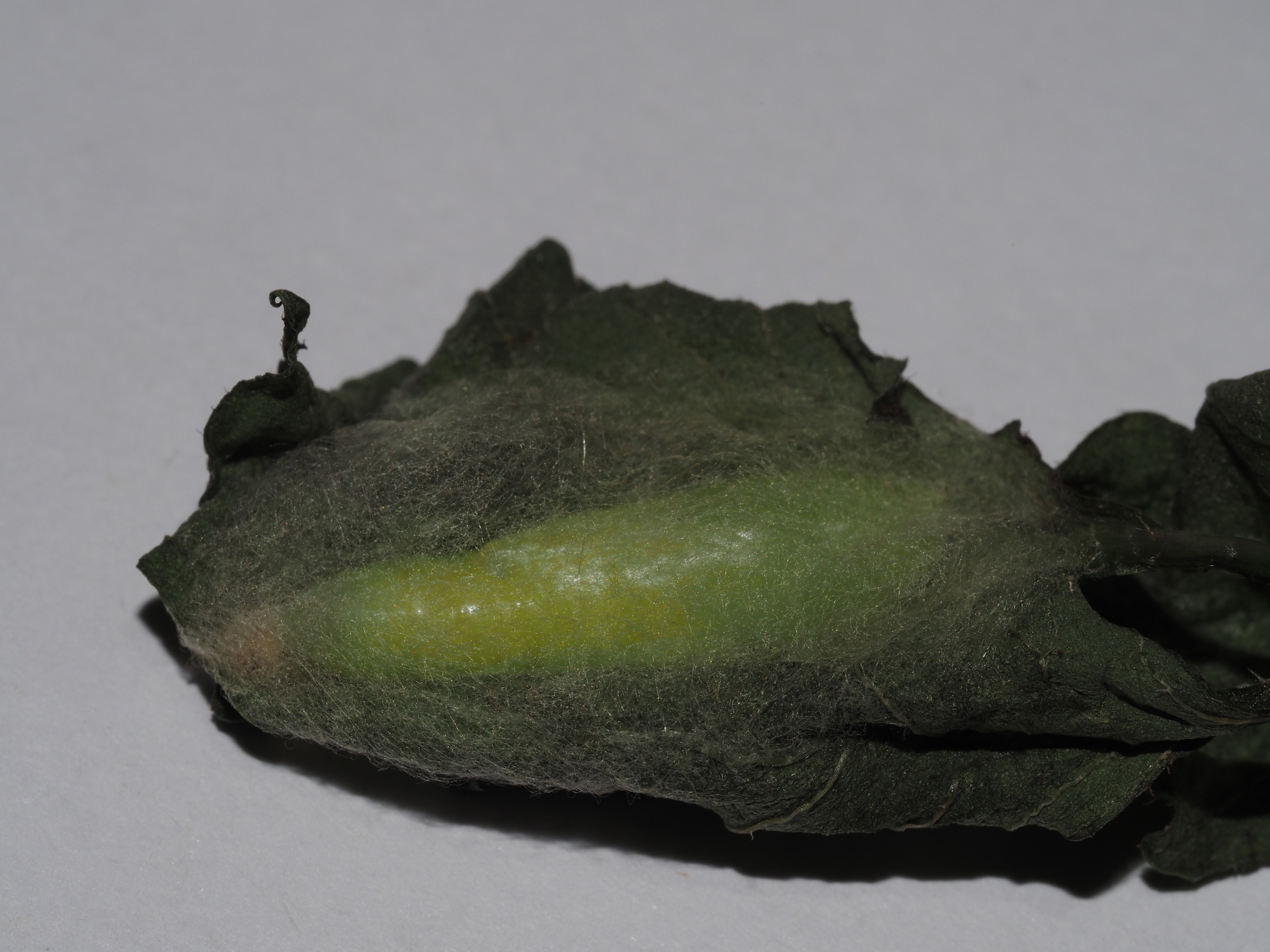
Holloway JD. 1985. Moths of Borneo 14. Family Noctuidae: Subfamilies Euteliinae, Stictopterinae, Plusiinae, Pantheinae. Malayan Nature Journal. 38:157–317. lists the following host plants: Aster spp., Dichrocephala spp., Elephantopus spp., Erigeron spp., Calendula, Callistephus spp., Dahlia spp., and Solidago spp. There are also records for Symphytum spp. (Boraginaceae) and Calystegia spp. (Convolvulaceae). Larvae feed on the leaves and pupate in dead leaves or in the soil.
Author: Kyhl A. Austin
Content last updated May 2026
idtools.org