ADVENTIVE
Condica illecta (Walker, 1865)
Higher taxonomy: Noctuidae: Condicinae: Condicini
Condica illecta is an uncommon non-native species that was first collected in Hawaiʻi in 1961 (Riotte 1991Riotte 1991:
Riotte JCE. 1991. Reassessment of the Noctuoidea of the Hawaiian Islands. Bishop Museum Occasional Papers. 31:139–151.) but has since been collected on all the main high Hawaiian Islands except Lānaʻi (Riotte 1991Riotte 1991:
Riotte JCE. 1991. Reassessment of the Noctuoidea of the Hawaiian Islands. Bishop Museum Occasional Papers. 31:139–151., Nishida 2002Nishida 2002:
Nishida GM. 2002. Hawaiian terrestrial arthropod checklist. Fourth Edition. Bishop Museum Technical Report 22. 313 pp.). It does not appear to be a significant pest in the state.
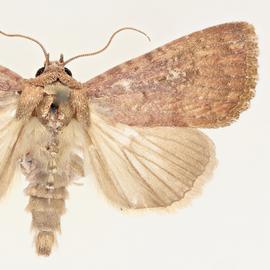
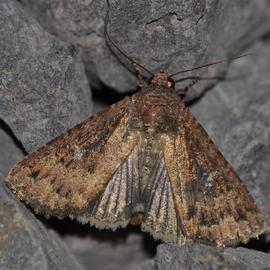
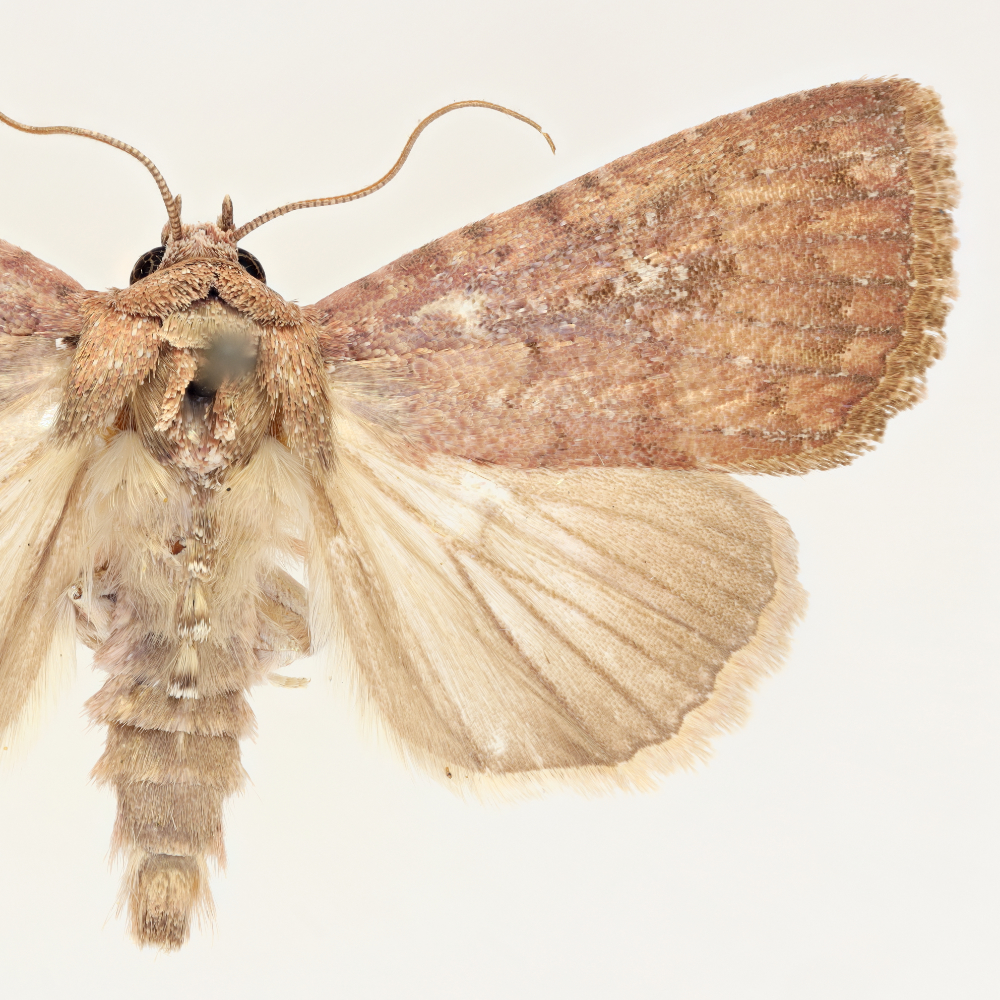
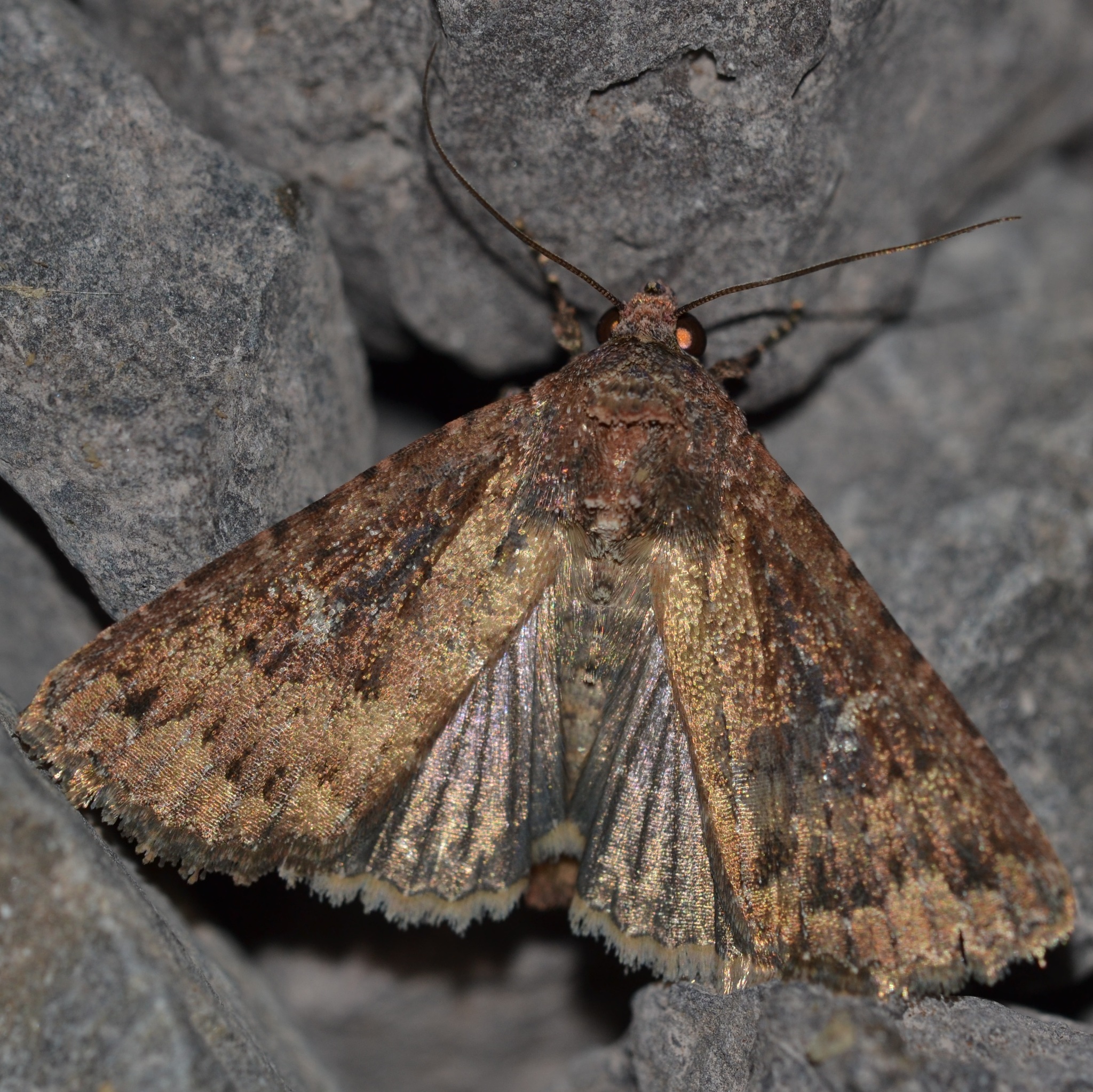
Adults of Condica illecta are moderate-sized noctuids (forewingforewing:
the front wing of an insect; the wing attached to the second segment of the thorax (the mesothorax)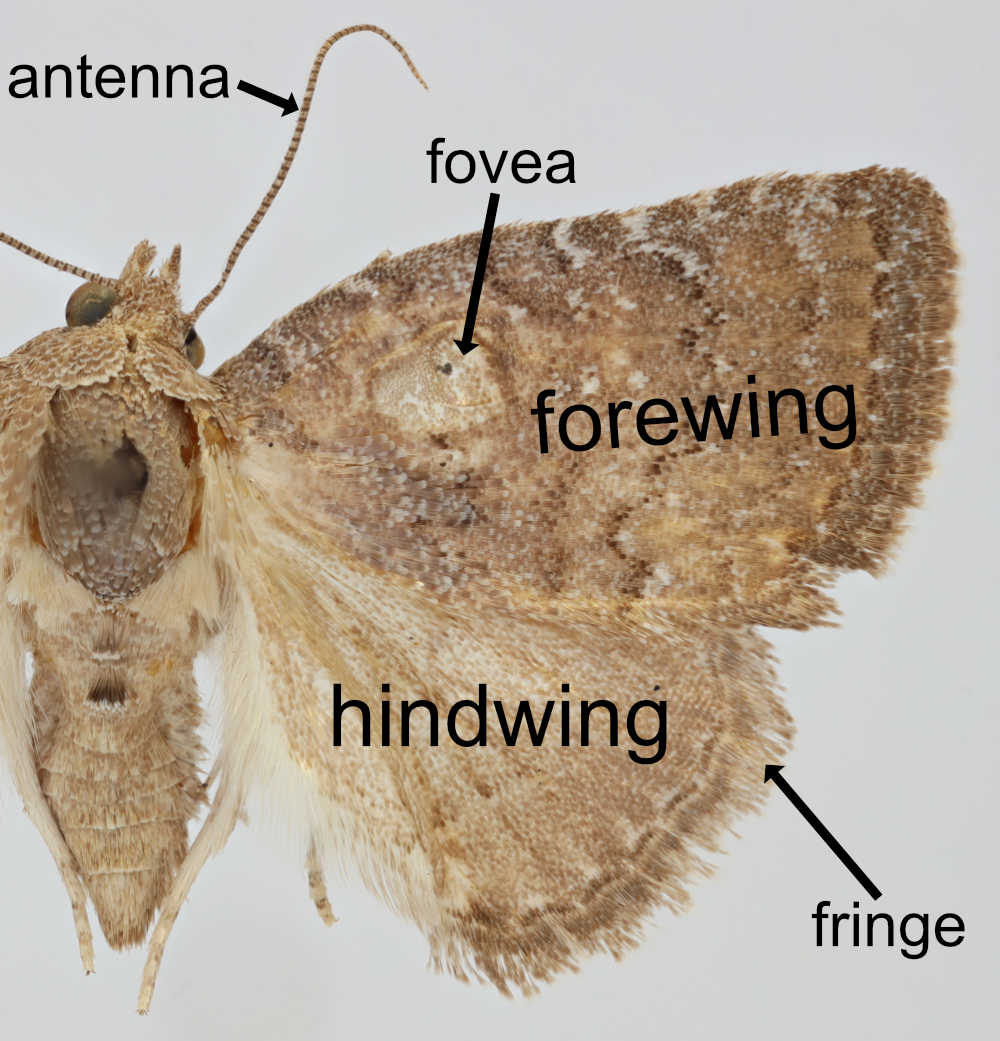 12–16 mm) and have a brown head, thoraxthorax:
the second, or middle, body segment of an insect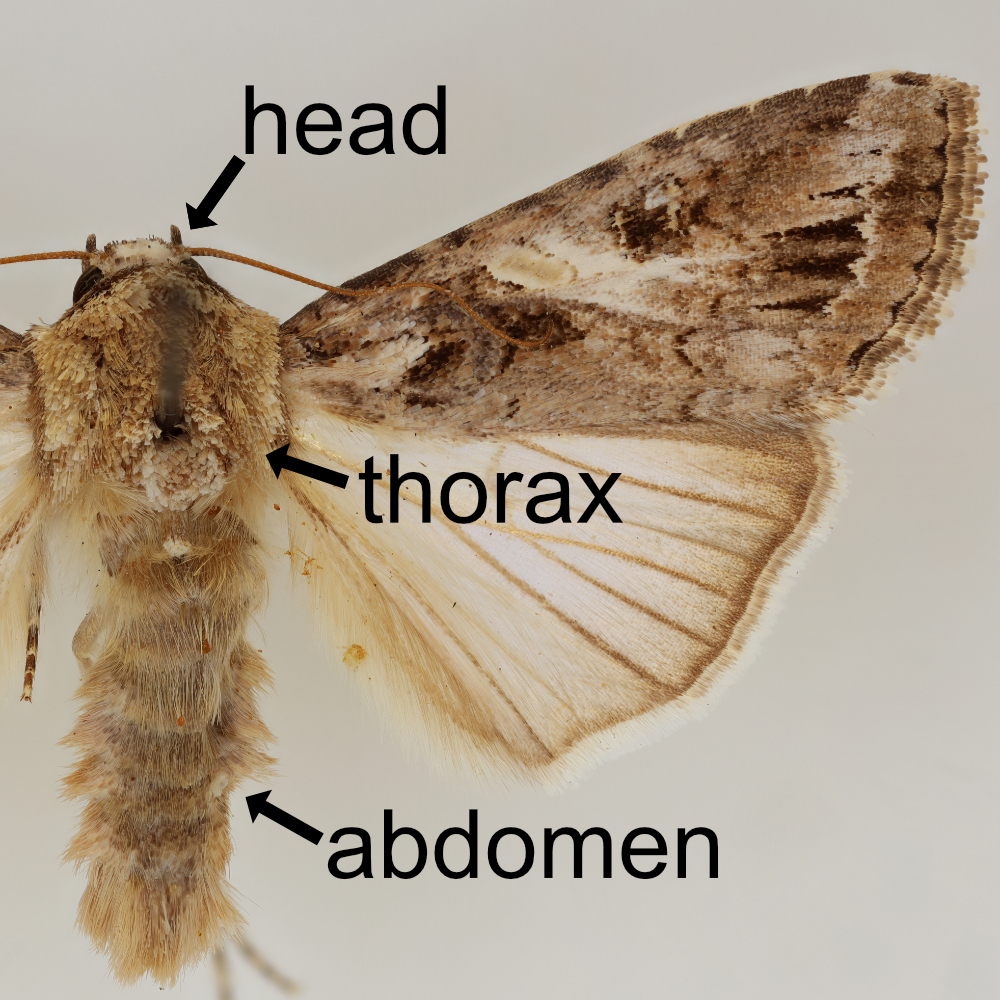 , and forewingforewing:
the front wing of an insect; the wing attached to the second segment of the thorax (the mesothorax), the latter mixed with orange-brown distally and along inner margininner margin:
the hind margin of the forewing, opposite the costal margin; also called 'posterior margin' or 'trailing margin'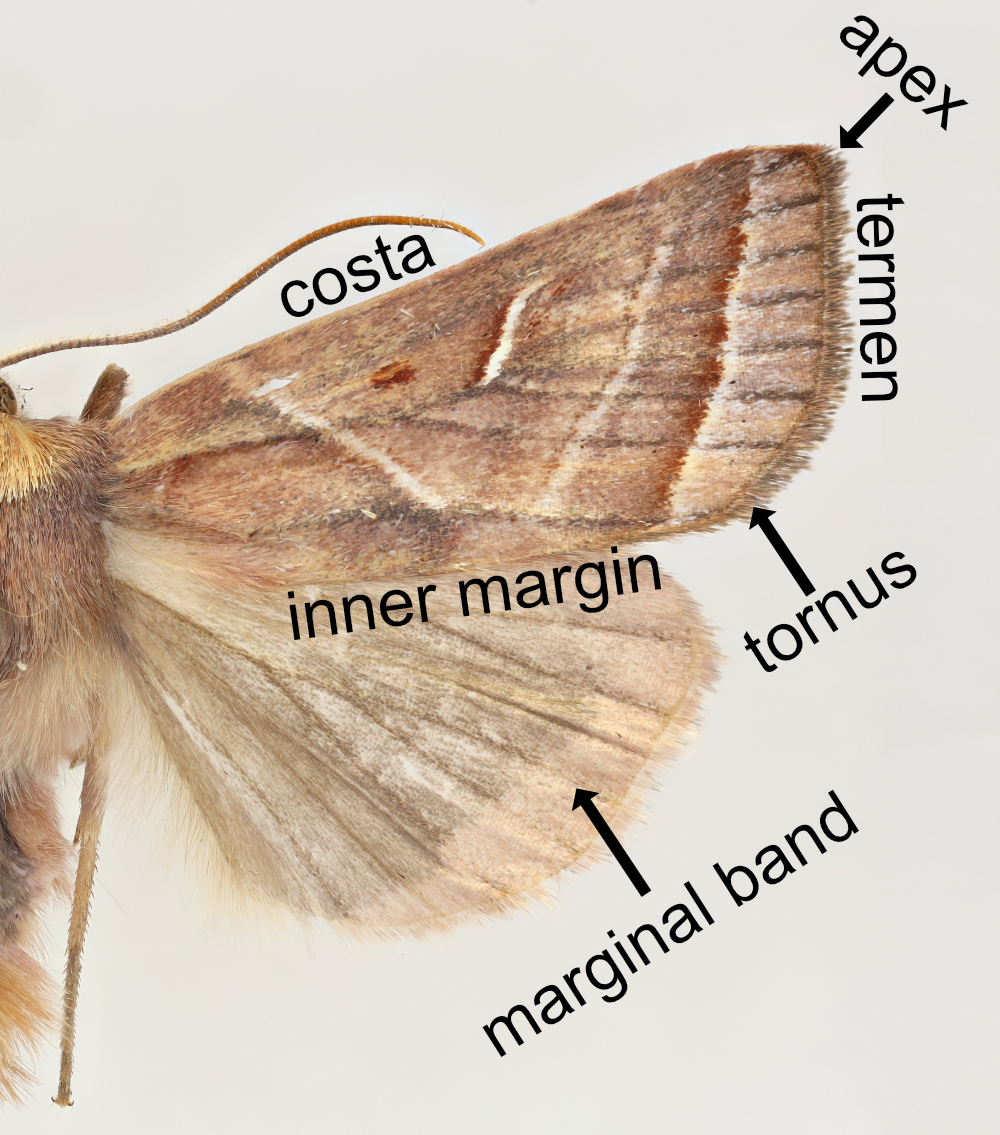 . The orbicular spotorbicular spot:
a round or oval spot located in the middle of the discal cell of the forewing, between the antemedial and median lines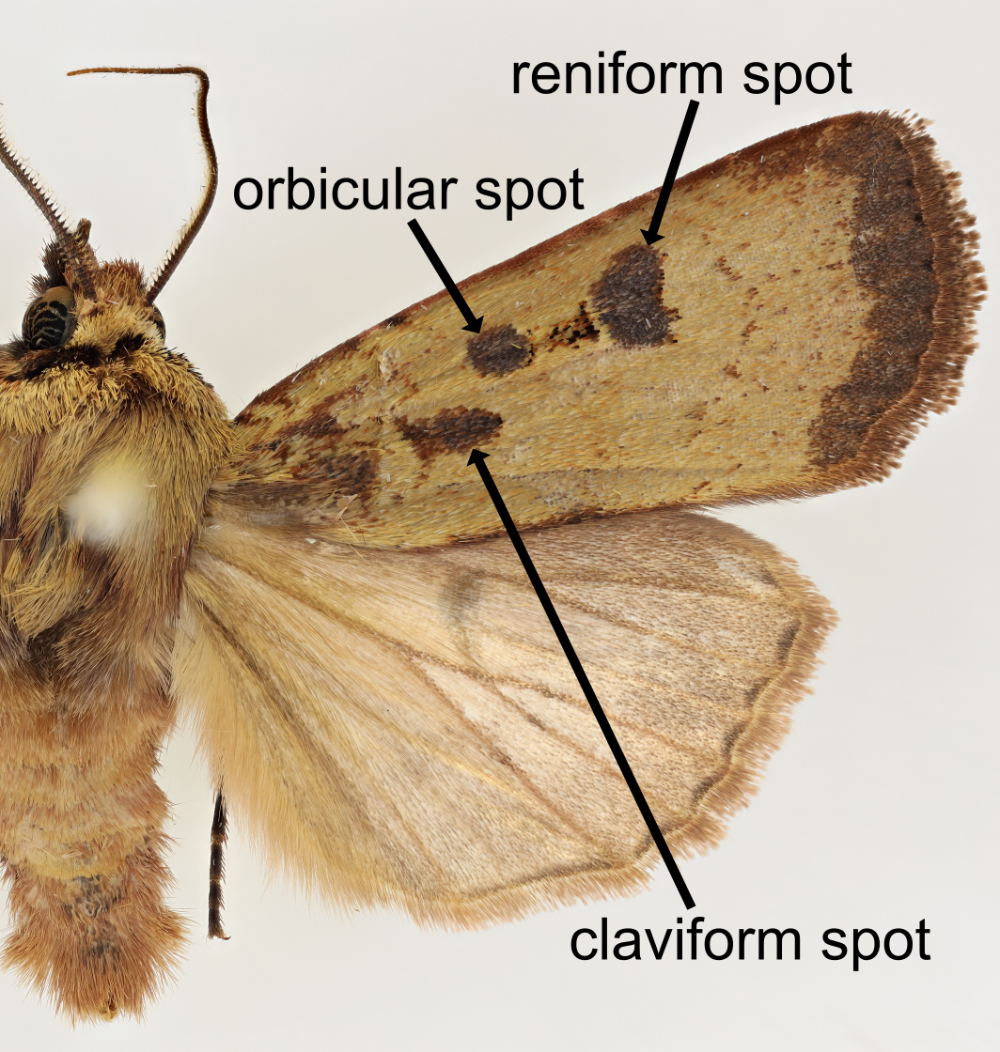 is round and typically faint. The reniform spotreniform spot:
a spot, often broad bean- or kidney-shaped, found at the distal end of the discal cell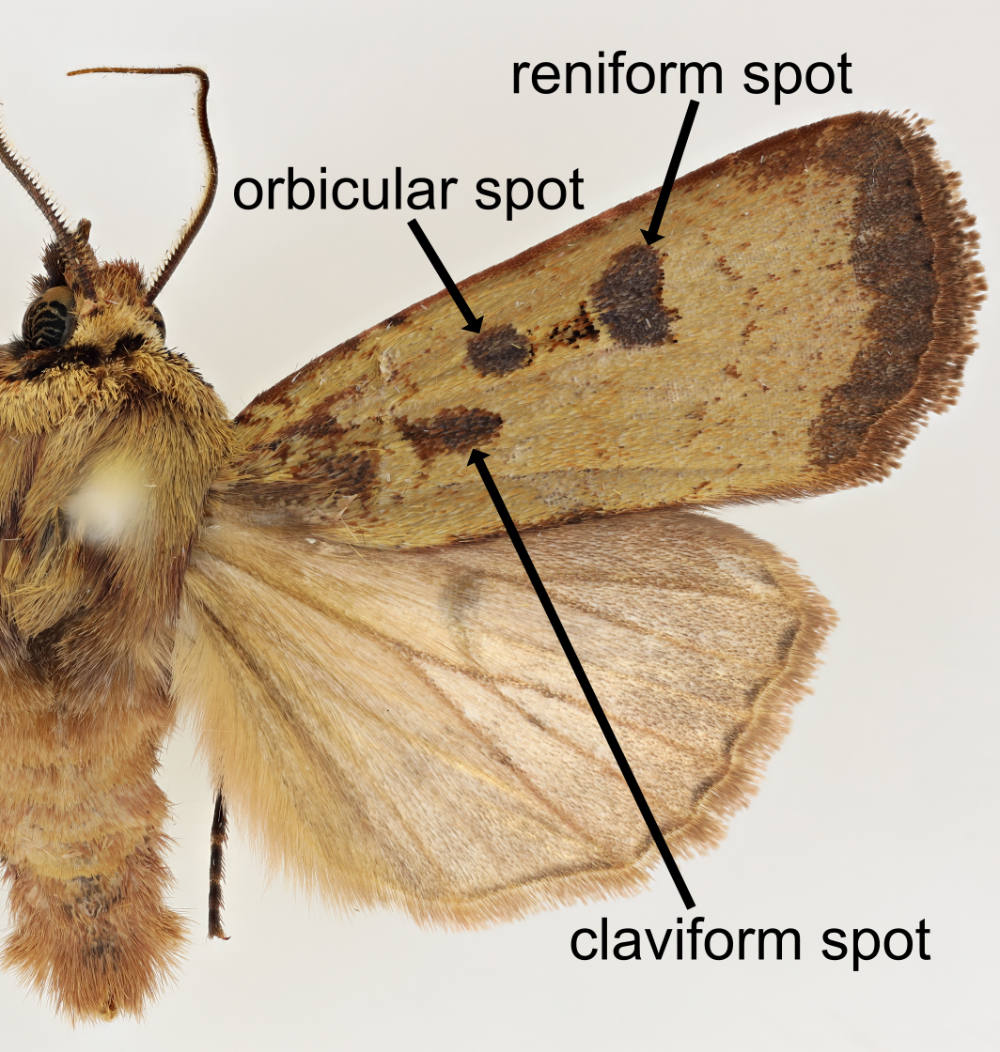 is similarly faint and roughly figure 8-shaped, often partially filled with white scales. The terminal lineterminal line:
a thin, transverse line situated near the margin of the forewing at the base of the fringe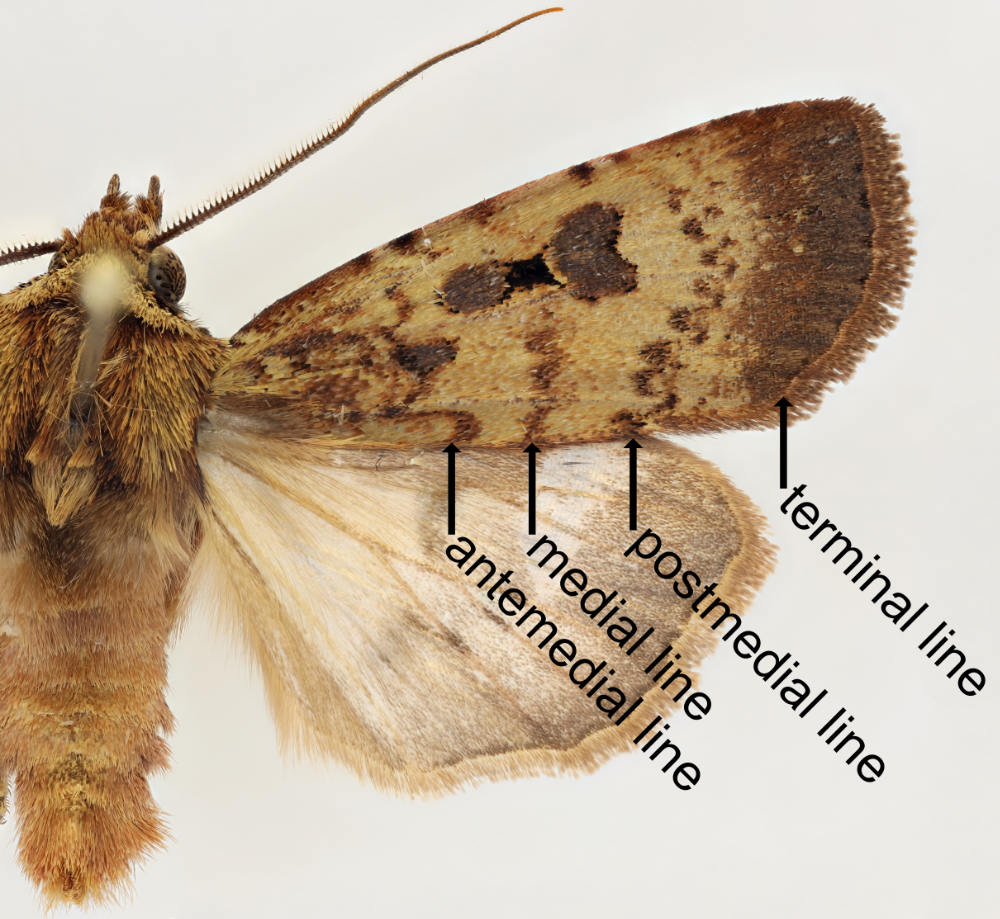 is scalloped. The hindwinghindwing:
the back wing of an insect; the wing attached to the third segment of the thorax (the metathorax)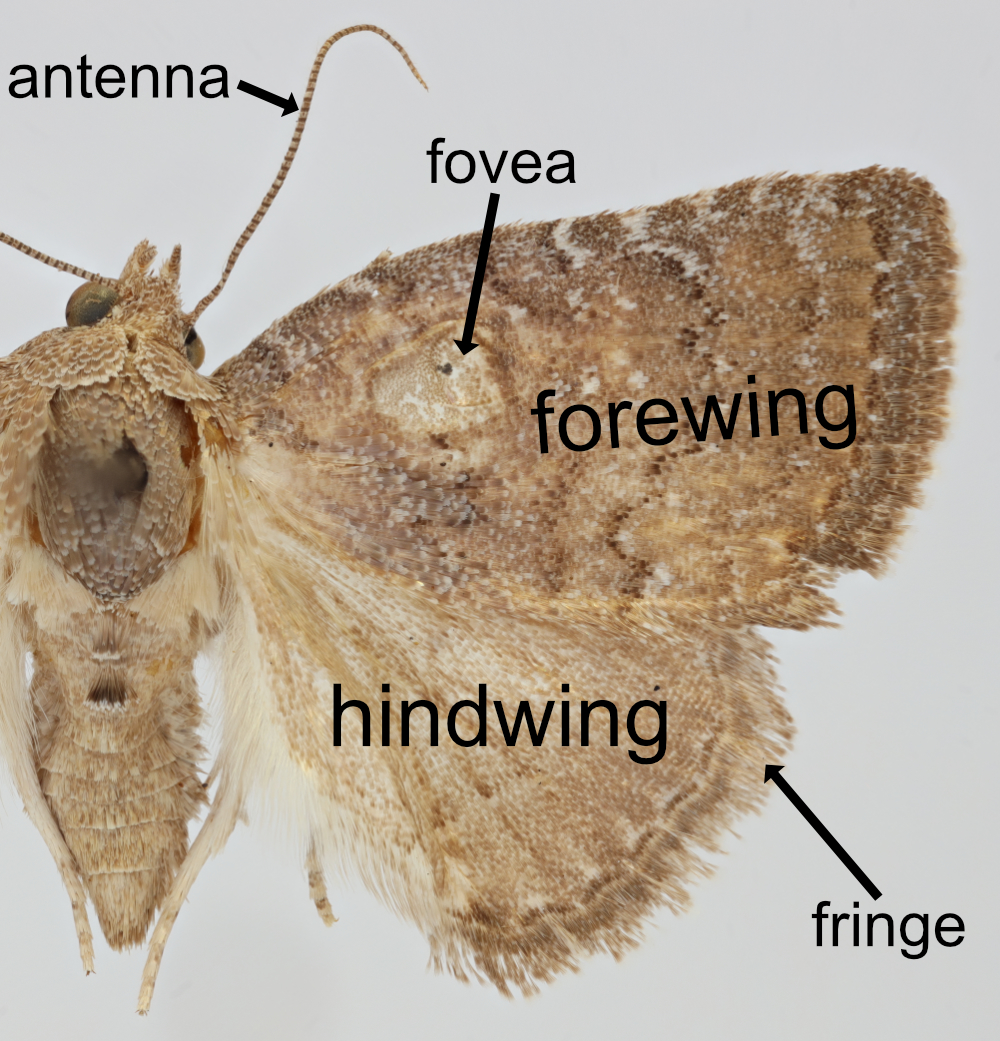 is brown, paler towards the base.
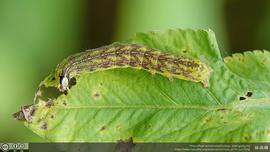
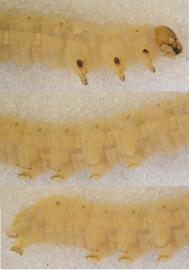
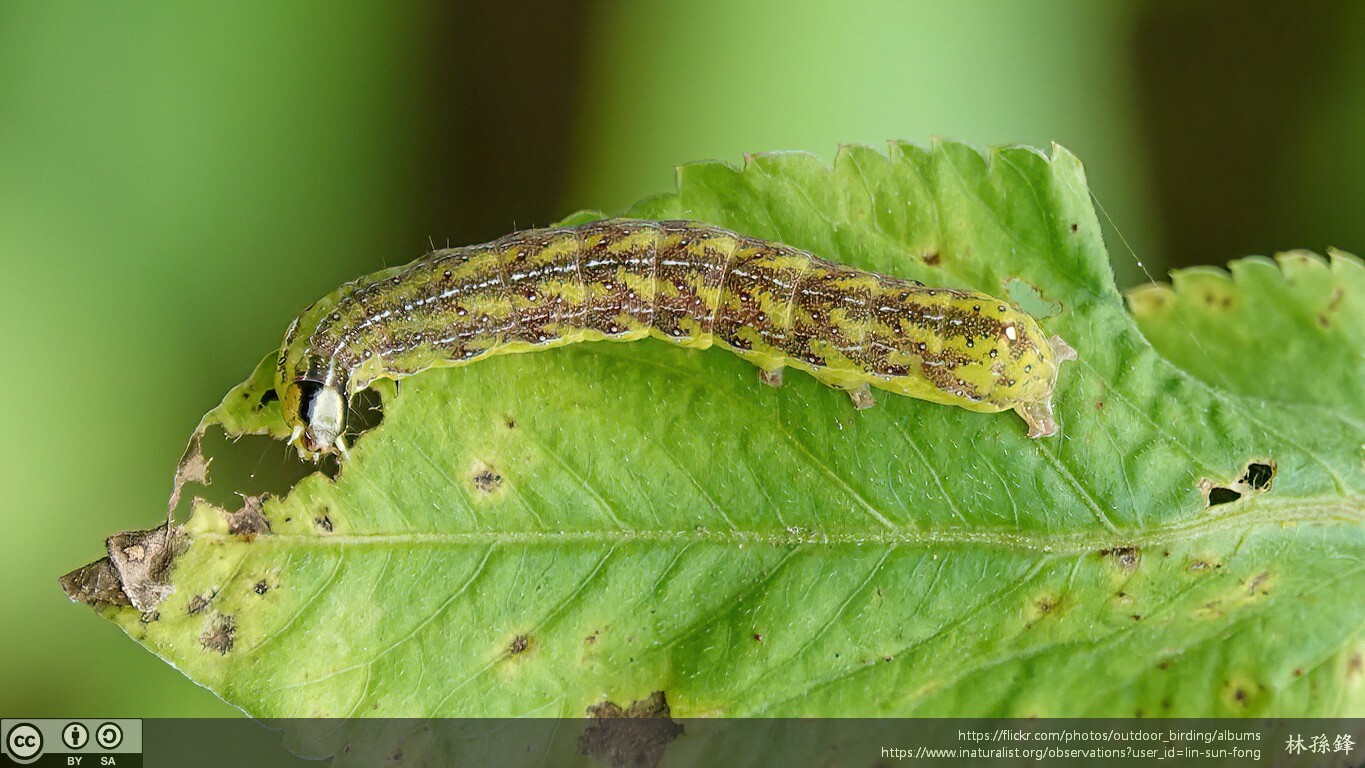
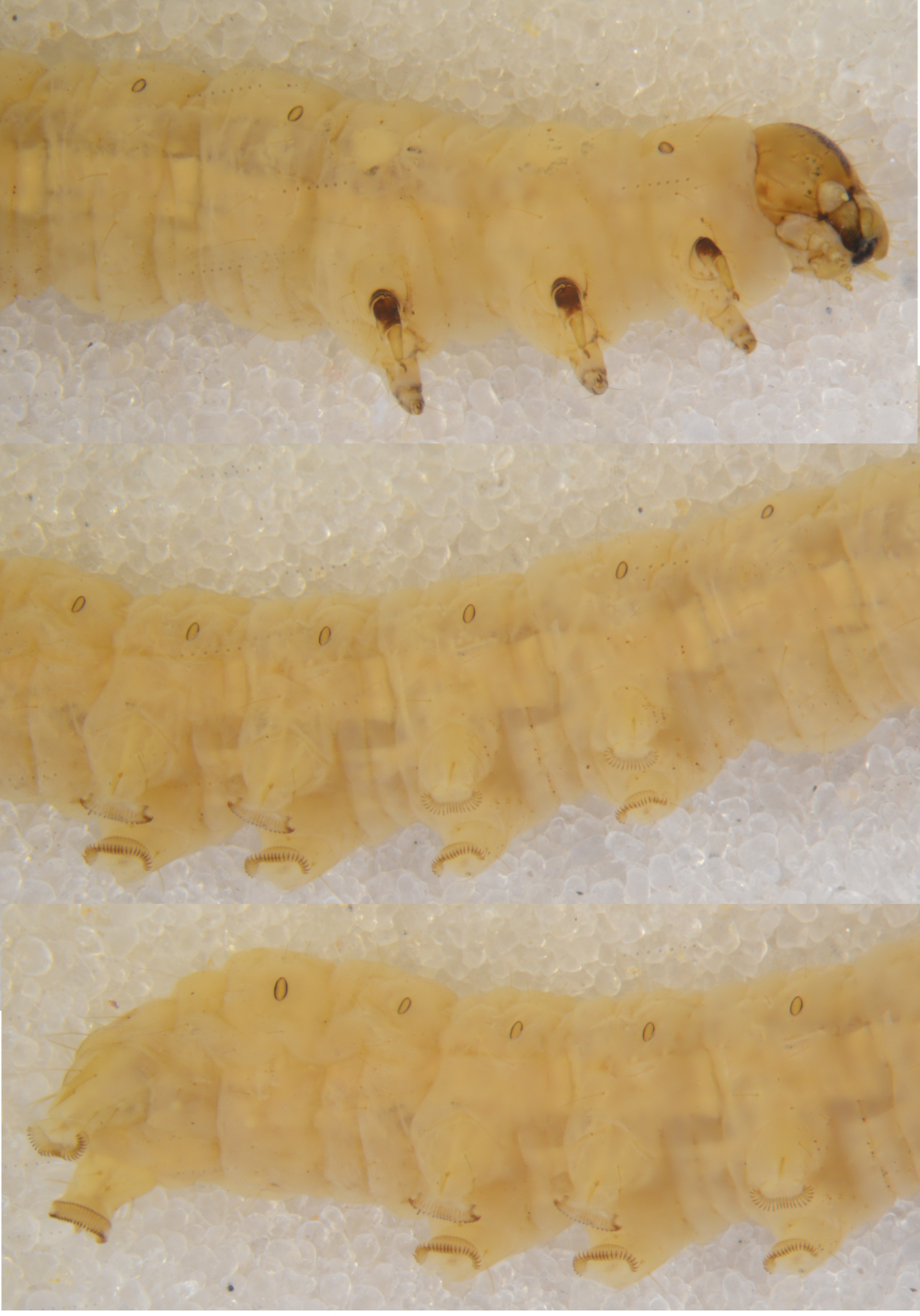
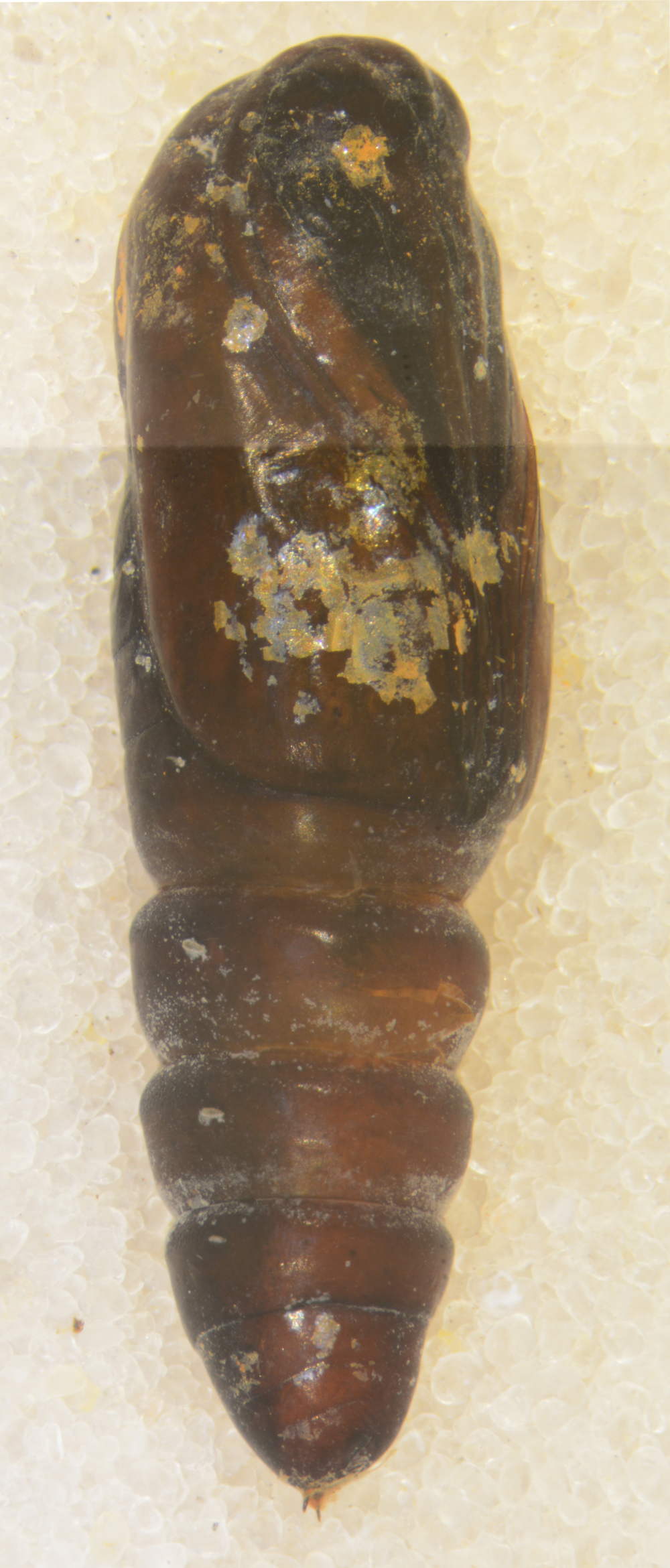
The larva of Condica illecta varies between molts, but is most often yellowish green, with small white dots, sometimes faintly ringed with purple-brown. Often times there is a distinct dorsal and lateral purple-brown line, the dorsal line appearing to be a series of arrow-shaped markings. Some later instars lose this purple coloration and instead have a single white lateral line.
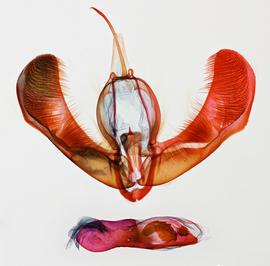
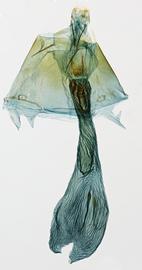
Condica illecta is similar to C. dolorosa, which is also present in Hawaiʻi, but can be separated by the lighter brown and orange-brown forewingforewing:
the front wing of an insect; the wing attached to the second segment of the thorax (the mesothorax) color (dark gray or black in C. dolorosa). The larvae of the two species may be too similar to identify without DNA or rearing to adulthood.
Similar to Condica dolorosa, the native range of C. illecta is throughout tropical Asia, Australia, and Melanesia. It is also present in some islands of the South Pacific and is apparently a rare natural migrant to New Zealand.
In Hawaiʻi, it is known from all the main high Hawaiian Islands except for Lānaʻi. It is more common in Hawaiʻi than C. dolorosa and appears to occur in a wider variety of habitats.
Holloway (1989)Holloway (1989):
Holloway JD. 1989. The Moths of Borneo: family Noctuidae, trifine subfamilies: Noctuinae, Heliothinae, Hadeninae, Acronictinae, Amphipyrinae, Agaristinae, Malayan Nature Journal. 42:57–226. lists the following hosts for Condica illecta: Ageratum spp., Bidens spp., Carthamus spp., Coreopsis spp., Dahlia spp., and Dichrocephala spp., (all Asteraceae). Condica illecta is also reported to be a pest of ornamental Acanthaceae (Holloway 1989Holloway 1989:
Holloway JD. 1989. The Moths of Borneo: family Noctuidae, trifine subfamilies: Noctuinae, Heliothinae, Hadeninae, Acronictinae, Amphipyrinae, Agaristinae, Malayan Nature Journal. 42:57–226.), but this requires verification as these records may represent a misidentification of other species of Condica. The full host range of C. illecta in Hawaiʻi is unknown.
Author: Kyhl A. Austin
Content last updated May 2026
idtools.org