ADVENTIVE
Condica dolorosa (Walker, 1865)
Higher taxonomy: Noctuidae: Condicinae: Condicini
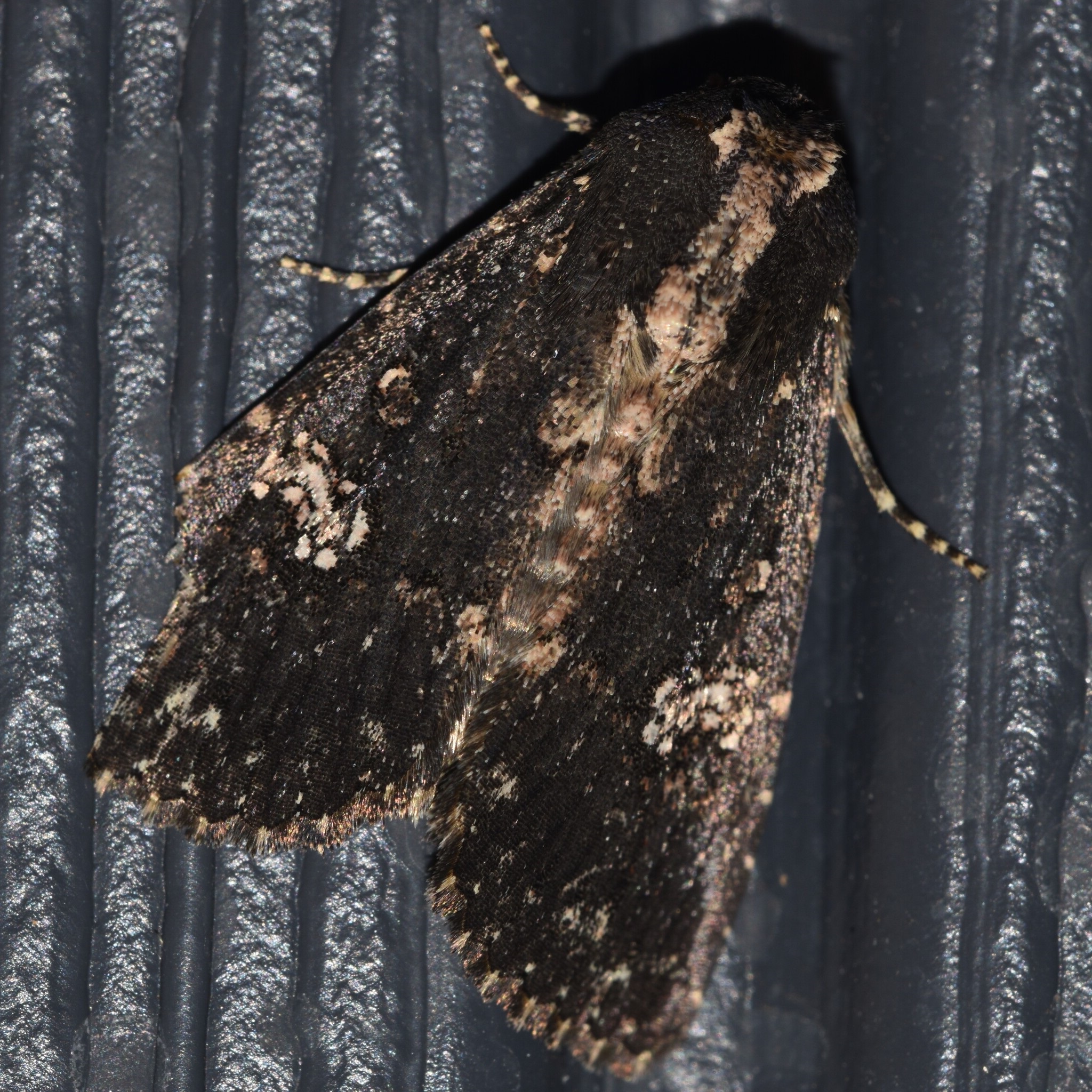
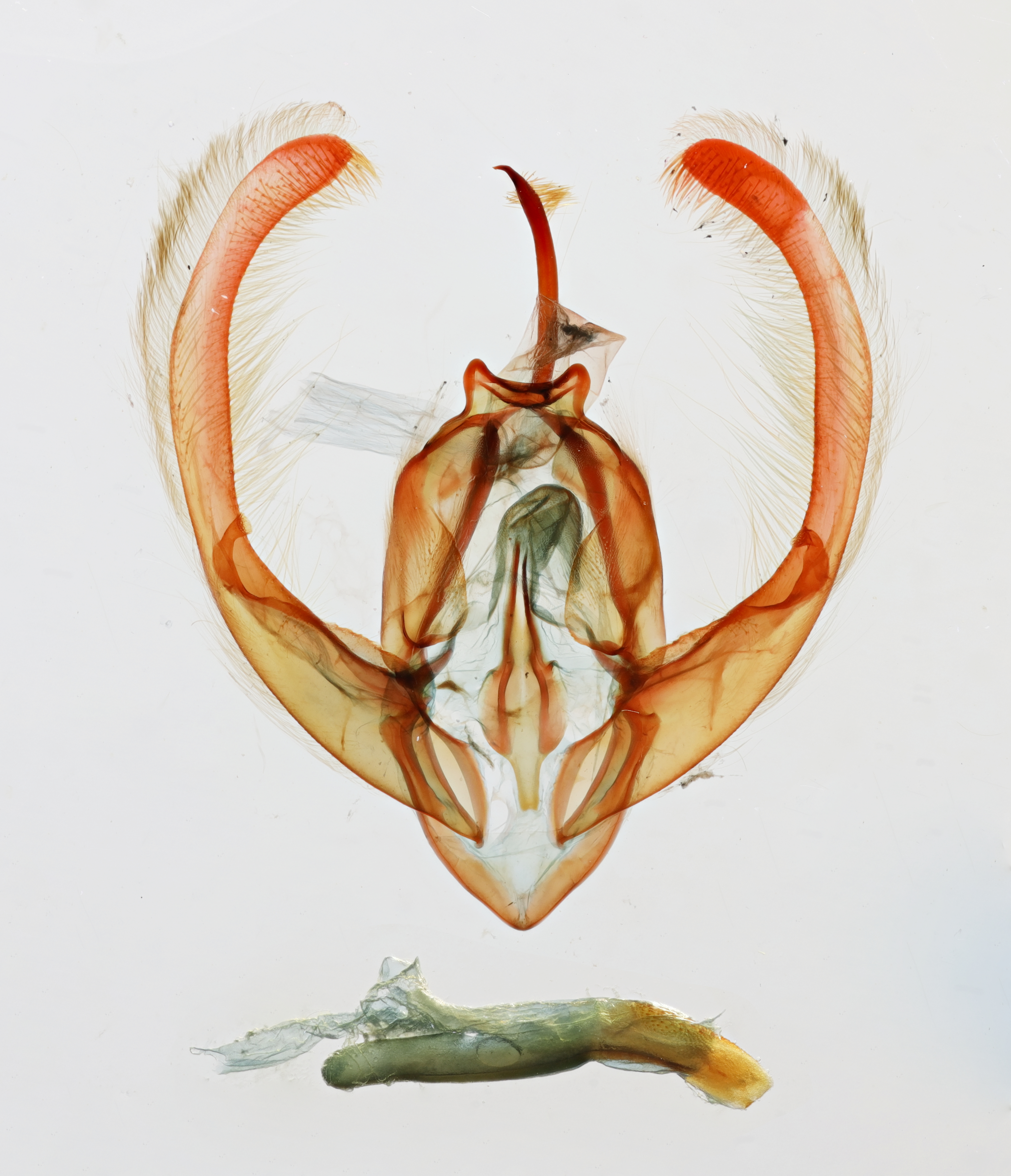
Condica dolorosa is a rarely collected non-native noctuid in Hawaiʻi. It is only known from a handful of specimens since it was first detected in 1975 and does not appear to be a significant pest in the state.
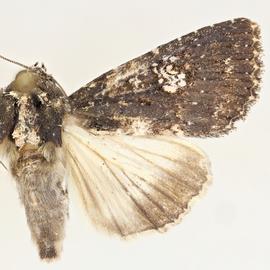
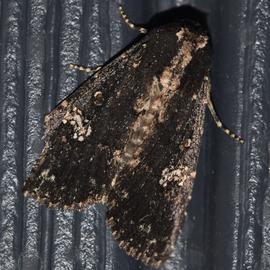
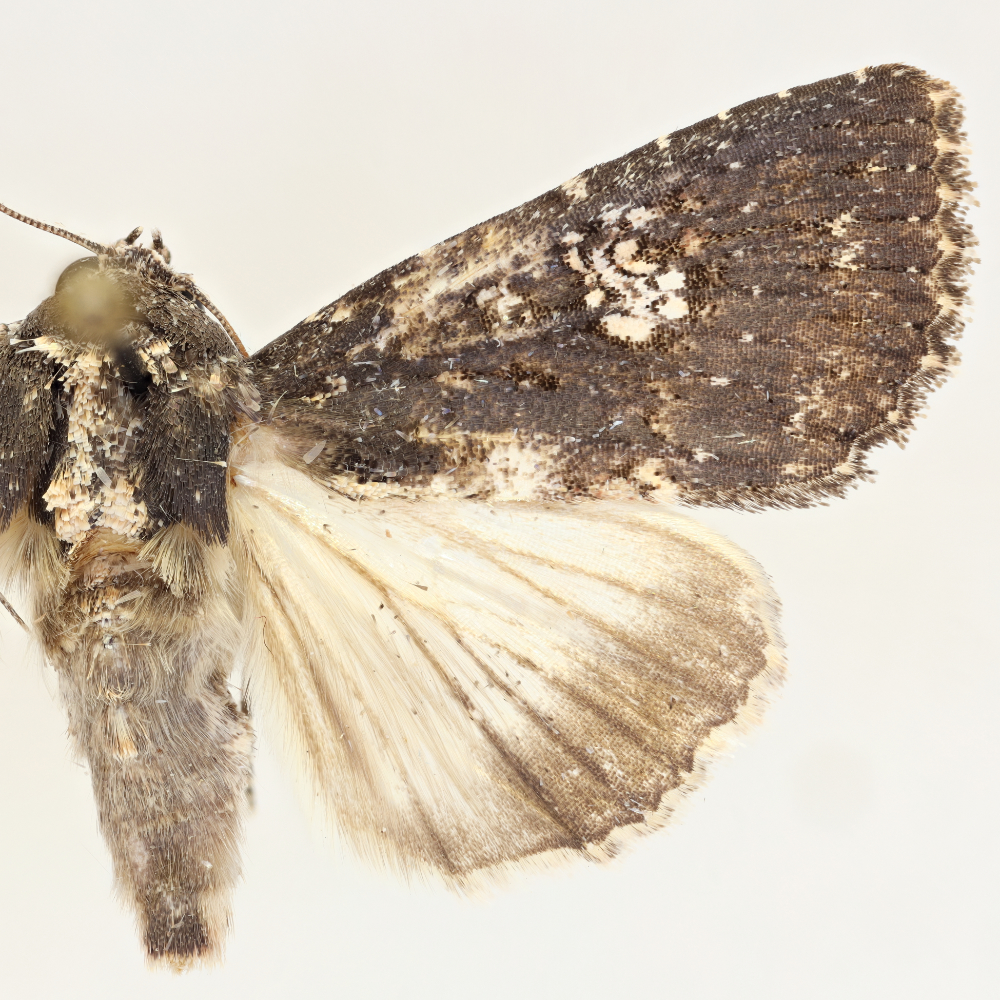
Adults of Condica dolorosa are dark overall in appearance, moderate in size (forewing lengthforewing length:
the distance of the forewing in a straight line from the base to the tip of the apex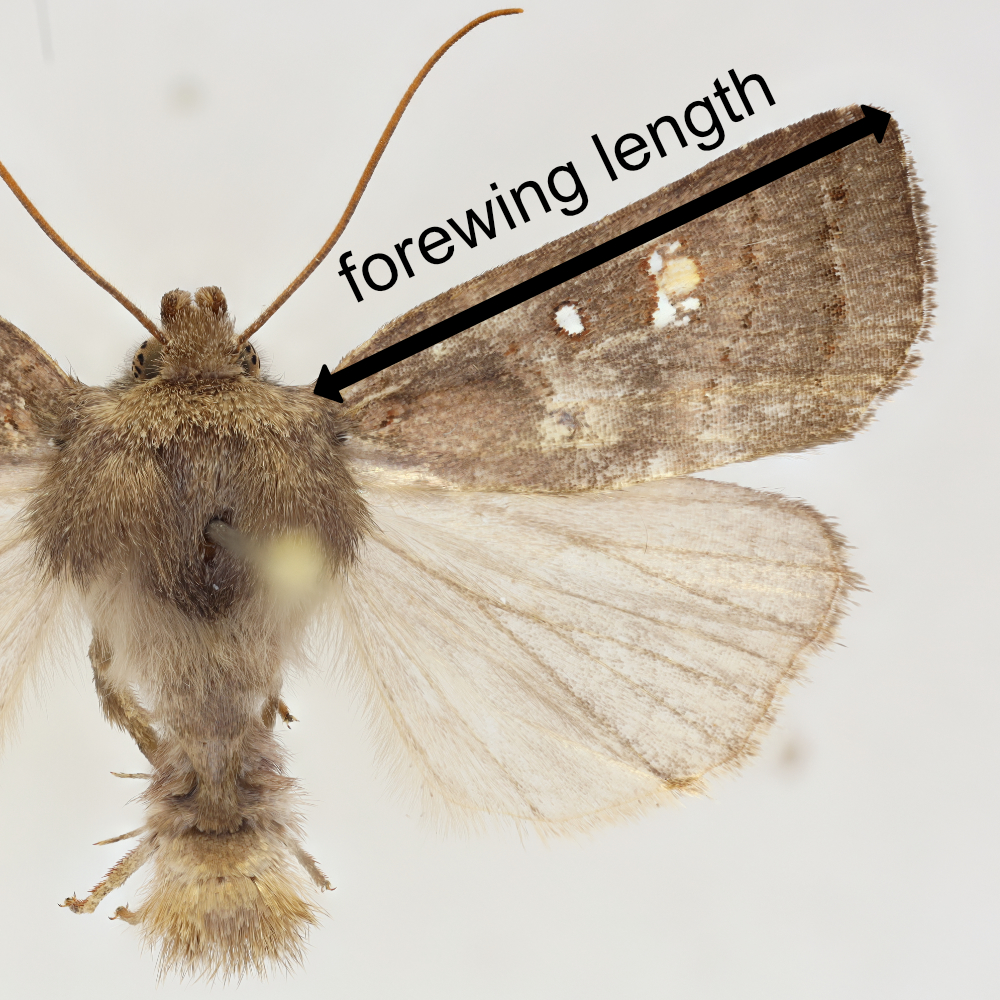 14–16 mm), with a dark gray or black head, a black thoraxthorax:
the second, or middle, body segment of an insect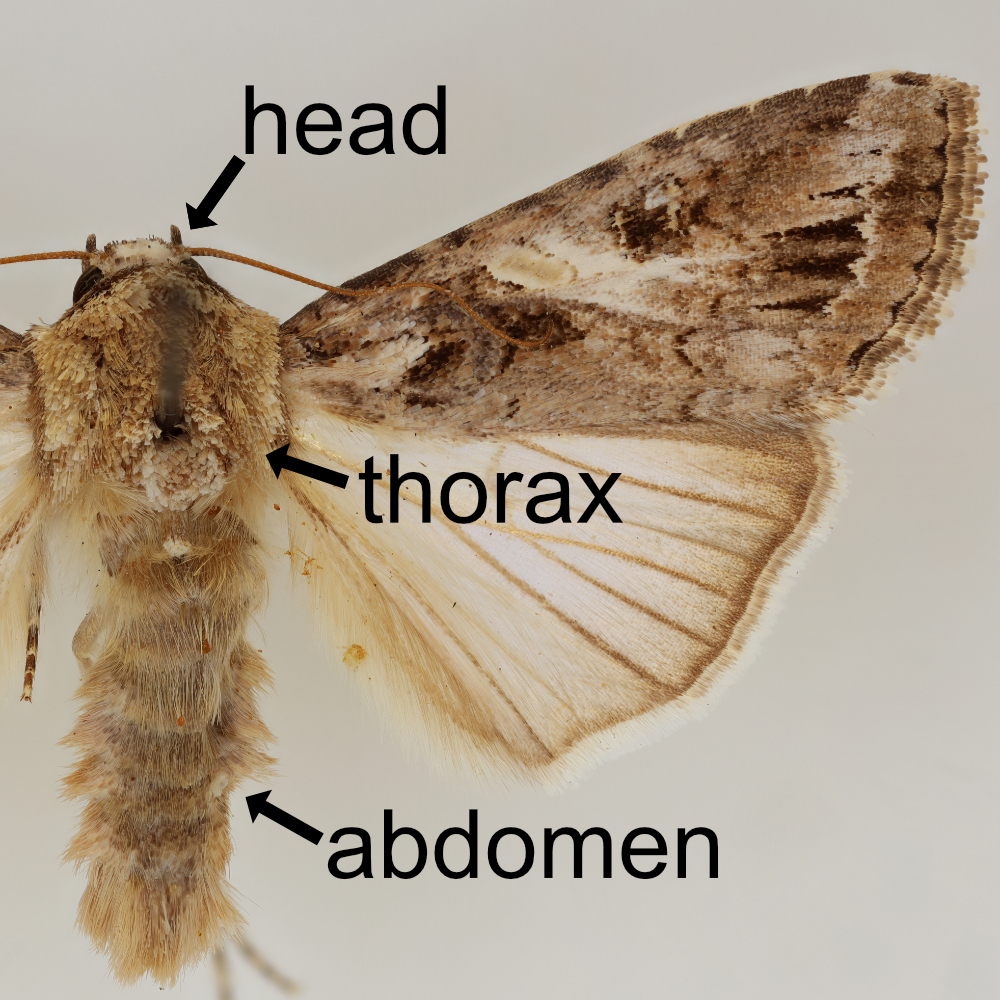 with a medialmedial:
in the middle of a structure, along the midline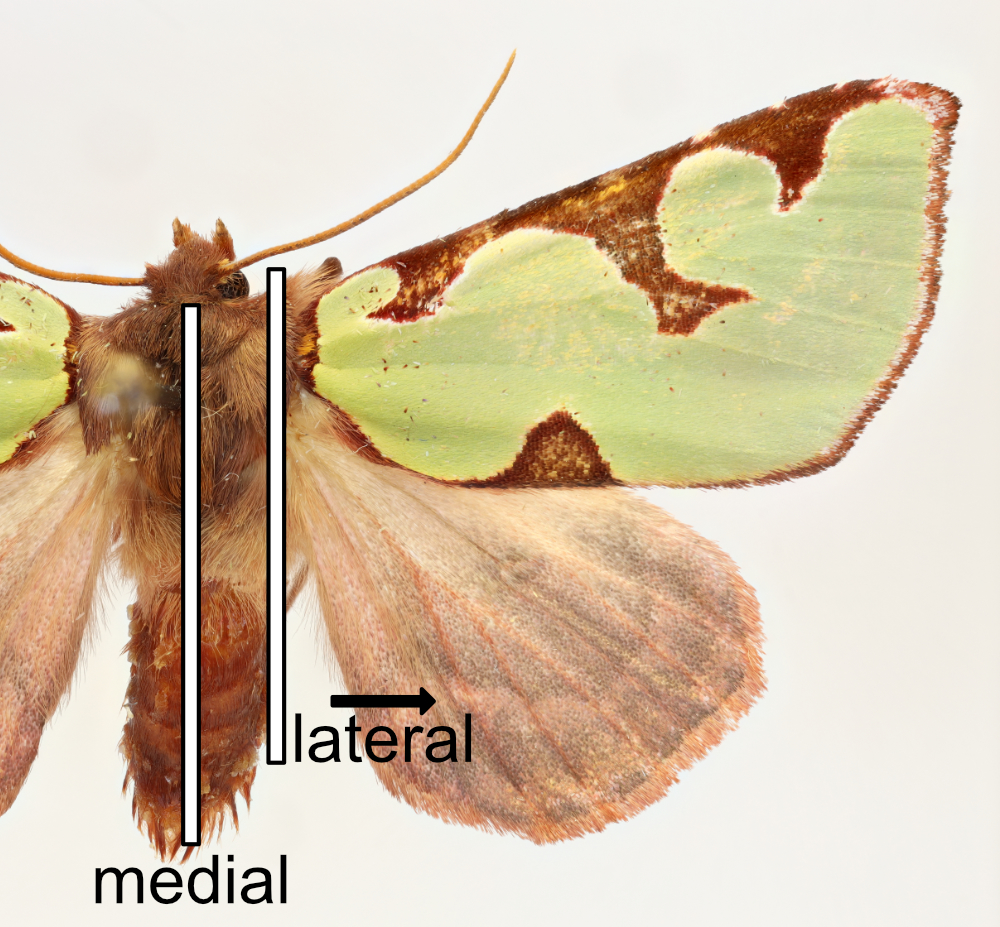 brownish crest of scales, and a dark gray or black forewingforewing:
the front wing of an insect; the wing attached to the second segment of the thorax (the mesothorax)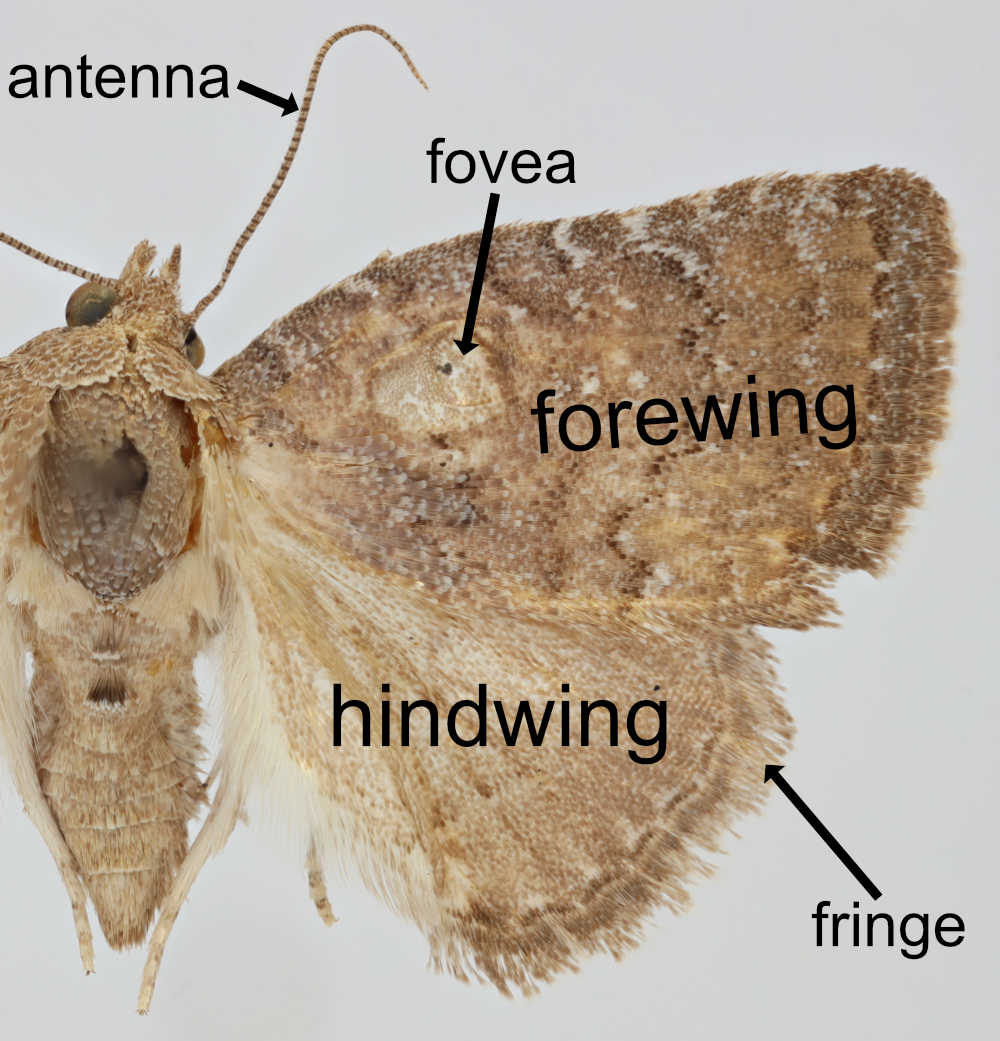 with the antemedial and postmedial linespostmedial line:
a thin, transverse line located distal to the reniform spot, typically on the distal third of the forewing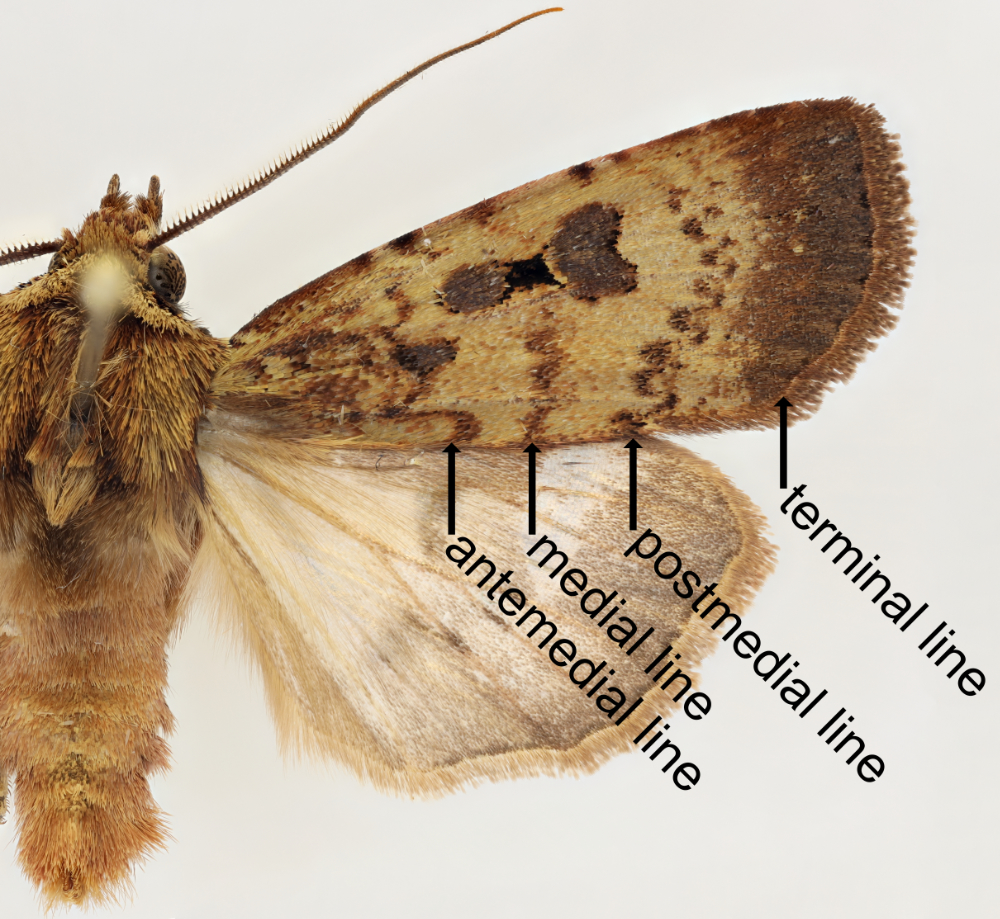 arched and reduced to small dots distally. The orbicular spotorbicular spot:
a round or oval spot located in the middle of the discal cell of the forewing, between the antemedial and median lines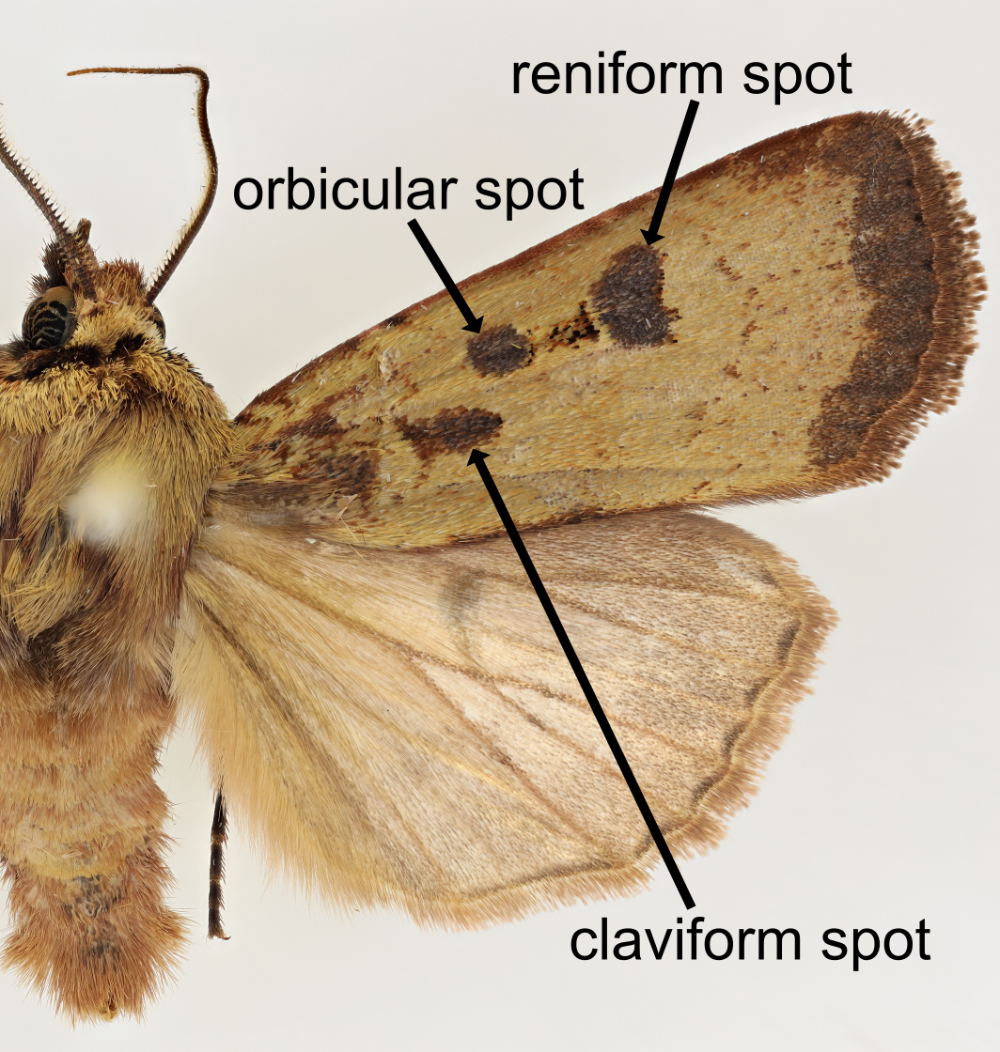 is moderate in size, bordered by a thin ring of brown scales. The reniform spotreniform spot:
a spot, often broad bean- or kidney-shaped, found at the distal end of the discal cell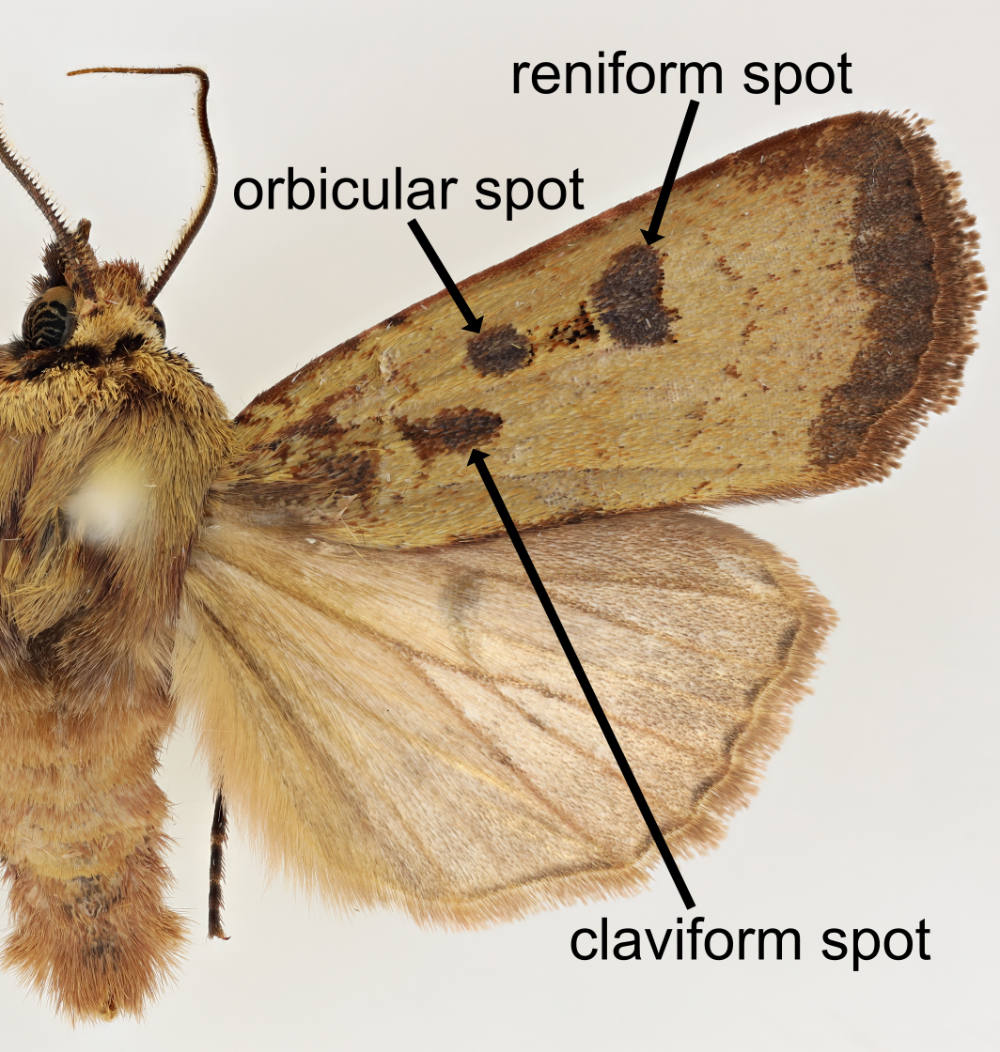 is roughly figure 8-shaped, bordered by interrupted patches of brown or white patches of scales. A few paler brown patches of scales are present along the costa and termentermen:
distal margin of the wing where the fringe is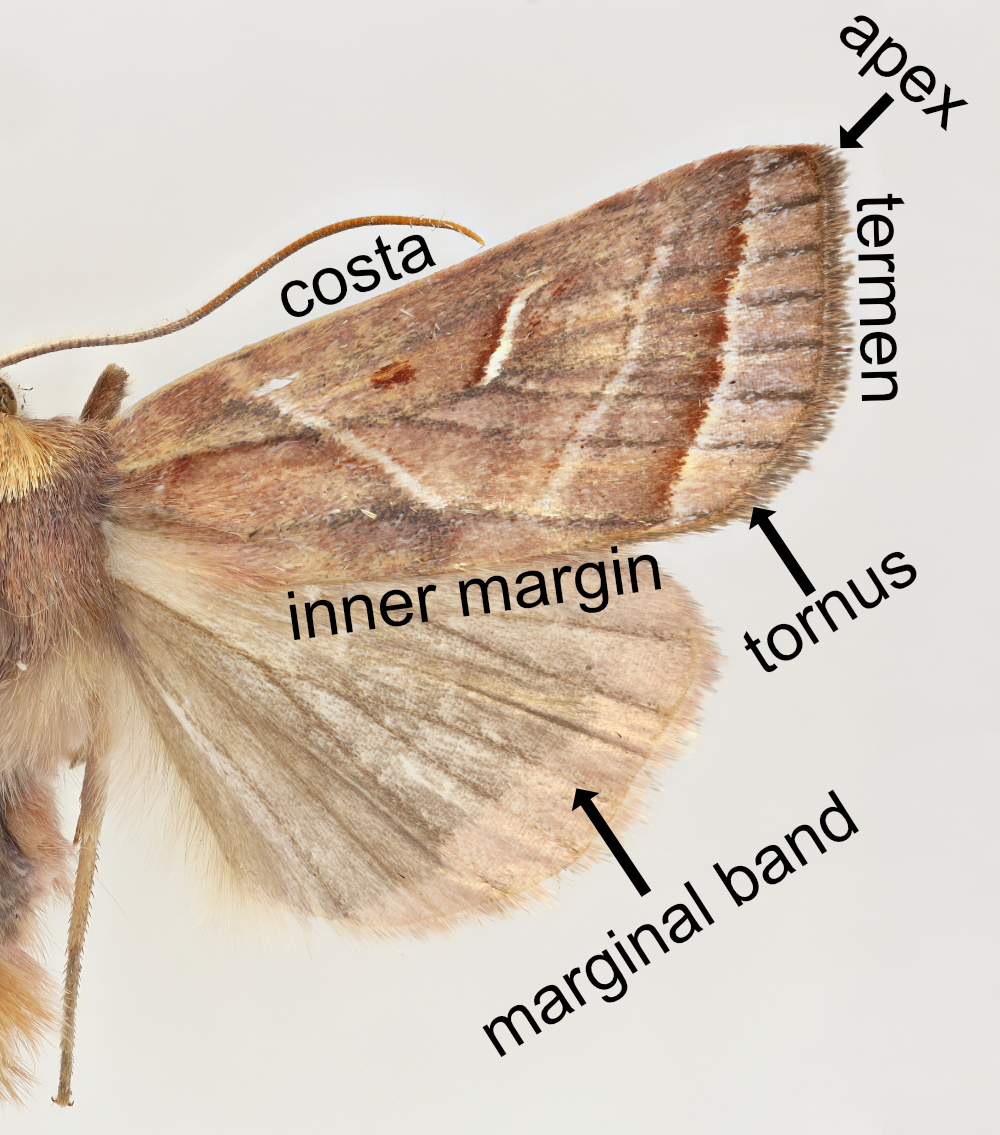 . The hindwinghindwing:
the back wing of an insect; the wing attached to the third segment of the thorax (the metathorax)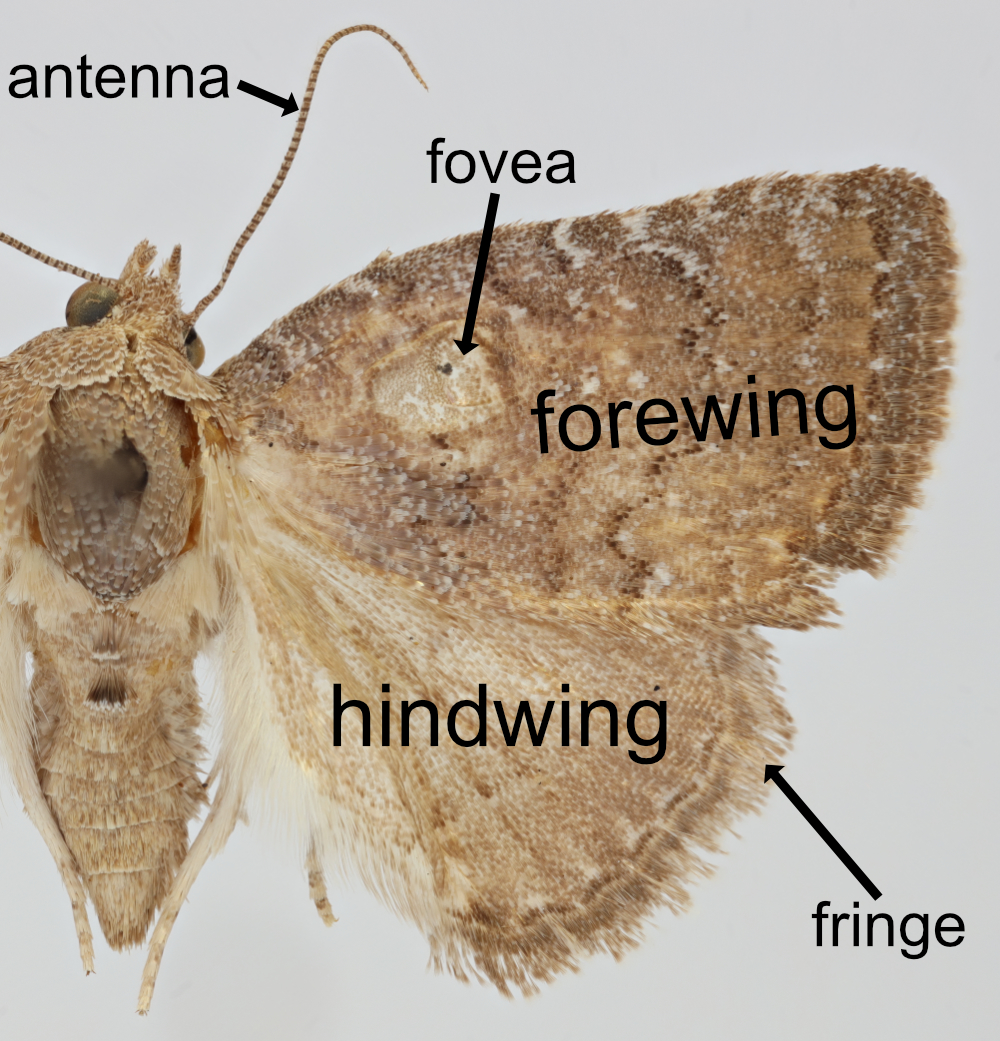 is gray, becoming paler towards the base.
The body is yellow-green with a dorsal violet band, widening on each segment to form a small diamond shape, and symmetrically patterned with white and green. Similar patches occur on the lateral side of each segment just above and below each spiracle (Holloway 1989Holloway 1989:
Holloway JD. 1989. The Moths of Borneo: family Noctuidae, trifine subfamilies: Noctuinae, Heliothinae, Hadeninae, Acronictinae, Amphipyrinae, Agaristinae, Malayan Nature Journal. 42:57–226.).
Condica dolorosa is similar to C. illecta, which is also present in Hawaiʻi, but can be separated by the darker forewingforewing:
the front wing of an insect; the wing attached to the second segment of the thorax (the mesothorax) color (dark gray or black in C. dolorosa, orange-brown in C. illecta). The larvae of the two species may be too similar to identify without DNA or rearing to adulthood.
The native range of Condica dolorosa is throughout tropical Asia, Australia, and Melanesia.
In Hawaiʻi, it is known from Oʻahu, Maui, and Hawaiʻi island (Riotte 1991Riotte 1991:
Riotte JCE. 1991. Reassessment of the Noctuoidea of the Hawaiian Islands. Bishop Museum Occasional Papers. 31:139–151., Howarth et al. 2012Howarth et al. 2012:
Howarth FG, Preston DJ, Pyle R. 2012. Surveying for terrestrial arthropods (insects and relatives) occurring within the Kahului Airport Environs, Maui, Hawai‘i: Synthesis report. Final report submitted to EKNA Services Inc. and State of Hawaiʻi, Department of Transportation, Airports Division. Bishop Museum Technical Report 58. 215 pp.). A photograph from Kauaʻi suggests it is also present on that island, but no voucher specimens are known. Few specimens are known from Hawaiʻi, but it appears to be restricted to disturbed, low elevation habitats.
Condica dolorosa has been recorded feeding on Blumea balsamifera (L.) DC. and Elaphantopus sp. (Sevastopulo 1941Sevastopulo 1941:
Sevastopulo DG. 1941. On the food-plants of Indian Agaristidae and Noctuidae (Heterocera). Journal of the Bombay Natural History Society. 42:421–430., Holloway 1989Holloway 1989:
Holloway JD. 1989. The Moths of Borneo: family Noctuidae, trifine subfamilies: Noctuinae, Heliothinae, Hadeninae, Acronictinae, Amphipyrinae, Agaristinae, Malayan Nature Journal. 42:57–226.) but likely feeds on additional weedy Asteraceae. Pupation occurs in the soil.
Author: Kyhl A. Austin
Content last updated May 2026
idtools.org