ADVENTIVE
Chloridea virescens (Fabricius, 1777)
Higher taxonomy: Noctuidae: Heliothinae
Common name: tobacco budworm
Note: Chloridea virescens was only recently transferred from Heliothis (Pogue 2013Pogue 2013:
Pogue MG. 2013. Revised status of Chloridea Duncan and (Westwood), 1841, for the Heliothis virescens species group (Lepidoptera: Noctuidae: Heliothinae) based on morphology and three genes. Systematic Entomology. 38:523–542.). Much of the literature regarding this species lists it as Heliothis virescens.
Chloridea virescens was first detected in Hawaiʻi in 1956 from Oʻahu. Today it is an uncommon species but can be occasionally found in dry forests or agricultural settings. It does not appear to be as significant of a pest in Hawaiʻi as it is in its native range. It is likely to be encountered in both agricultural settings and at ports.
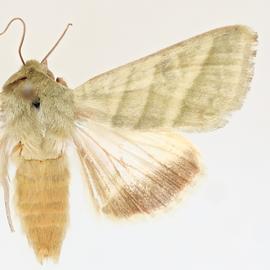
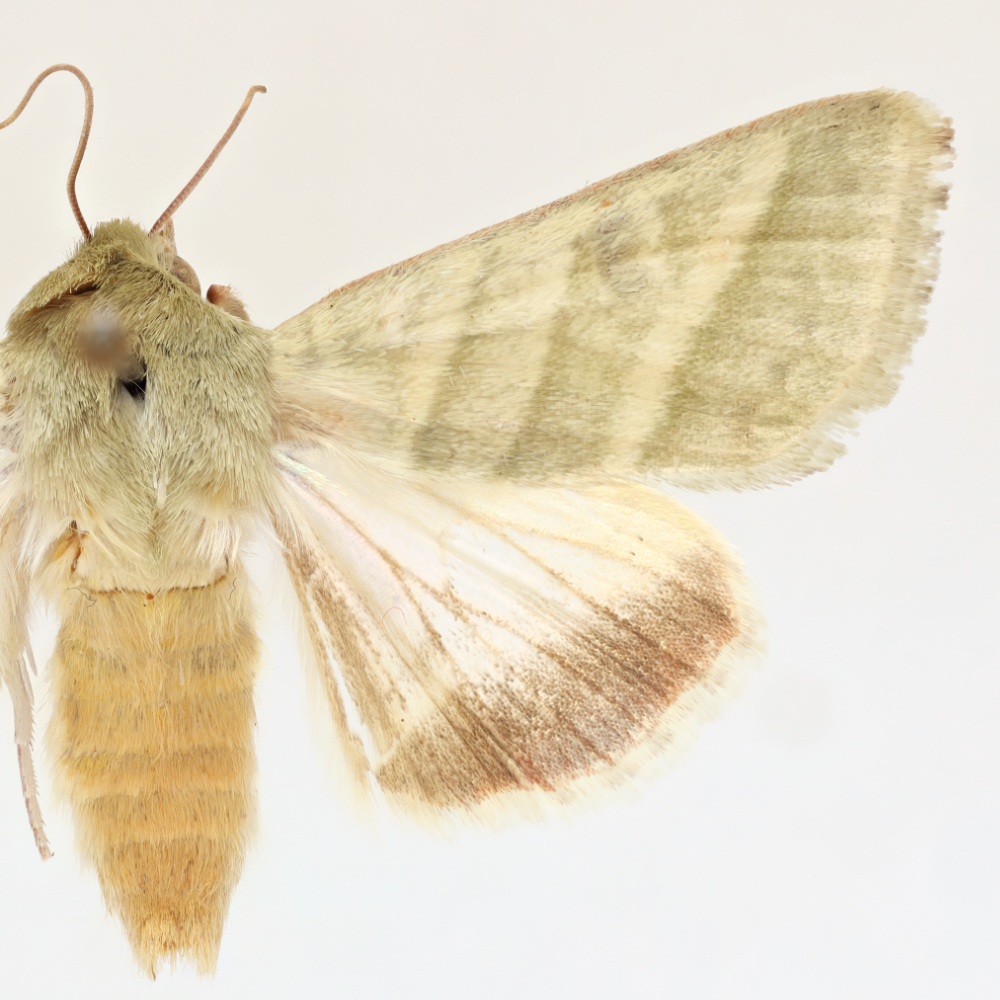
Adults of Chloridea virescens are medium-sized noctuids (forewing lengthforewing length:
the distance of the forewing in a straight line from the base to the tip of the apex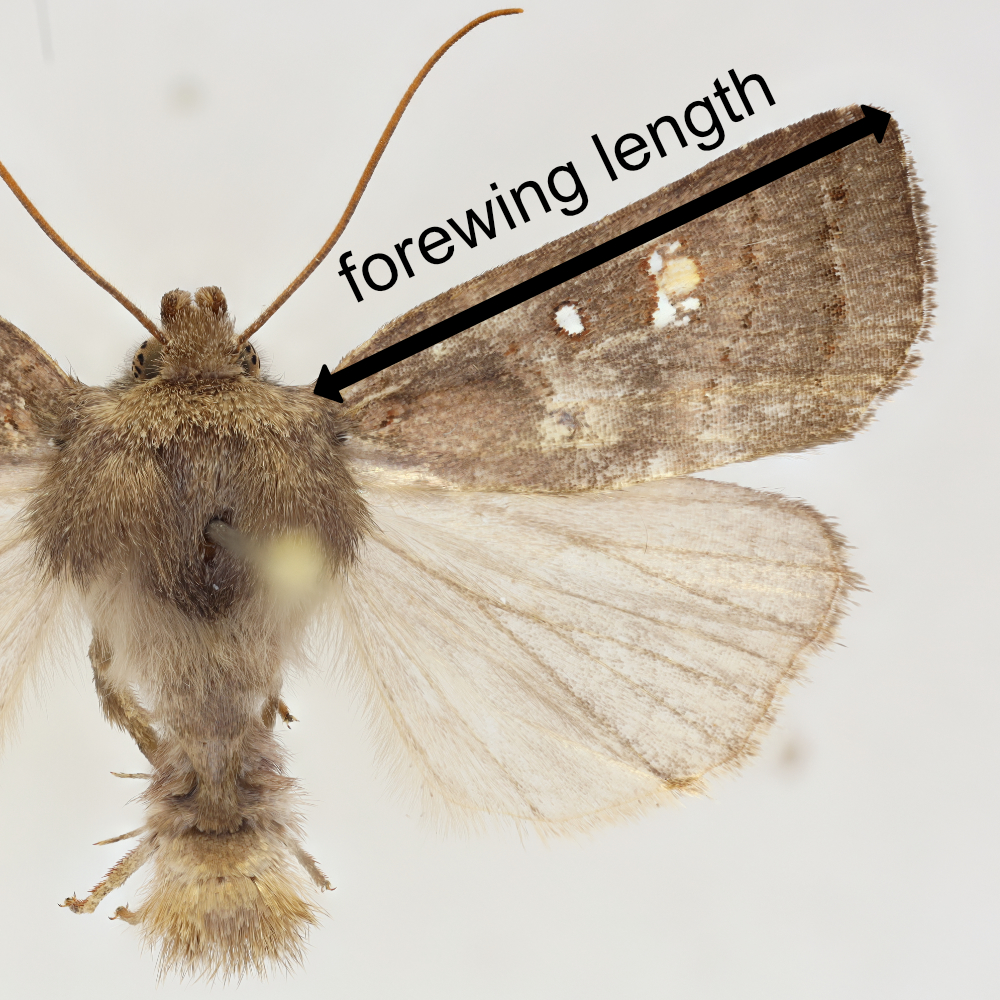 12–15 mm) with a pale green forewingforewing:
the front wing of an insect; the wing attached to the second segment of the thorax (the mesothorax)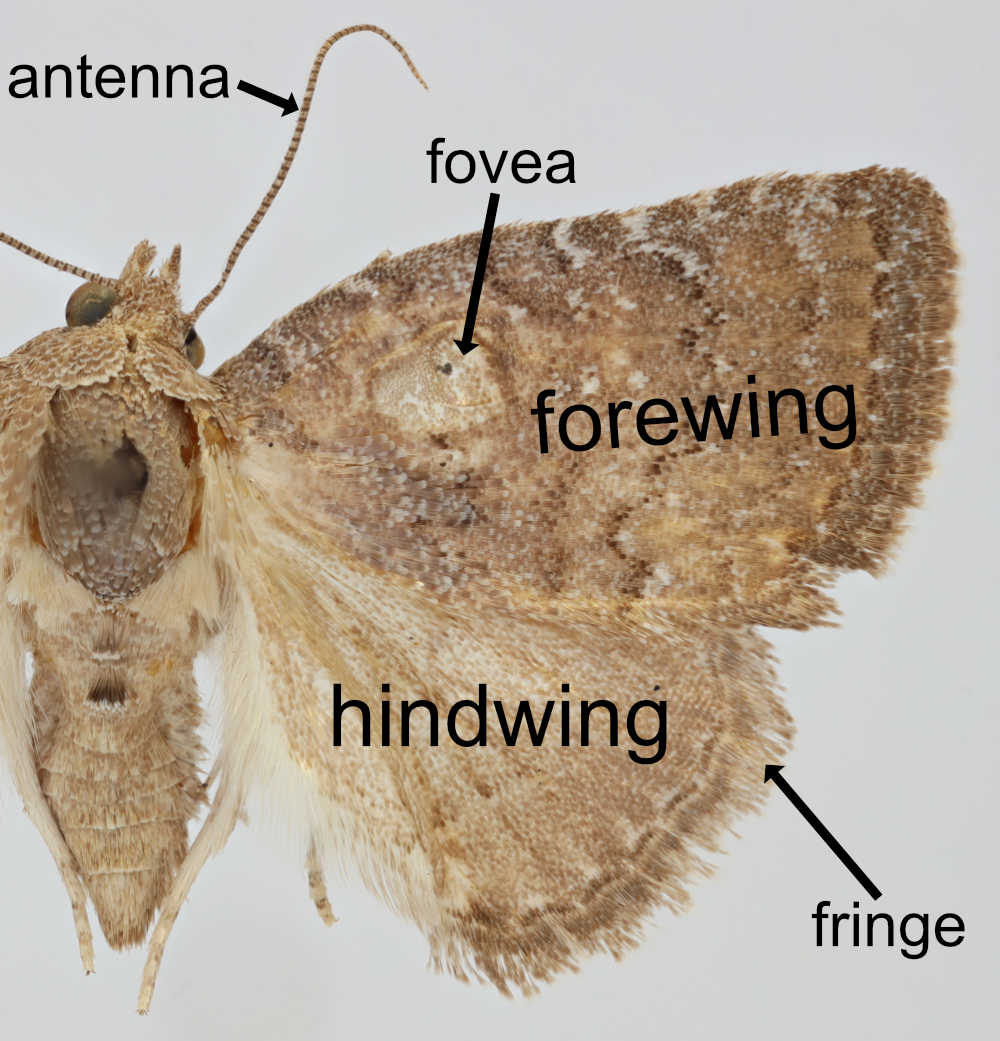 and straight basal linebasal line:
a transverse line extending across the forewing near the base. The transverse line on the forewing closest to the wing base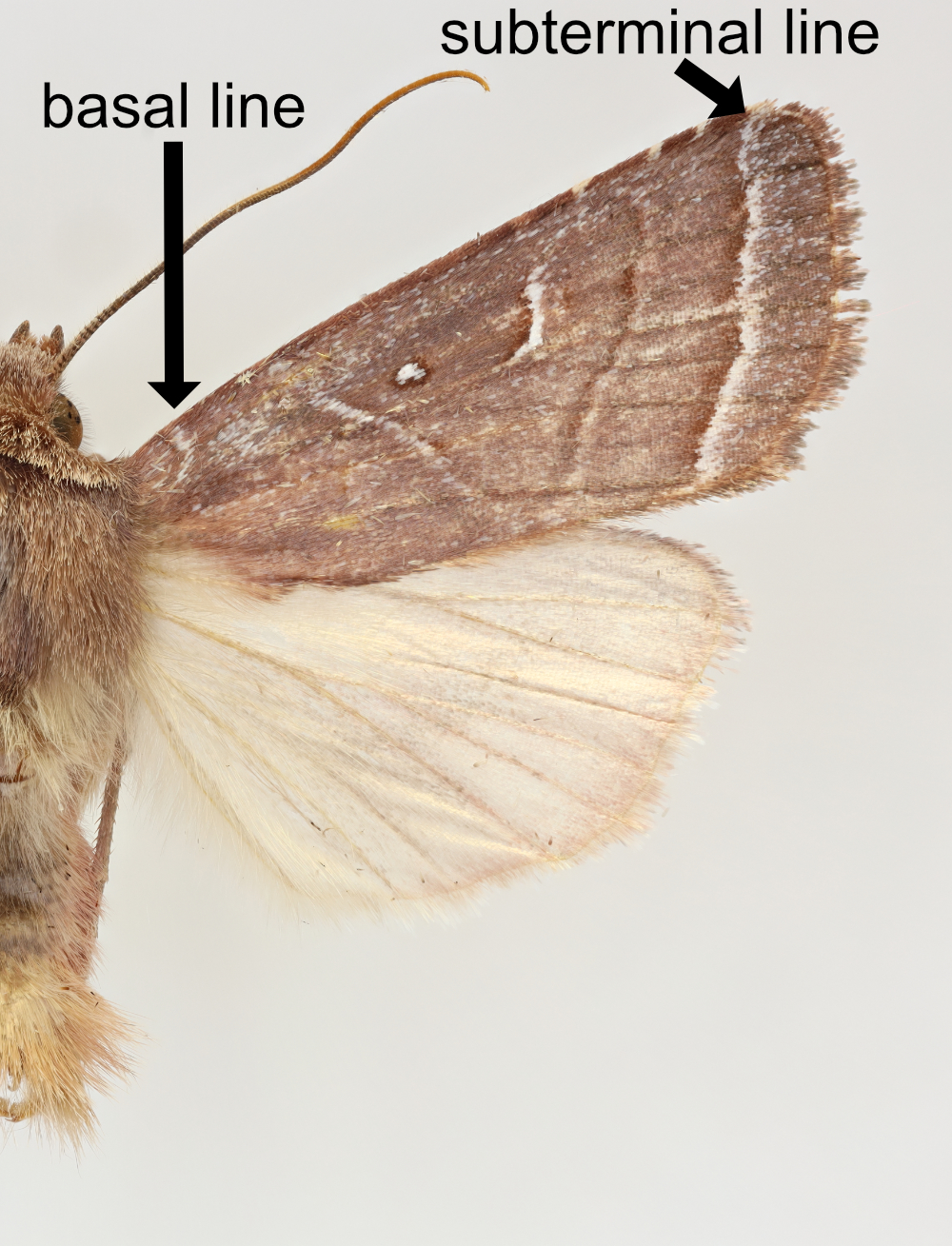 , antemedial lineantemedial line:
a thin transverse line found on the basal third of the forewing, between the median and basal lines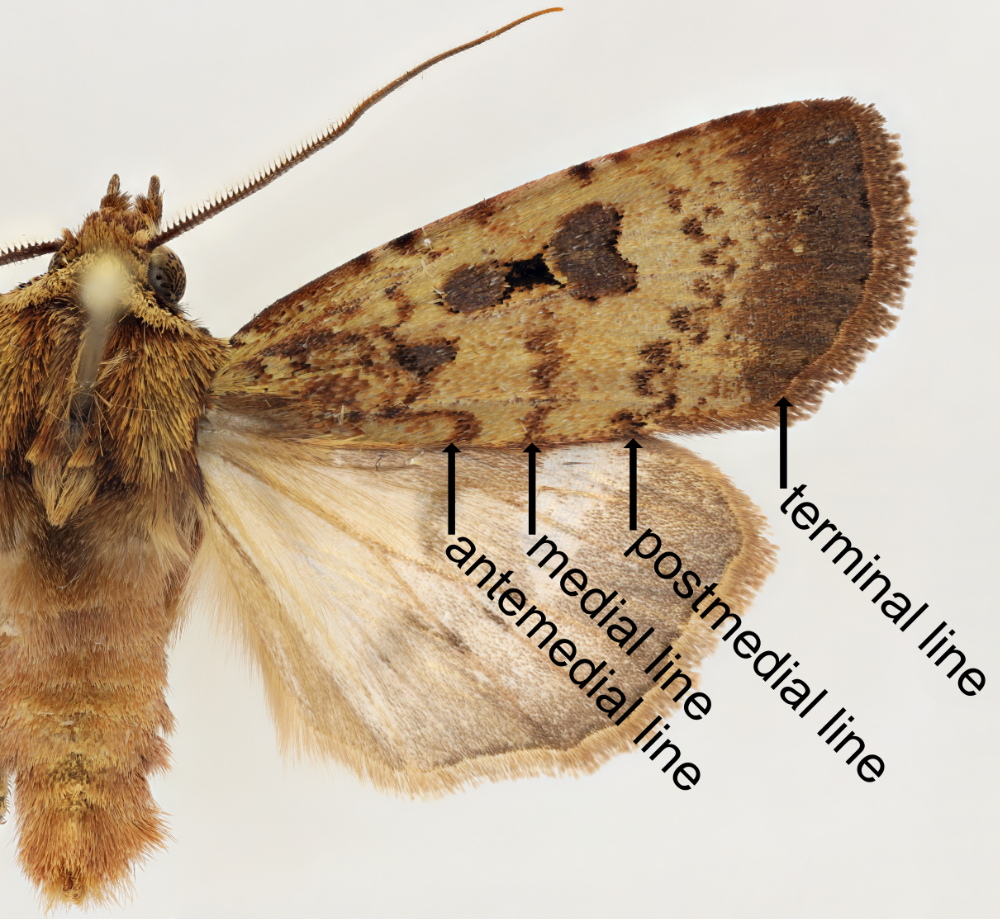 , and postmedial linepostmedial line:
a thin, transverse line located distal to the reniform spot, typically on the distal third of the forewing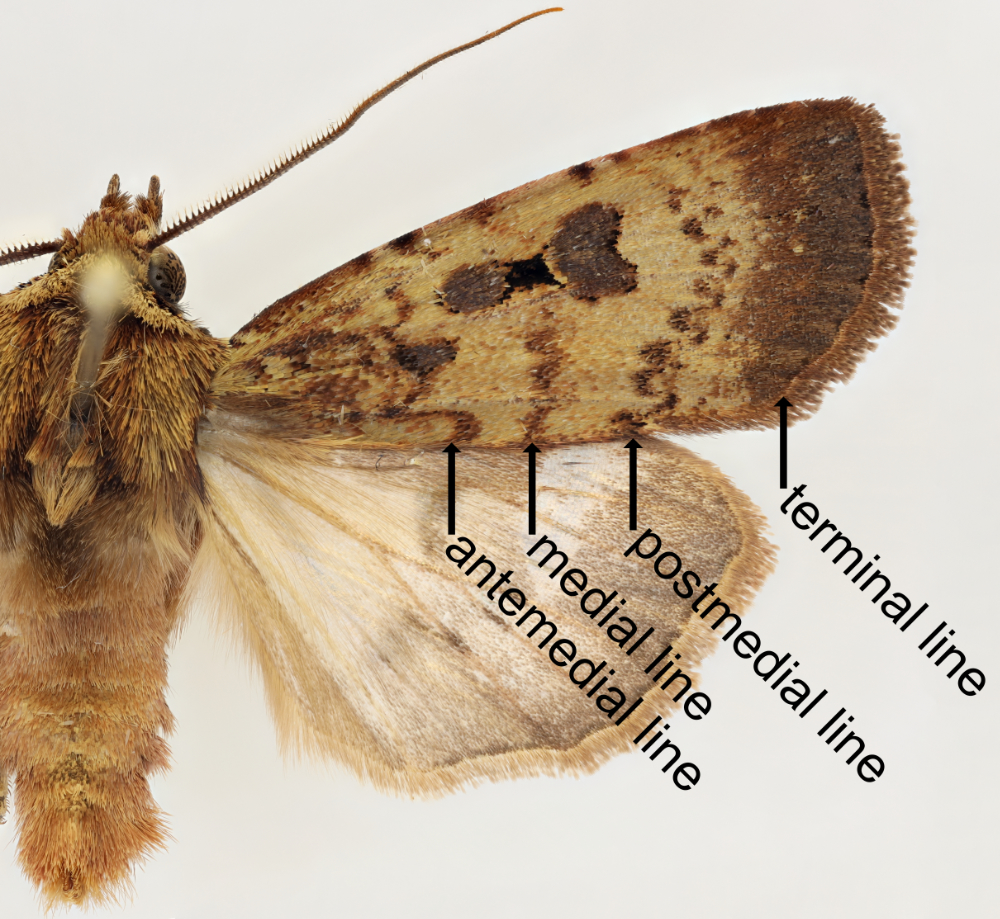 . The inner margininner margin:
the hind margin of the forewing, opposite the costal margin; also called 'posterior margin' or 'trailing margin'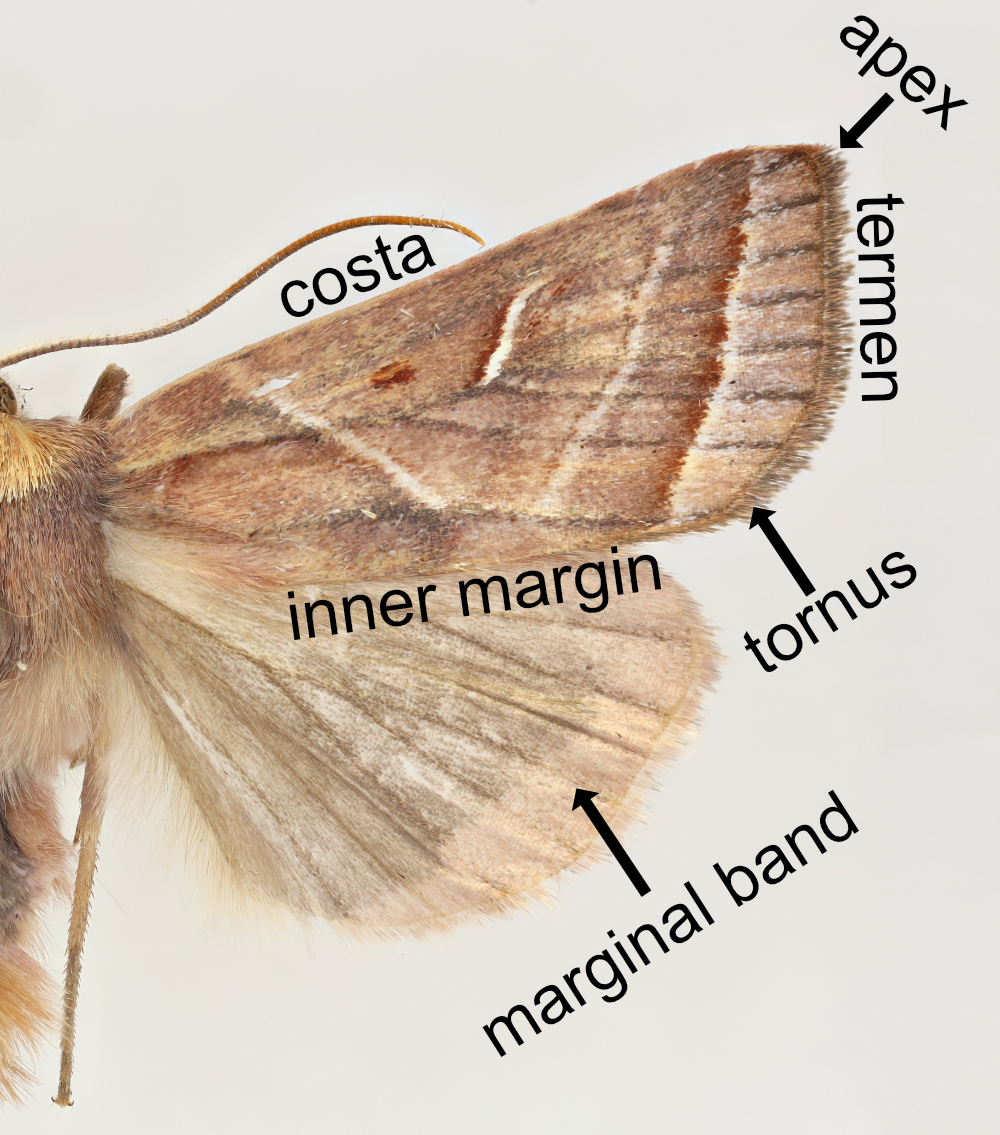 of these lines is often pale yellow, strongly contrasting with the darker green distaldistal:
towards the free end of an appendage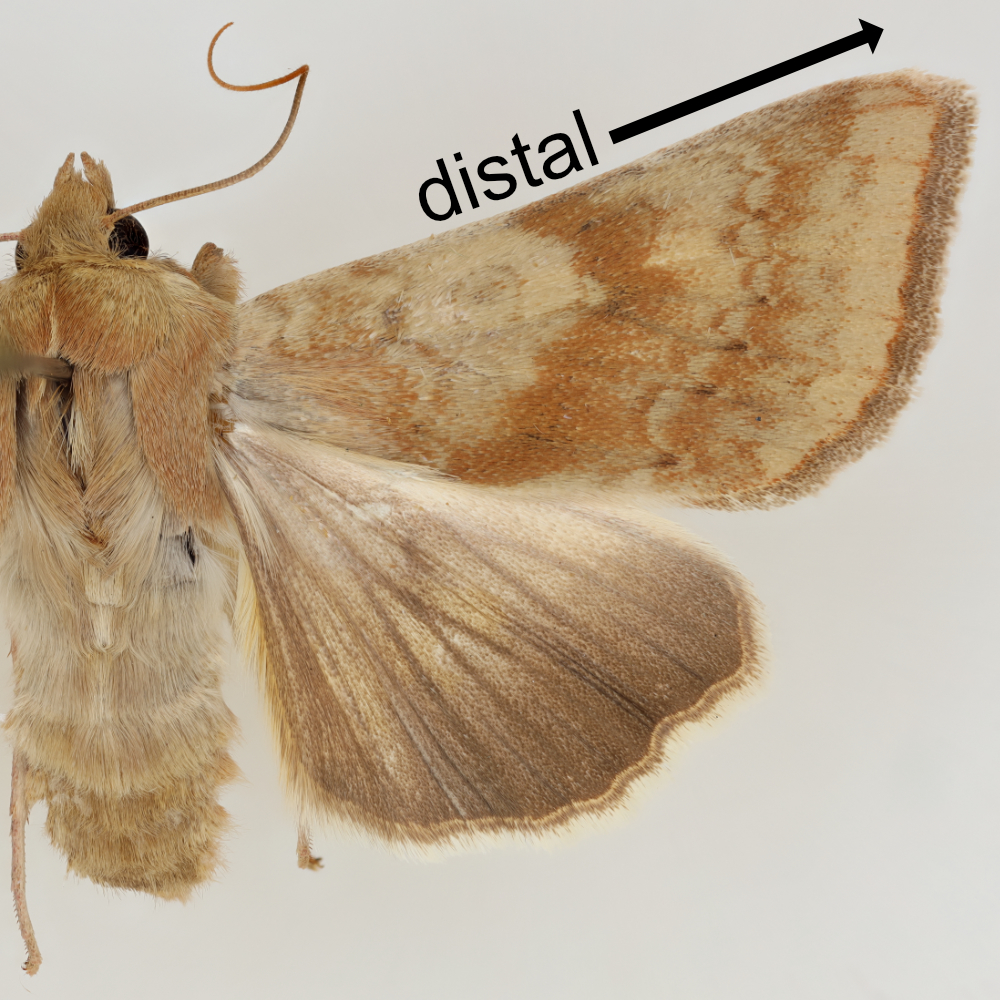 margin. The orbicular and reniform spotsreniform spot:
a spot, often broad bean- or kidney-shaped, found at the distal end of the discal cell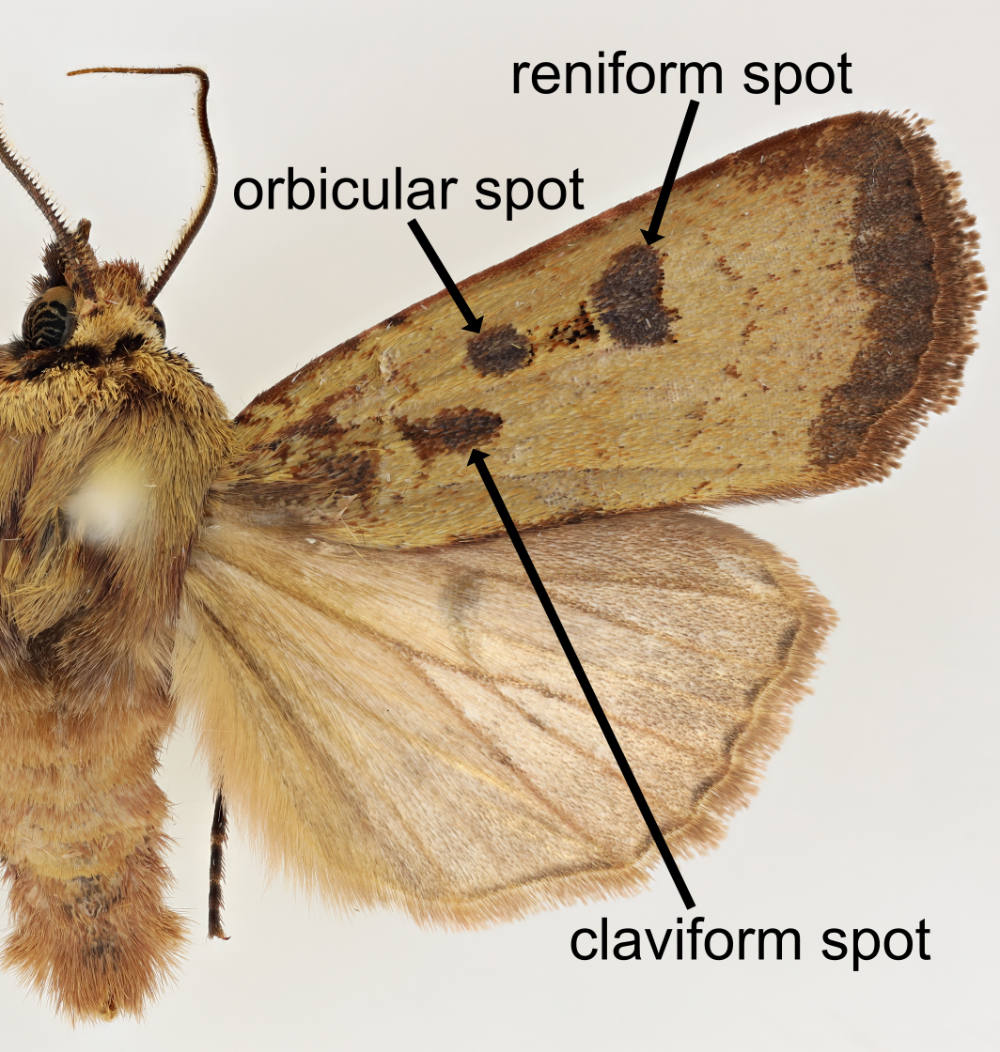 are variably expressed, sometimes highly obscured, but often well-developed. The distaldistal:
towards the free end of an appendage third of the hindwinghindwing:
the back wing of an insect; the wing attached to the third segment of the thorax (the metathorax)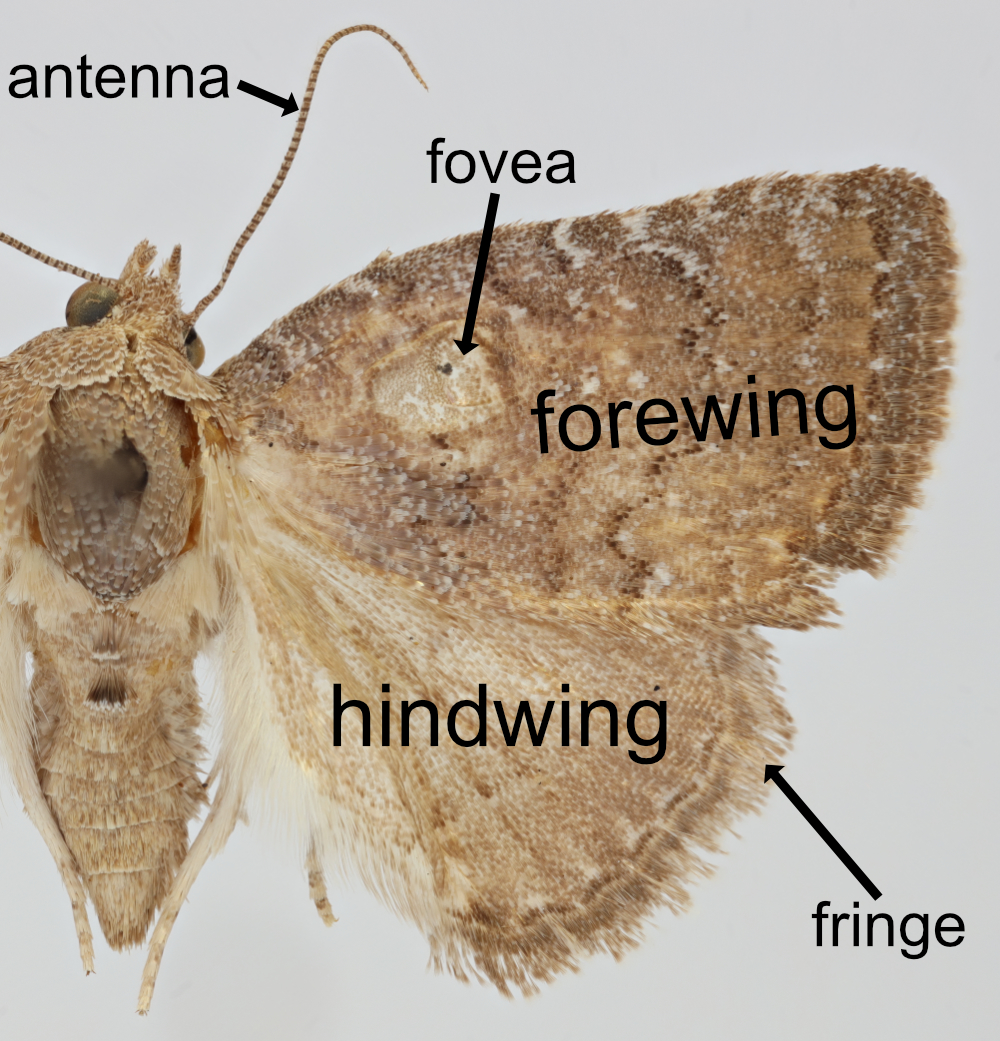 is dark gray; the remainder of the hindwinghindwing:
the back wing of an insect; the wing attached to the third segment of the thorax (the metathorax) is pale. The forelegs and midlegs are often red or pink.
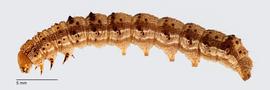
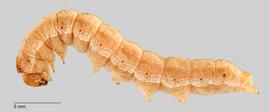
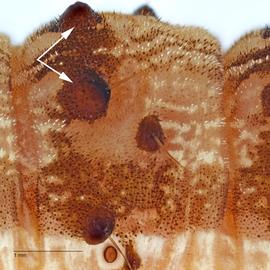
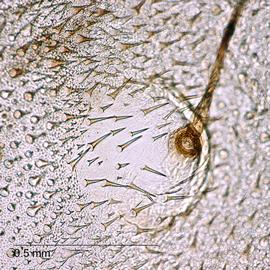
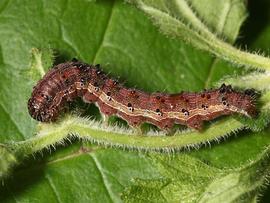
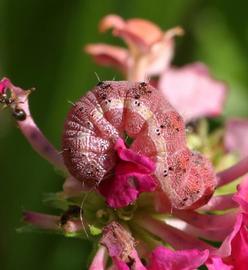
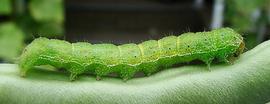
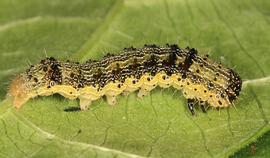
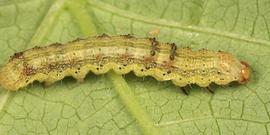
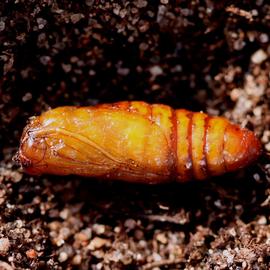
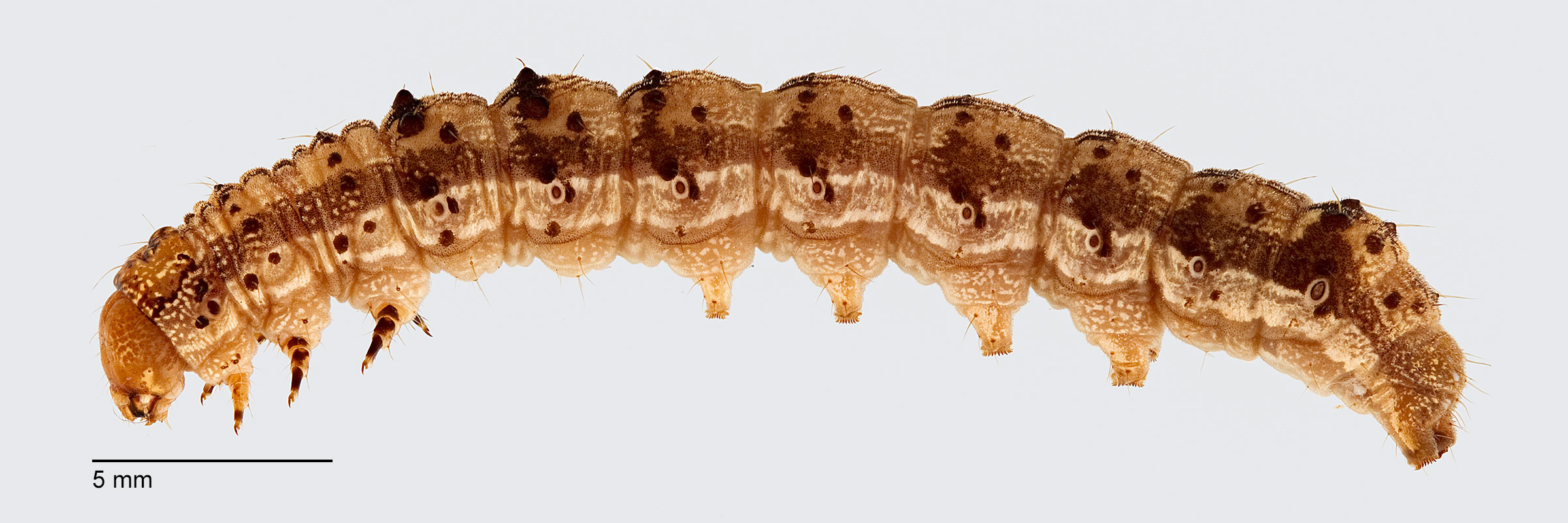
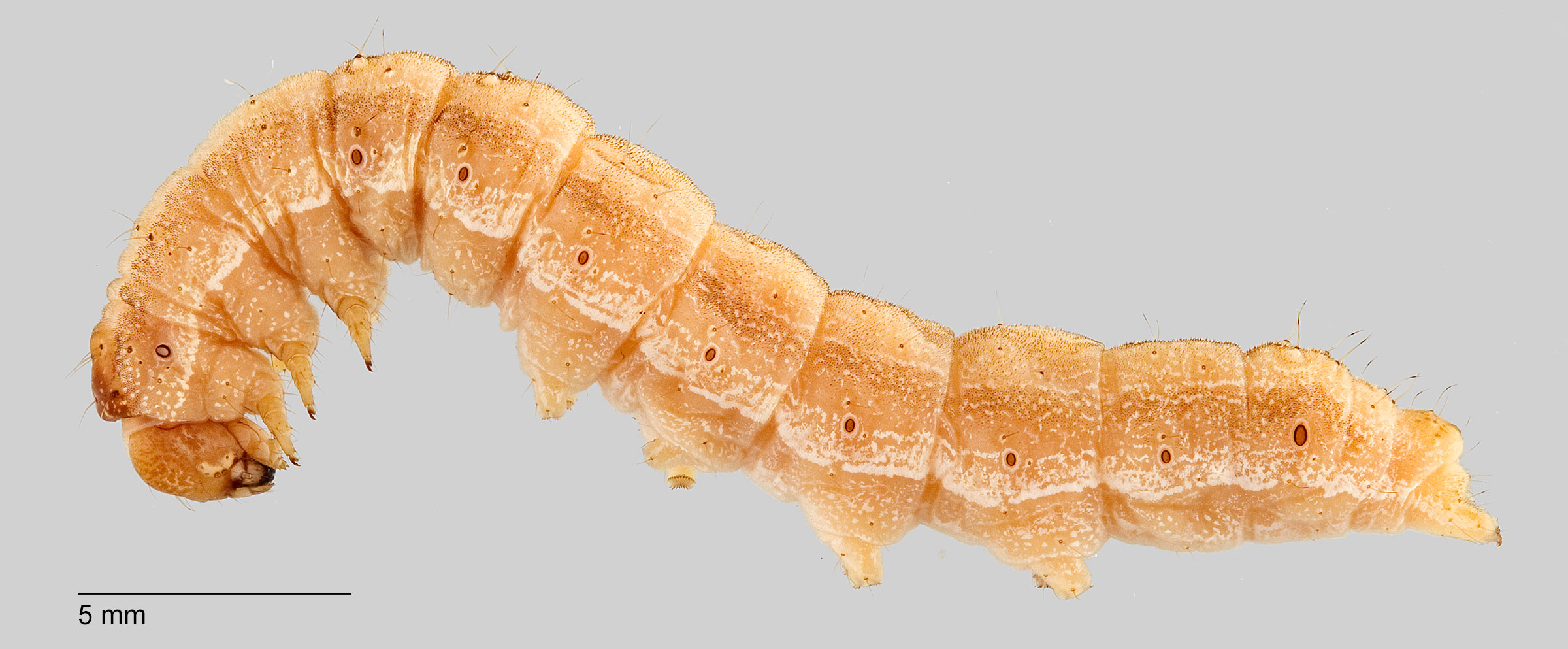
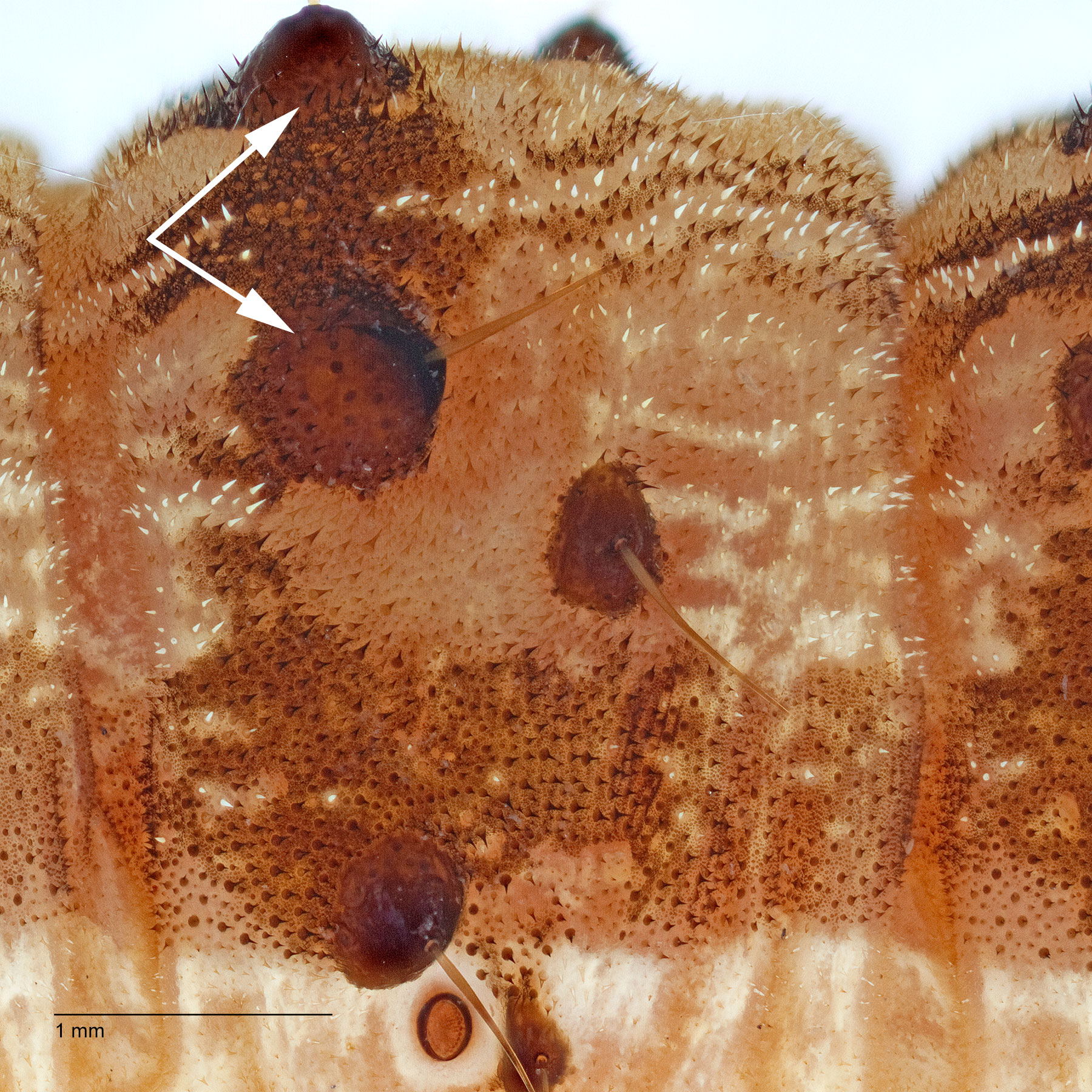
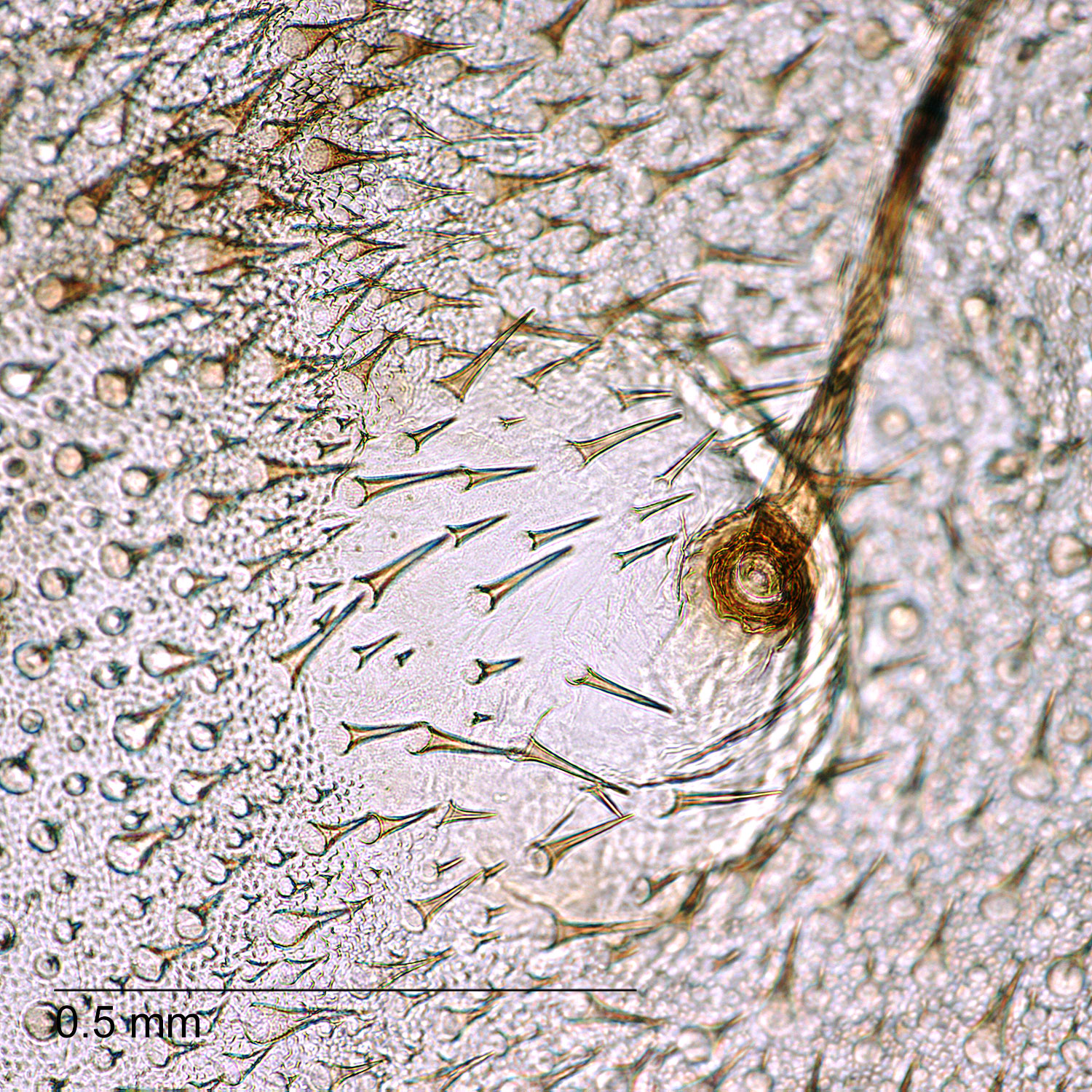
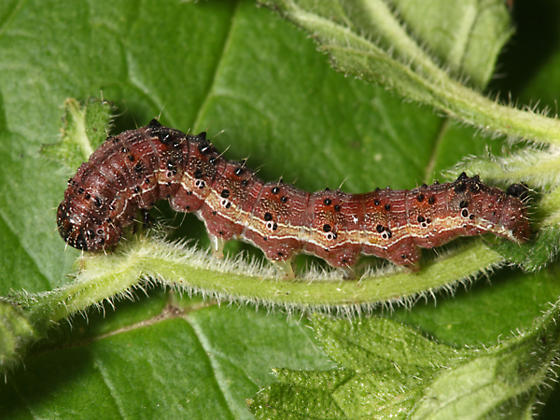
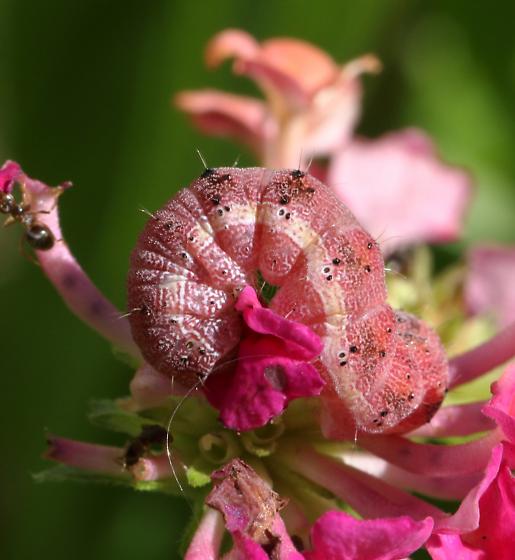
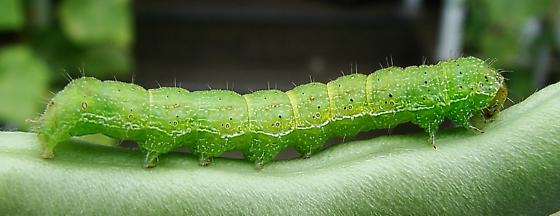
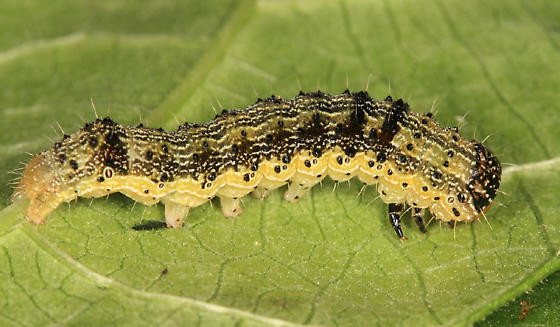
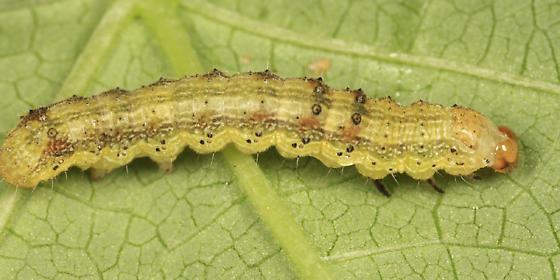
The larva of Chloridea virescens is variable in color, largely dependent on their food plant. Brown, green, yellow, pink, and black forms are all known. Chloridea virescens always has a large retinaculum on the mandible (although sometimes dulled or broken) and large dorsal pinaculapinaculum:
a small, flat, or slightly elevated chitinized area bearing a seta or setae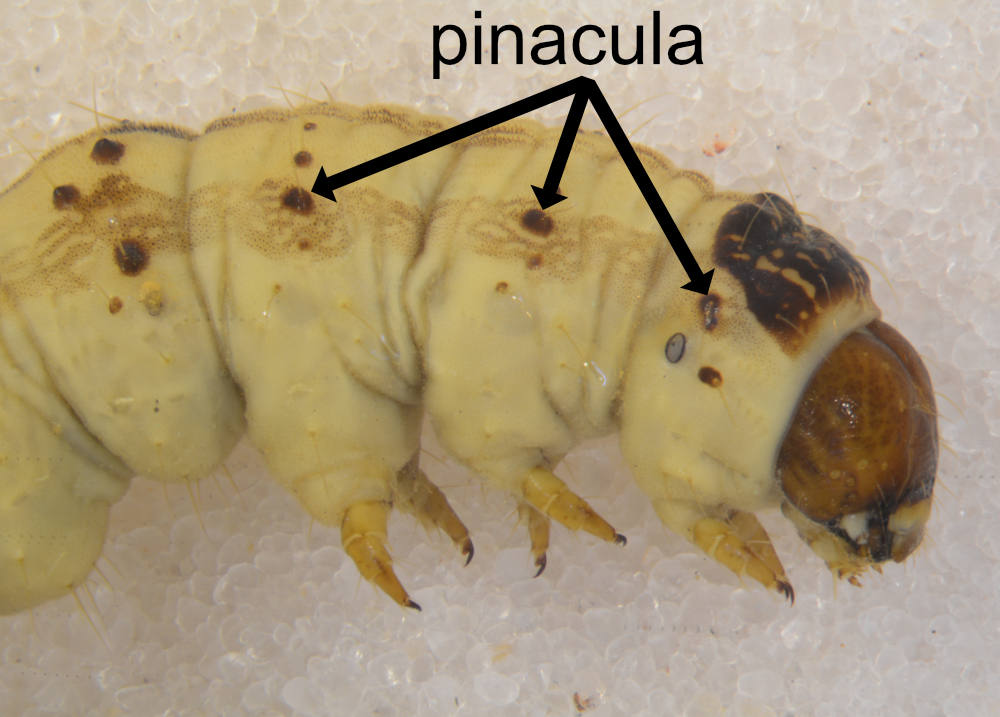 on A1, A2 and A8 covered with microspines. The dorsal pinaculapinaculum:
a small, flat, or slightly elevated chitinized area bearing a seta or setae of A1 and A2 may be connected by a dark band (Hardwick 1996Hardwick 1996:
Hardwick DF. 1996. A monograph to the North American Heliothentinae (Lepidoptera: Noctuidae). Almonte, Ontario [privately published]. 281 pp.).
More information is available on LepIntercept.
Adults of Chloridea virescens are unlikely to be confused with any other noctuid in Hawaiʻi, though worn specimens can be similar to Helicoverpa spp., especially H. zea. The postmedial linepostmedial line:
a thin, transverse line located distal to the reniform spot, typically on the distal third of the forewing in C. virescens is straight, as opposed to the scalloped postmedial linepostmedial line:
a thin, transverse line located distal to the reniform spot, typically on the distal third of the forewing of H. zea.
Larvae are most likely to be confused with Helicoverpa spp., especially H. zea because of the shared microspines across much of the larval integument. However, larger larvae of C. virescens have distinctly raised dorsal pinacula on A1, A2, and A8 covered with microspines, which are lacking in H. zea. Typically, the mandible of C. virescens has a large retinaculum, which is reduced or absent in H. zea.
Chloridea virescens is widely distributed across the United States and southern Canada, although it does not survive winters in northern areas. It is also present in Mexico, Central America, South America, and the Caribbean (Poole et al. 1993Poole et al. 1993:
Poole RW, Mitter C, Huettel MD. 1993. A revision and cladistic analysis of the Heliothis virescens species-group (Lepidoptera: Noctuidae) with a preliminary morphometric analysis of H. virescens. Mississippi Agricultural and Forestry Experimental Station Technical Bulletin 185. Mississippi Entomological Museum 4. 51 pp.).
In Hawaiʻi, it has been detected on Kauaʻi, Oʻahu, Molokaʻi, and Hawaiʻi island (Nishida 2002Nishida 2002:
Nishida GM. 2002. Hawaiian terrestrial arthropod checklist. Fourth Edition. Bishop Museum Technical Report 22. 313 pp.). Though not known from Maui and Lānaʻi, it likely occurs there as well.
Chloridea virescens is a broadly polyphagous species, having been recorded on over 100 different species of plants in over 25 different families. Especially common hosts are in the families Asteraceae, Fabaceae, Lamiaceae, Malvaceae, and Solanaceae.
Author: Kyhl A. Austin
Content last updated May 2026
idtools.org