ADVENTIVE
Spodoptera exempta (Walker, 1856)
Higher taxonomy: Noctuidae: Prodeniinae
Common name: African armyworm, grass armyworm
Note: prior to 1938, Spodoptera exempta had been misidentified as S. mauritia in Hawai‘i. See Swezey (1938)Swezey (1938):
Swezey OH. 1938. Identity of the nutgrass armyworm in Hawaii. Proceedings of the Hawaiian Entomological Society. 10(1):75–76. for an explanation. Though now also present in Hawai‘i, S. mauritia was not detected until 1953 (Zimmerman 1958Zimmerman 1958:
Zimmerman EC. 1958. Insects of Hawaii, Volume 7. Macrolepidoptera. University of Hawaii Press, Honolulu. 542 pp.).
Spodoptera exempta was once a major pest of sugar cane (Saccharum officinarum L.) in the Hawaiian Islands but is now a fairly uncommon species. Only a handful of specimens have been collected in recent decades (UHIM collectionUHIM collection:
UHIM collection. Based on identified specimens in the collection of the University of Hawaii Insect Museum, Honolulu, HI); it appears to have been largely replaced by the very similar-looking S. mauritia. Spodoptera exempta was first reported in Hawai‘i by Butler (1877)Butler (1877):
Butler AG. 1877. List of the heterocerous Lepidoptera recently collected by the Rev. T. Blackburn in the Hawaiian Islands. Entomologist's Monthly Magazine. 14:47–52..
A detailed description of Spodoptera exempta is available in Pogue (2002)Pogue (2002):
Pogue MG. 2002. A world revision of the genus Spodoptera Guenée (Lepidoptera: Noctuidae). Memoirs of the American Entomological Society. 43:1–202..
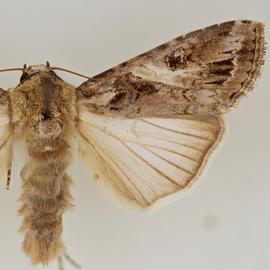
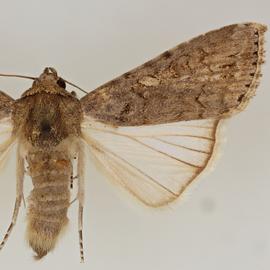
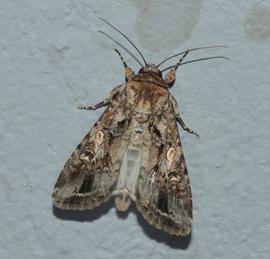
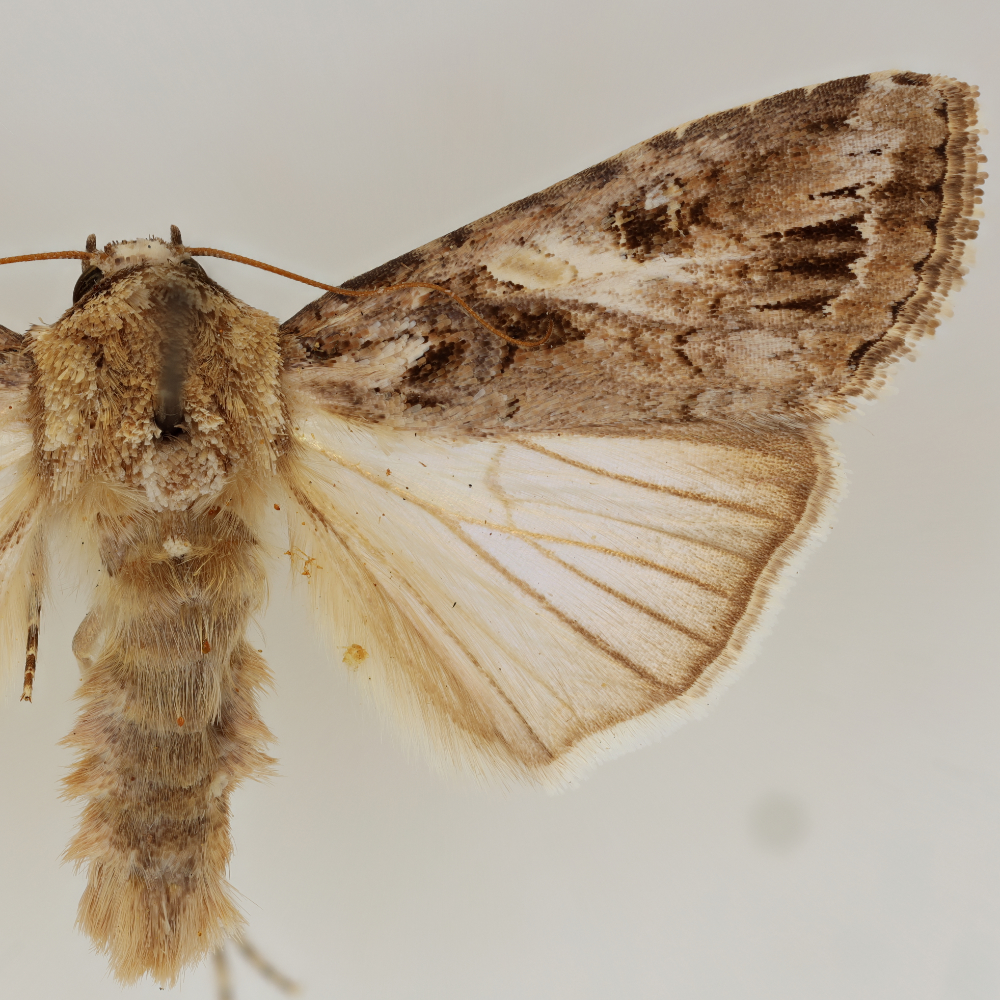
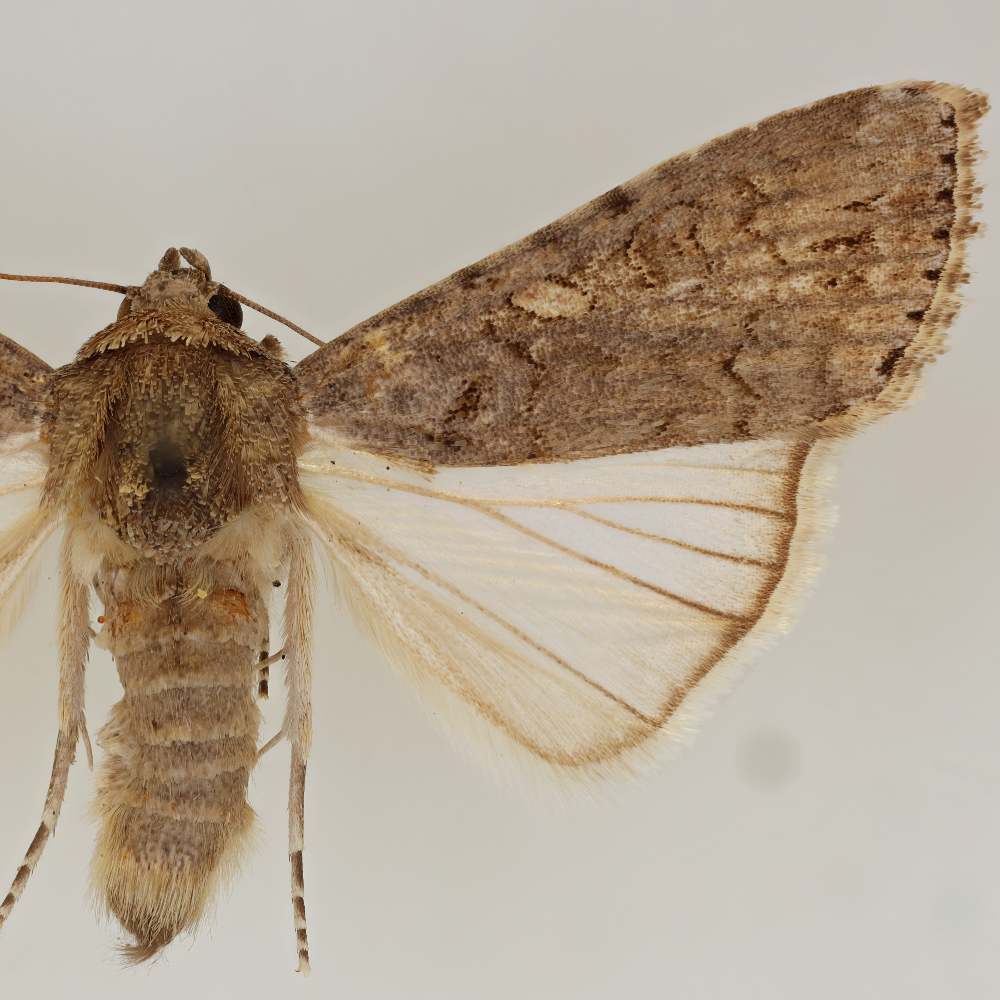
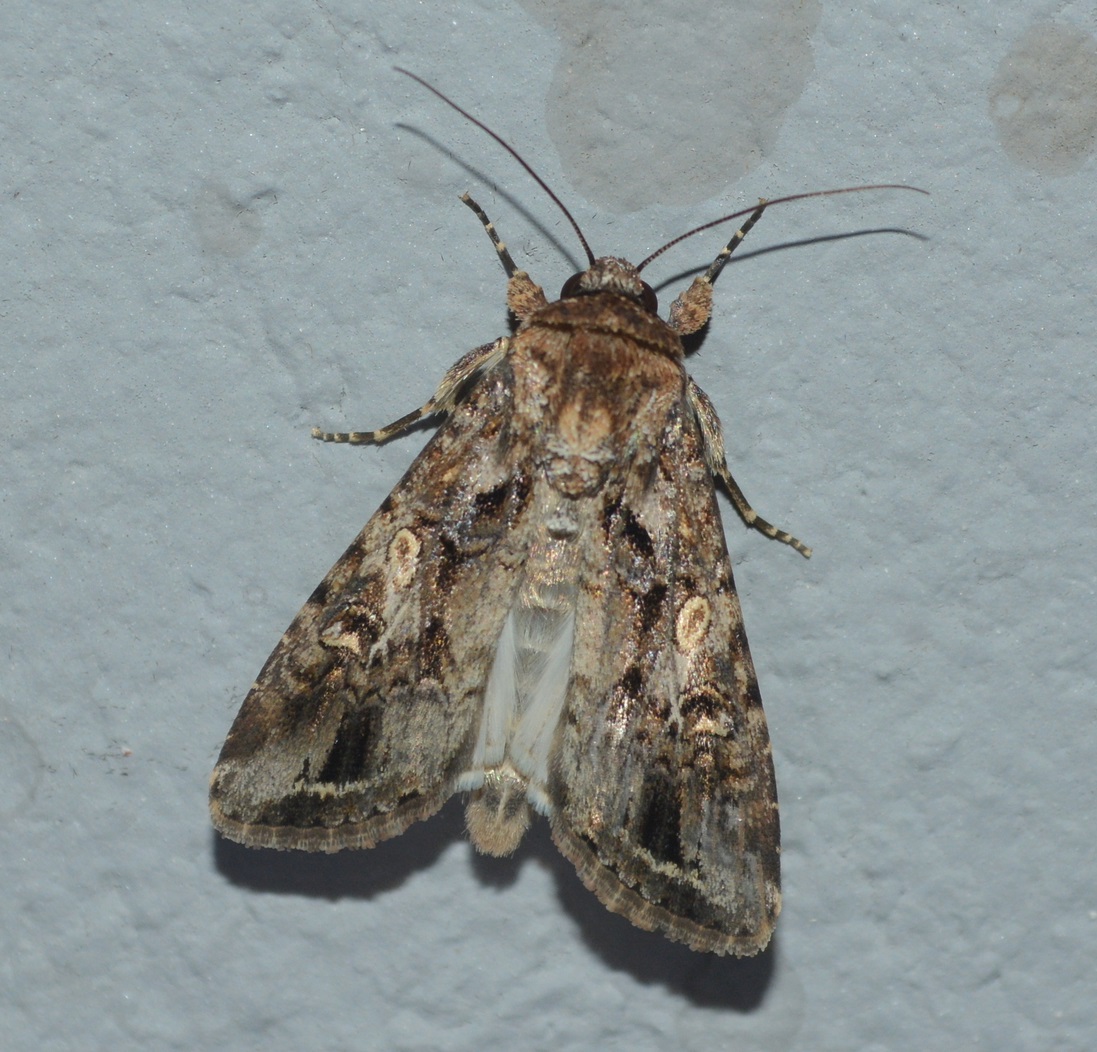
Generally, adults of S. exempta are sexually dimorphic. In both sexes the forewingsforewing:
the front wing of an insect; the wing attached to the second segment of the thorax (the mesothorax)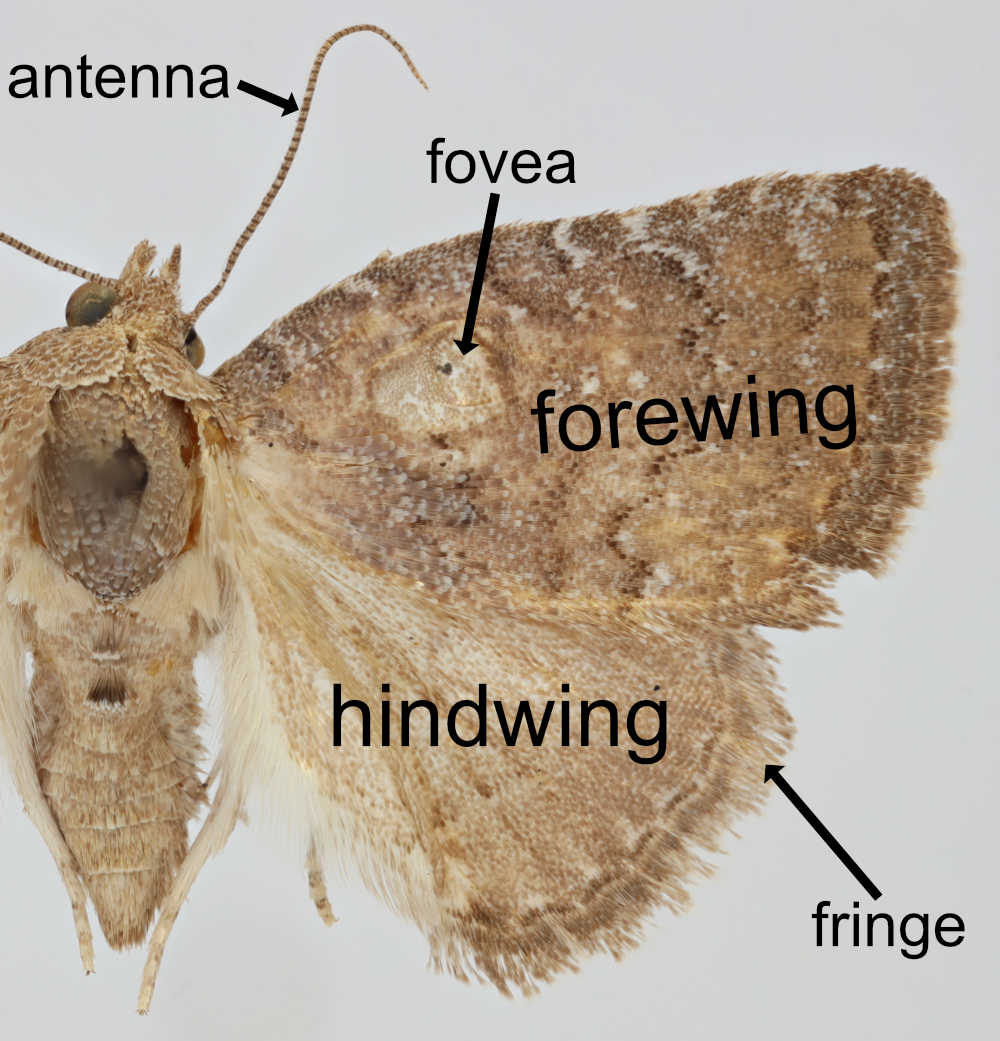 are pale brown (forewing lengthforewing length:
the distance of the forewing in a straight line from the base to the tip of the apex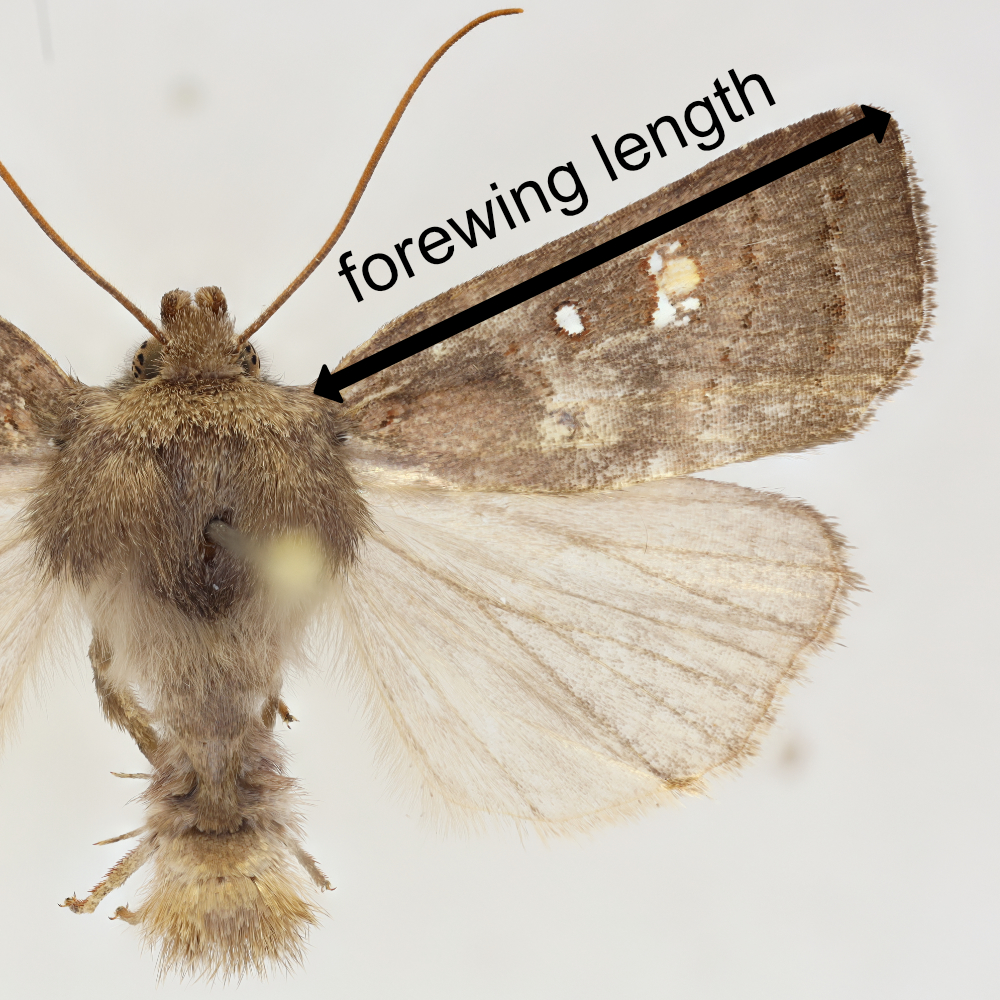 10–16 mm) with an elliptical orbicular spotorbicular spot:
a round or oval spot located in the middle of the discal cell of the forewing, between the antemedial and median lines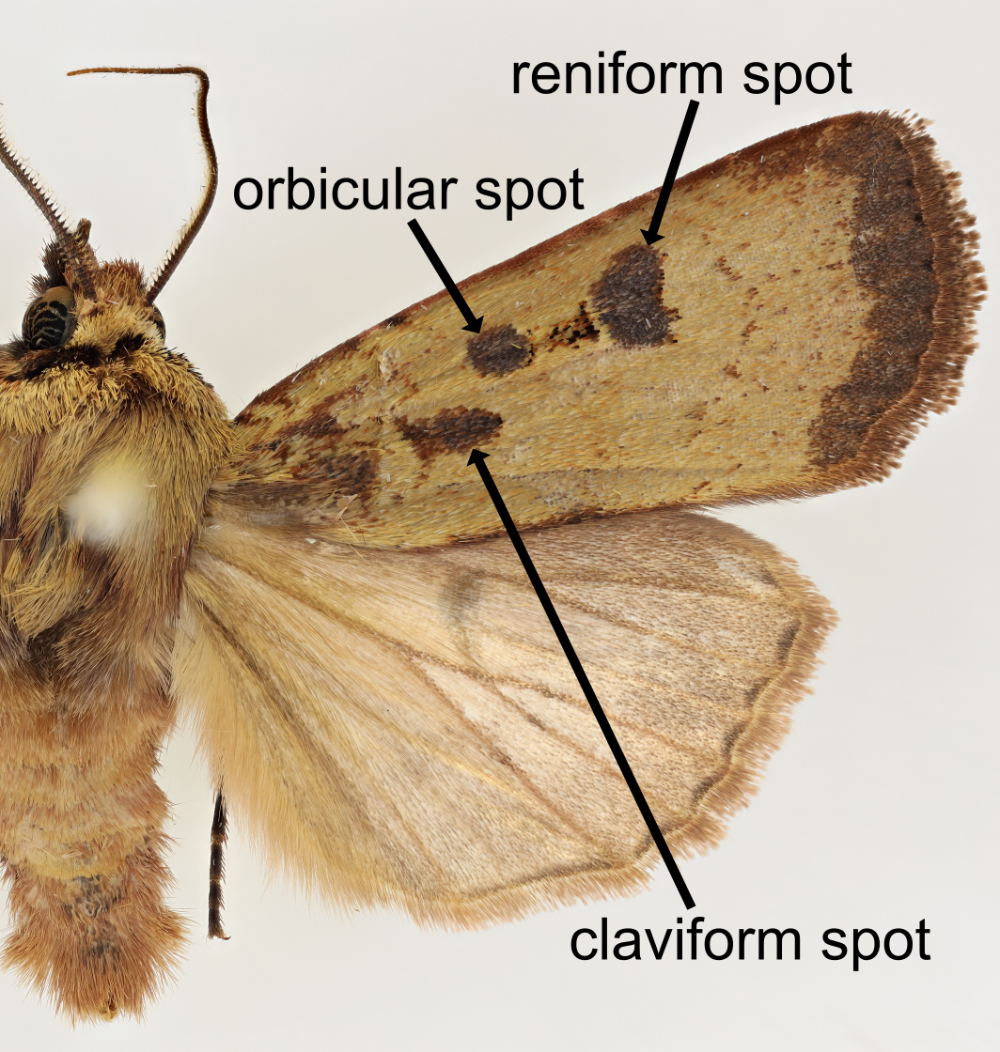 , but males are more boldly marked, with white and black basalbasal:
the part of an appendage nearest to where it connects to the body; often referred to as 'proximal'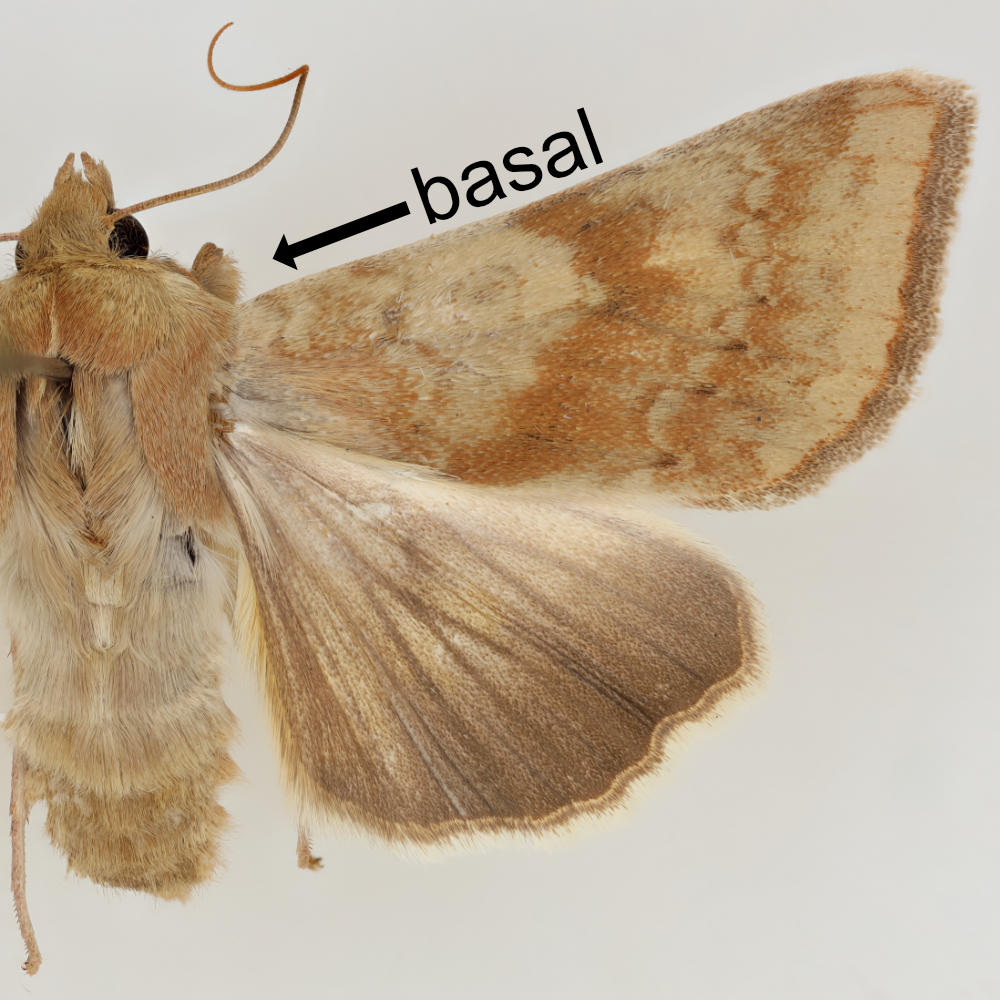 scaling, a white streak around the orbicular spotorbicular spot:
a round or oval spot located in the middle of the discal cell of the forewing, between the antemedial and median lines, black shading in the reniform spotreniform spot:
a spot, often broad bean- or kidney-shaped, found at the distal end of the discal cell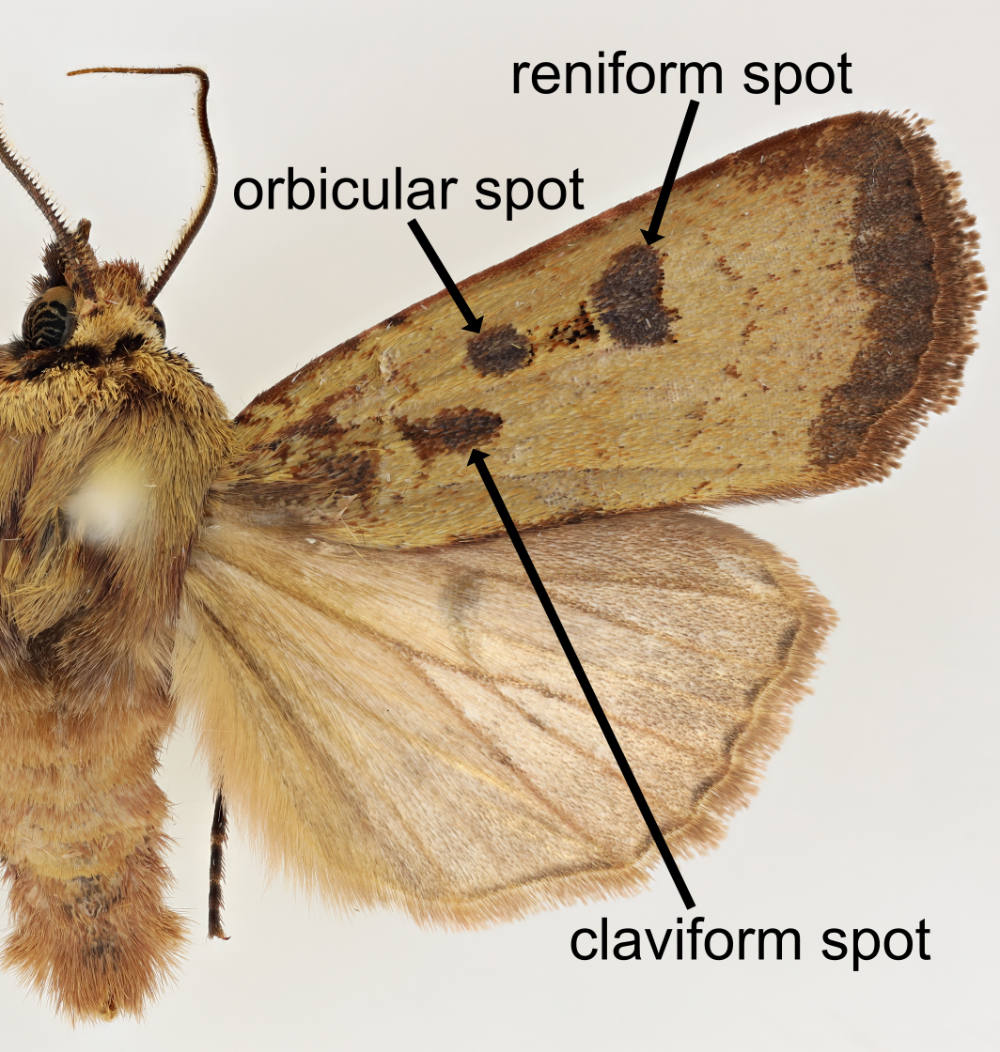 , and distinct triangular markings along the subterminal linesubterminal line:
a thin, transverse line situated near the distal end of the forewing between the postmedial and terminal lines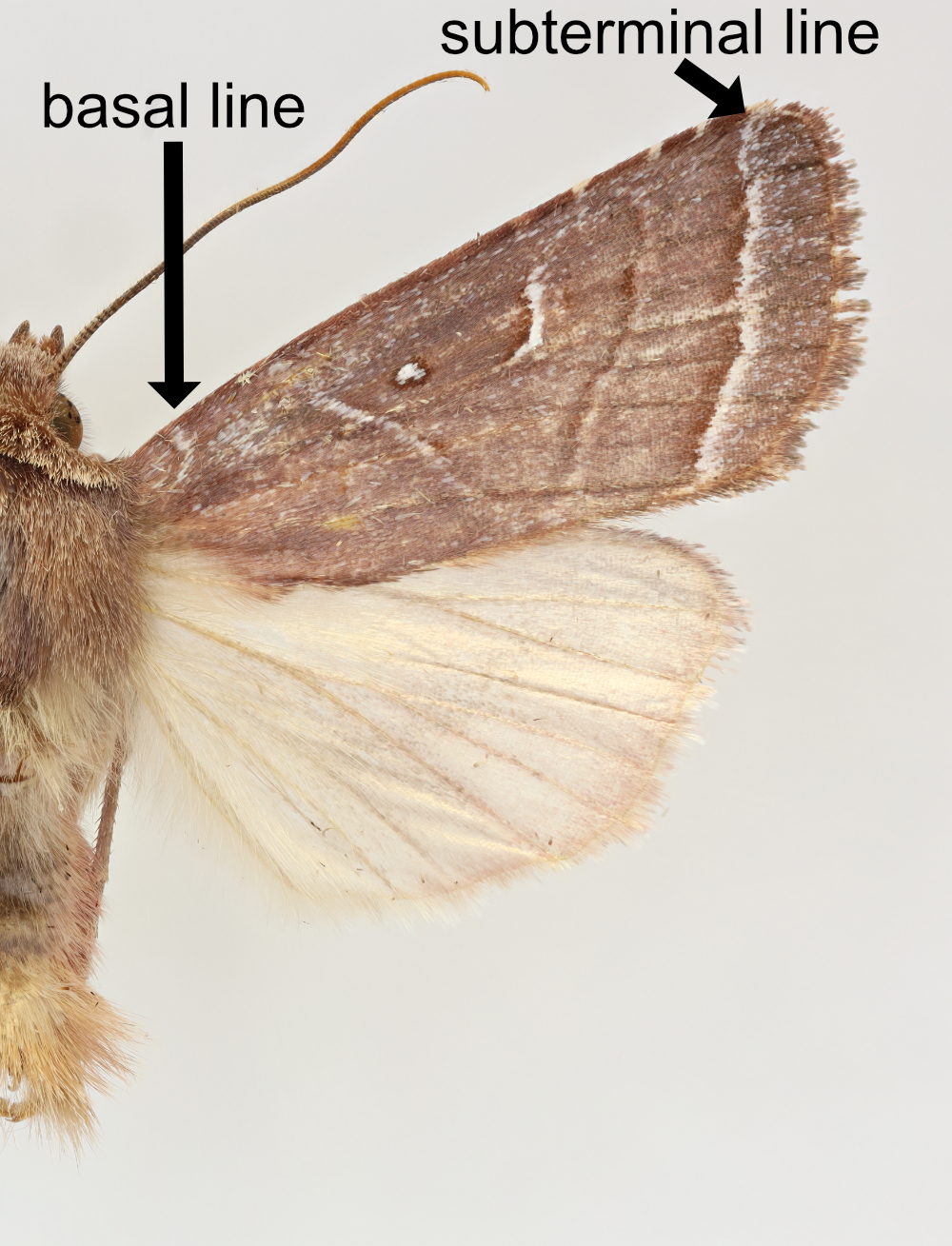 . Females have less white and black scaling and are fairly uniform in coloration with the exception of a paler orbicular spotorbicular spot:
a round or oval spot located in the middle of the discal cell of the forewing, between the antemedial and median lines. The hindwinghindwing:
the back wing of an insect; the wing attached to the third segment of the thorax (the metathorax)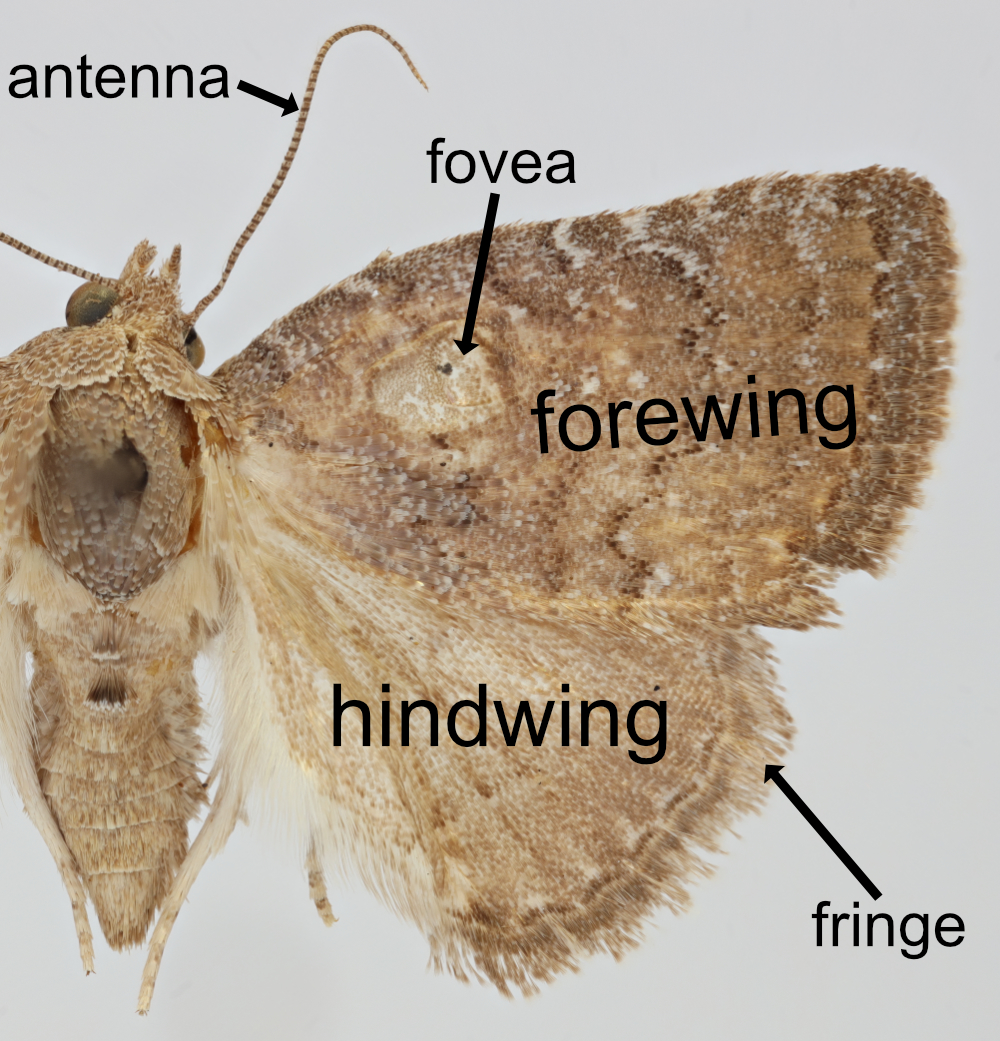 of both sexes is white with dark brown or black scaling along the veins.
Larvae of Spodoptera exempta were described by Swezey (1909)Swezey (1909):
Swezey OH. 1909. Army worms and cut worms on sugar cane in the Hawaiian Islands. Report of the Work of the Experiment Station of the Hawaiian Sugar Planters' Association, 7. Honolulu. 31 pp. and Pogue (2002)Pogue (2002):
Pogue MG. 2002. A world revision of the genus Spodoptera Guenée (Lepidoptera: Noctuidae). Memoirs of the American Entomological Society. 43:1–202..
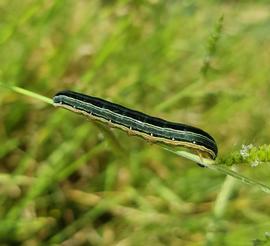
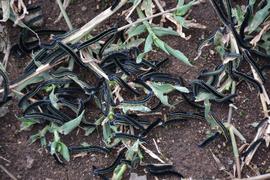
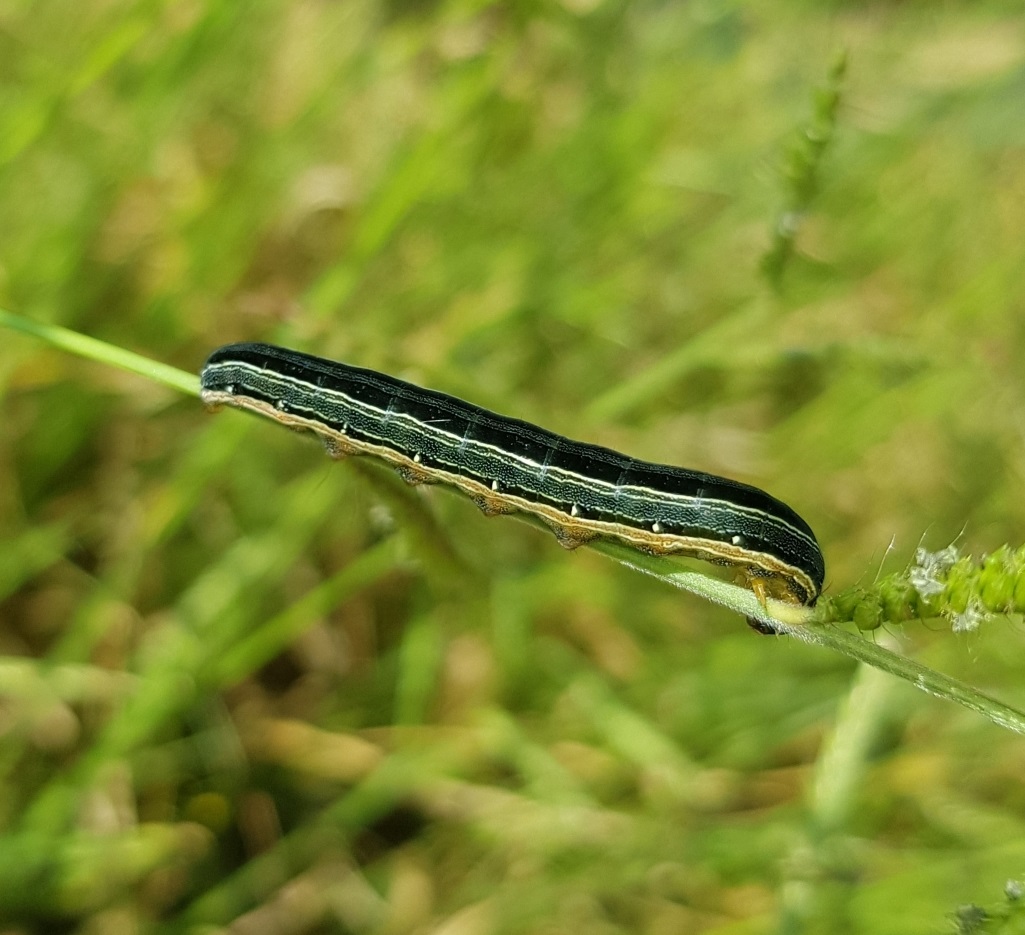
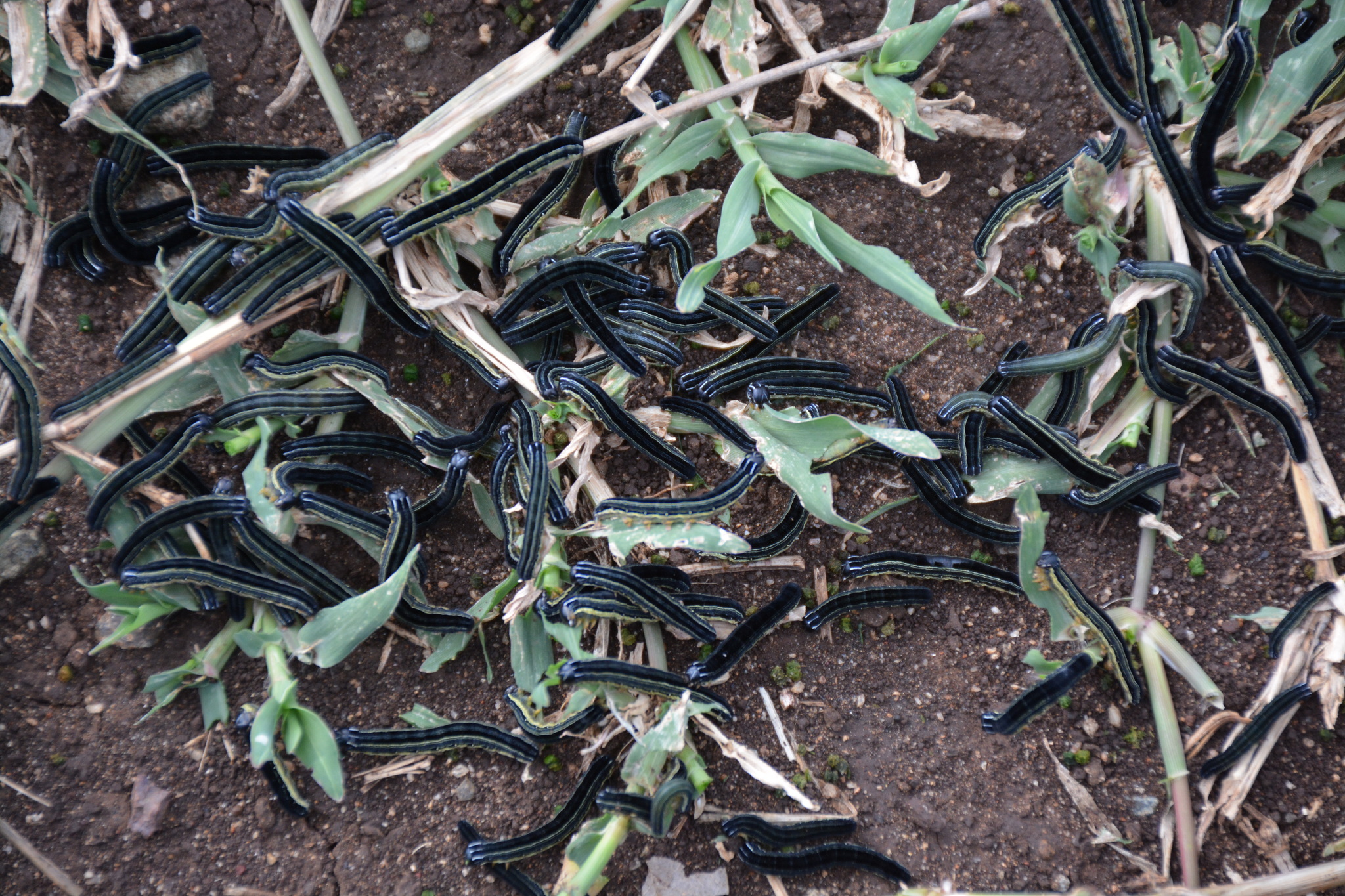
The primary body color varies from grass green to black, the dorsal stripe white, gray, black, or slate blue and unbroken, the subdorsal stripe is thin, separate, and white. In the black form, the subdorsal stripe and lateral stripe are darker than other stripes. The sublateral stripe is yellowish (sometimes pinkish); spiracles black. The underside is pale (Swezey 1909Swezey 1909:
Swezey OH. 1909. Army worms and cut worms on sugar cane in the Hawaiian Islands. Report of the Work of the Experiment Station of the Hawaiian Sugar Planters' Association, 7. Honolulu. 31 pp. ).
More information available on the genus here, LepIntercept.
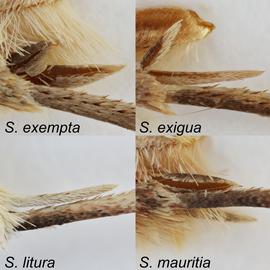
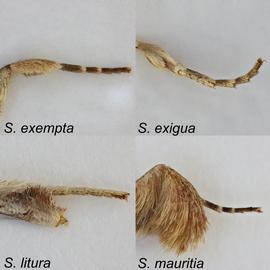
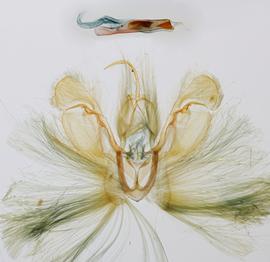
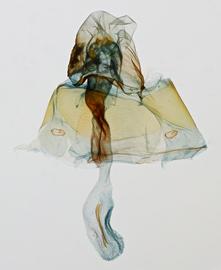
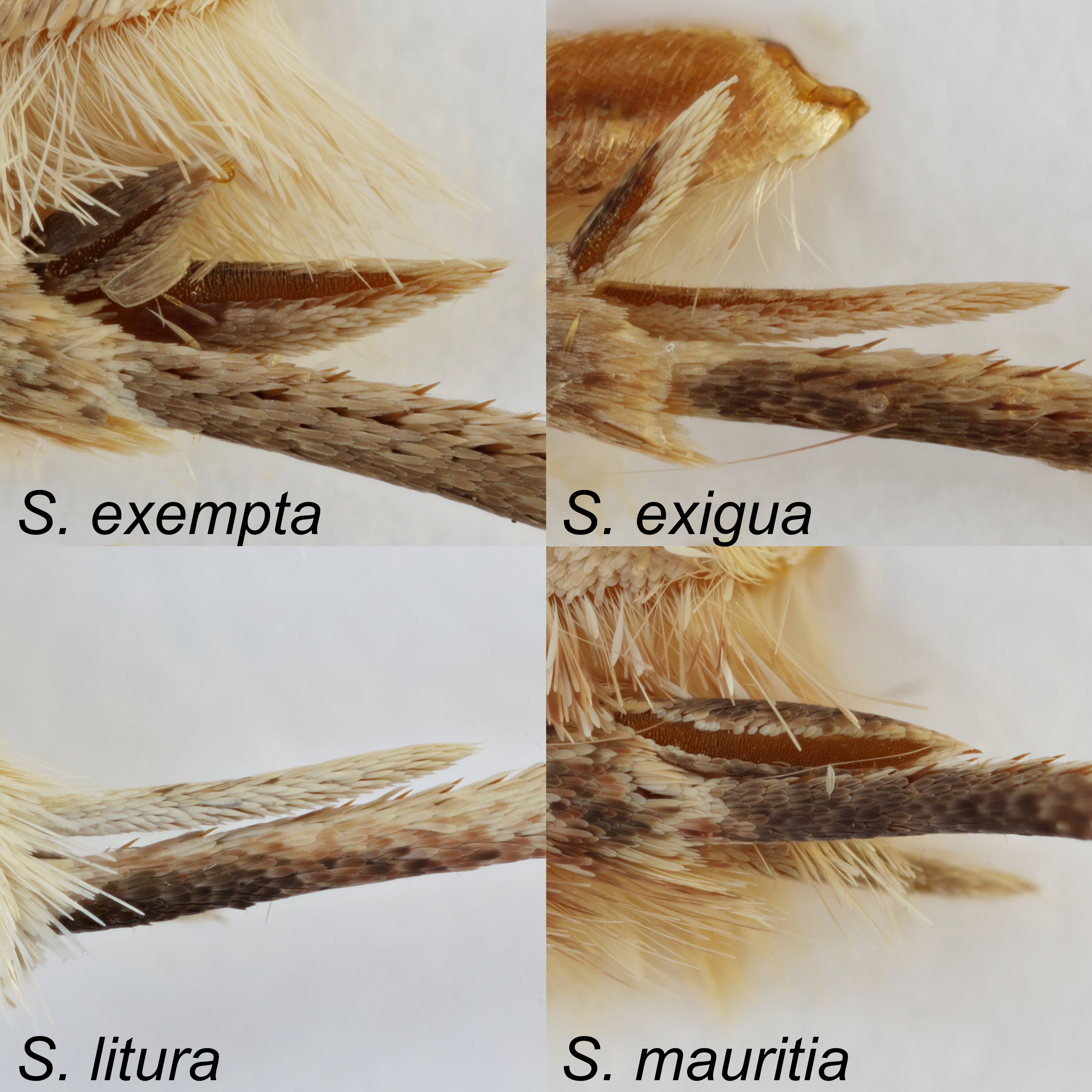
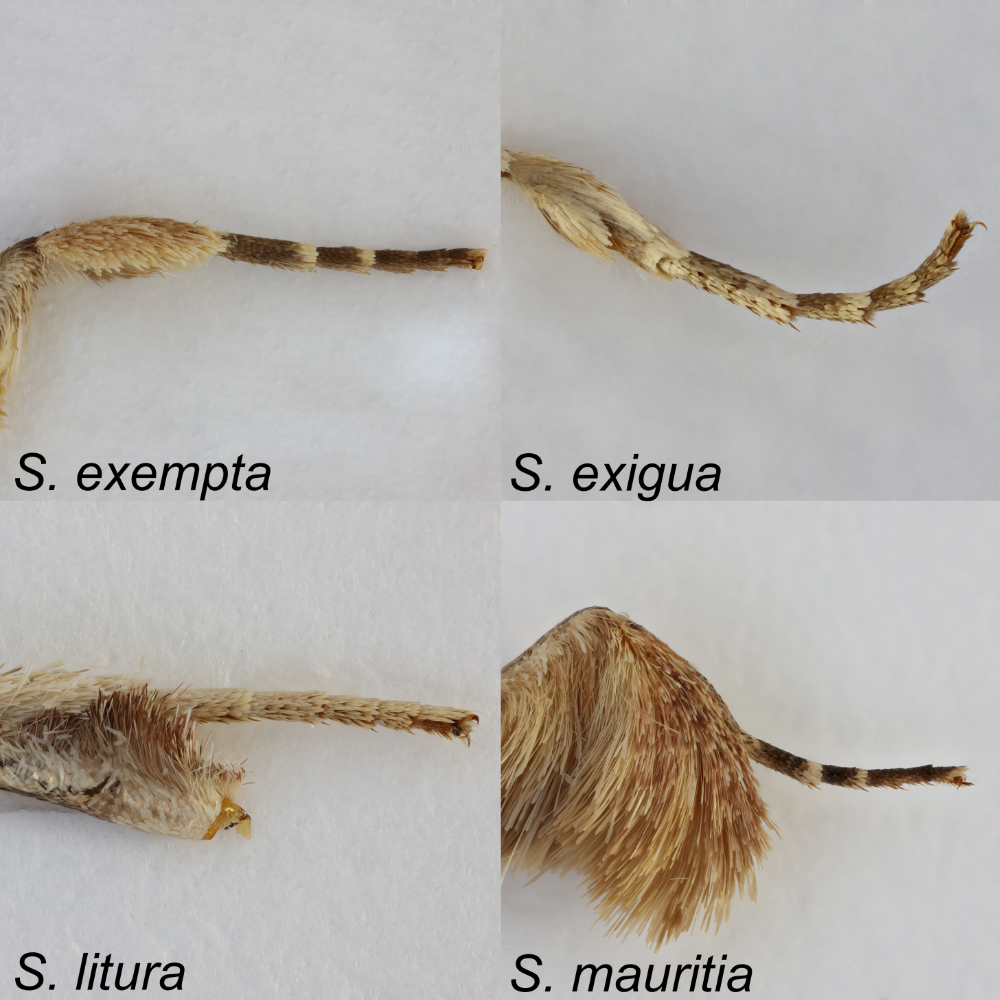
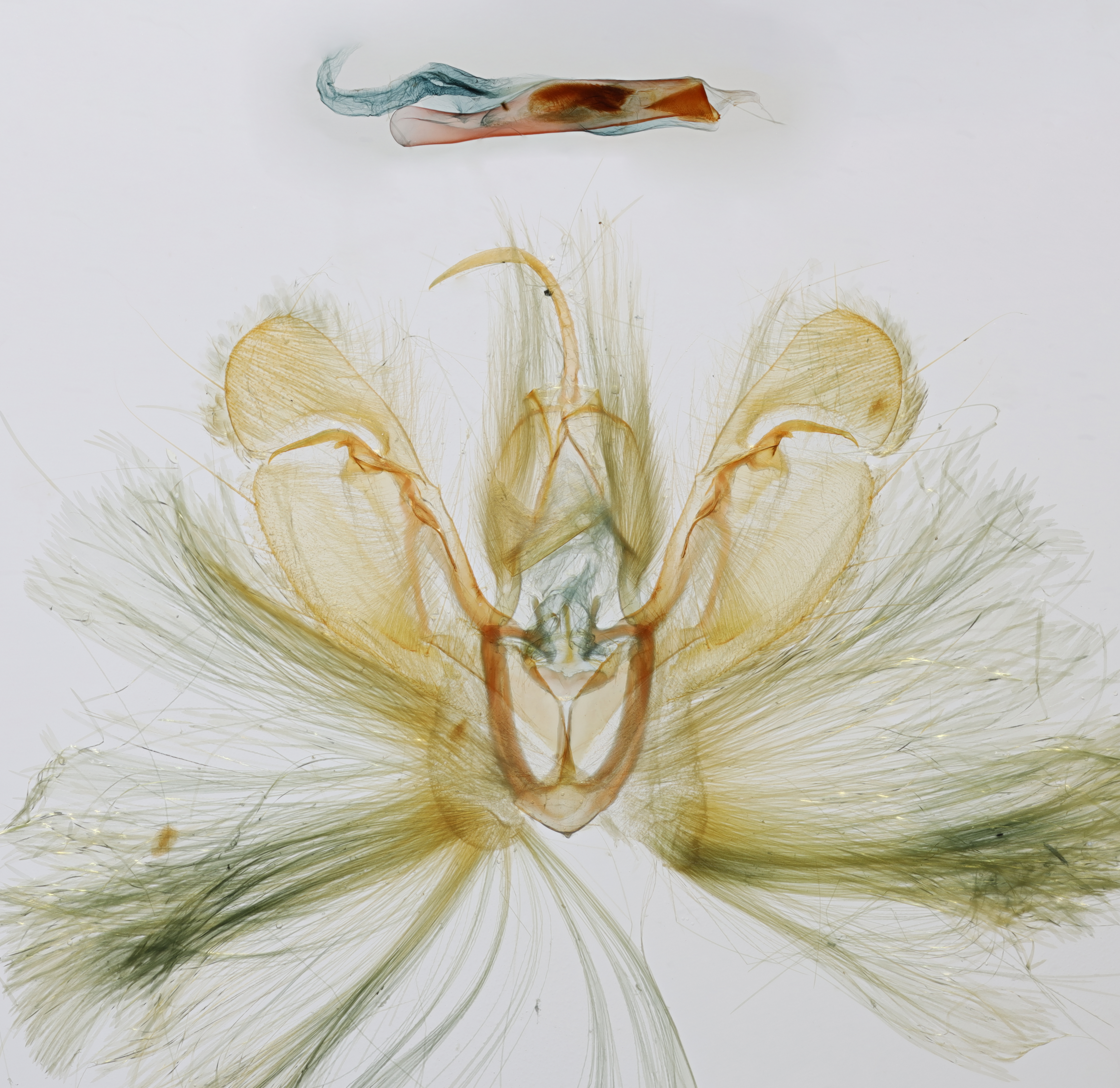
Adults of Spodoptera exempta are very similar to the three other species of Spodoptera present in Hawai‘i. They can be most reliably identified by the shape of the spurs on the middle tibiatibia:
the fourth segment of the insect leg; often a large and elongate segment with some ornamentation or identifying structures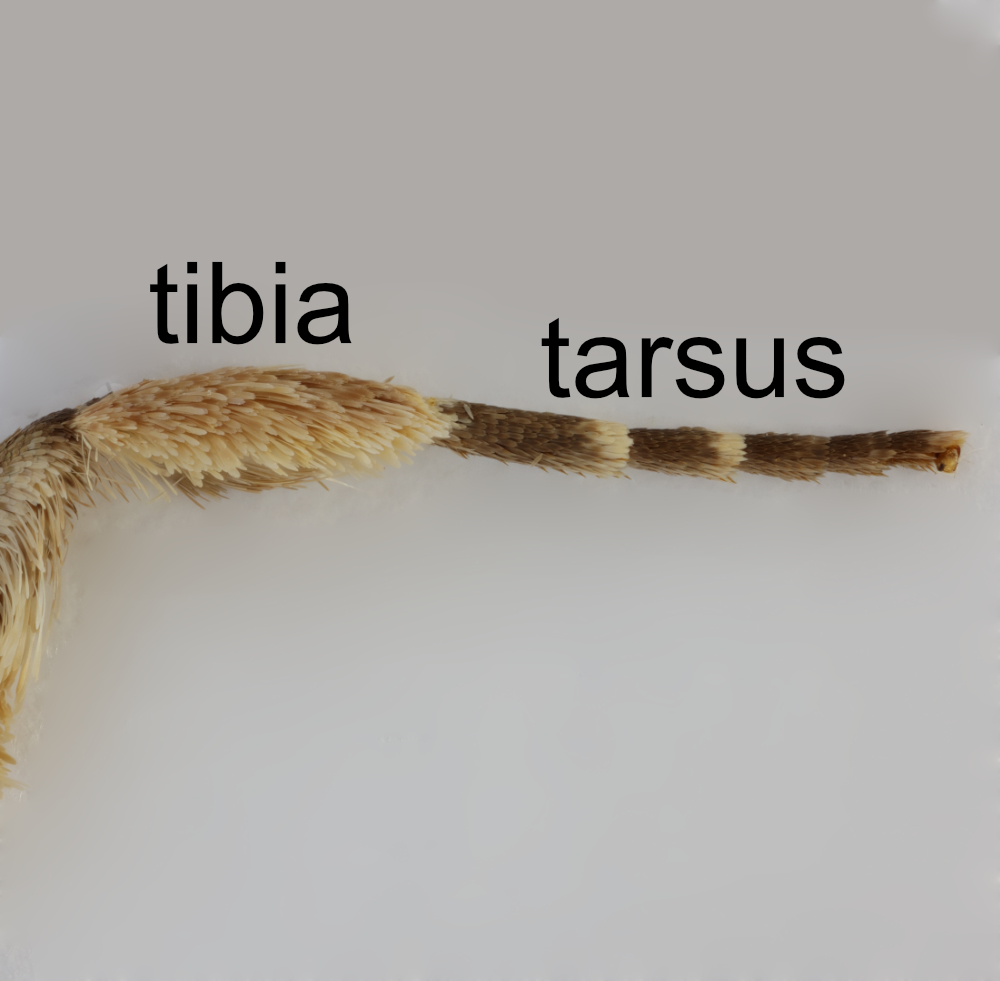 in males: distinctly unequal in size and with the specialized setose areas broad and well developed. The orbicular spotorbicular spot:
a round or oval spot located in the middle of the discal cell of the forewing, between the antemedial and median lines of both sexes is elliptical, as opposed to rounded, like in S. exigua and S. mauritia. Further characters to tell species of Spodoptera apart in Hawai‘i were provided by Zimmerman (1958)Zimmerman (1958):
Zimmerman EC. 1958. Insects of Hawaii, Volume 7. Macrolepidoptera. University of Hawaii Press, Honolulu. 542 pp..
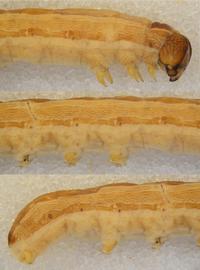
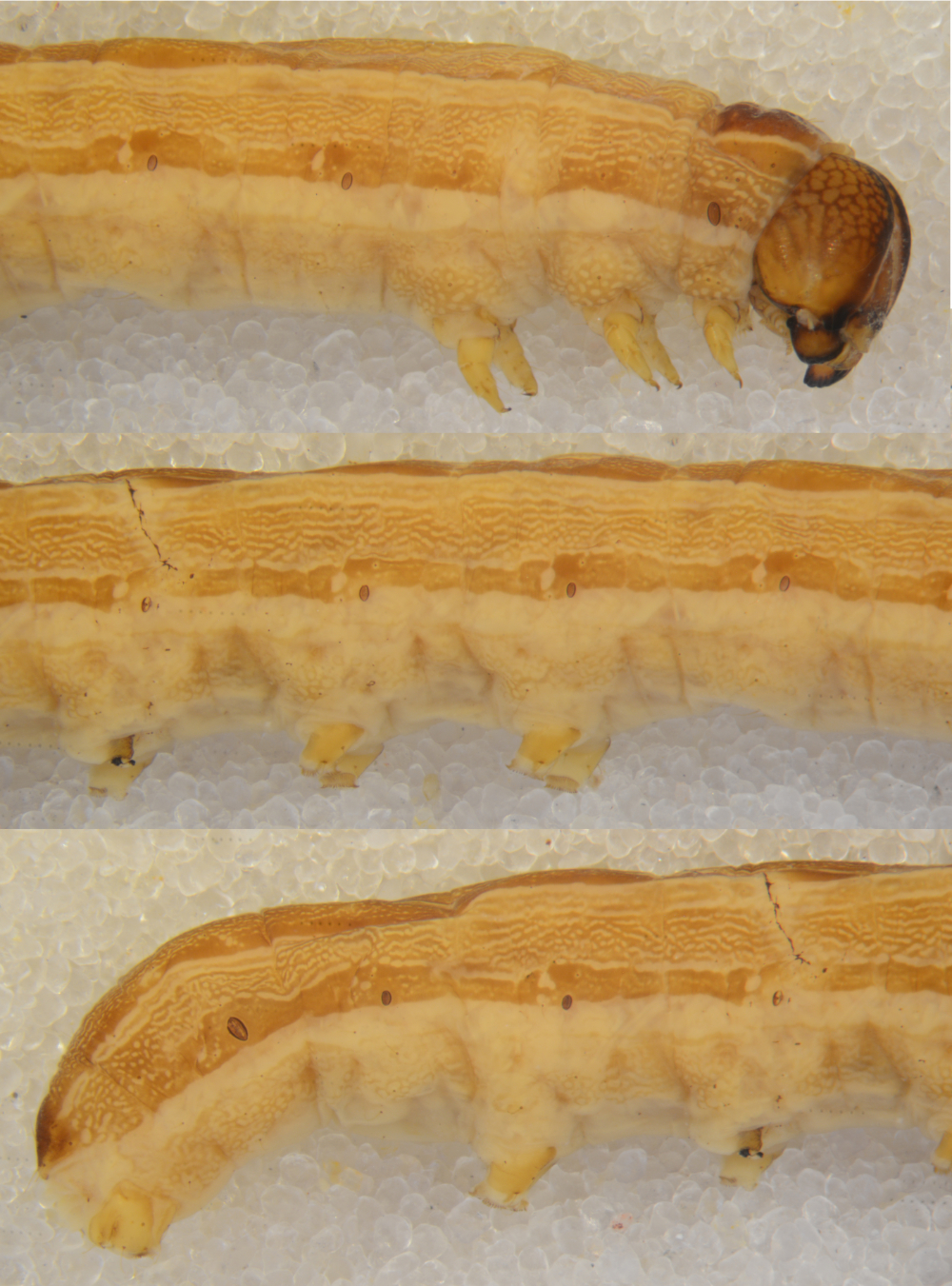
In larvae, S. exempta has the spiracular band solid in color with a white spot on the posteriorposterior:
the 'tail' end of an organism, as opposed to the anterior or 'head' end of an organism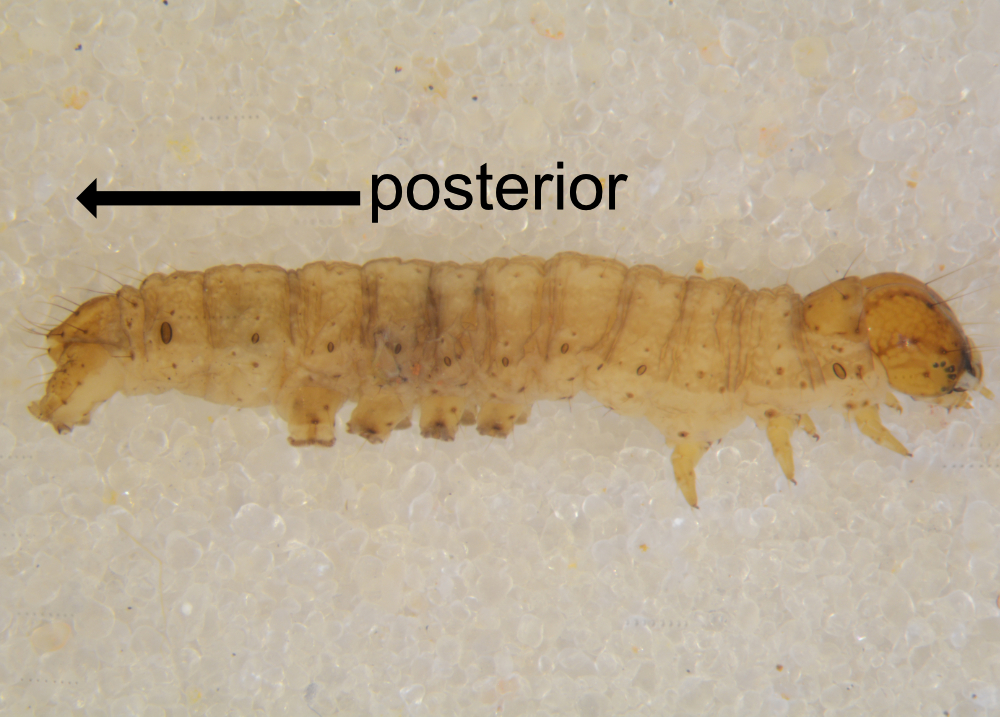 side of each spiracle. The head and frons are dark brown. The dorsal thoracic and abdominal markings are usually absent or greatly reduced. Larvae of S. exempta could be confused with S. mauritia, but S. mauritia does not have a solid spiracular band and usually has dorsal thoracic and abdominal markings, though they can be quite reduced (Pogue 2002Pogue 2002:
Pogue MG. 2002. A world revision of the genus Spodoptera Guenée (Lepidoptera: Noctuidae). Memoirs of the American Entomological Society. 43:1–202.).
Spodoptera exempta is native to Sub-Saharan Africa and the Arabian Peninsula but has been introduced to Southeast Asia, Australia, and many Pacific Islands. It has been reported from Japan and New Zealand but is not thought to be established there.
In Hawaiʻi, S. exempta has been reported from all of the main high Hawaiian Islands, plus Ni‘ihau, Kure, Midway, Pearl and Hermes Atoll, and French Frigate Shoals. It is unclear on how many of these islands it is still present. The only records from the past 50 years in the UHIM collectionUHIM collection:
UHIM collection. Based on identified specimens in the collection of the University of Hawaii Insect Museum, Honolulu, HI are from Maui and Lānaʻi.
The life cycle of Spodoptera exempta in Hawaiʻi was described by Swezey (1909)Swezey (1909):
Swezey OH. 1909. Army worms and cut worms on sugar cane in the Hawaiian Islands. Report of the Work of the Experiment Station of the Hawaiian Sugar Planters' Association, 7. Honolulu. 31 pp. (as S. mauritia):
The eggs "are usually in large masses of one layer and in regular rows, and covered with gray hairs from the abdomenabdomen:
the third and posterior-most body section of an insect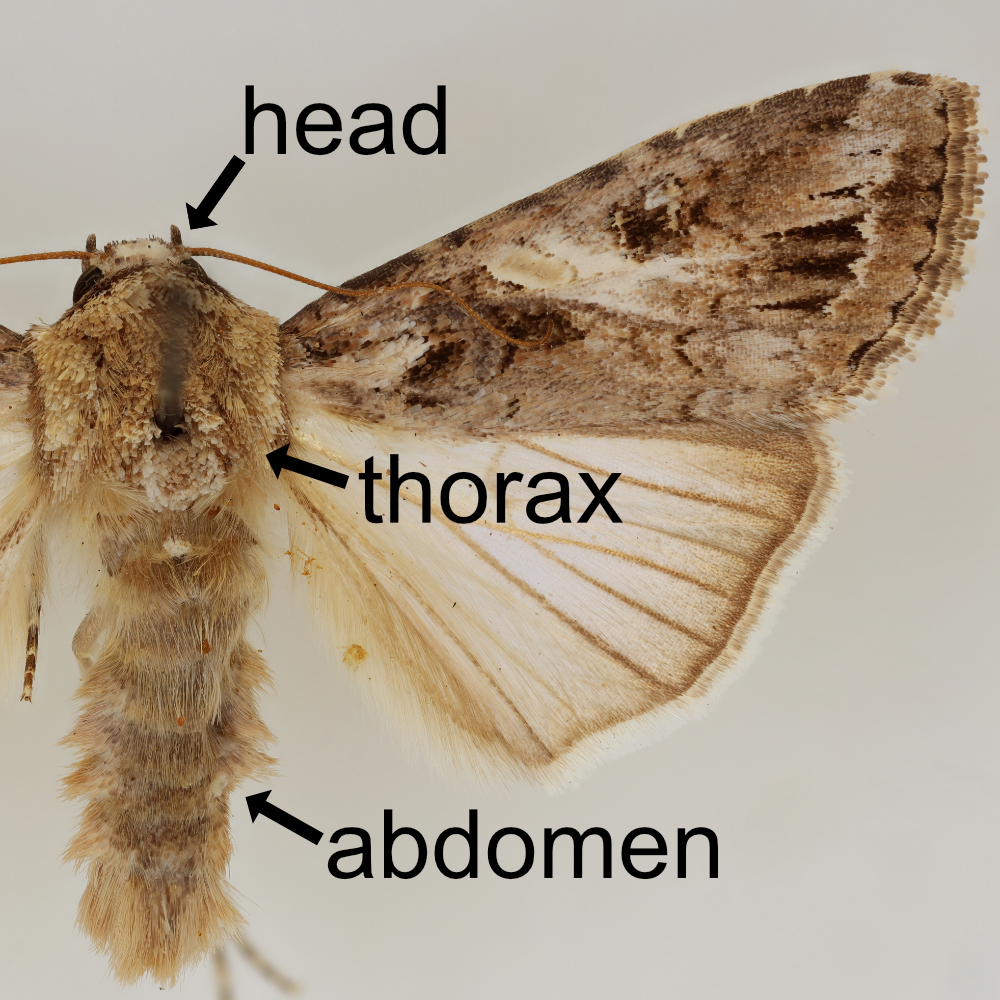 of the moth. There may be from 100 to 300 in one cluster. One moth may lay several hundred eggs; one specimen which I had in a breeding cage laid 700. The egg masses are not placed necessarily on the food plant; but usually high up, often on the leaves of banana and small palms, or other small trees or shrubs at three to five feet elevation. It is also common to find them on the sides of buildings and other structures..."
"The eggs hatch in three to four days from the time they are laid, and the tiny larvae drop to the ground by means of a silken thread, where they will find grass or other suitable food plant. They feed at first at the tips of leaves, eating the green substance of the leaf and leaving the epidermis, which dries up, giving a dead appearance. When a few days old, they eat the entire substance of the leaf from its margins, producing notches and a very ragged appearance."
"After molting five times at intervals of two to six days, the caterpillars become full-grown in two to three weeks. They are then about [35 mm] long. The pupa is formed in an earthen cell a little below the surface of the soil. It is medium dark brown, [12–15 mm] in length. At its apexapex:
the point furthest from the base; the apex of the wing may be rounded, pointed, or falcate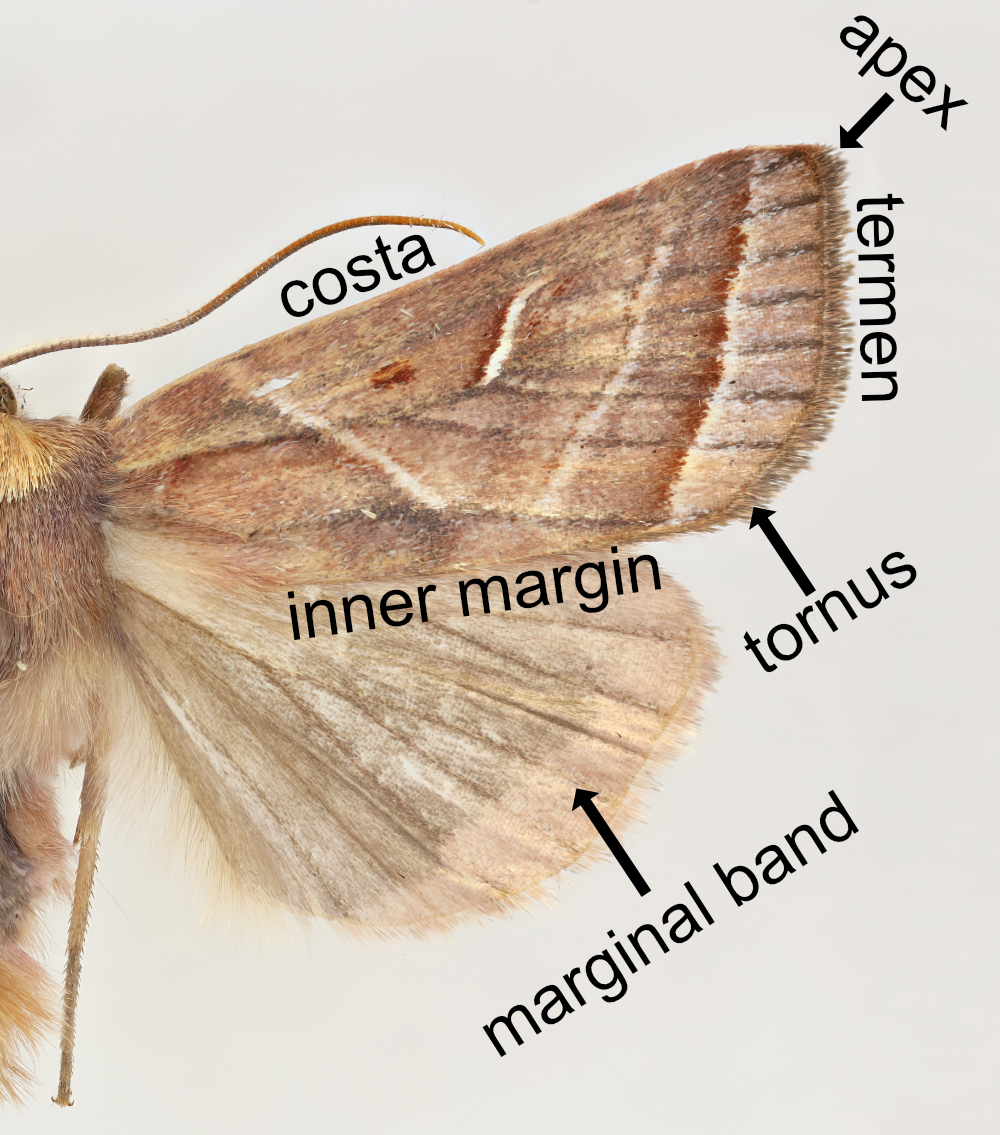 are two straight slender-pointed spines set rather wide apart and nearly parallel. The moth emerges from the pupa in eight to fourteen days, and is ready for egg-laying in two to four days. Thus the whole life cycle occupies only five to six weeks (Swezey 1909Swezey 1909:
Swezey OH. 1909. Army worms and cut worms on sugar cane in the Hawaiian Islands. Report of the Work of the Experiment Station of the Hawaiian Sugar Planters' Association, 7. Honolulu. 31 pp. )."
Brown (1962)Brown (1962):
Brown ES. 1962. The African armyworm Spodoptera exempta (Walker) (Lepidoptera, Noctuidae): a review of the literature. Commonwealth Institute of Entomology, London. 57 pp. listed 36 species of Poaceae and four of Cyperaceae as hosts of S. exempta in East Africa. A few other species of grasses have been reported since Brown and Dewhurst (1975)Brown and Dewhurst (1975):
Brown ES, Dewhurst CF. 1975. The genus Spodoptera (Lepidoptera, Noctuidae) in Africa and the Near East. Bulletin of Entomological Research. 65:221–262.. Spodoptera exempta is primarily a grass-feeder, attacking corn (Zea mays L.), rice (Oryza sativa L.), millet (various Poaceae), sorghum (Sorghum bicolor (L.) Moench), wheat (Triticum spp.), sugar cane (Saccharum spp.), and pasture grasses. It is rare on dicots and probably only eats these plants when species of Poaceae and Cyperaceae are absent (Pogue 2002Pogue 2002:
Pogue MG. 2002. A world revision of the genus Spodoptera Guenée (Lepidoptera: Noctuidae). Memoirs of the American Entomological Society. 43:1–202.).
Author: Kyhl A. Austin
Content last updated May 2026
idtools.org