ADVENTIVE
Peridroma saucia (Hübner, 1808)
Higher taxonomy: Noctuidae: Noctuinae: Noctuini
Common names: variegated cutworm, pearly underwing
Note: much of the literature regarding this species in Hawai‘i use the names Peridroma porphyrea (of authors, not Denis and Schiffermüller) or Lycophotia porphyrea (Denis and Schiffermüller), 1775, which has caused a great deal of confusion regarding this species in Hawai‘i. For a summary, see Austin and Rubinoff (2022)Austin and Rubinoff (2022):
Austin KA, Rubinoff D. 2022. Eleven new records of Lepidoptera in the Hawaiian Islands including corrections to the Hawaiian terrestrial arthropod checklist. Bishop Museum Occasional Papers. 142:49–74..
Peridroma saucia is a widespread, polyphagous species in the Hawaiian Islands. It was first reported in Hawai‘i by Meyrick (1899)Meyrick (1899):
Meyrick E. 1899. Macrolepidoptera. In: Sharp D, Fauna Hawaiiensis. Cambridge University Press, Cambridge. p 123–275. but likely arrived sometime in the preceding decade, as it was never collected by Blackburn (Perkins 1913Perkins 1913:
Perkins RCL. 1913. Introduction, being a review of the land-fauna of Hawaii. In: Sharp D, editor. Fauna Hawaiiensis. Cambridge University Press, Cambridge. p 15–238.). Today it can be found across all of the main high Hawaiian Islands plus Kaho‘olawe and Laysan (Nishida 2002Nishida 2002:
Nishida GM. 2002. Hawaiian terrestrial arthropod checklist. Fourth Edition. Bishop Museum Technical Report 22. 313 pp., Austin and Rubinoff 2022Austin and Rubinoff 2022:
Austin KA, Rubinoff D. 2022. Eleven new records of Lepidoptera in the Hawaiian Islands including corrections to the Hawaiian terrestrial arthropod checklist. Bishop Museum Occasional Papers. 142:49–74.).
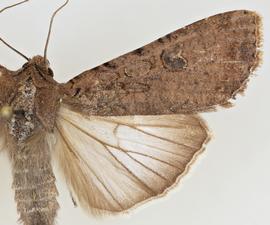
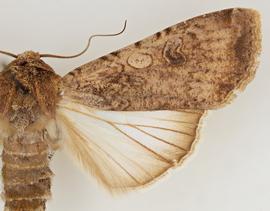
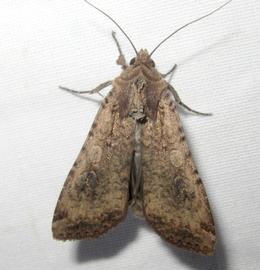
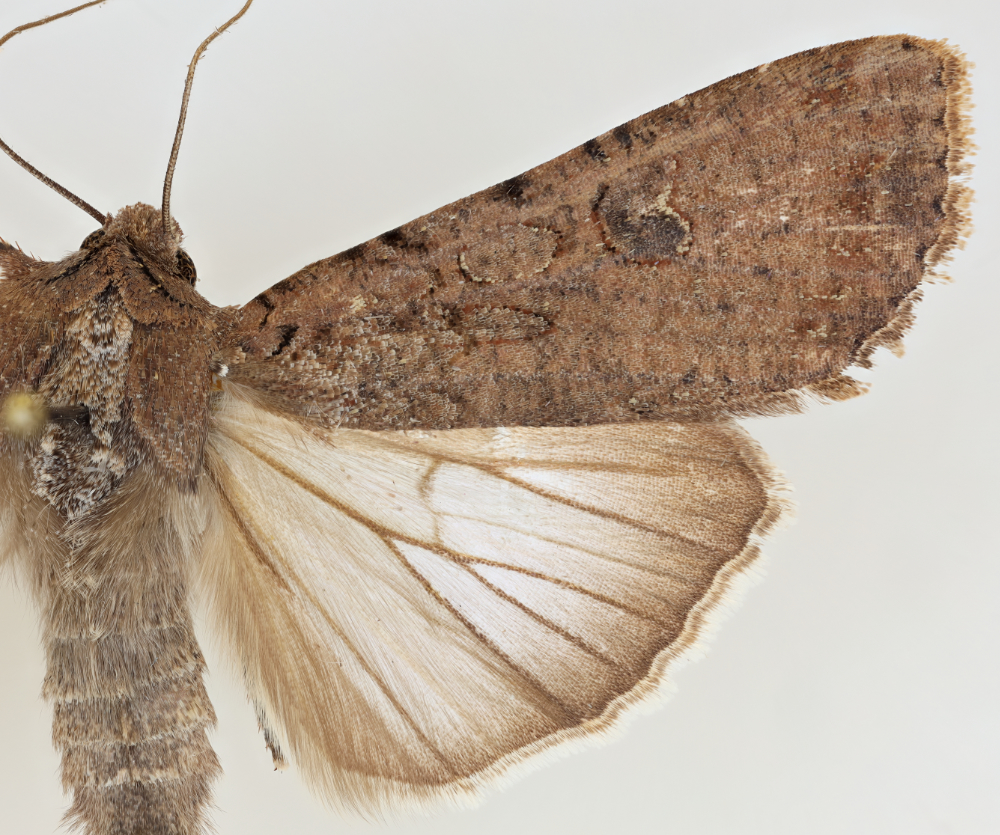
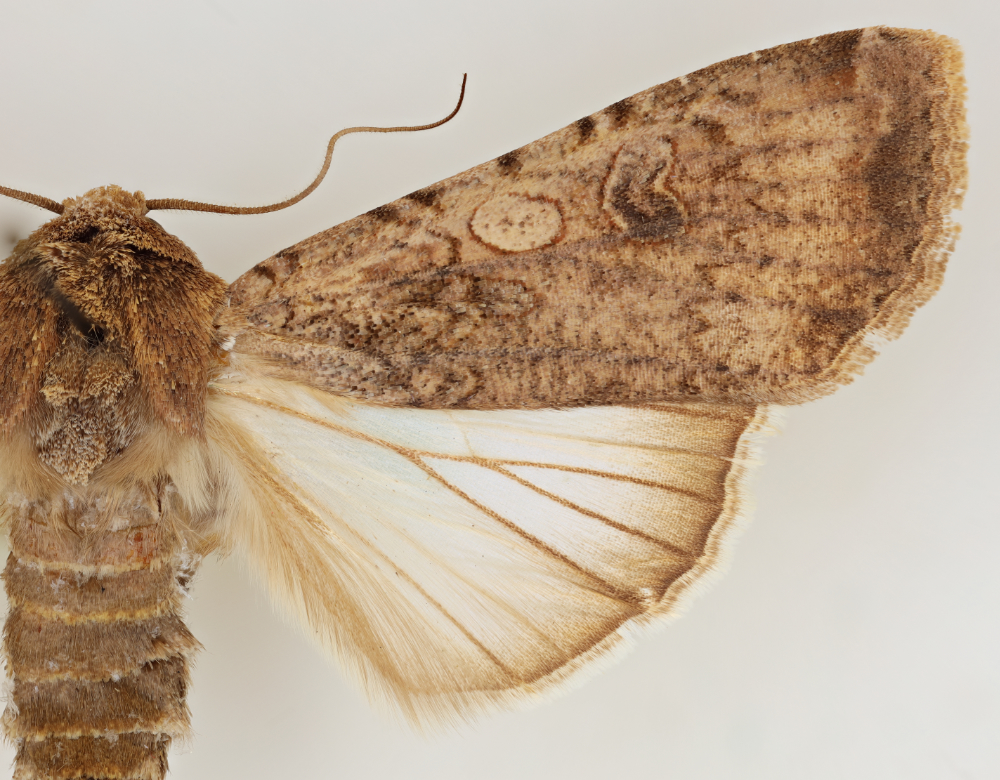
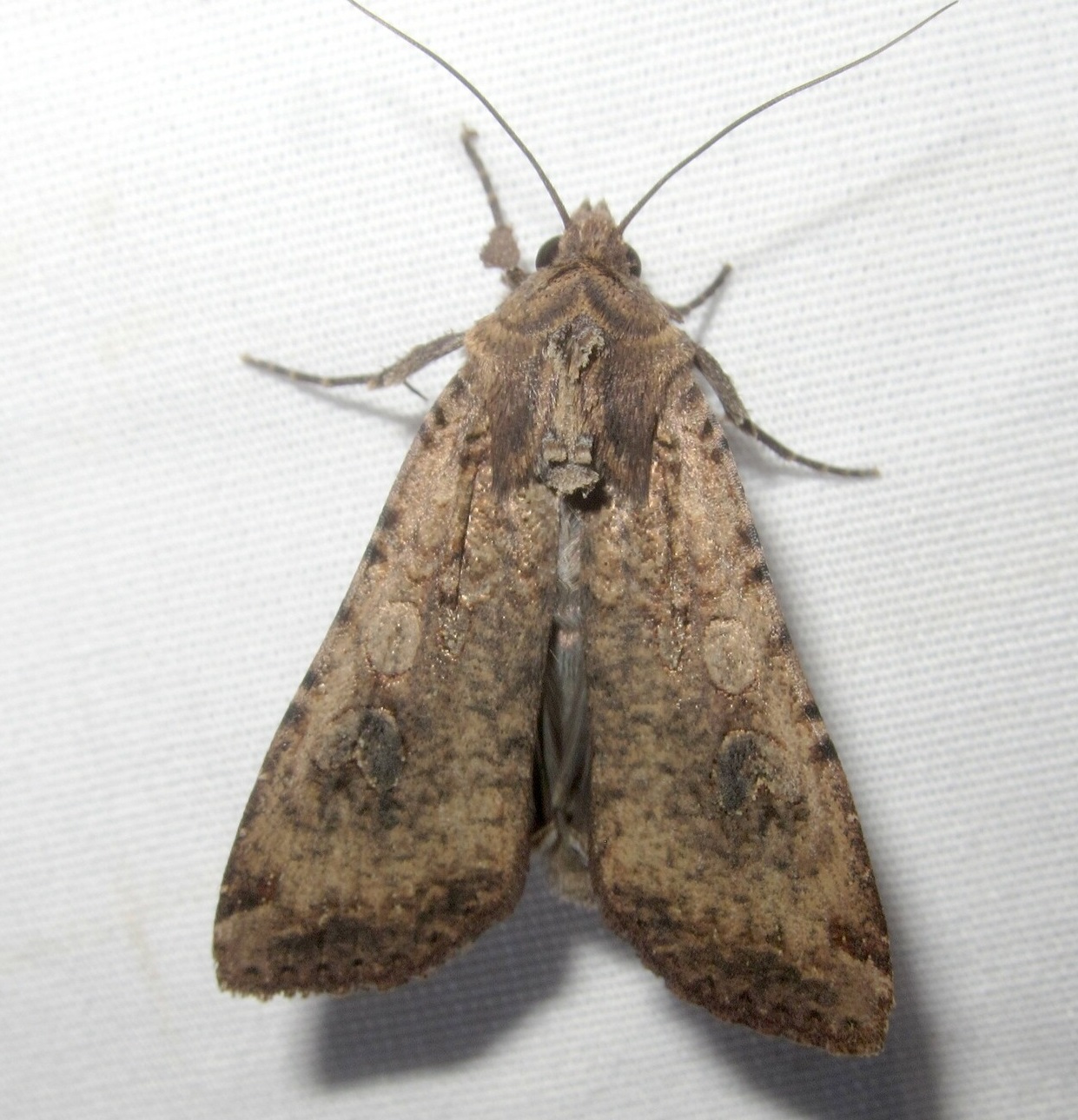
Adults of Peridroma saucia are medium-sized to large noctuids (forewing lengthforewing length:
the distance of the forewing in a straight line from the base to the tip of the apex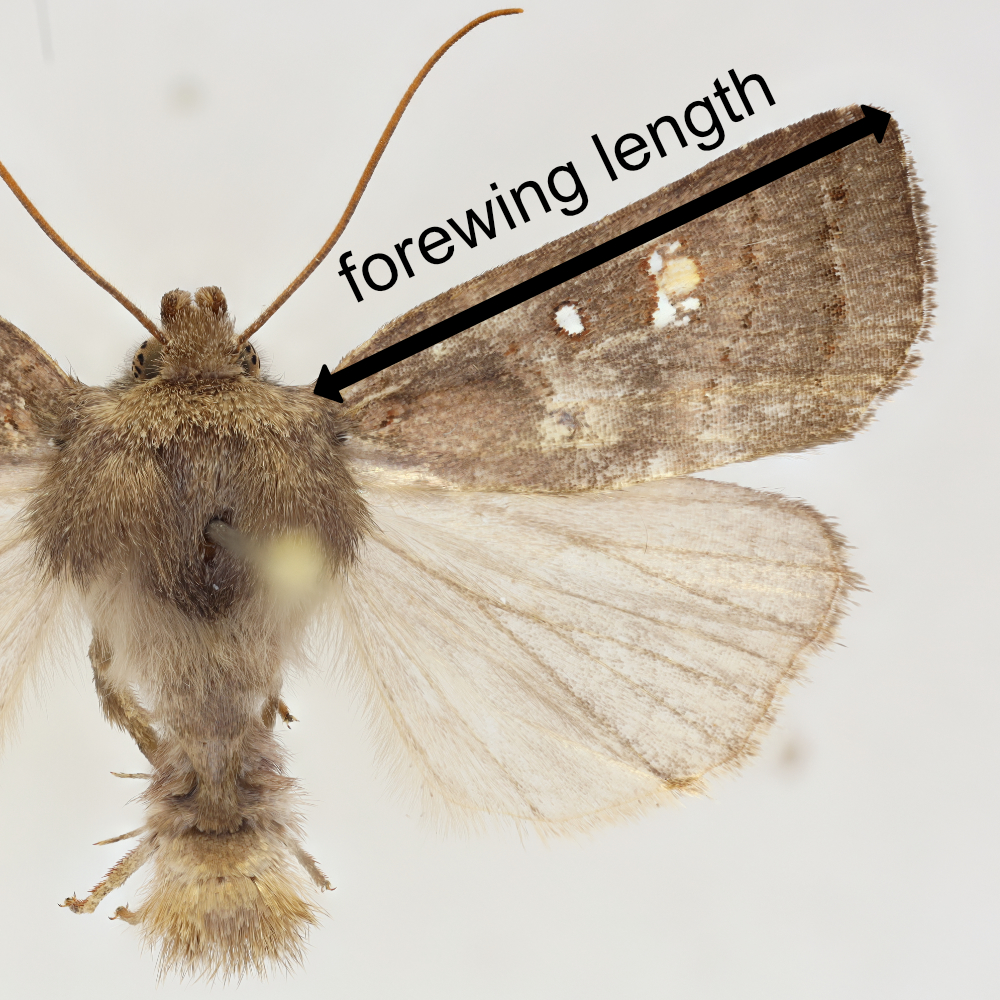 19–24 mm) characterized by a pale brown, brown, or nearly black forewingforewing:
the front wing of an insect; the wing attached to the second segment of the thorax (the mesothorax)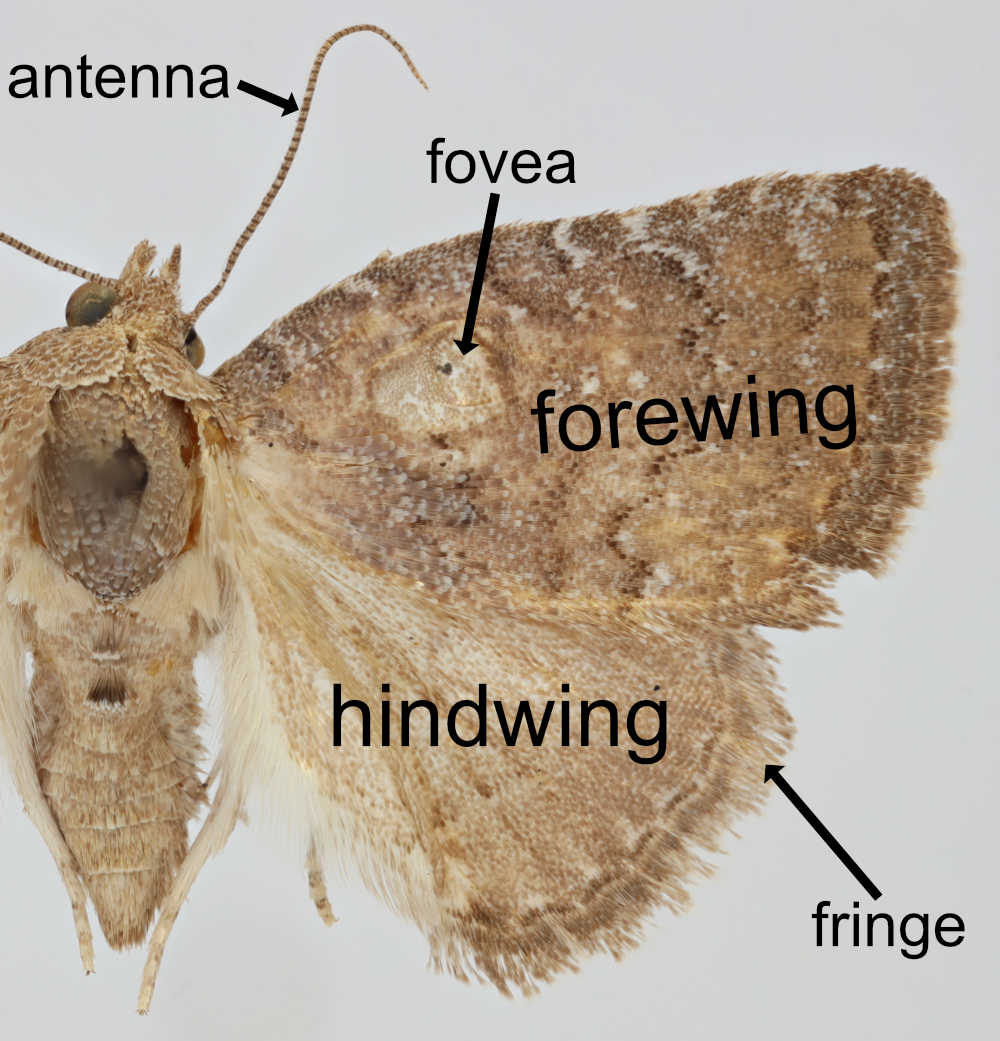 (often with a purplish wash), large, distinctive orbicular and reniform spotsreniform spot:
a spot, often broad bean- or kidney-shaped, found at the distal end of the discal cell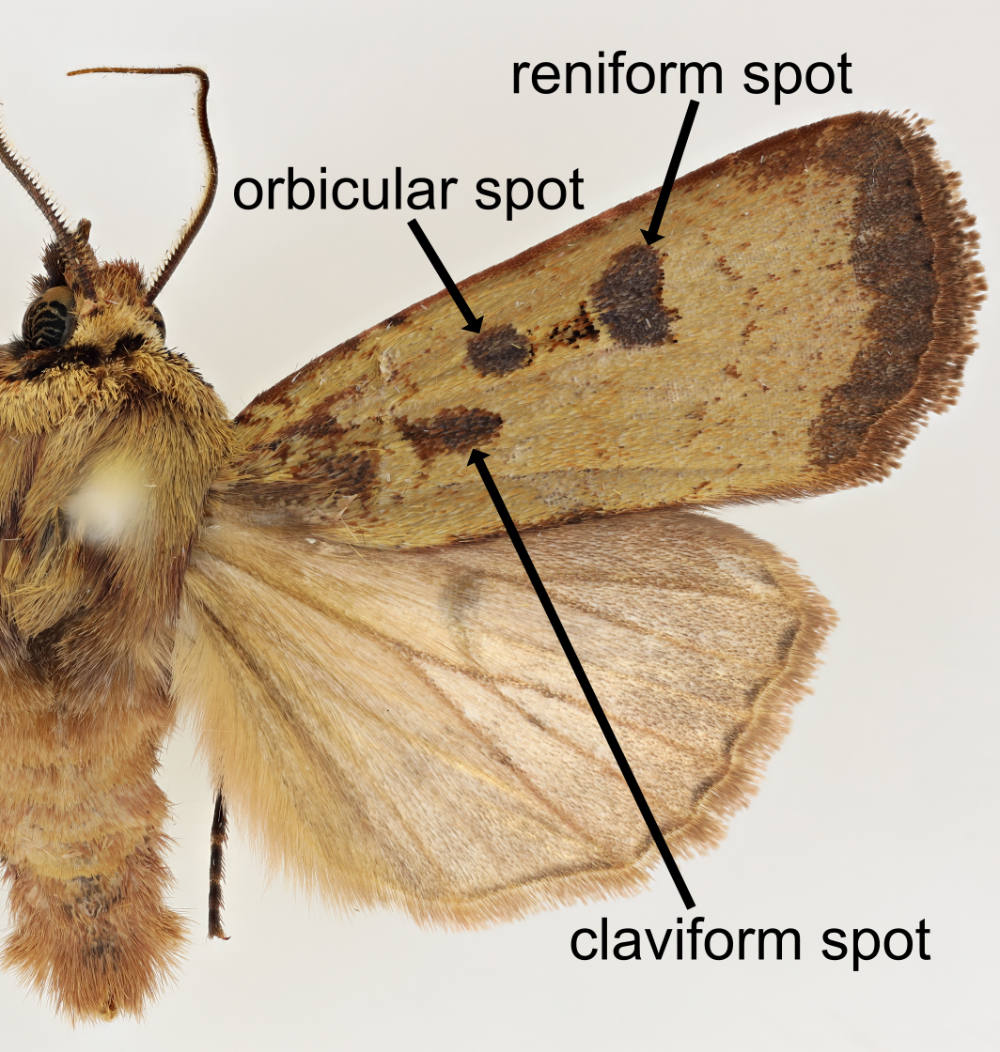 , and several black spots along the costa. The antemedial and postmedial linespostmedial line:
a thin, transverse line located distal to the reniform spot, typically on the distal third of the forewing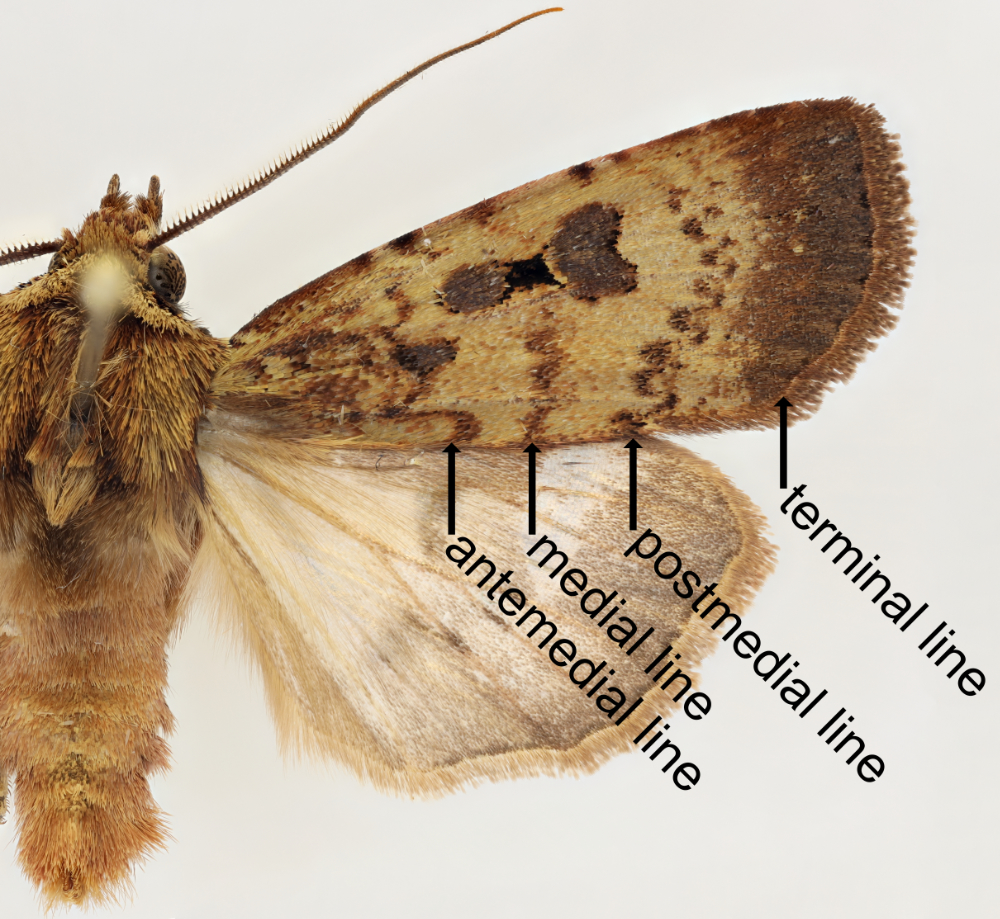 are variably expressed but when apparent are typically jagged or scalloped. The hindwinghindwing:
the back wing of an insect; the wing attached to the third segment of the thorax (the metathorax)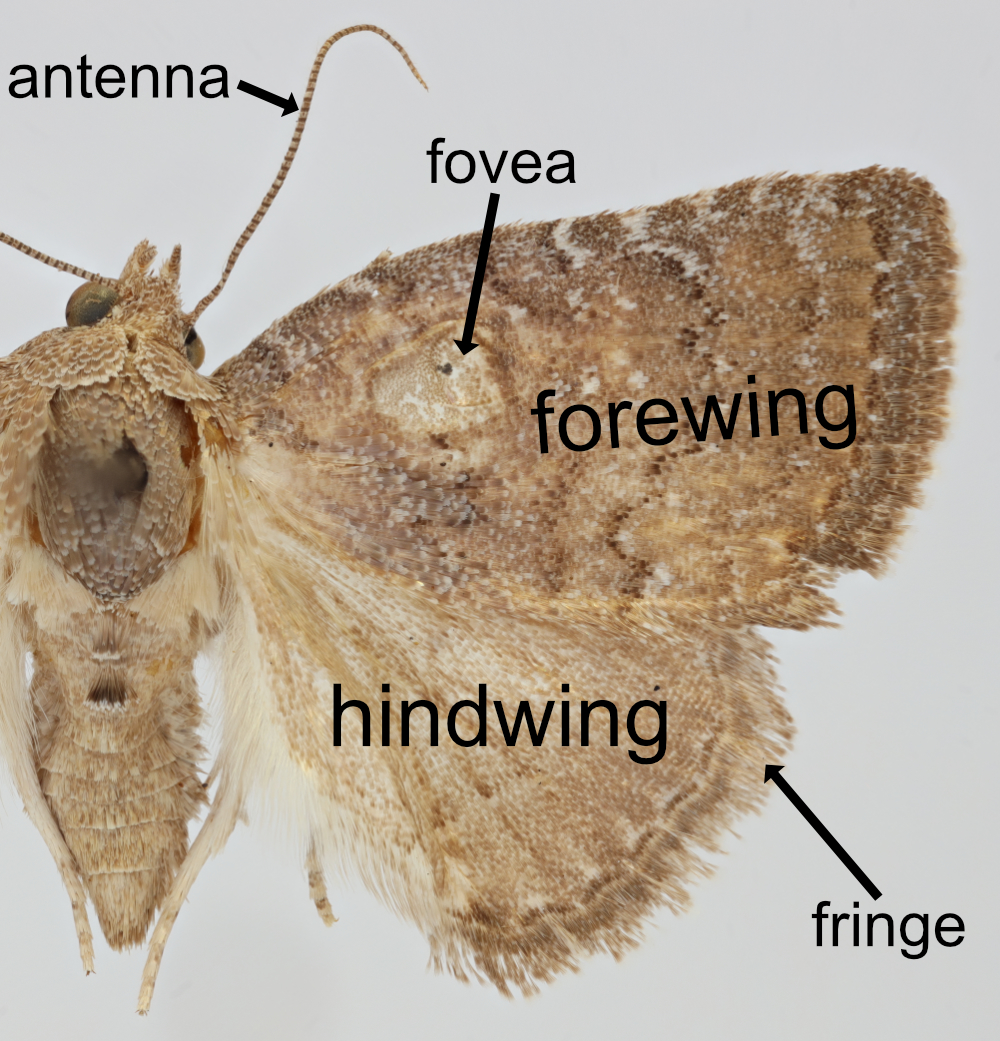 is partially translucent, pale brown, with darker scaling along the veins. Males have a thin pair of sex scale tufts at the base of the abdomenabdomen:
the third and posterior-most body section of an insect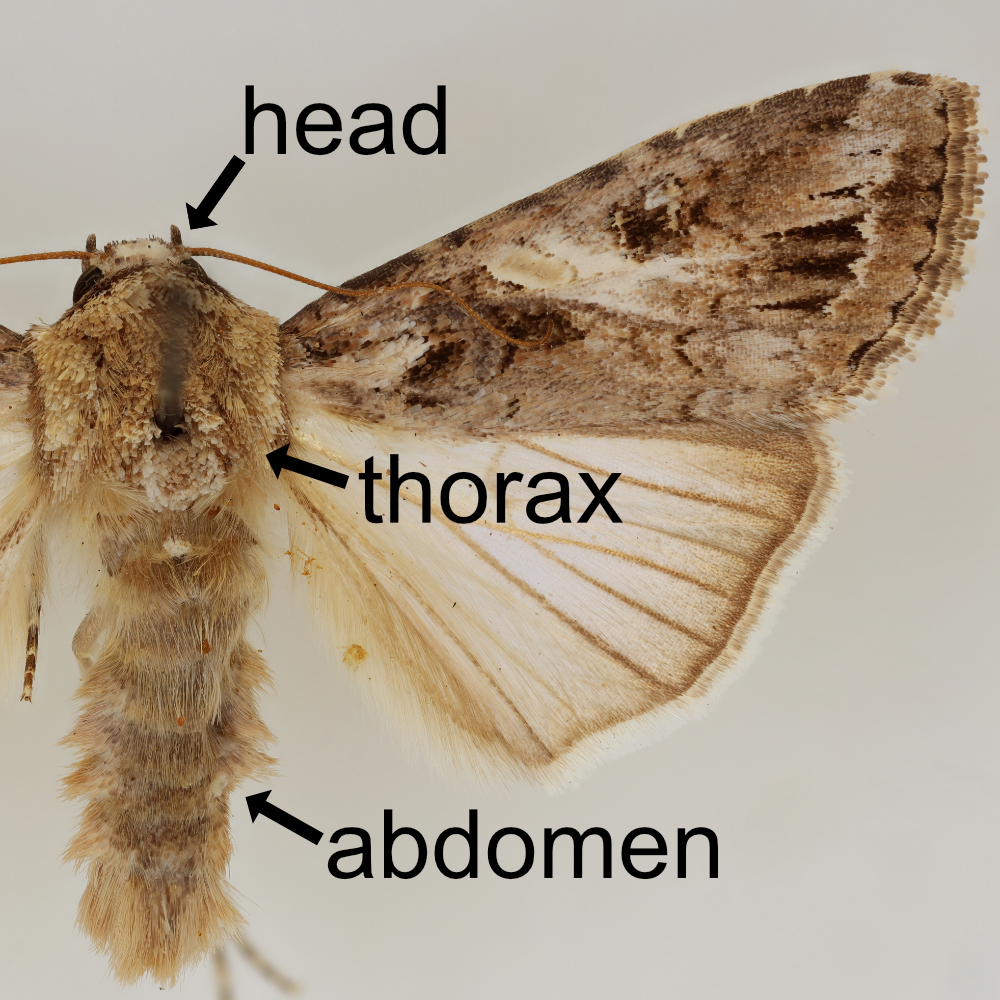 . For representative images of male and female genitalia, see the Moth Photographers Group North American Lepidoptera Genitalia Library.
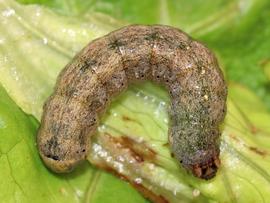
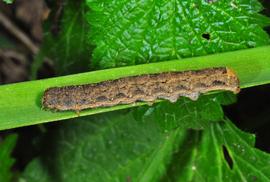
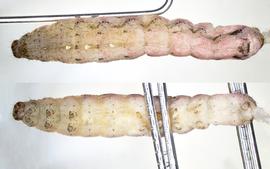
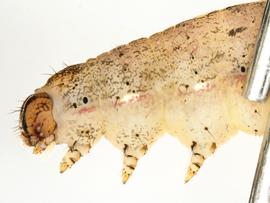
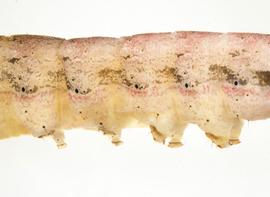
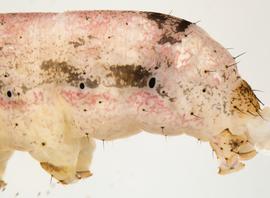
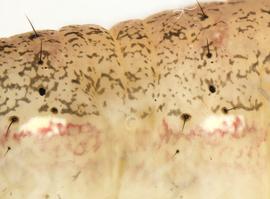
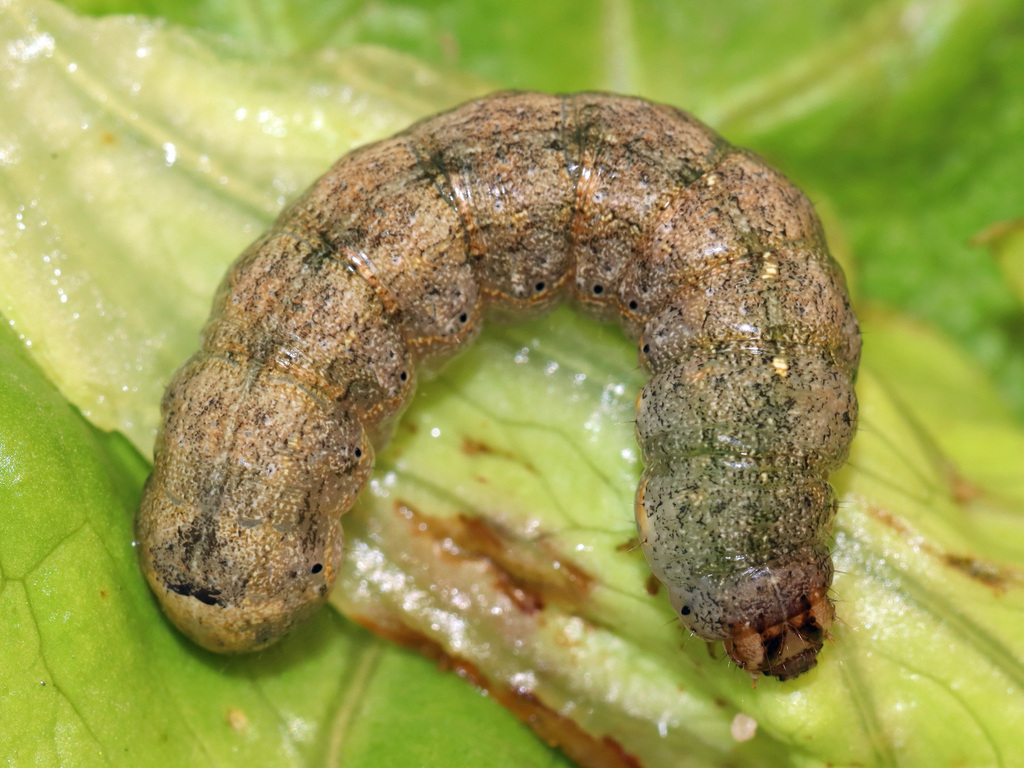
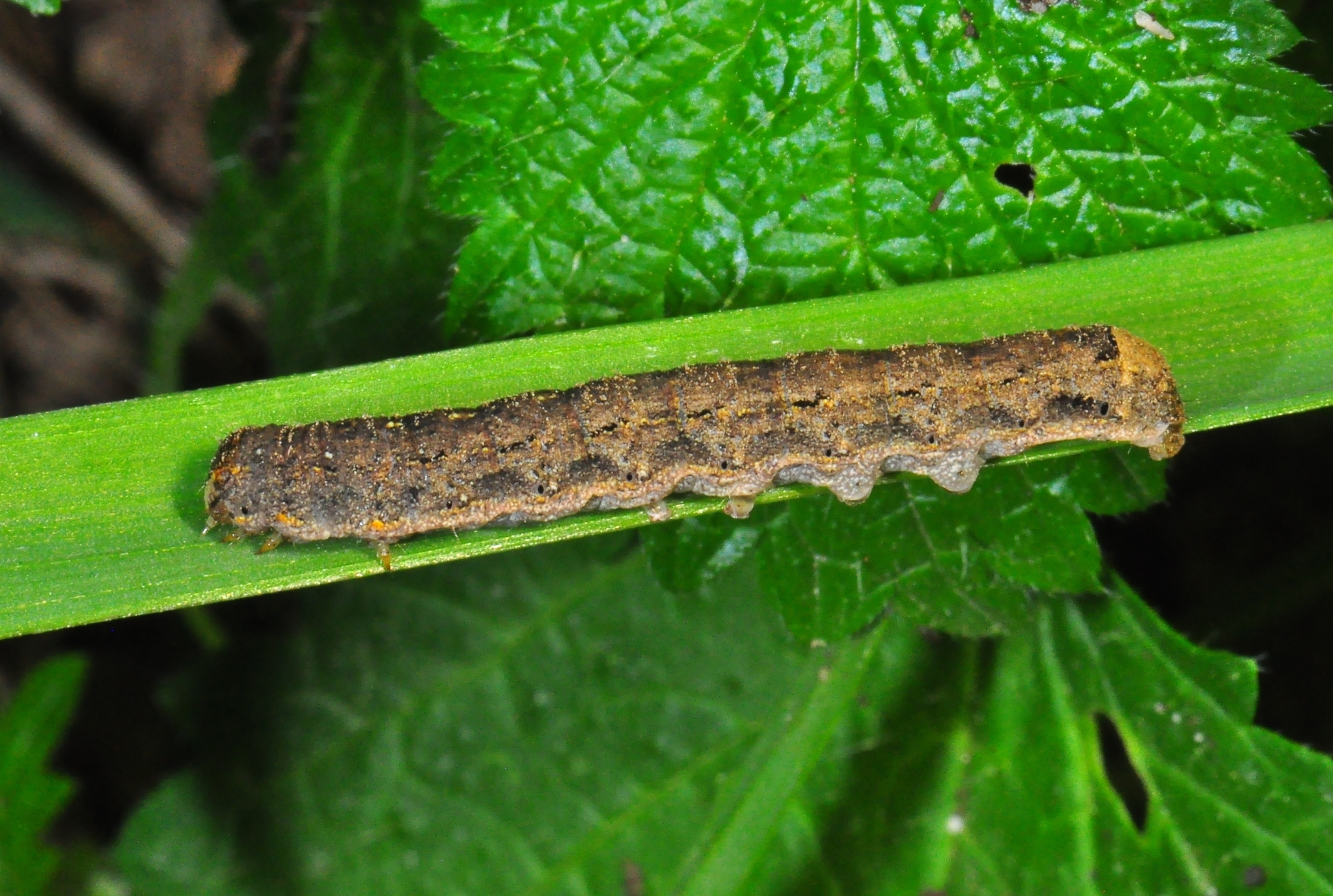
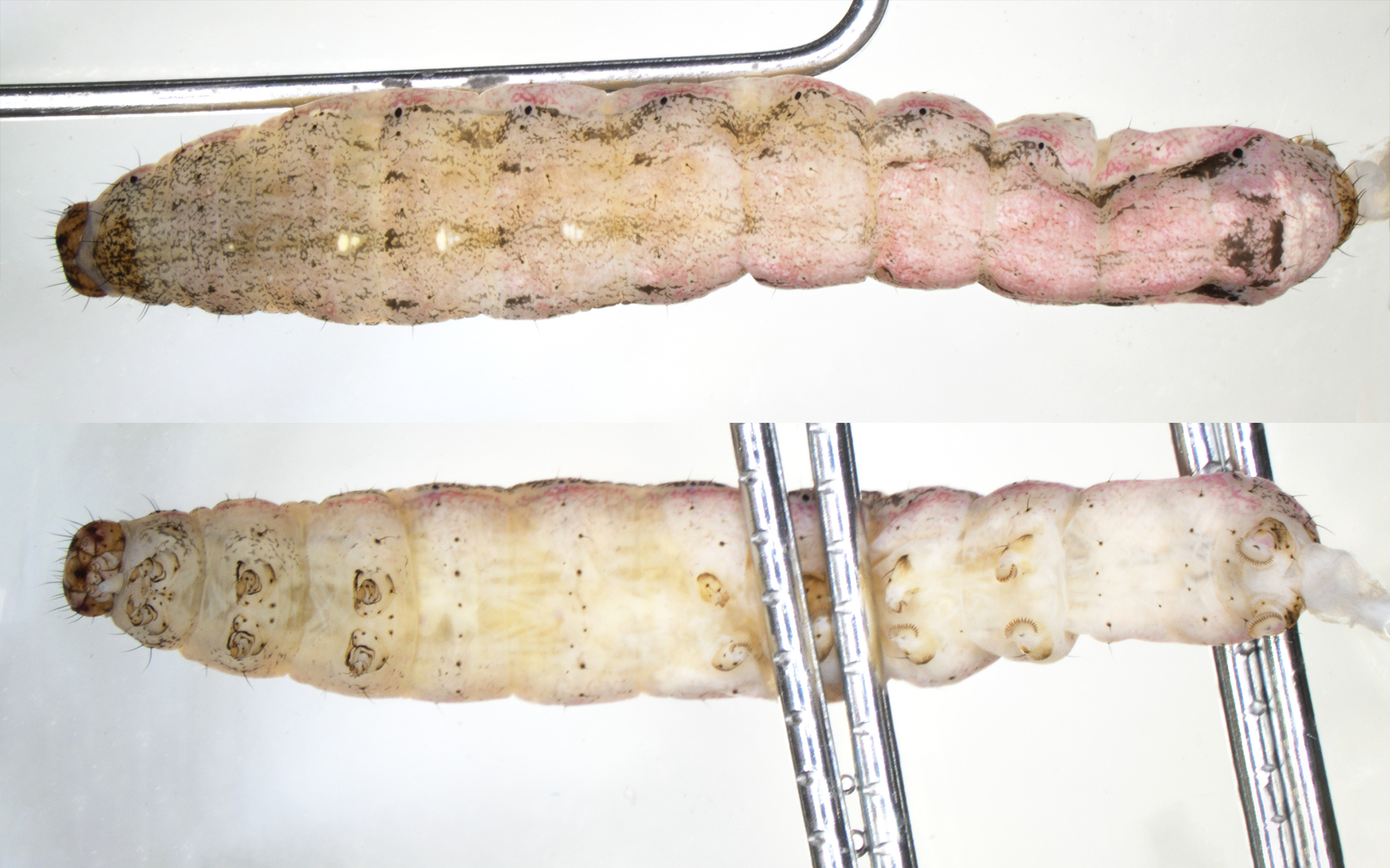
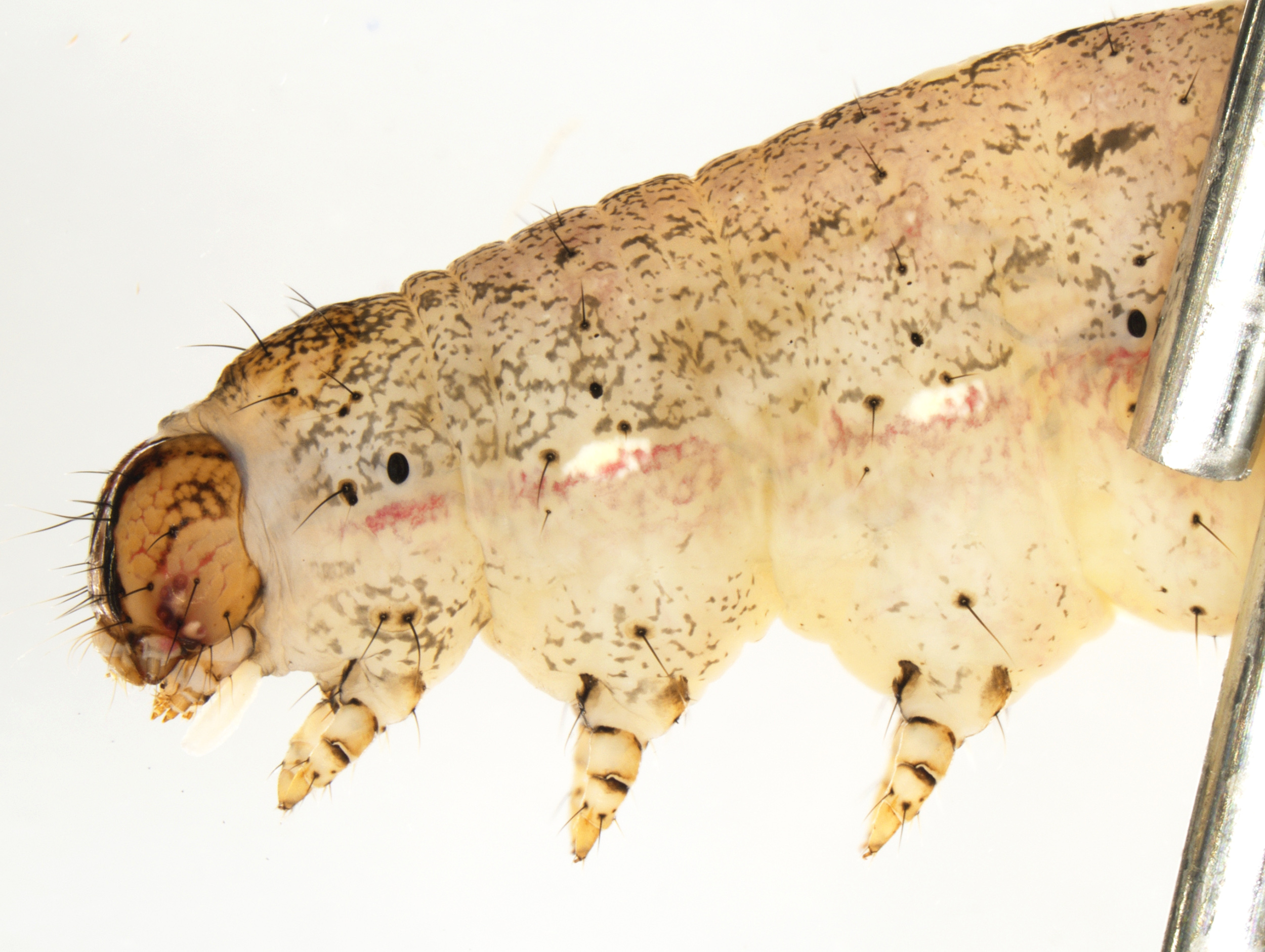
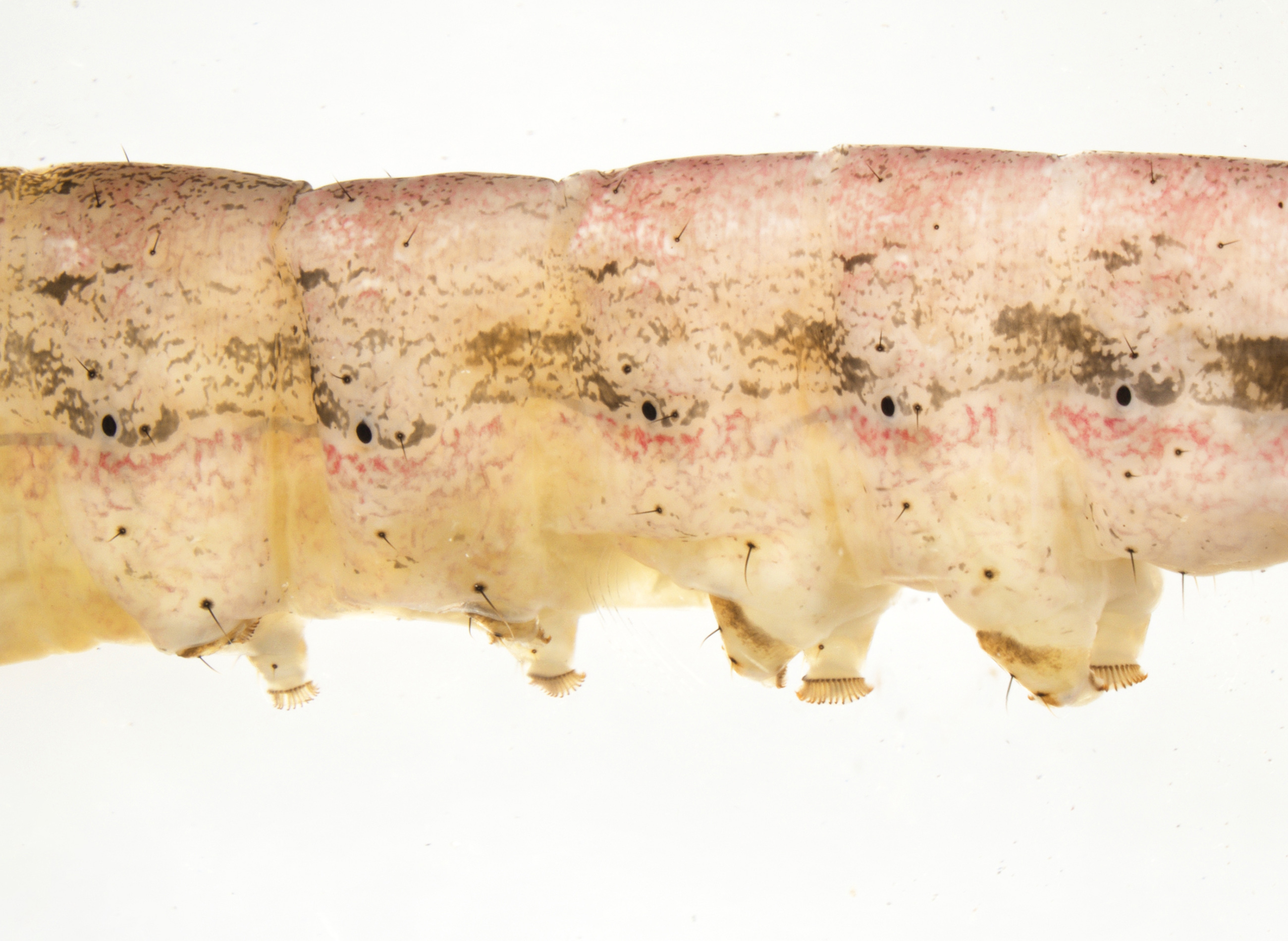
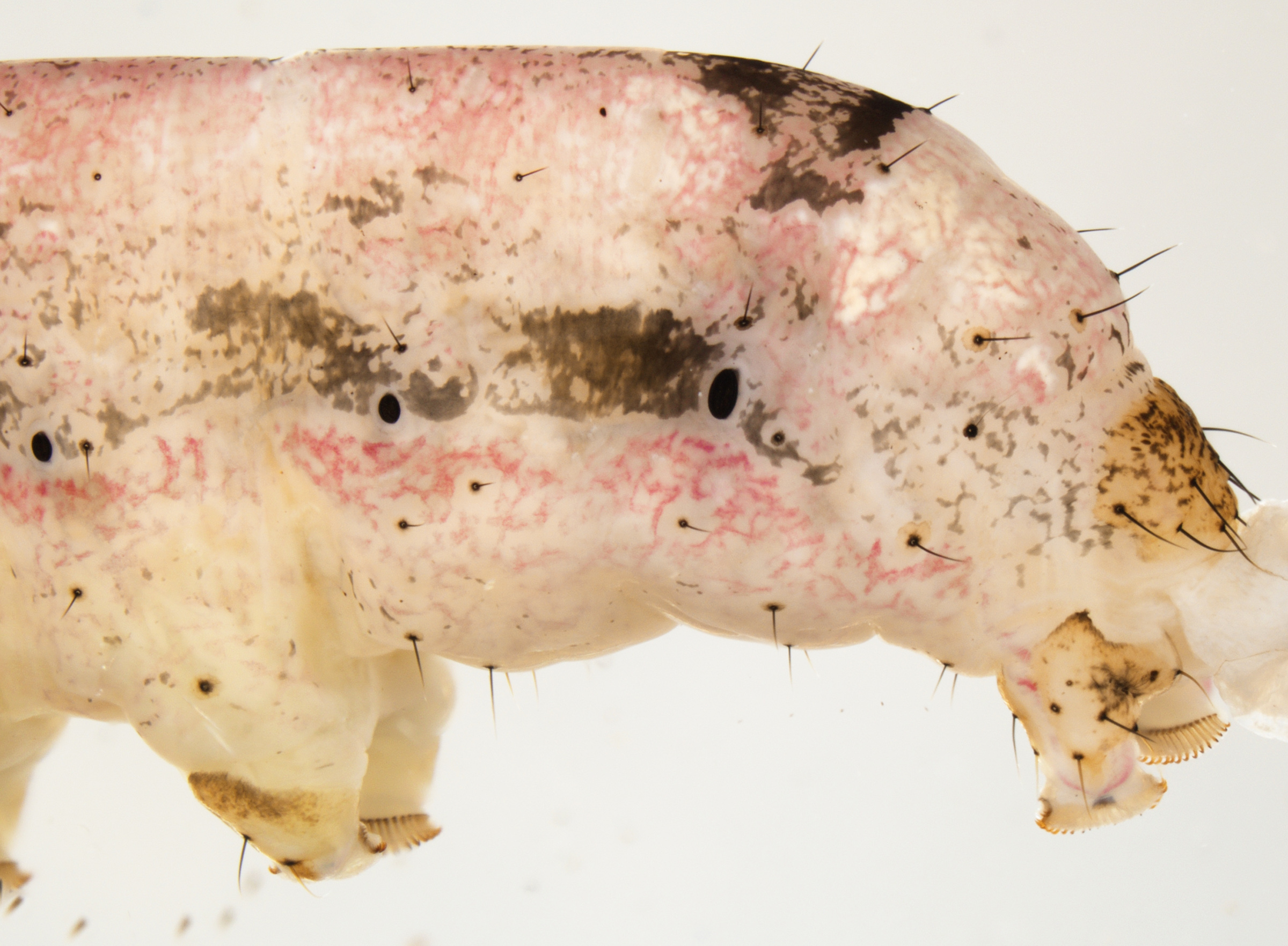
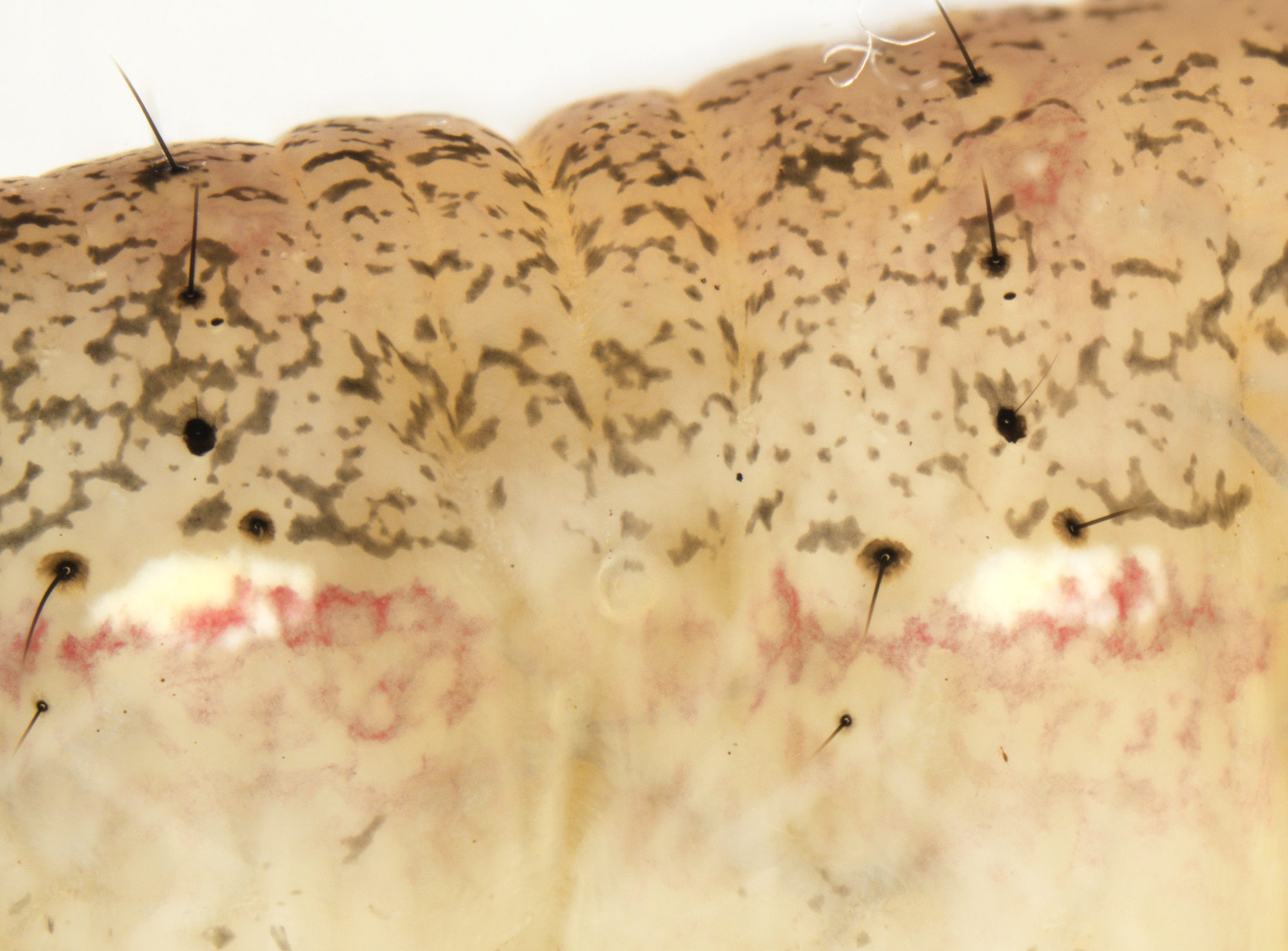
The larva of Peridroma saucia was described by Swezey (1909)Swezey (1909):
Swezey OH. 1909. Army worms and cut worms on sugar cane in the Hawaiian Islands. Report of the Work of the Experiment Station of the Hawaiian Sugar Planters' Association, 7. Honolulu. 31 pp. : "The full grown caterpillar ... is about 1.75 inches (40–45 mm). It varies much in color. Head pale brown, reticulate with dark brown, a slight line upward from eyes, two curved vertical broad dark bands in front. Body brown, more or less generally mottled with darker and lighter brown and some yellowish; dorsal line pale yellowish, often broken into a series of yellowish patches on [A1–6]; [A9] mostly usually yellow dorsally on posteriorposterior:
the 'tail' end of an organism, as opposed to the anterior or 'head' end of an organism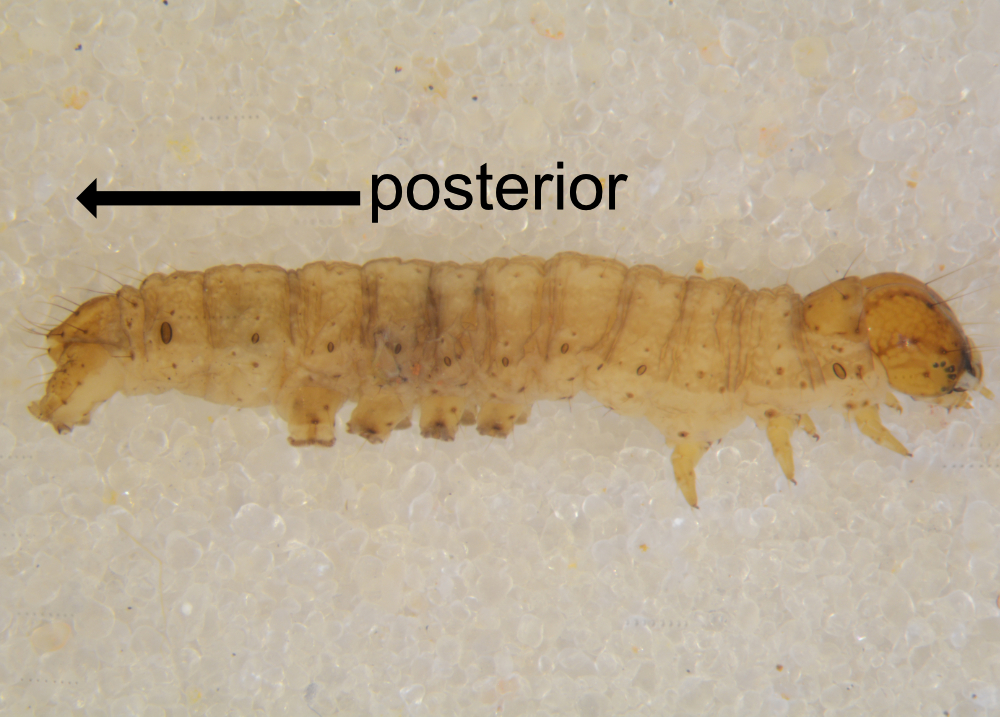 part; a yellowish line below the spiracles, which are black. Tubercles and hairs very minute. In darker forms the browns are nearly black. There is a more or less irregularly interrupted blackish streak just above the line of spiracles. A subdorsal line consisting of blackish spots on each segment. On several of the segments there is a dorsal lozenge-shaped spot slightly darker than the general color, but not so dark as the blackish stripes. A blackish spot on outer side of each proleg."
Peridroma saucia could be confused with several of the native Hawaiian species of Peridroma, especially P. albiorbis, P. coniotis, and P. chersotoides. It differs from these species by possessing purplish scaling on the ventralventral:
refers to the bottom or underside of an organism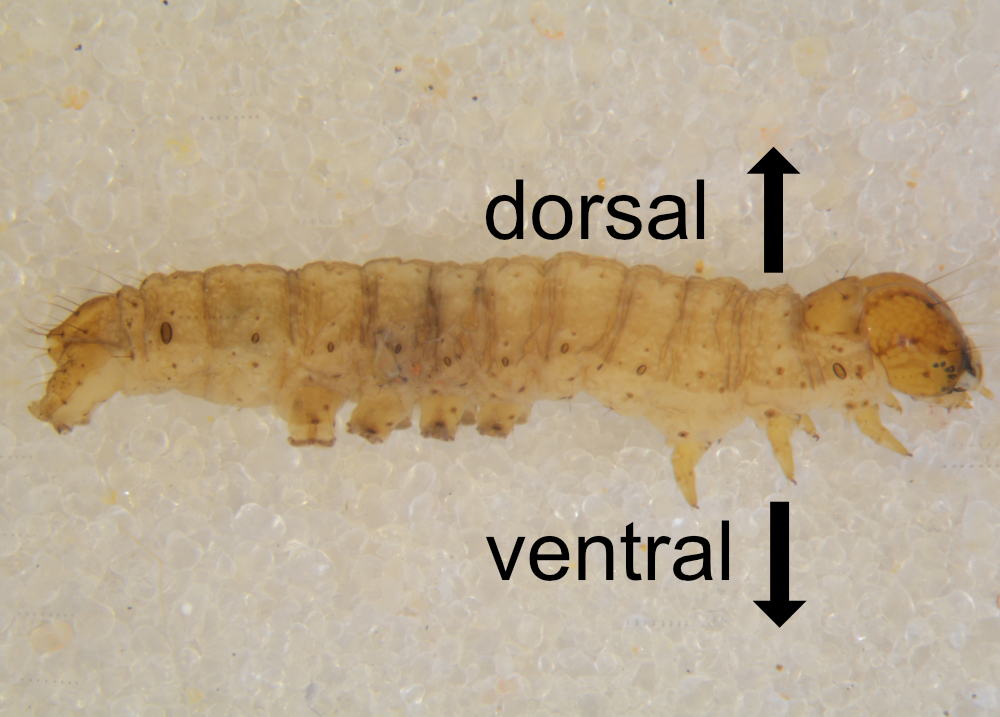 surface of the hindwingshindwing:
the back wing of an insect; the wing attached to the third segment of the thorax (the metathorax) (Zimmerman 1958Zimmerman 1958:
Zimmerman EC. 1958. Insects of Hawaii, Volume 7. Macrolepidoptera. University of Hawaii Press, Honolulu. 542 pp.). Worn specimens could be confused with some species of Agrotis, but males of P. saucia do not have the wide antennal serrations of Agrotis males.
Globally, Peridroma saucia is a widespread species, with records from throughout the Americas, Europe, North Africa, Middle East, Asia, and several oceanic islands. It is apparently absent from Sub-Saharan Africa and Australia. It is believed to be native to South America (Lafontaine 2004Lafontaine 2004:
Lafontaine JD. 2004. The moths of America north of Mexico. Fascicle 27.1. Noctuoidea, Noctuidae (part), Agrotini. The Wedge Entomological Research Foundation. 385 pp. ).
In Hawai‘i, P. saucia can be found widely on the main islands with records from every island except Ni‘ihau. It occurs from sea level to well over 3000 meters on the summits of the highest volcanoes (Nishida 2002Nishida 2002:
Nishida GM. 2002. Hawaiian terrestrial arthropod checklist. Fourth Edition. Bishop Museum Technical Report 22. 313 pp., Austin and Rubinoff 2022Austin and Rubinoff 2022:
Austin KA, Rubinoff D. 2022. Eleven new records of Lepidoptera in the Hawaiian Islands including corrections to the Hawaiian terrestrial arthropod checklist. Bishop Museum Occasional Papers. 142:49–74., UHIM collectionUHIM collection:
UHIM collection. Based on identified specimens in the collection of the University of Hawaii Insect Museum, Honolulu, HI). It is also known from Laysan and Midway (Nishida 2002Nishida 2002:
Nishida GM. 2002. Hawaiian terrestrial arthropod checklist. Fourth Edition. Bishop Museum Technical Report 22. 313 pp., UHIM collectionUHIM collection:
UHIM collection. Based on identified specimens in the collection of the University of Hawaii Insect Museum, Honolulu, HI). It is especially common in disturbed mesic and wet forests.
The life cycle of Peridroma saucia in Hawai'i was described by Swezey (1909)Swezey (1909):
Swezey OH. 1909. Army worms and cut worms on sugar cane in the Hawaiian Islands. Report of the Work of the Experiment Station of the Hawaiian Sugar Planters' Association, 7. Honolulu. 31 pp. : "The eggs are deposited in regular masses, often in regular rows on the surface of leaves or twigs, usually a large number in a mass, often several hundred. The young larvae are green with black heads. They molt five times before attaining their full growth, which takes about a month or a little more."
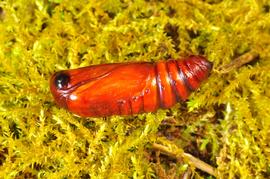
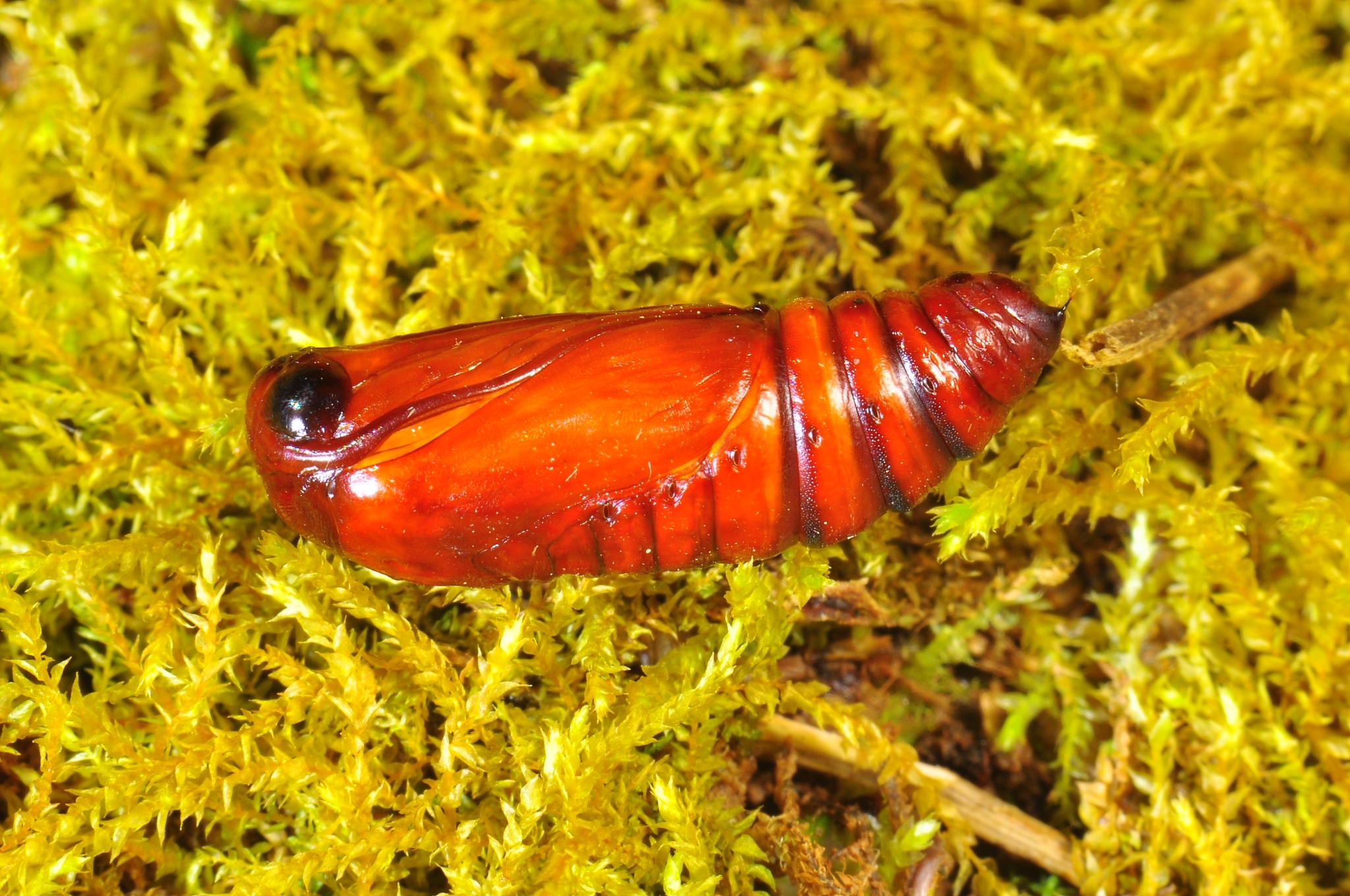
"The pupa is formed in the ground a few inches below the surface, or beneath trash. It is 19 mm in length, and of a uniform medium brown color, its apexapex:
the point furthest from the base; the apex of the wing may be rounded, pointed, or falcate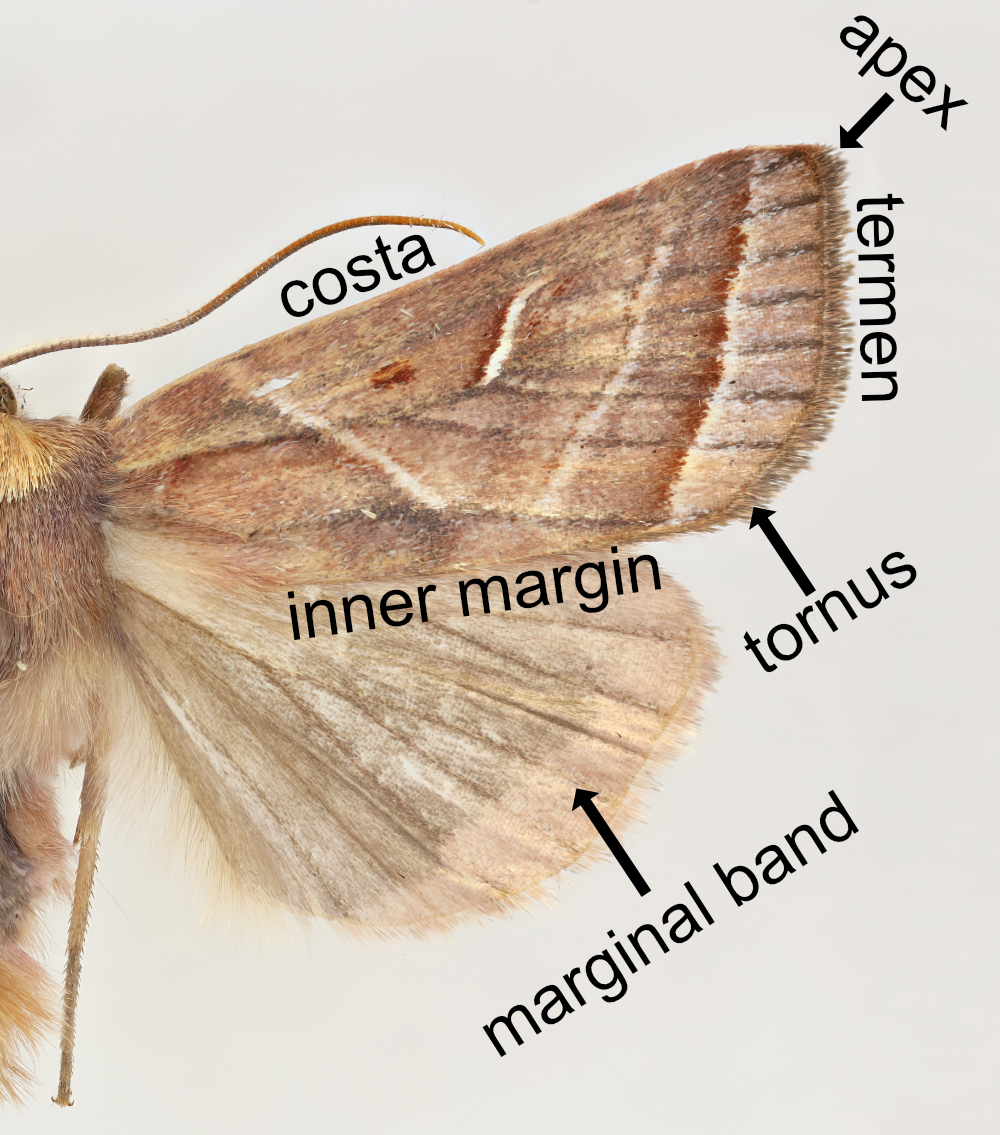 armed with two spines very close together, the basalbasal:
the part of an appendage nearest to where it connects to the body; often referred to as 'proximal'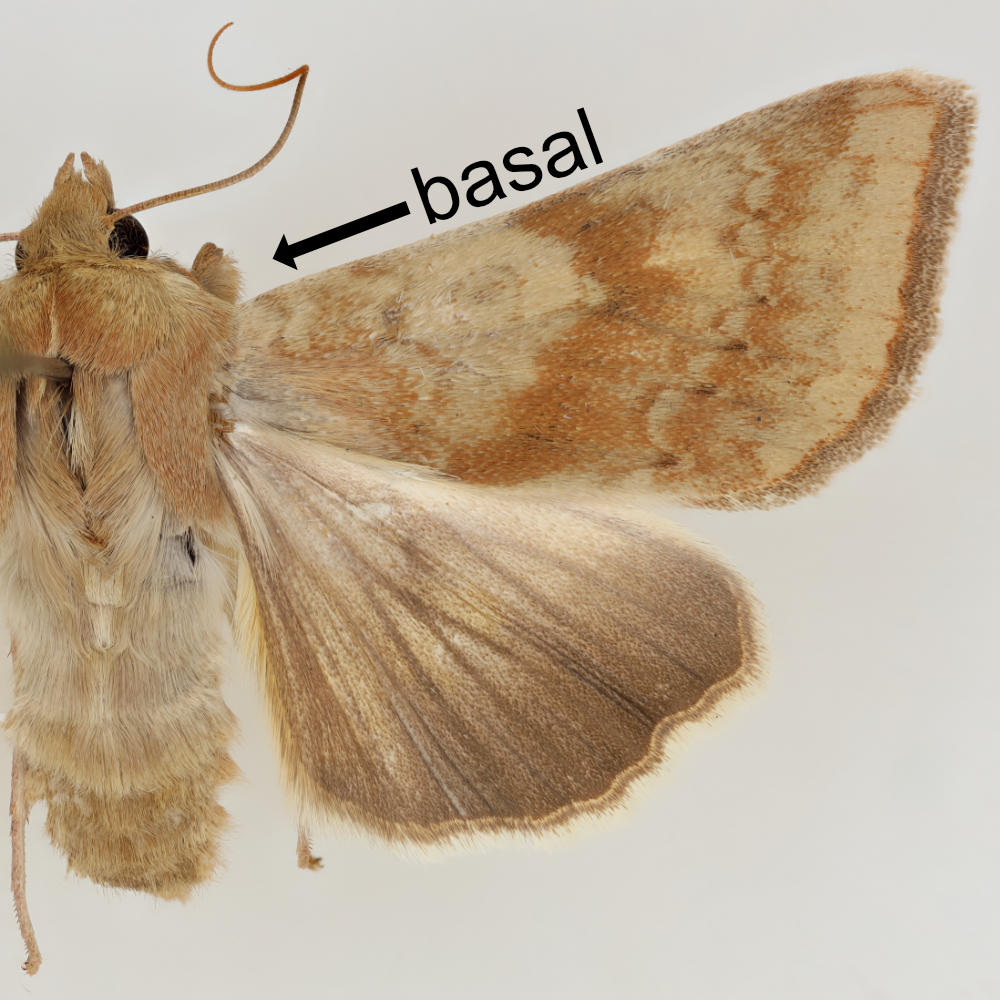 half of each spine black, the tips white. The moth appears in two or three weeks" (Swezey 1909Swezey 1909:
Swezey OH. 1909. Army worms and cut worms on sugar cane in the Hawaiian Islands. Report of the Work of the Experiment Station of the Hawaiian Sugar Planters' Association, 7. Honolulu. 31 pp. ).
More than 130 species of plants have been reported as larval hosts. Some of the most economically important hosts include alfalfa (Medicago sativa L.), beets (Beta vulgaris L.), cabbage (Brassica oleracea L.), cauliflower (Brassica oleracea L.), globe artichoke (Cynara cardunculus L.), lettuce (Lactuca sativa L.), peppers (Capsicum spp.), potato (Solanum tuberosum L.), tobacco (Nicotiana spp.), and tomato (Solanum lycopersicum L.) (Lafontaine 2004Lafontaine 2004:
Lafontaine JD. 2004. The moths of America north of Mexico. Fascicle 27.1. Noctuoidea, Noctuidae (part), Agrotini. The Wedge Entomological Research Foundation. 385 pp. ).
Author: Kyhl A. Austin
Content last updated May 2026
idtools.org