DELIBERATELY INTRODUCED
Neogalea sunia (Guenée, 1852)
Higher taxonomy: Noctuidae: Oncocnemidinae
Common name: lantana stick moth
Neogalea sunia (under the name Catabena esula (Druce, 1889)) was introduced to Hawaiʻi in 1955 from California for biological control of Lantana camara L. (Verbenaceae) (Krauss 1962Krauss 1962:
Krauss NLH. 1962. Biological control investigations on lantana. Proceedings of the Hawaiian Entomological Society. 18:134–136.). It has since been reported on all of the main high Hawaiian Islands (Nishida 2002Nishida 2002:
Nishida GM. 2002. Hawaiian terrestrial arthropod checklist. Fourth Edition. Bishop Museum Technical Report 22. 313 pp.), where it can be locally common in dry and mesic landscapes where Lantana L. is present.
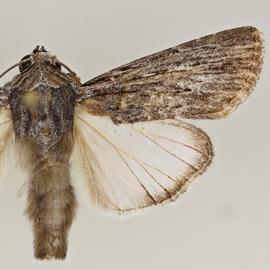
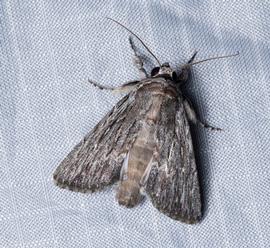
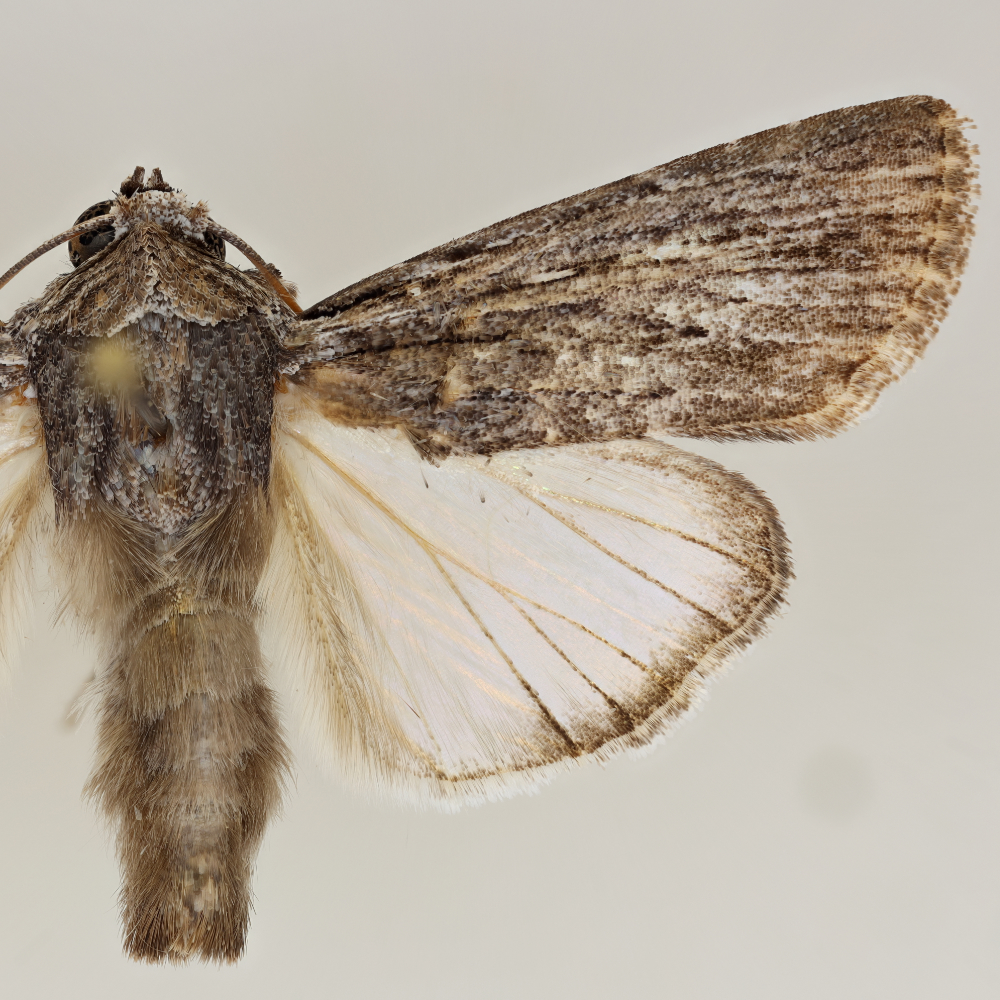
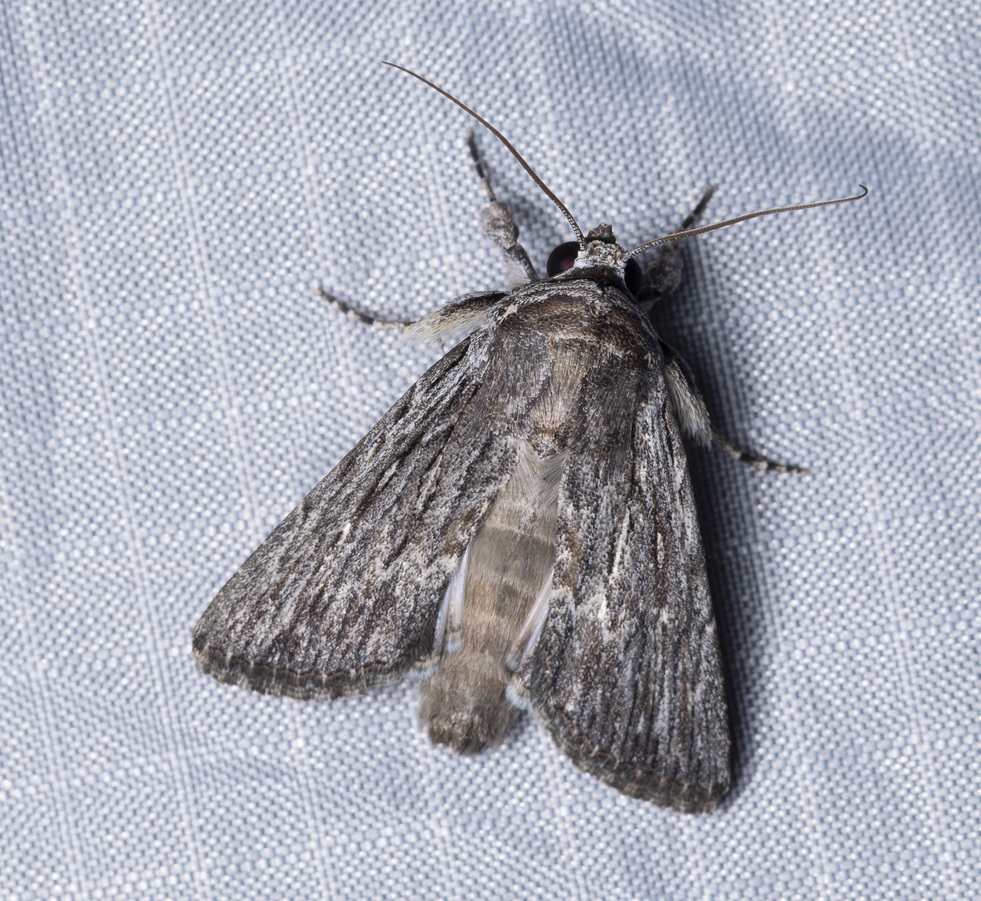
Neogalea sunia is a medium-sized (forewing lengthforewing length:
the distance of the forewing in a straight line from the base to the tip of the apex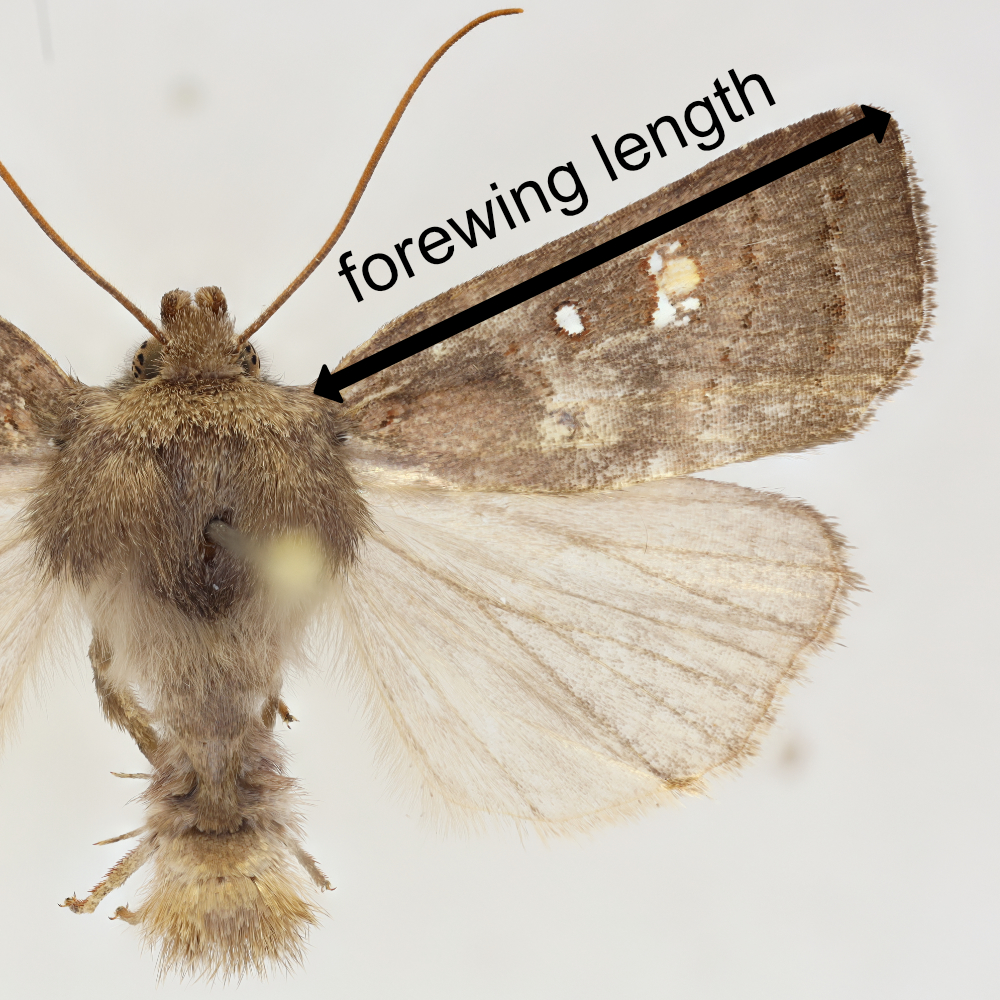 13–16 mm), rather nondescript noctuid moth. When fresh, the thoraxthorax:
the second, or middle, body segment of an insect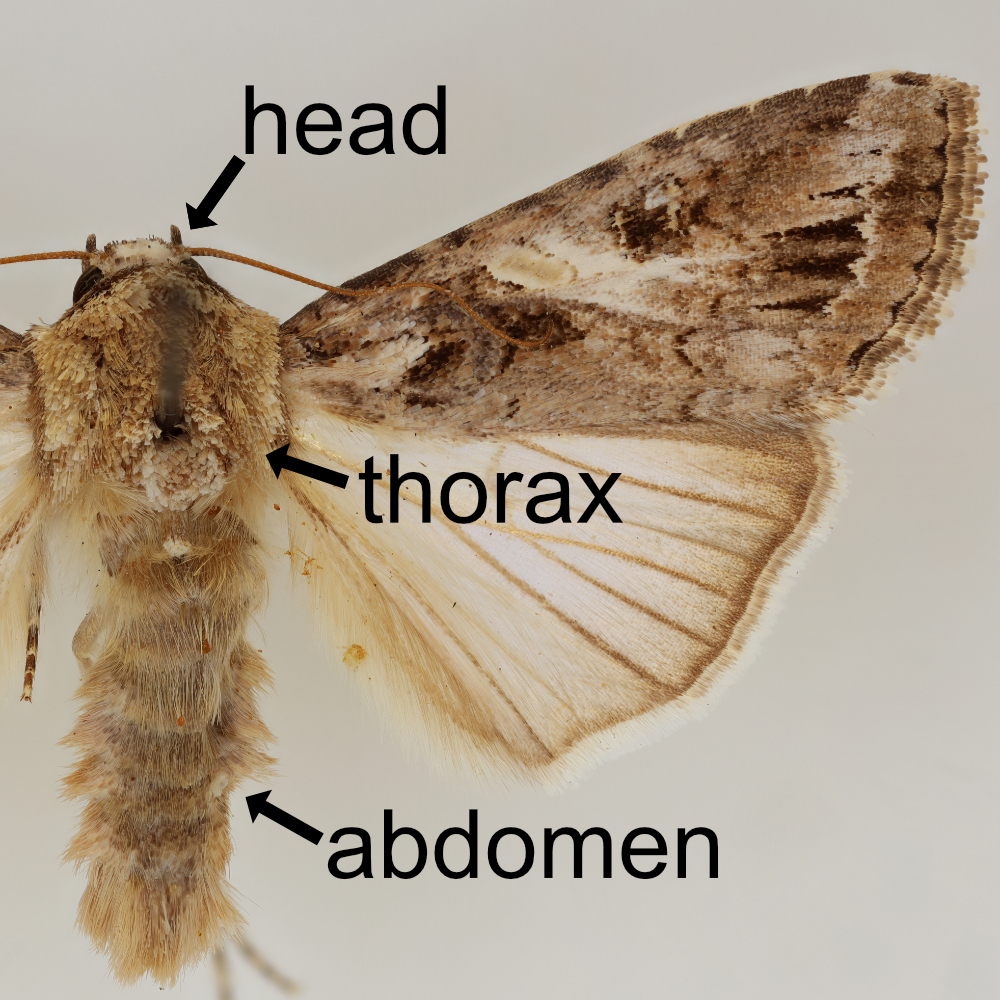 has a large tuft or crest of scales, but these are easily lost in old or damaged specimens. The forewingforewing:
the front wing of an insect; the wing attached to the second segment of the thorax (the mesothorax)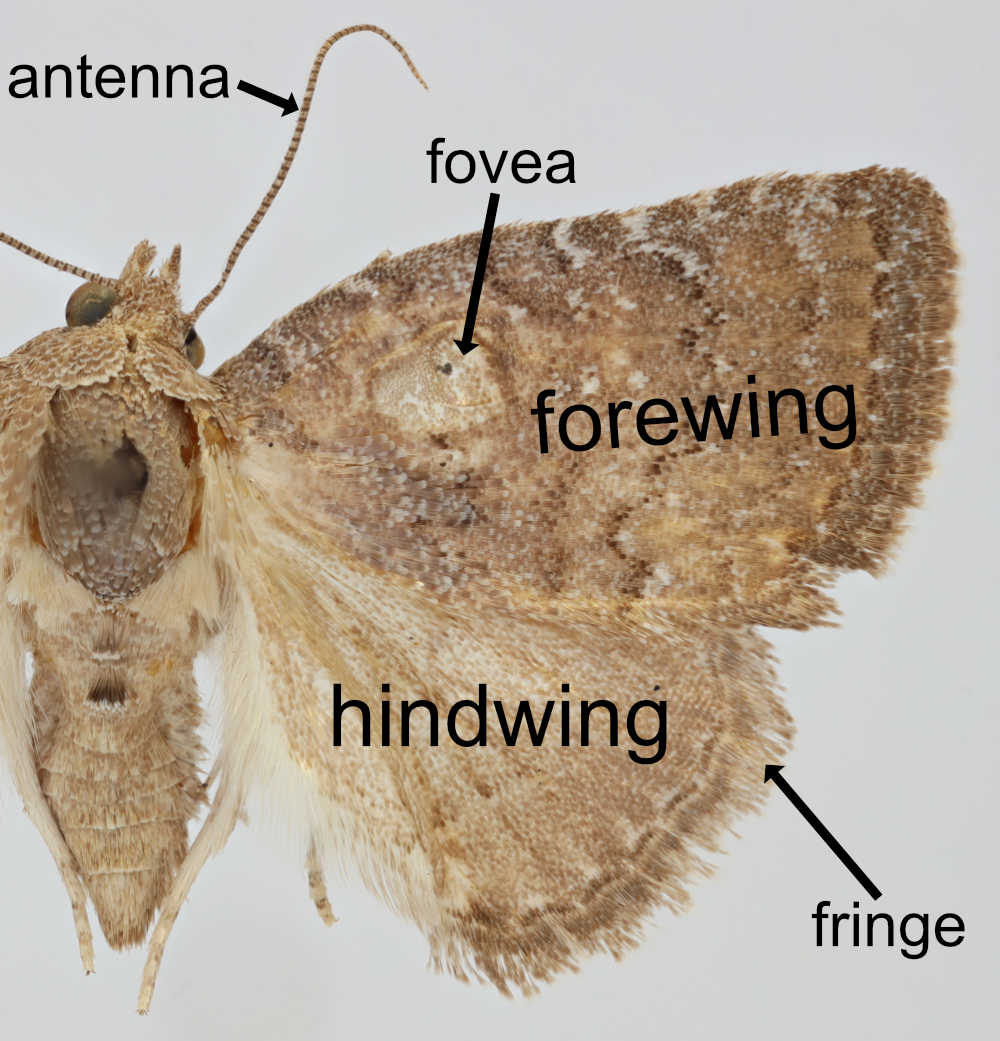 pattern is primarily dark gray, with long pale gray and black streaks running from the base to the fringefringe:
the scales, setae, or hairs that extend beyond the edge of a wing membrane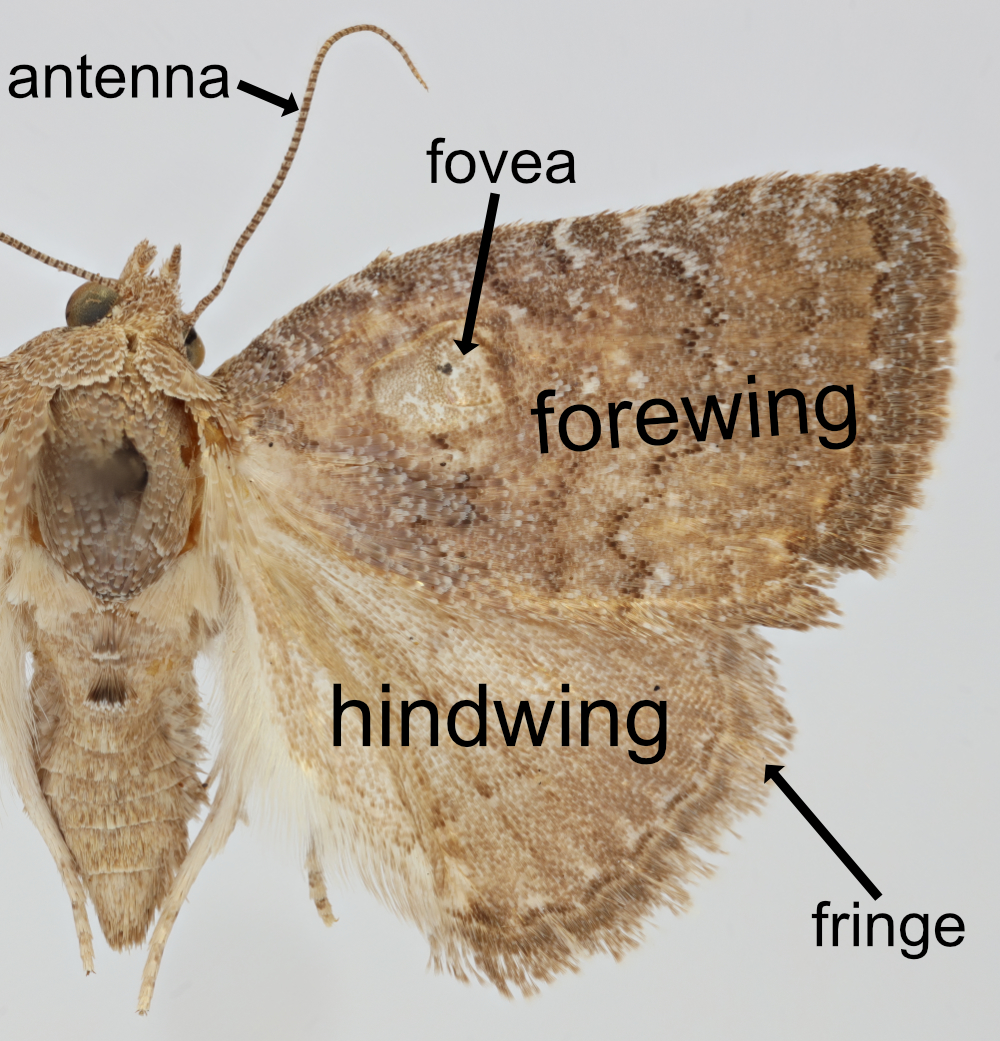 , especially along the veins. The orbical and reniform spotsreniform spot:
a spot, often broad bean- or kidney-shaped, found at the distal end of the discal cell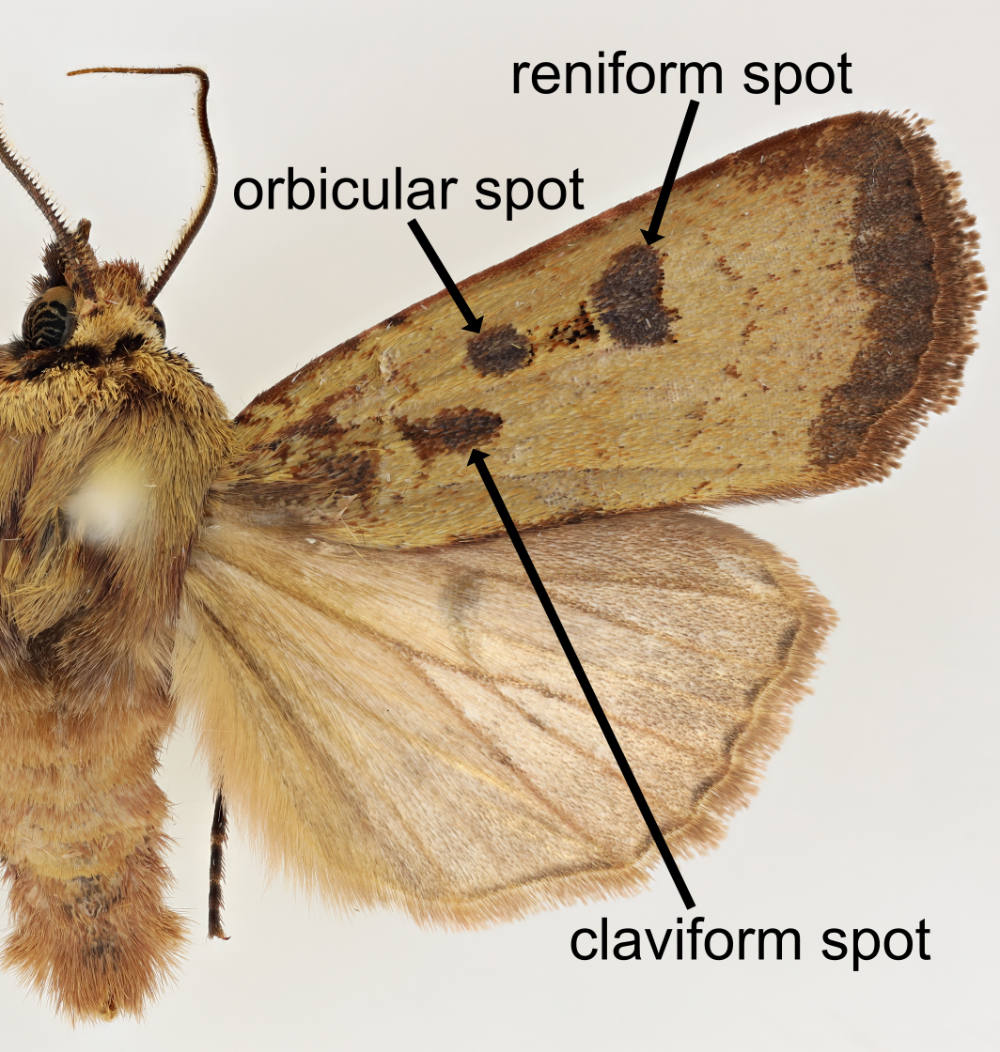 are minute to obsolete but a more prominent black streak is often present between them. The hindwingshindwing:
the back wing of an insect; the wing attached to the third segment of the thorax (the metathorax)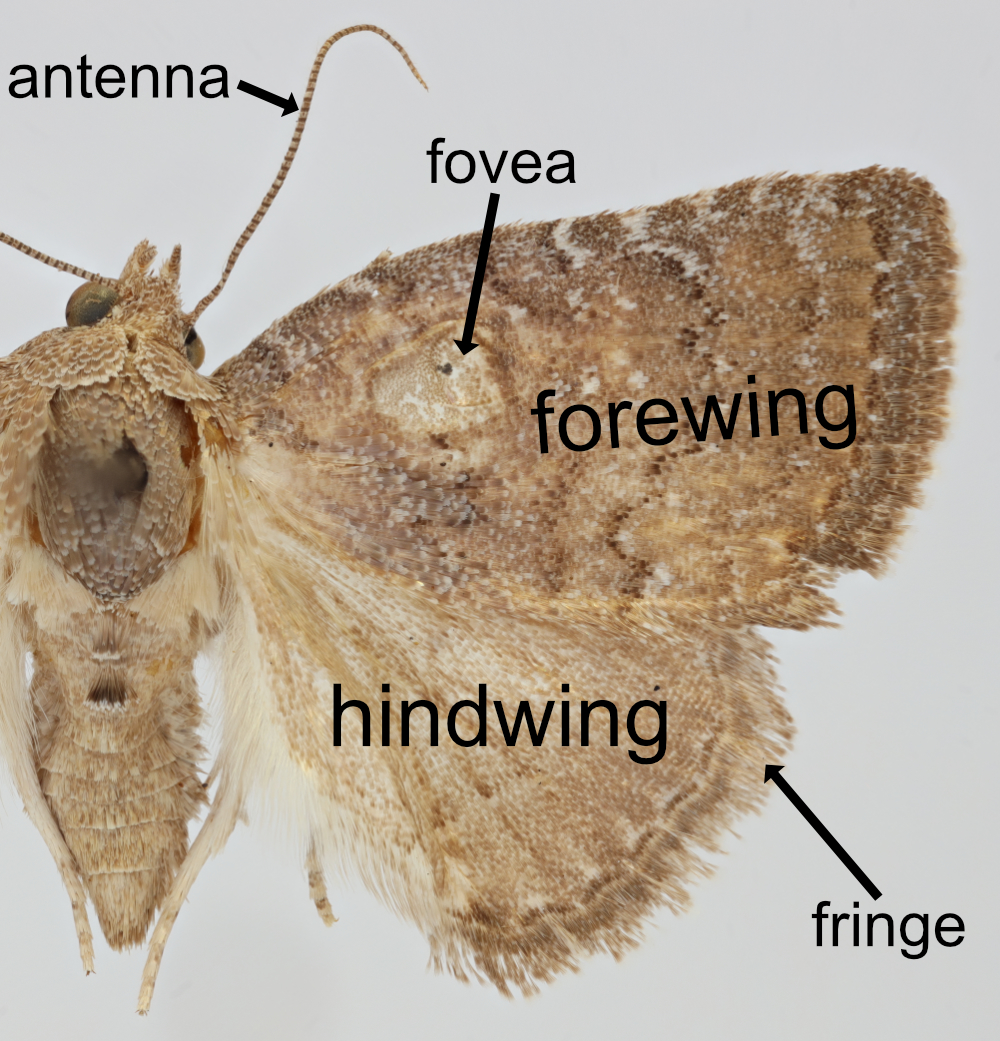 are pearly white, darker towards the fringefringe:
the scales, setae, or hairs that extend beyond the edge of a wing membrane, strongly contrasting with the dark gray forewingforewing:
the front wing of an insect; the wing attached to the second segment of the thorax (the mesothorax).
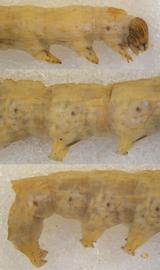
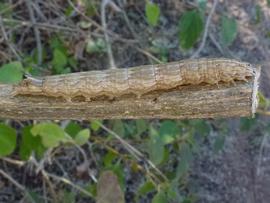
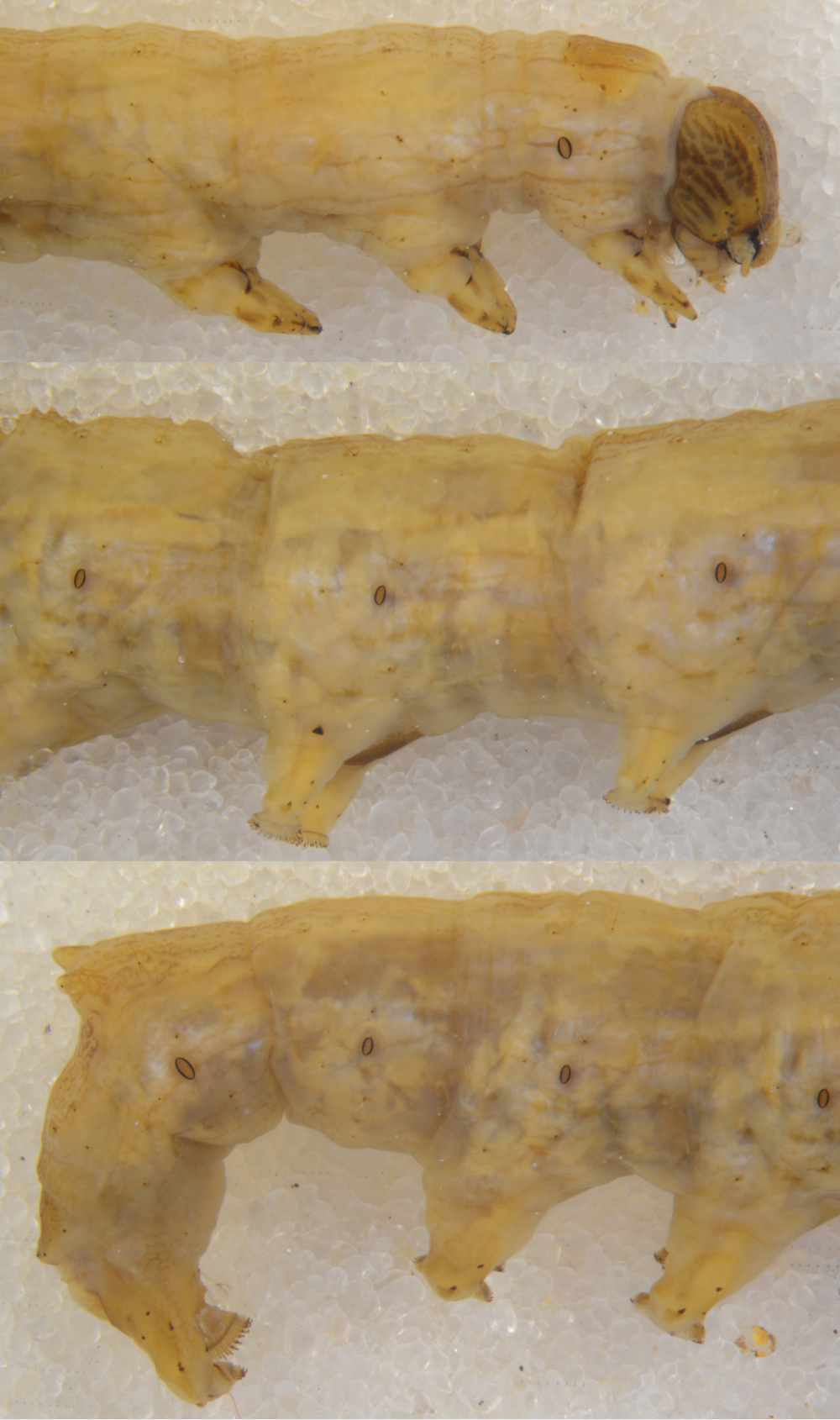
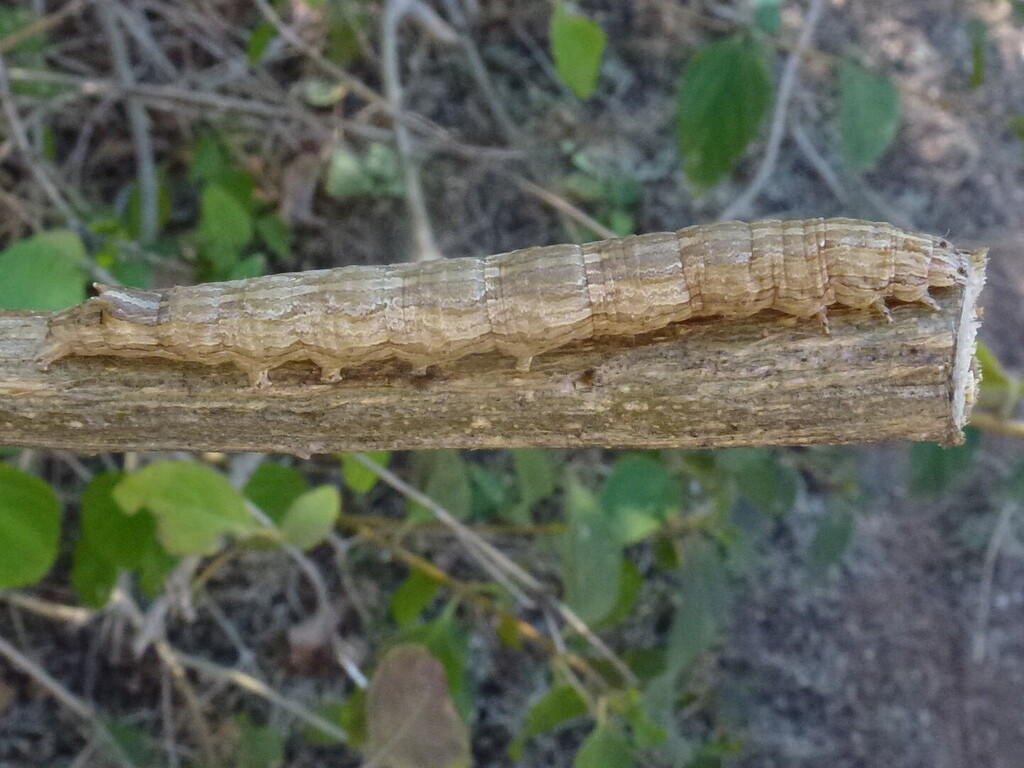
The larva of Neogalea sunia is green when young but quickly turns pale brown with age. Mature larvae have the head slightly paler than the body and with distinctive striping of various shades of brown; the body has numerous darker bands running the entire length. The eighth abdominal segment has a pair of backwards-facing tubercules. It moves in a "looping" fashion, similar to some geometrids. The posteriorposterior:
the 'tail' end of an organism, as opposed to the anterior or 'head' end of an organism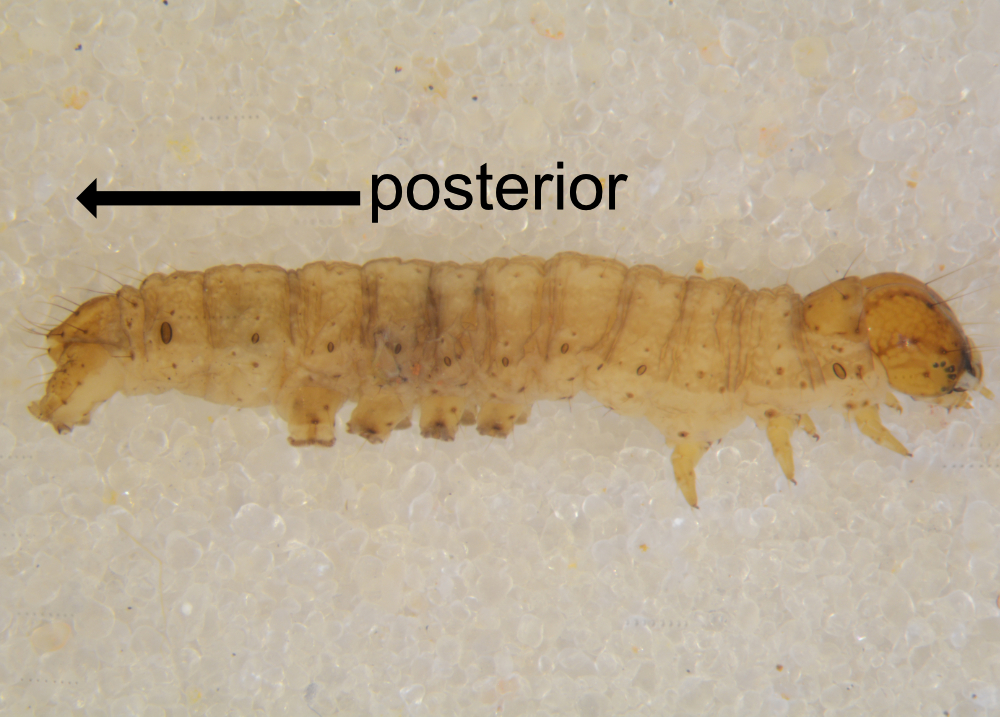 tubercles, overall patterning, and "flattened" appearance makes it resemble some erebids (e.g., Ophiusa disjungens (Walker, 1858)) more than most noctuids in Hawaiʻi.
Fresh adults of Neogalea sunia are unlikely to be confused with other species of Noctuidae in Hawaiʻi but worn individuals are roughly the same size and shape as Athetis thoracica. They can be separated by the jagged and obsolete postmedial linepostmedial line:
a thin, transverse line located distal to the reniform spot, typically on the distal third of the forewing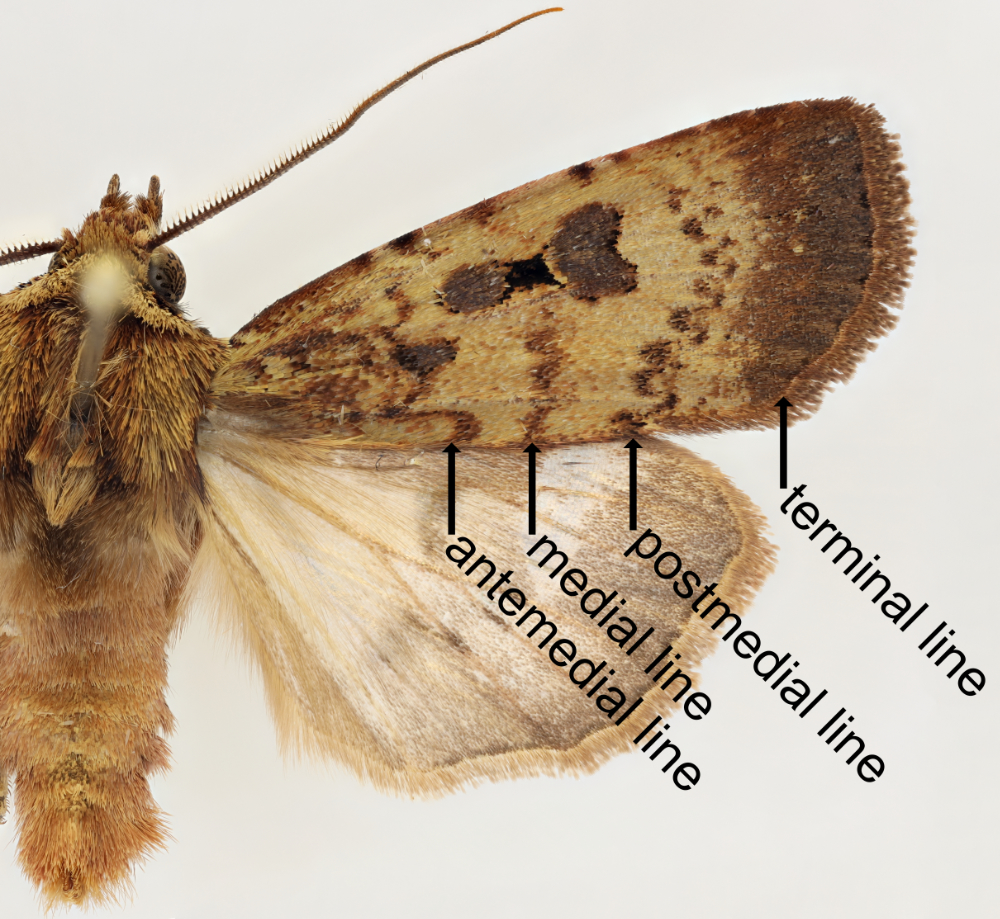 , which is continuous and nearly straight in A. thoracica.
The larvae closely resemble Ophiusa disjungens (Walker, 1858) and Achaea janata (Linnaeus, 1758) (both Erebidae). Mature larvae of N. sunia are smaller, have biordinal crochetscrochets:
sclerotized, hooklike structures, usually arranged in rows or circles on the prolegs of Lepidoptera larvae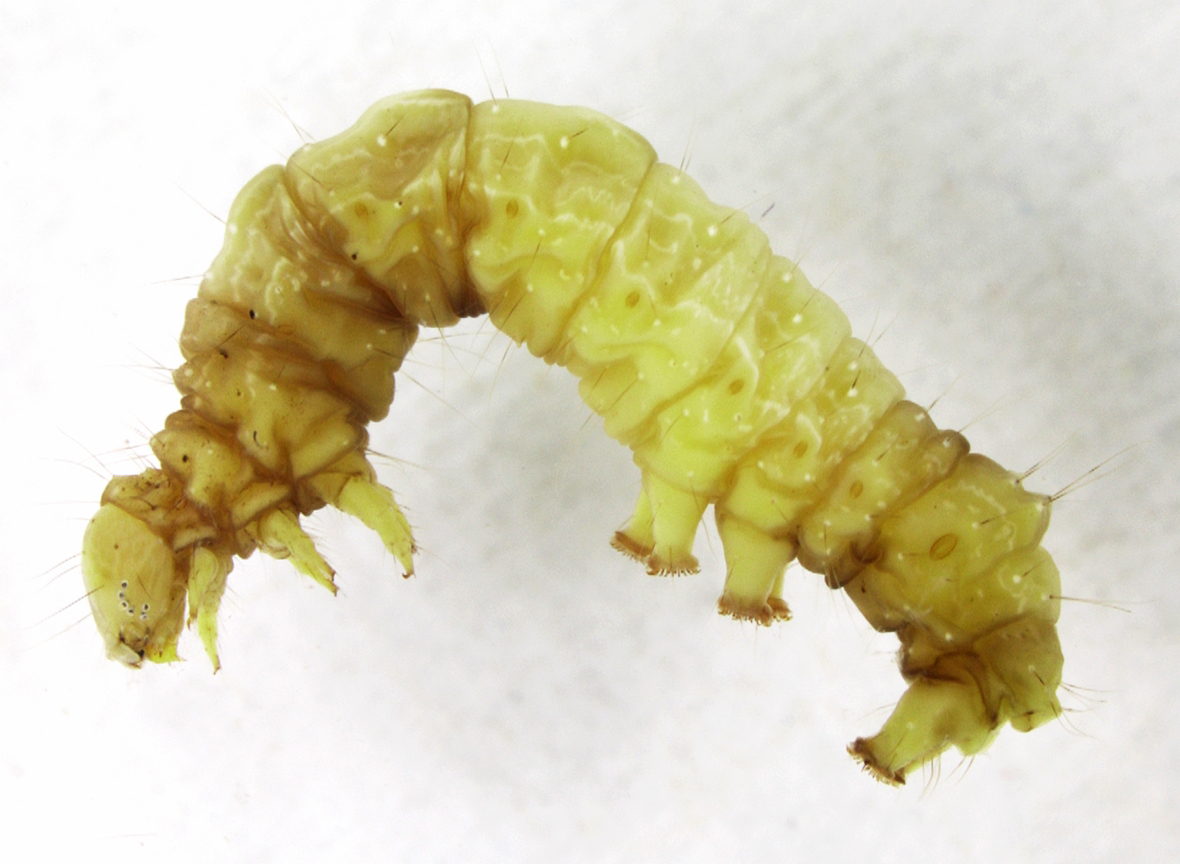 on the prolegs, and feed on Lantana L.. Mature larvae of O. disjungens and A. janata are larger, have uniordinal crochetscrochets:
sclerotized, hooklike structures, usually arranged in rows or circles on the prolegs of Lepidoptera larvae, and feed primarily on Myrtaceae and Euphorbiaceae, respectively.
The native range of Neogalea sunia is from the southern United States, through Central America and the Caribbean, south to Argentina. In Hawaiʻi, it can be found on all of the main high Hawaiian Islands, where it is common in dry and mesic habitats throughout the state, nearly everywhere Lantana is found. It will also fly far to find new host plants, as it can occasionally be encountered in forests without Lantana populations. Neogalea sunia has also been introduced as a biological control agent in Australia, New Caledonia, and South Africa, although it only became established in Australia.
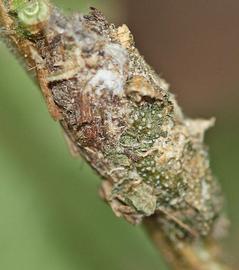
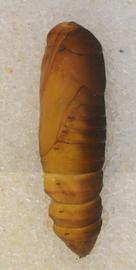
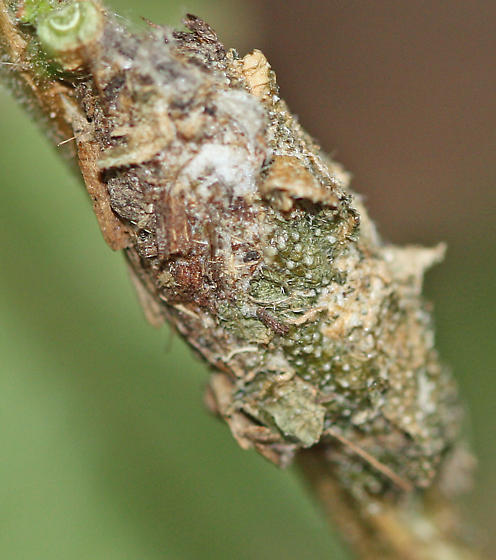
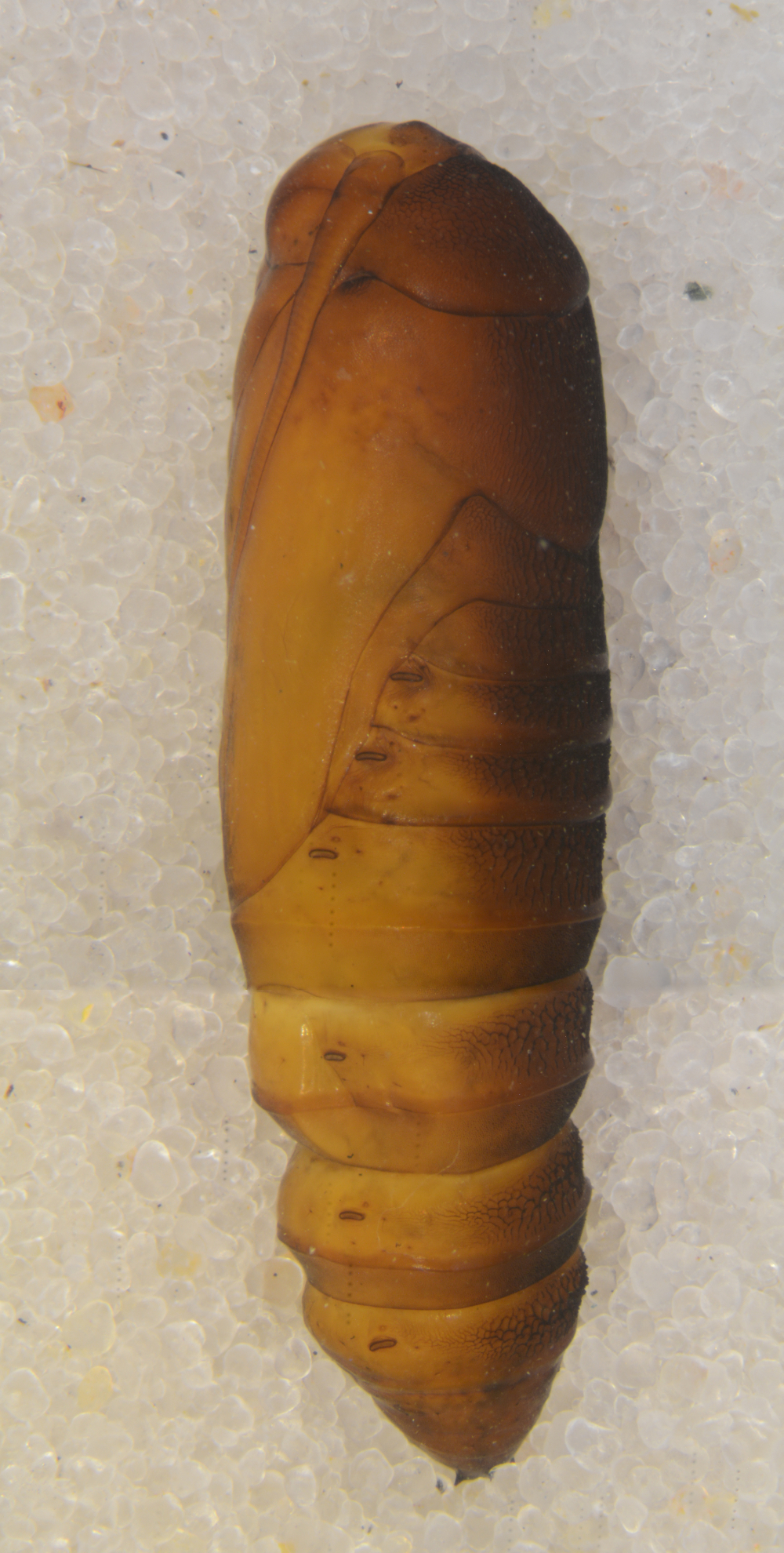
Larvae of Neogalea sunia feed on the undersides of Lantana leaves. Pupation typically occurs on stems. In Australia, it can cause seasonal defoliation of Lantana. Post-release studies have not been conducted specifically for Neogalea sunia in Hawaiʻi but upwards of 20 different biological control agents have been released in Hawaiʻi since 1902 for Lantana (Davis et al. 1992Davis et al. 1992:
Davis CJ, Yoshioka E, Kageler D. 1992. Biological control of lantana, prickly pear, and Hāmākua pāmakani in Hawaiʻi: A review and update. In Stone CP, Smith CW, Tunison JT, editors. Alien plant invasions in native ecosystems of Hawai‘i: Management and research. University of Hawai‘i Press. p 411–431.) and appear to be exerting good control of this noxious weed in islands.
Author: Kyhl A. Austin
Content last updated May 2026
idtools.org