ADVENTIVE
Mythimna unipuncta (Haworth, 1809)
Higher taxonomy: Noctuidae: Noctuinae: Leucaniini
Common names: armyworm, common armyworm, true armyworm, rice armyworm, white-speck
Note: Nedumpally et al. (2025)Nedumpally et al. (2025):
Nedumpally V, Zilli A, Yapar E, Tammaru T, Lemmon AR, Õunap E. 2025. Elaborating the phylogeny of Noctuidae by focusing on relationships between northern European taxa. Systematic Entomology. e70010. resurrected Pseudaletia Franclemont, 1951 from synonymy of Mythimna, but only formally transferred M. separata (Walker, 1865) back to Pseudaletia. Mythimna unipuncta and the native Hawaiian species of Mythimna likely need to be transferred to Pseudaletia as well.
Mythimna unipuncta is one of the most common and widespread non-native noctuids in the Hawaiian Islands. It was first recorded from Hawaiʻi by Butler (1880)Butler (1880):
Butler AG. 1880. On two small consignments of Lepidoptera from the Hawaiian Islands. Entomologist's Monthly Magazine. 17:6–9.. It is broadly polyphagous and can be found in virtually any habitat in Hawaiʻi from sea level to the summits of Haleakalā and Maunakea at over 3000 meters (though they are not likely resident species at the highest elevations).
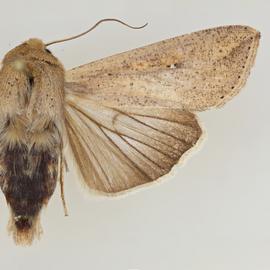
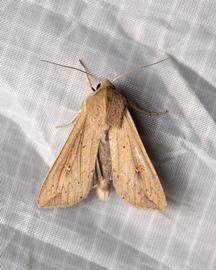
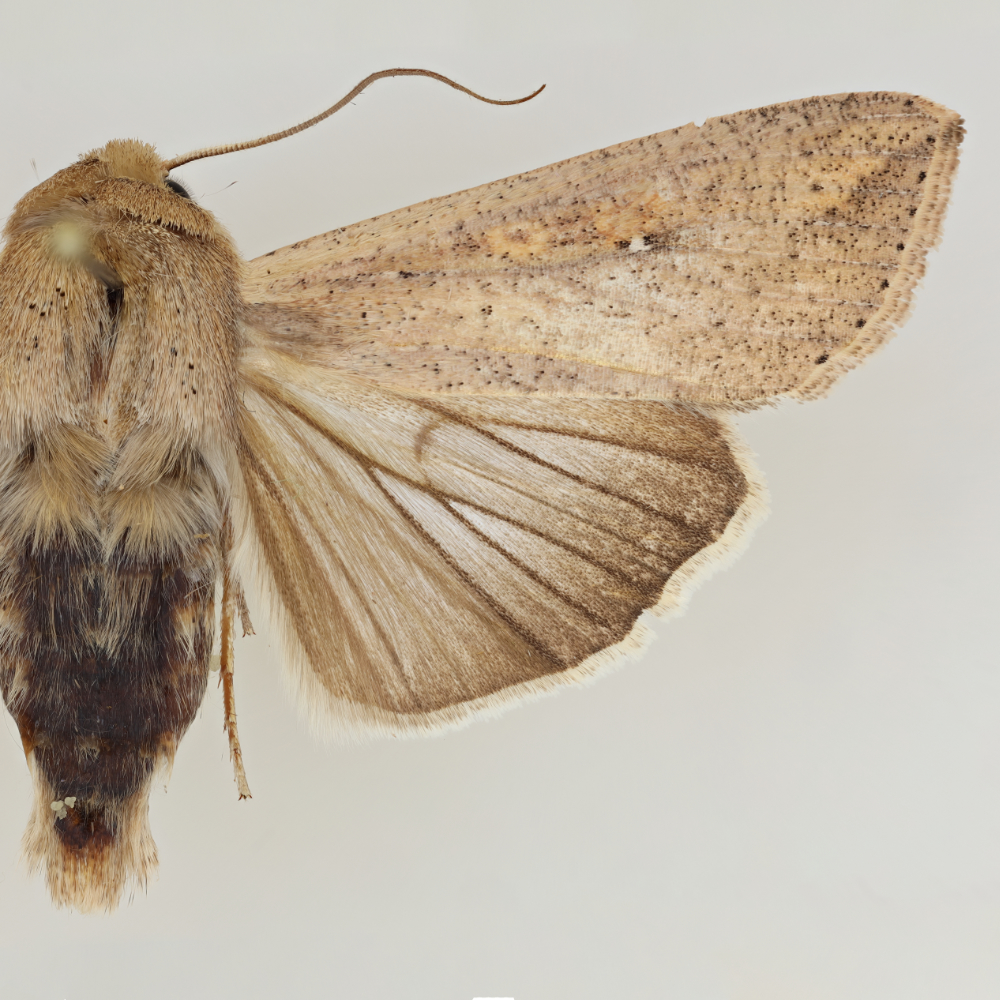
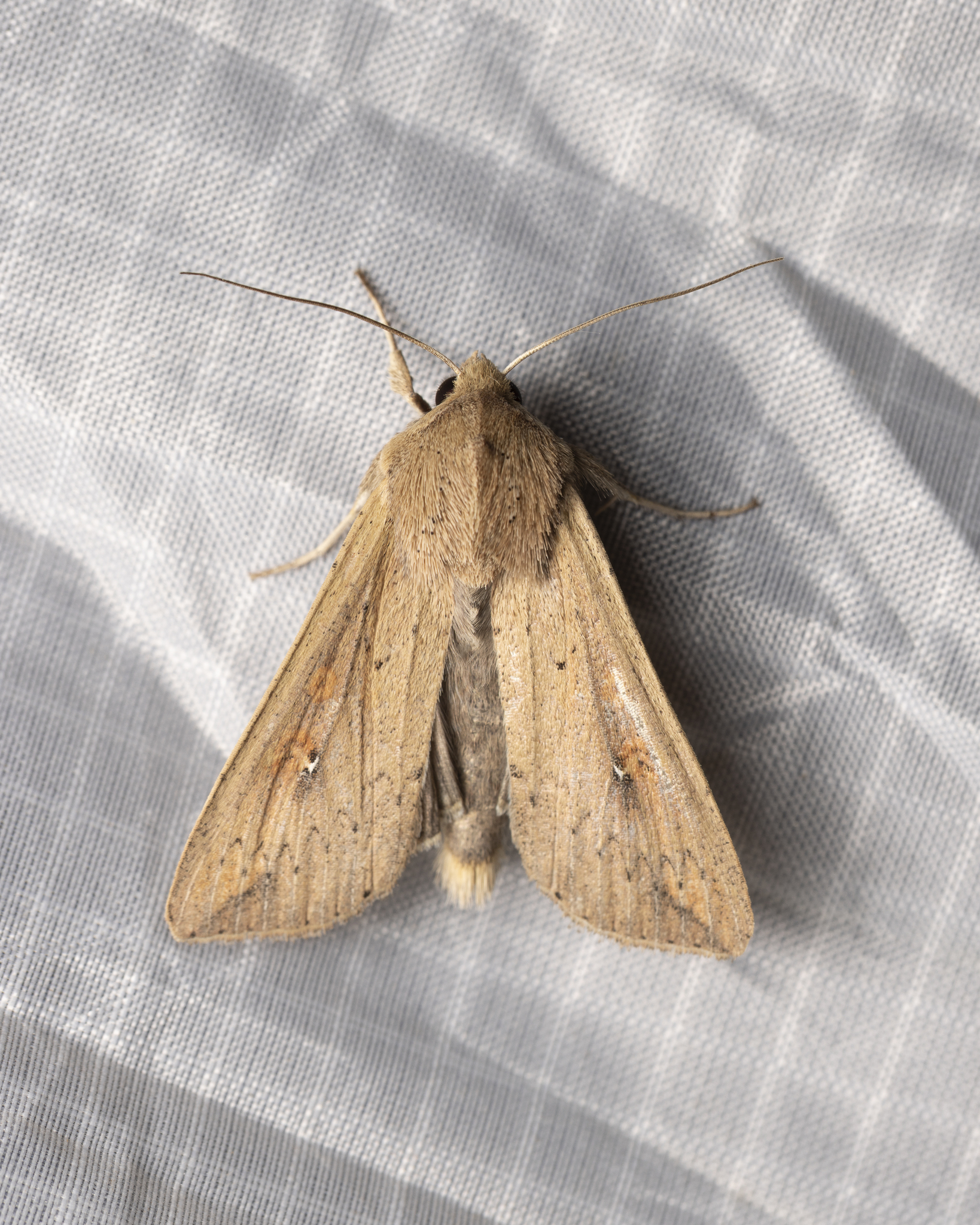
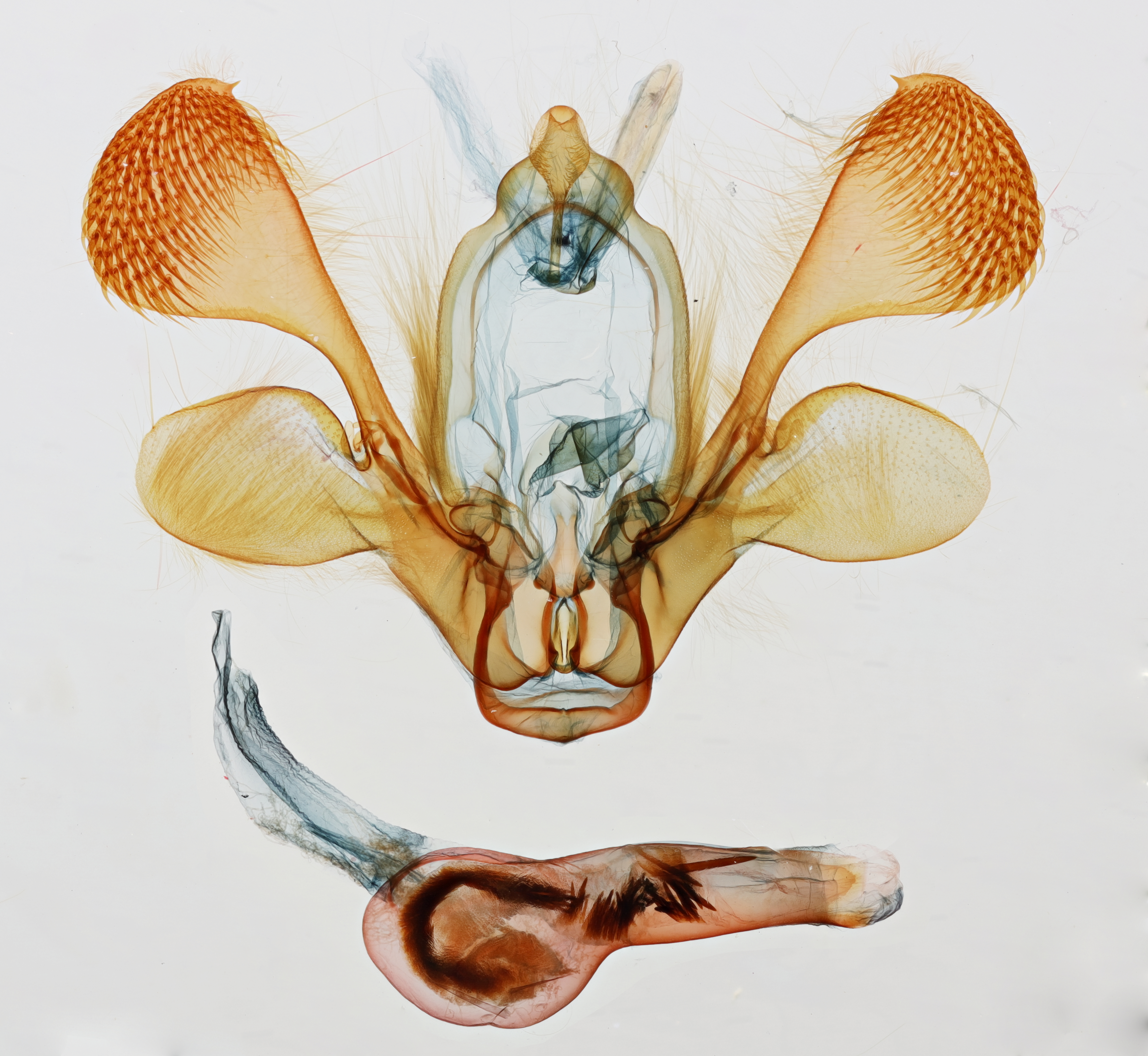
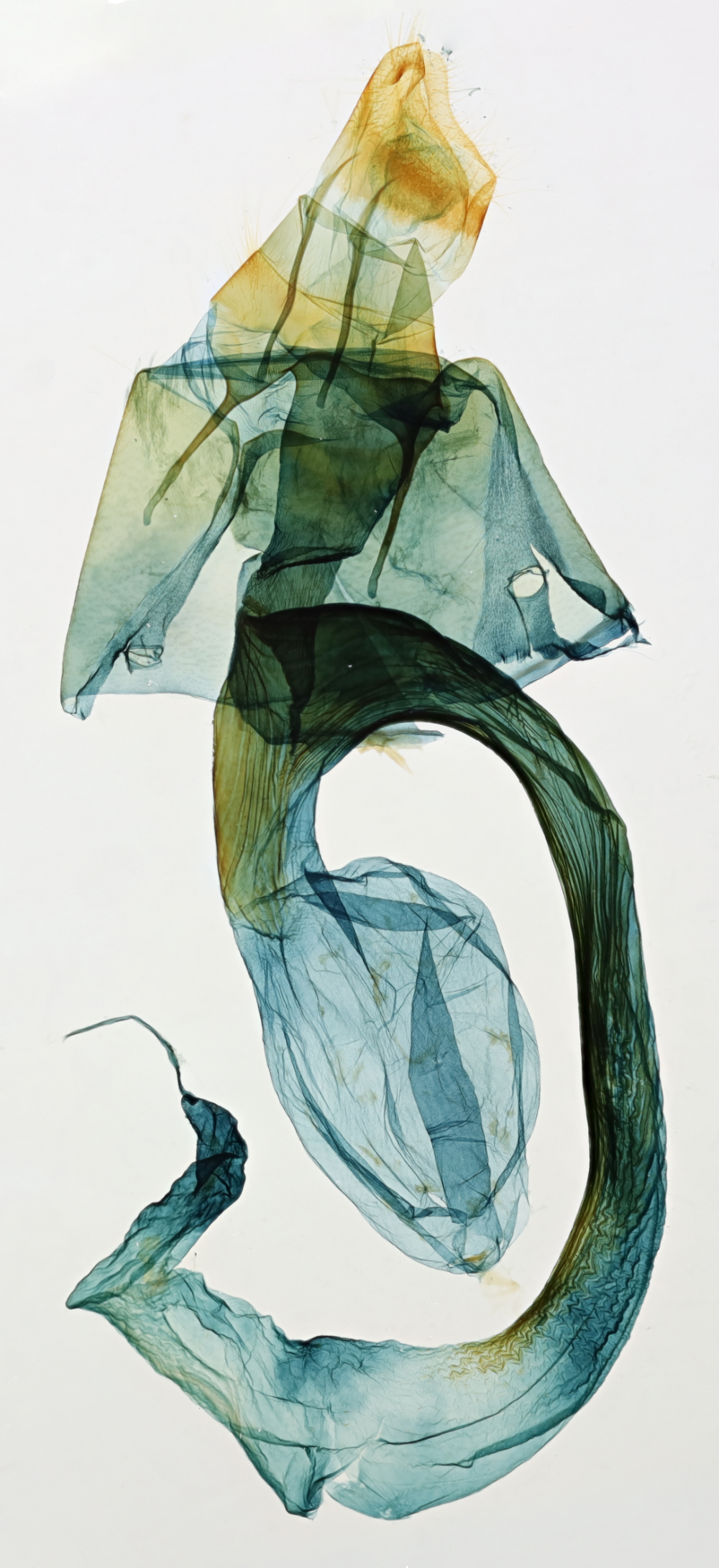
Mythimna unipuncta is a medium-sized noctuid (forewing lengthforewing length:
the distance of the forewing in a straight line from the base to the tip of the apex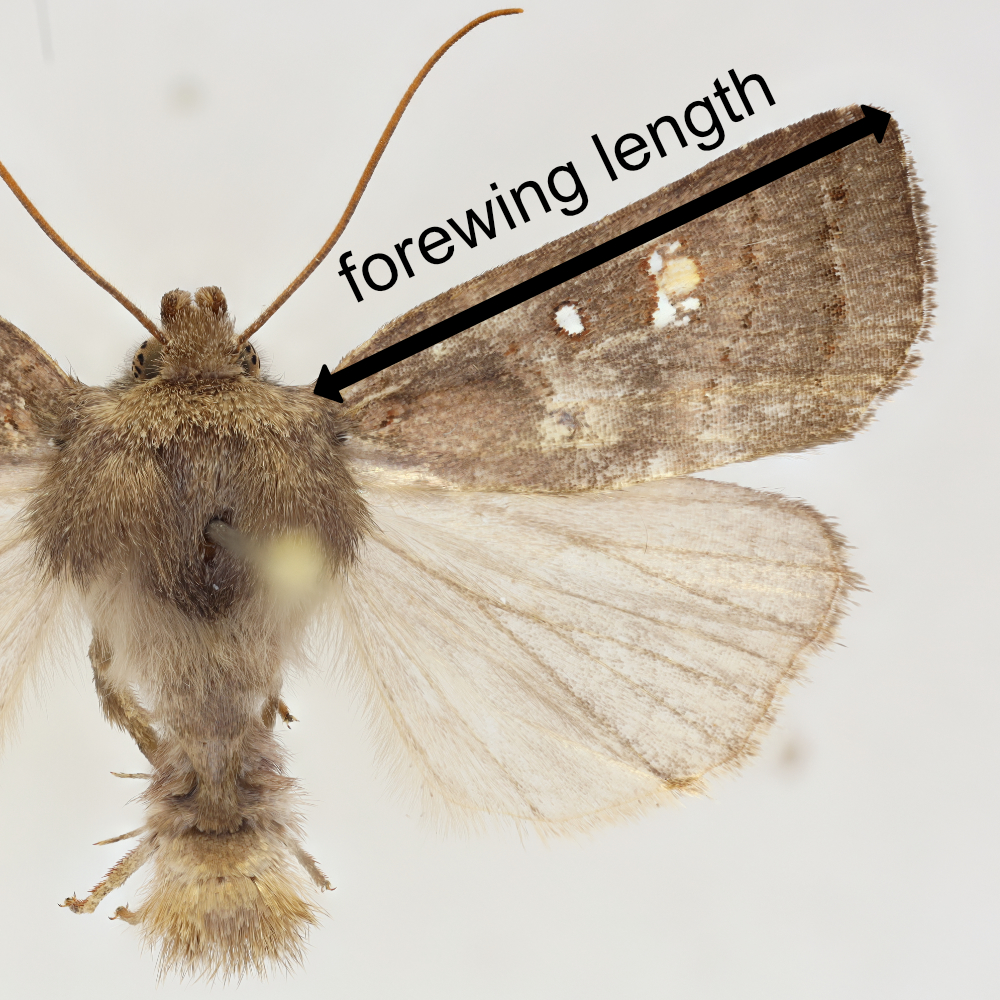 17–21 mm) characterized by a pale brown or straw yellow forewingforewing:
the front wing of an insect; the wing attached to the second segment of the thorax (the mesothorax)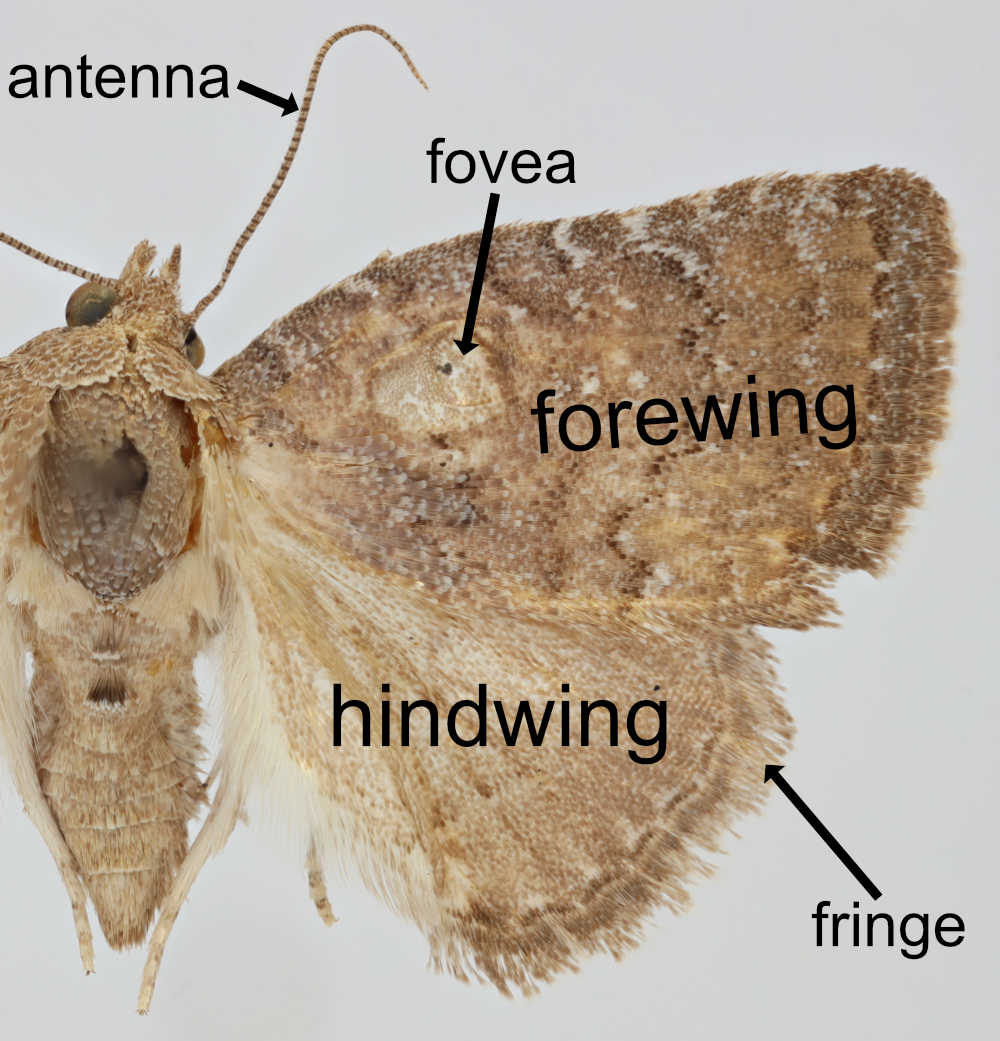 , nearly unicolorous except for some darker brown or black speckling and a small white spot present at the end of the discal celldiscal cell:
a large, central compartment on the wing surrounded by veins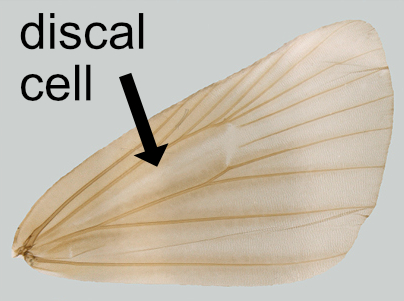 (this white scaling occasionally extended along neighboring veins). The reniform and orbicular spotsorbicular spot:
a round or oval spot located in the middle of the discal cell of the forewing, between the antemedial and median lines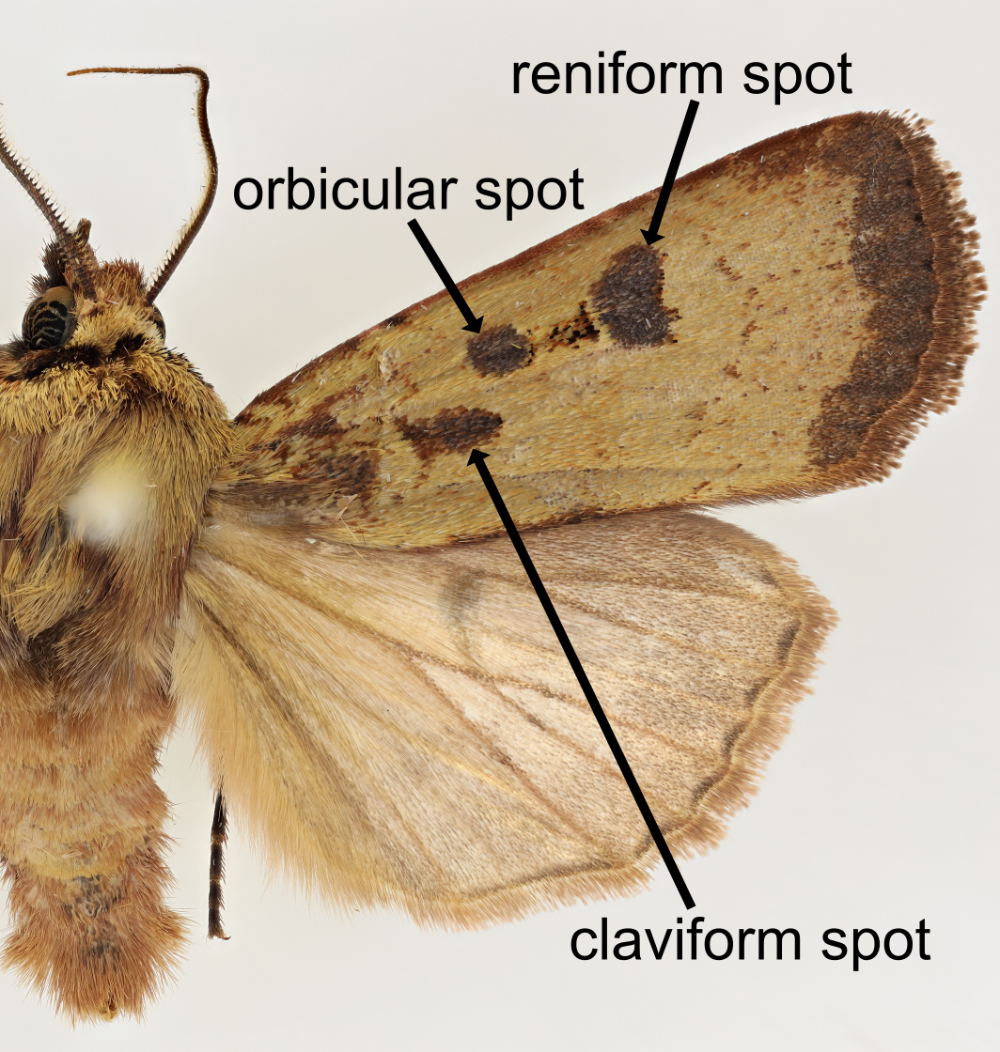 are often faint or obscured, surrounded by pale red-orange or orange scaling. A dark, mottled diagonal line typically extends from to the apexapex:
the point furthest from the base; the apex of the wing may be rounded, pointed, or falcate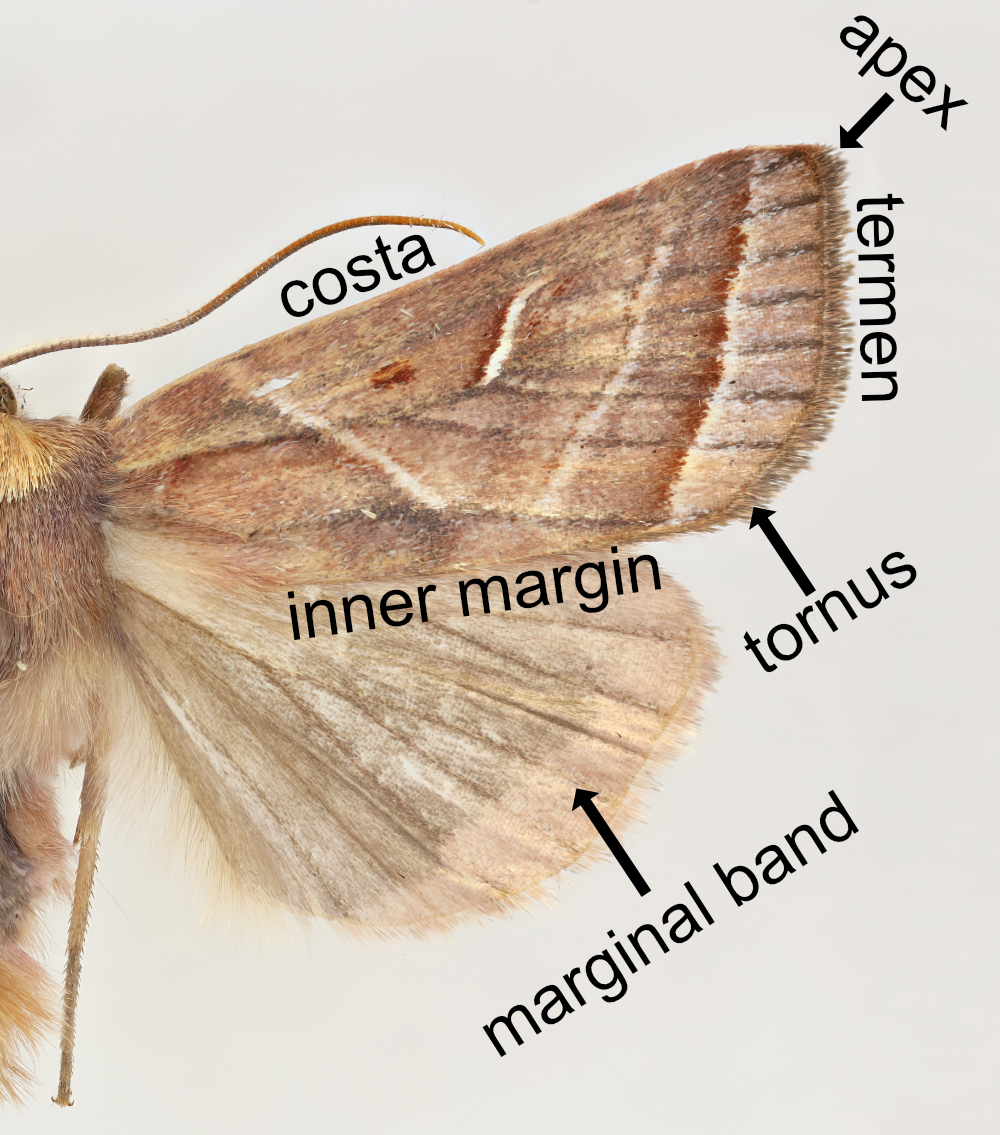 , and there are black dots along the fringefringe:
the scales, setae, or hairs that extend beyond the edge of a wing membrane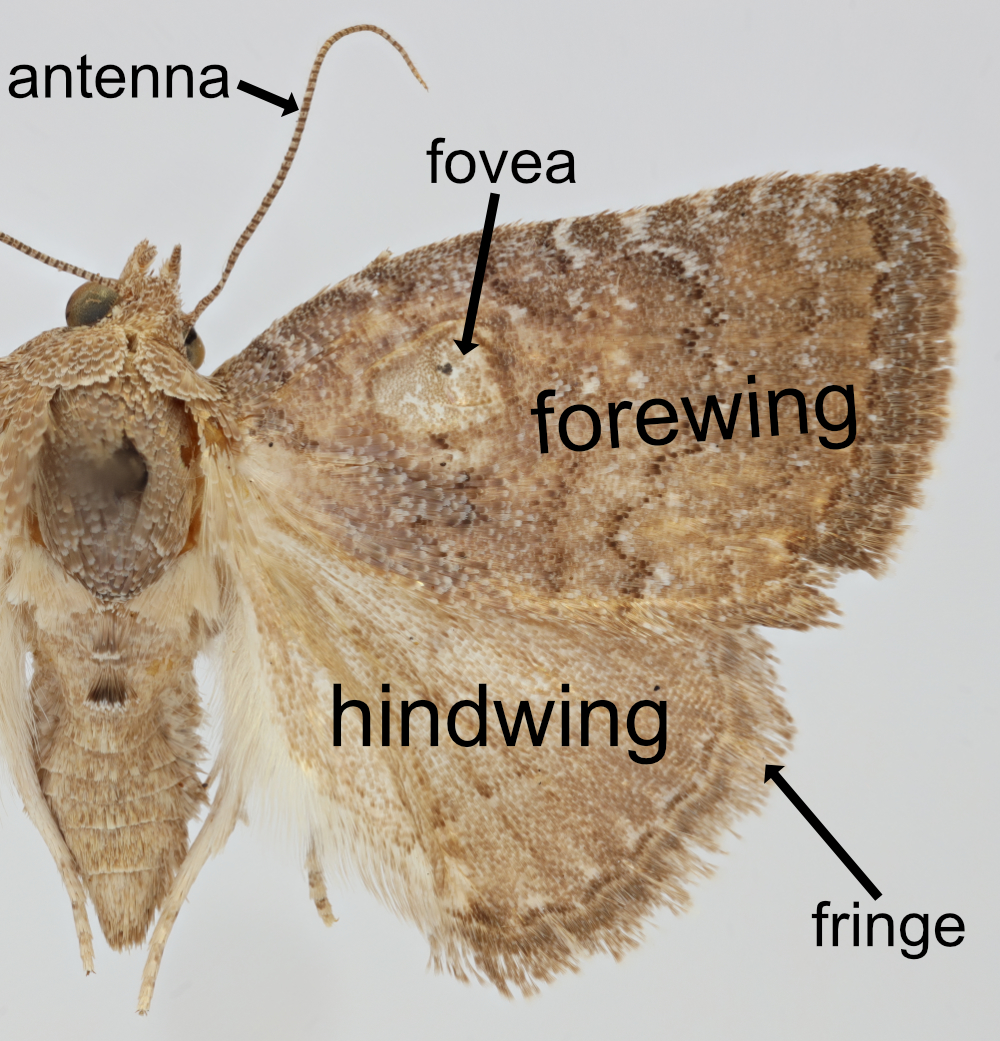 . The hindwinghindwing:
the back wing of an insect; the wing attached to the third segment of the thorax (the metathorax)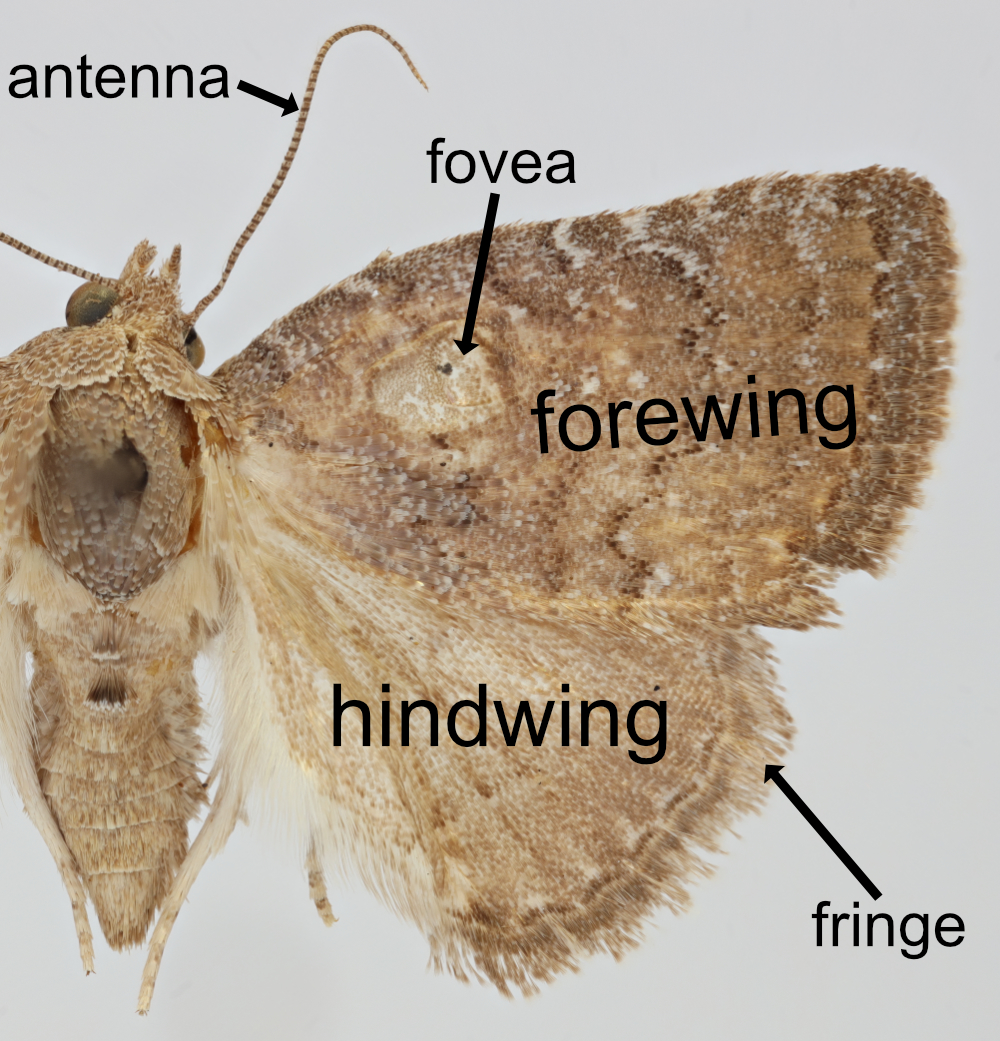 is brown or dark gray, with darker scaling along the veins. Males have a large brush of sex scales at the base of the abdomenabdomen:
the third and posterior-most body section of an insect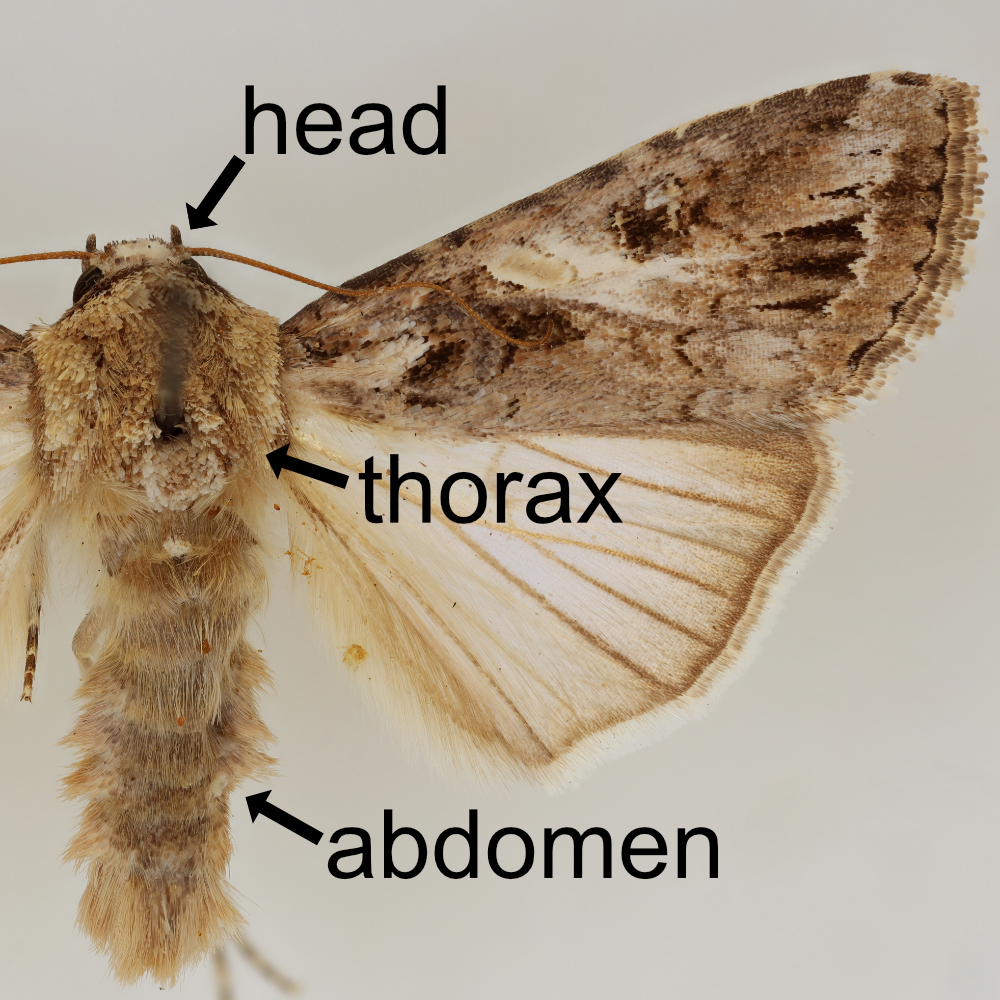 .
.
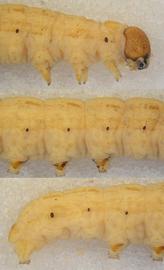
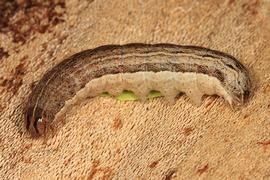
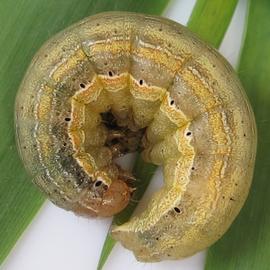
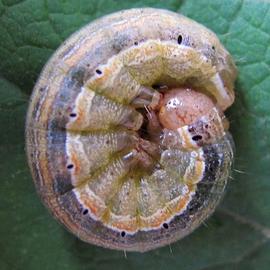
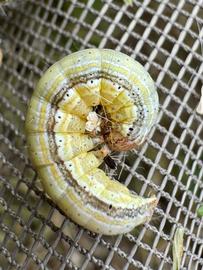
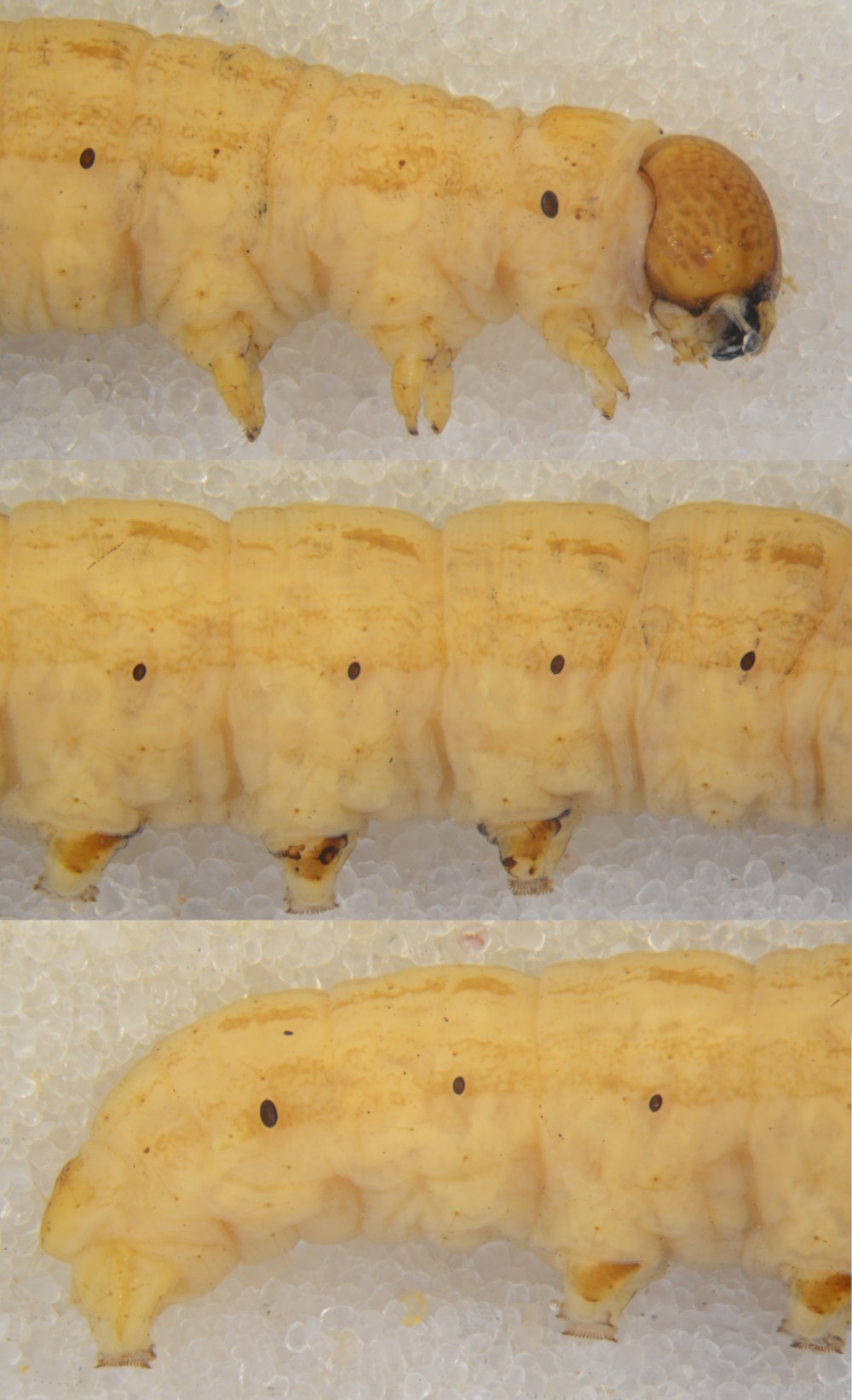
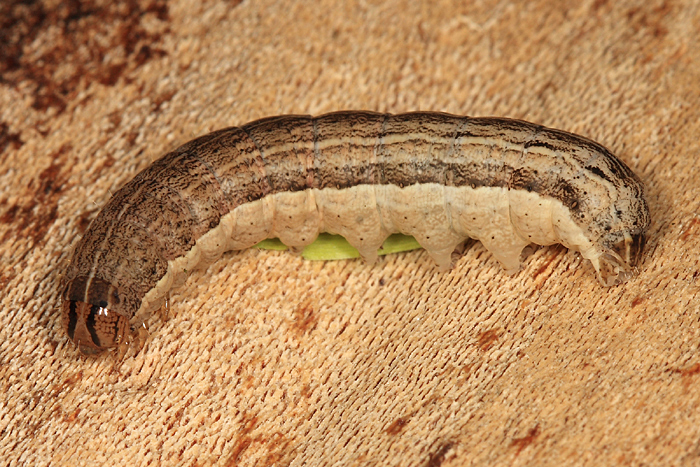
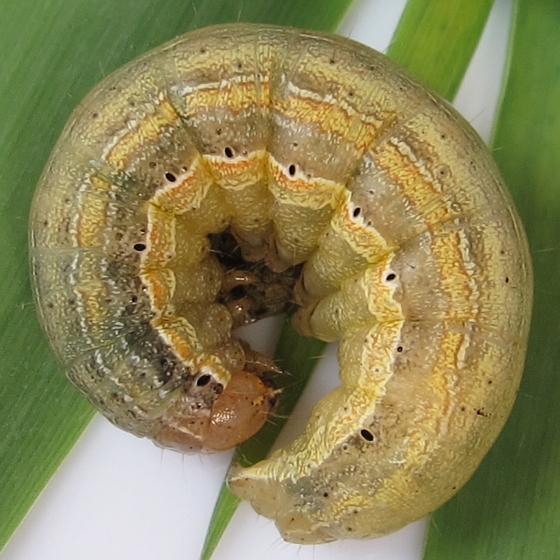
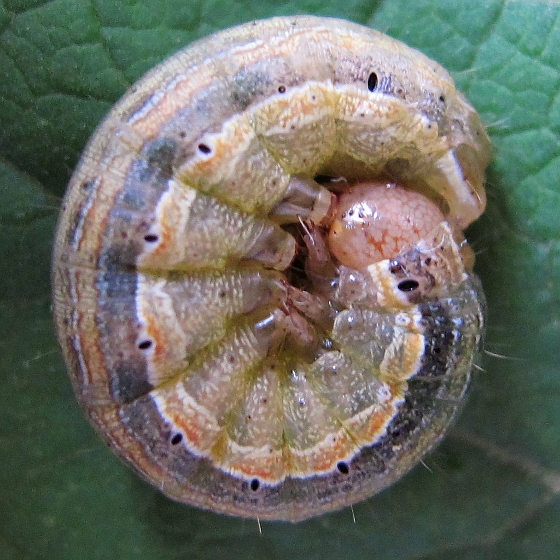
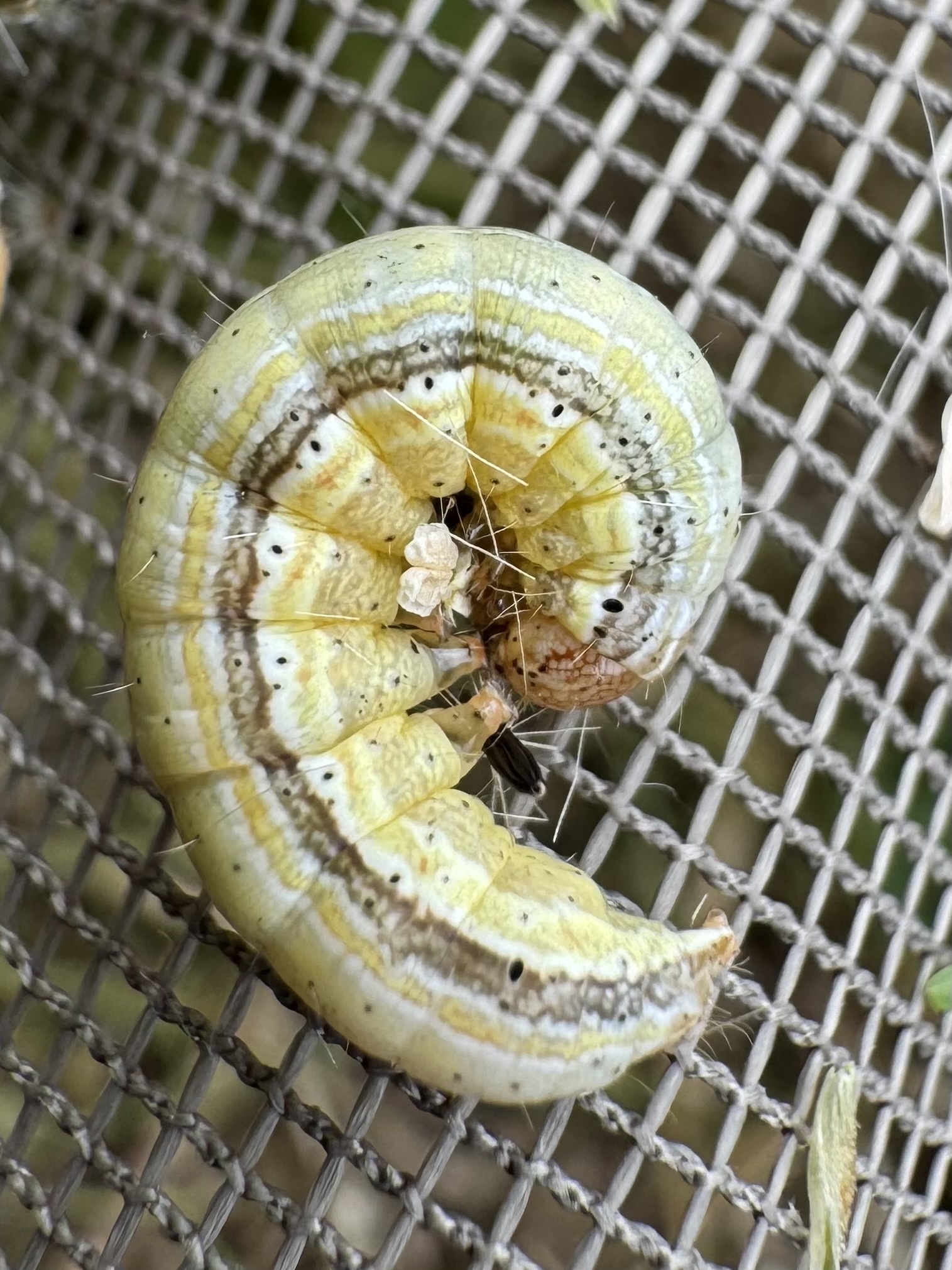
The larva of Mythimna unipuncta comes in two primary color morphs, brown and green. Further, the green morph tends to take on some color from the host it feeds on (especially flowers) resulting in some larvae with pink, orange or purple hues.
The brown form was described by Swezey (1909)Swezey (1909):
Swezey OH. 1909. Army worms and cut worms on sugar cane in the Hawaiian Islands. Report of the Work of the Experiment Station of the Hawaiian Sugar Planters' Association, 7. Honolulu. 31 pp. : "The full grown caterpillar is 35–40 mm long....general color greenish brown with longitudinal blackish stripes on back and sides, much paler below. The stripes are as follows: a wide, pale blackish stripe on the back with an interrupted white line in the middle; outside of this is a narrow pinkish brown stripe; then next a still wider blackish stripe darker along its lower edge, which contains the black oval spiracles; below this is another pinkish brown stripe having whitish lines on each edge. The head is pale brown, each lobe with a network of darker brown and running up and down in front are two blackish bands diverging below. First segment behind head nearly all brown dorsally. A dark brown spot on outer side of each proleg. Hairs small, situated in inconspicuous tubercles. The coloration varies somewhat and the stripes are sometimes less distinct. The younger stages are colored about the same; often paler, and sometimes nearly black."
Adults of native Mythimna unipuncta are similar to some of the native Hawaiian species of Mythimna, especially the smaller and browner species. Native species of Mythimna are generally larger than M. unipuncta with a distinct reddish wash to the forewingforewing:
the front wing of an insect; the wing attached to the second segment of the thorax (the mesothorax).
Mythimna unipuncta's global range includes North and South America, Europe, north Africa, and the Middle East. Records of M. unipuncta from Asia and Australia likely refer to M. separata or other similar species of Mythimna.
Mythimna unipuncta is a broadly distributed species in the Hawaiian Islands, having been recorded from all of the main high Hawaiian Islands as well as Midway, Laysan, and Lisianski Island (Nishida 2002Nishida 2002:
Nishida GM. 2002. Hawaiian terrestrial arthropod checklist. Fourth Edition. Bishop Museum Technical Report 22. 313 pp.). It occurs from sea level to the summits of Haleakalā and Maunakea at over 3000 meters.
Swezey (1909)Swezey (1909):
Swezey OH. 1909. Army worms and cut worms on sugar cane in the Hawaiian Islands. Report of the Work of the Experiment Station of the Hawaiian Sugar Planters' Association, 7. Honolulu. 31 pp. described the life cycle of Mythimna unipuncta in Hawaiʻi:
"The eggs are usually placed at the base of the leaves or thrust in behind the leaf sheath, but may often be deposited amongst trash or debris as well. The eggs are glued on to the objects, wherever they are deposited, and are commonly in rows of 15 to 20; but sometimes they are as few as 2 or 3, and again as many as nearly a hundred may be in one batch. One female may deposit several hundred eggs (500–700) and may occupy two or more evenings so doing. The eggs hatch in a week or ten days, depending on the temperature. The young caterpillars first crawl by a looping motion on account of the fact that the first and the second pairs of abdominal prolegs are rudimentary. After the first molt only the first pair are rudimentary, and after the second molt all prolegs are functional and the caterpillar crawls in the normal manner. There are five molts at intervals of three to six days, and the growing period is thus about three to four weeks, depending on the temperature. The caterpillars usually feed on the plants at night-time and hide during the day beneath leaves or trash on the surface of the ground, or in the soil a little below the surface, or sometimes even remain on the plant and feed more or less or hide in a fold of leaf or behind a leaf sheath or other convenient place. Those feeding on the leaves in the daytime drop to the ground on the slightest disturbance and coil up, remaining motionless for a time..."
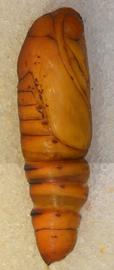
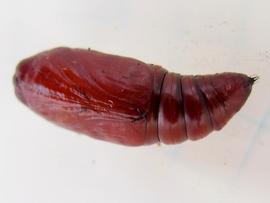
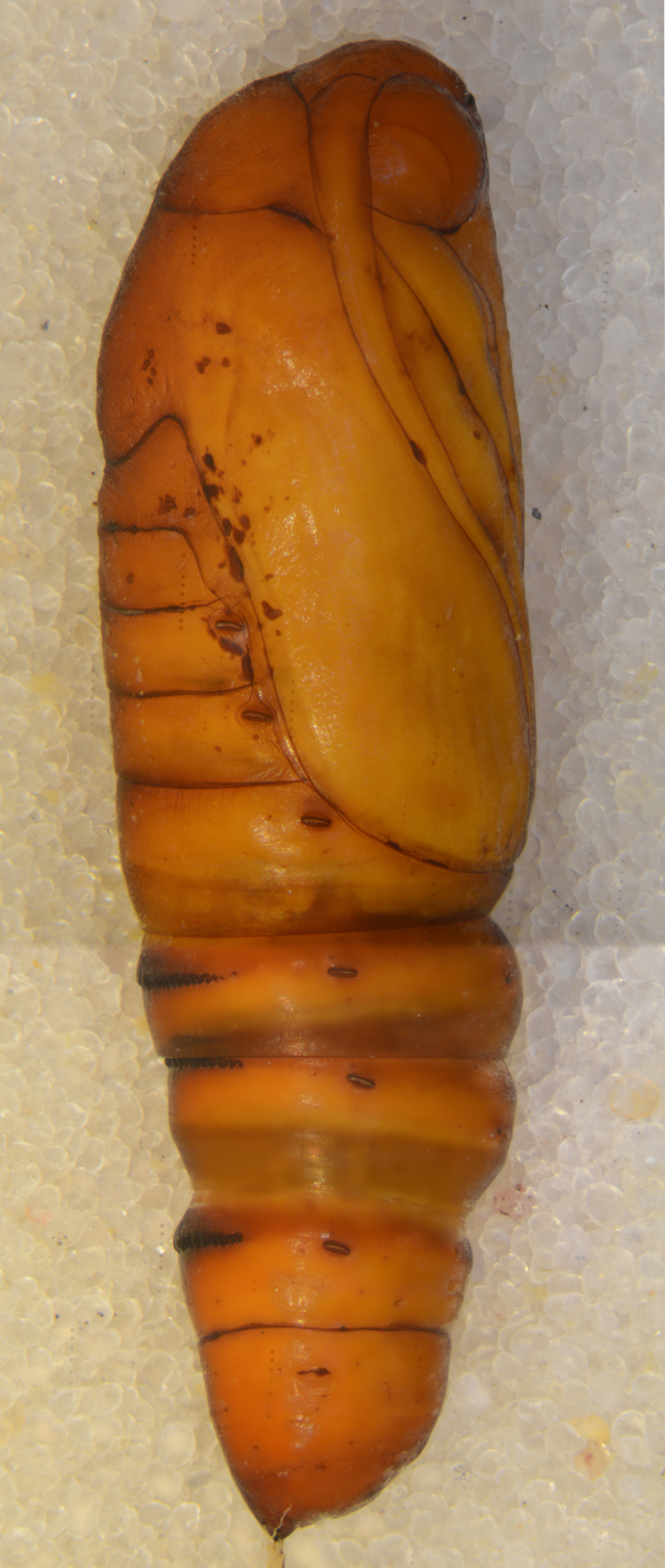
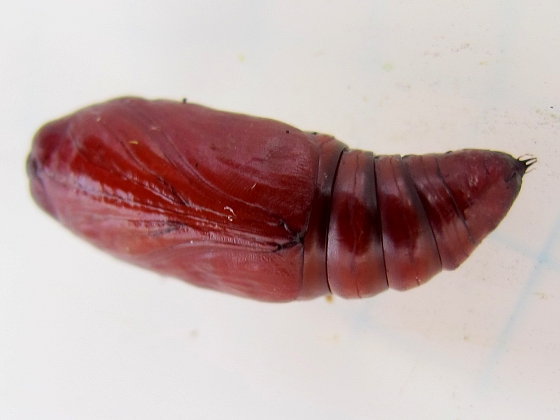
"When full grown, the caterpillar burrows into the soil and at a depth of two to four inches constructs an oval earthen cell, within which after a few days it transforms to the pupa. The pupa is of a shiny dark brown color, about 18 mm long and 4.5 mm thick..."
"The moth emerges from the pupa in about ten days to two weeks. It makes its way above the surface, and, clinging to some object, its soft wings soon become expanded and dried, and the moth is fully matured, after a period of from six to eight weeks, or sometimes more, according to temperature."
Mythimna unipuncta is extremely polyphagous, having been recorded to feed on hundreds of different plant species in dozens of different families (CABI 2021CABI 2021:
CABI. 2021. Mythimna unipuncta (rice armyworm). Compendium 45094. [Last accessed 24 September 2025].). However, it appears that grasses, grains, and cereals (family Poaceae) are the preferred hosts, and other plants will be consumed if their primary hosts are lacking. Larvae will readily accept virtually all plant material in laboratory settings (CABI 2021CABI 2021:
CABI. 2021. Mythimna unipuncta (rice armyworm). Compendium 45094. [Last accessed 24 September 2025].).
Author: Kyhl A. Austin
Content last updated May 2026
idtools.org