ADVENTIVE
Megalographa biloba (Stephens, 1830)
Higher taxonomy: Noctuidae: Plusiinae: Plusiini
Common name: bilobed looper
Megalographa biloba is a widespread species in the Americas where it is a minor pest of many herbaceous vegetables and ornamental plants. It has been present in Hawaiʻi since at least 1899, but does not appear to be a significant pest (Meyrick 1899Meyrick 1899:
Meyrick E. 1899. Macrolepidoptera. In: Sharp D, Fauna Hawaiiensis. Cambridge University Press, Cambridge. p 123–275. , Zimmerman 1958Zimmerman 1958:
Zimmerman EC. 1958. Insects of Hawaii, Volume 7. Macrolepidoptera. University of Hawaii Press, Honolulu. 542 pp.).
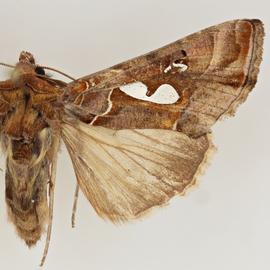
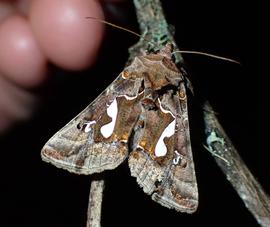
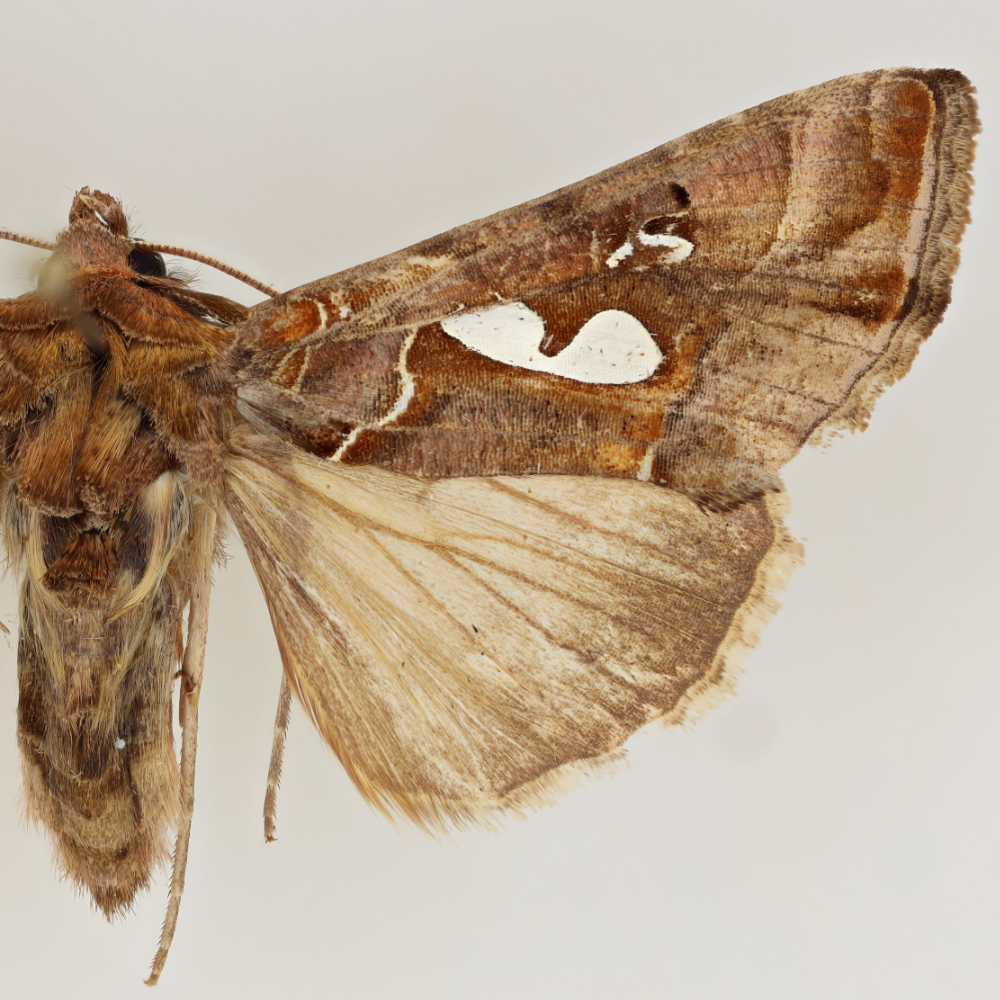
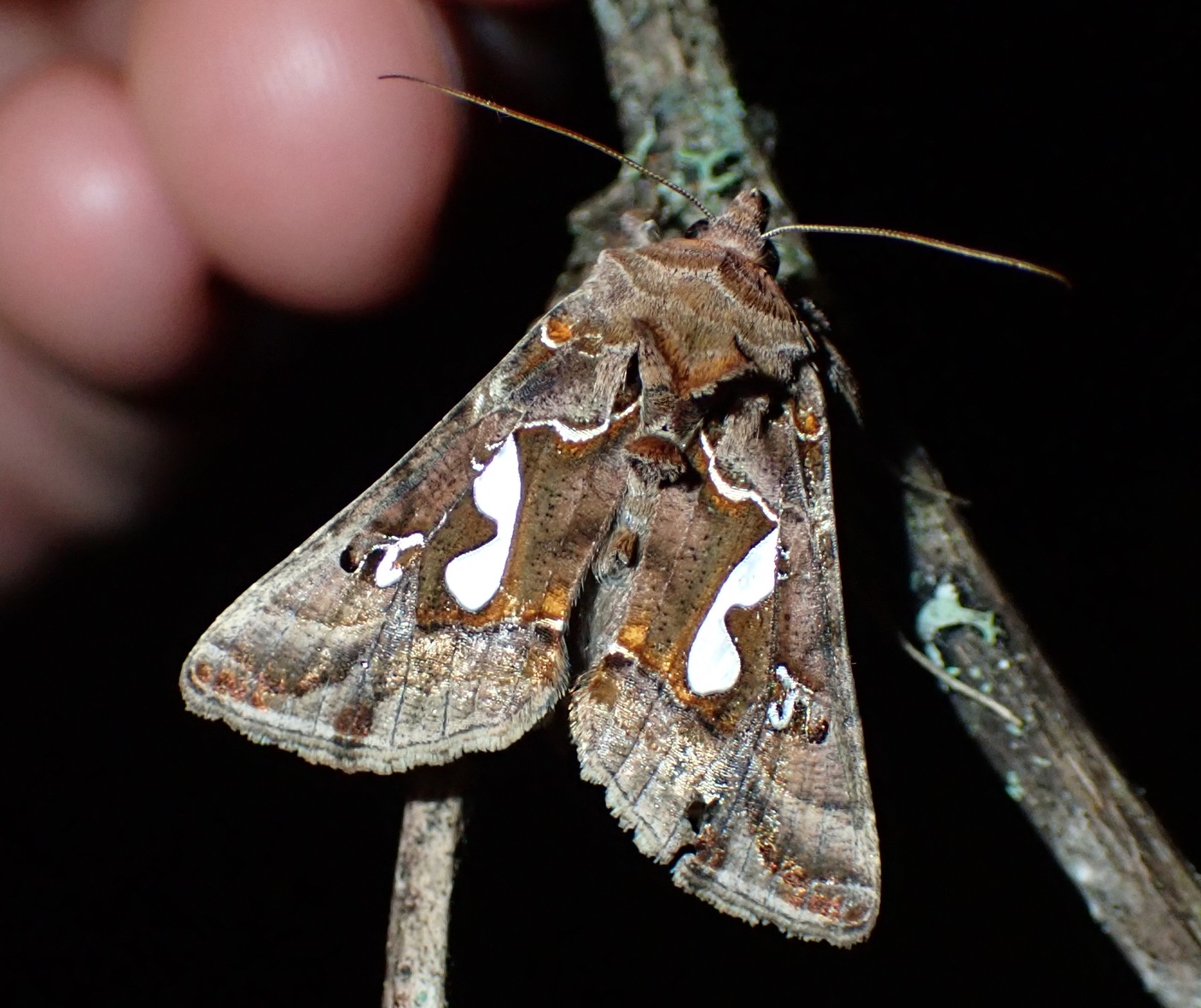
Megalographa biloba is a fairly distinct species: the forewingforewing:
the front wing of an insect; the wing attached to the second segment of the thorax (the mesothorax)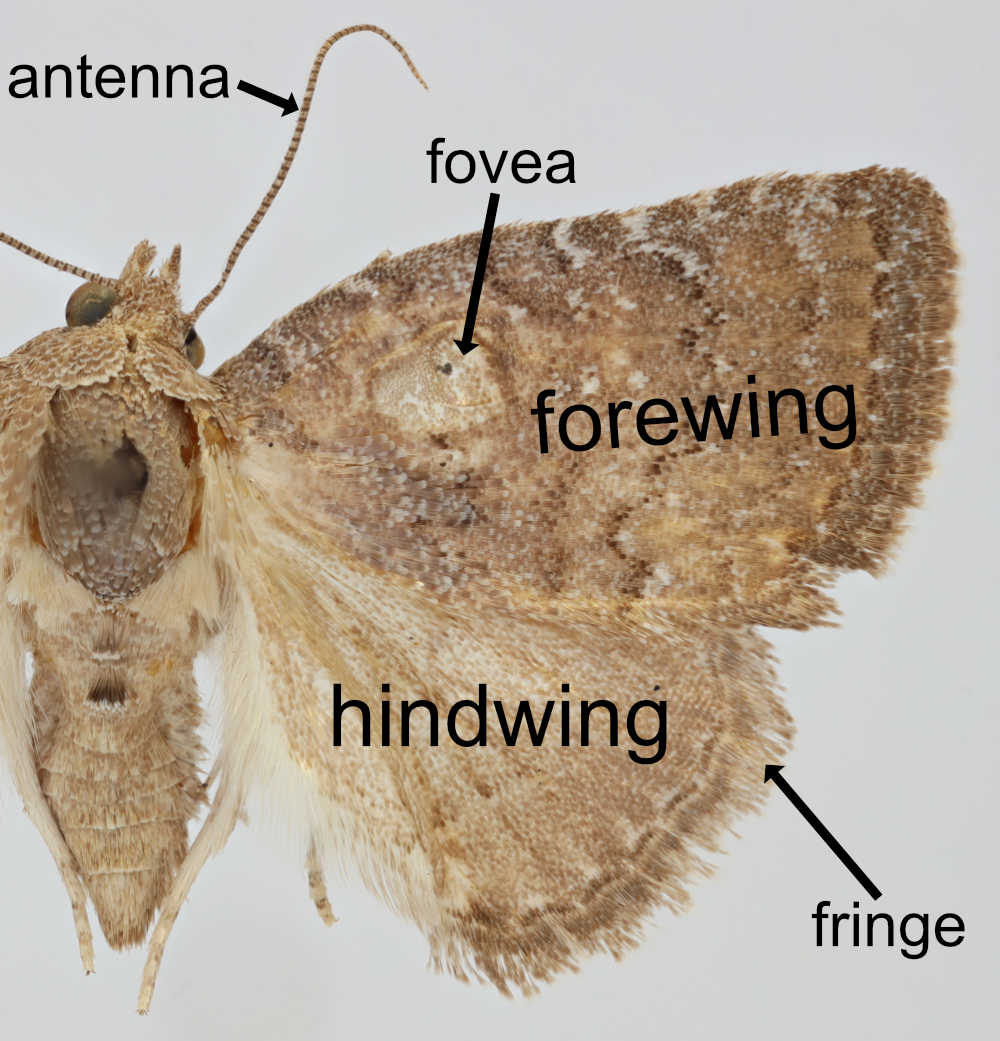 (forewing lengthforewing length:
the distance of the forewing in a straight line from the base to the tip of the apex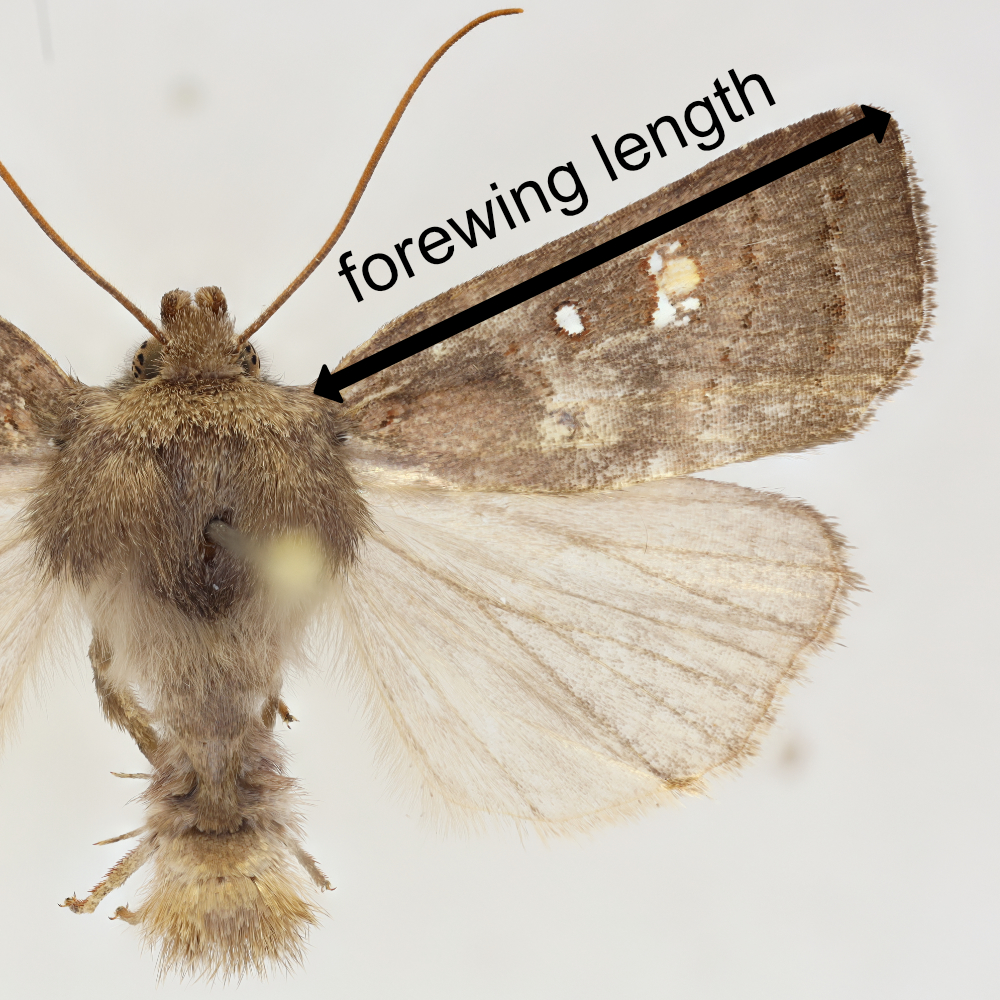 14–18 mm) is brown to pale brown; the stigmastigma:
a distinctive metallic, often silver or gold-colored, marking on the forewing in many species of Plusiinae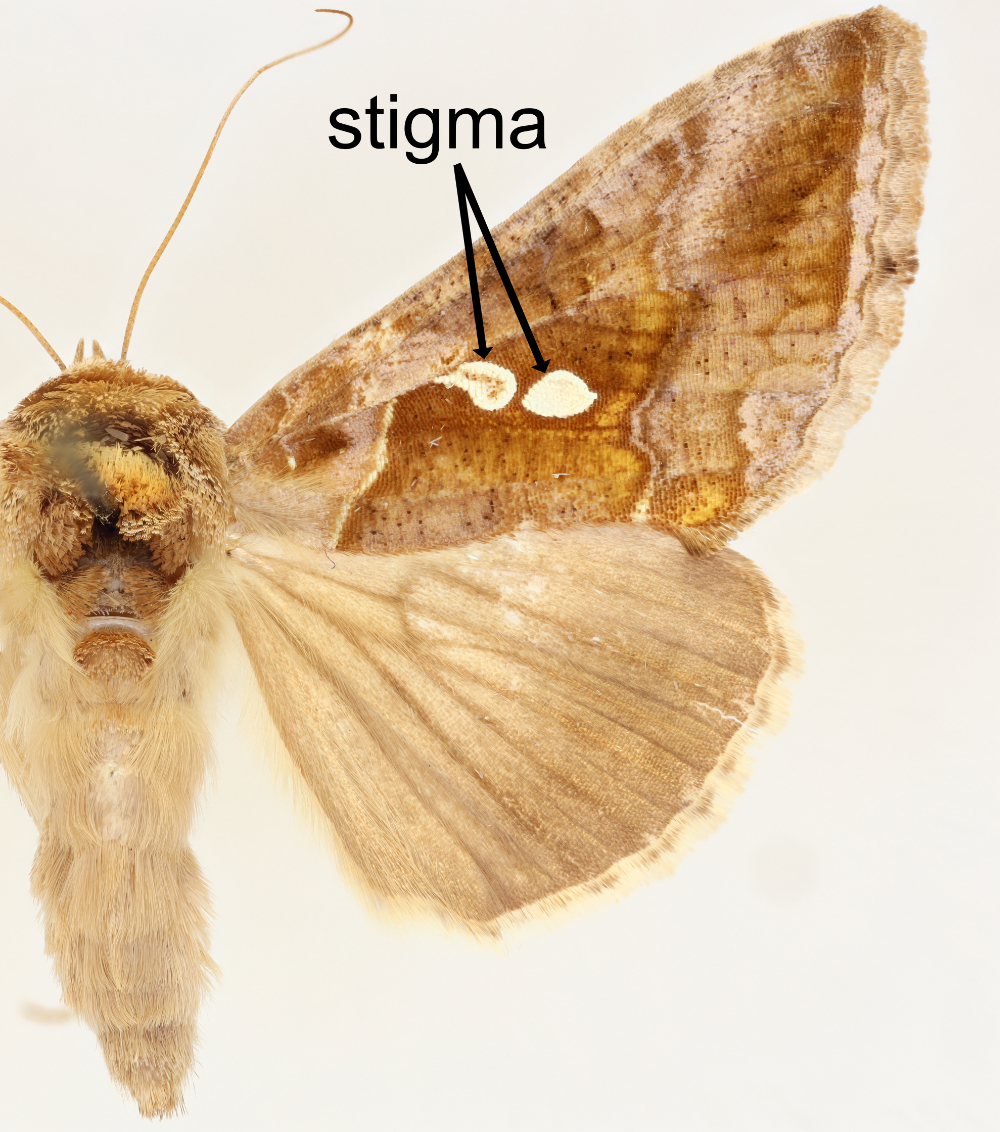 is highly distinctive and has the appearance of a pair of joined silver semicircles; the posteriorposterior:
the 'tail' end of an organism, as opposed to the anterior or 'head' end of an organism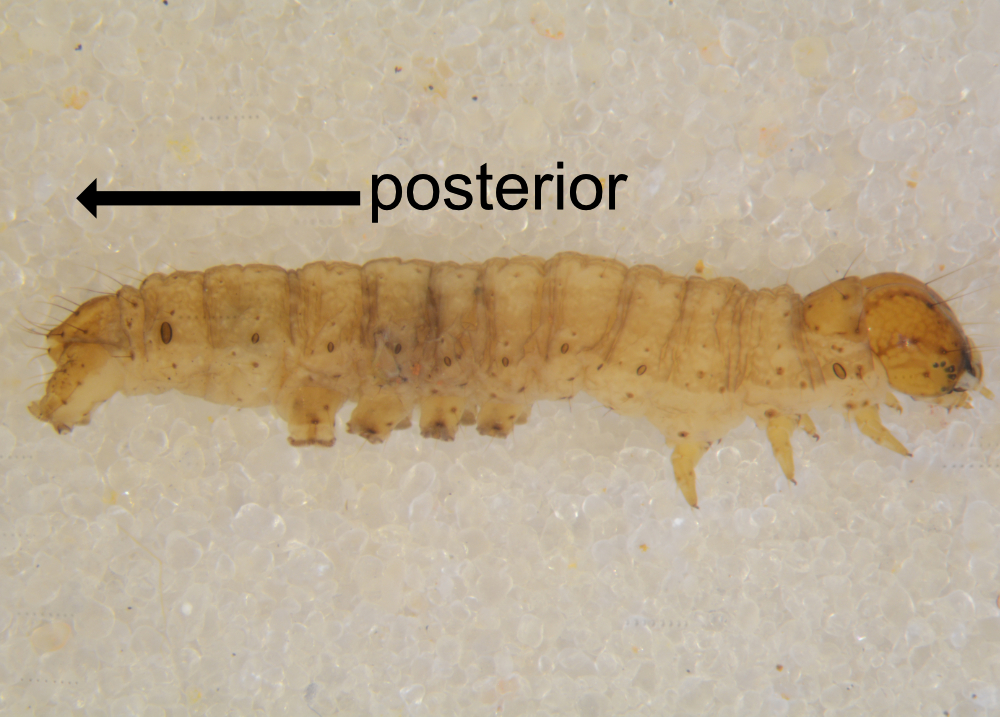 part of the reniform spotreniform spot:
a spot, often broad bean- or kidney-shaped, found at the distal end of the discal cell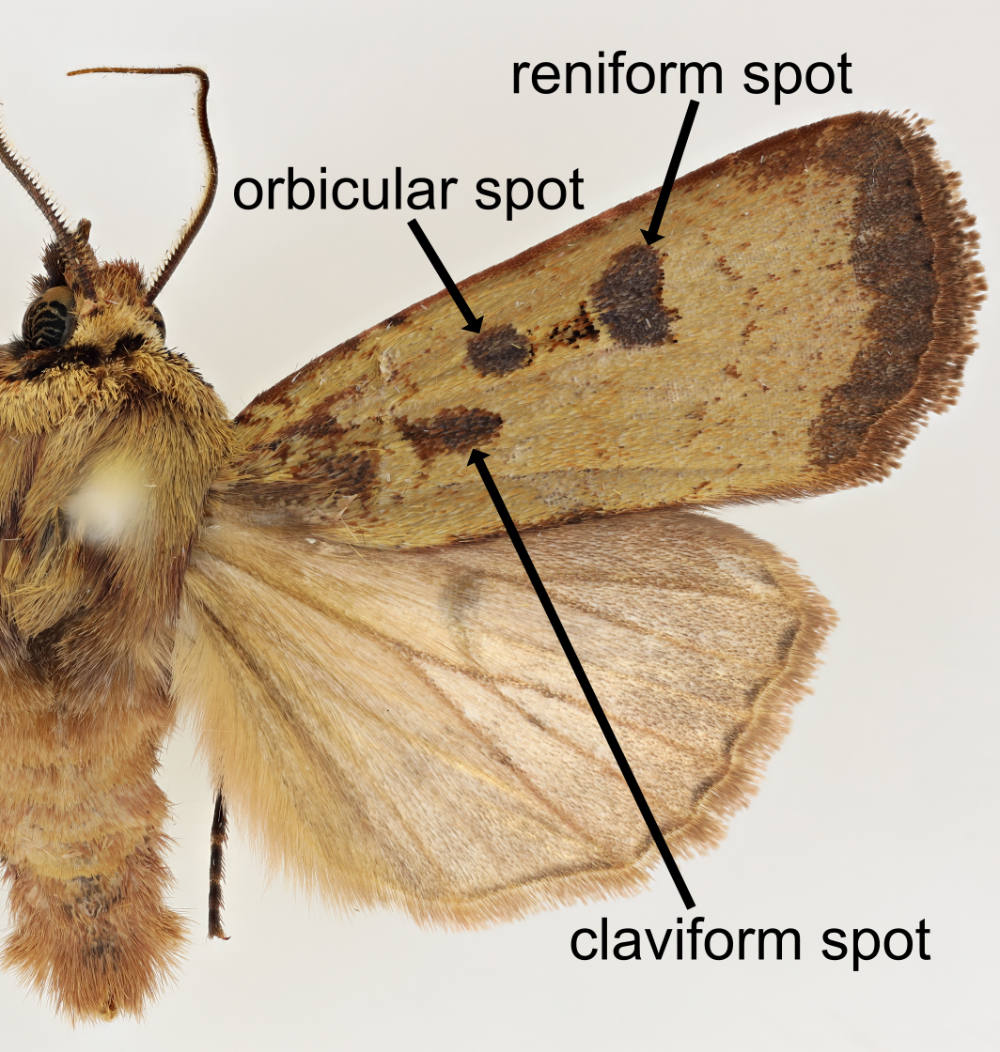 has a fine C-shaped silver line; and a pair of dark spots in the terminal areaterminal area:
the portion of the wing that is located distal to the subterminal line and basal of the terminal line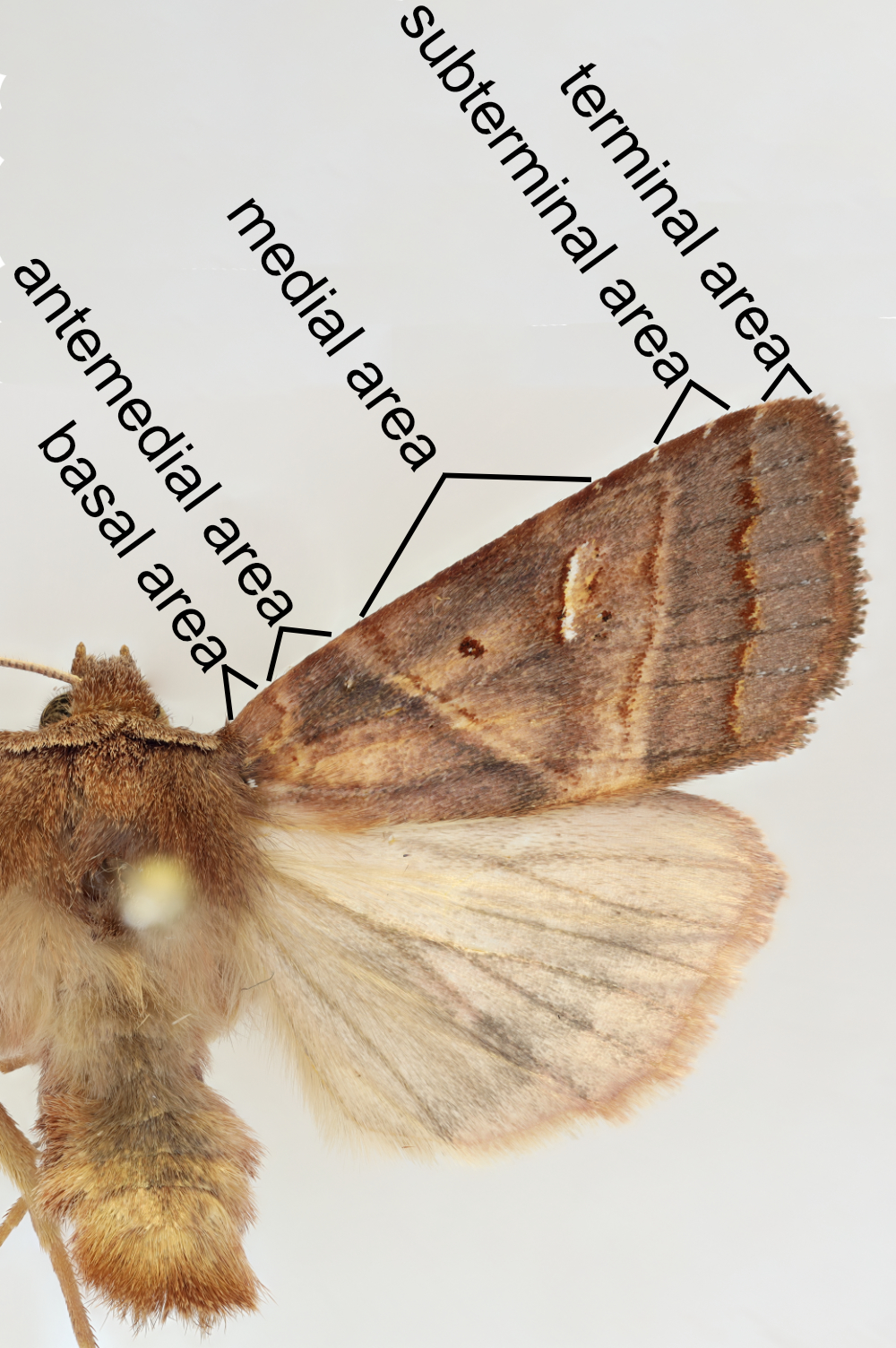 extend as a streak toward the position of the reniform spotreniform spot:
a spot, often broad bean- or kidney-shaped, found at the distal end of the discal cell.
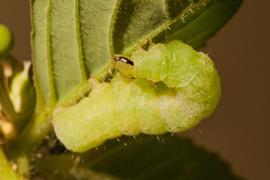
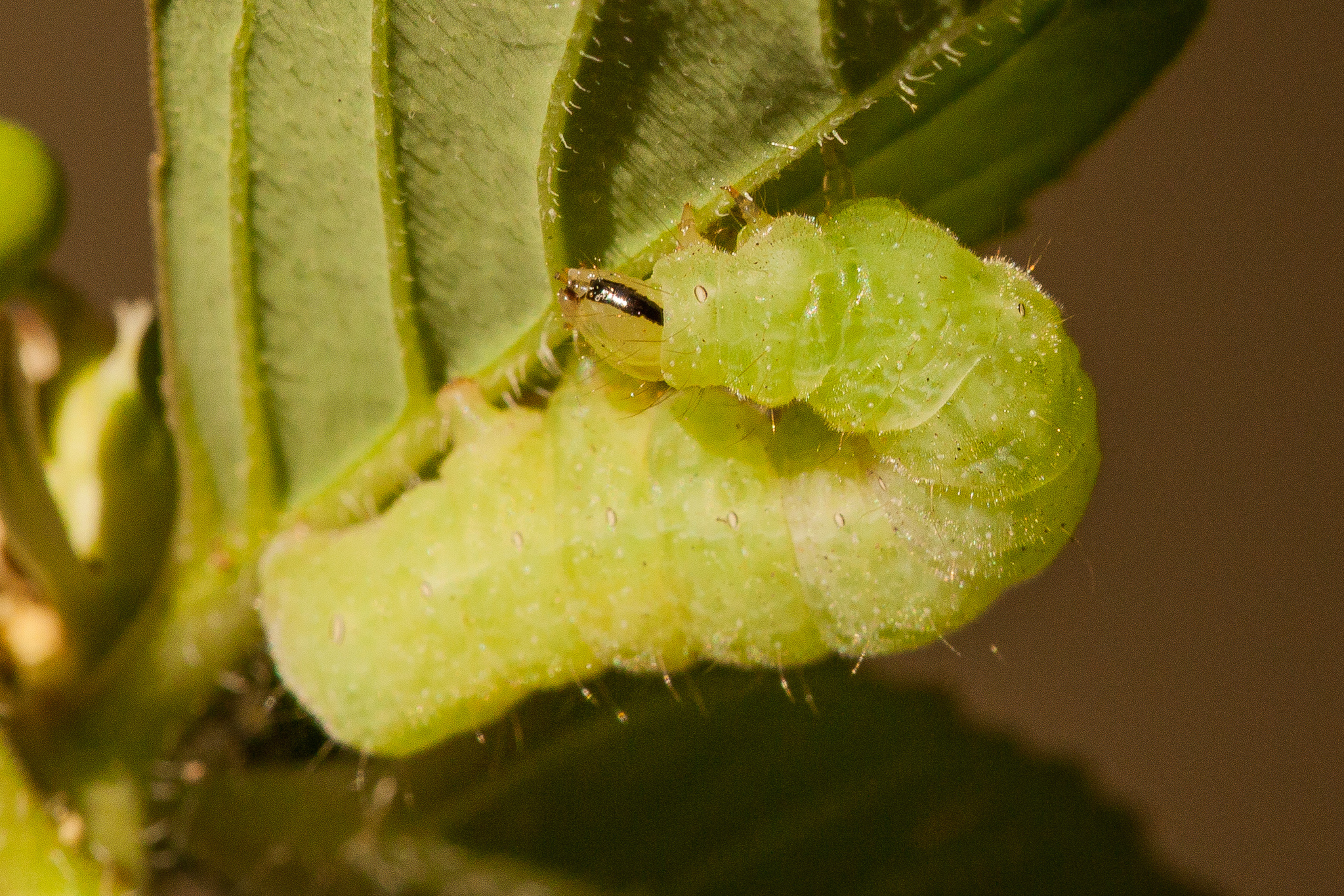
The larva of Megalographa biloba is green with three pairs of wavy white lines on the back. The pinaculapinaculum:
a small, flat, or slightly elevated chitinized area bearing a seta or setae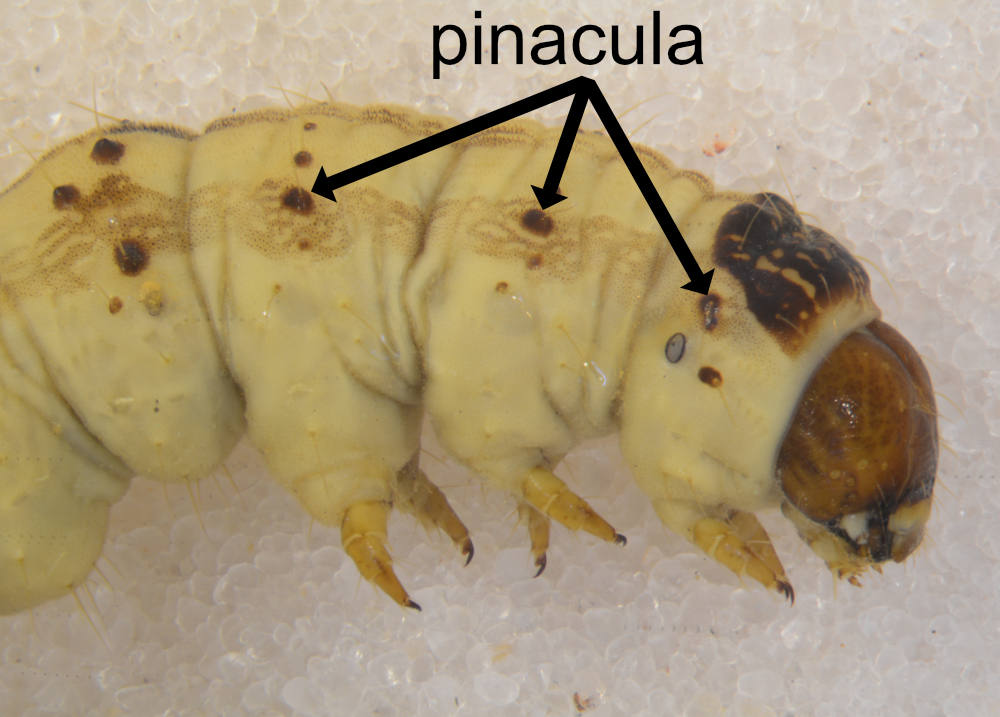 are green with white around the setal sockets, except that the sockets of the subdorsal setae are ringed with black. The head is dark green with a black lateral line on each side that covers the stemmata. Larvae have two pairs of abdominal prolegs (Lafontaine and Poole 1991Lafontaine and Poole 1991:
Lafontaine JD, Poole RW. 1991. The moths of America north of Mexico. Fascicle 25.1. Noctuoidea, Noctuidae (part), Plusiinae. The Wedge Entomological Research Foundation. 385 pp. ).
The distinctive stigmastigma:
a distinctive metallic, often silver or gold-colored, marking on the forewing in many species of Plusiinae shape of Megalographa biloba renders it immediately recognizable. It is unlikely to be confused with any other species of noctuid in Hawaiʻi.
Megalographa biloba is a widespread species in the Americas, occurring natively from southern Canada south to Chile and Argentina. In Hawaiʻi, it is known from all the main high Hawaiian Islands. It is most common in drier, cooler, higher elevation locations, although it can still be occasionally found at sea level and in wet forests.
The larva of Megalographa biloba is broadly polyphagous, feeding on a wide variety of herbaceous plants in the families Asteraceae, Brassicaceae, Fabaceae, Geraniaceae, Iridaceae, Lamiaceae, Musaceae, Poaceae, Ranunculaceae, Scrophulariaceae, Solanaceae, Urticaceae, and Verbenaceae (Eichlin and Cunningham 1978Eichlin and Cunningham 1978:
Eichlin TD, Cunningham HB. 1978. The Plusiinae (Lepidoptera: Noctuidae) of America north of Mexico, emphasizing genitalic and larval morphology. USDA Tech. Bulletin. 1567:1–122.).
Author: Kyhl A. Austin
Content last updated May 2026
idtools.org