ADVENTIVE
Leucania striata Leech, 1900
Higher taxonomy: Noctuidae: Noctuinae: Leucaniini
Leucania striata was first recorded in Hawaiʻi in 1969 from Oʻahu (Beardsley 1979Beardsley 1979:
Beardsley JW. 1979. New immigrant insects in Hawaiʻi: 1962 through 1976. Proceedings of the Hawaiian Entomological Society. 23:35–44.). It has since been detected on all of the main high Hawaiian Islands (Nishida 2002Nishida 2002:
Nishida GM. 2002. Hawaiian terrestrial arthropod checklist. Fourth Edition. Bishop Museum Technical Report 22. 313 pp., Austin and Rubinoff 2022Austin and Rubinoff 2022:
Austin KA, Rubinoff D. 2022. Eleven new records of Lepidoptera in the Hawaiian Islands including corrections to the Hawaiian terrestrial arthropod checklist. Bishop Museum Occasional Papers. 142:49–74., 2025). Its host plants are unknown, but likely use grasses (family Poaceae) like many other species of Leucania.
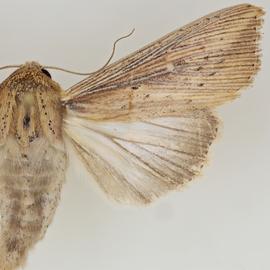
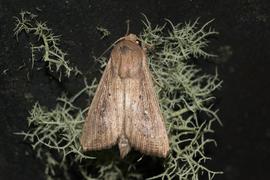
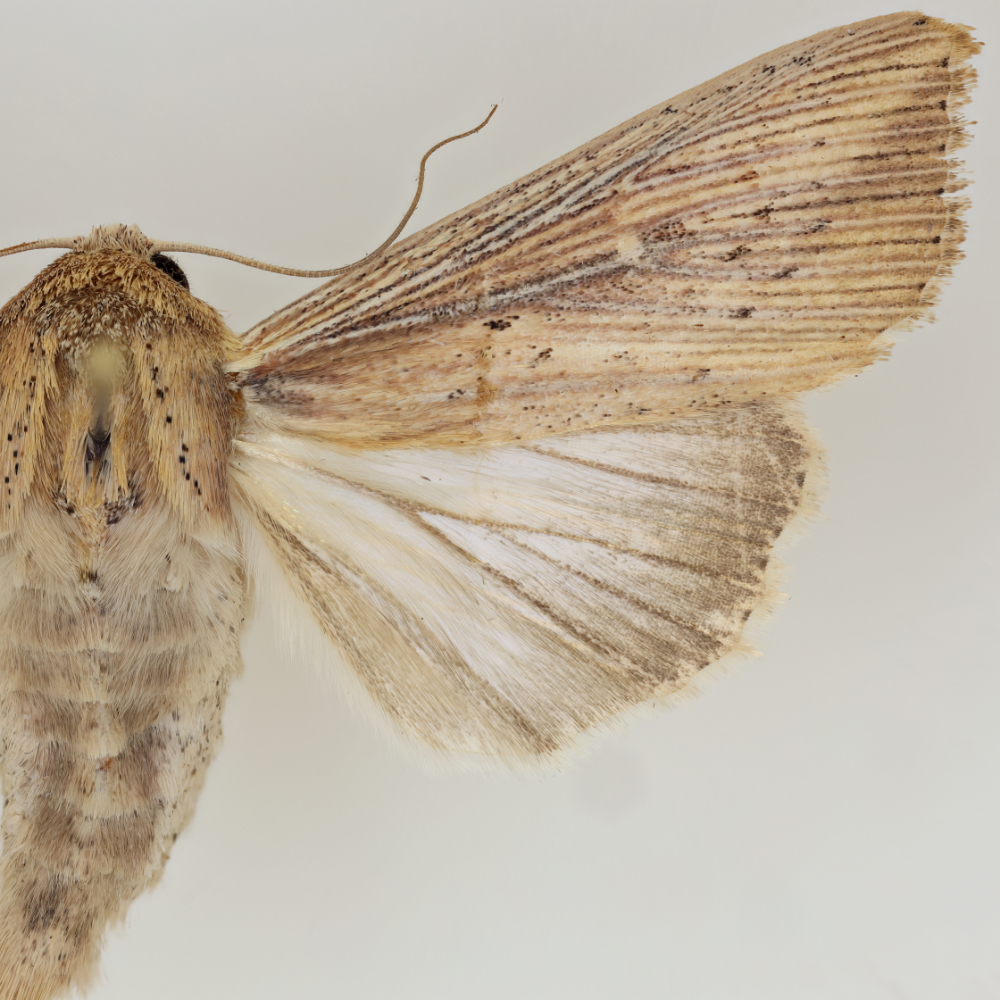
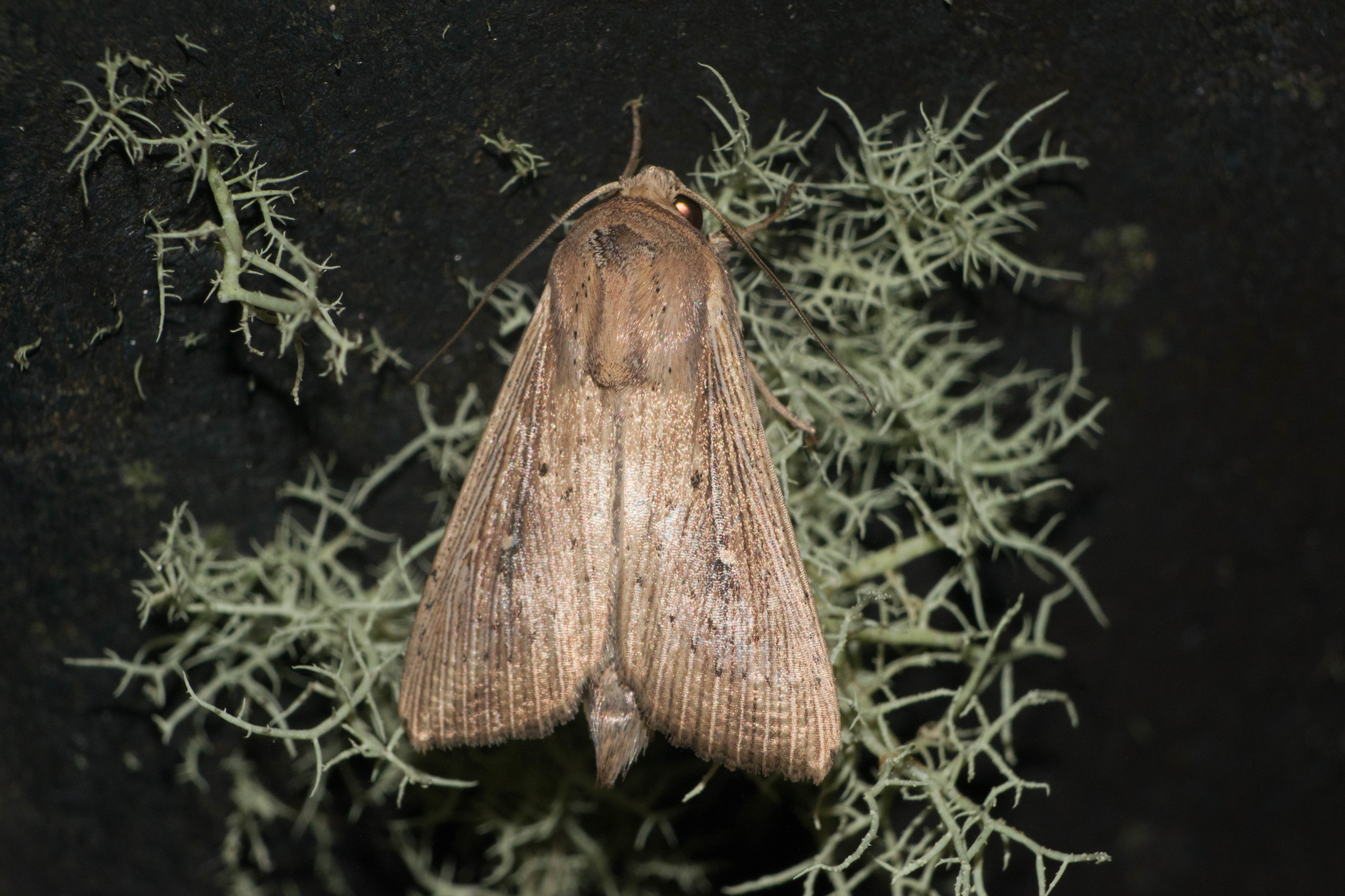
Adults of Leucania striata are medium-sized noctuids (forewing lengthforewing length:
the distance of the forewing in a straight line from the base to the tip of the apex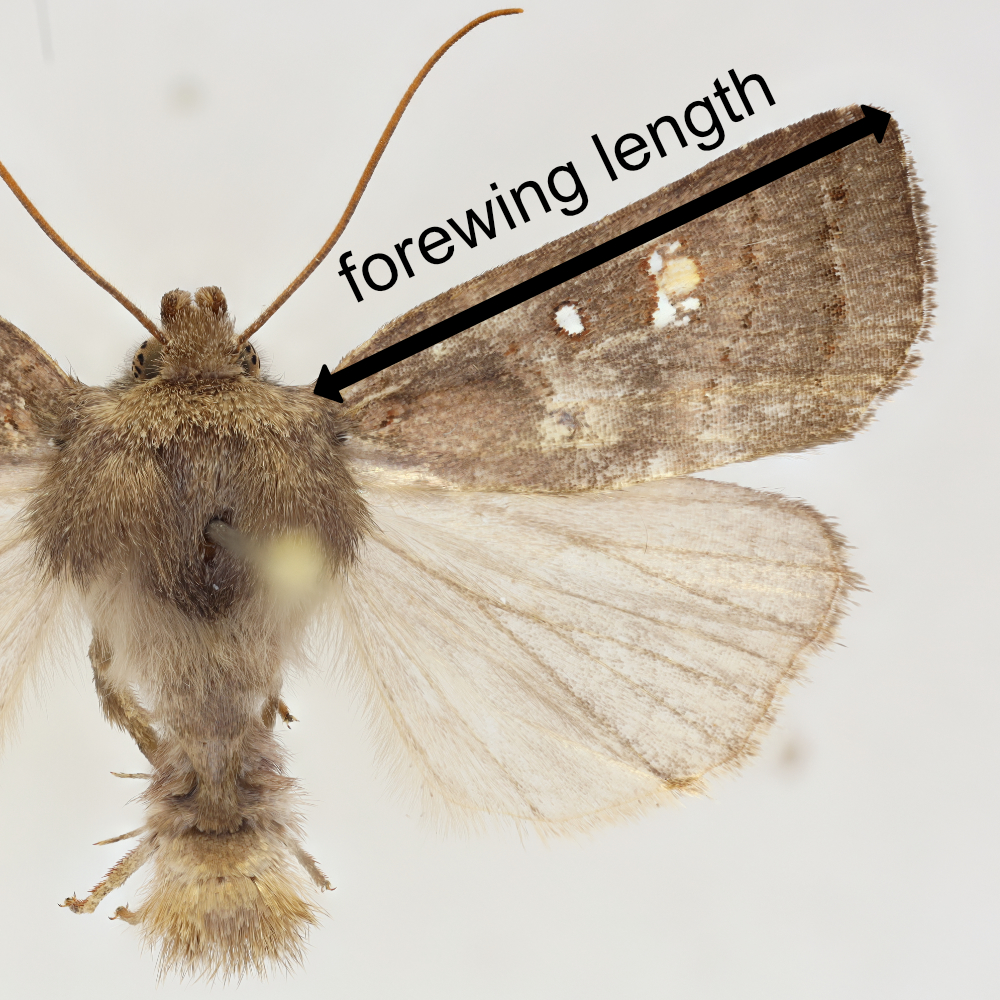 15–19 mm) characterized by a straw yellow or pale brown forewingforewing:
the front wing of an insect; the wing attached to the second segment of the thorax (the mesothorax)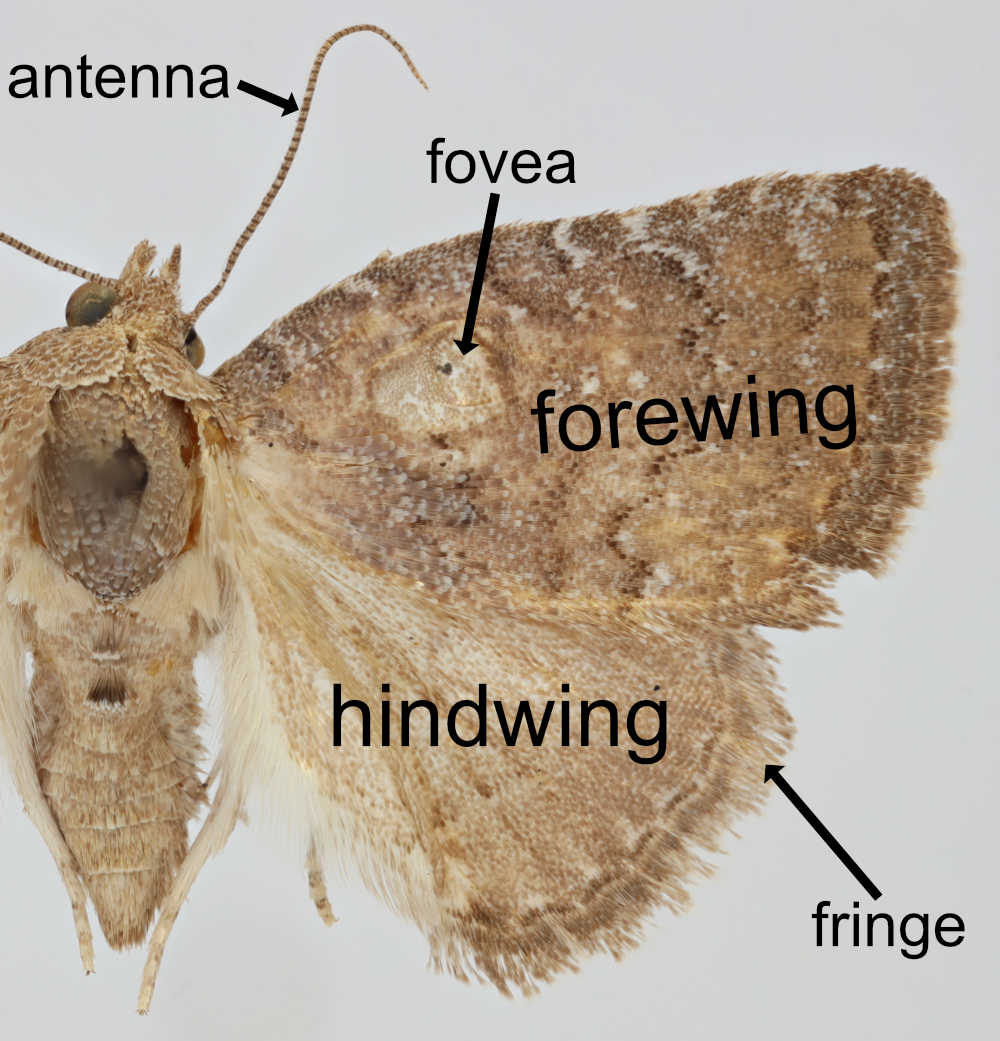 , veins covered in white scales and outlined with pink, brown, or black scales, and the postmedial linepostmedial line:
a thin, transverse line located distal to the reniform spot, typically on the distal third of the forewing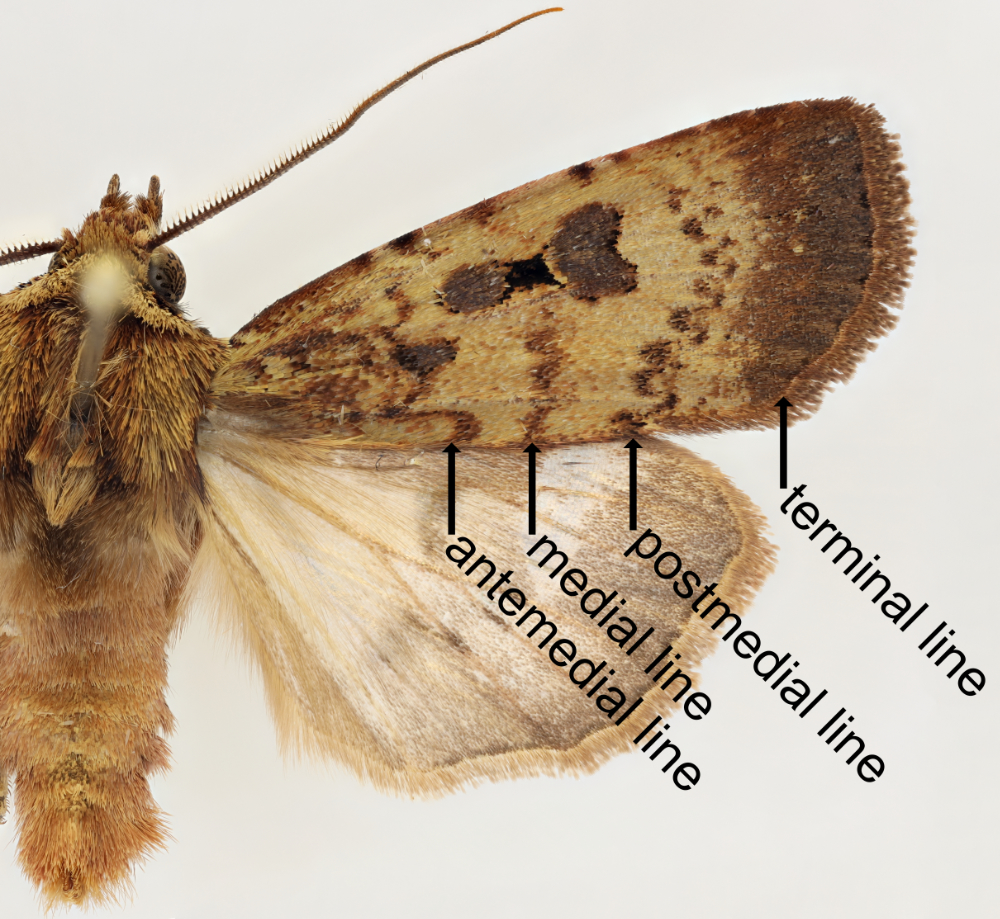 composed of two rows of offset black spots along the veins. The hindwinghindwing:
the back wing of an insect; the wing attached to the third segment of the thorax (the metathorax)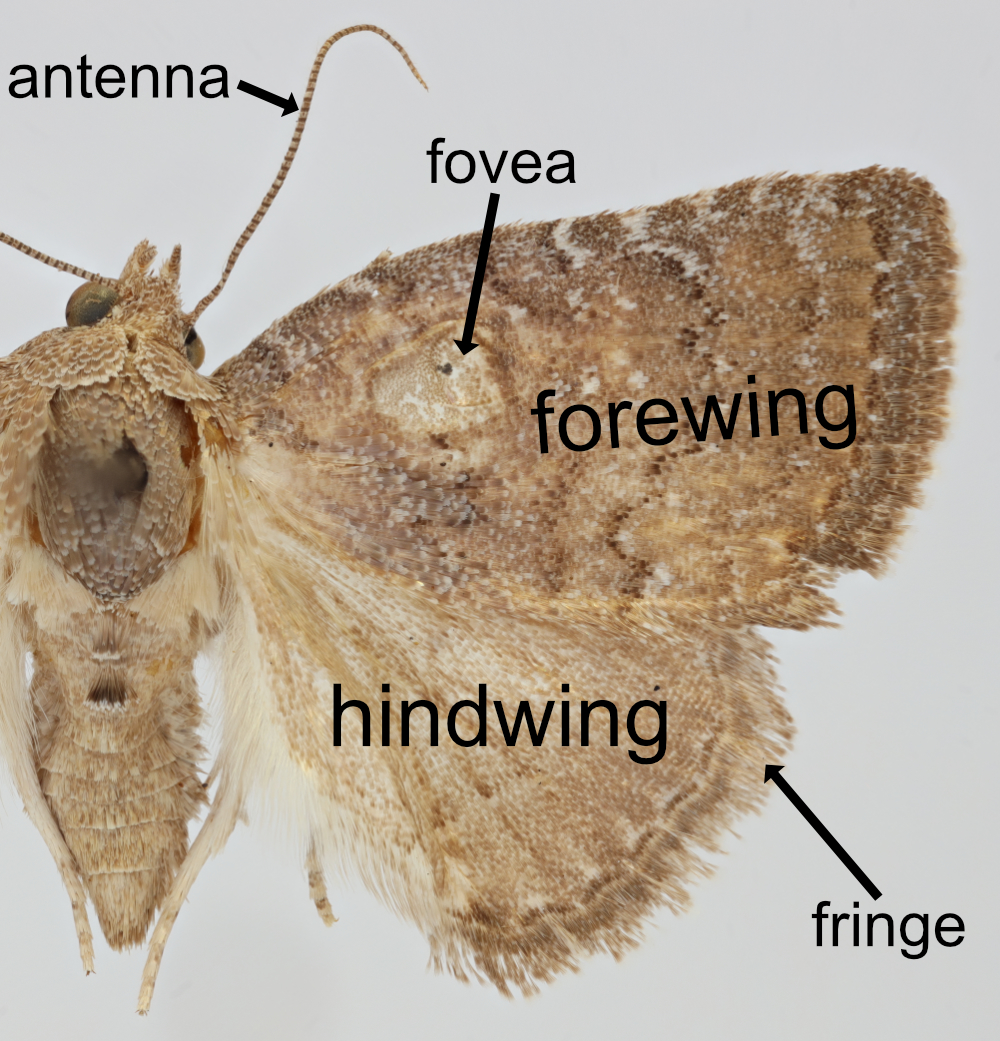 is dark gray, paler basally and darker along the veins.
Larvae of Leucania striata have not been formally described but likely resemble other species of Leucania Ochsenheimer, 1816.
In Hawaiʻi, Leucania striata closely resembles L. stenographa, but L. stenographa has a paler hindwinghindwing:
the back wing of an insect; the wing attached to the third segment of the thorax (the metathorax), less distinctly marked veins on the forewingforewing:
the front wing of an insect; the wing attached to the second segment of the thorax (the mesothorax), and only a single row of black spots on the postmedial linepostmedial line:
a thin, transverse line located distal to the reniform spot, typically on the distal third of the forewing.
Leucania striata is native to Japan.
In Hawaiʻi, Leucania striata is known from all of the main Hawaiian islands except Niʻihau and Kahoʻolawe (Nishida 2002Nishida 2002:
Nishida GM. 2002. Hawaiian terrestrial arthropod checklist. Fourth Edition. Bishop Museum Technical Report 22. 313 pp., Austin and Rubinoff 2022Austin and Rubinoff 2022:
Austin KA, Rubinoff D. 2022. Eleven new records of Lepidoptera in the Hawaiian Islands including corrections to the Hawaiian terrestrial arthropod checklist. Bishop Museum Occasional Papers. 142:49–74., 2025). There are records from sea level up to 1200 meters (UHIM collectionUHIM collection:
UHIM collection. Based on identified specimens in the collection of the University of Hawaii Insect Museum, Honolulu, HI).
Host plant(s) for Leucania striata are unknown, but larvae likely feed on various grasses (family Poaceae) like other species of Leucania.
Author: Kyhl A. Austin
Content last updated May 2026
idtools.org