ADVENTIVE
Mythimna scottii (Butler, 1886)
Higher taxonomy: Noctuidae: Noctuinae: Leucaniini
Note: some sources treat this species as Leucania scottii (e.g., Riotte 1991Riotte 1991:
Riotte JCE. 1991. Reassessment of the Noctuoidea of the Hawaiian Islands. Bishop Museum Occasional Papers. 31:139–151.). We list it as Mythimna scottii, following the treatment of Hacker et al. (2002)Hacker et al. (2002):
Hacker H, Ronkay L, Hreblay M. 2002. Noctuidae Europaeae Volume 4: Hadeninae I. Entomological Press, Sorø, Denmark. 419 pp..
Mythimna scottii was first detected in Hawaiʻi in 1956 on Oʻahu (initially identified as Meliana sp. near scottii, Beardsley 1957Beardsley 1957:
Beardsley JW. 1957. Notes and exhibitions: Meliana sp. near scotti. Proceedings of the Hawaiian Entomological Society. 16(2):197.). It has since been collected on all the main high Hawaiian Islands. It is locally common in open, dry habitats, especially grasslands and ranchlands.
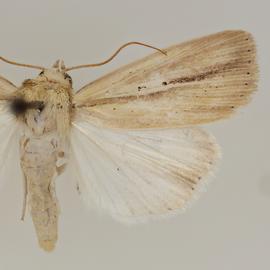
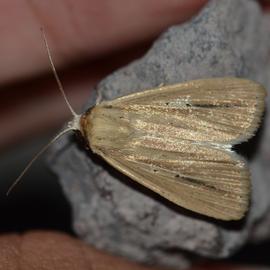
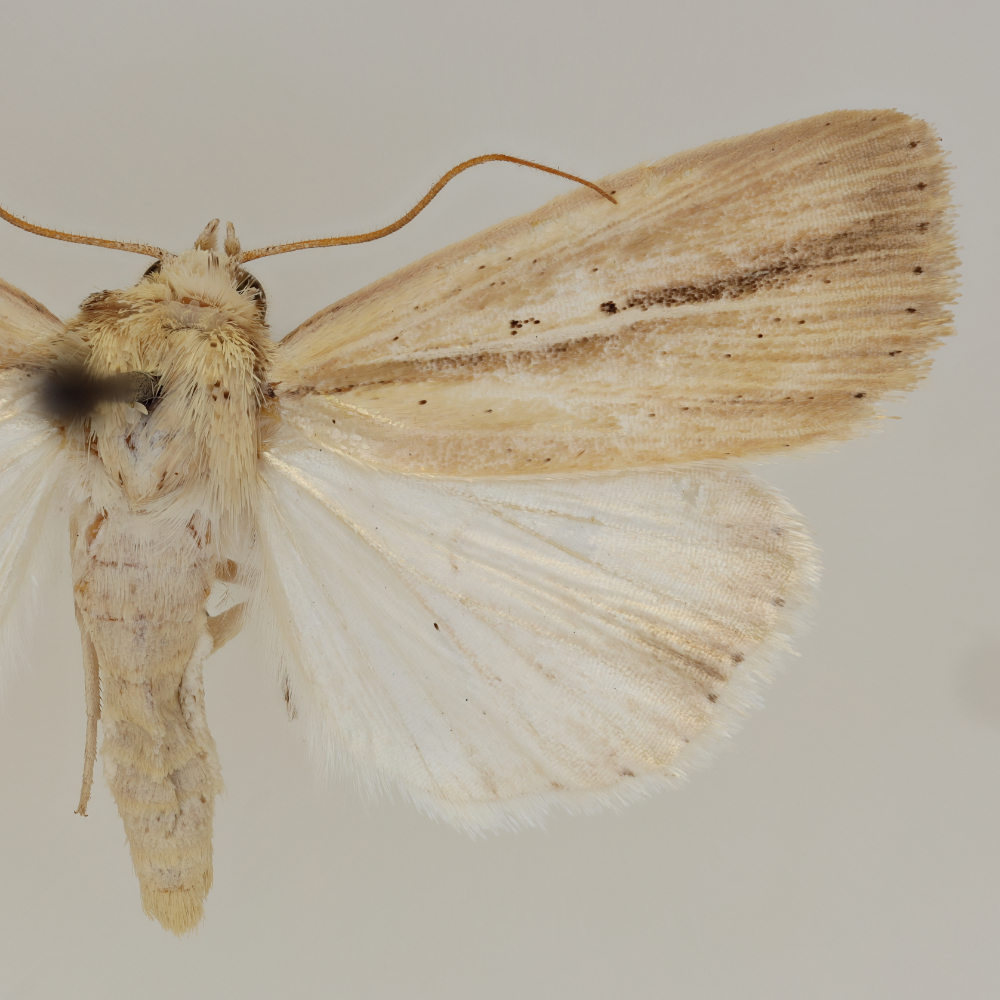
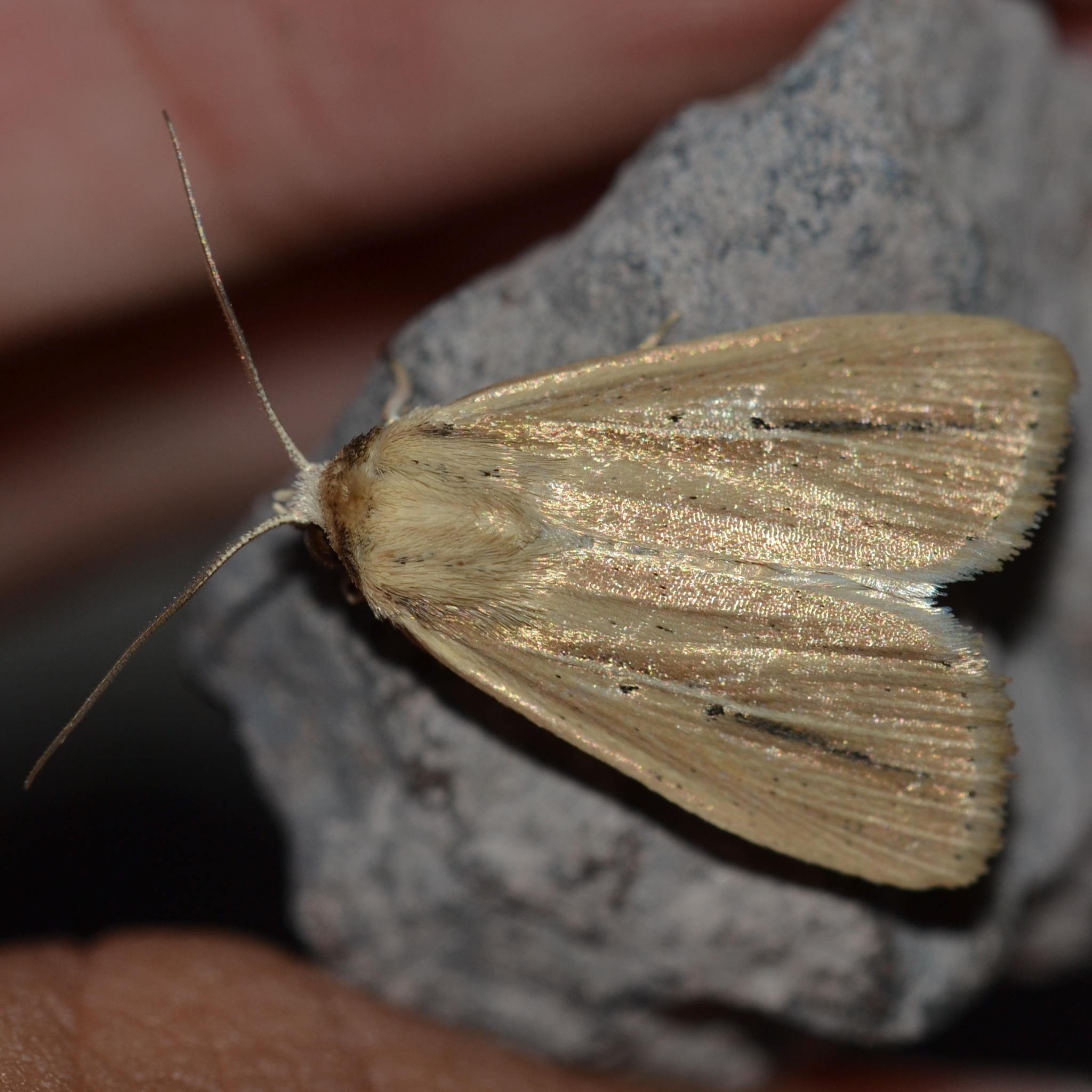
Mythimna scottii is a small noctuid (forewing lengthforewing length:
the distance of the forewing in a straight line from the base to the tip of the apex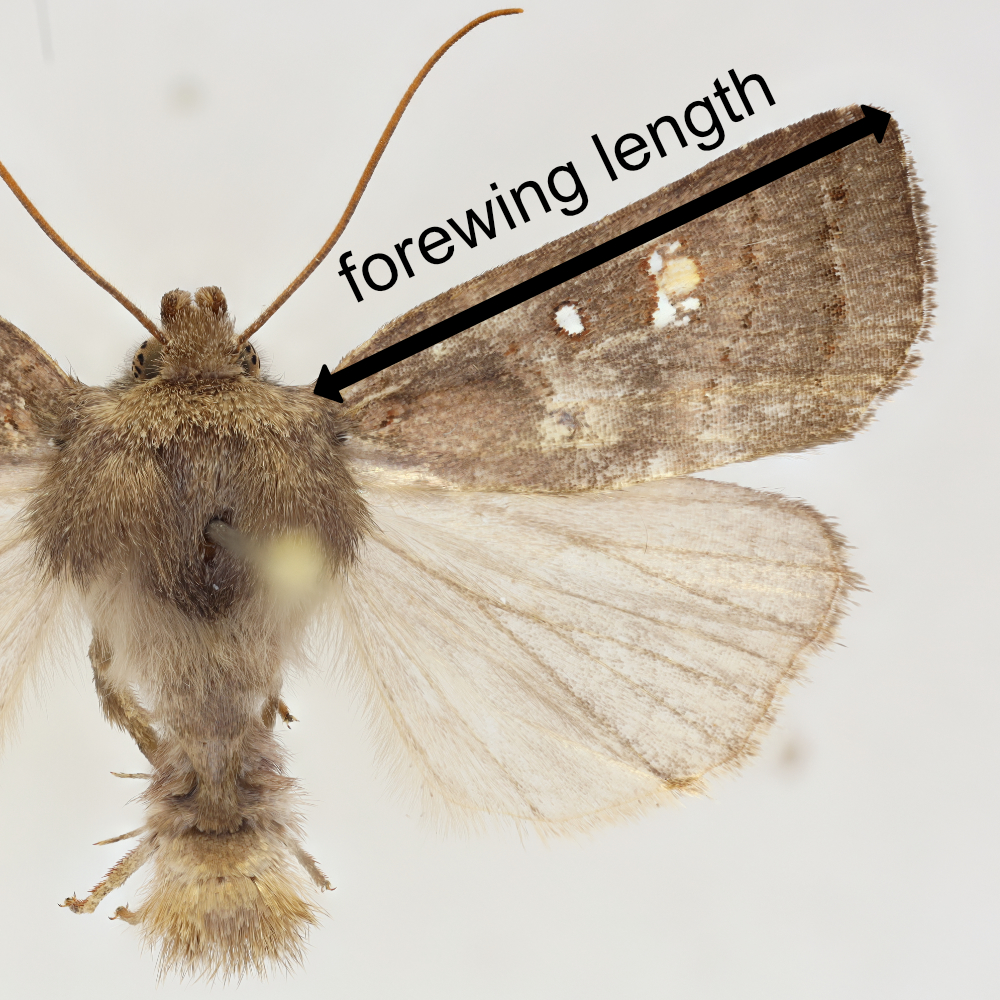 10–12 mm) characterized by a pale yellow and pale brown forewingforewing:
the front wing of an insect; the wing attached to the second segment of the thorax (the mesothorax)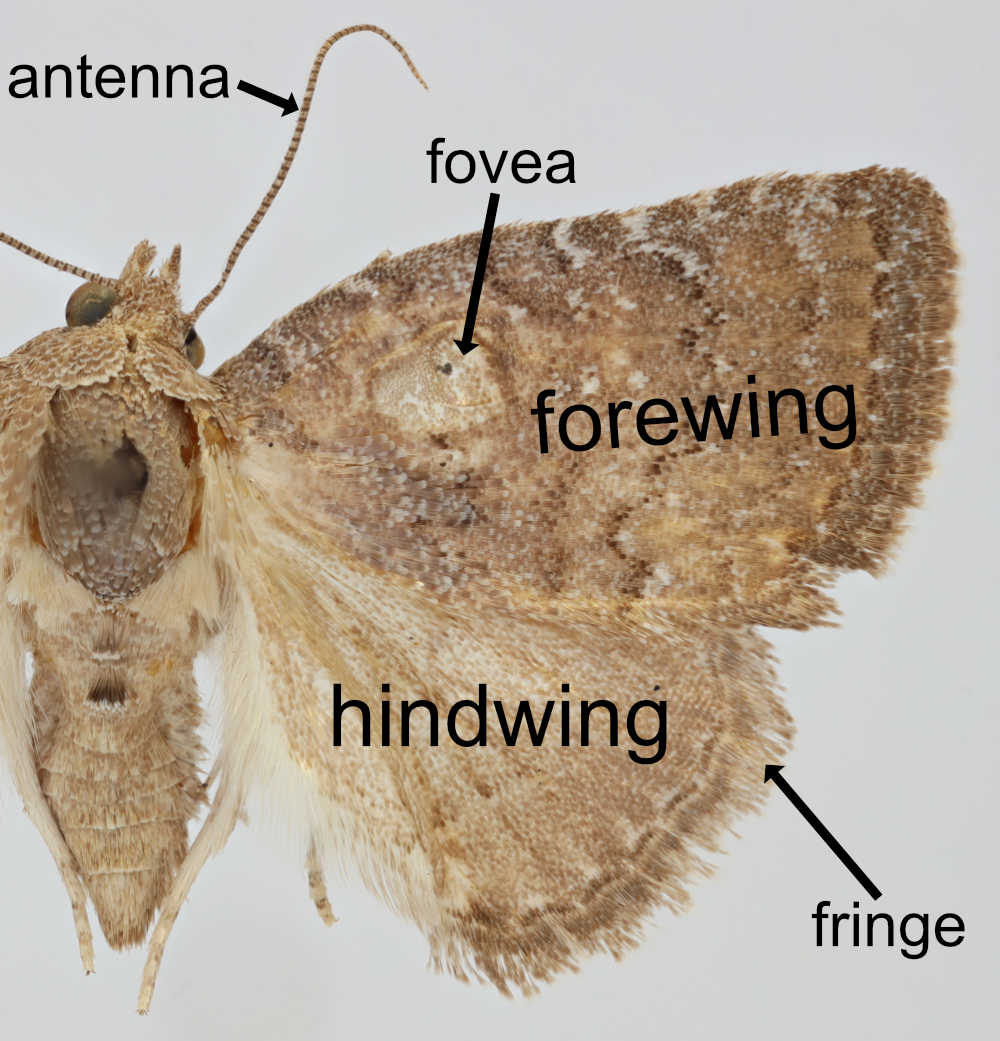 with a pale brown or slightly pinkish basalbasal:
the part of an appendage nearest to where it connects to the body; often referred to as 'proximal'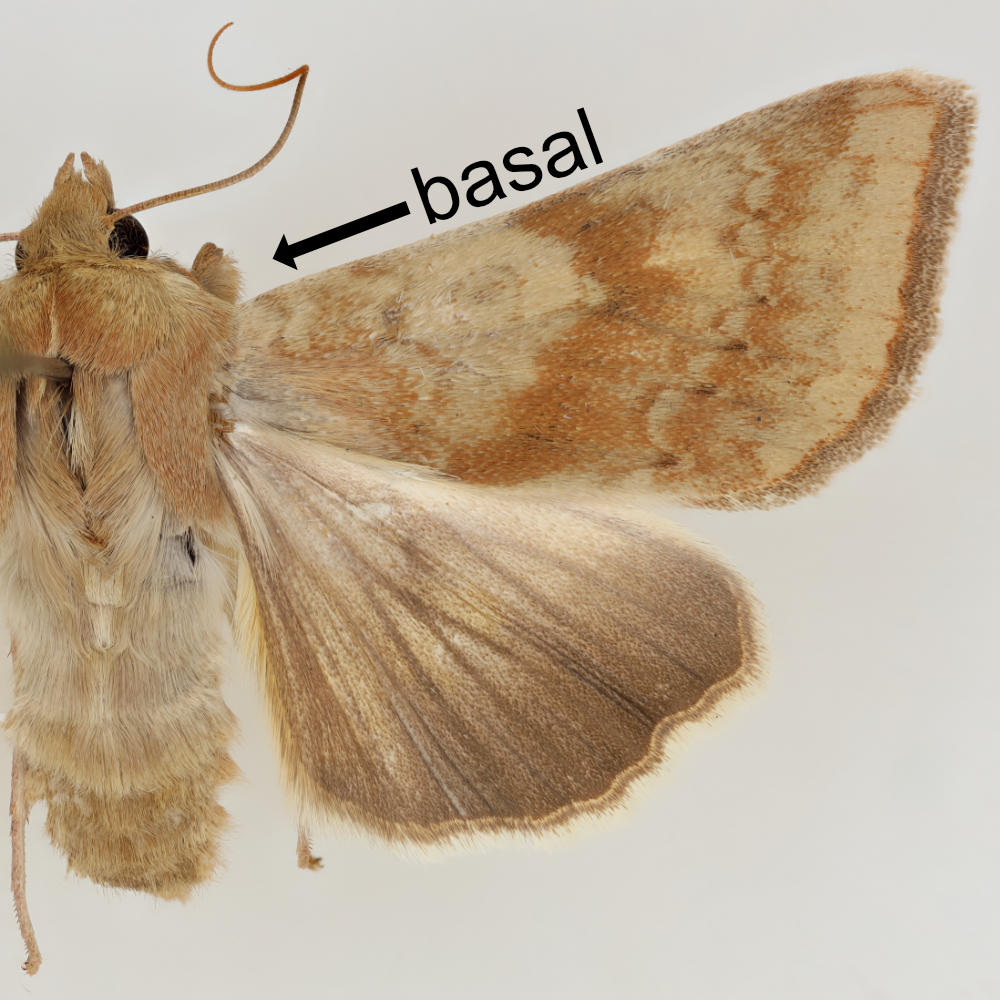 streak, two black dots in the discal celldiscal cell:
a large, central compartment on the wing surrounded by veins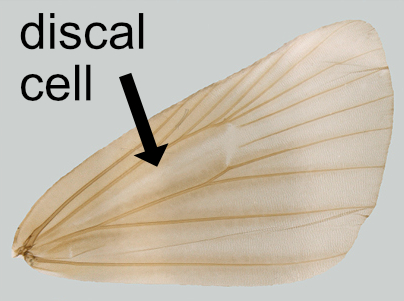 , with a distinct black streak from the distaldistal:
towards the free end of an appendage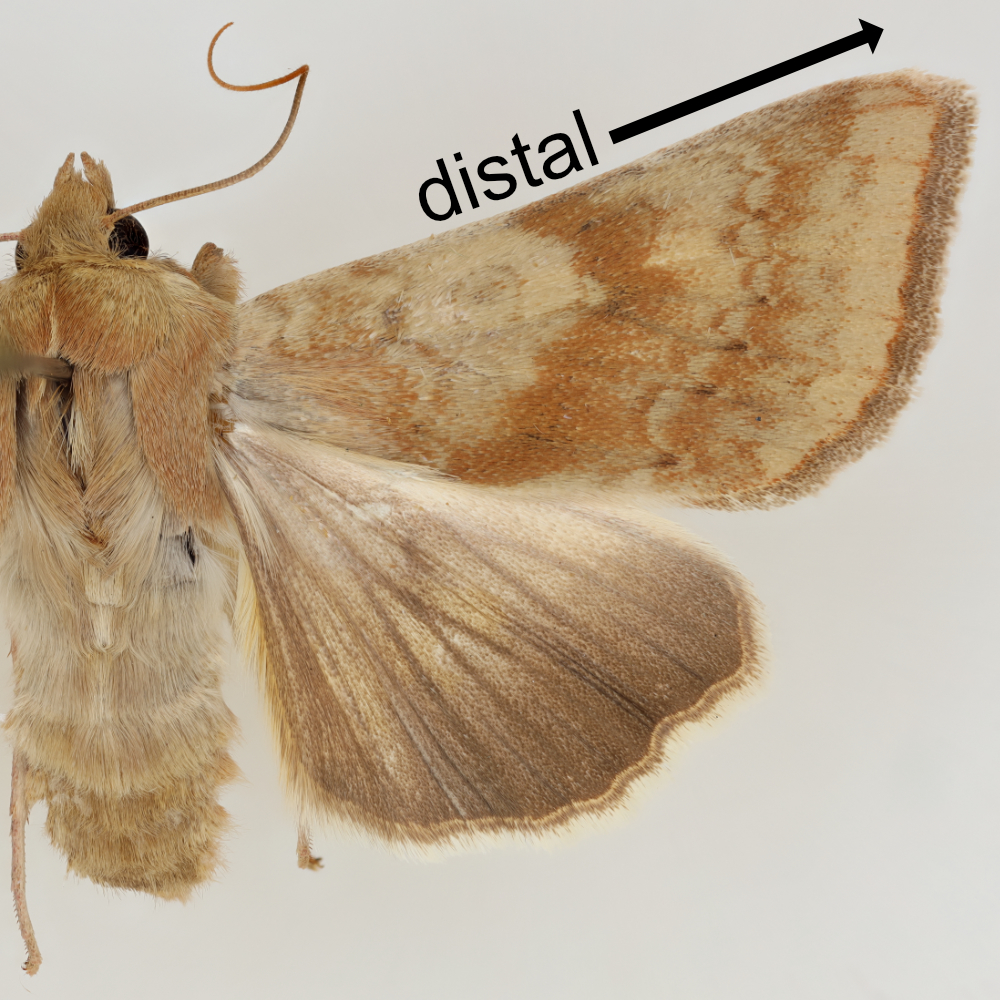 dot to near the fringefringe:
the scales, setae, or hairs that extend beyond the edge of a wing membrane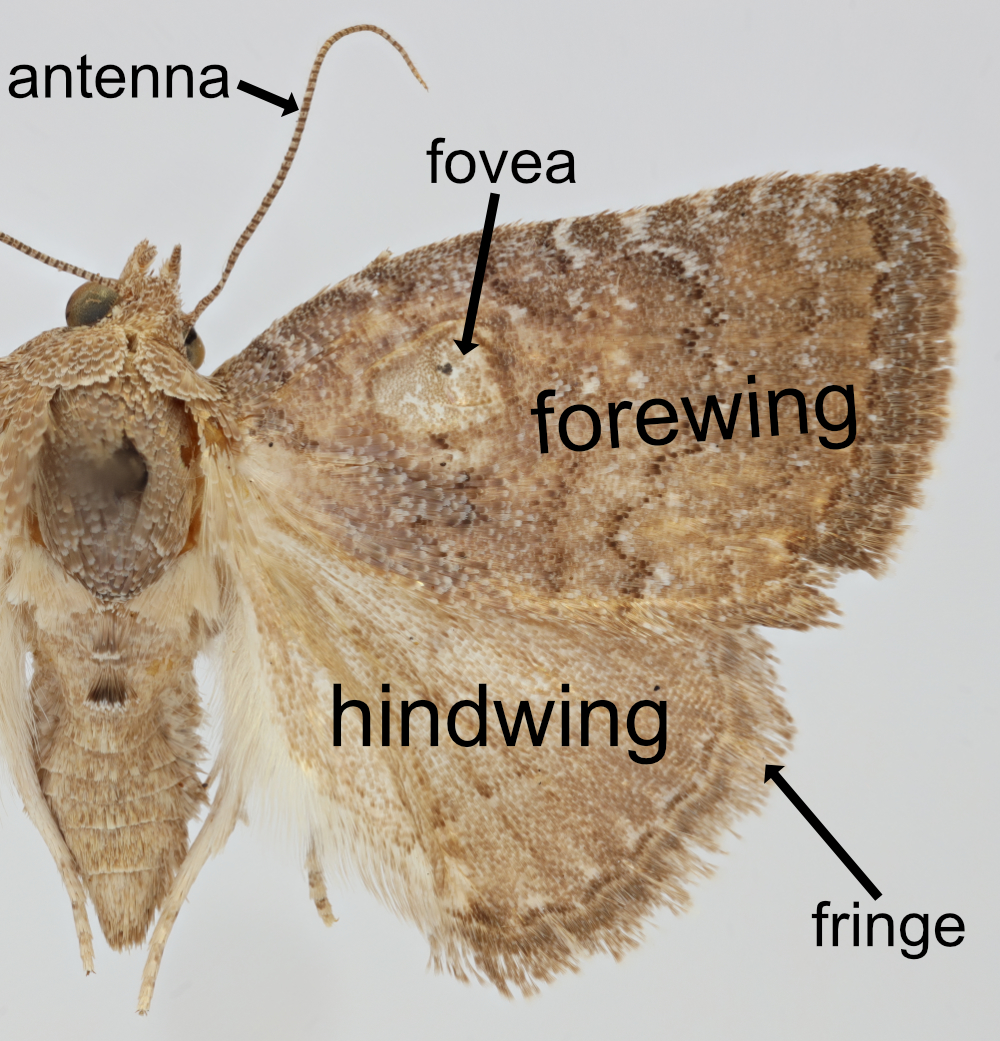 . The hindwinghindwing:
the back wing of an insect; the wing attached to the third segment of the thorax (the metathorax)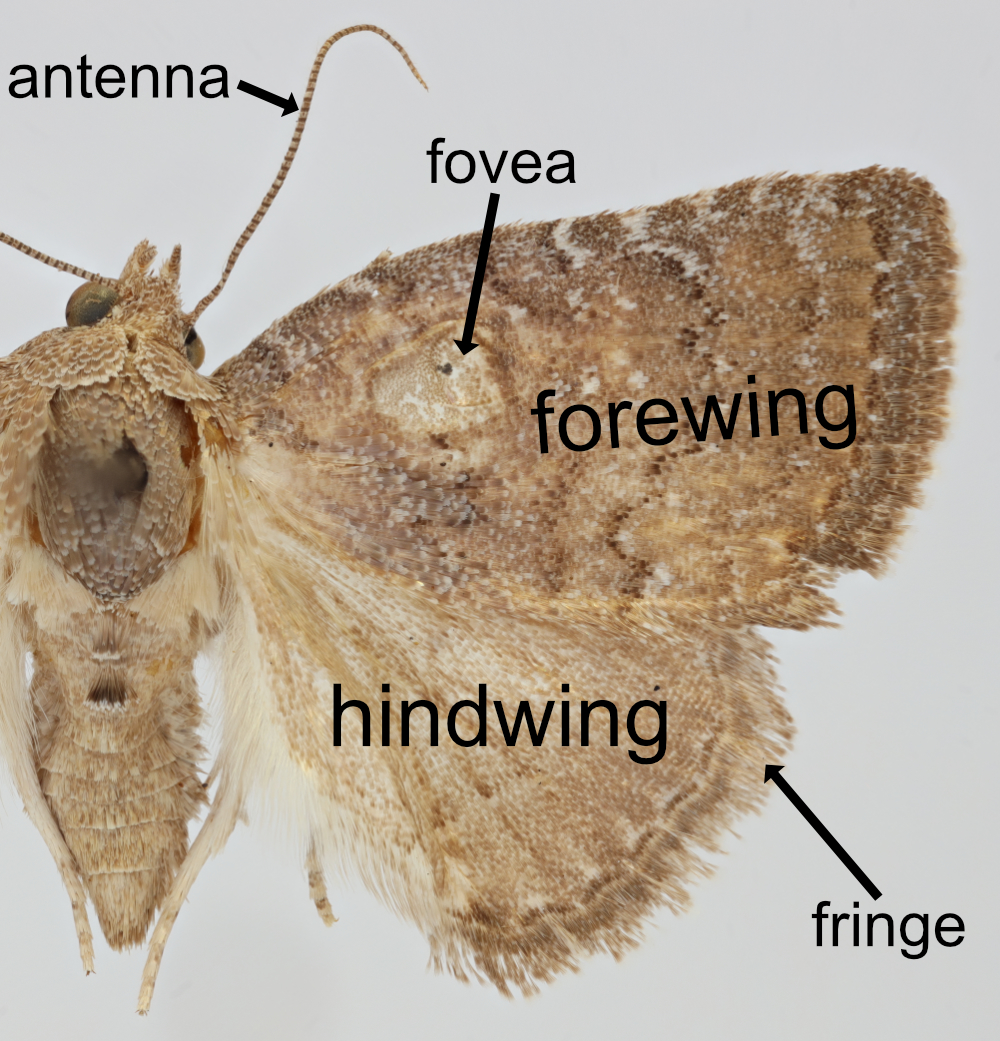 is white, pale gray distally, with small black dots along the fringefringe:
the scales, setae, or hairs that extend beyond the edge of a wing membrane.
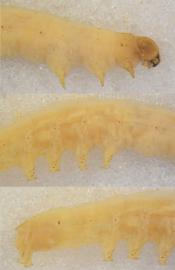
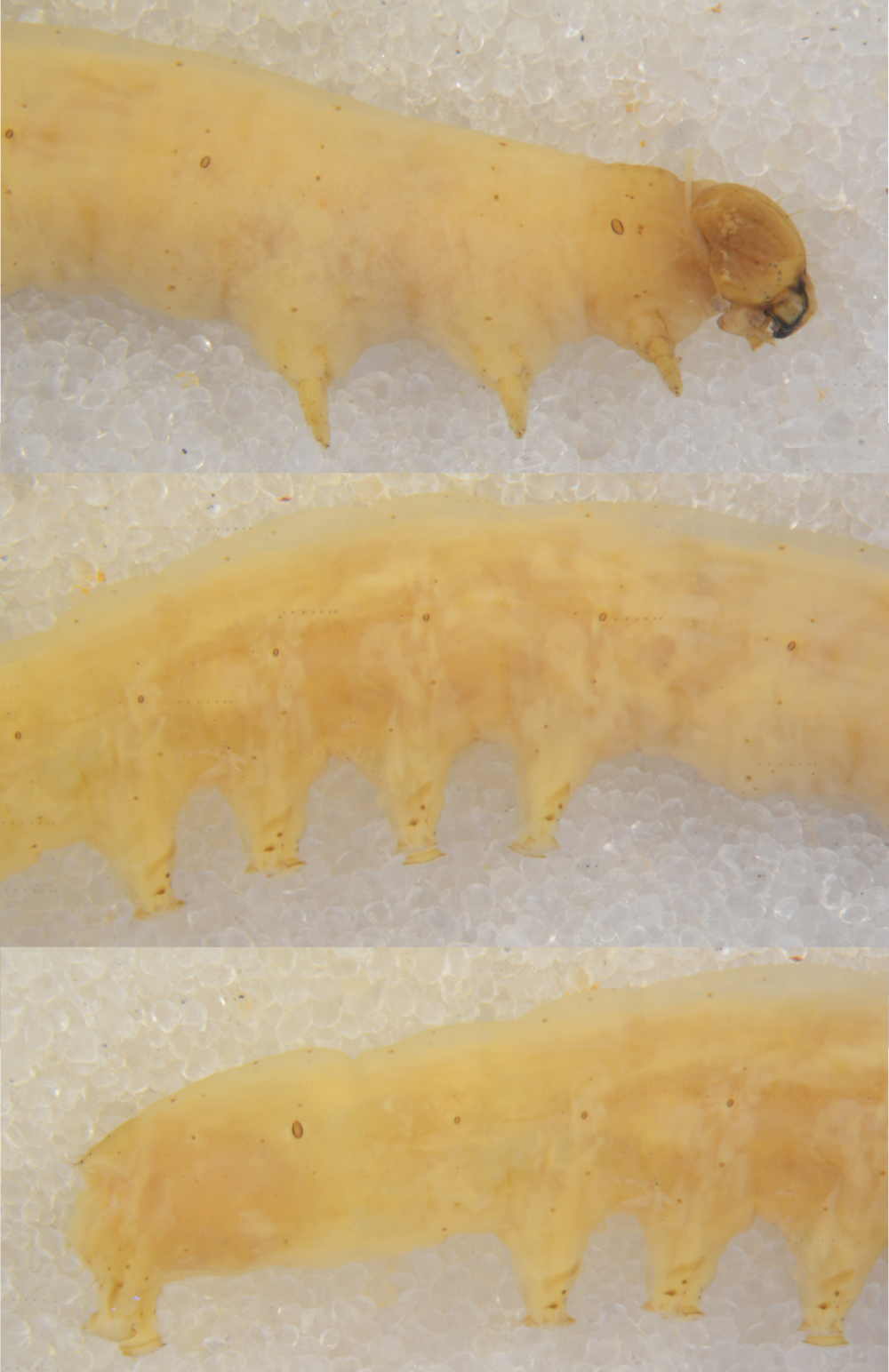
The larva of Mythimna scottii has not been formally described. However, Beardsley (1982)Beardsley (1982):
Beardsley JW. 1982. A key to the late instar larvae of some Hawaiian Noctuidae. Proceedings of the Hawaiian Entomological Society. 24(1):37–49. listed the following characters to separate it from M. unipuncta: "eighth abdominal spiracle twice as high as seventh; body without longitudinal pigmented bands, skin largely pale, except for blackish areas around setal bases."
Mythimna scottii is superficially similar to Leucania stenographa but is a smaller species without a distinct basalbasal:
the part of an appendage nearest to where it connects to the body; often referred to as 'proximal' black streak. The spot at the distaldistal:
towards the free end of an appendage end of the cell is black, unlike in L. stenographa in which it is white.
Mythimna scottii is native to Australia, New Guinea, Vanuatu, Fiji, and New Caledonia. In Hawaiʻi, it is known from all of the main Hawaiian Islands except Niʻihau and Kahoʻolawe where it can be found from sea level to ca. 800 meters elevation. It is locally common in open, dry habitats, especially grasslands and ranchlands.
Host plant(s) for Mythimna scottii are unknown, but larvae likely feed on various grasses (family Poaceae) like other species of Mythimna Ochsenheimer, 1816.
Author: Kyhl A. Austin
Content last updated May 2026
idtools.org