ADVENTIVE
Helicoverpa zea (Boddie, 1850)
Higher taxonomy: Noctuidae: Heliothinae
Common name: corn earworm
Helicoverpa zea is a common non-native noctuid in both natural and agricultural settings in Hawaiʻi. It first arrived in Hawaiʻi sometime prior to 1927 and quickly spread to all of the main high Hawaiian Islands as well as many of the Northwestern Hawaiian Islands. Known primarily as a pest of corn, H. zea is broadly polyphagous and has been recorded on many ornamental, garden, and other crops. Hybridization between H. zea and native Helicoverpa species appears to have driven some species to extinction (Gagné 1982Gagné 1982:
Gagné WC. 1982. Working toward an assessment of the conservation status of Hawaii’s endemic arthropods, with emphasis on the moths or Lepidoptera. Proceedings of the 4th Conference on Natural Sciences, Hawaii Volcanoes National Park Science Conference. University of Hawaii, Honolulu. p 63–72., see Helicoverpa spp. fact sheet). Helicoverpa zea is likely to both be encountered in natural, agricultural, residential, and urban environments.
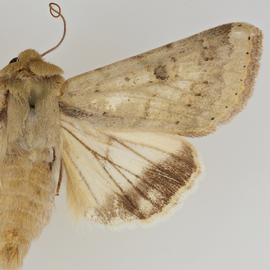
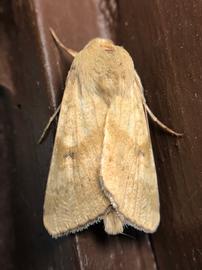
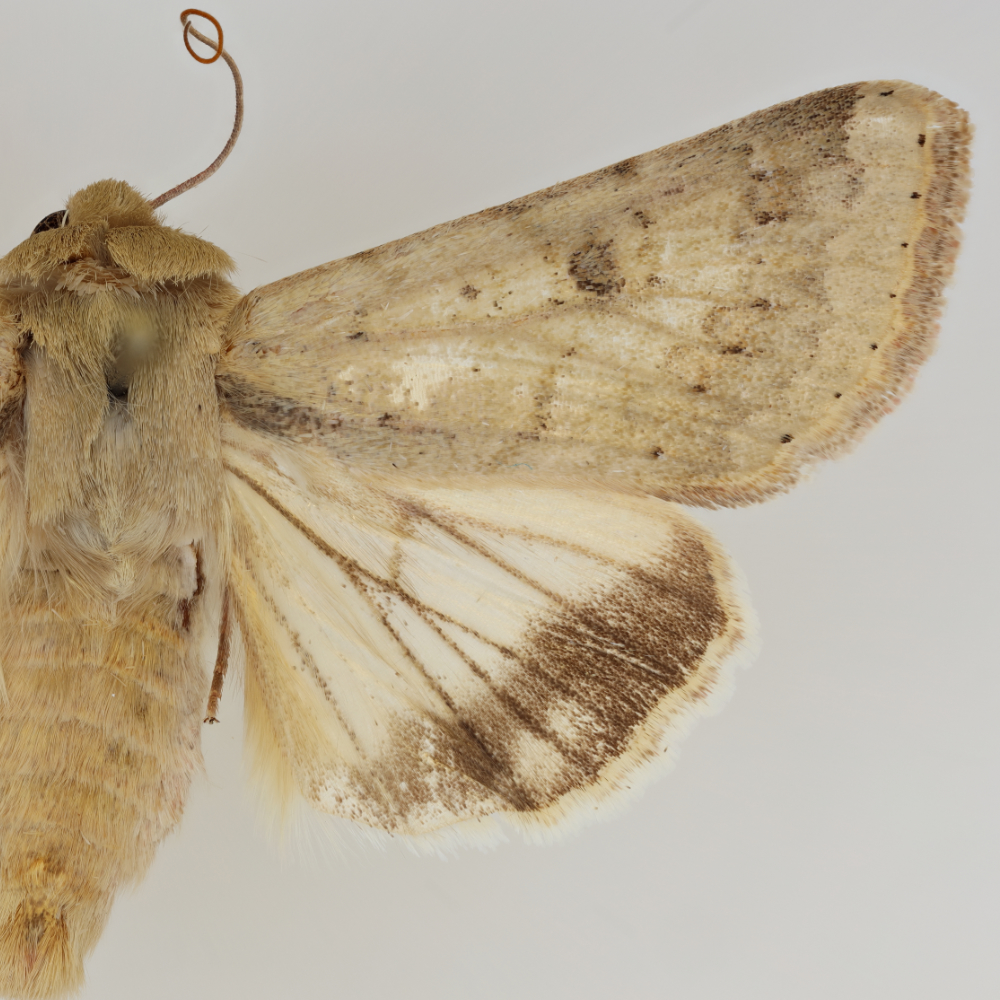
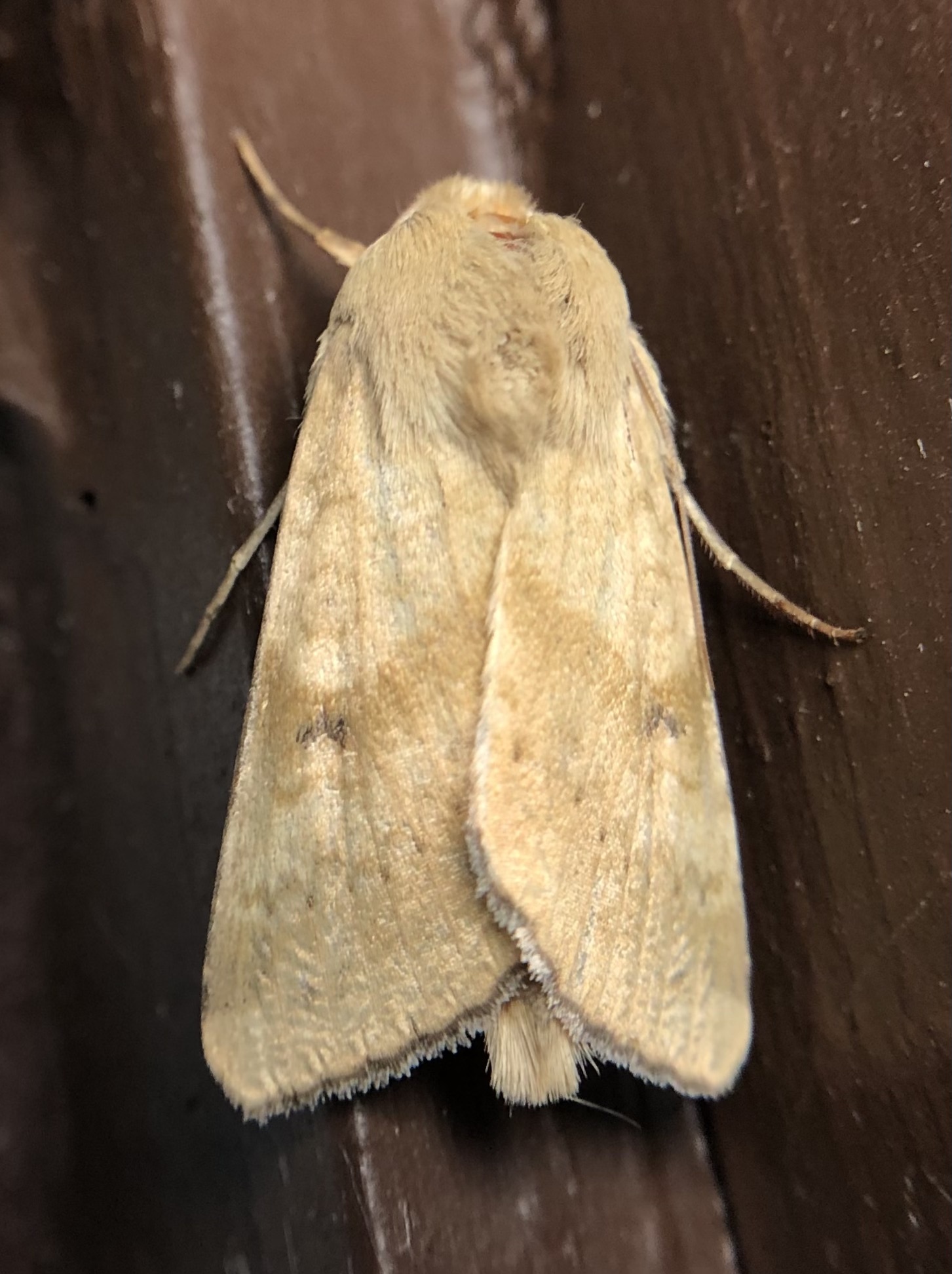
Adults of Helicoverpa zea are pale yellow, medium-sized noctuids (forewing lengthforewing length:
the distance of the forewing in a straight line from the base to the tip of the apex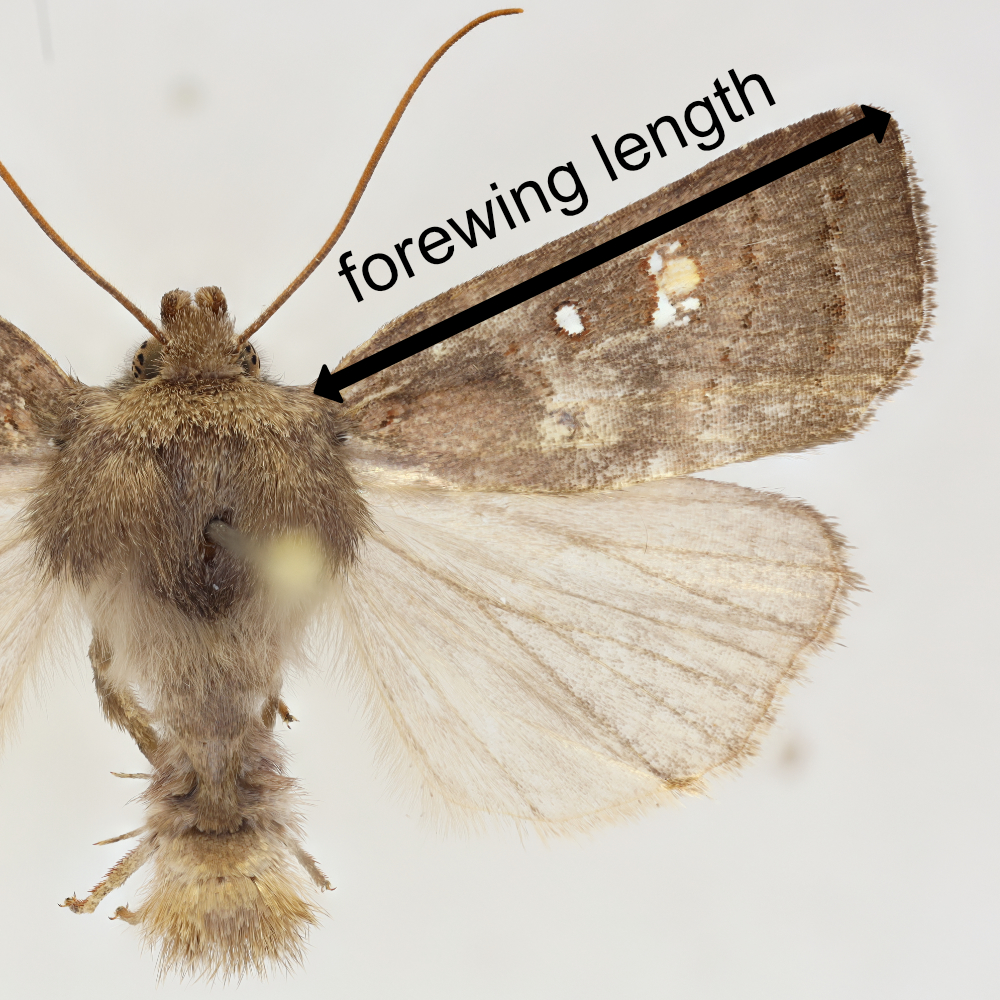 16–20 mm) with a small, circular, dark-centered orbicular spotorbicular spot:
a round or oval spot located in the middle of the discal cell of the forewing, between the antemedial and median lines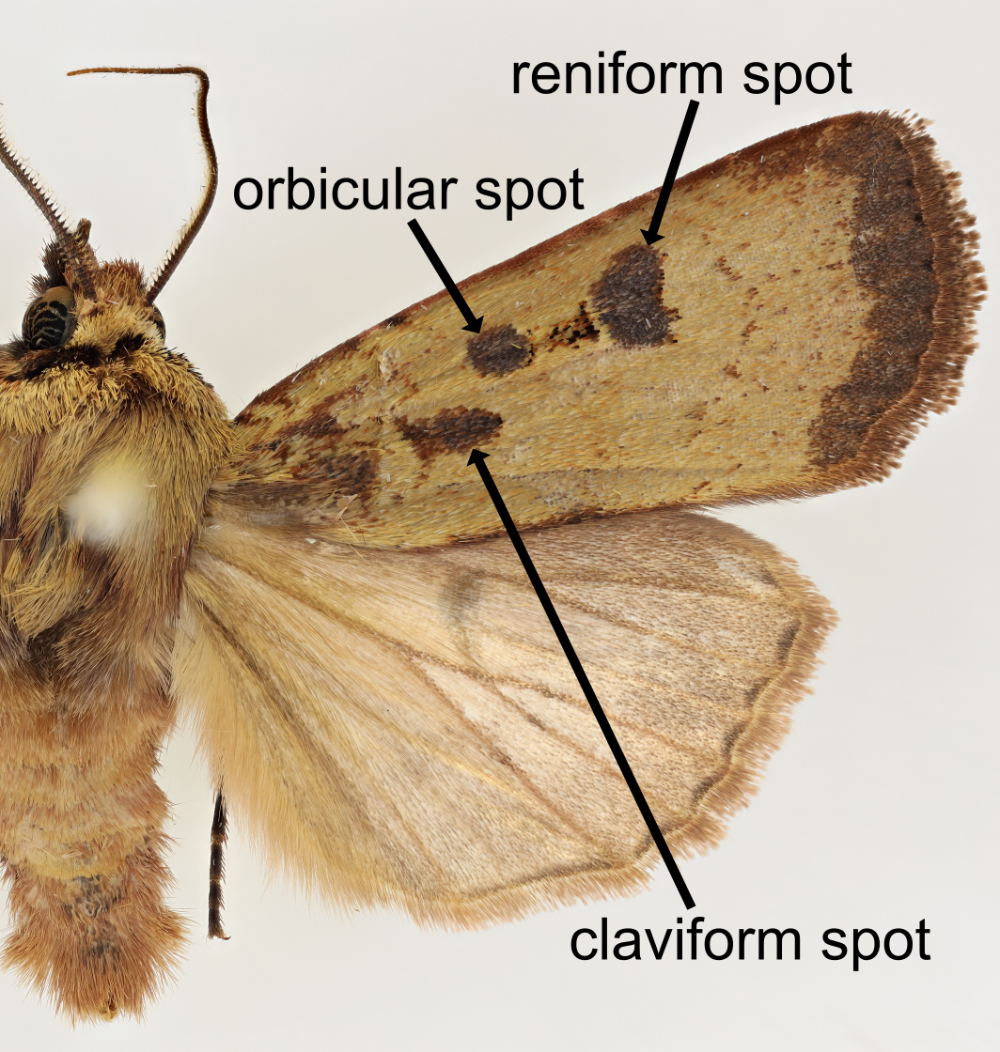 and variably expressed, dark-centered reniform spotreniform spot:
a spot, often broad bean- or kidney-shaped, found at the distal end of the discal cell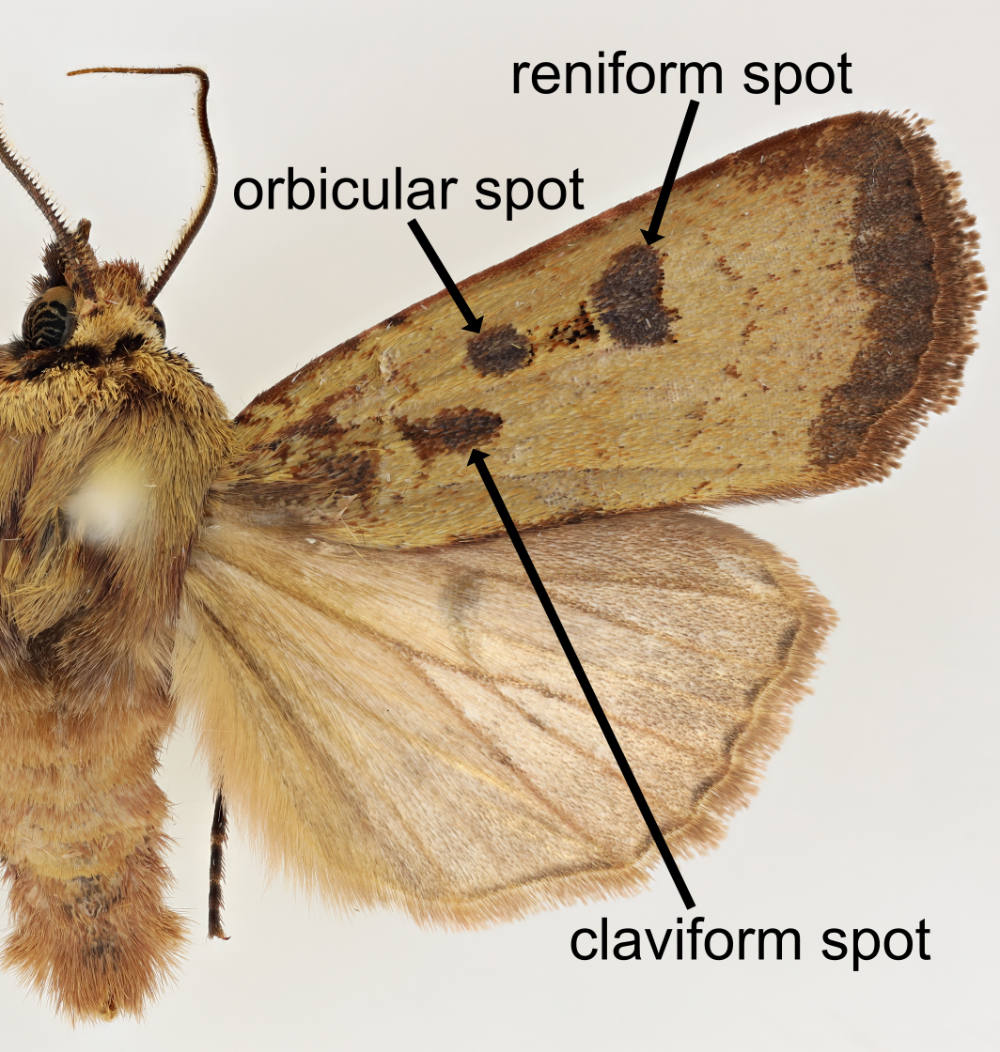 . The antemedial lineantemedial line:
a thin transverse line found on the basal third of the forewing, between the median and basal lines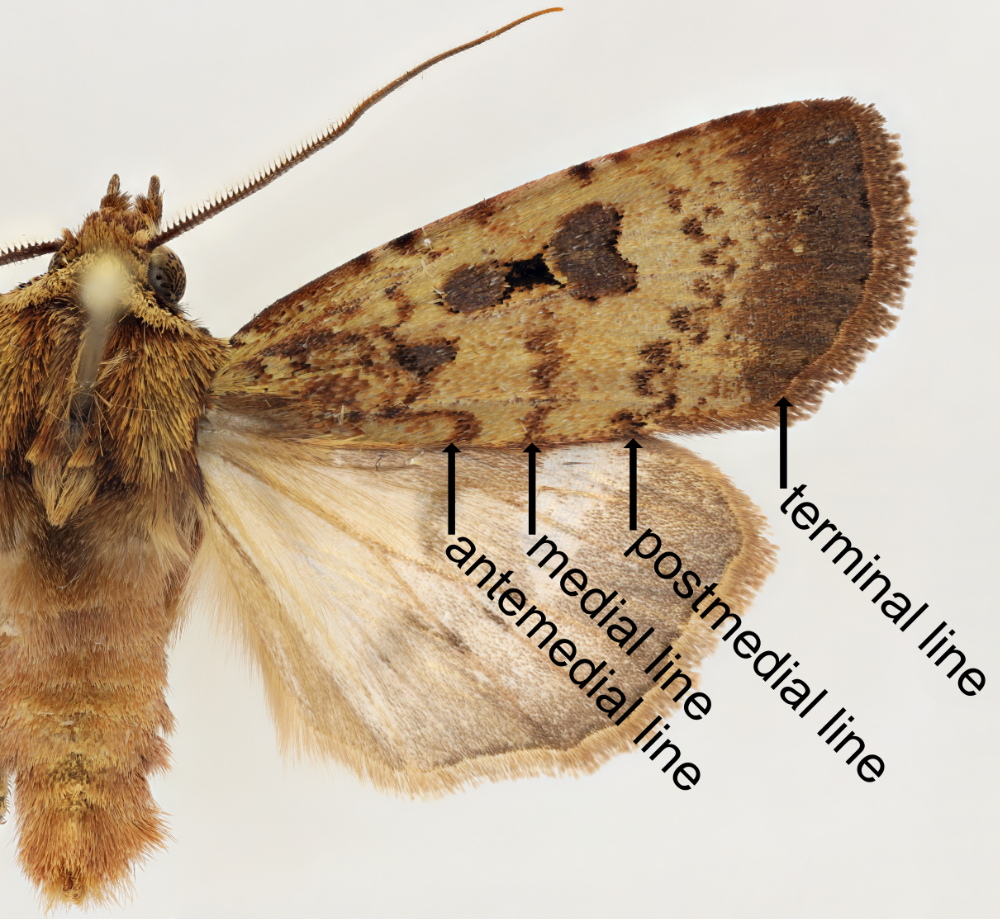 is often obscured, scalloped; the postmedial linepostmedial line:
a thin, transverse line located distal to the reniform spot, typically on the distal third of the forewing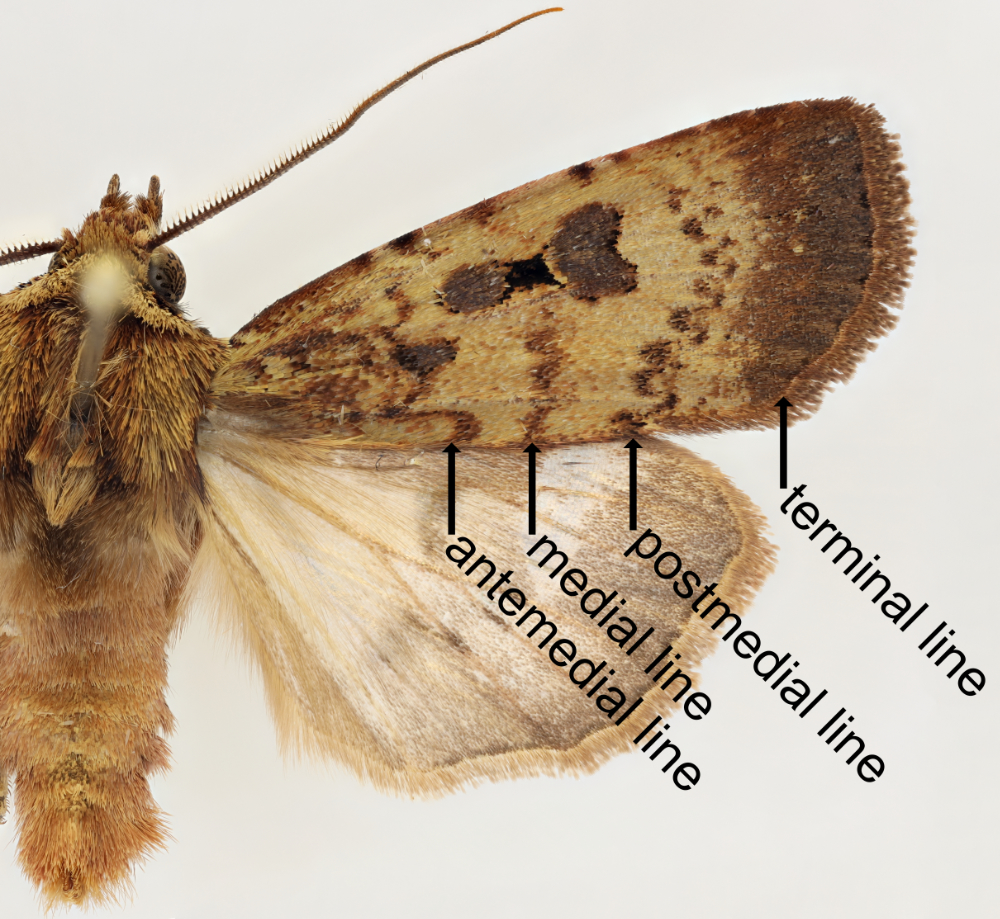 is scalloped, darker along the veins; the postmedial area is typically darker than the remainder of the wing. The hindwinghindwing:
the back wing of an insect; the wing attached to the third segment of the thorax (the metathorax)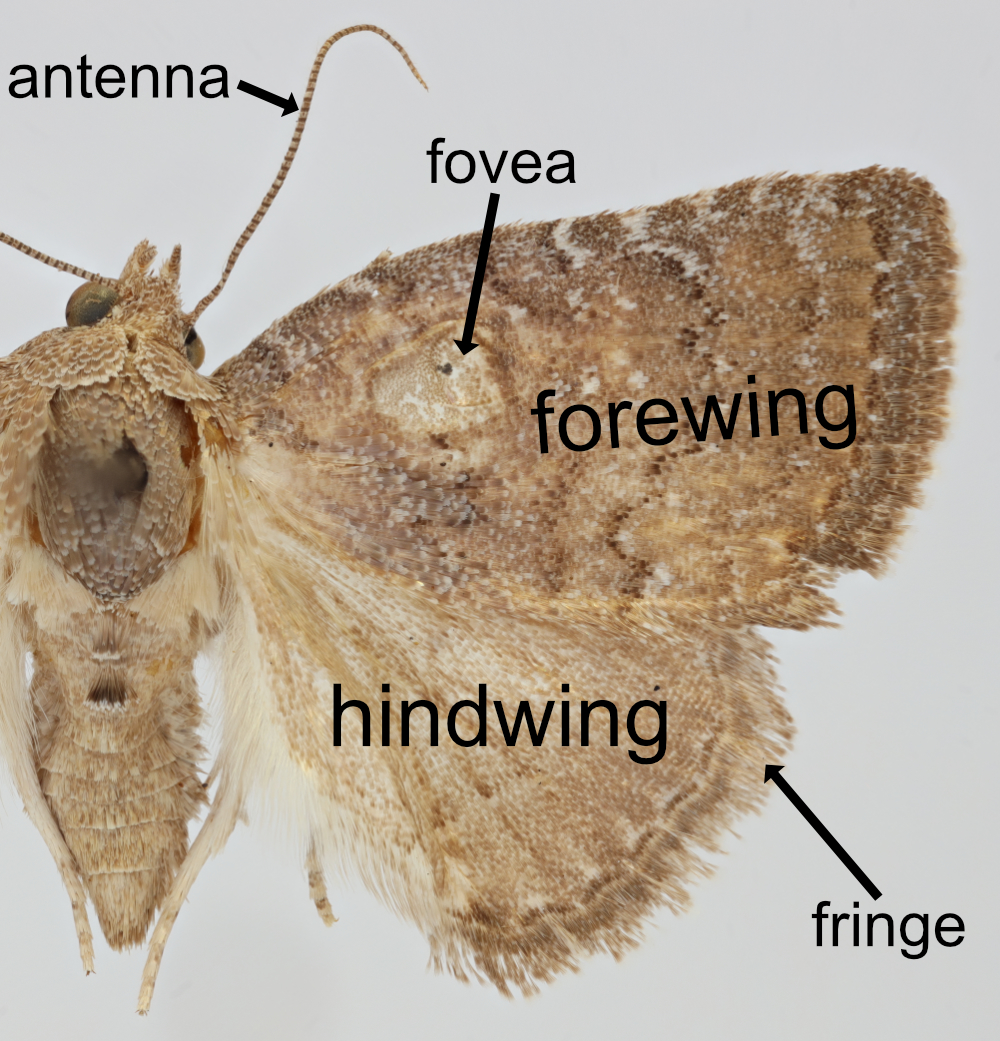 is pale yellow basally, dark along the veins and dark brown or black distally, typically with a small pale patch partially interrupting this dark band.
The larva of Helicoverpa zea was described in detail by Hardwick (1965)Hardwick (1965):
Hardwick DF. 1965. The corn earworm complex. Memoirs of the Entomological Society of Canada. 40:1–247..
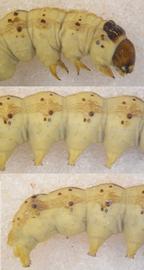
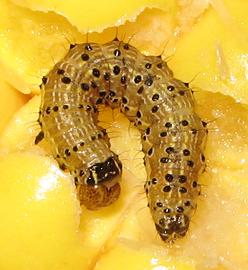
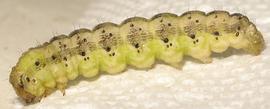
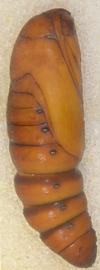
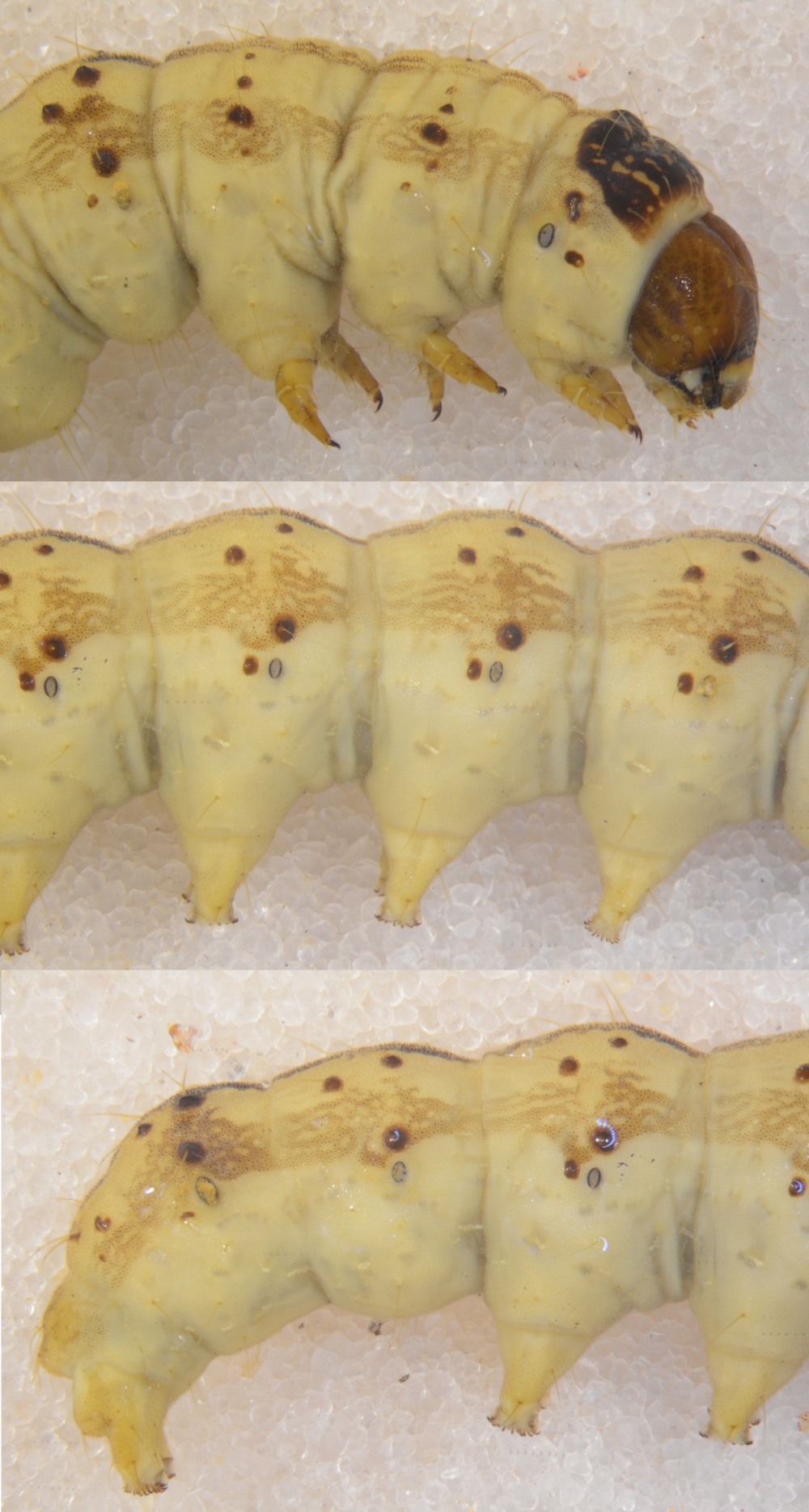
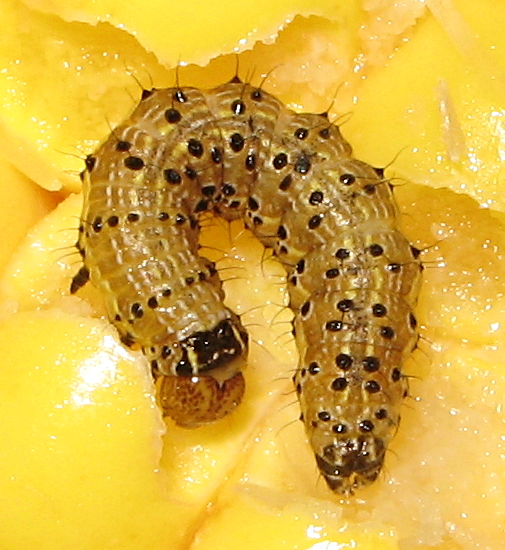
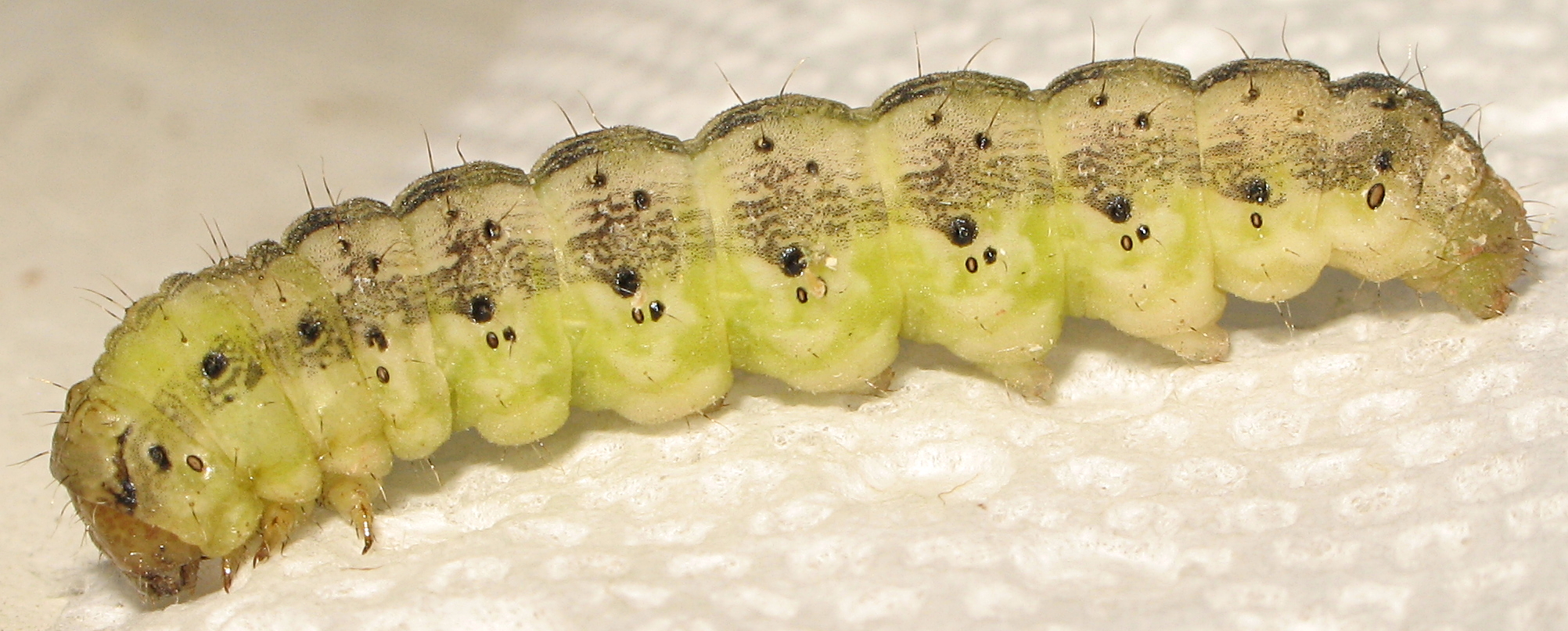
The fully grown larva has the light gray, grayish yellow, or light orange, heavily mottled with orange or orange-brown; prothoracic shield light green, mottled with black and cream; body with shades of brown, black, and green, the middorsal band light green, greenish-grey, pinkish brown, yellowish-brown, chocolate-brown, or dark blackish-brown, typically with a usually continuous, cream or white median linemedian line:
a transverse line located in the median area of the forewing, typically between the orbicular spot and reniform spot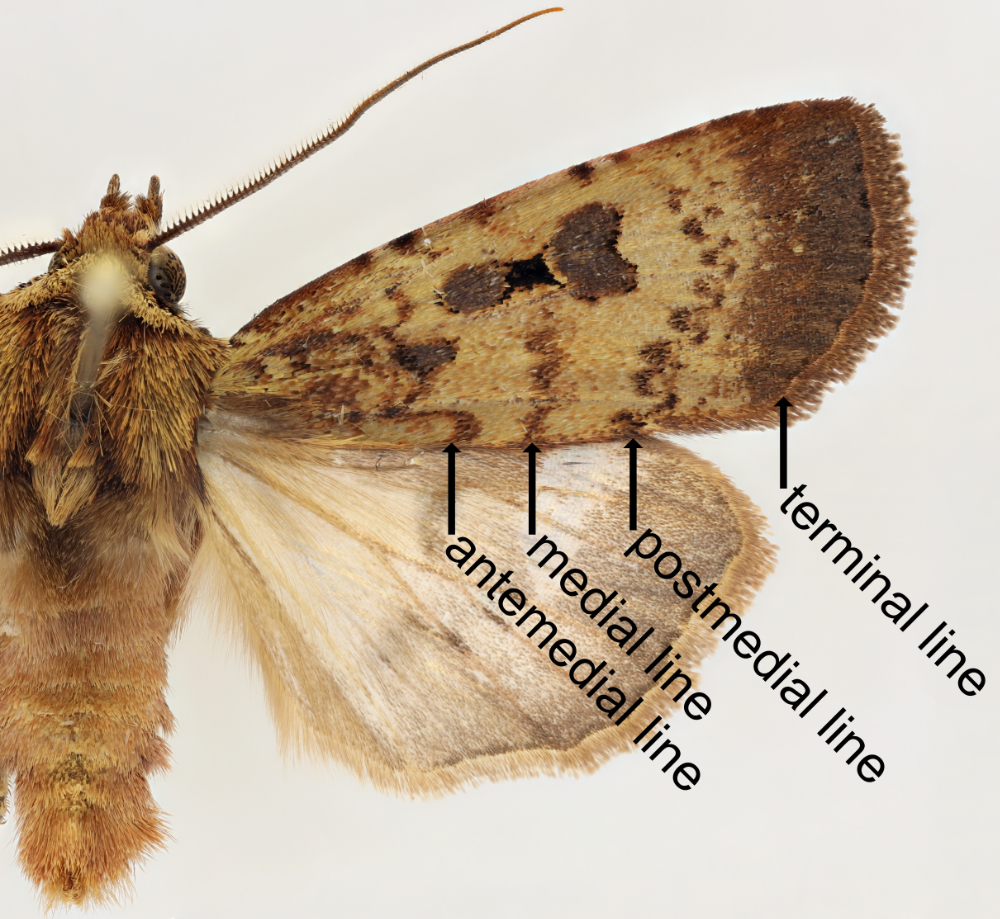 ; this median linemedian line:
a transverse line located in the median area of the forewing, typically between the orbicular spot and reniform spot often flanked on either side by a linear series of white or cream spots; subdorsal area similar, but slightly paler than middorsal band. The pinaculapinaculum:
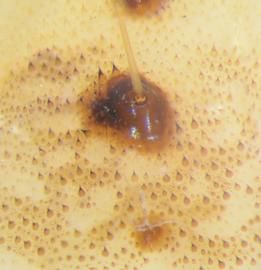
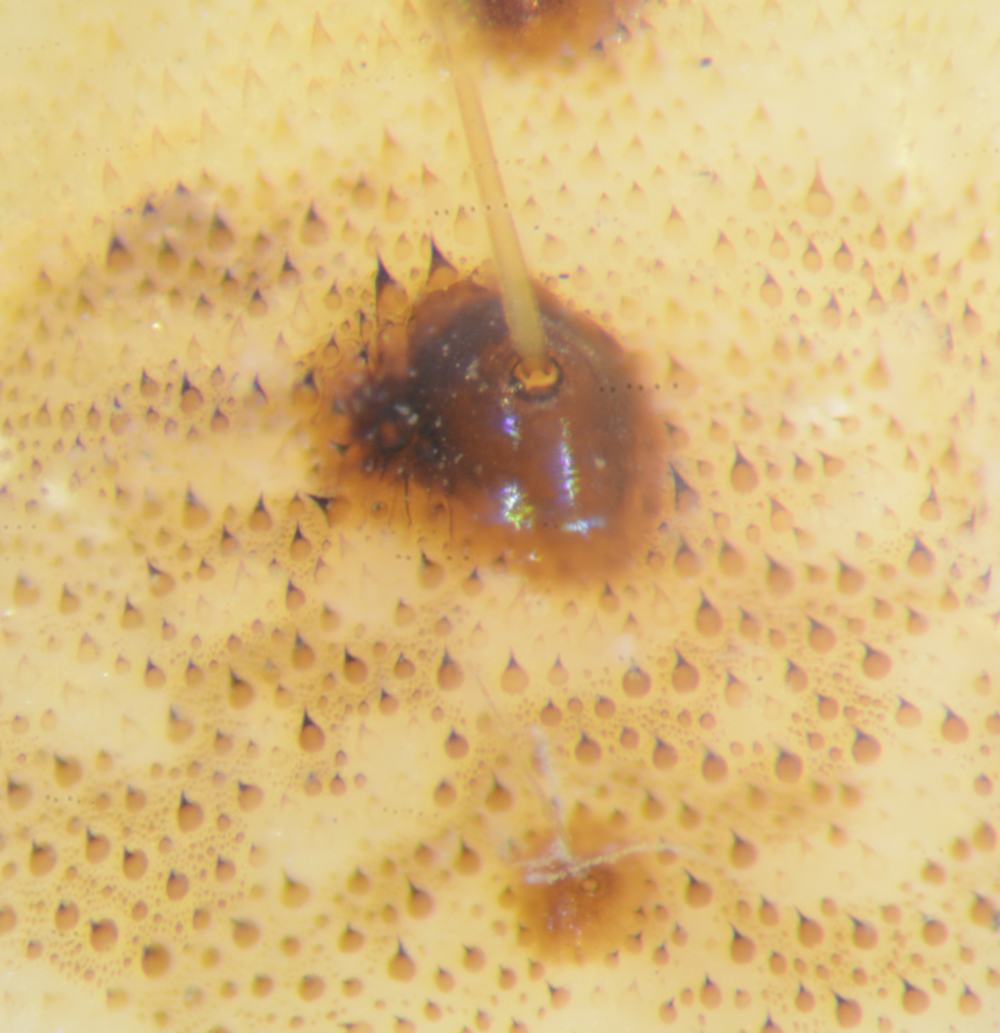
a small, flat, or slightly elevated chitinized area bearing a seta or setae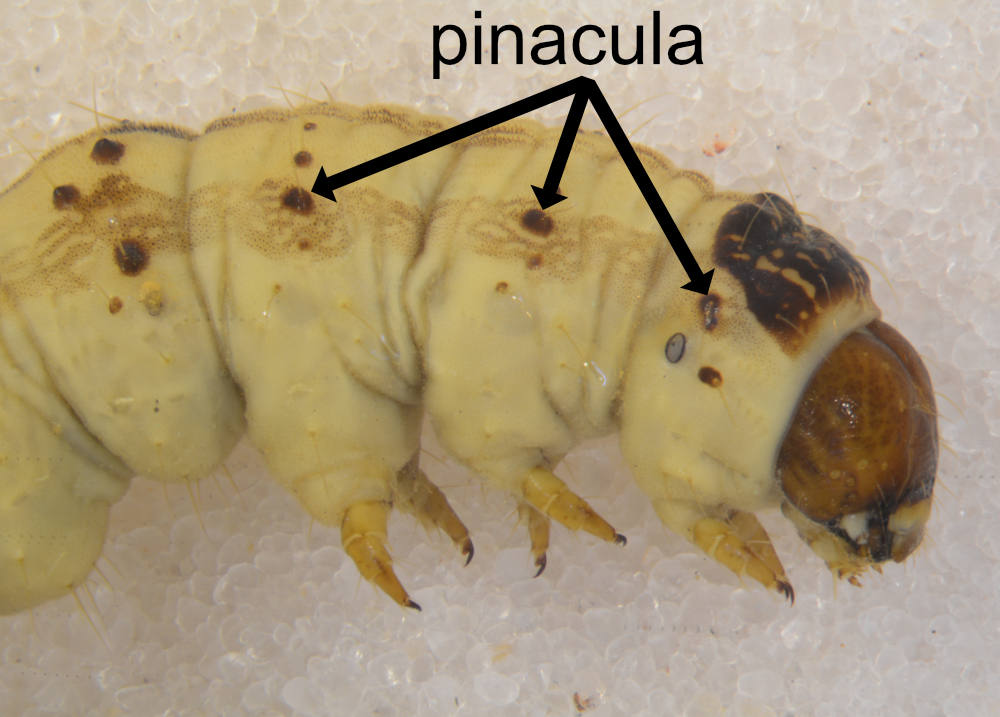 are typically large and black.
More information available on LepIntercept.
Helicoverpa zea looks exceedingly similar to several of the native Hawaiian Helicoverpa spp. It can be separated from H. hawaiiensis and H. pallida by the dorsal surface of the hindwinghindwing:
the back wing of an insect; the wing attached to the third segment of the thorax (the metathorax), in which H. zea typically has a pale spot which interrupts the otherwise entirely dark band across distaldistal:
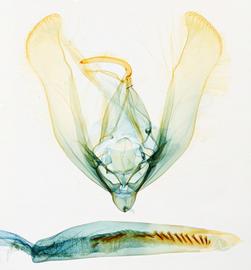
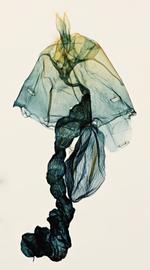
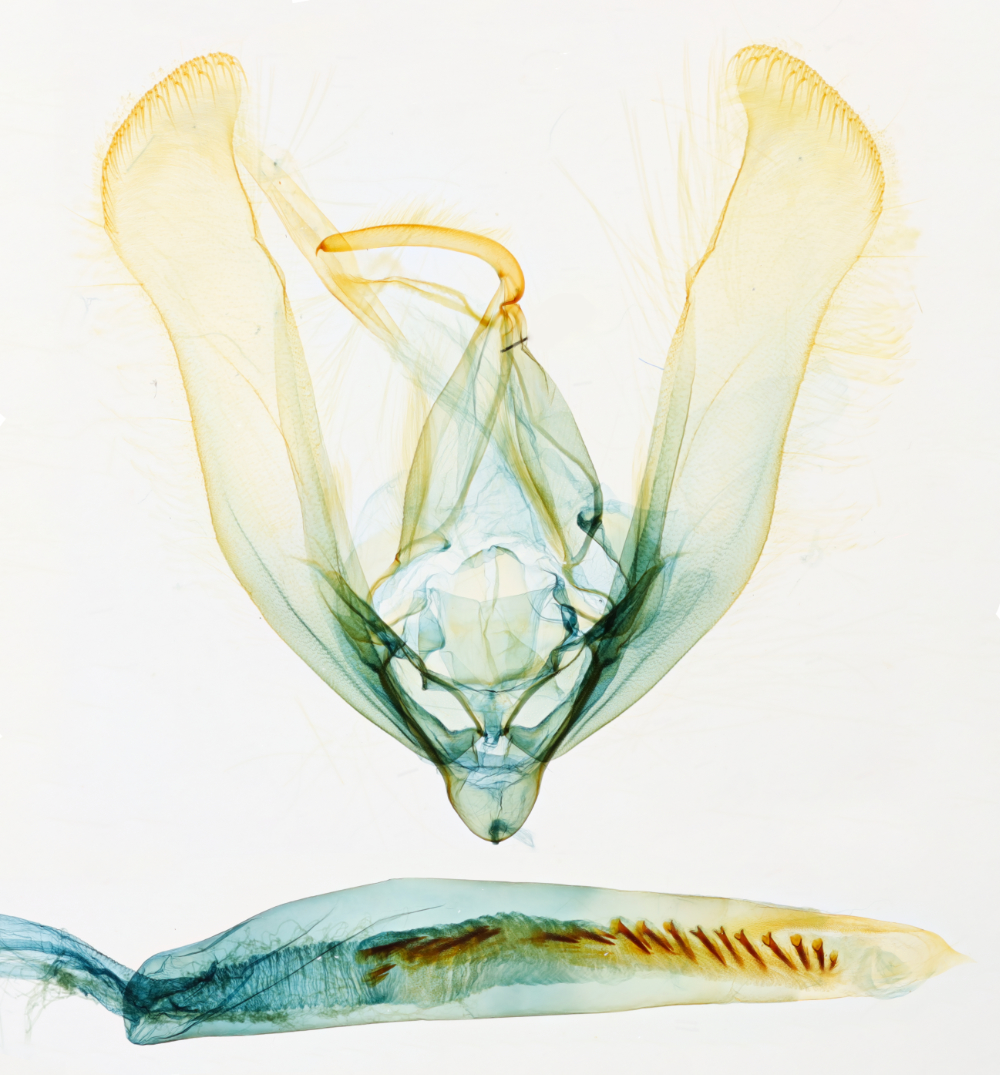
towards the free end of an appendage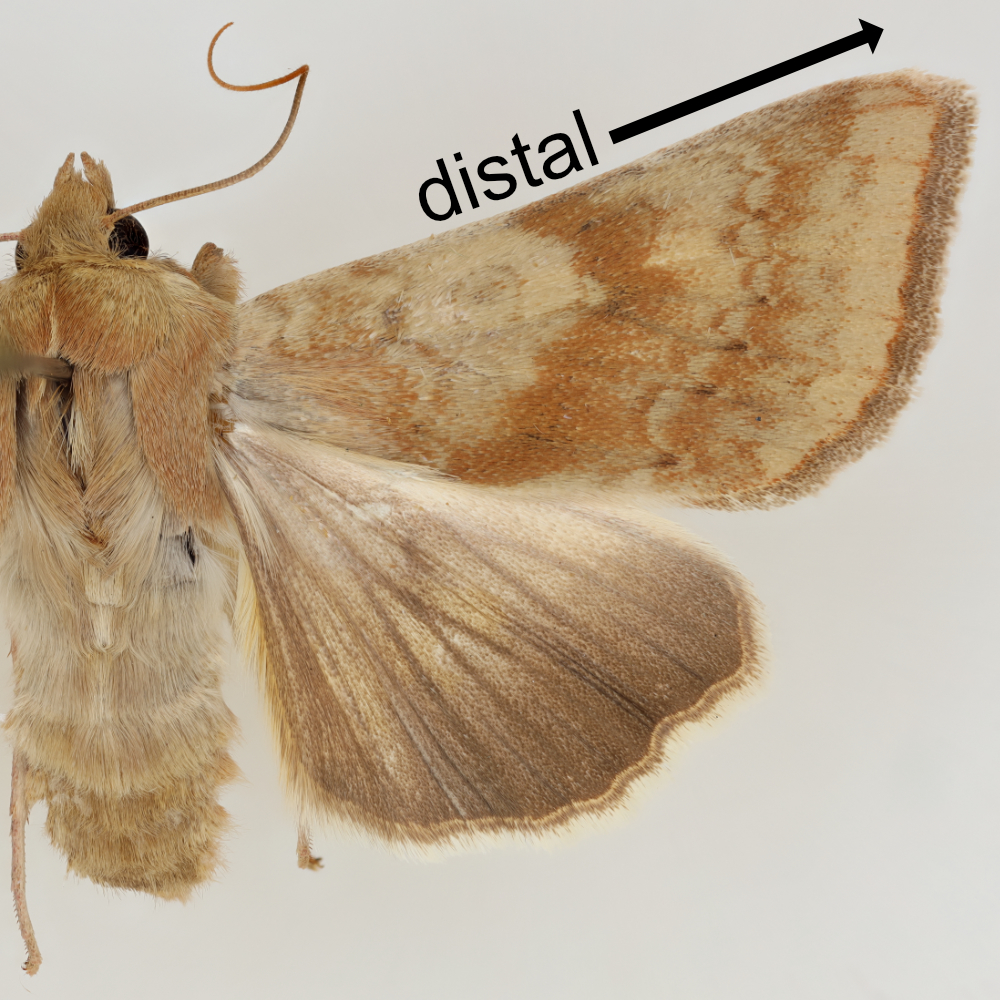 half (this band complete and without a pale patch in H. hawaiiensis and H. pallida). Adults of H. minuta are much smaller than typical H. zea and are restricted to Lisianski Island. Adults of H. confusa and H. zea cannot be separated reliably externally; dissection is usually required (see Hardwick 1965Hardwick 1965:
Hardwick DF. 1965. The corn earworm complex. Memoirs of the Entomological Society of Canada. 40:1–247.). The number and distribution of cornuti on the male phallus is diagnostic. H. confusa is believed to be extinct (Austin and Rubinoff 2024bAustin and Rubinoff 2024b:
Austin KA, Rubinoff D. 2024b. Patterns of extinction across Hawaiian Lepidoptera offer lessons from a diverse, neglected, and vulnerable endemic fauna. Biodiversity and Conservation. 34:917–930.).
Helicoverpa zea's native range includes most of North and South America, including virtually all islands in the Caribbean. It is a seasonal migrant as far north as Saskatchewan and as far south as the Falkland Islands (Hardwick 1965Hardwick 1965:
Hardwick DF. 1965. The corn earworm complex. Memoirs of the Entomological Society of Canada. 40:1–247.).
Helicoverpa zea is now widespread in the Hawaiian Islands, occurring from sea level to 1300 meters elevation on all of the main Hawaiian Islands plus Nihoa, Necker, Pearl and Hermes Atoll, Laysan, Midway, and Kure (Nishida 2002Nishida 2002:
Nishida GM. 2002. Hawaiian terrestrial arthropod checklist. Fourth Edition. Bishop Museum Technical Report 22. 313 pp.).
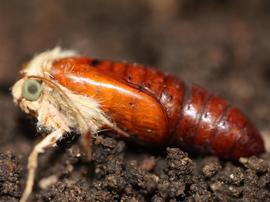
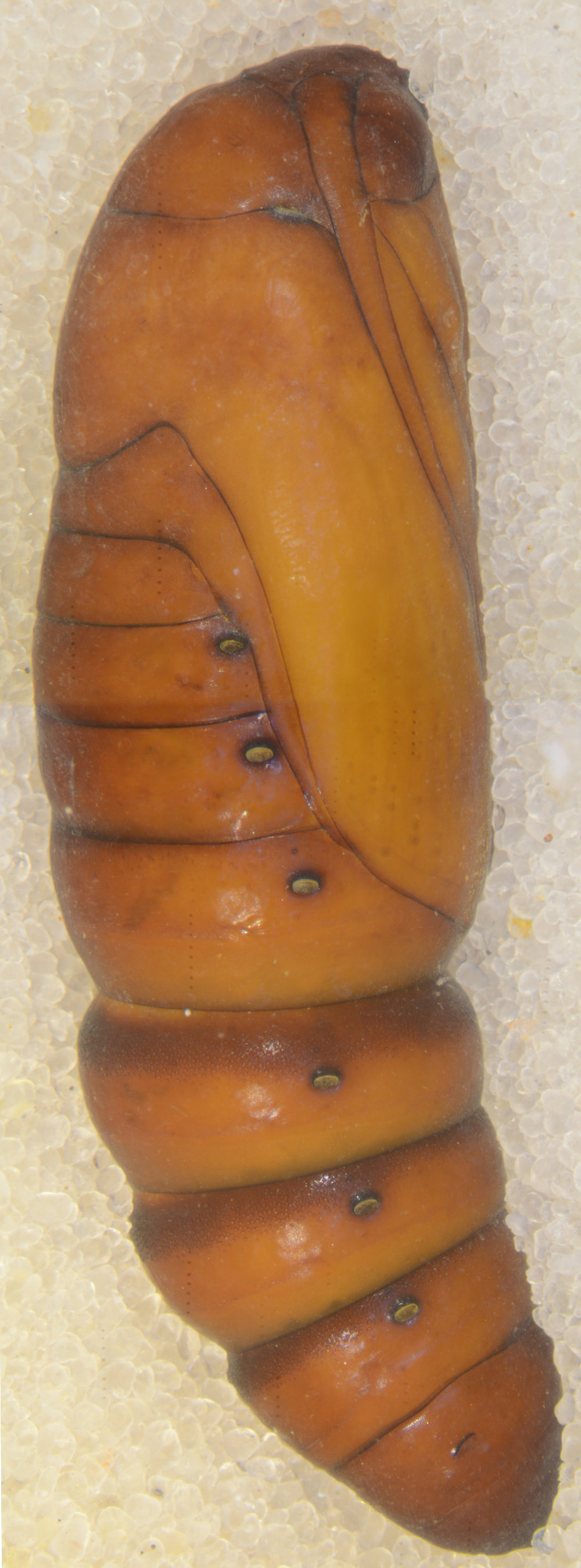
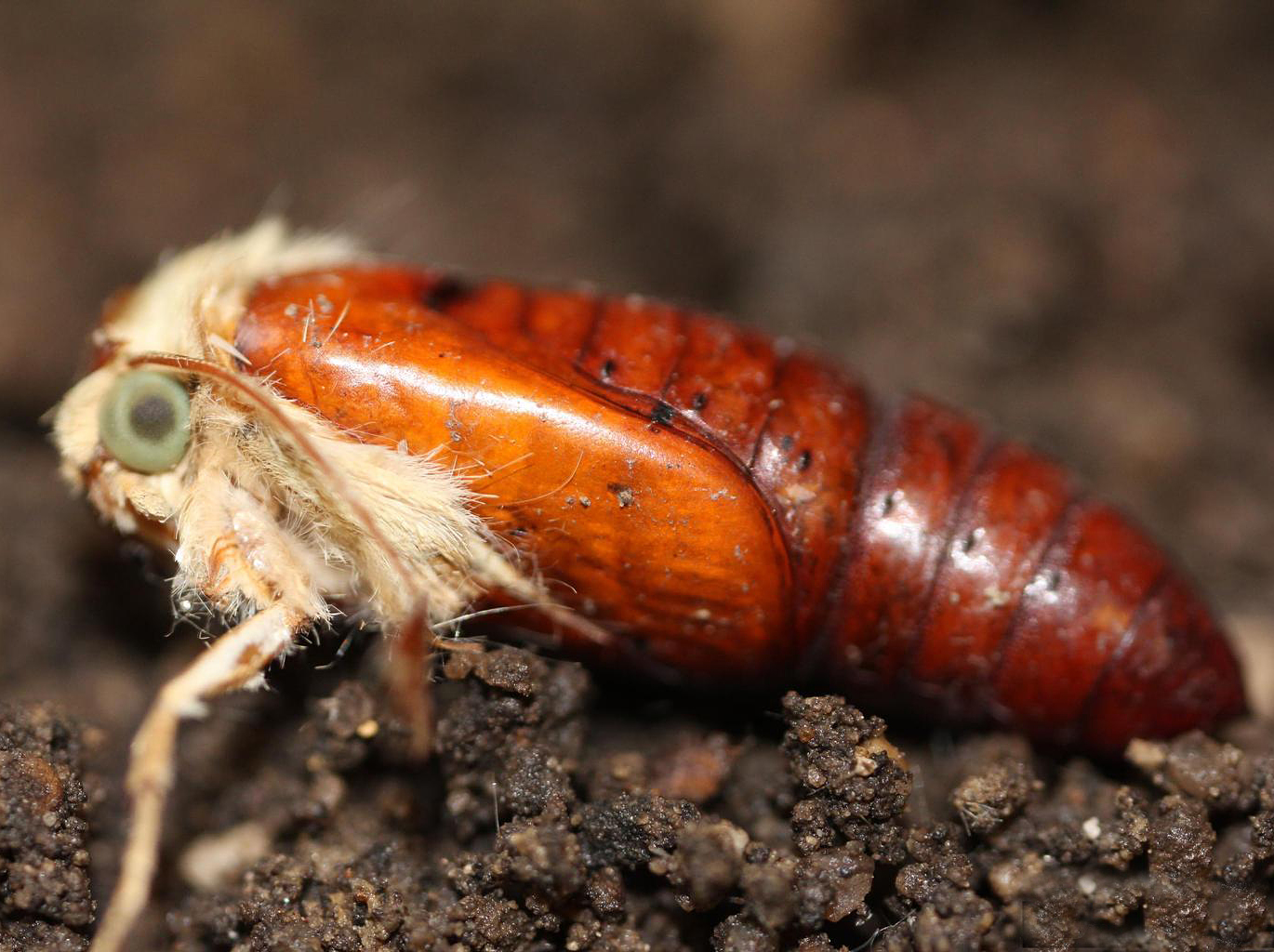
Females of Helicoverpa zea lay ~1100 eggs on average, up to ~2200 eggs in one individual. The larvae undergo five to seven instars, with six being the most typical. Each instar takes between 2–4 days except for the final instar, which takes on average eight days. Adults eclose from the pupa on average 11–15 days later (Hardwick 1965Hardwick 1965:
Hardwick DF. 1965. The corn earworm complex. Memoirs of the Entomological Society of Canada. 40:1–247.).
Larvae are broadly polyphagous and are known to feed on over 100 species in 21 different families of plants (dos Santos et al. 2023dos Santos et al. 2023:
dos Santos IB, Paula-Moraes SV, Beuzelin JM, Hahn DA, Perera OP, Fraisse C. 2023. Factors affecting population dynamics of Helicoverpa zea (Lepidoptera: Noctuidae) in a mixed landscape with Bt cotton and peanut. Insects. 14(4):395. ).
Author: Kyhl A. Austin
Content last updated May 2026
idtools.org