ADVENTIVE
Feltia subterranea (Fabricius, 1794)
Higher taxonomy: Noctuidae: Noctuinae: Noctuini
Common names: subterranean dart, granulate cutworm
Feltia subterranea is a relatively recent addition to the non-native noctuid fauna of Hawaiʻi. It was first detected on Maui in 2006 (Prestes 2014Prestes 2014:
Prestes AS. 2014. A new exotic noctuid for the Hawaiian Archipelago: Feltia subterranea (Fabricius) (Lepidoptera: Noctuidae: Noctuinae). The Journal of the Lepidopterists' Society. 68(3):220–221.), but has since been collected on all of the main Hawaiian Islands (Prestes 2014Prestes 2014:
Prestes AS. 2014. A new exotic noctuid for the Hawaiian Archipelago: Feltia subterranea (Fabricius) (Lepidoptera: Noctuidae: Noctuinae). The Journal of the Lepidopterists' Society. 68(3):220–221., Austin and Rubinoff 2022Austin and Rubinoff 2022:
Austin KA, Rubinoff D. 2022. Eleven new records of Lepidoptera in the Hawaiian Islands including corrections to the Hawaiian terrestrial arthropod checklist. Bishop Museum Occasional Papers. 142:49–74., 2025). It is a polyphagous pest of numerous crop species, but it is not as common in Hawaiʻi as other introduced pests such as Agrotis ipsilon, Helicoverpa zea, Mythimna unipuncta, Peridroma saucia, and Spodoptera mauritia.
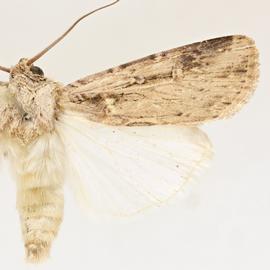
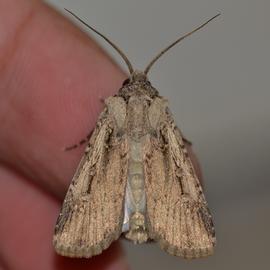
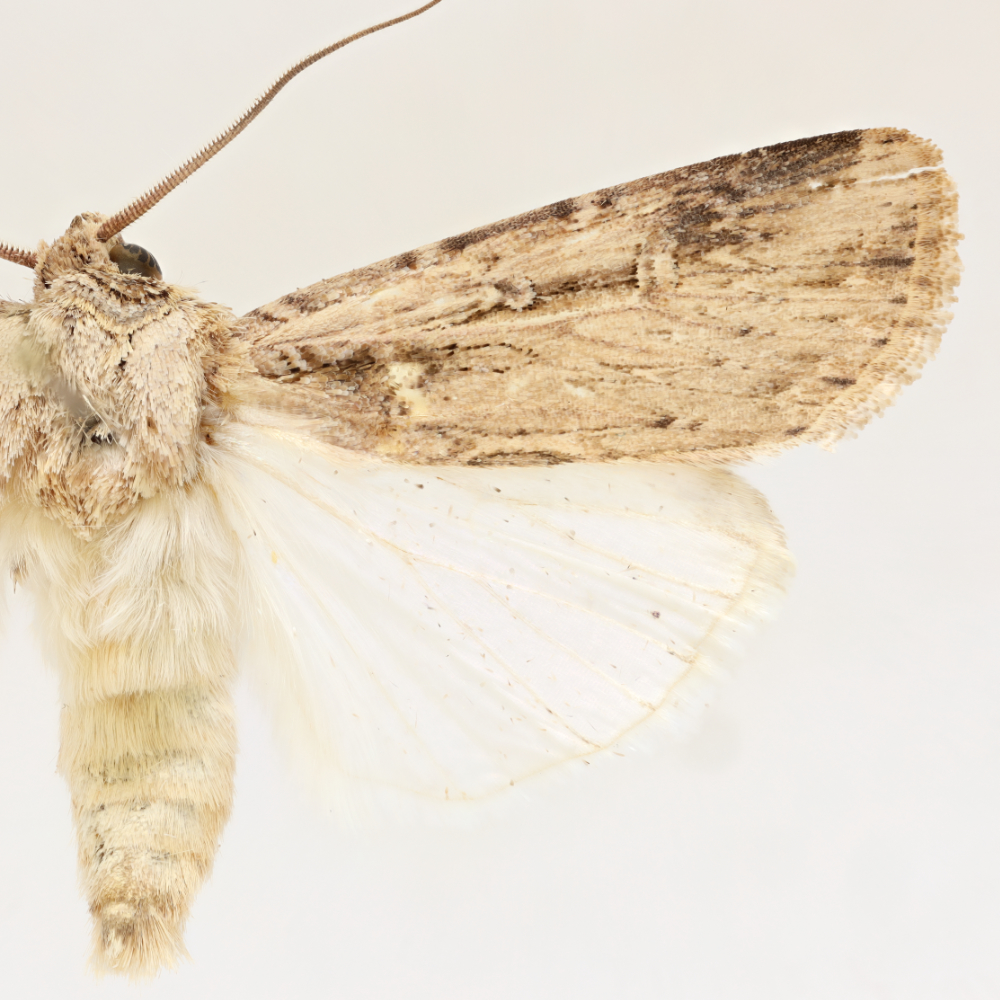
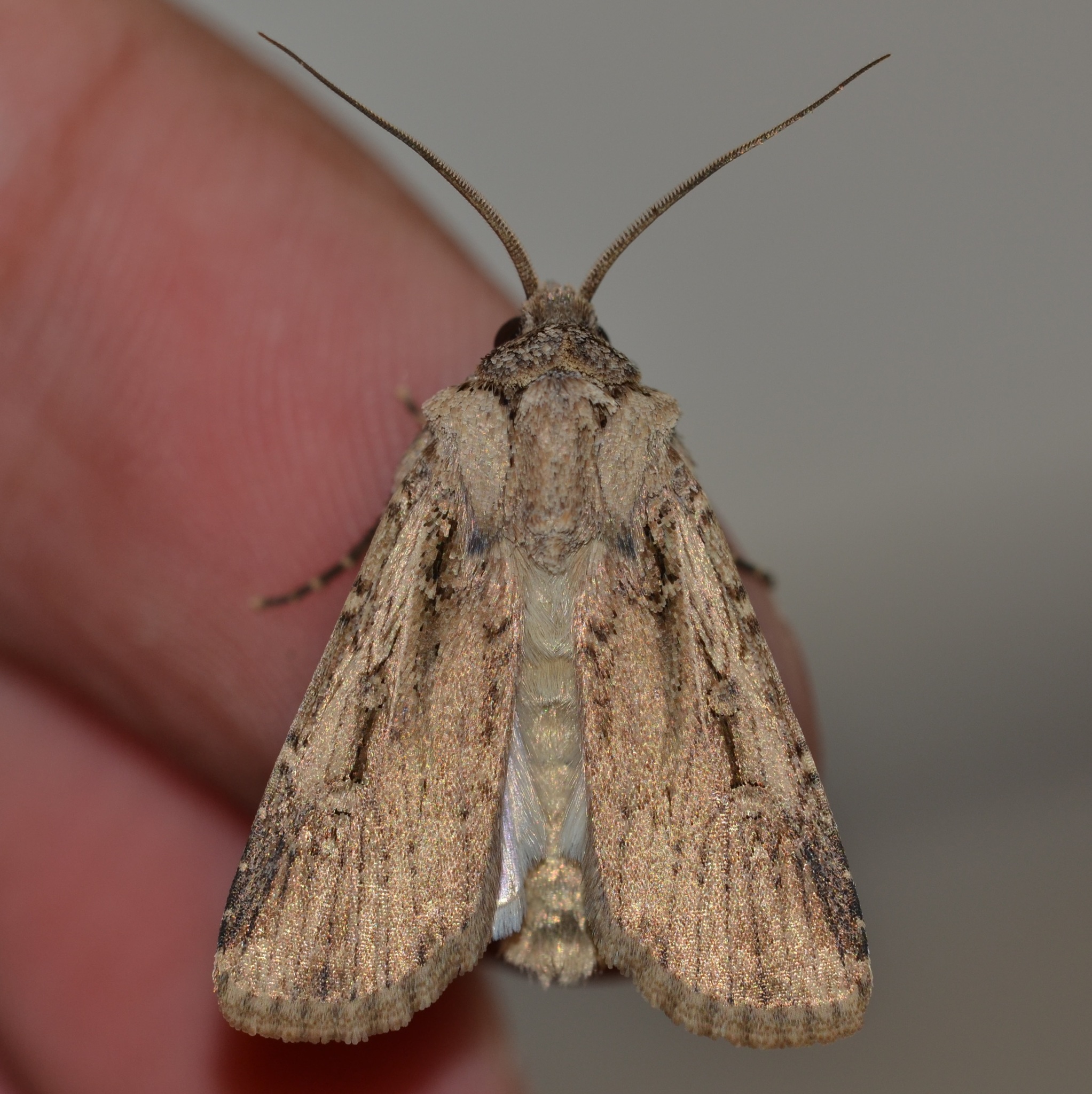
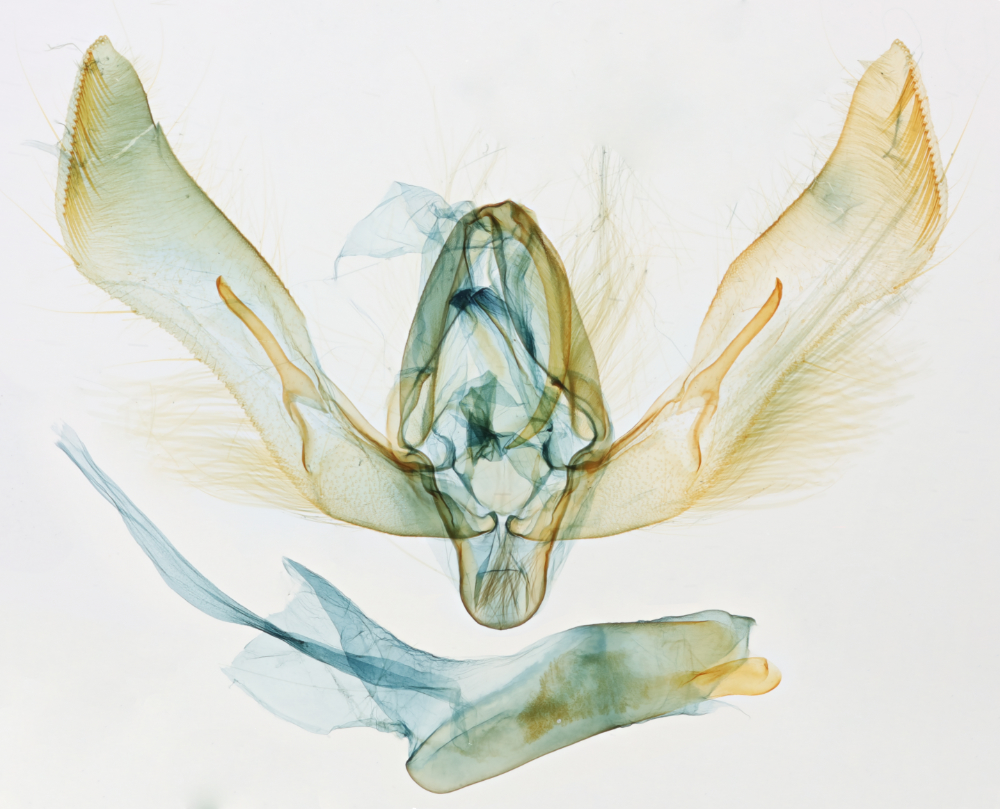
Feltia subterranea can be recognized by the doubly biserrate male antennaeantenna:
a thin, paired, elongate, segmented sensory organ on the head that serves primarily for olfaction (smell) to find food and mates, but also aids in navigation and balance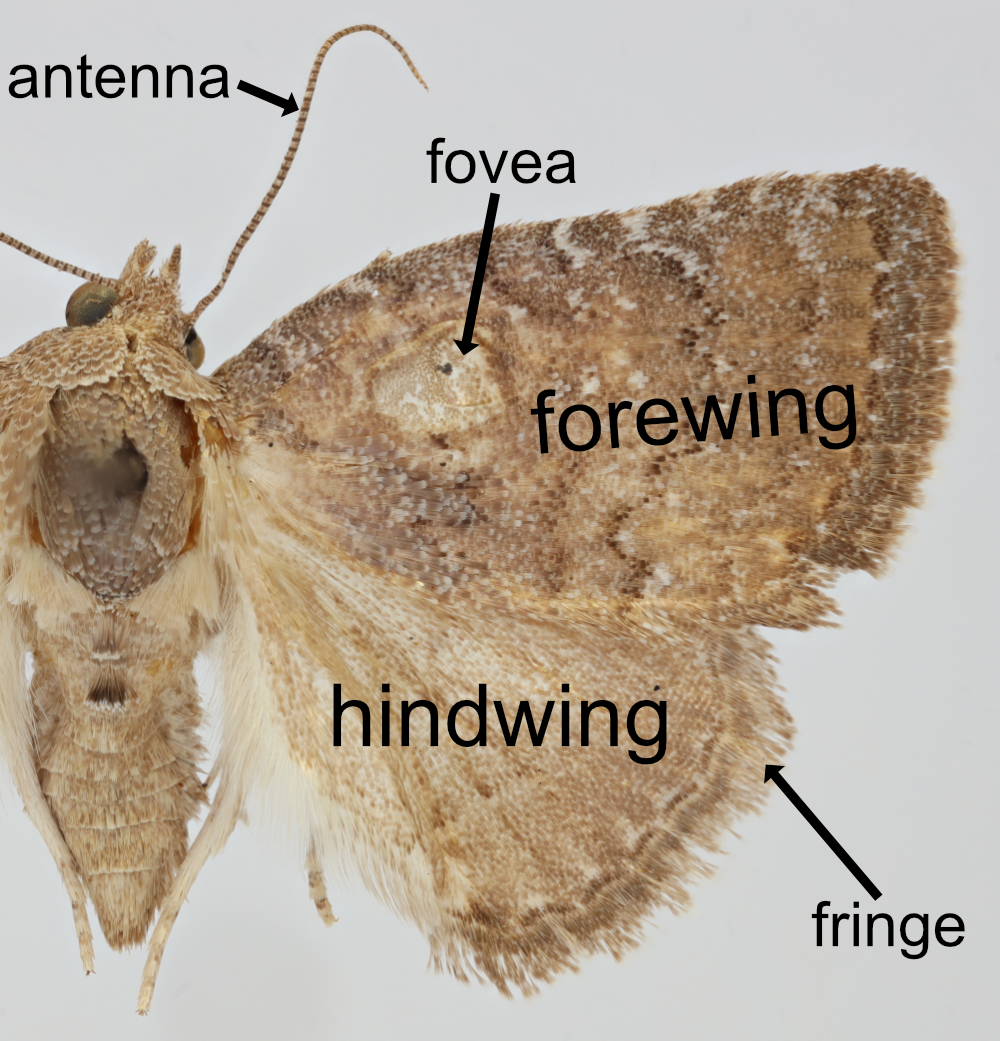 , the small round orbicular spotorbicular spot:
a round or oval spot located in the middle of the discal cell of the forewing, between the antemedial and median lines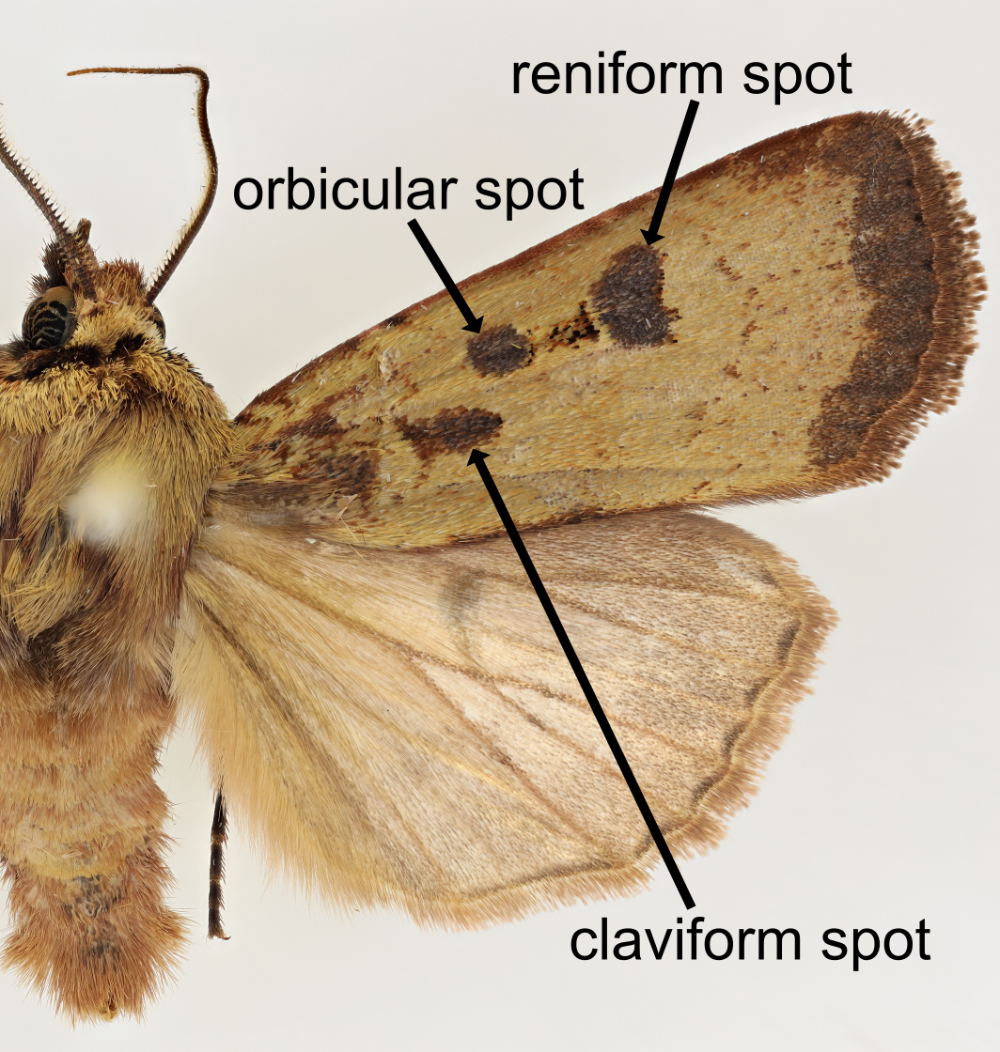 connected to the reniform spotreniform spot:
a spot, often broad bean- or kidney-shaped, found at the distal end of the discal cell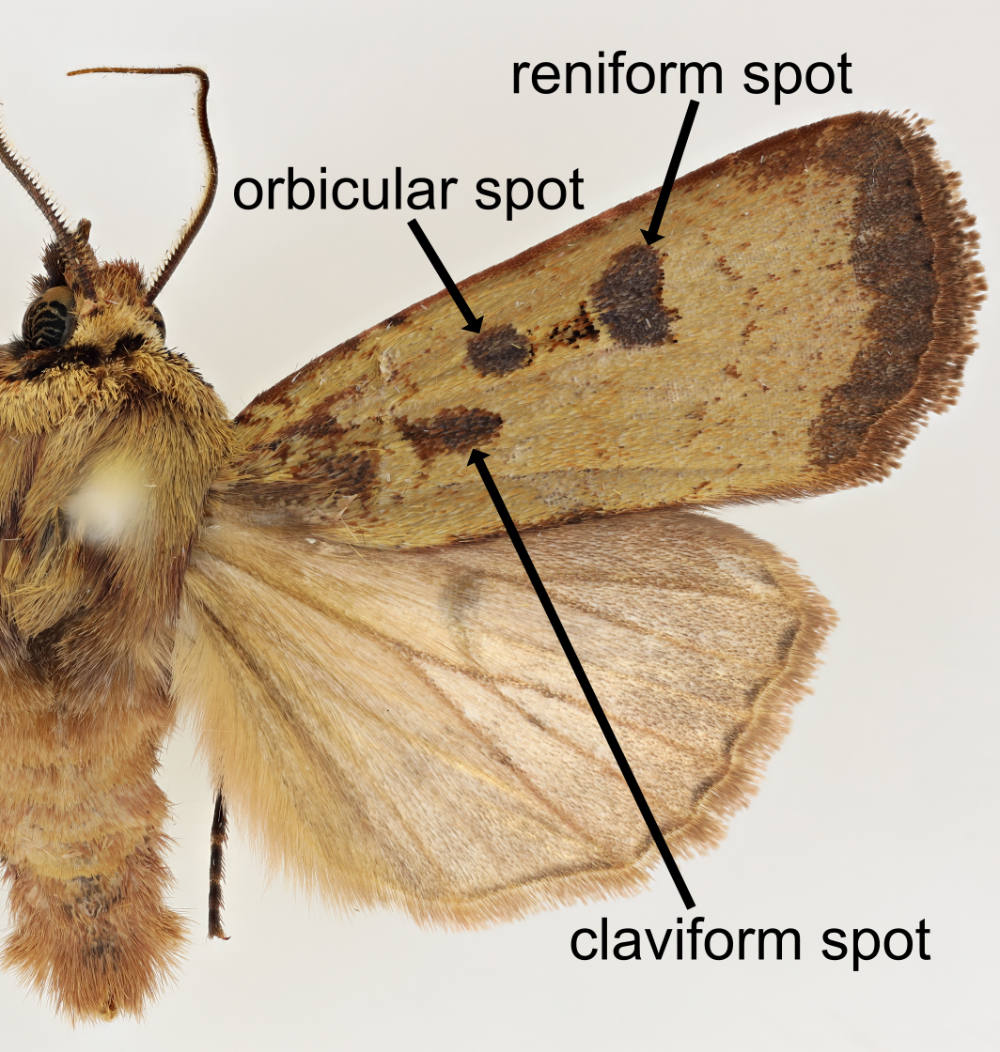 by a narrow black bar, a narrow, loop-like marking extending from the base of the forewingforewing:
the front wing of an insect; the wing attached to the second segment of the thorax (the mesothorax)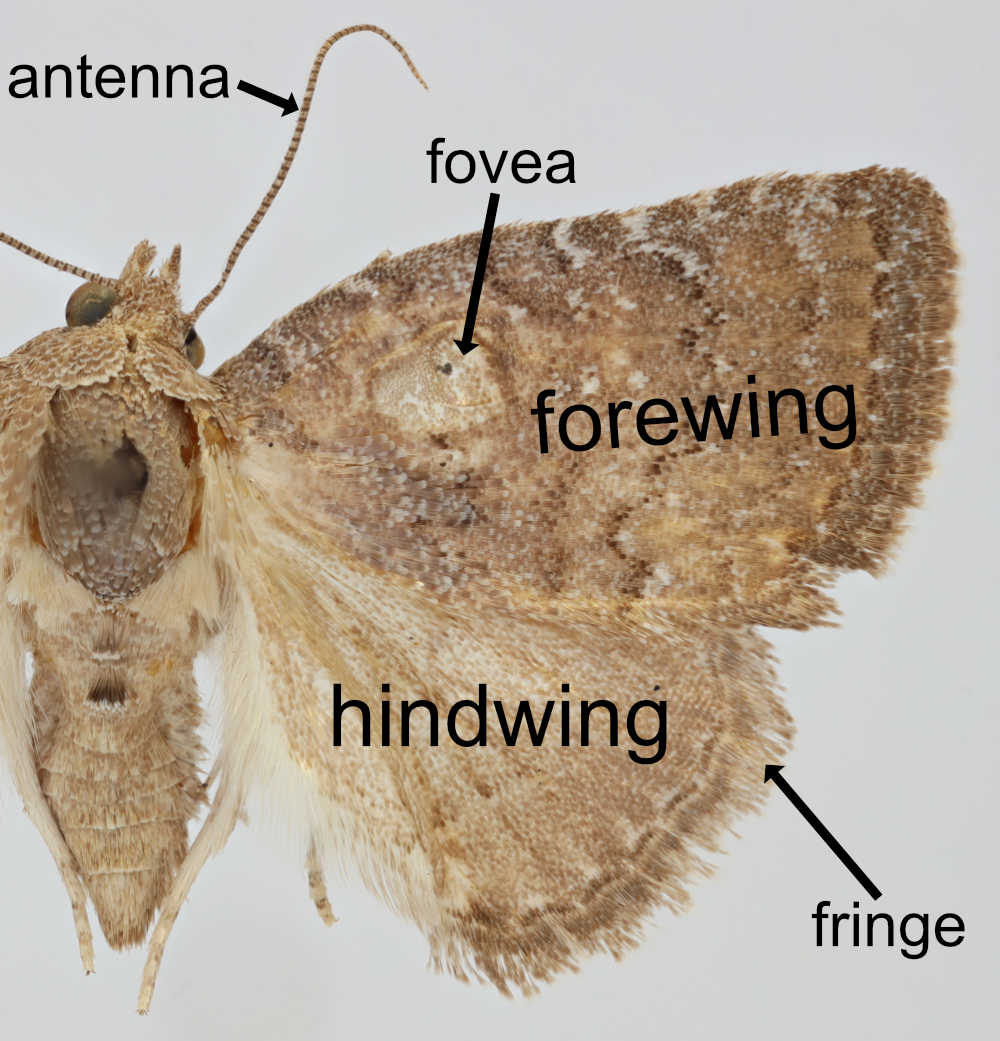 to the orbicular spotorbicular spot:
a round or oval spot located in the middle of the discal cell of the forewing, between the antemedial and median lines, and the translucent pearly white hindwinghindwing:
the back wing of an insect; the wing attached to the third segment of the thorax (the metathorax)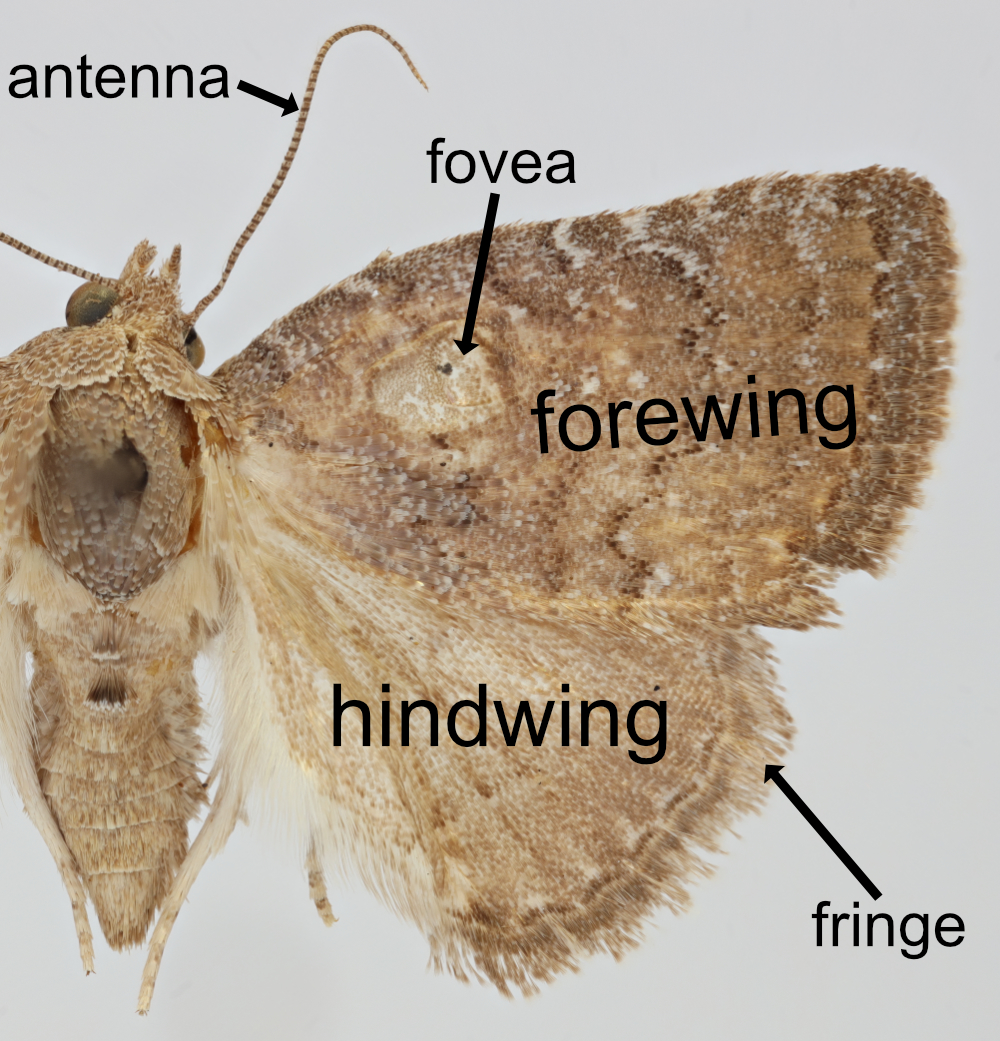 in both sexes (Lafontaine 2004Lafontaine 2004:
Lafontaine JD. 2004. The moths of America north of Mexico. Fascicle 27.1. Noctuoidea, Noctuidae (part), Agrotini. The Wedge Entomological Research Foundation. 385 pp. ).
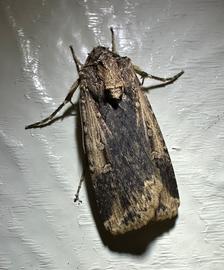
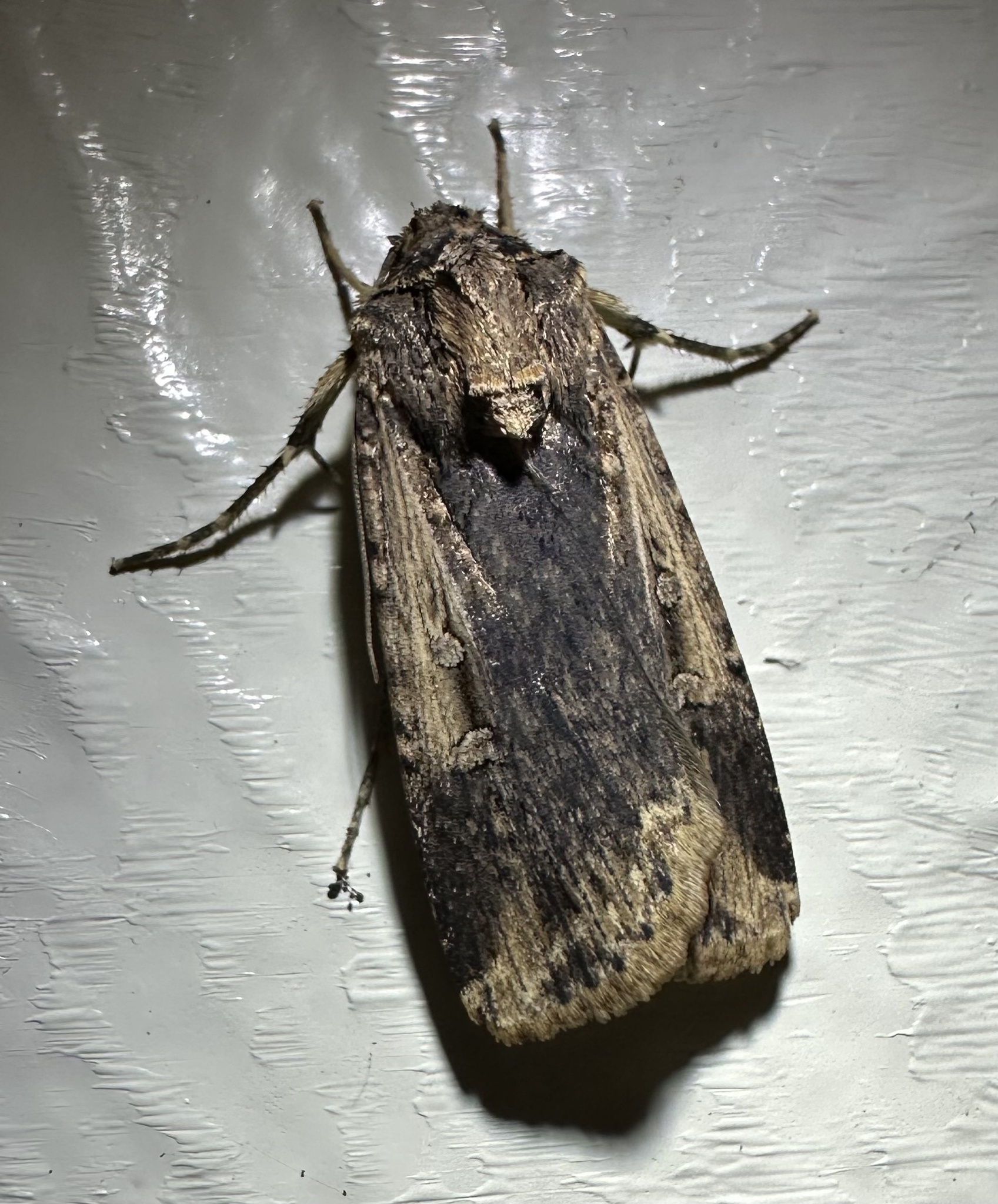
Feltia subterranea is sexually dimorphic: males are on average smaller than females (forewing lengthforewing length:
the distance of the forewing in a straight line from the base to the tip of the apex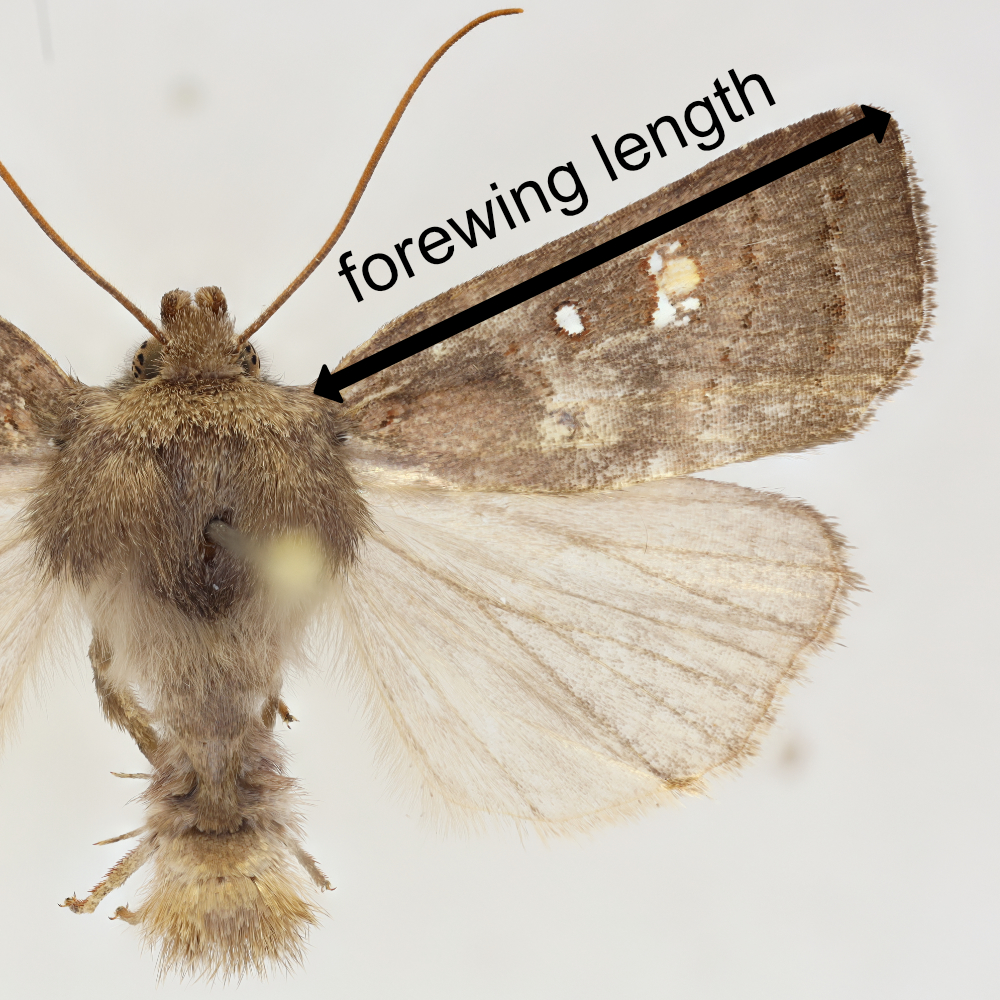 12–18 mm in males, 14–20 mm in females); the male forewingforewing:
the front wing of an insect; the wing attached to the second segment of the thorax (the mesothorax) is brown with a diffuse blackish-brown patch along the costa between the reniform spotreniform spot:
a spot, often broad bean- or kidney-shaped, found at the distal end of the discal cell and the subterminal linesubterminal line:
a thin, transverse line situated near the distal end of the forewing between the postmedial and terminal lines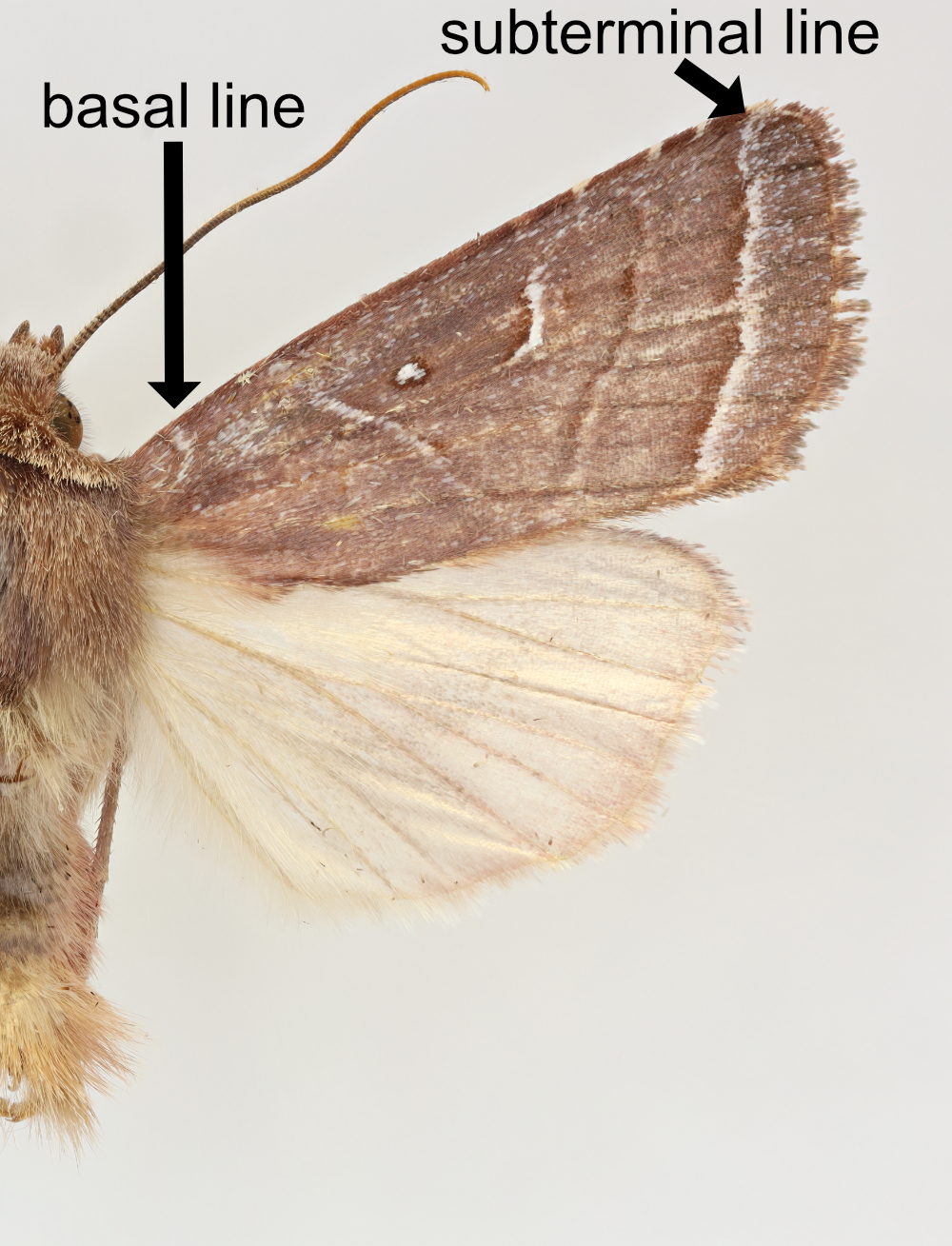 ; in females the forewingforewing:
the front wing of an insect; the wing attached to the second segment of the thorax (the mesothorax) is mainly dark blackish brown with paler brown shading in the terminal areaterminal area:
the portion of the wing that is located distal to the subterminal line and basal of the terminal line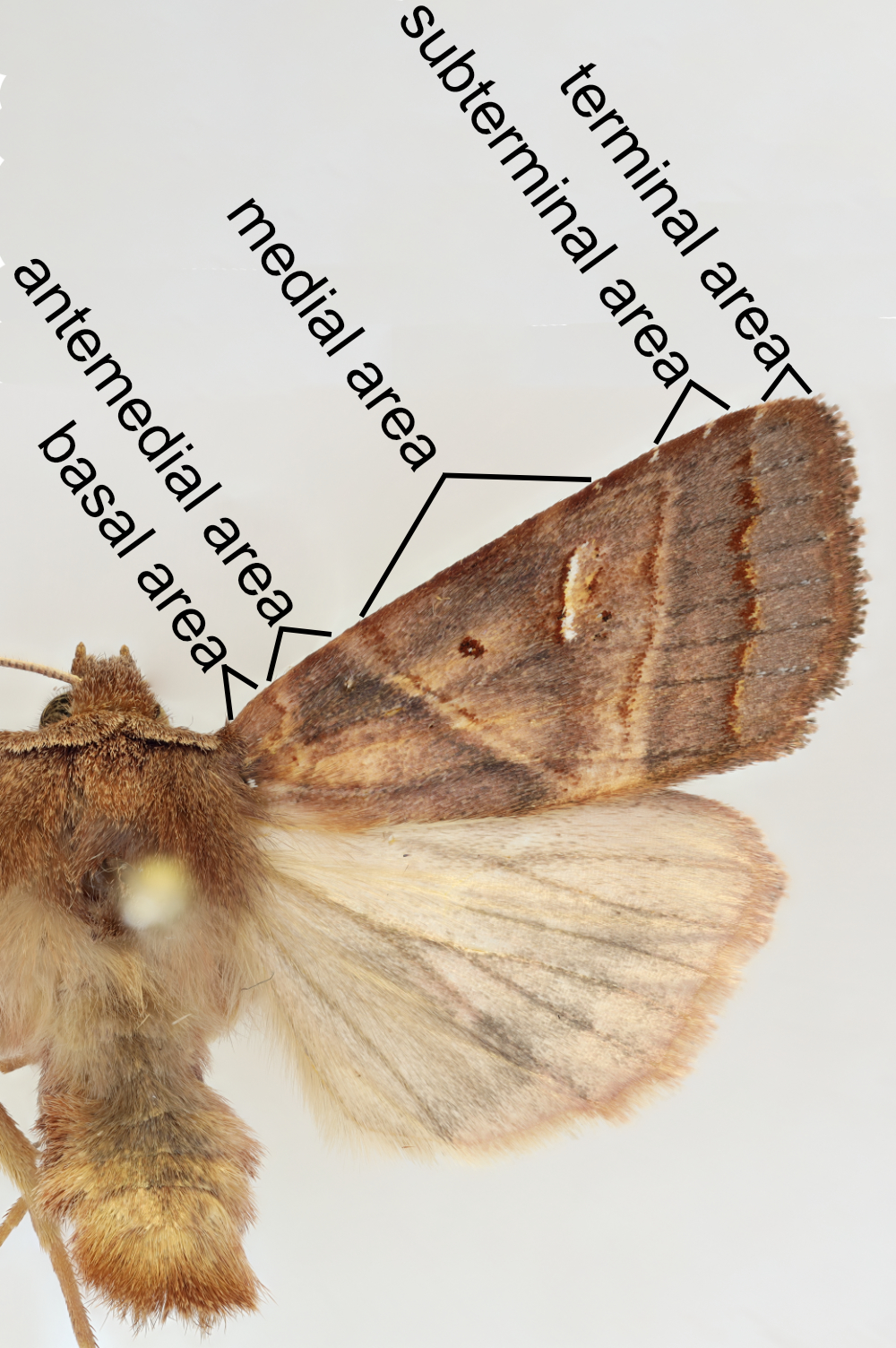 and along the costa between the wing base and the reniform spotreniform spot:
a spot, often broad bean- or kidney-shaped, found at the distal end of the discal cell (Lafontaine 2004Lafontaine 2004:
Lafontaine JD. 2004. The moths of America north of Mexico. Fascicle 27.1. Noctuoidea, Noctuidae (part), Agrotini. The Wedge Entomological Research Foundation. 385 pp. ).
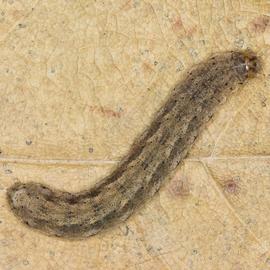
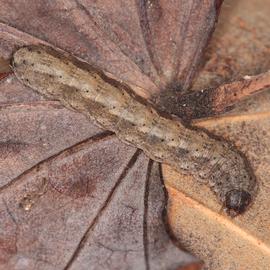
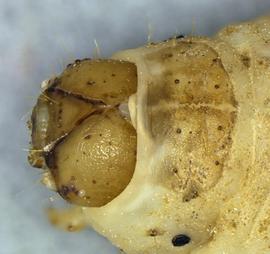
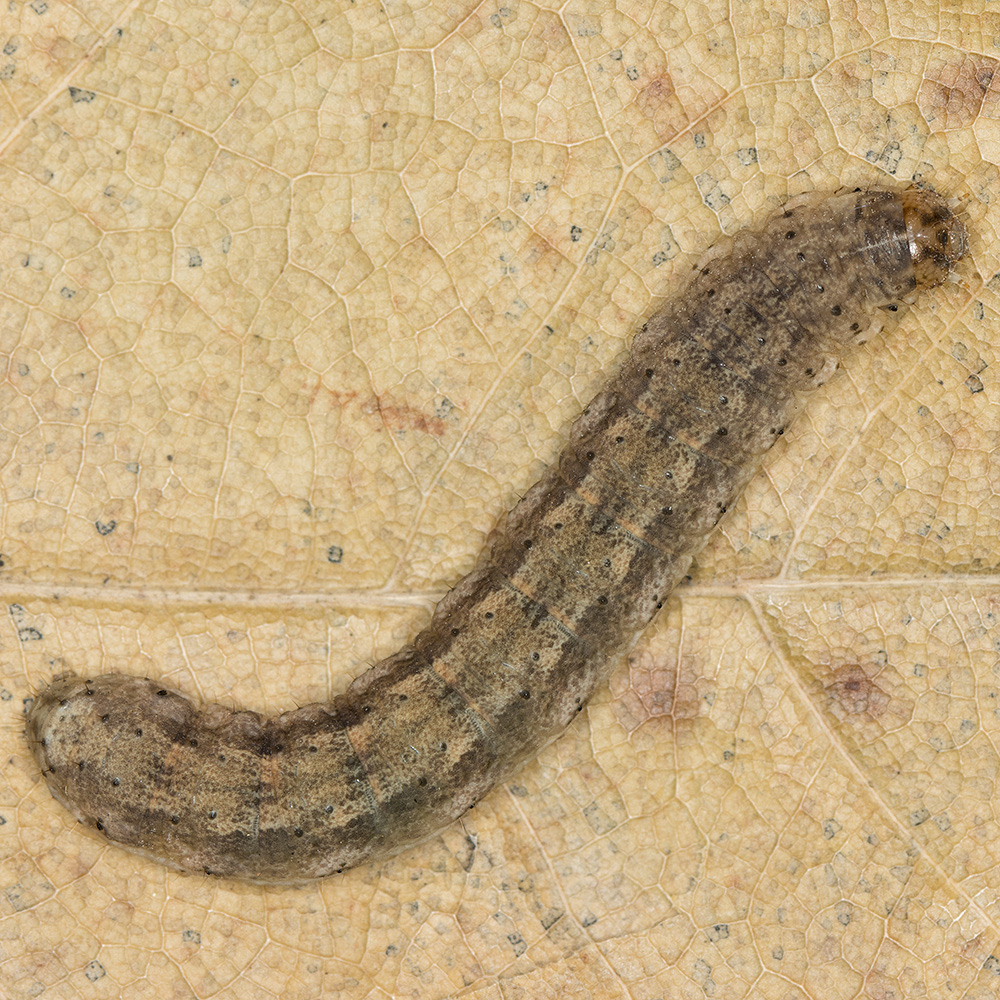
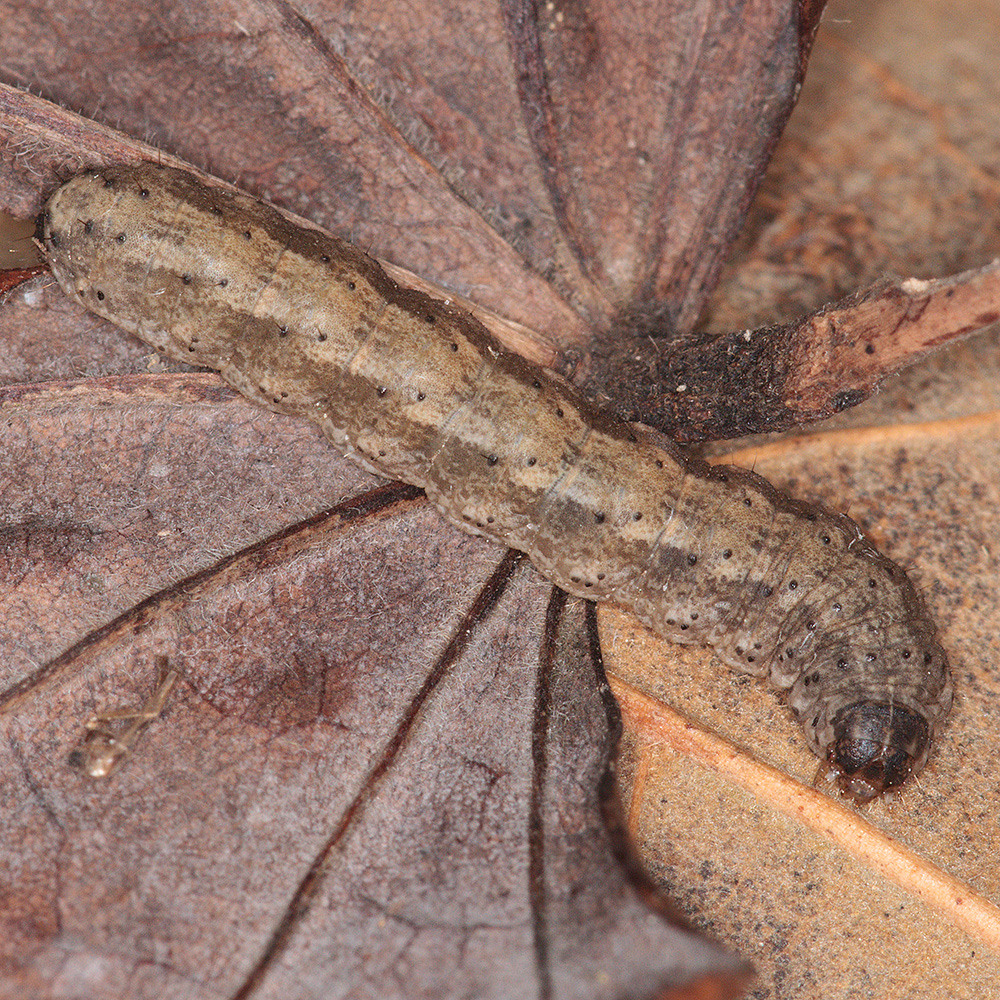
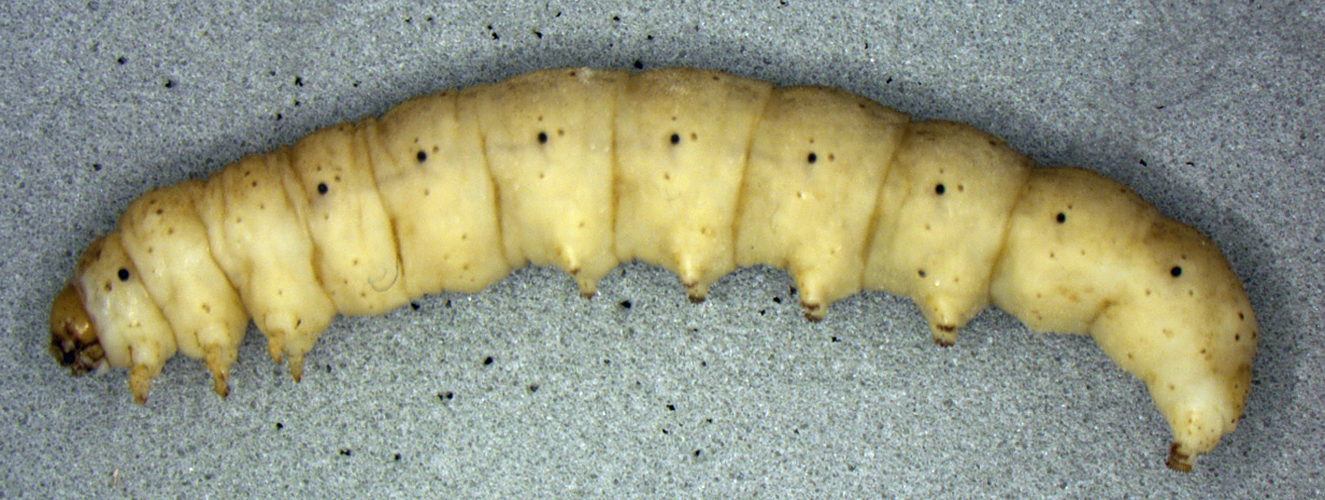
Larvae of Feltia subterranea are easily distinguished from all other noctuid larvae in Hawaiʻi by the presence of scattered, raised, conical skin granules (Crumb 1956Crumb 1956:
Crumb SE. 1956. The larvae of the Phalaenidae [Noctuidae]. U.S. Department of Agriculture Technical Bulletin 1135:1–356., Lafontaine 2004Lafontaine 2004:
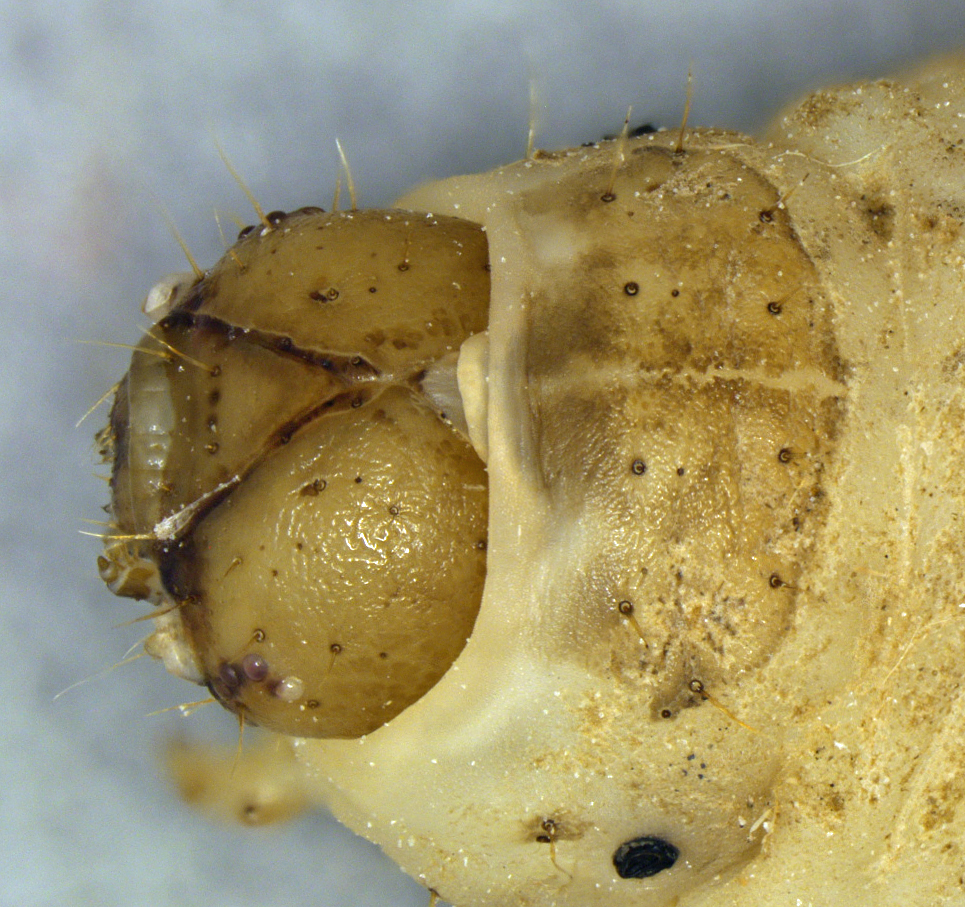
Lafontaine JD. 2004. The moths of America north of Mexico. Fascicle 27.1. Noctuoidea, Noctuidae (part), Agrotini. The Wedge Entomological Research Foundation. 385 pp. ). The head is typically pale brown; the body is dark brown to gray with pale longitudinal stripes.
In Hawaiʻi, Feltia subterranea is most likely to be confused with Agrotis ipsilon. Feltia subterranea is a smaller species with a dark band extending between the orbicular and reniform spotreniform spot:
a spot, often broad bean- or kidney-shaped, found at the distal end of the discal cell. In A. ipsilon, a dark band extends below the reniform spotreniform spot:
a spot, often broad bean- or kidney-shaped, found at the distal end of the discal cell.
Feltia subterranea natively occurs from the southern United States south to Peru and Brazil. As a seasonal migrant, it has been recorded as far north as Nova Scotia and southern Ontario.
In Hawaiʻi, it is known from all the main high Hawaiian Islands, where it occurs in dry, mesic, and wet forests at elevations of up to 1200 meters.
Feltia subterranea is broadly polyphagous on many commercial crops. Tietz (1972)Tietz (1972):
Tietz HM. 1972. An index to the described life histories, early stages, and hosts of the Macrolepidoptera of the continental United States and Canada (two volumes). The Allyn Museum of Entomology, Sarasota, Florida, USA. 1041 pp. listed 24 genera of plants that have been recorded as hosts for F. subterranea. Host plants include beans (Phaseolus L.), beets (Beta vulgaris L.), cabbage (Brassica oleracea L.), corn (Zea mays L.), lettuce (Lactuca sativa L.), peas (Pisum sativum L.), potatoes (Solanum tuberosum L.), tobacco (Nicotiana L. spp.), tomatoes (Solanum lycopersicum L.), turnips (Brassica rapa L.), and wheat (Triticum spp.).
Adults appear to occur year-round in Hawaiʻi.
Author: Kyhl A. Austin
Content last updated May 2026
idtools.org