ADVENTIVE
Elaphria nucicolora (Guenée, 1852)
Higher taxonomy: Noctuidae: Noctuinae: Elaphriini
Common name: sugarcane midget
Elaphria nucicolora is a common non-native noctuid across all the main high Hawaiian Islands as well as Kahoʻolawe and Laysan. It was first reported in Hawaiʻi from Oʻahu in 1945 (Swezey 1947Swezey 1947:
Swezey OH. 1947. Elaphria nucicolora (Guenee), a recent immigrant to Hawaii. Proceedings of the Hawaiian Entomological Society. 13(1):99–100.).
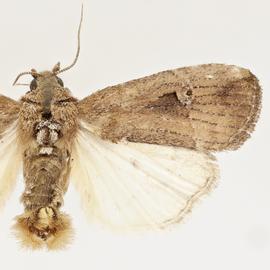
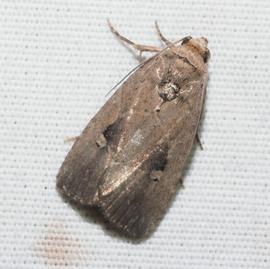
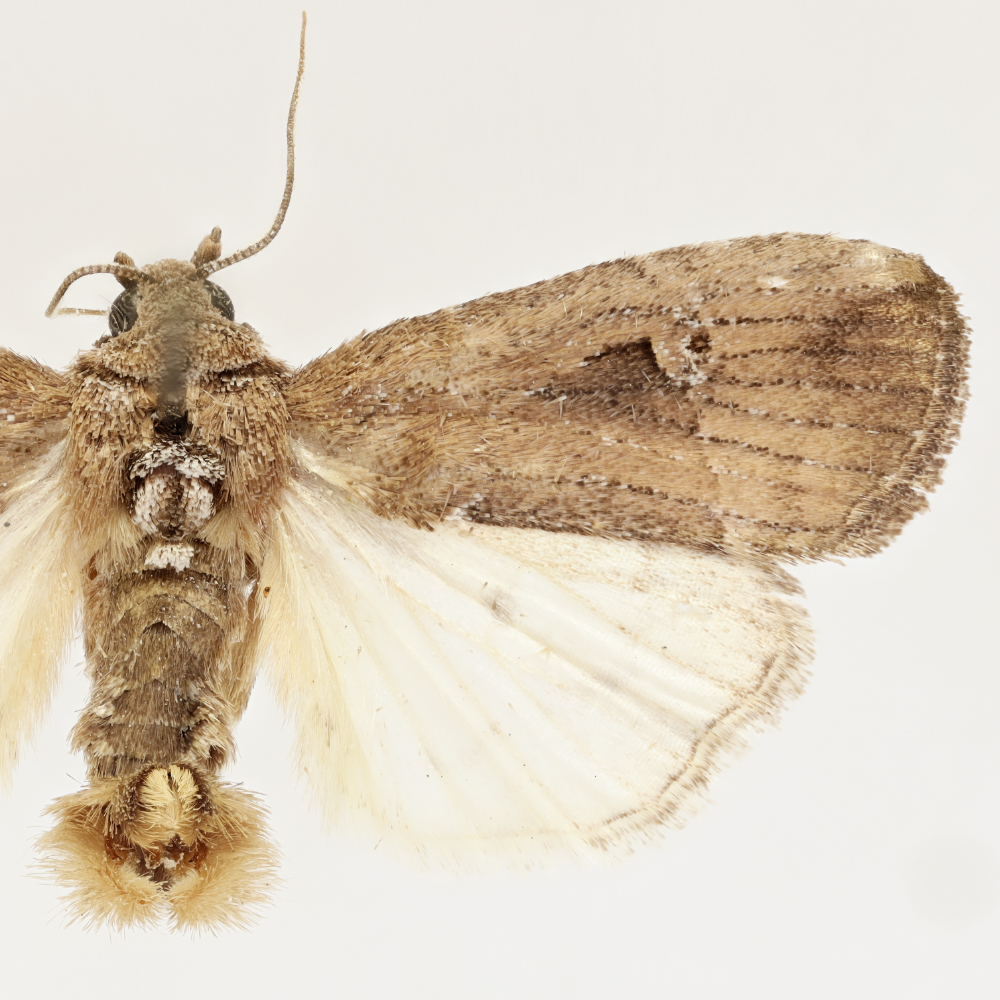
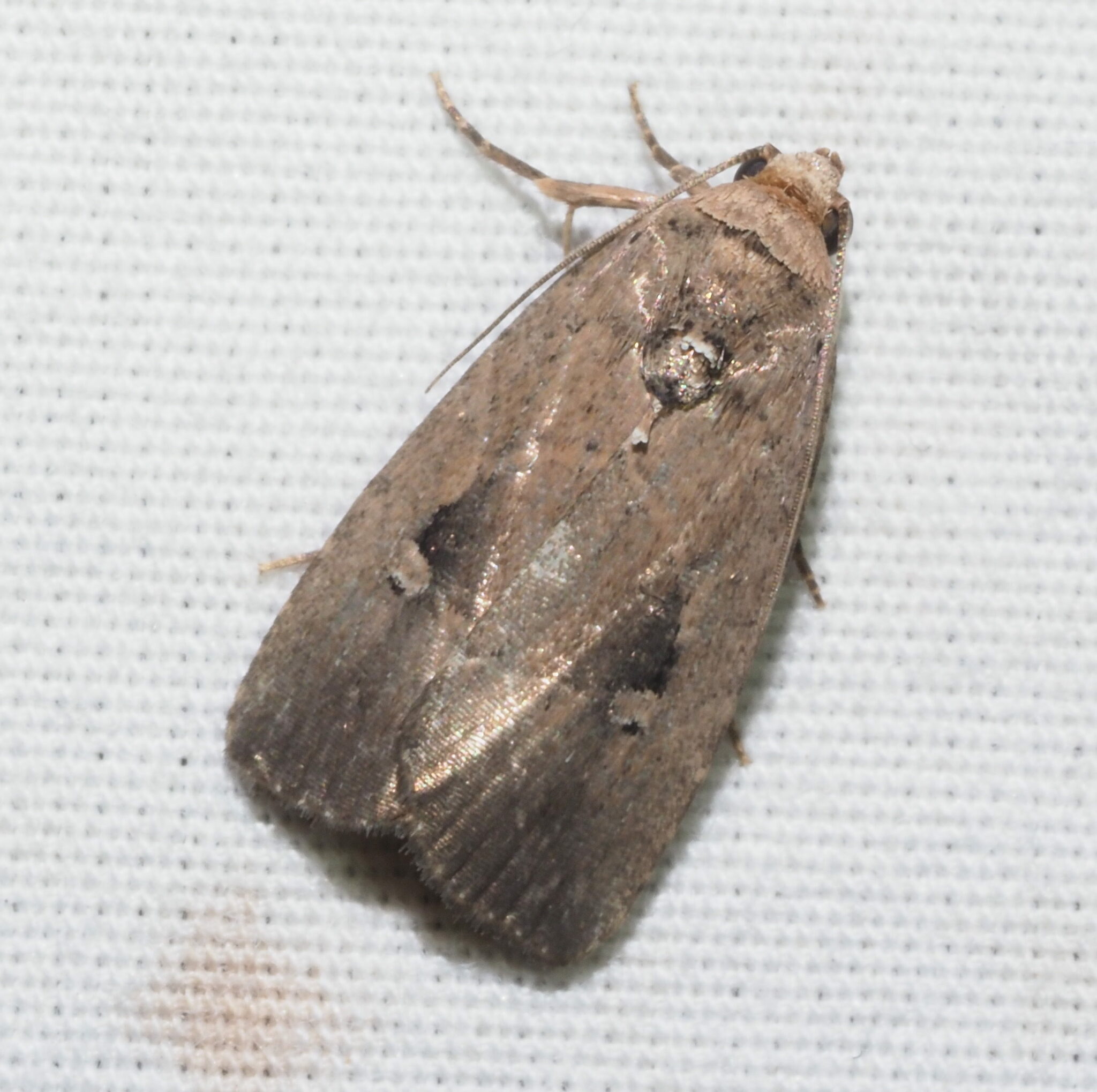
Elaphria nucicolora is a small, pale brown noctuid (forewing lengthforewing length:
the distance of the forewing in a straight line from the base to the tip of the apex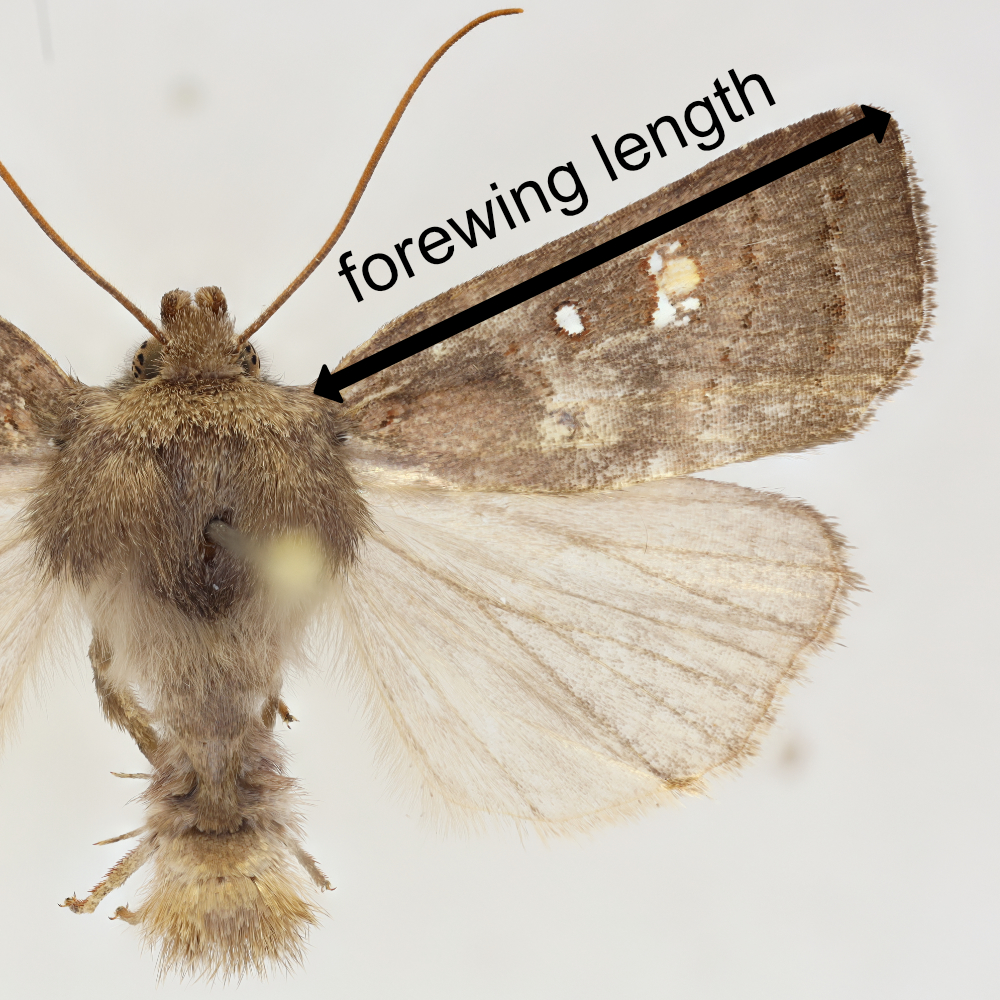 9–10 mm) with a small tuft of black and gray scales on the thoraxthorax:
the second, or middle, body segment of an insect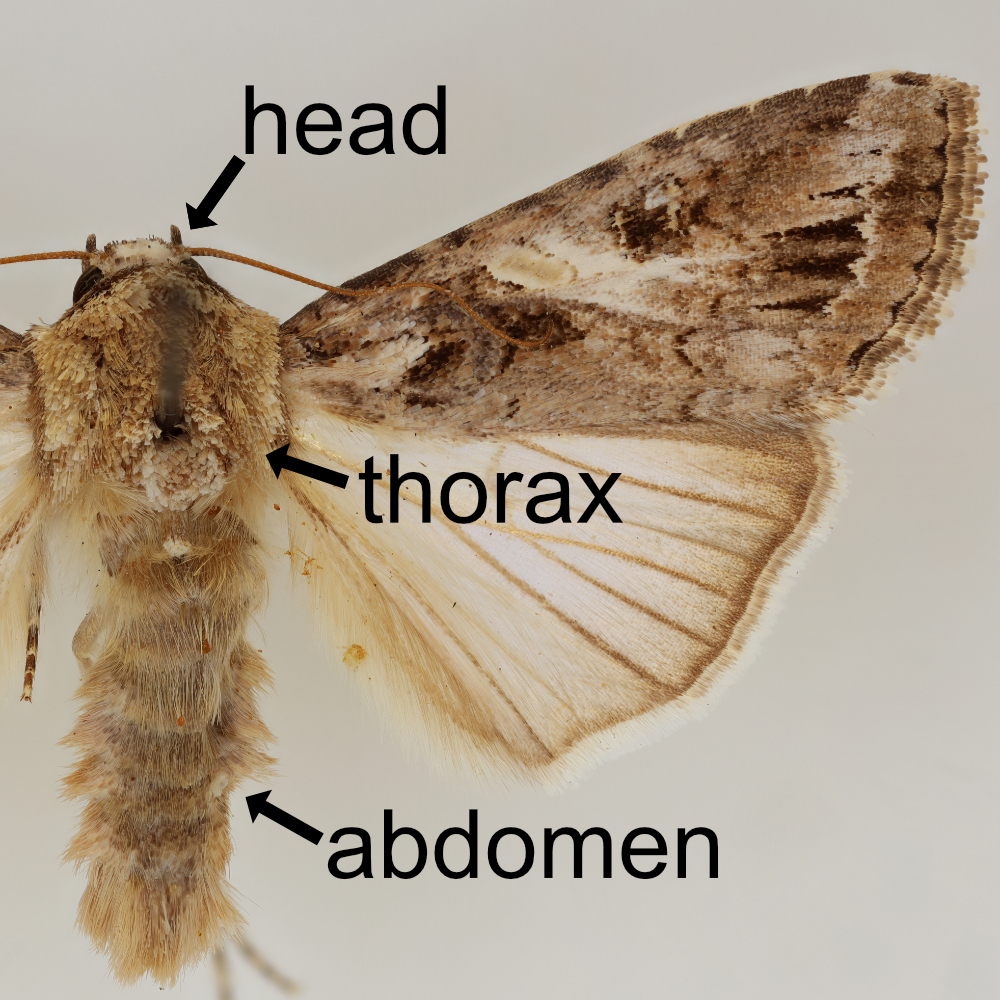 dorsum, a pale brown forewingforewing:
the front wing of an insect; the wing attached to the second segment of the thorax (the mesothorax)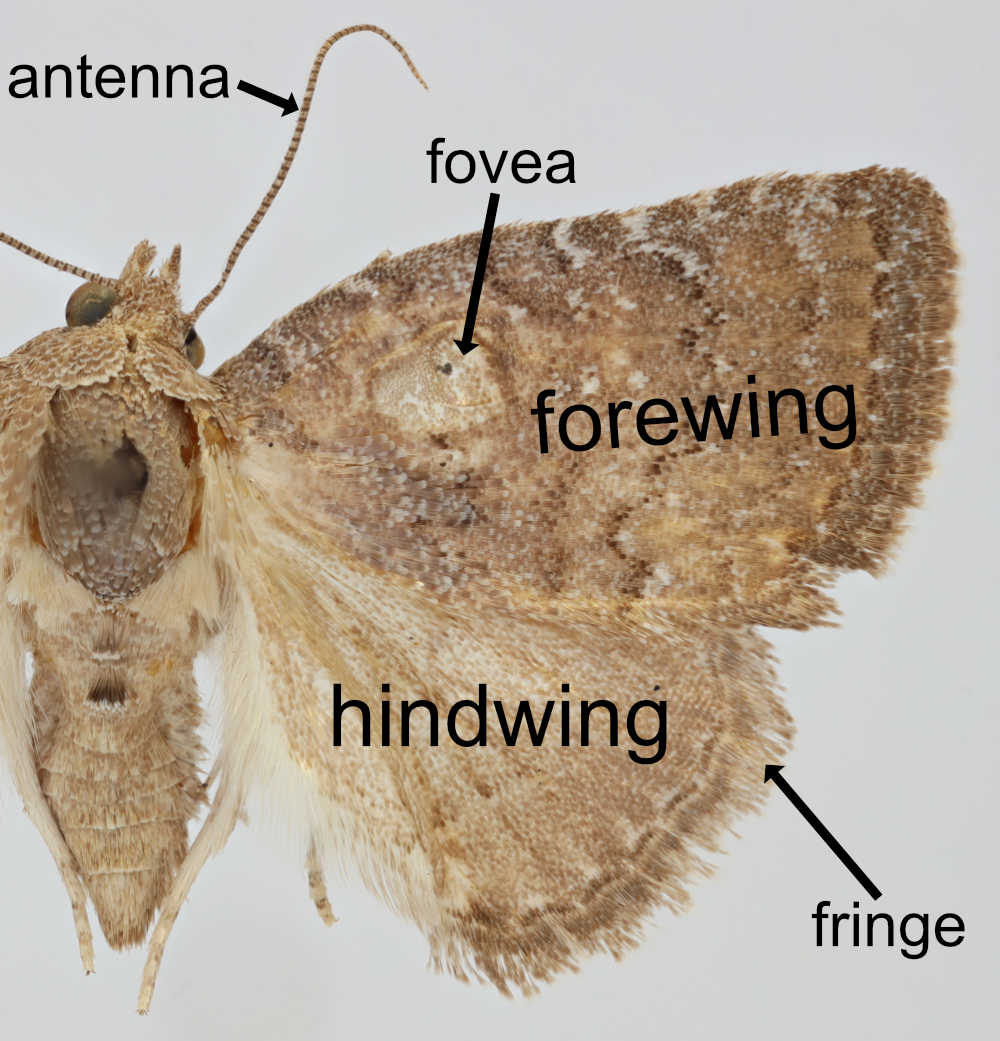 , and a darker brown or black triangular area surrounding a semi-apparent reniform spotreniform spot:
a spot, often broad bean- or kidney-shaped, found at the distal end of the discal cell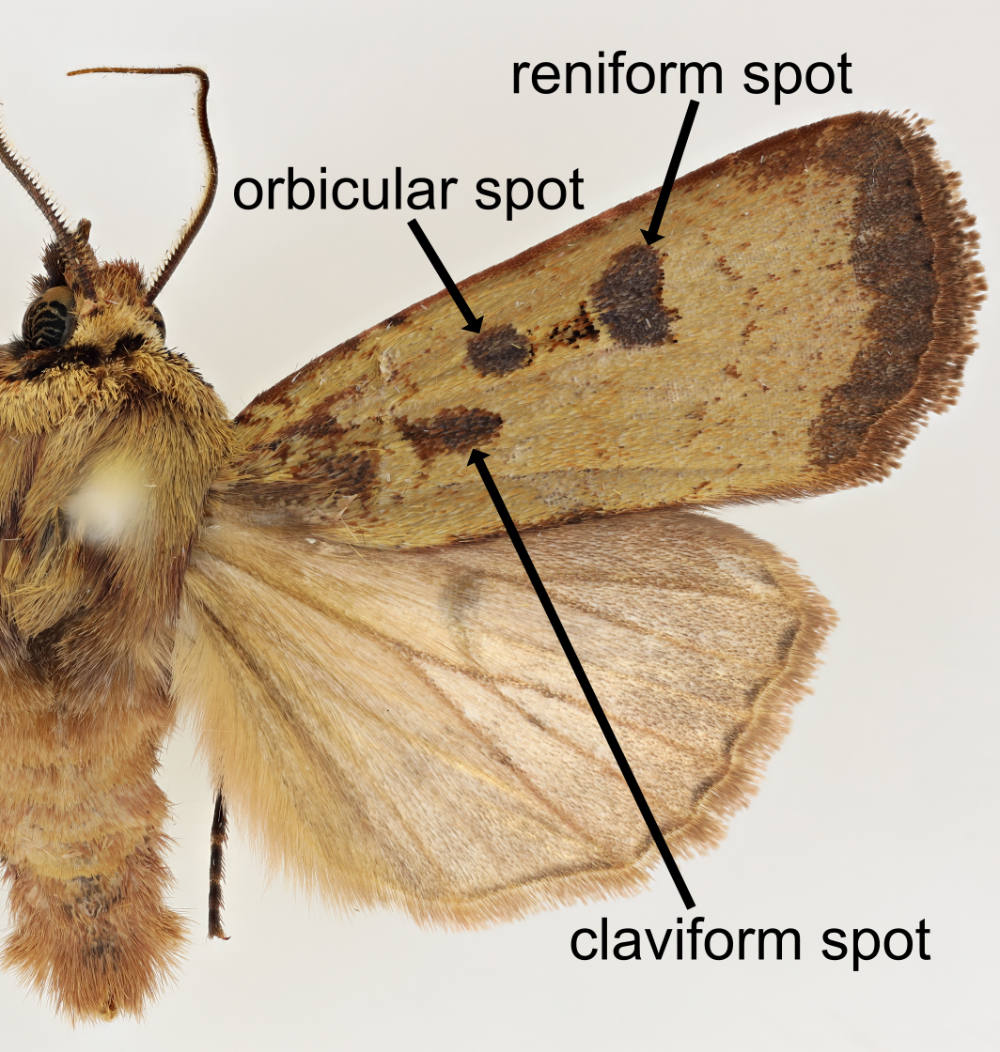 . The veins, especially distally, are lined with black scales. The orbicular spotorbicular spot:
a round or oval spot located in the middle of the discal cell of the forewing, between the antemedial and median lines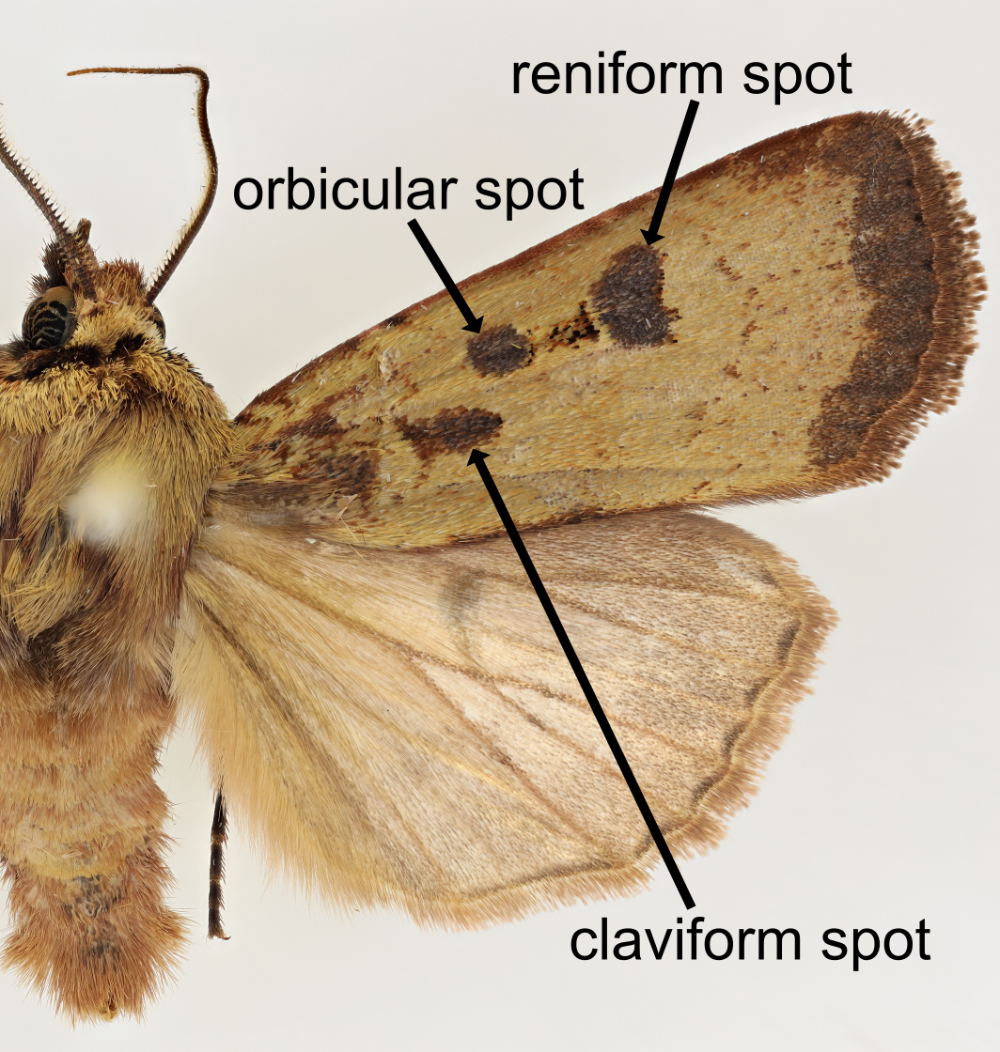 is obsolete. The hindwinghindwing:
the back wing of an insect; the wing attached to the third segment of the thorax (the metathorax)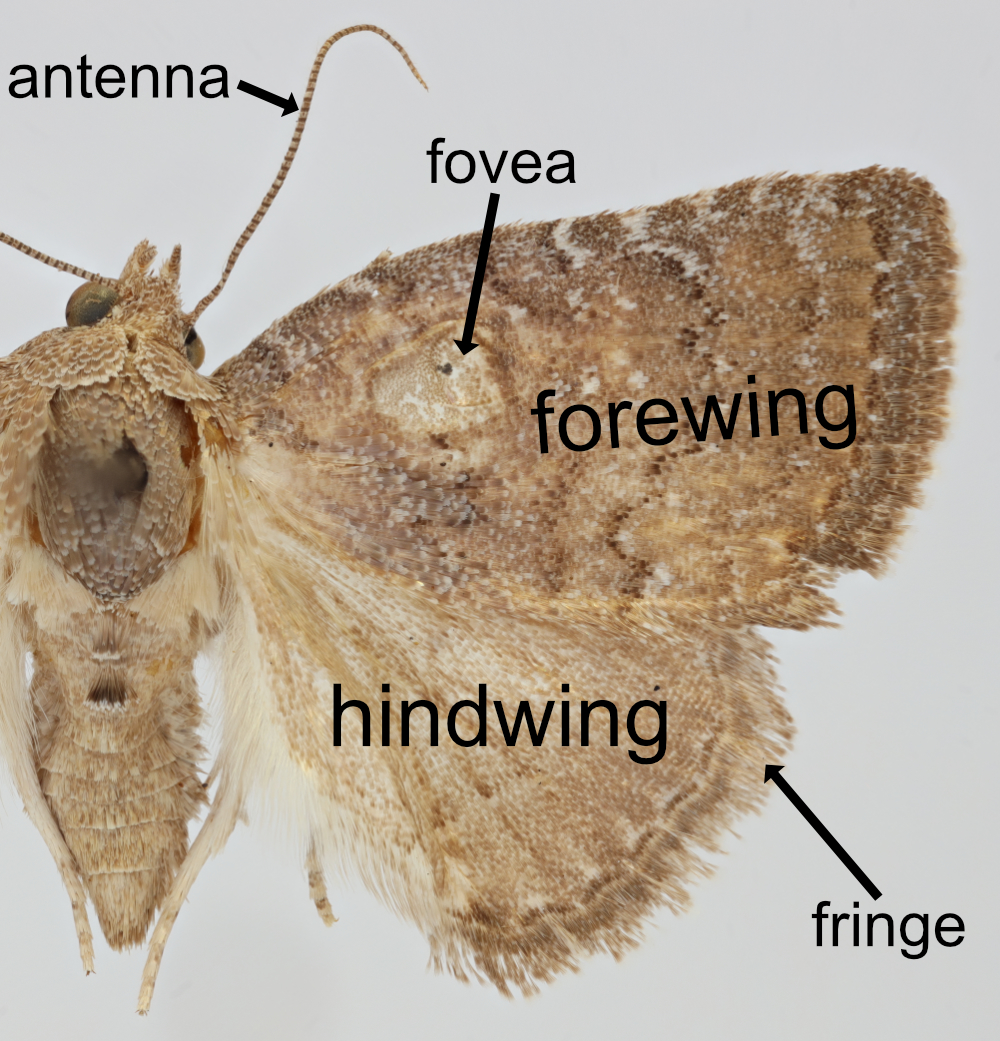 is pale yellow or gray.
Swezey (1951)Swezey (1951):
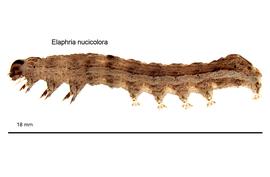
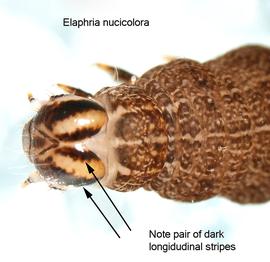
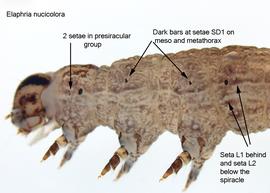
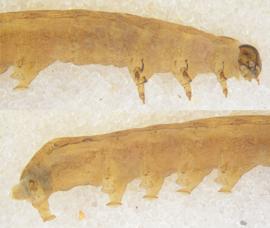
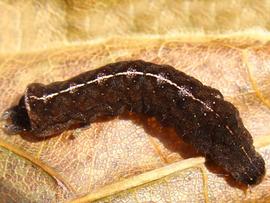
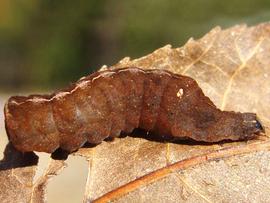
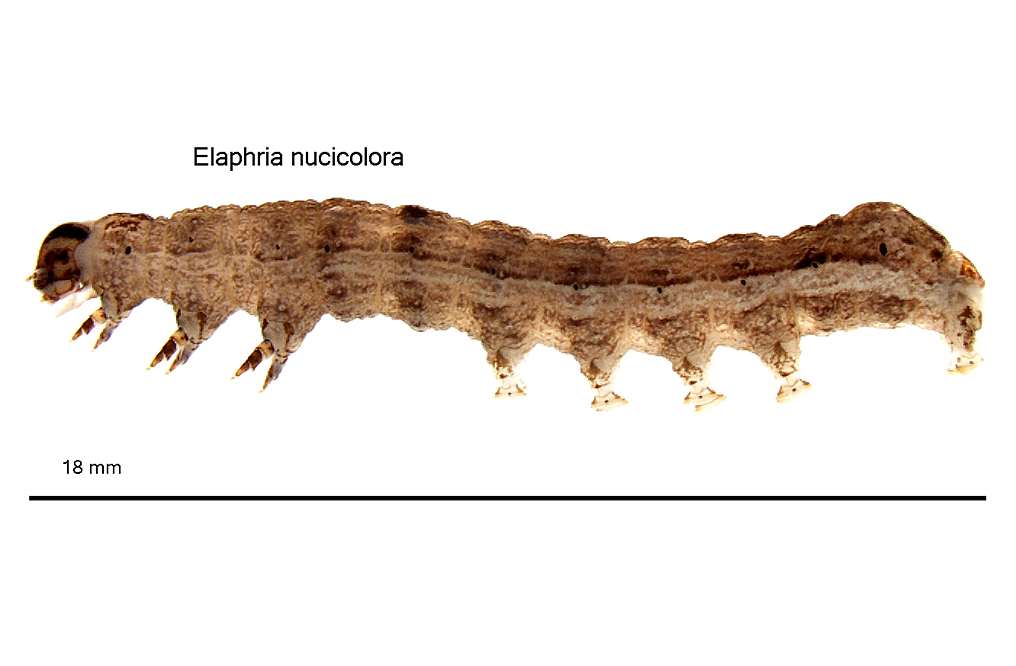
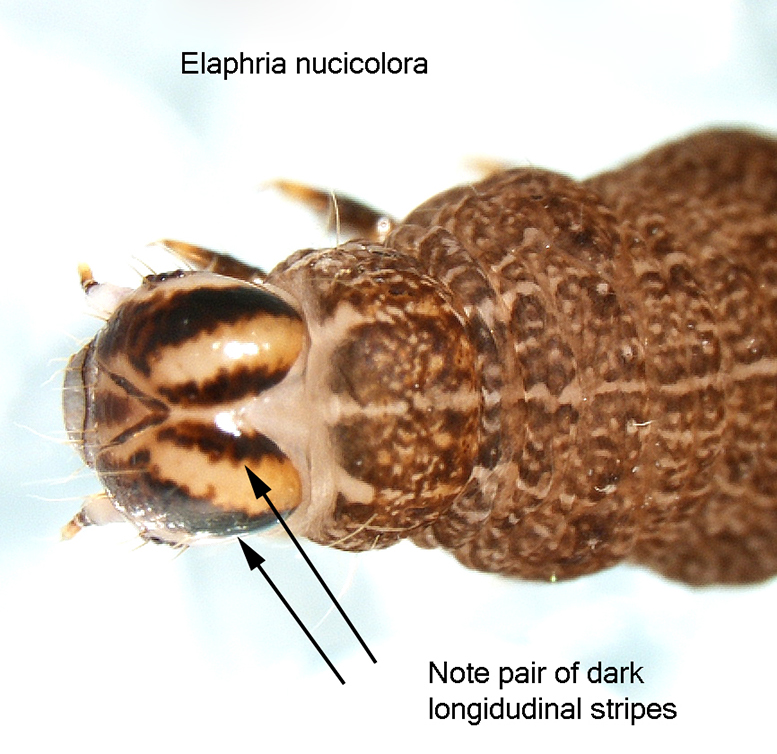
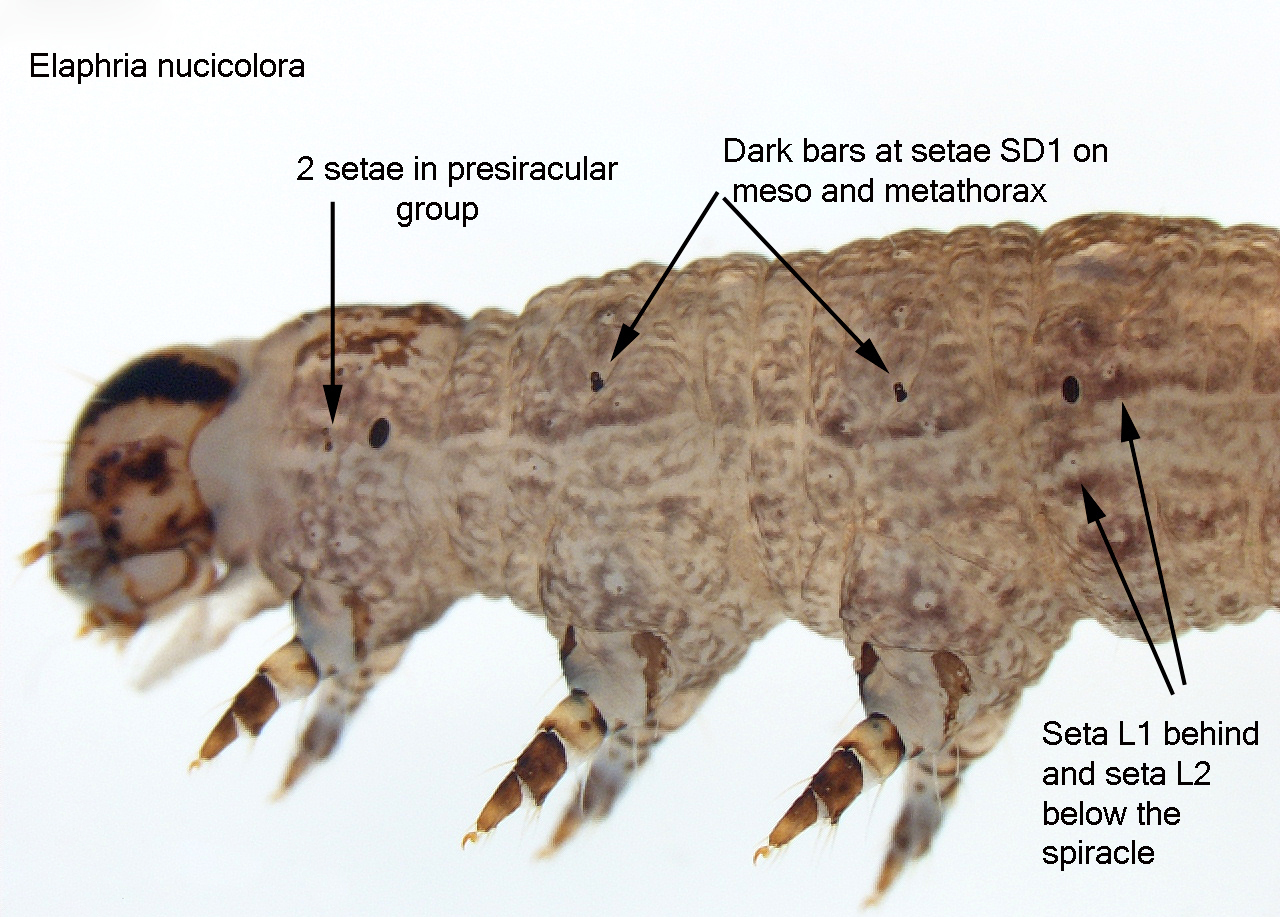
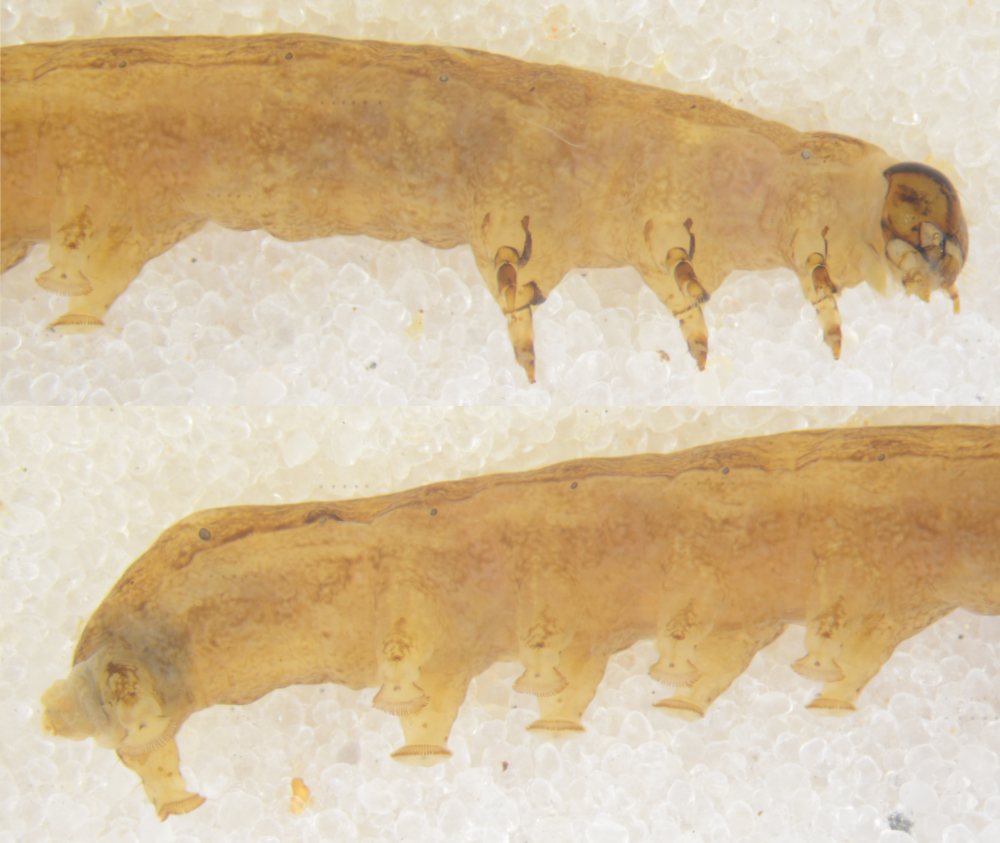
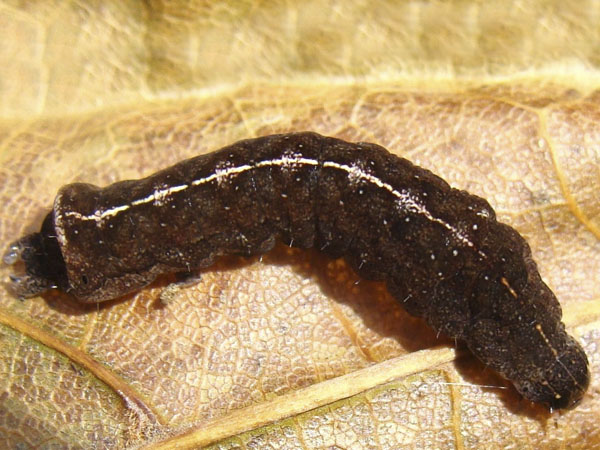
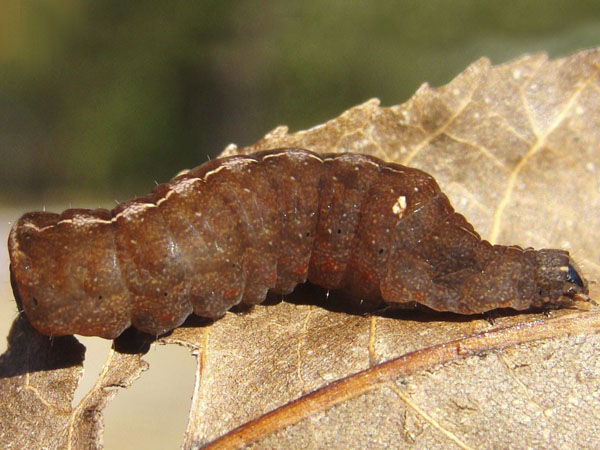
Swezey OH. 1951. Notes and exhibitions: Elaphria nucicolora (Guenée). Proceedings of the Hawaiian Entomological Society. 14(2):217. described the larva: "nearly uniform dark fuscous, variegated with black. There is a fine, pale, middorsal line; the dorsal setae are minute and situated in minute, pale, black-ringed spots. There is a distinct, small, yellow lateral spot on either side of the first abdominal segment. The head is dark and distinctly narrower than the prothorax. The spiracles are oval, black and pale-ringed." The full grown larva is about 20 mm long.
The larva of Athetis thoracica is similar but lacks the white middorsal line present in Elaphria nucicolora. The yellow (sometimes white) spots on A. thoracica are on A3 but are on A1 in E. nucicolora.
Worn adults could be confused with Athetis thoracica, but E. nucicolora is a smaller species without dark scaling along the hindwinghindwing:
the back wing of an insect; the wing attached to the third segment of the thorax (the metathorax) veins.
Elaphria nucicolora's native range includes the southeastern United States, Mexico, Caribbean, Central America, south to Peru and Brazil.
Elaphria nucicolora can be found in dry and mesic forest on all the main Hawaiian Islands at elevations up to 1200 meters plus Kahoʻolawe and Laysan.
The life cycle of Elaphria nucicolora was described from a laboratory culture by Habeck (1965)Habeck (1965):
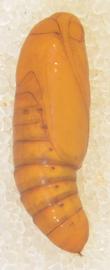
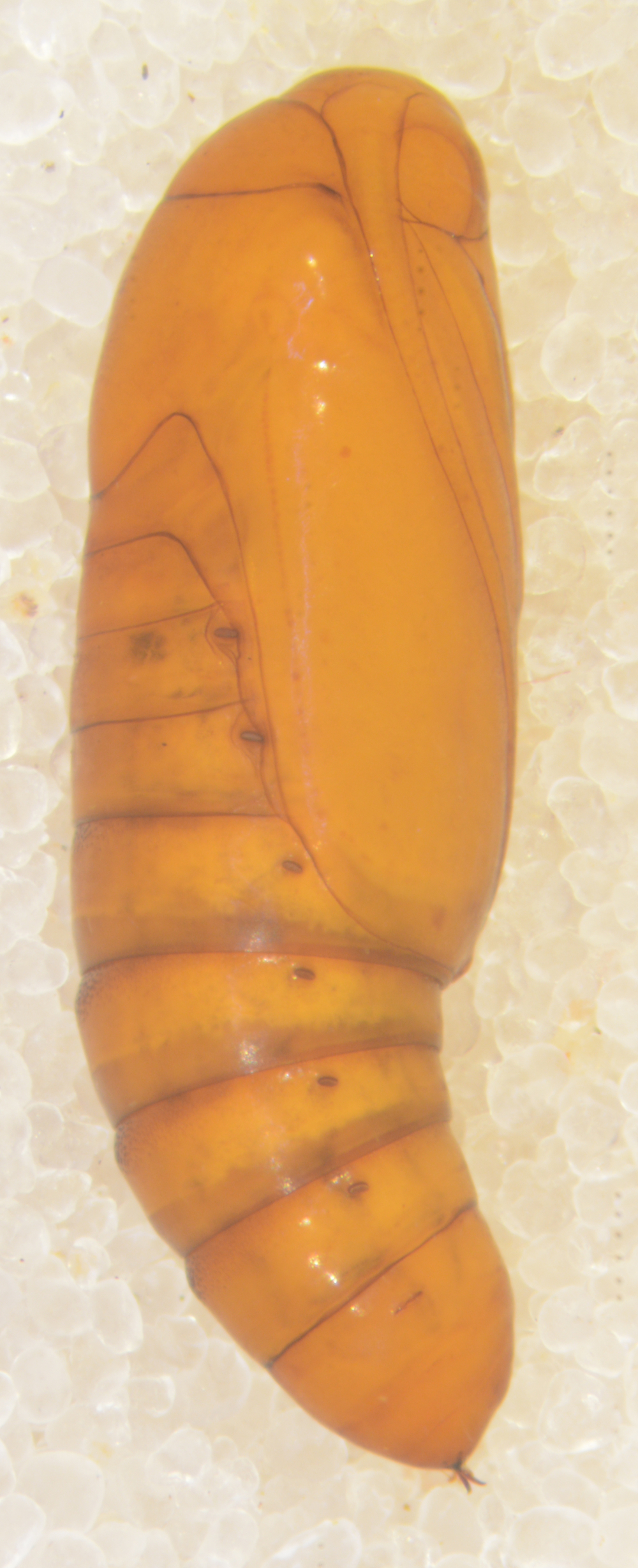
Habeck DH. 1965. Laboratory culture and development in Elaphria nucicolora (Lepidoptera: Noctuidae). The Florida Entomologist. 48:187–188.. Females can lay up to 900 eggs. Larvae typically undergo six instars, averaging 3–4 days per instar except the sixth which takes eight days on average. Complete larval development takes 20–35 days. Pupation occurs in a dead leaf or other suitable material; the pupal period lasts about 13 days on average.
Larvae are best known as pests of sugar cane (Saccharum spp.) but are broadly polyphagous, known to accept at least 14 different species of plants in eight different families (Swezey 1951Swezey 1951:
Swezey OH. 1951. Notes and exhibitions: Elaphria nucicolora (Guenée). Proceedings of the Hawaiian Entomological Society. 14(2):217., Zimmerman 1958Zimmerman 1958:
Zimmerman EC. 1958. Insects of Hawaii, Volume 7. Macrolepidoptera. University of Hawaii Press, Honolulu. 542 pp., Habeck 1965Habeck 1965:
Habeck DH. 1965. Laboratory culture and development in Elaphria nucicolora (Lepidoptera: Noctuidae). The Florida Entomologist. 48:187–188.). It is frequently intercepted on pineapple (Ananas comosus (L.) Merr.) from Central America (Gilligan and Passoa 2014Gilligan and Passoa 2014:
Gilligan TM, Passoa SC. 2014. LepIntercept, An identification resource for intercepted Lepidoptera larvae. Identification Technology Program (ITP), USDA-APHIS-PPQ-S&T, Fort Collins, CO.). Fresh leaves are not required; larvae will also consume dead leaves too.
Author: Kyhl A. Austin
Content last updated May 2026
idtools.org