ADVENTIVE
Chrysodeixis eriosoma (Doubleday, 1843)
Higher taxonomy: Noctuidae: Plusiinae: Argyrogrammatini
Common names: green garden looper, green looper caterpillar
Chrysodeixis eriosoma was first collected in Hawaiʻi by Blackburn (Butler 1877Butler 1877:
Butler AG. 1877. List of the heterocerous Lepidoptera recently collected by the Rev. T. Blackburn in the Hawaiian Islands. Entomologist's Monthly Magazine. 14:47–52.) but was misidentified as Plusia verticillata Guenée, 1852 now a synonym of Chrysodeixis chalcites (Esper, 1789). Chrysodeixis chalcites is limited to Europe, Asia, and northern Africa (Holloway 1977Holloway 1977:
Holloway JD. 1977. Lepidoptera of Norfolk Island: their biogeography and ecology. Series Entomologica. 13:1–291., Riotte 1991Riotte 1991:
Riotte JCE. 1991. Reassessment of the Noctuoidea of the Hawaiian Islands. Bishop Museum Occasional Papers. 31:139–151.), adventive in Canada (Murillo et al. 2013Murillo et al. 2013:
Murillo H, Hunt DWA, Van Laerhoven SL. 2013. First records of Chrysodeixis chalcites (Lepidoptera: Noctuidae: Plusiinae) for east-central Canada. The Canadian Entomologist. 145(3):338–342.) but does not occur in Hawaiʻi. In Hawaiʻi, Chrysodeixis eriosoma is an occasional pest of ornamental and garden plants and can also be found in native forests in low numbers.
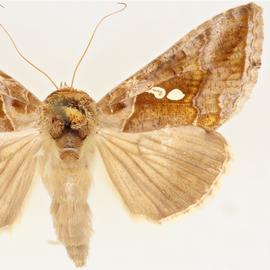
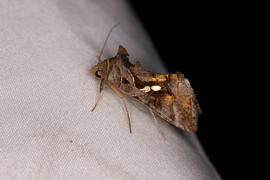
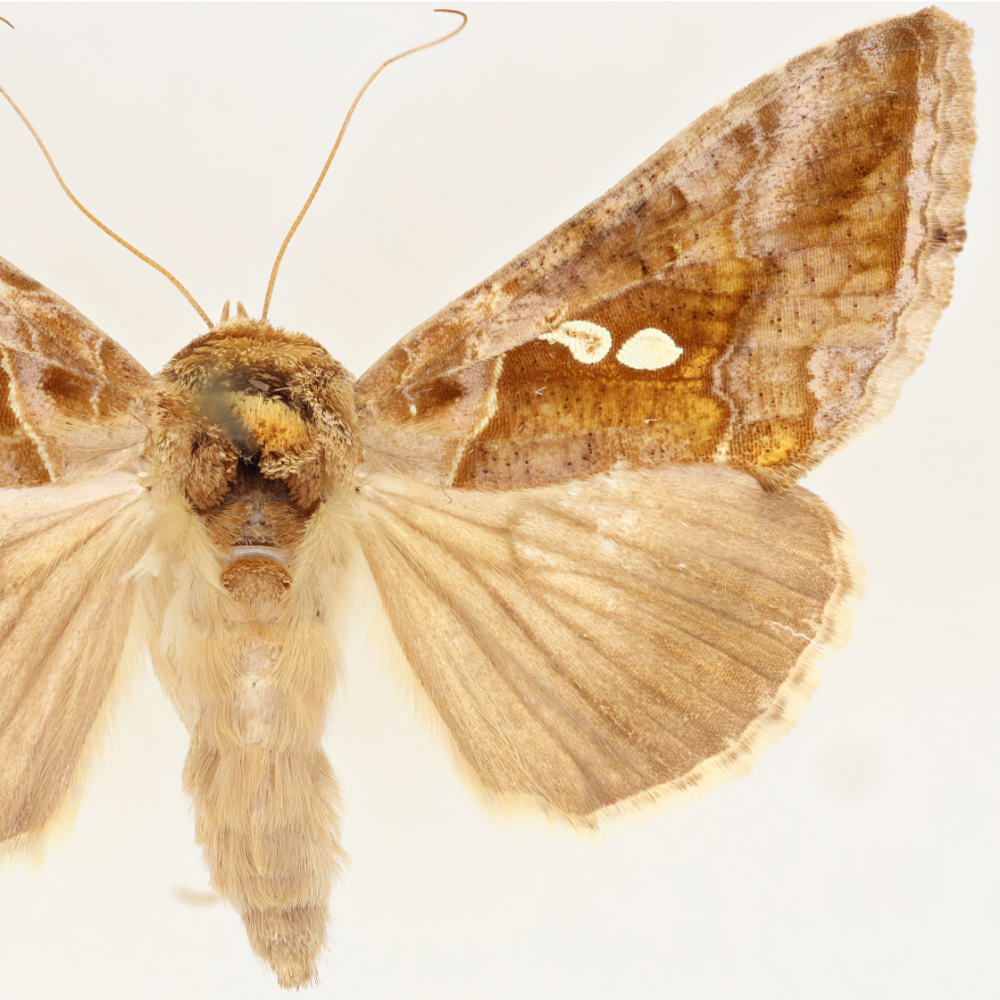
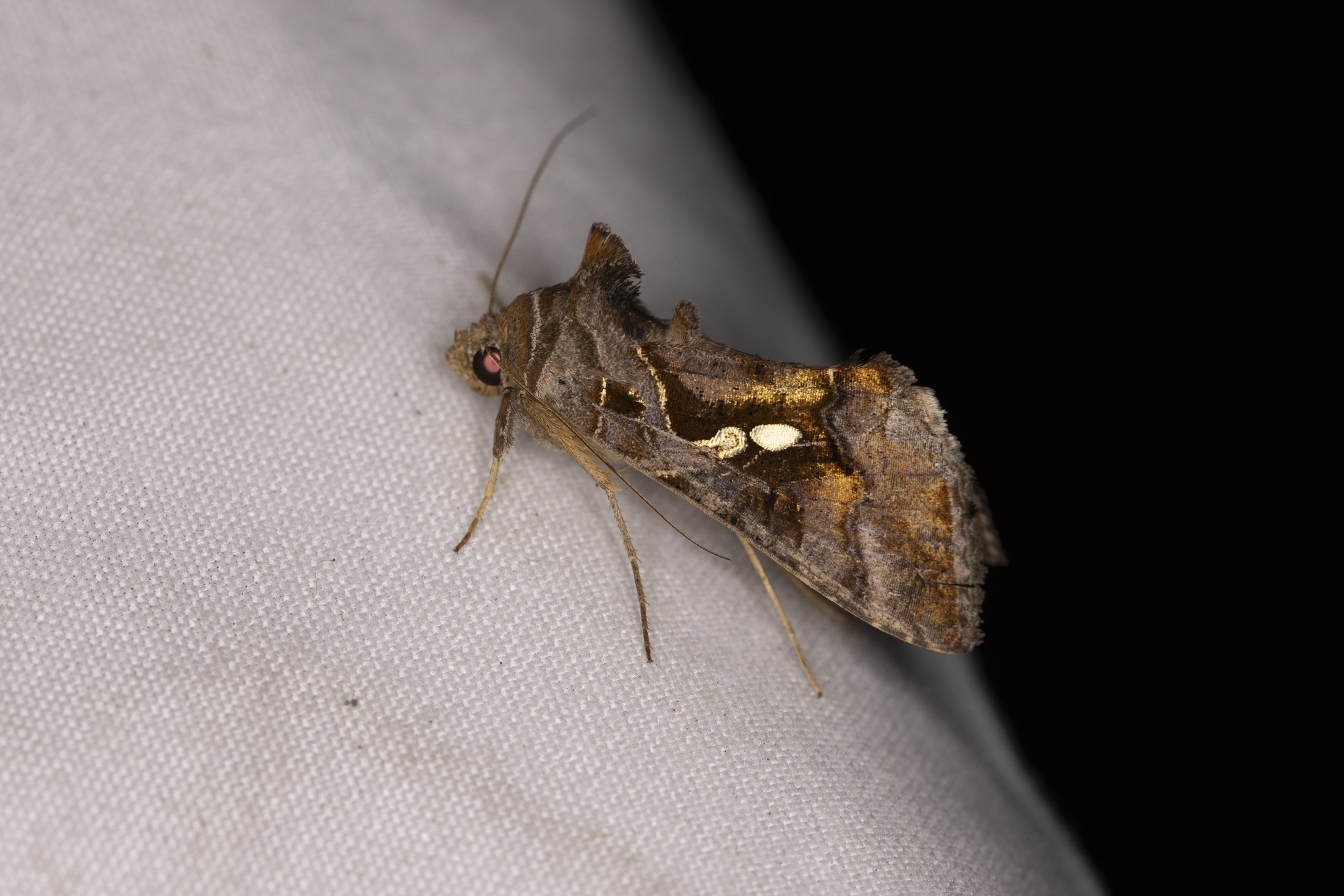
Adults of Chrysodeixis eriosoma are medium-sized, typical plusiines (forewing lengthforewing length:
the distance of the forewing in a straight line from the base to the tip of the apex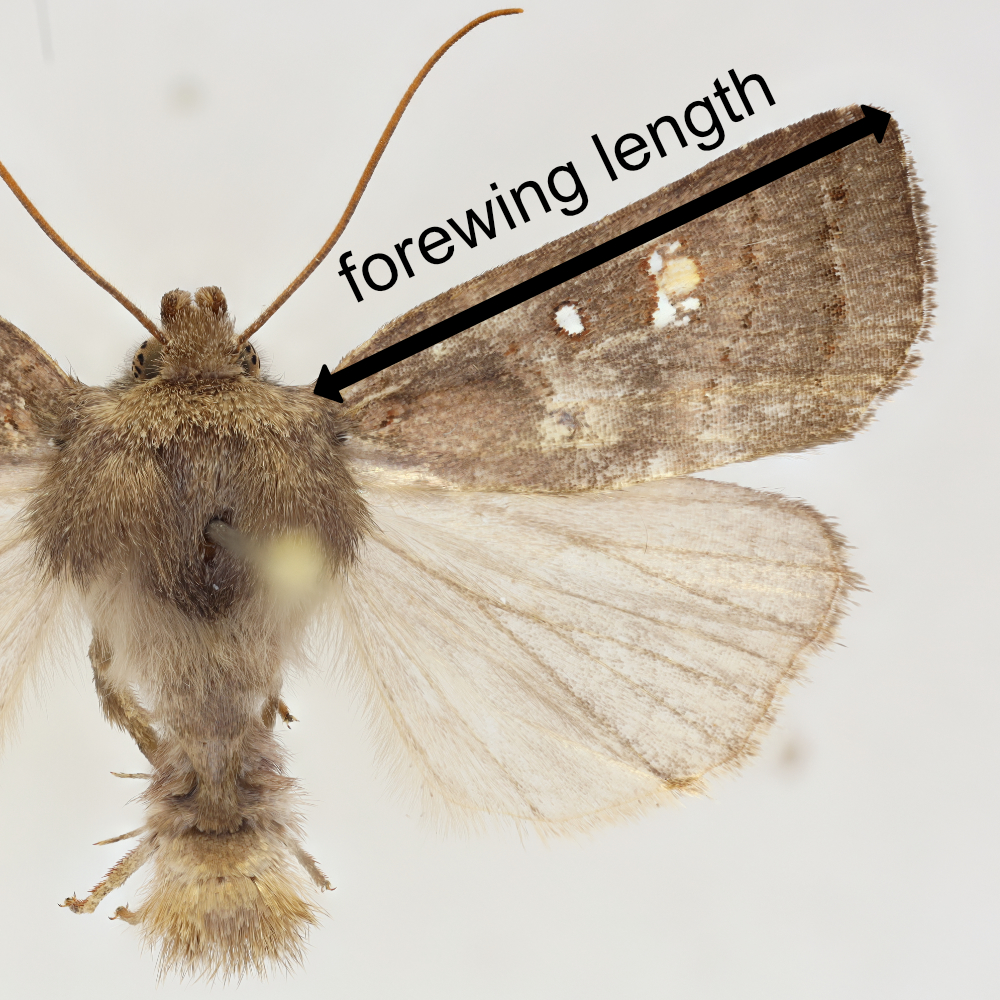 13–17 mm) with a brassy forewingforewing:
the front wing of an insect; the wing attached to the second segment of the thorax (the mesothorax)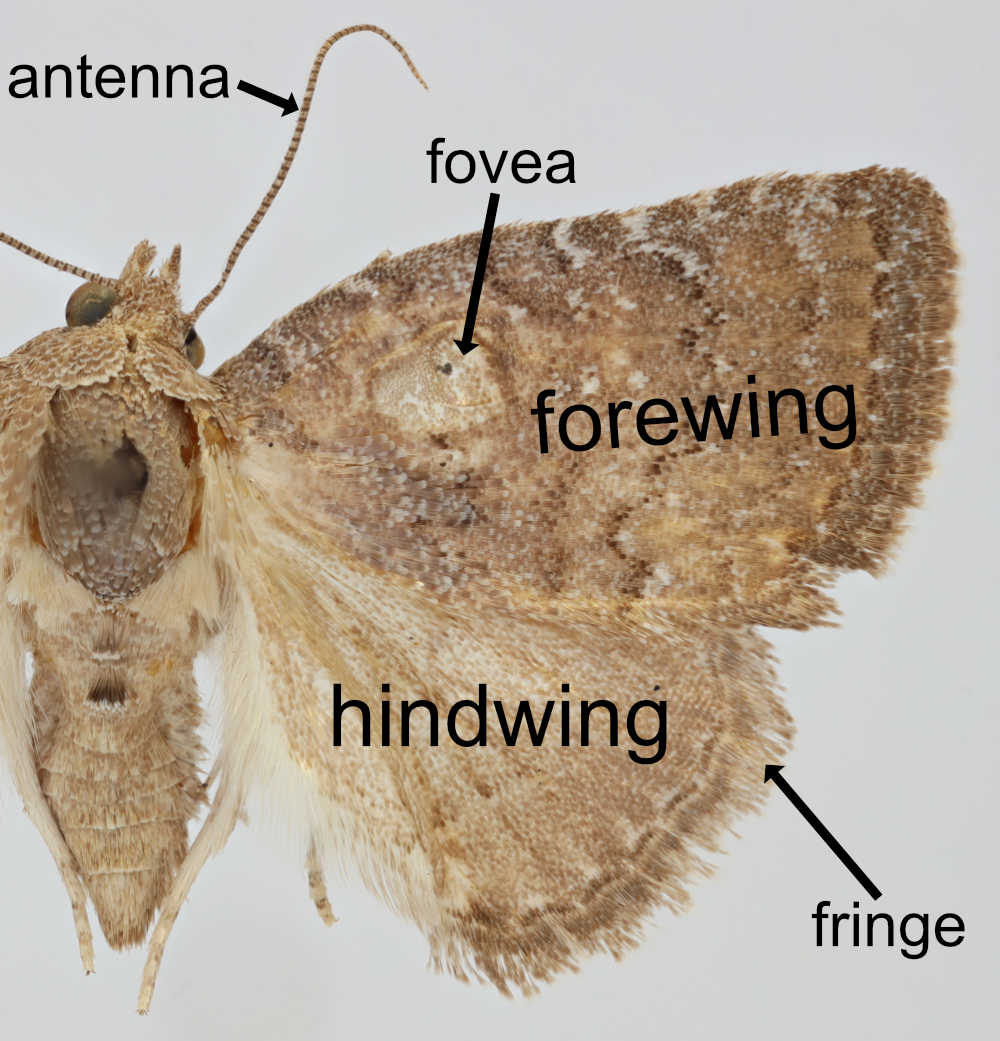 and well-developed, distinct stigmastigma:
a distinctive metallic, often silver or gold-colored, marking on the forewing in many species of Plusiinae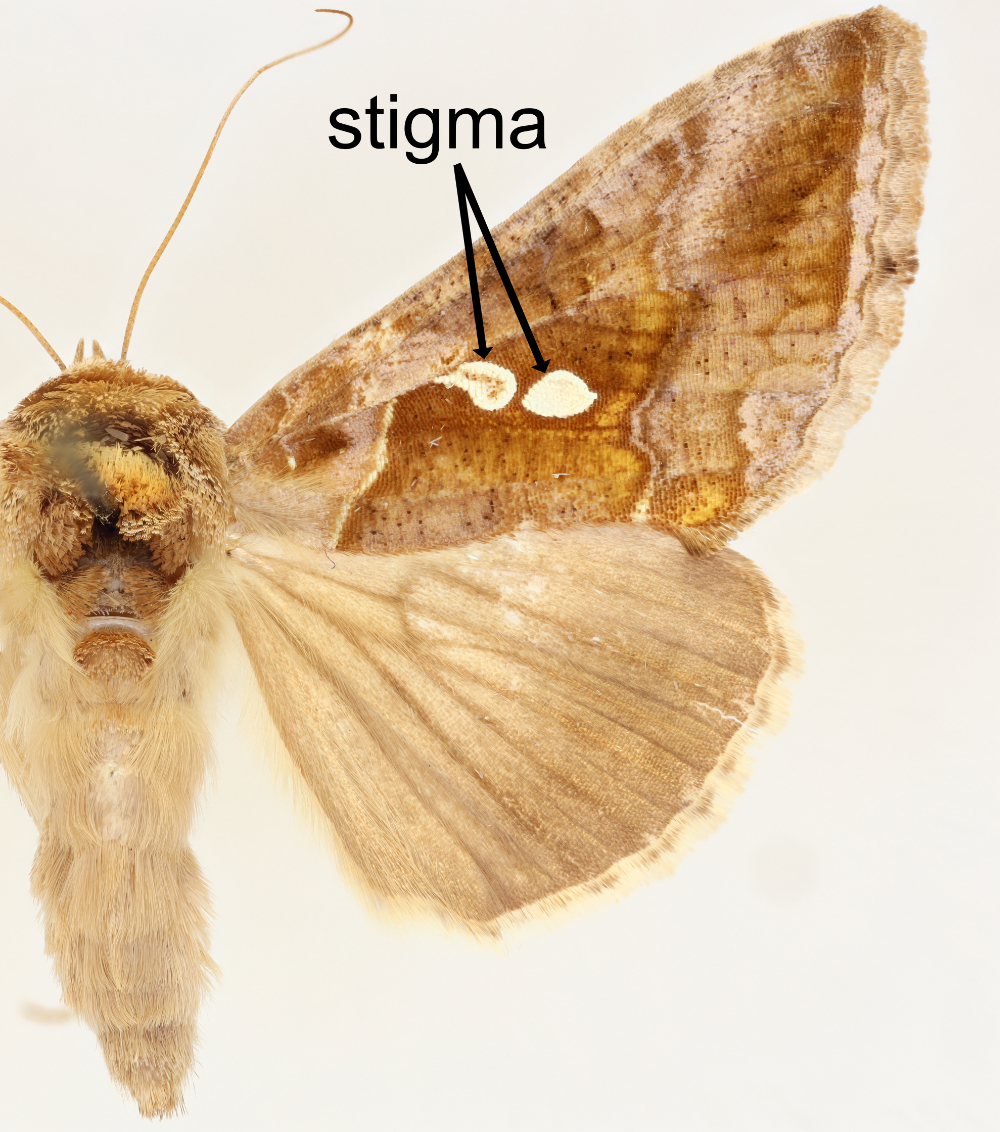 that is typically divided, but occasionally fused. The fringefringe:
the scales, setae, or hairs that extend beyond the edge of a wing membrane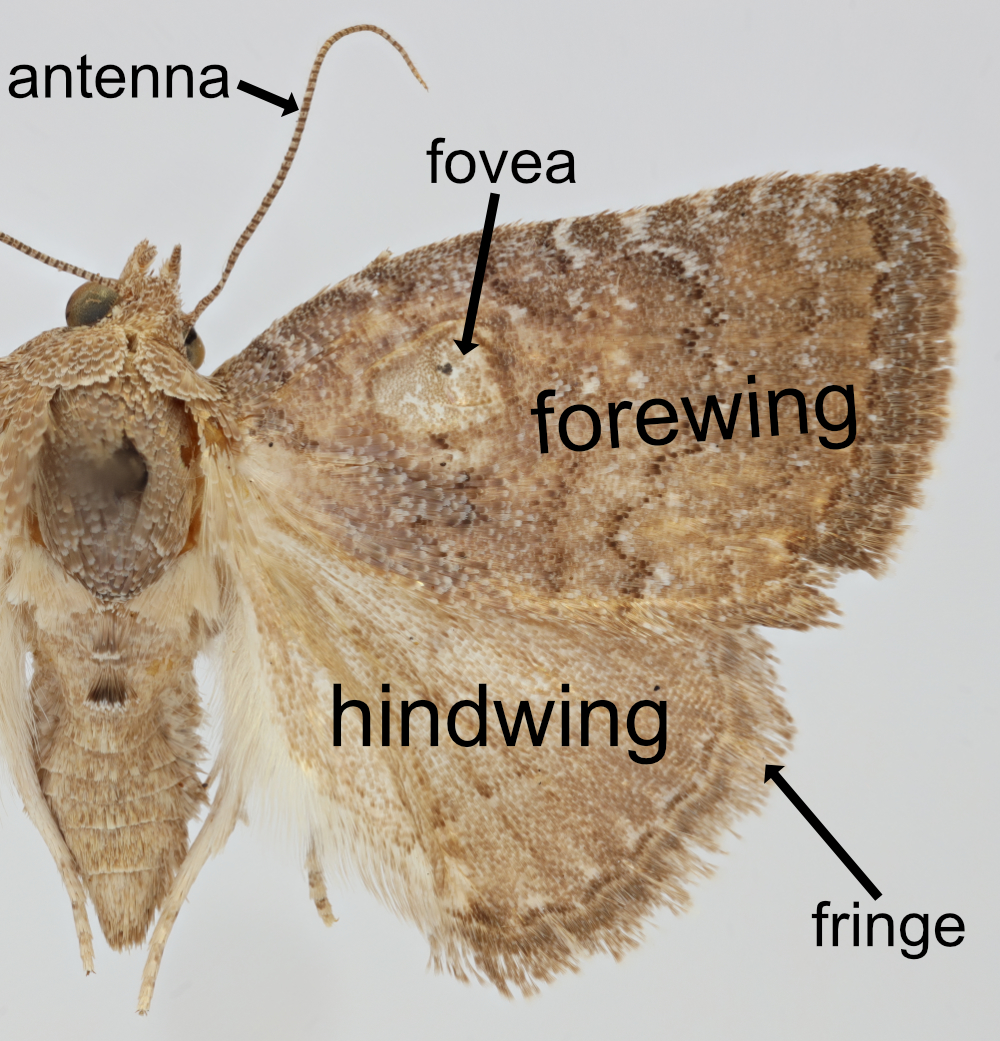 is unicolorous pale brown with the exception of a black patch at the midpoint. The hindwinghindwing:
the back wing of an insect; the wing attached to the third segment of the thorax (the metathorax)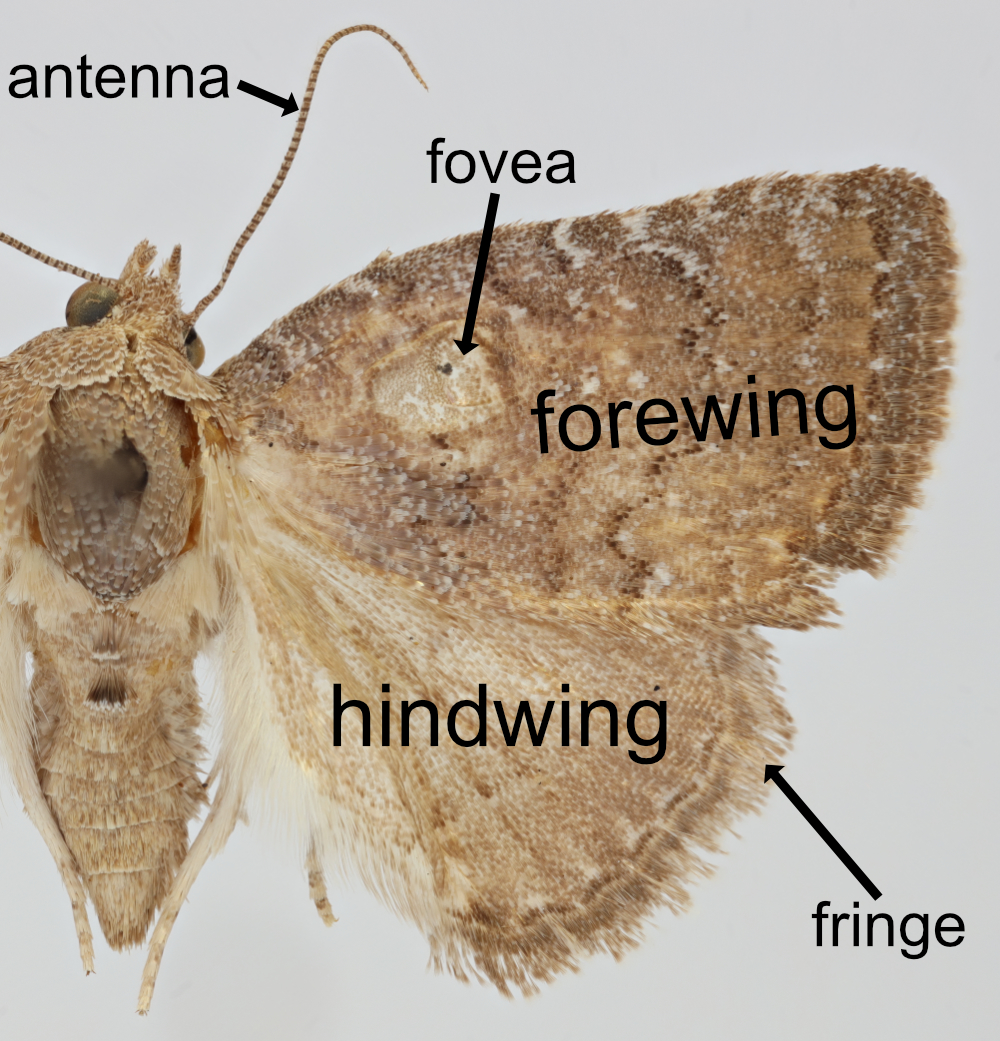 is pale brown.
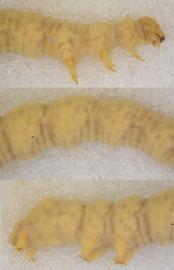
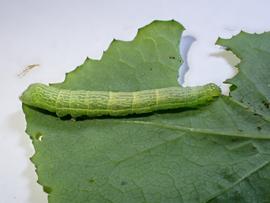
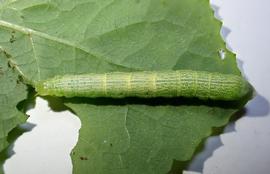
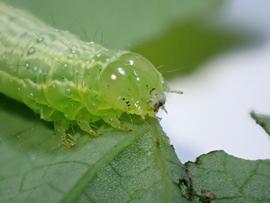
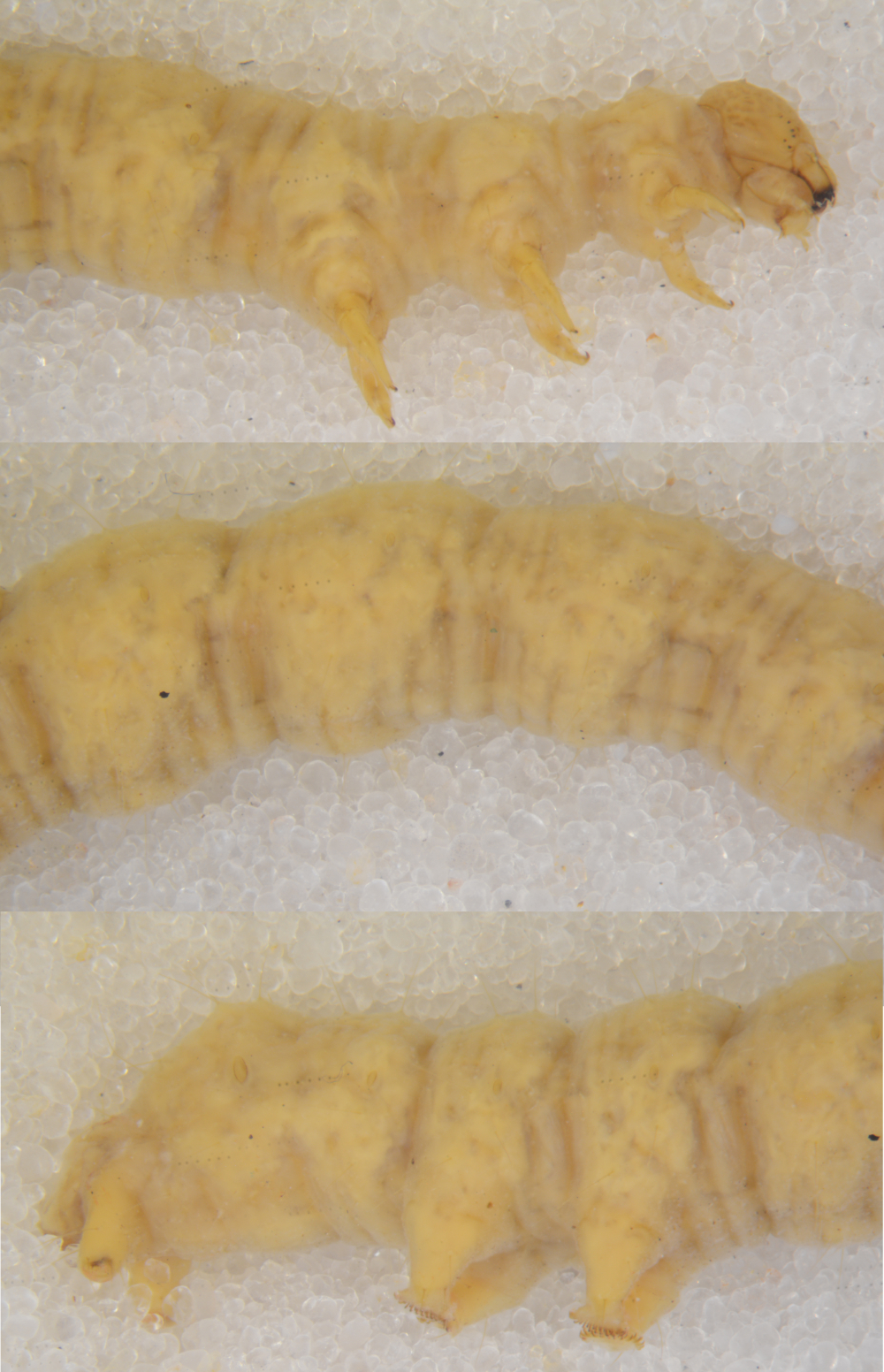
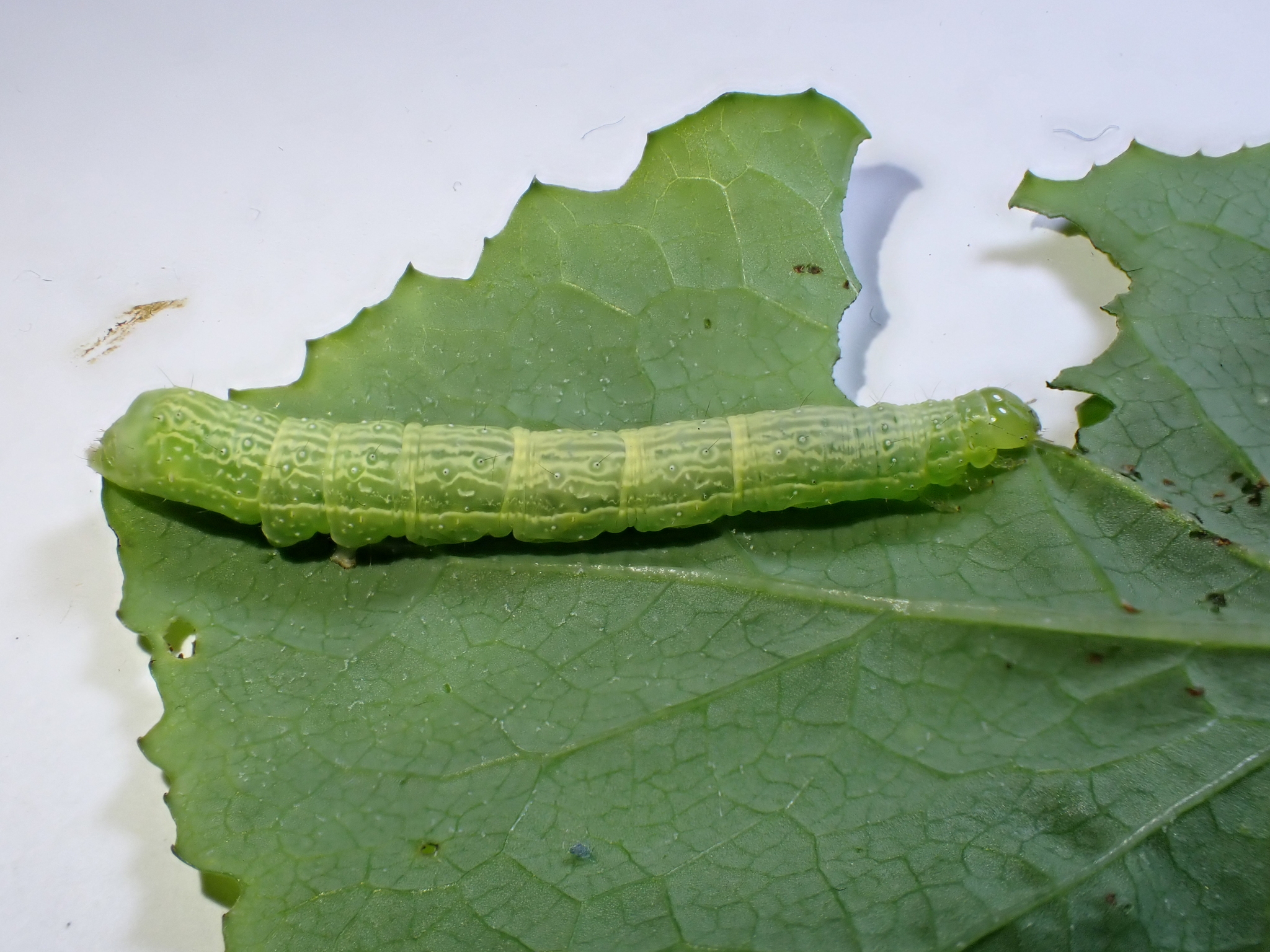
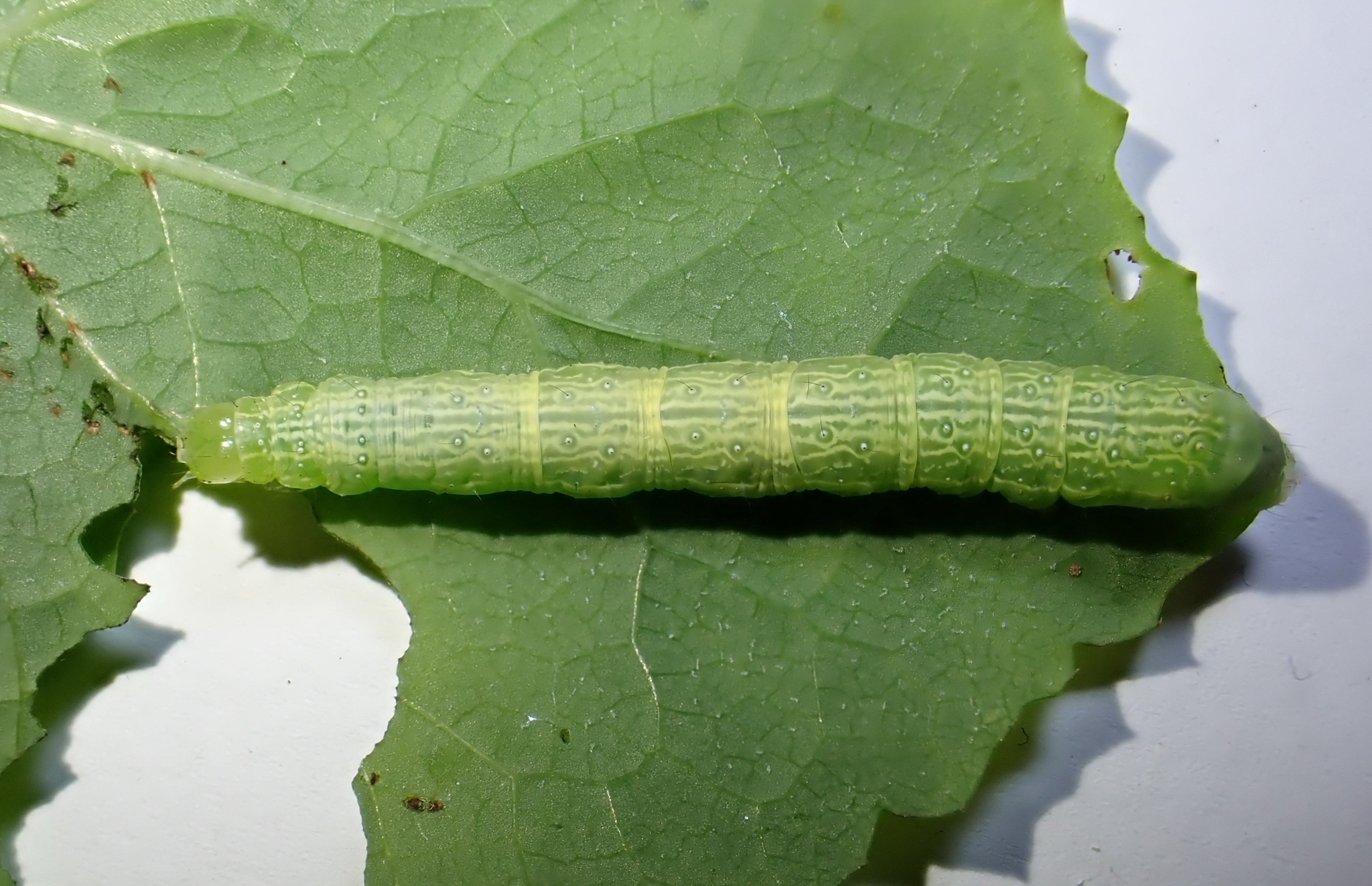
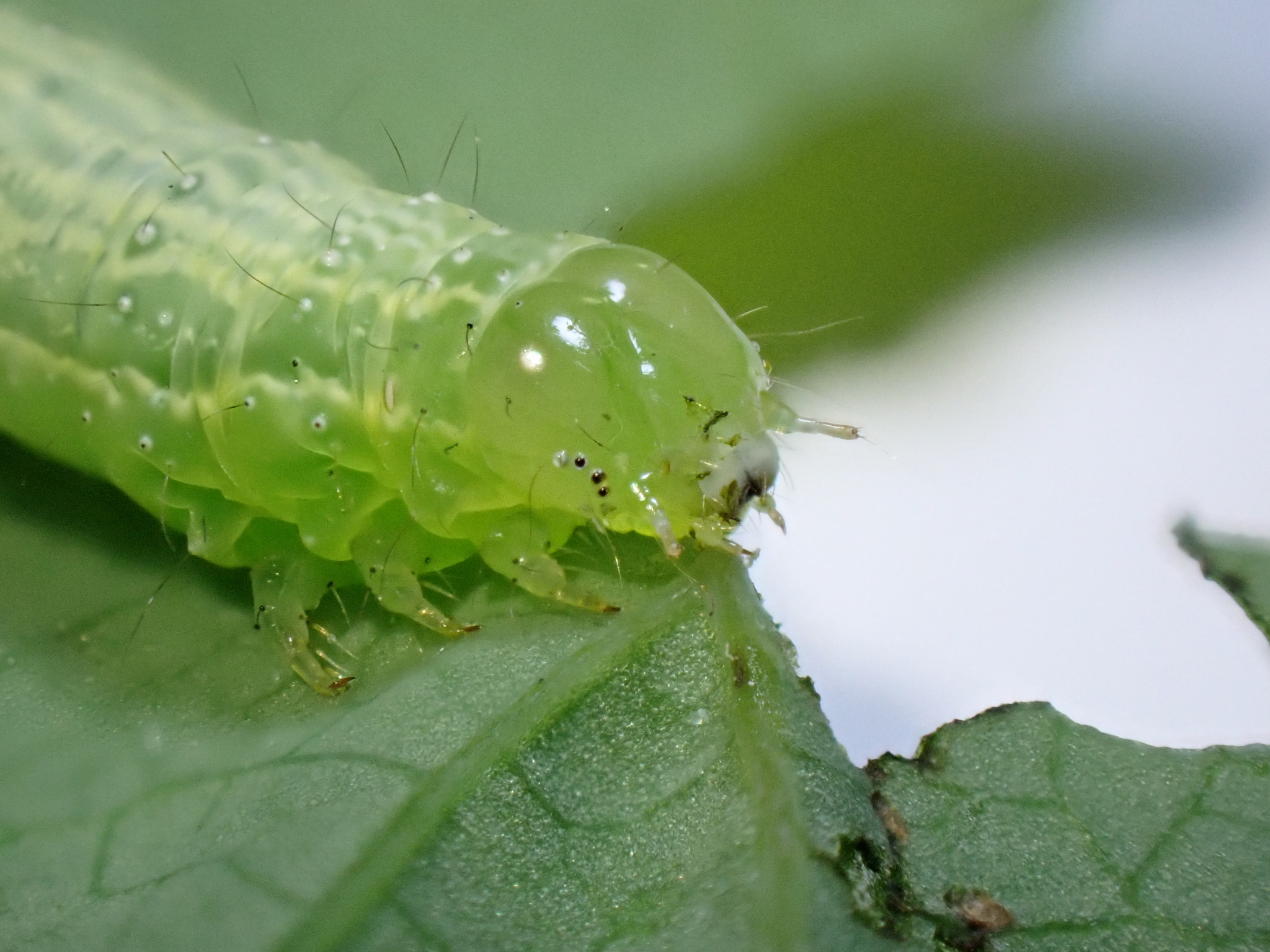
The larva was described by Swezey (1906)Swezey (1906):
Swezey OH. 1906. Life history notes and observations on three common moths. Proceedings of the Hawaiian Entomological Society. 1(2):53–58.: "There is very little change in the larva at the successive molts, except in size. The full-grown larva is about 36 mm long, bright green with [a] white line just above the line of spiracles, and several faint, crinkly, white lines down the back, often black spiracular line; tubercles mostly white, except row just above the spiracles which are black and larger than the others....Feet often black; head green, with black dots where the hairs are situated, and black line on lateral margins; mandibles blackish on tip and edges. The prolegs are situated on segments [6, 7, and 10], and the caterpillar crawls by looping motion; when at rest, its back is humped up."
Adults of Chrysodeixis eriosoma could be confused with other Plusiinae in Hawaiʻi, especially Argyrogramma verruca, Megalographa biloba, and Trichoplusia ni. The postmedial linepostmedial line:
a thin, transverse line located distal to the reniform spot, typically on the distal third of the forewing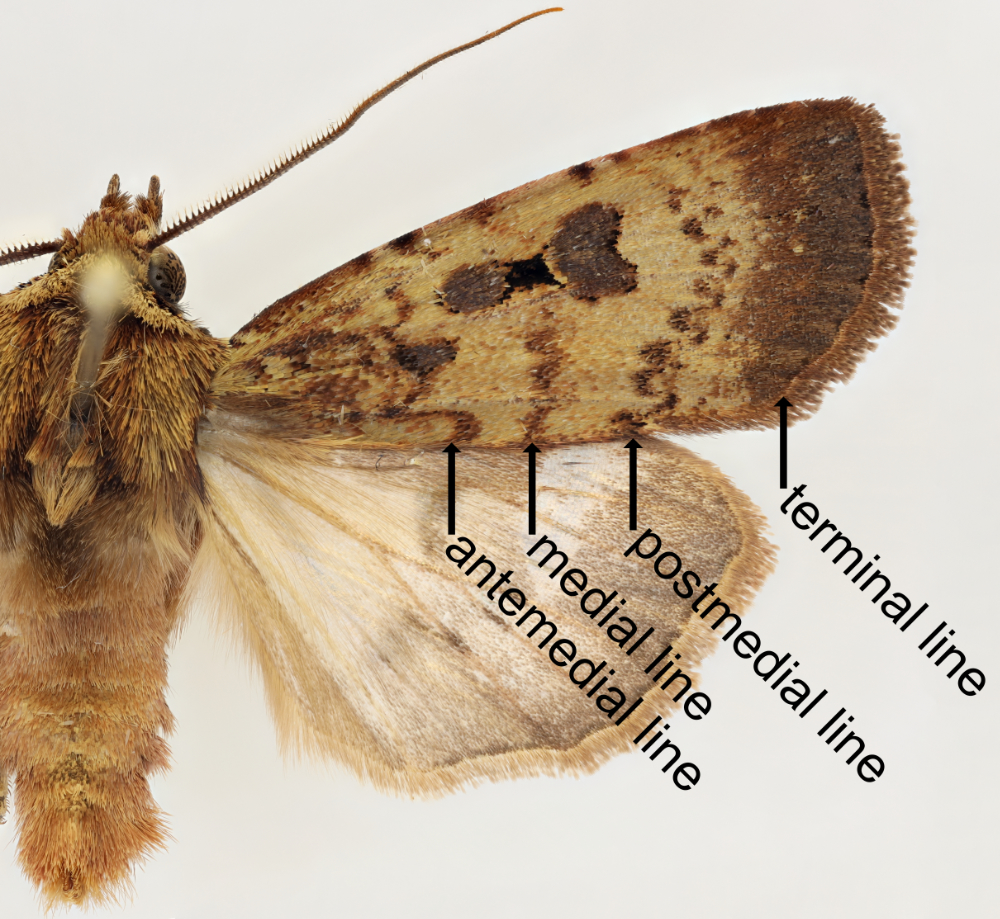 in A. verruca is much more strongly bent than in C. eriosoma and reaches the apexapex:
the point furthest from the base; the apex of the wing may be rounded, pointed, or falcate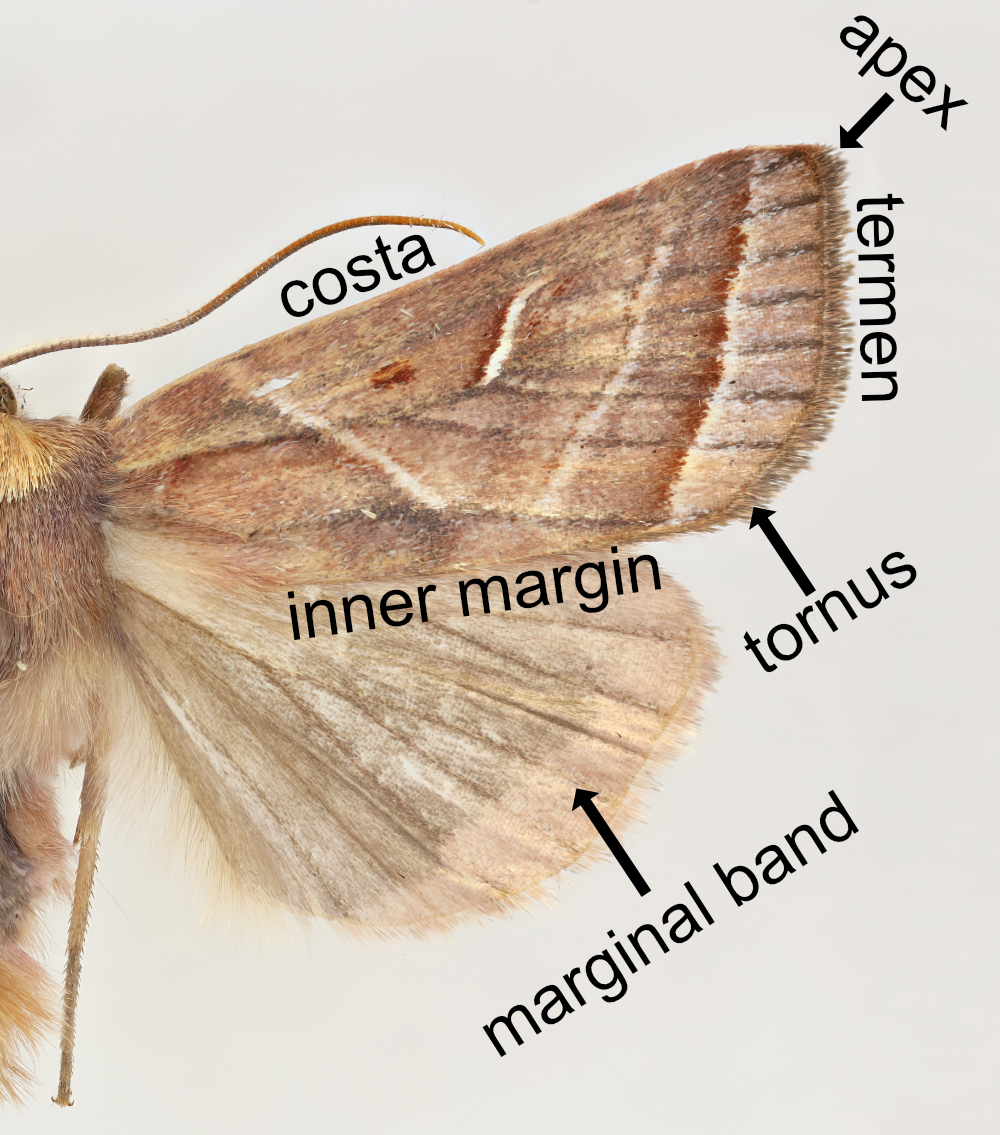 of the stigmastigma:
a distinctive metallic, often silver or gold-colored, marking on the forewing in many species of Plusiinae. The shape of the stigmastigma:
a distinctive metallic, often silver or gold-colored, marking on the forewing in many species of Plusiinae in M. biloba is highly distinct and is never divided like in C. eriosoma. Trichoplusia ni differs in lacking the iridescent gold, silver, or brassy scales on the forewingforewing:
the front wing of an insect; the wing attached to the second segment of the thorax (the mesothorax).
Larvae are very similar to other species of non-native Plusiinae in Hawai‘i and rearing adults may be necessary for identification.
Globally, Chrysodeixis eriosoma is known India, Japan, South Korea, Southeast Asia to Australia, New Zealand, and several islands in the south Pacific. Its exact native range is unclear, but is likely fairly broad.
Chrysodeixis eriosoma is a broadly distributed species in the Hawaiian Islands, having been recorded from all of the main high Hawaiian Islands as well as several of the Northwestern Hawaiian Islands (Zimmerman 1958Zimmerman 1958:
Zimmerman EC. 1958. Insects of Hawaii, Volume 7. Macrolepidoptera. University of Hawaii Press, Honolulu. 542 pp., Nishida 2002Nishida 2002:
Nishida GM. 2002. Hawaiian terrestrial arthropod checklist. Fourth Edition. Bishop Museum Technical Report 22. 313 pp.).
The life history and biology of Chrysodeixis eriosoma in Hawaiʻi was described by Swezey (1906)Swezey (1906):
Swezey OH. 1906. Life history notes and observations on three common moths. Proceedings of the Hawaiian Entomological Society. 1(2):53–58.: "The eggs are white, about one-half mm in diameter, flattened, height about half the diameter, [the] entire surface covered with concavities like those on a thimble, arranged in 54 regular rows radiating from the apexapex:
the point furthest from the base; the apex of the wing may be rounded, pointed, or falcate. They are deposited singly on the under surface of leaves....Some of the eggs hatched in six days. The freshly hatched larvae are 2 mm long, green with black hairs situated in small black tubercles. At first they ate small patches of the substance of the leaf, leaving the opposite epidermis; but when five days old they ate small holes entirely through the leaf. Larger caterpillars ate larger holes, and ate the leaves from the margin as well."
"A caterpillar in breeding cage obtained its growth and ready to pupate in twenty-three days. The pupa is pale green with broad brown streak on the back, darker on the margins of the segments, the whole pupa turning brownish little before the adult emerges; wing and leg-cases extend just little beyond the posterior margininner margin:
the hind margin of the forewing, opposite the costal margin; also called 'posterior margin' or 'trailing margin'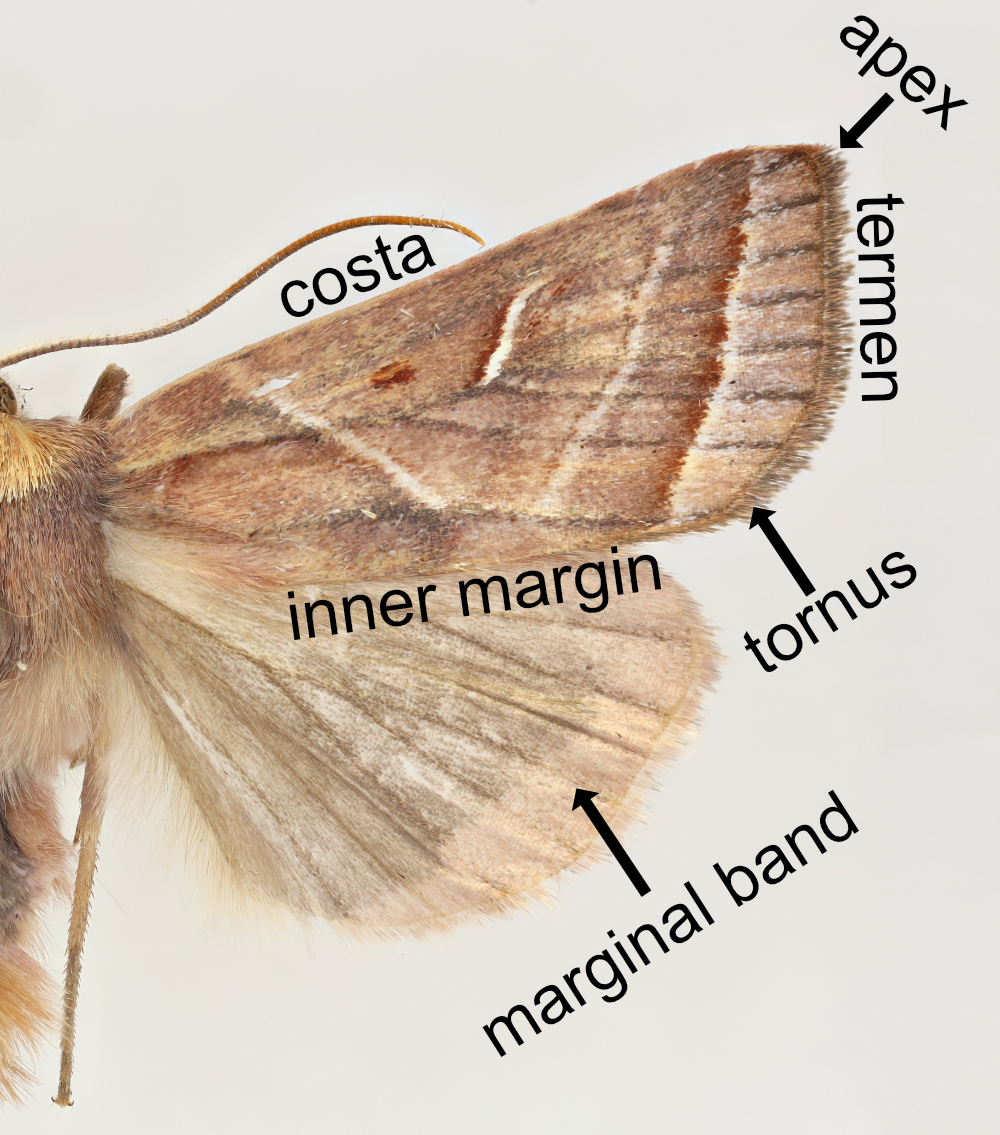 of the fourth abdominal segment; cremaster short, with several tiny brown hooks attaching the pupa to the slight white silken cocoon, which is made between leaves fastened together, or in the fold of single leaf; length of pupa 19 mm, width 4.5 mm. The pupal period is eight to eleven days."
The larvae of C. eriosoma are highly polyphagous, having been recorded from 41 different species in 17 different families (Zimmerman 1958Zimmerman 1958:
Zimmerman EC. 1958. Insects of Hawaii, Volume 7. Macrolepidoptera. University of Hawaii Press, Honolulu. 542 pp.), but its true host range is likely even broader.
Author: Kyhl A. Austin
Content last updated May 2026
idtools.org