ADVENTIVE
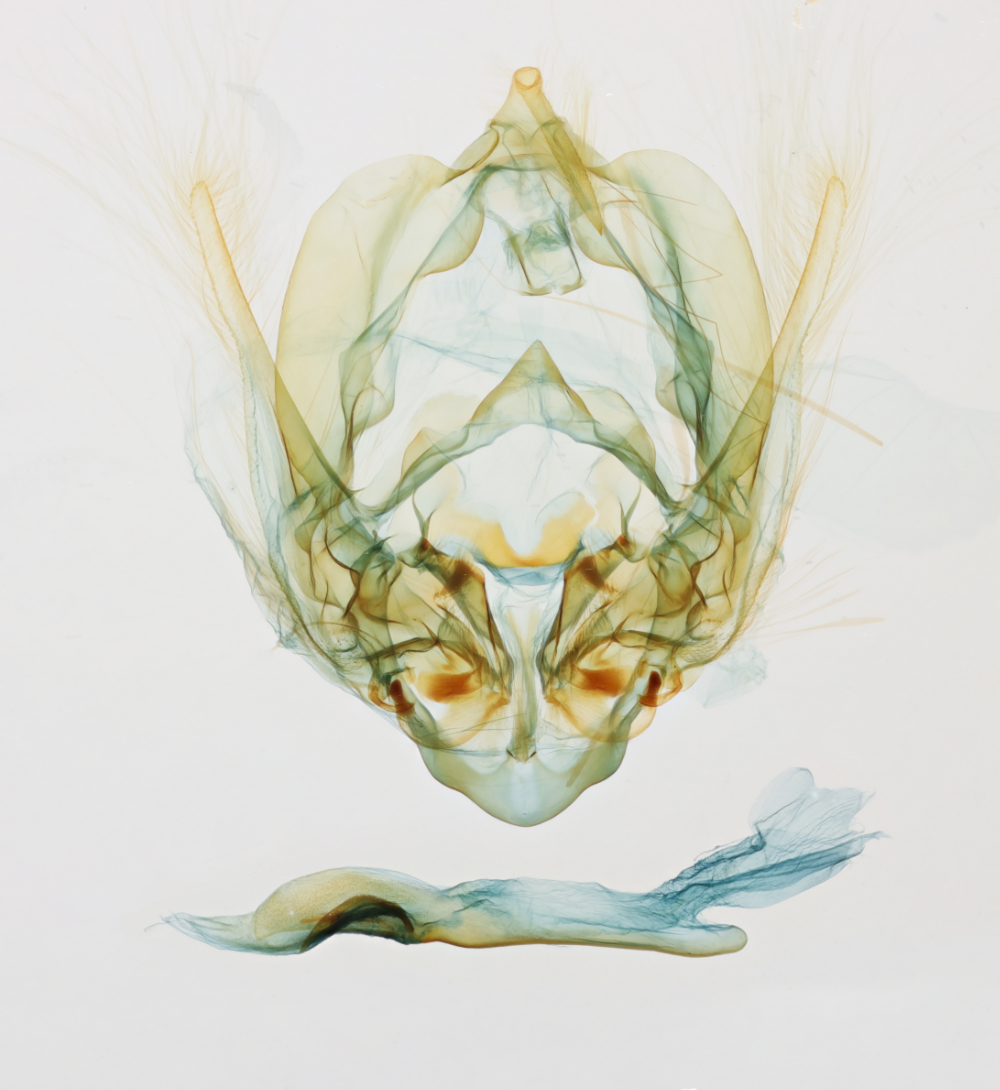
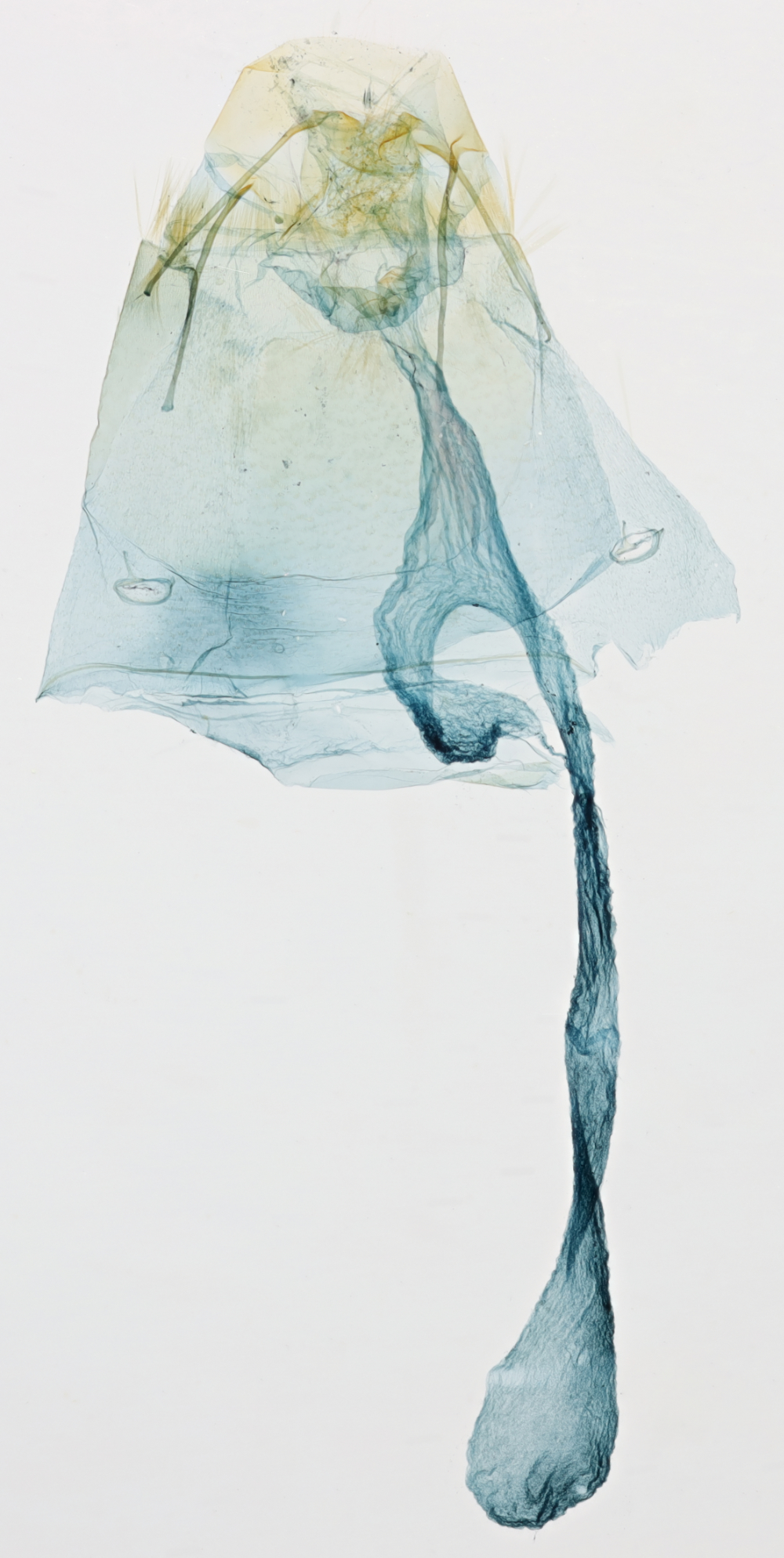
Callopistria floridensis (Guenée, 1852)
Higher taxonomy: Noctuidae: Eriopinae
Common names: Florida fern moth, Florida fern caterpillar
Note: this species was identified as Callopistria meridionalis by Riotte (1991)Riotte (1991):
Riotte JCE. 1991. Reassessment of the Noctuoidea of the Hawaiian Islands. Bishop Museum Occasional Papers. 31:139–151. and Callopistria maillardi by Nishida (2002)Nishida (2002):
Nishida GM. 2002. Hawaiian terrestrial arthropod checklist. Fourth Edition. Bishop Museum Technical Report 22. 313 pp.. Austin and Rubinoff (2022) identified the Callopistria species in Hawaiʻi as C. floridensis.
Keegan et al. (2021)Keegan et al. (2021):
Keegan KL, Rota J, Zahiri R, Zilli A, Wahlberg N, Schmidt BC et al. 2021. Toward a stable global Noctuidae (Lepidoptera) taxonomy. Insect Systematics and Diversity. 5:1–24. treated Eriopinae as a tribe (Eriopini) of Noctuinae. However, we follow the treatment of Nedumpally et al. (2025)Nedumpally et al. (2025):
Nedumpally V, Zilli A, Yapar E, Tammaru T, Lemmon AR, Õunap E. 2025. Elaborating the phylogeny of Noctuidae by focusing on relationships between northern European taxa. Systematic Entomology. e70010. in retaining it as a separate subfamily.
The earliest record of this non-native fern-feeding noctuid in Hawaiʻi is from Oʻahu in 1971. Now a locally common species in lowland wet forests, it is known to feed on both native and introduced fern species in Hawaiʻi. It is likely to be encountered at ports in Hawaiʻi, especially on cultivated and ornamental ferns.
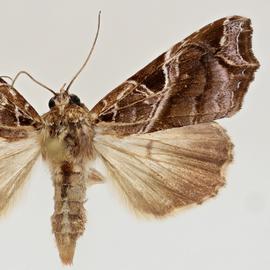
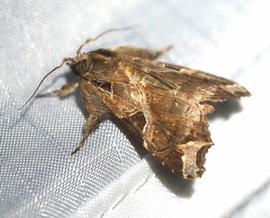
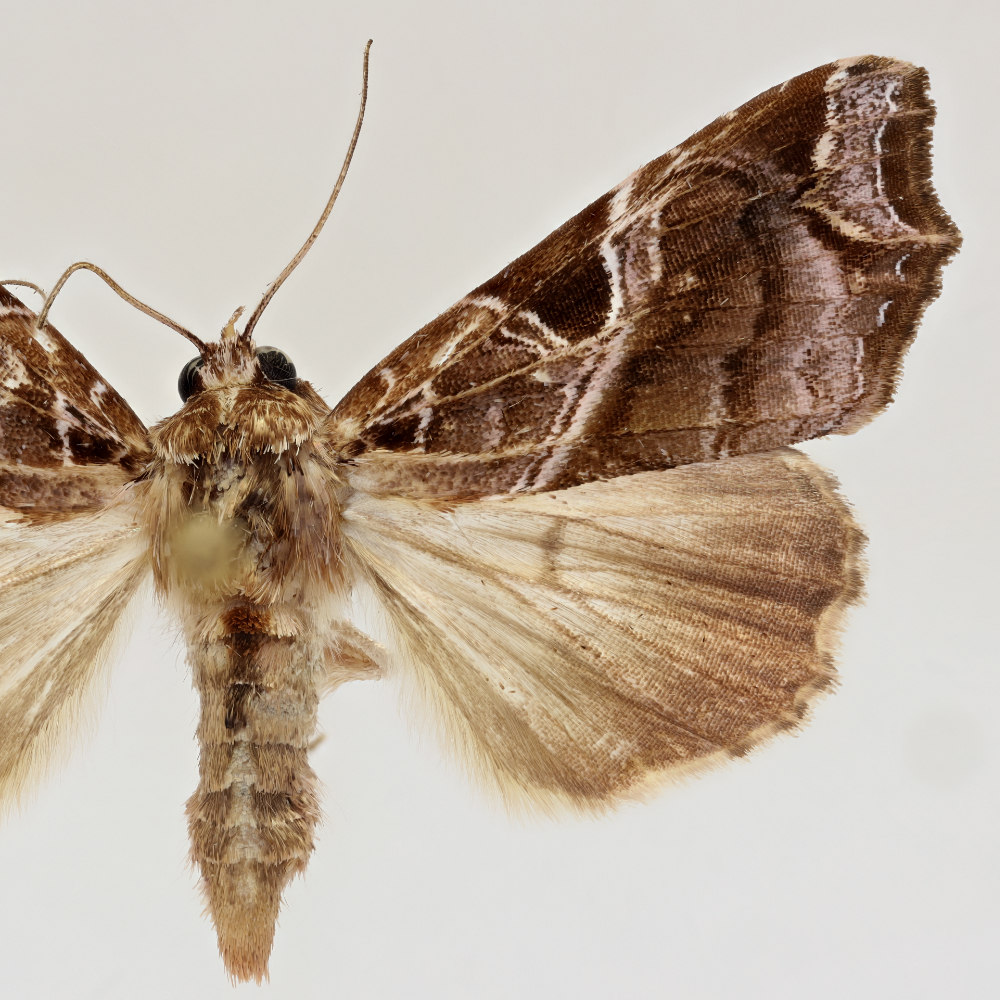
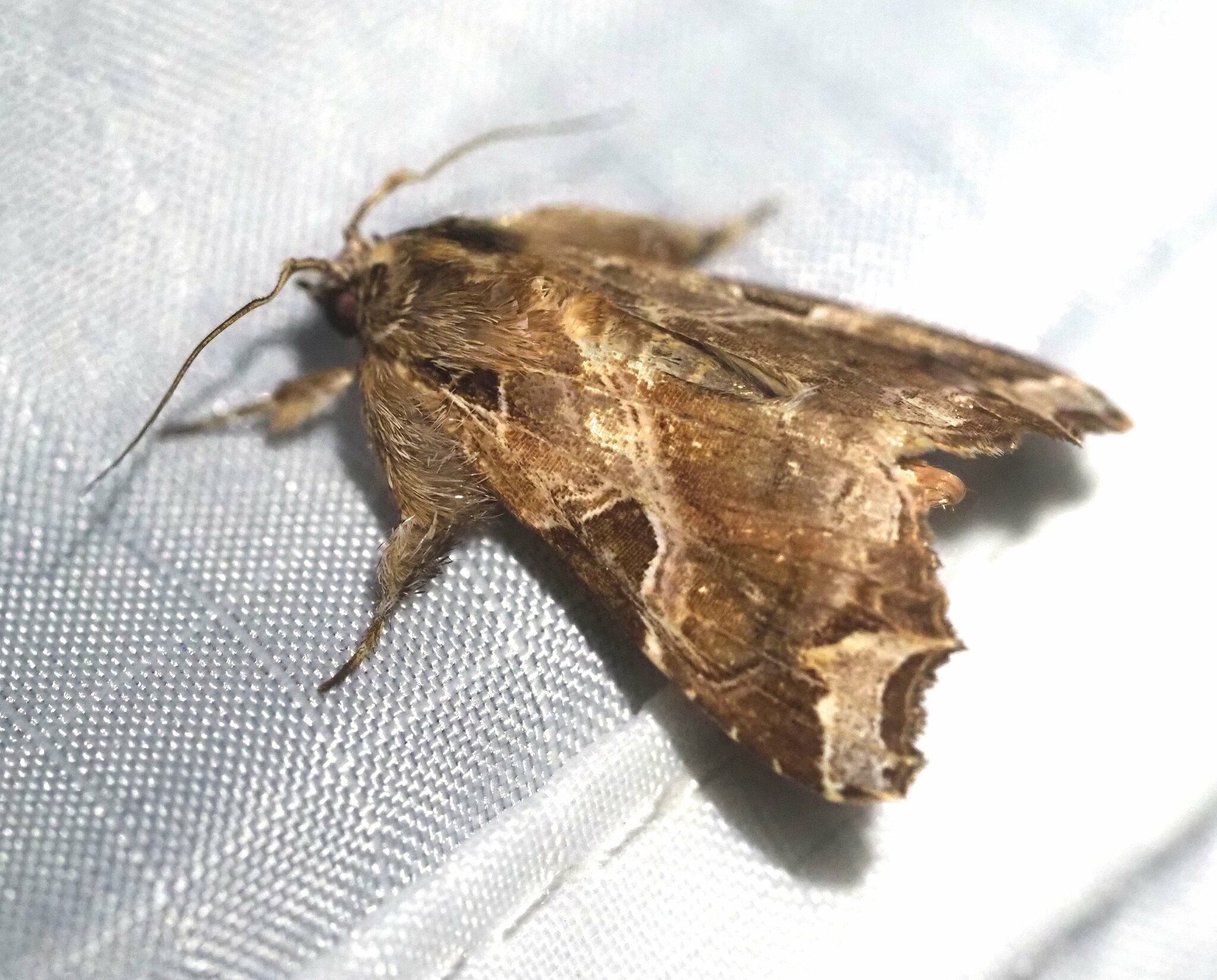
Adults of Callopistria floridensis have noticeably hairy or shaggy scaling on the legs, often holding them splayed out when at rest. The head and thoraxthorax:
the second, or middle, body segment of an insect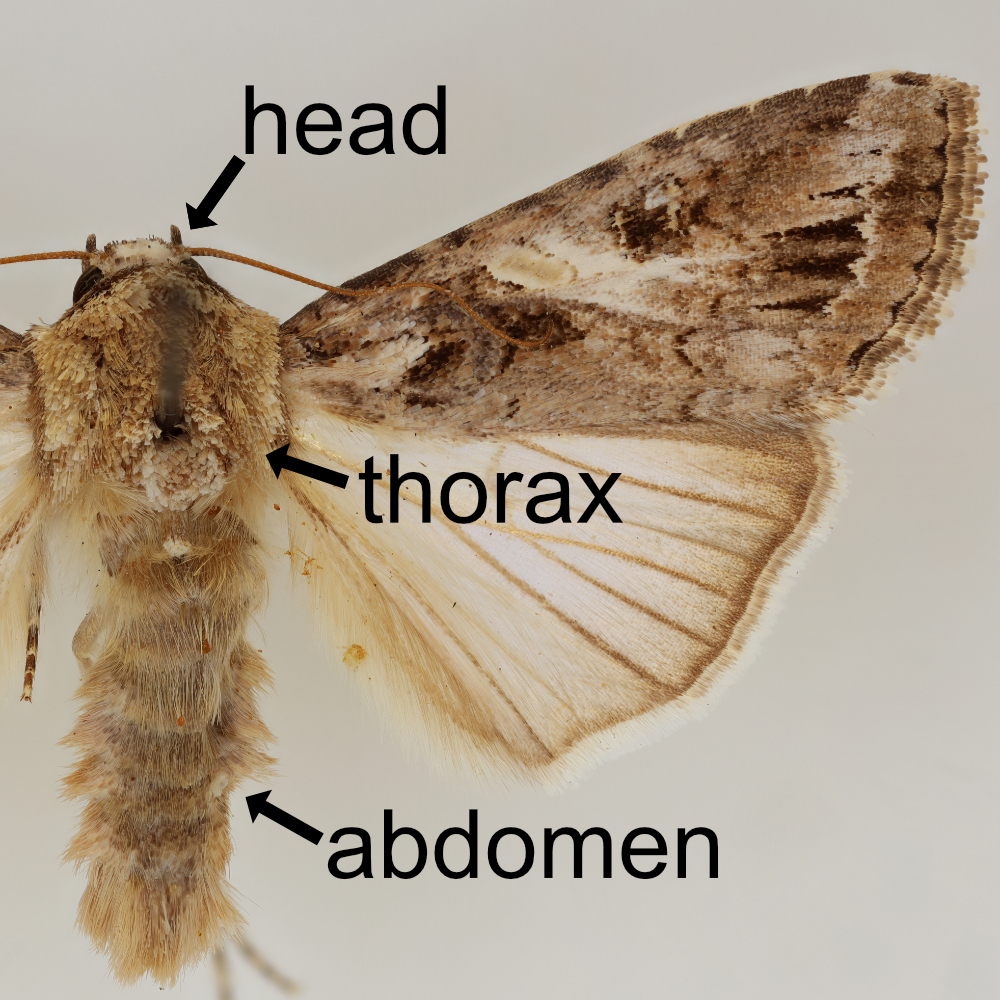 are brown, often with a mixture of pale brown, black, and gray-blue scales. The forewingforewing:
the front wing of an insect; the wing attached to the second segment of the thorax (the mesothorax)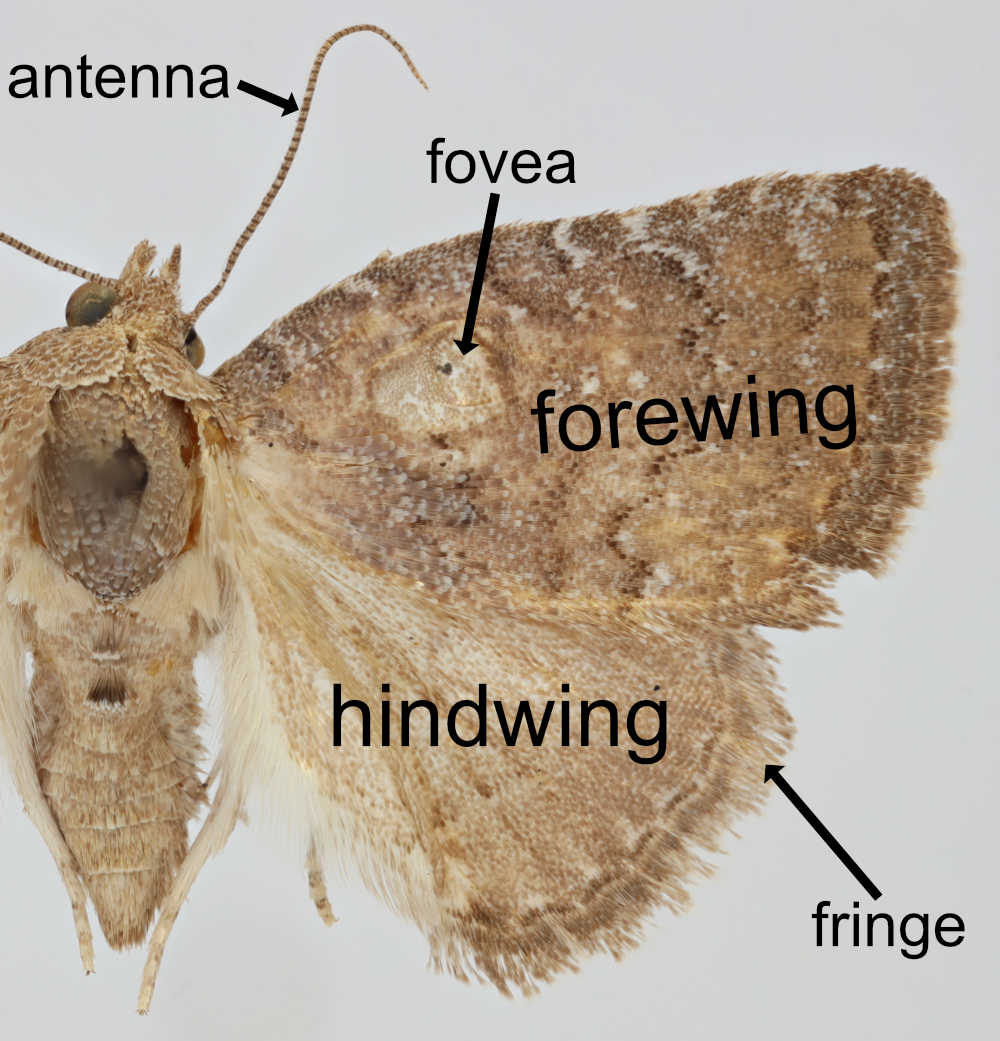 (forewing lengthforewing length:
the distance of the forewing in a straight line from the base to the tip of the apex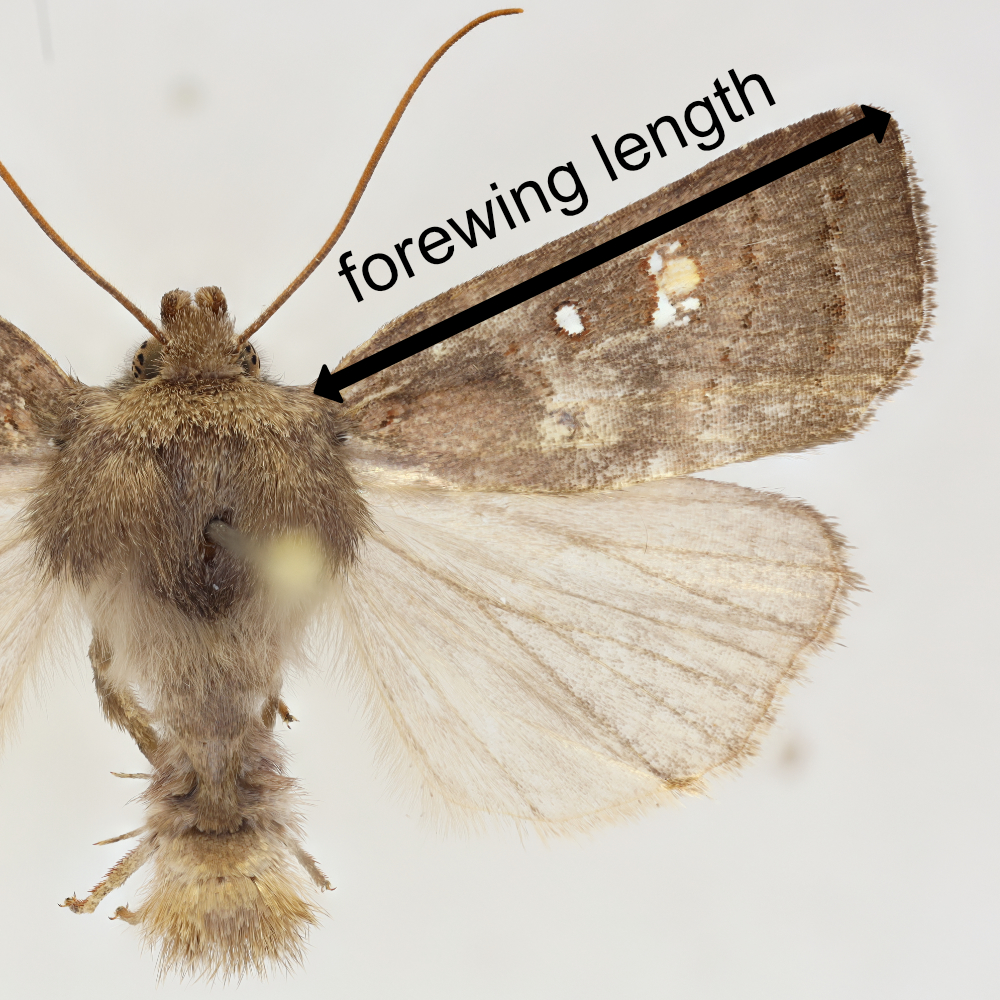 12–15 mm) is various shades of brown, with the antemedial and postmedial linespostmedial line:
a thin, transverse line located distal to the reniform spot, typically on the distal third of the forewing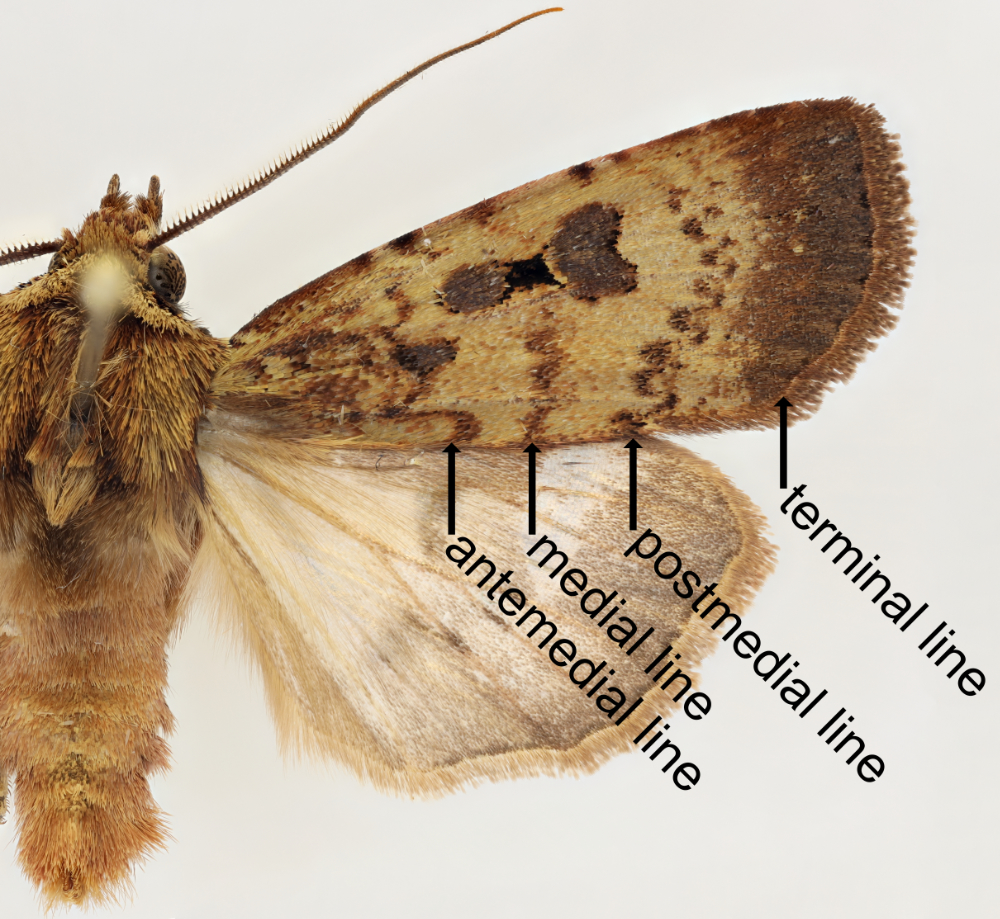 dark, irregular, and appearing to fuse above the reniform spotreniform spot:
a spot, often broad bean- or kidney-shaped, found at the distal end of the discal cell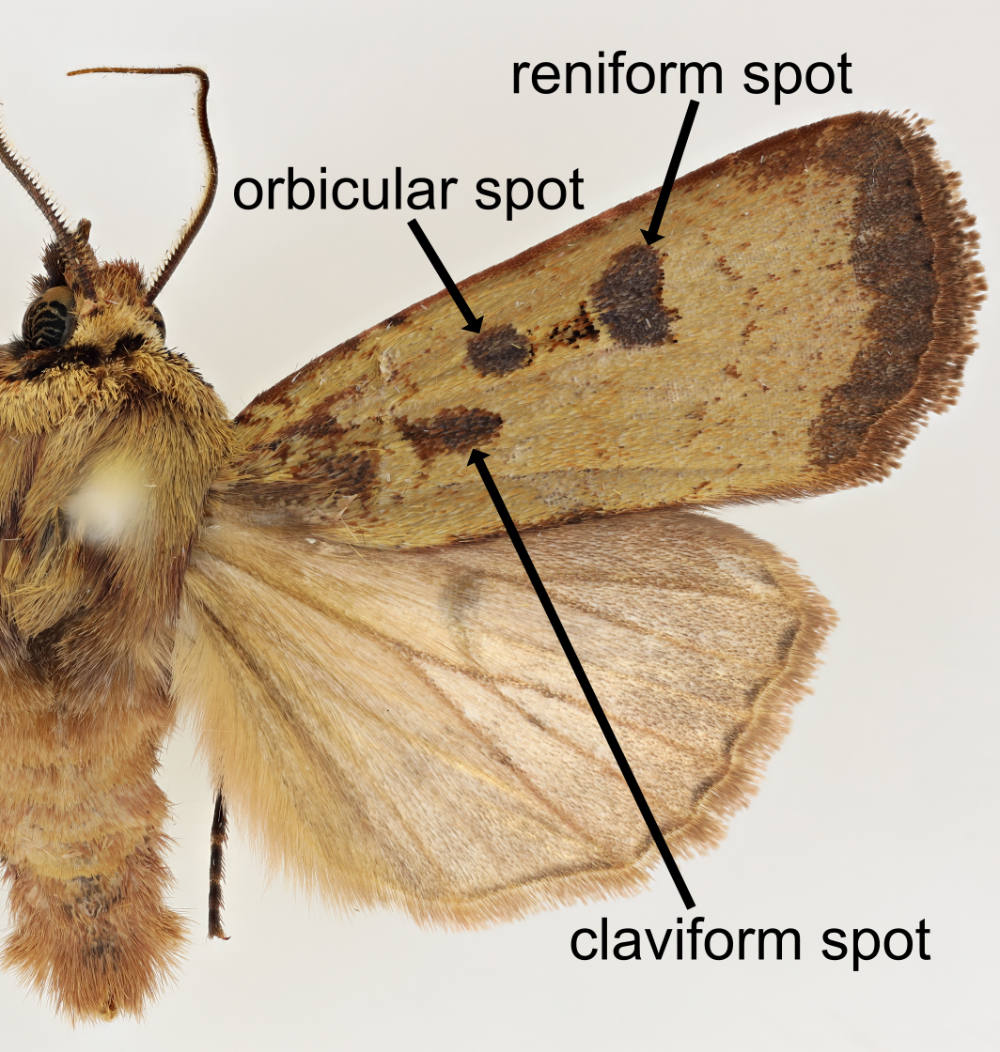 . The most distinctive characters on the forewingforewing:
the front wing of an insect; the wing attached to the second segment of the thorax (the mesothorax) are the large, dark brown triangular patch halfway along the costa, and the distinctly angled termentermen:
distal margin of the wing where the fringe is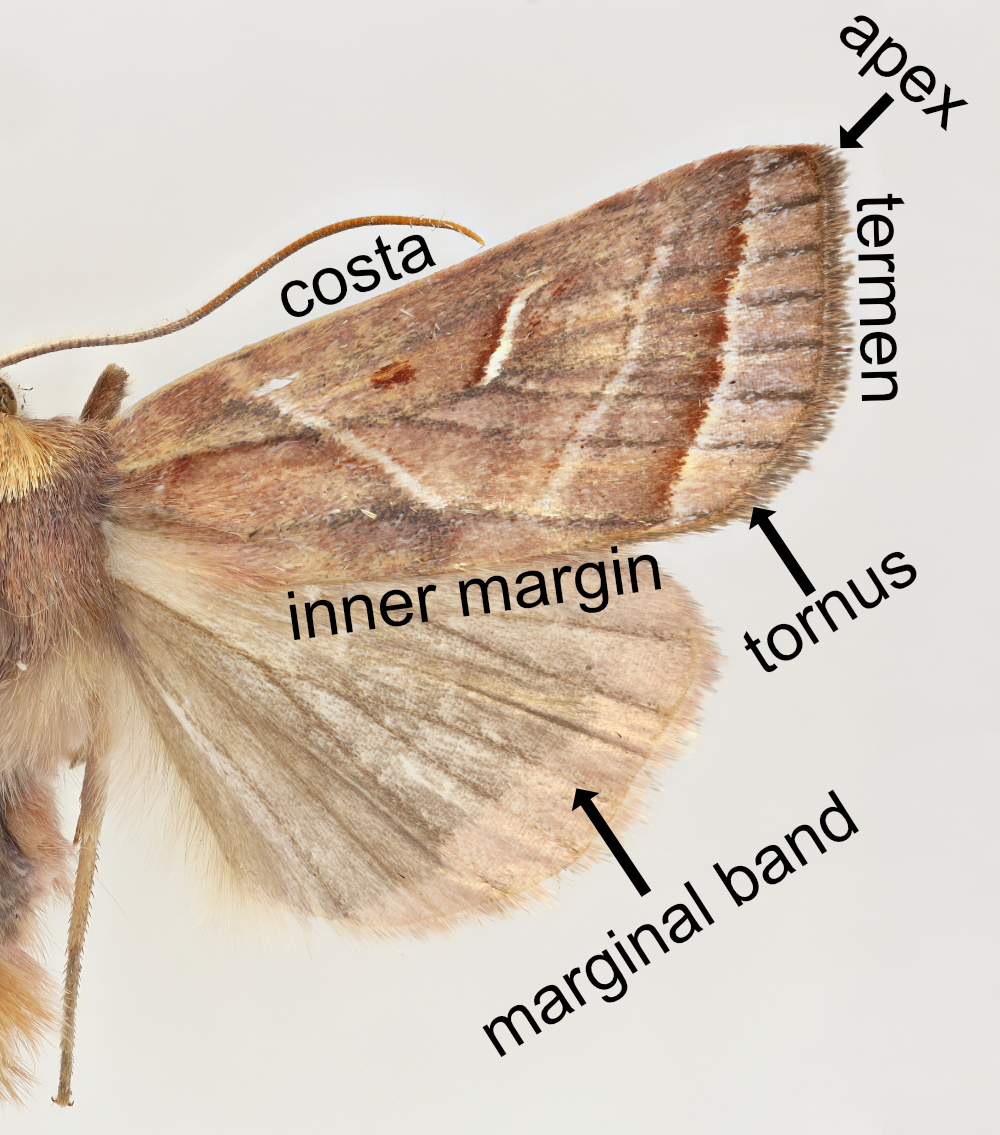 . The hindwinghindwing:
the back wing of an insect; the wing attached to the third segment of the thorax (the metathorax)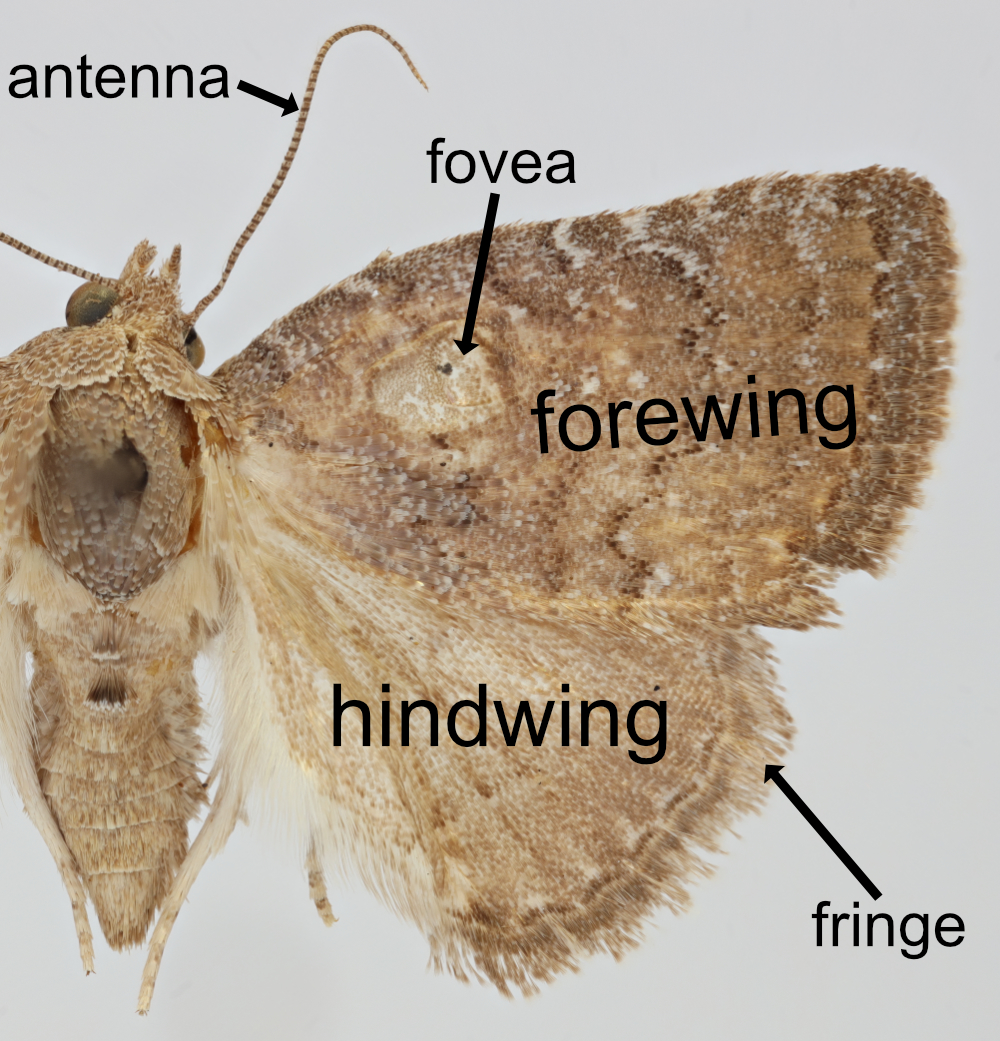 is brown.
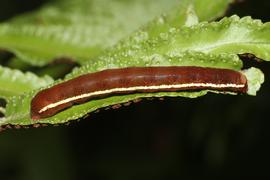
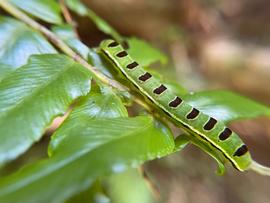
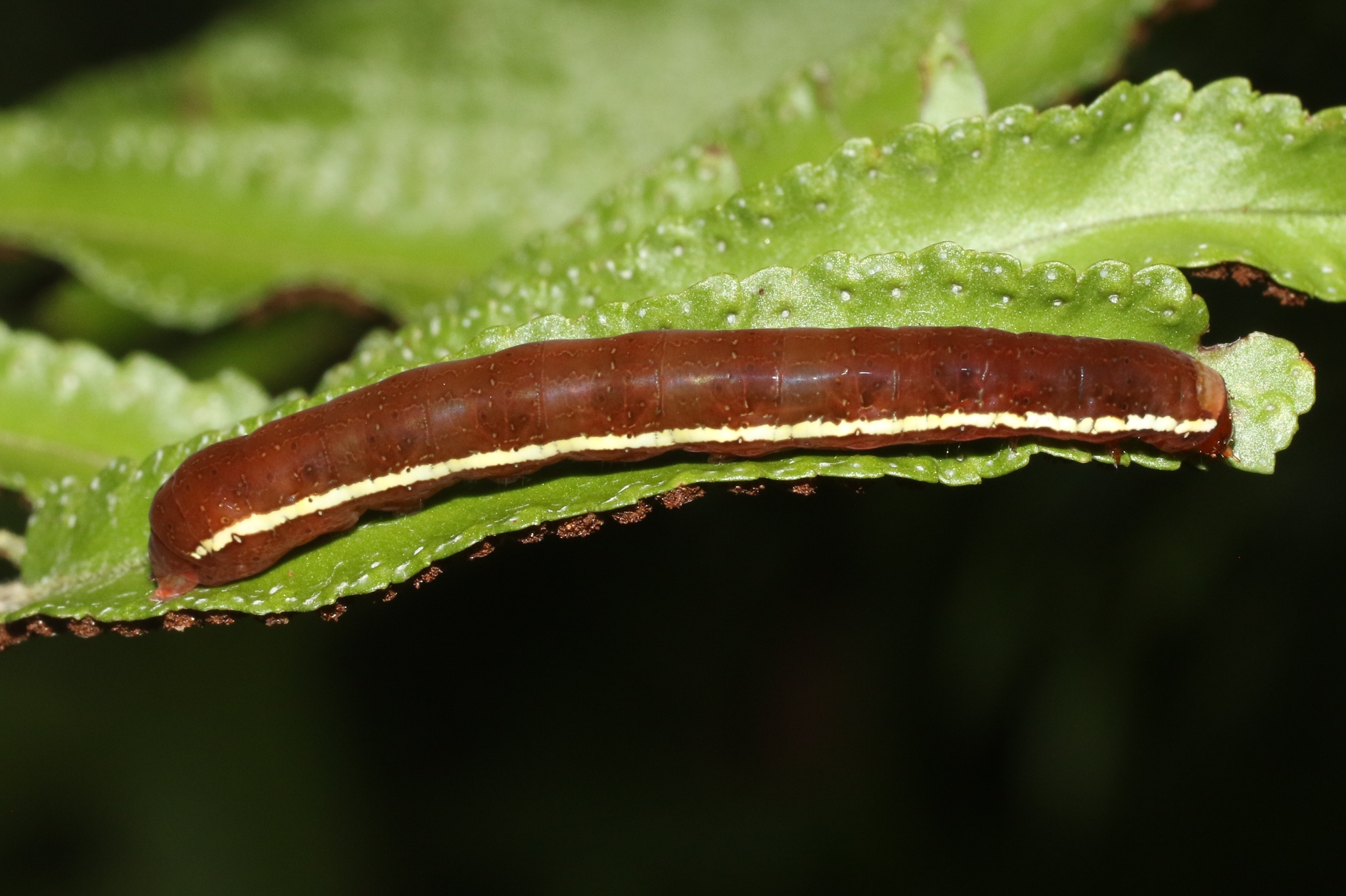
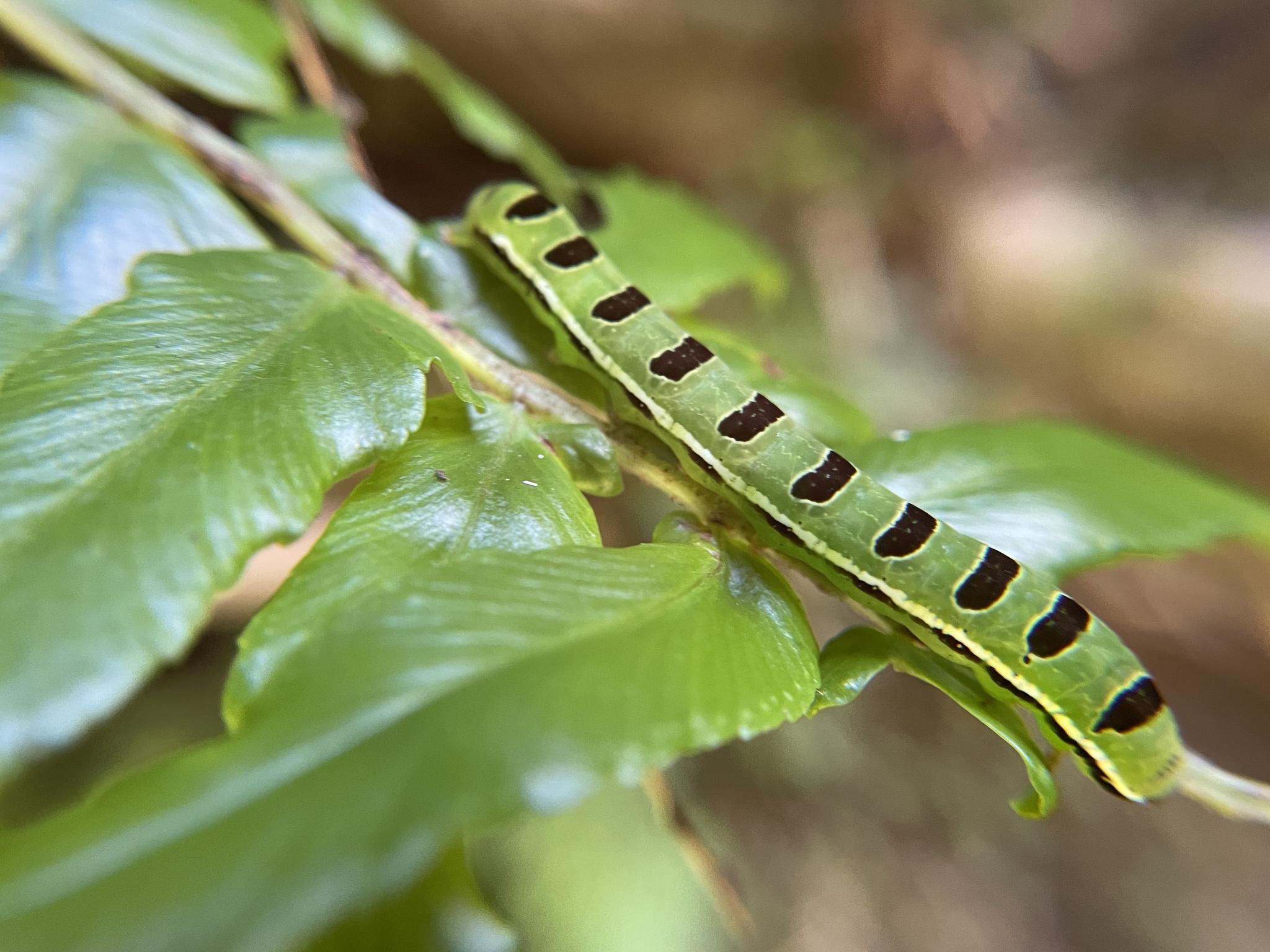
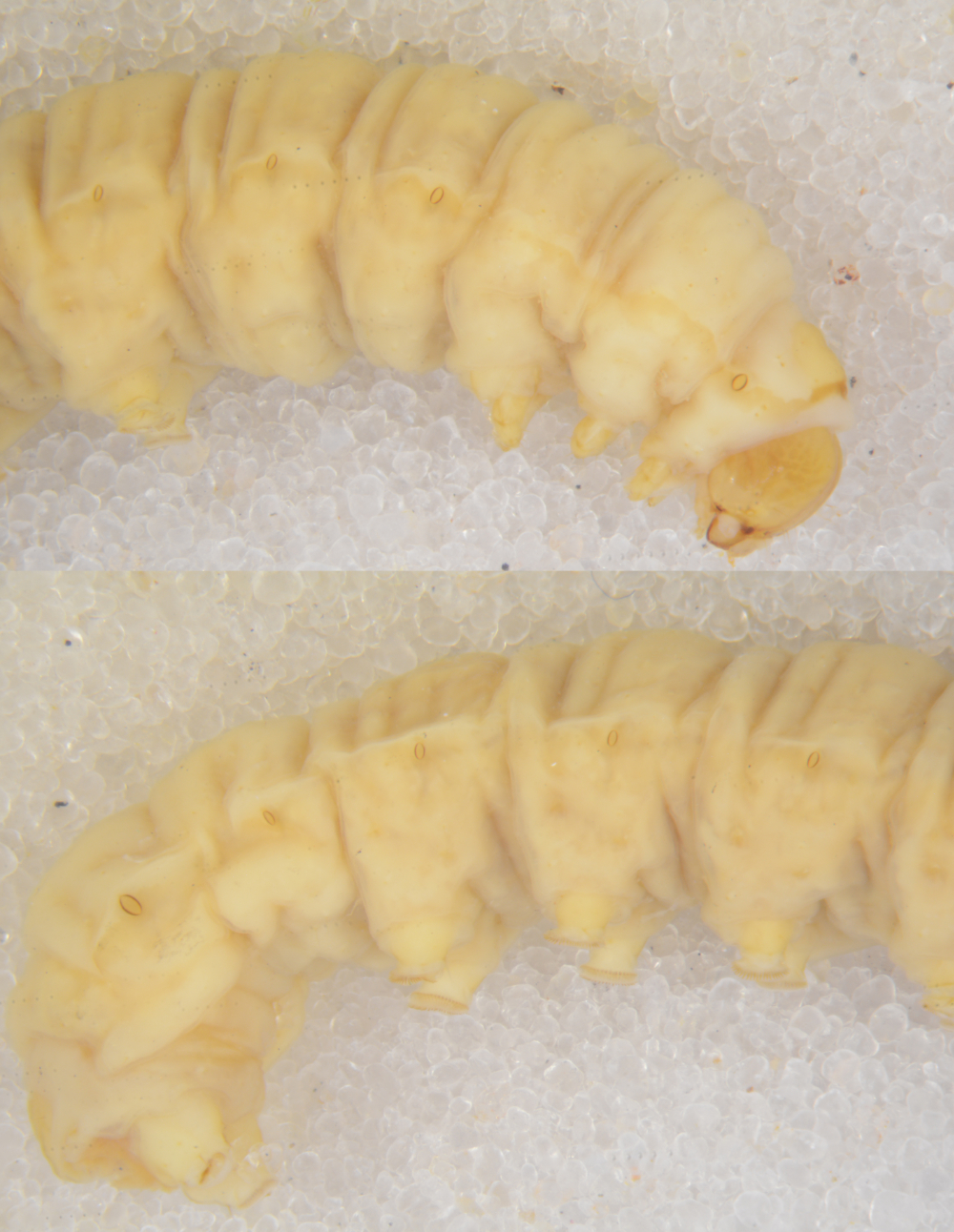
The larva is variable but is often green, brown, or red, with a long white or pale yellow stripe along the entire side of the body and reddish-brown, brown, or black saddle-like markings on most of the dorsal abdominal segments.
Both the adult and larva of Callopistria floridensis are distinctive in Hawaiʻi and are unlikely to be confused with any other noctuid species in the islands.
The native range of Callopistria floridensis includes eastern North America (north to southern Ontario), central America, the Caribbean, and south to Brazil. It is frequently transported outside of its native range via potted and ornamental ferns, especially in the western United States and Canada, but does not appear to be self-sustaining in these areas. Adults may migrate north in the late summer and fall, but cannot survive cold temperatures.
It has been present in Hawaiʻi since at least 1971 and can now be found across all the main high Hawaiian Islands (Riotte 1991Riotte 1991:
Riotte JCE. 1991. Reassessment of the Noctuoidea of the Hawaiian Islands. Bishop Museum Occasional Papers. 31:139–151., Nishida 2002Nishida 2002:
Nishida GM. 2002. Hawaiian terrestrial arthropod checklist. Fourth Edition. Bishop Museum Technical Report 22. 313 pp.).
Callopistria floridensis is a generalized fern-feeder. It has been recorded feeding on the following ferns: Adiantus spp., Davallia spp., Nephrolepis spp., Onoclea spp., Plytycerium spp., Pteris spp., Thelypteris spp., and Woodwardia spp. (Posada and Saldarriaga 1985Posada and Saldarriaga 1985:
Posada FFJ, Saldarriaga VA. 1985. Biologia, habitos y polimorfismo larval de Callopistria floridensis (Guenée) (Lepidoptera: Noctuidae, larva de los Helechos. Revista Colombiana de Entomología. 11(2):51–57., Robinson et al. 2001Robinson et al. 2001:
Robinson GS, Ackery PR, Kitching IJ, Beccaloni GW, Hernández LM. 2001. Hostplants of the moth and butterfly caterpillars of the Oriental Region. Kuala Lumpur, Malaysia, Southdene Sdn Bhd. 774 pp.), but likely are able to feed on many more. Non-ferns hosts listed by Robinson et al. (2001)Robinson et al. (2001):
Robinson GS, Ackery PR, Kitching IJ, Beccaloni GW, Hernández LM. 2001. Hostplants of the moth and butterfly caterpillars of the Oriental Region. Kuala Lumpur, Malaysia, Southdene Sdn Bhd. 774 pp. are questionable and require confirmation.
Author: Kyhl A. Austin
Content last updated May 2026
idtools.org