ADVENTIVE
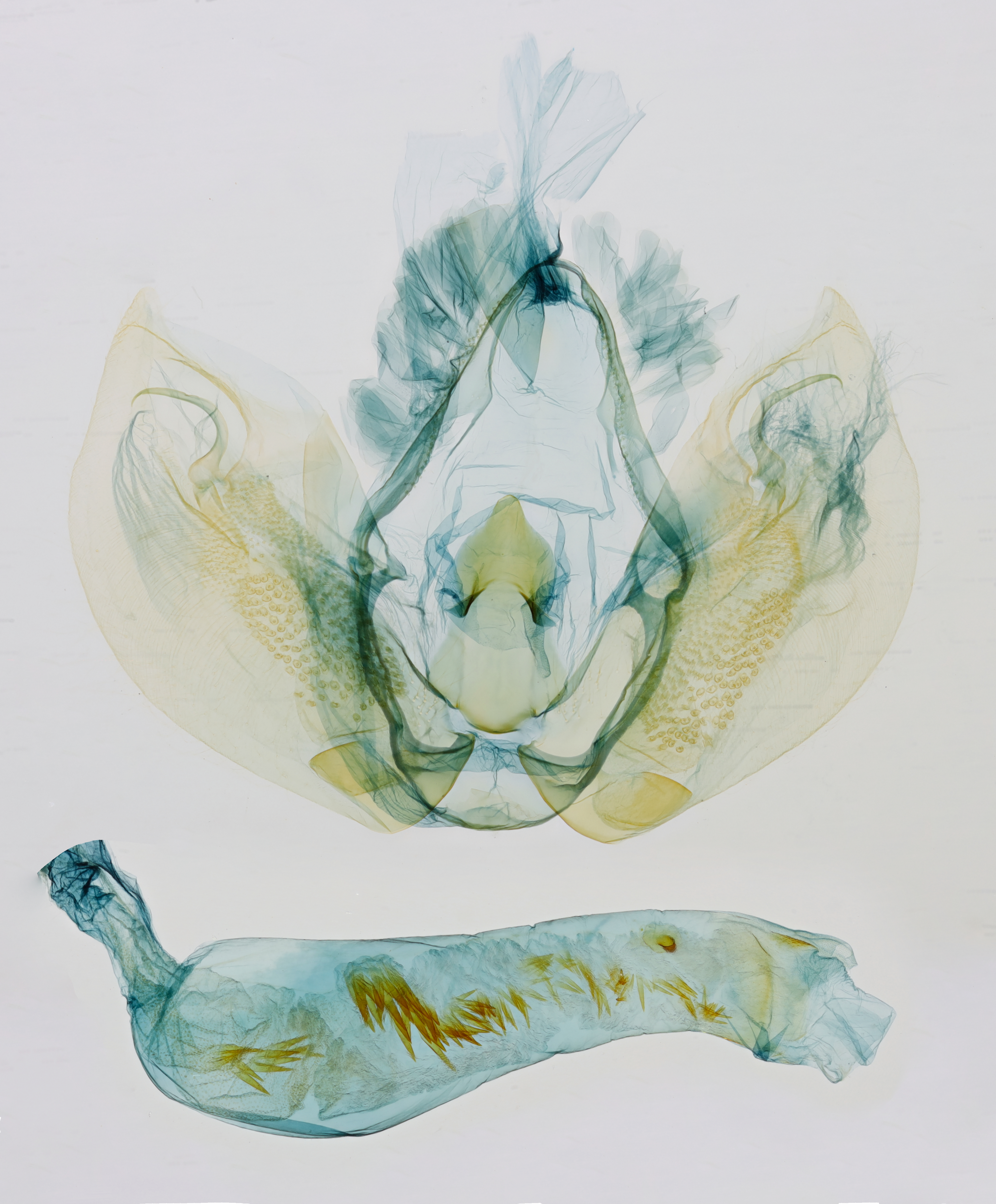
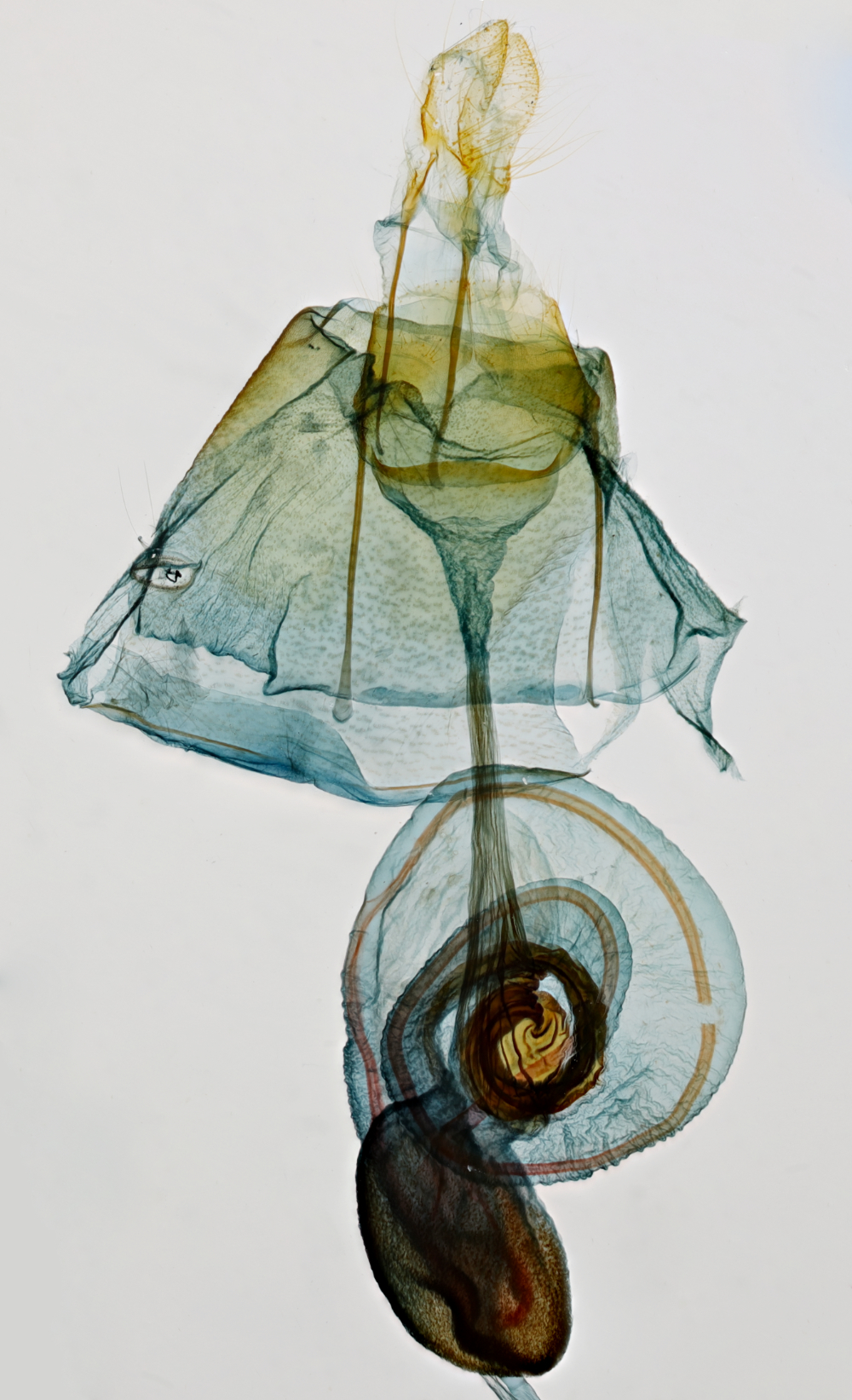
Athetis thoracica (Moore, 1884)
Higher taxonomy: Noctuidae: Noctuinae: Caradrinini
Athetis thoracica is one of the most common and widespread non-native noctuids in the Hawaiian Islands. It was first collected in Hawaiʻi in 1902 or 1903 on Oʻahu and was already common by 1906 (Perkins 1913Perkins 1913:
Perkins RCL. 1913. Introduction, being a review of the land-fauna of Hawaii. In: Sharp D, editor. Fauna Hawaiiensis. Cambridge University Press, Cambridge. p 15–238.). Today it can be found on all the main high Hawaiian Islands where it has been recorded from sea level to ca. 1500 meters in elevation. It is likely to be encountered in both agricultural settings and at ports in Hawaiʻi.
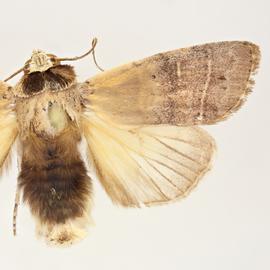
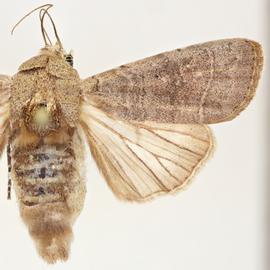
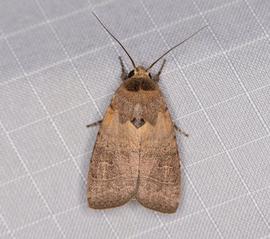
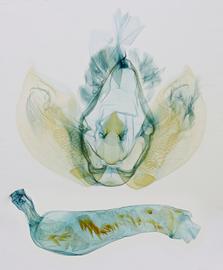
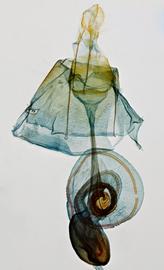
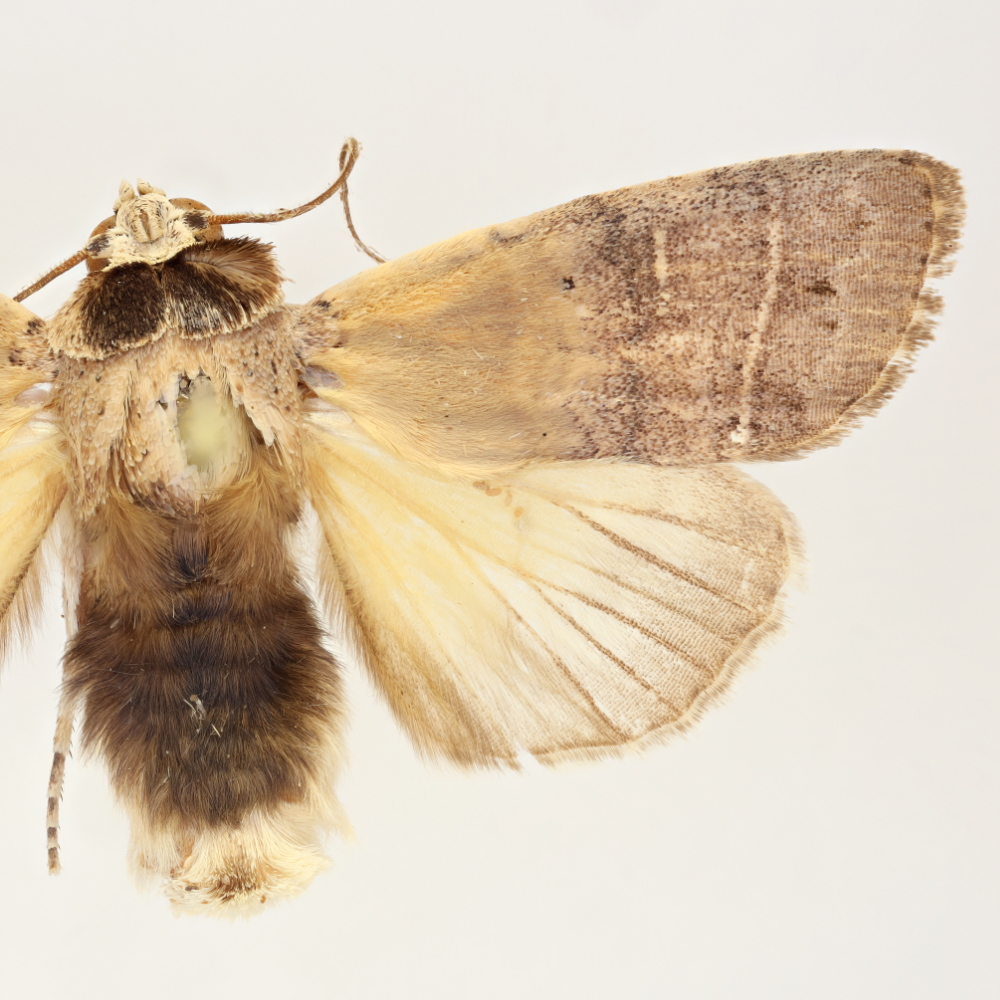
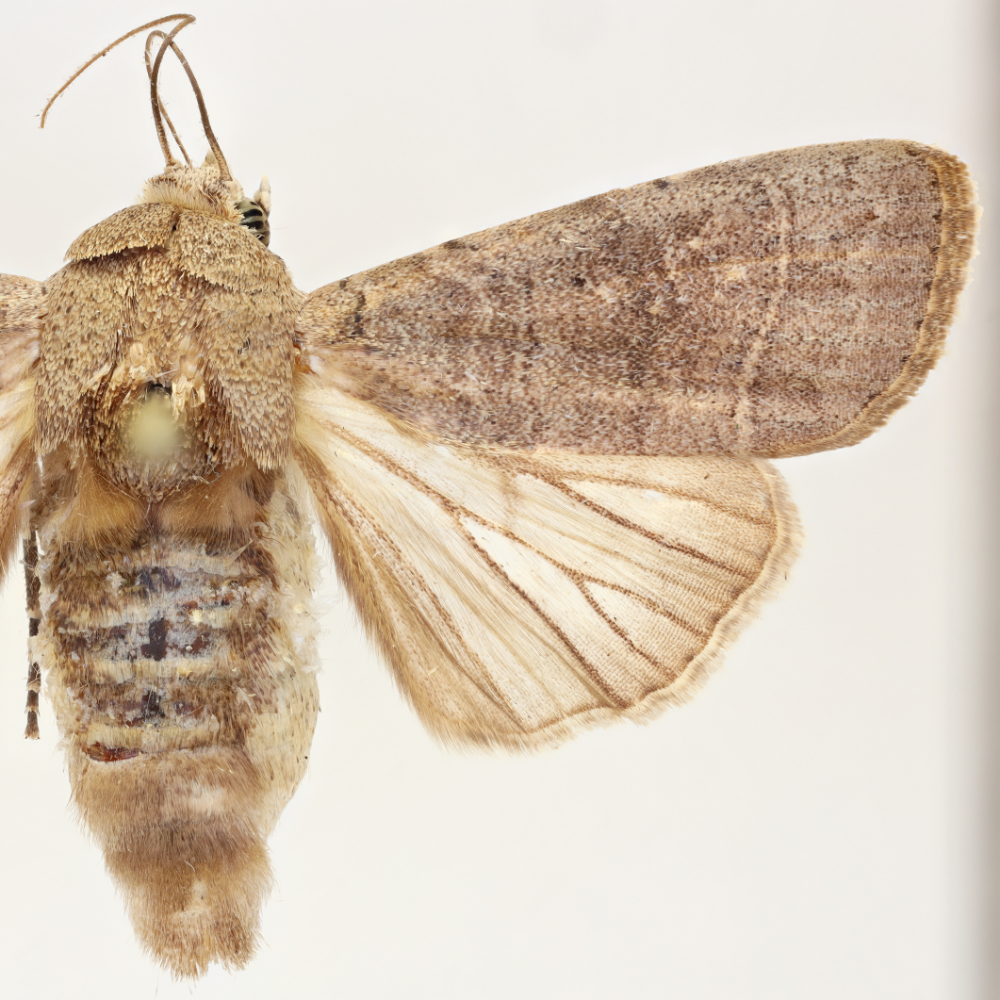
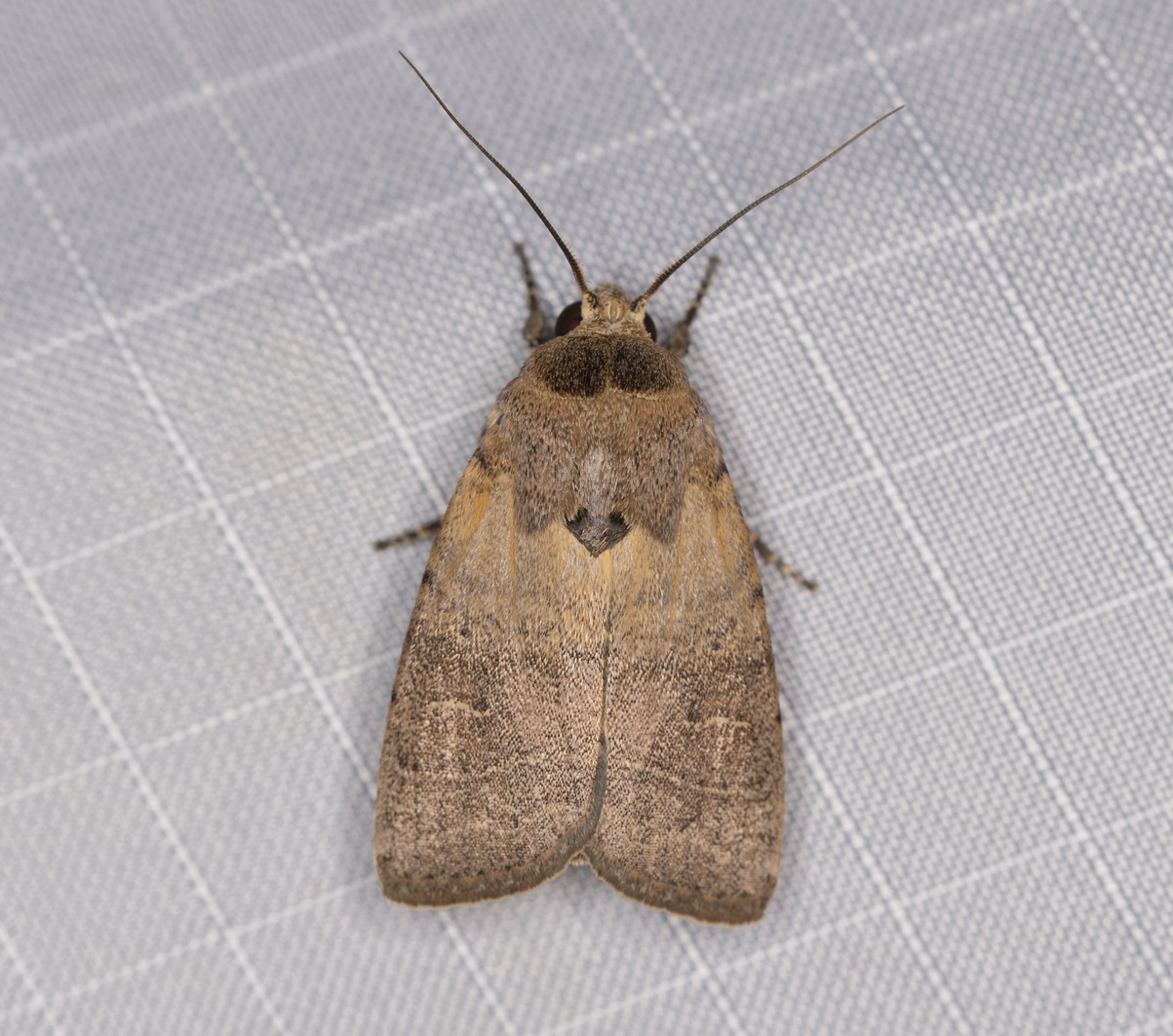
Athetis thoracica is a medium-sized noctuid (forewing lengthforewing length:
the distance of the forewing in a straight line from the base to the tip of the apex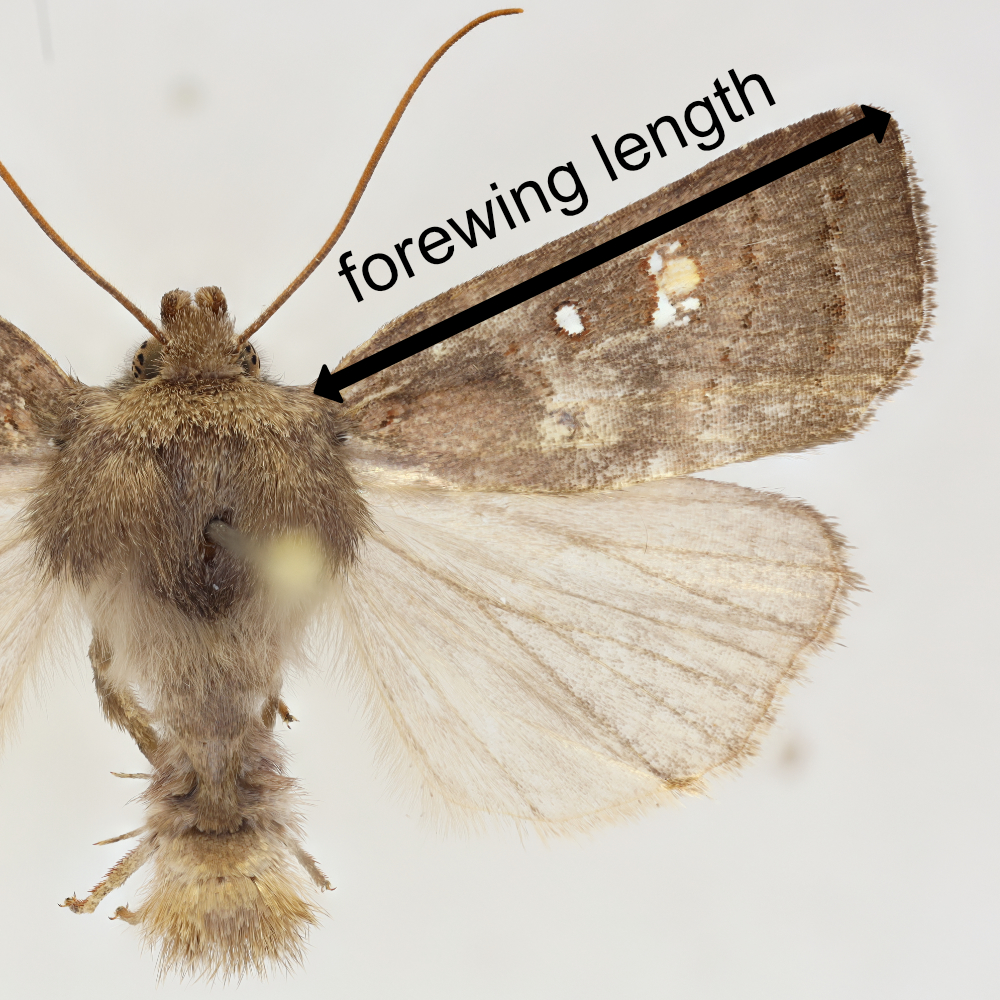 13–16 mm). Adults are moderately sexually dimorphic, with the basalbasal:
the part of an appendage nearest to where it connects to the body; often referred to as 'proximal'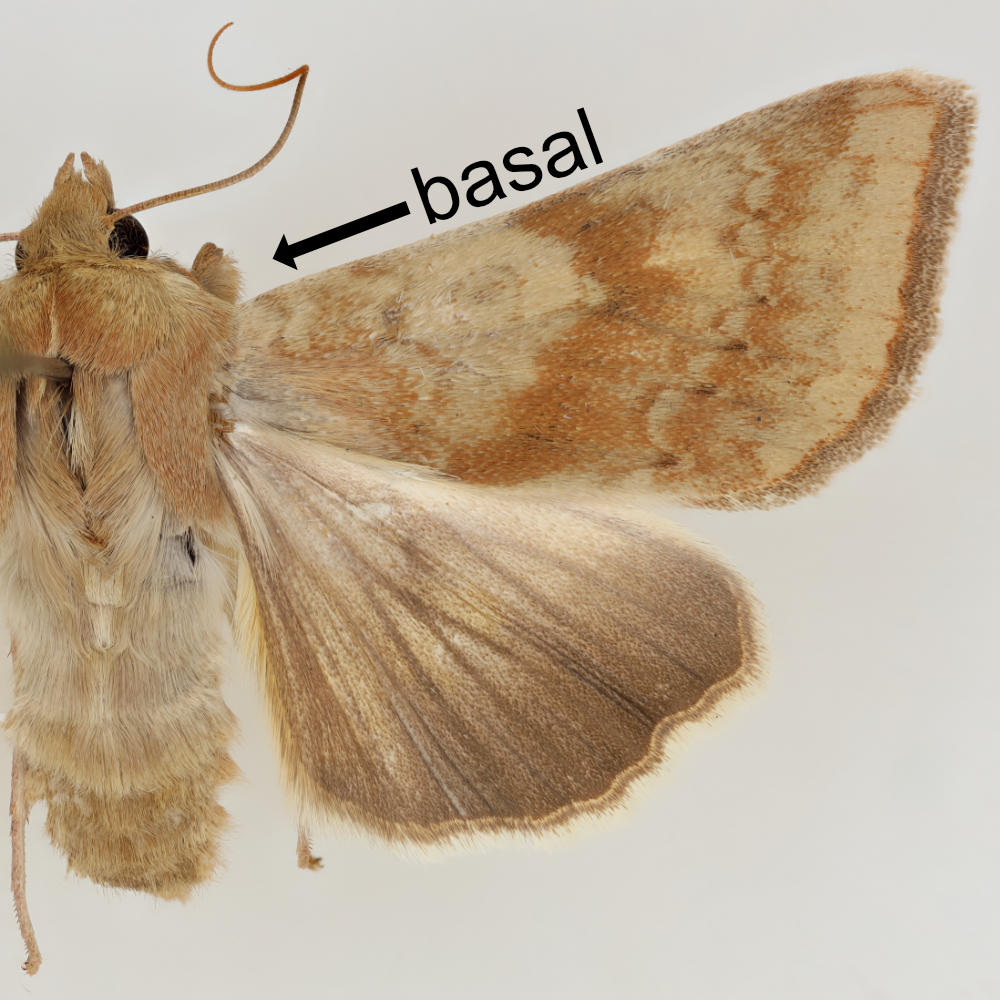 third of the male forewingforewing:
the front wing of an insect; the wing attached to the second segment of the thorax (the mesothorax)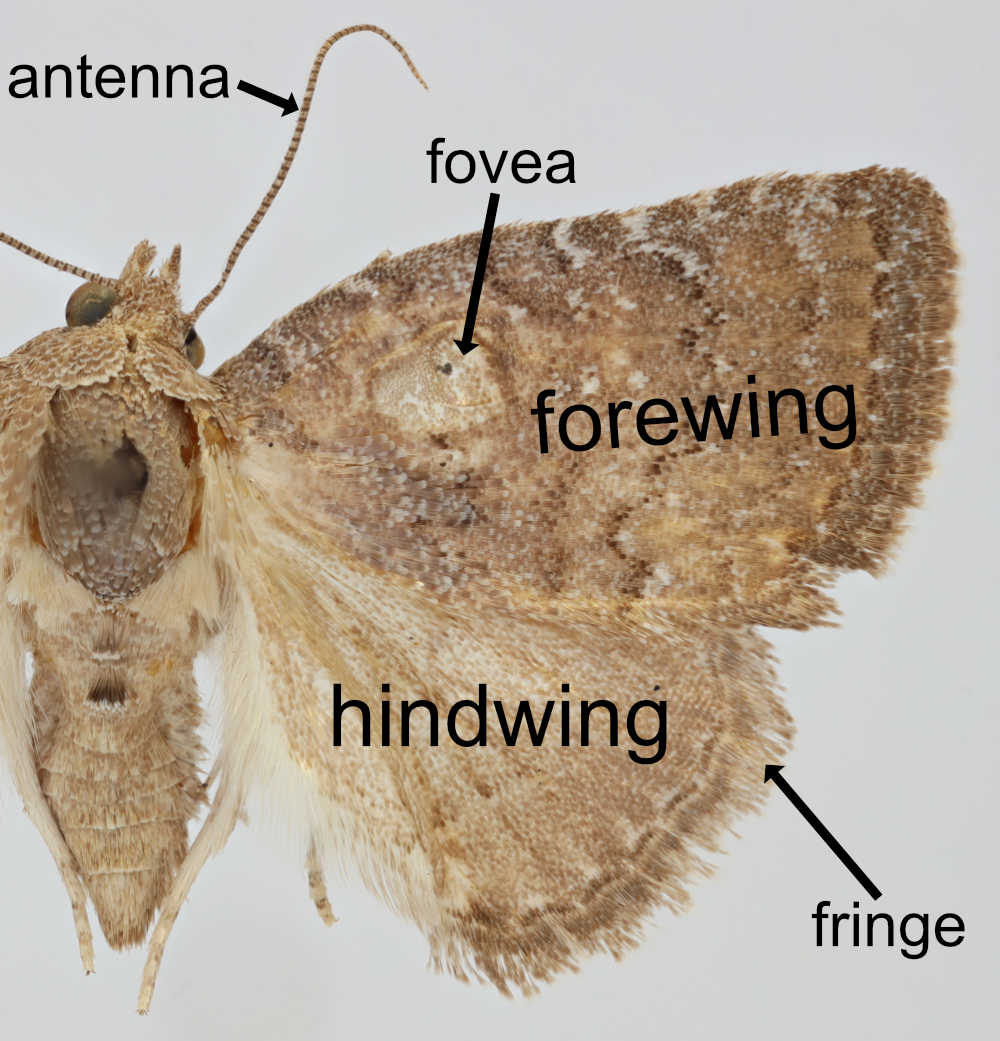 being a buff yellow color. The remainder of the forewingforewing:
the front wing of an insect; the wing attached to the second segment of the thorax (the mesothorax) of both sexes is pale brown, with the antemedial lineantemedial line:
a thin transverse line found on the basal third of the forewing, between the median and basal lines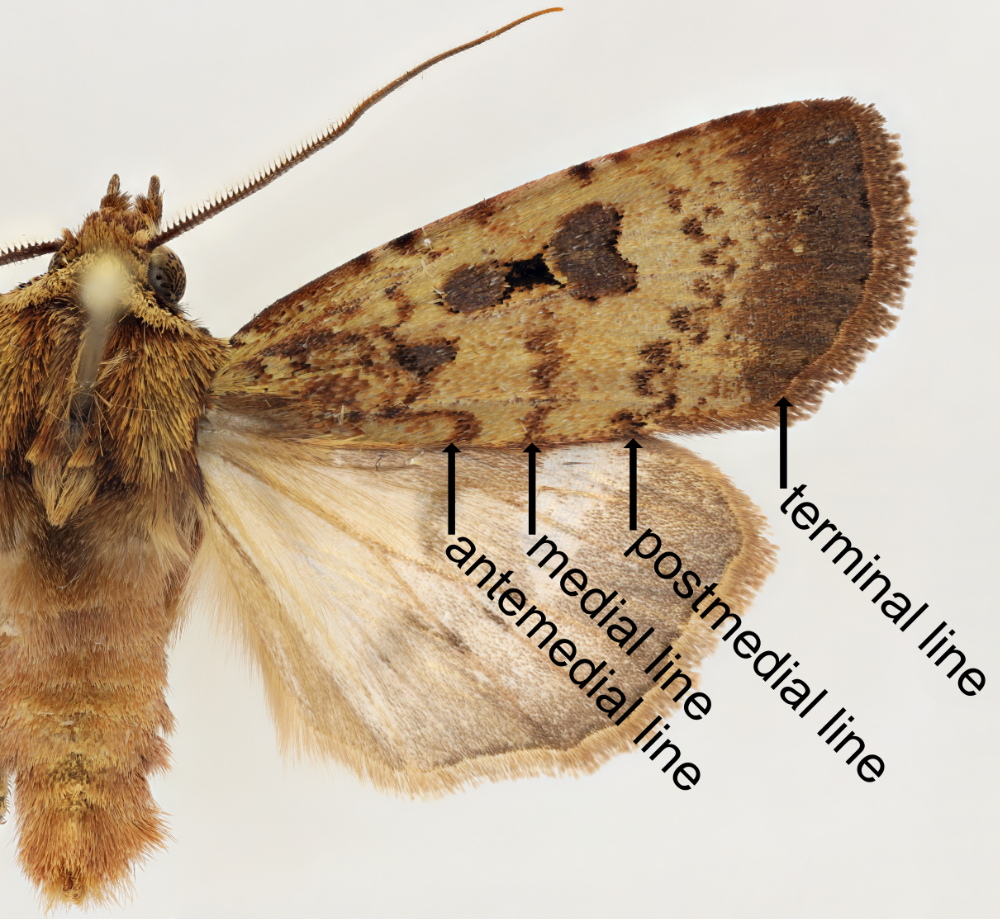 obscured and the postmedial linepostmedial line:
a thin, transverse line located distal to the reniform spot, typically on the distal third of the forewing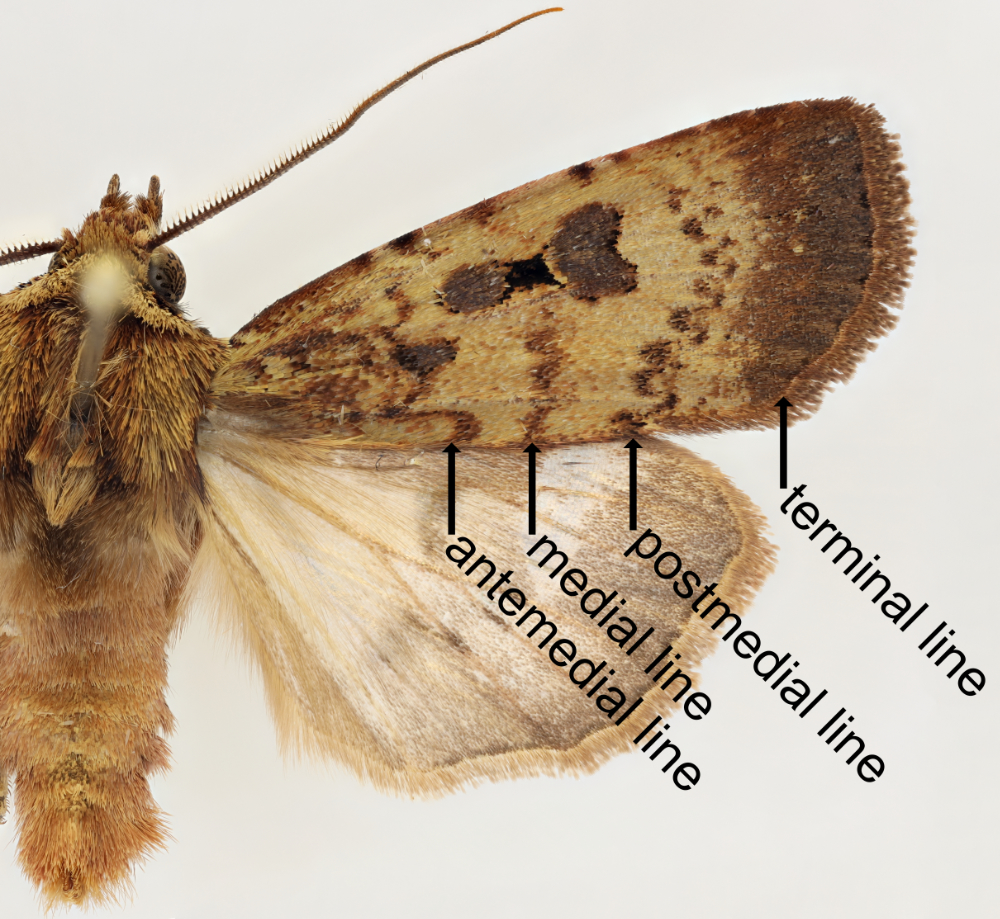 faint and straight or slightly curved. The orbicular and reniform spotreniform spot:
a spot, often broad bean- or kidney-shaped, found at the distal end of the discal cell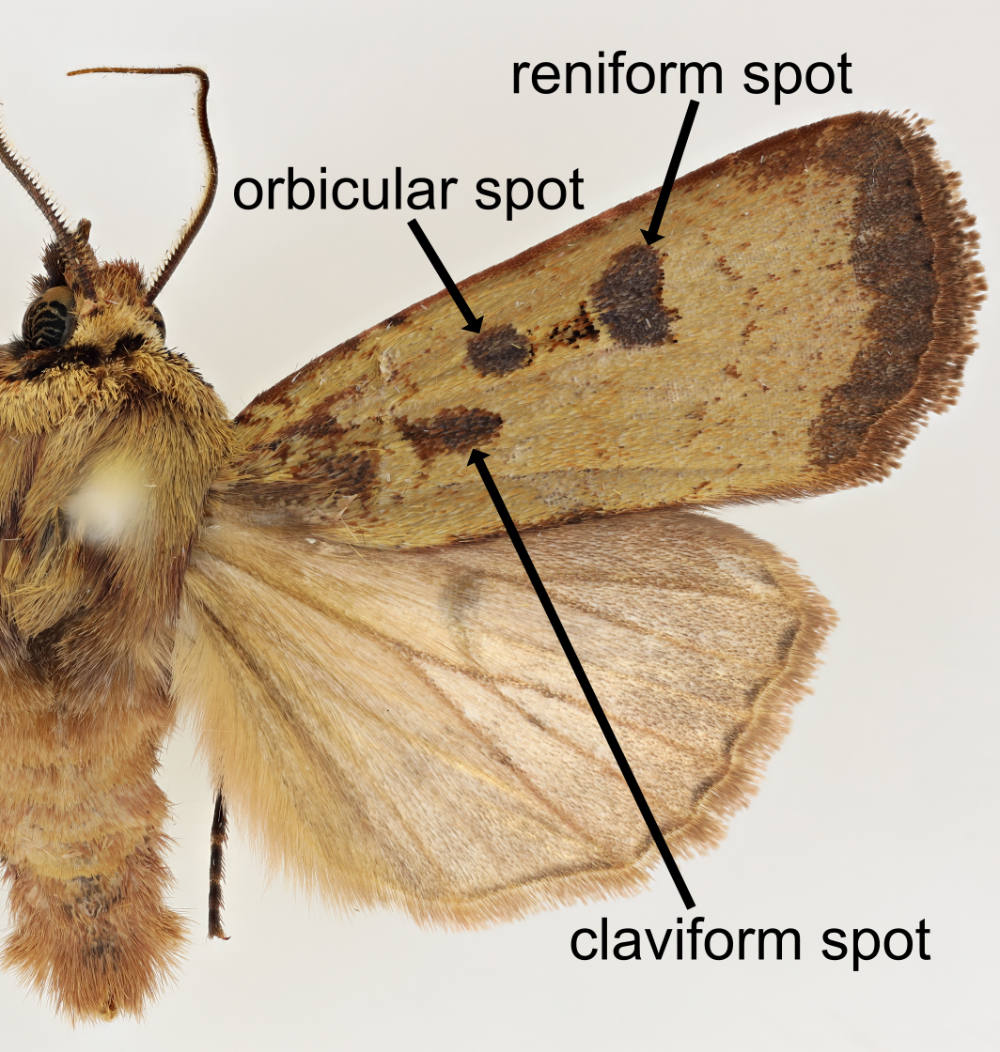 are obsolete. The hindwinghindwing:
the back wing of an insect; the wing attached to the third segment of the thorax (the metathorax)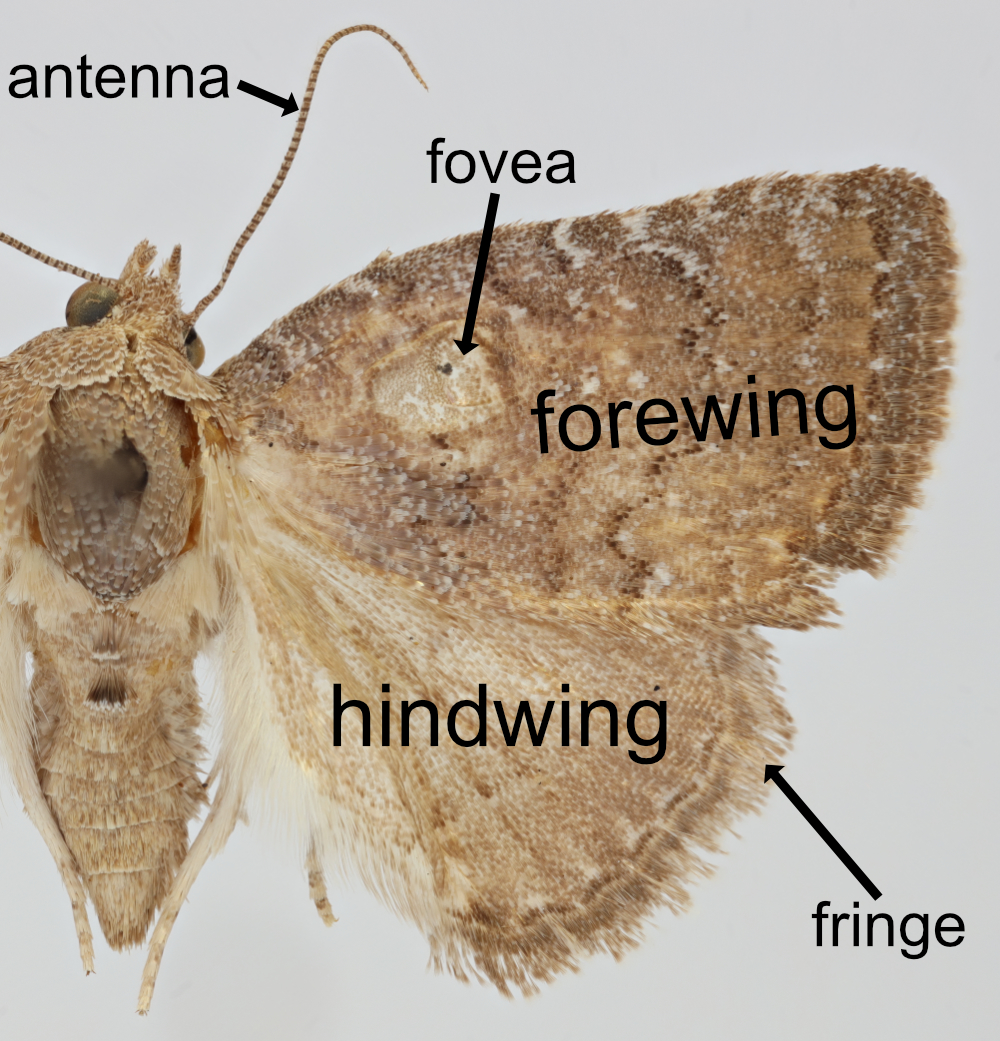 is pale brown, buff yellow at the base in males, with dark scaling along the veins.
The following account is from Swezey (1908)Swezey (1908):
Swezey OH. 1908. Life-History of Caradrina reclusa Walker. Proceedings of the Hawaiian Entomological Society. 2(1):3–5.:
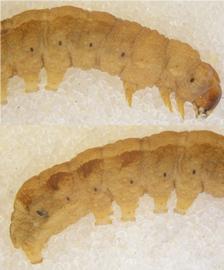
"1st [instar]: about 2 mm long when first hatched; dull whitish, head black; cervical shield and tubercles nearly black. The hairs in tubercles quite prominent, dark. They crawl by a looping motion, using of the prolegs, only the anal and those on segment 10, the other prolegs are rudimentary. They eat off the surface of leaves, leaving one epidermis.
2nd [instar]: about 4 mm long, pale mottled reddish green, with a dorsal and on each side a subdorsal stripe, paler, head very pale luteous, eyes black; tubercles small, with a tiny blackish dot at base of hairs; hairs pale, shorter than in first stage. They now use abdominal prolegs of segments 9 and 10 (others rudimentary) and still crawl by a looping motion. They now eat holes through the tender leaves; but in older leaves, leave one epidermis.
3rd [instar]: bout 6–8 mm long; very much mottled with greenish, blackish and sometimes a faint reddish tinge; a dorsal whitish line on each side, darker along ventralventral:
refers to the bottom or underside of an organism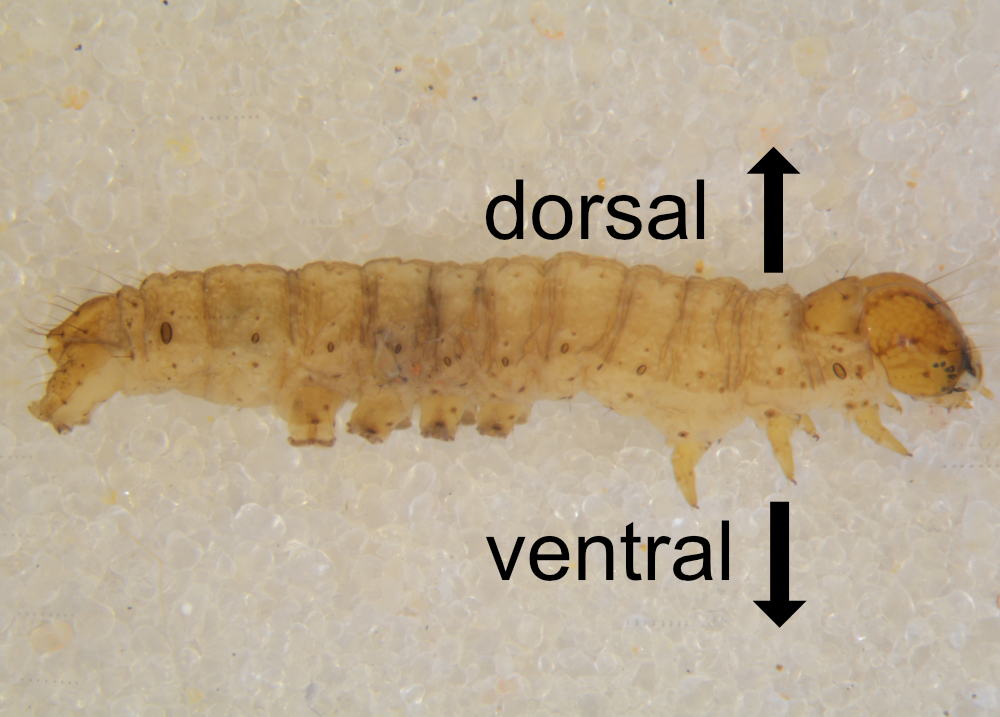 side; segment 12 slightly swollen, two whitish spots on dorsal side; segment 6. also has two white spots on dorsal side each in a subdorsal line; tubercles white; hairs very short; head slightly fuscous except the upper and posteriorposterior:
the 'tail' end of an organism, as opposed to the anterior or 'head' end of an organism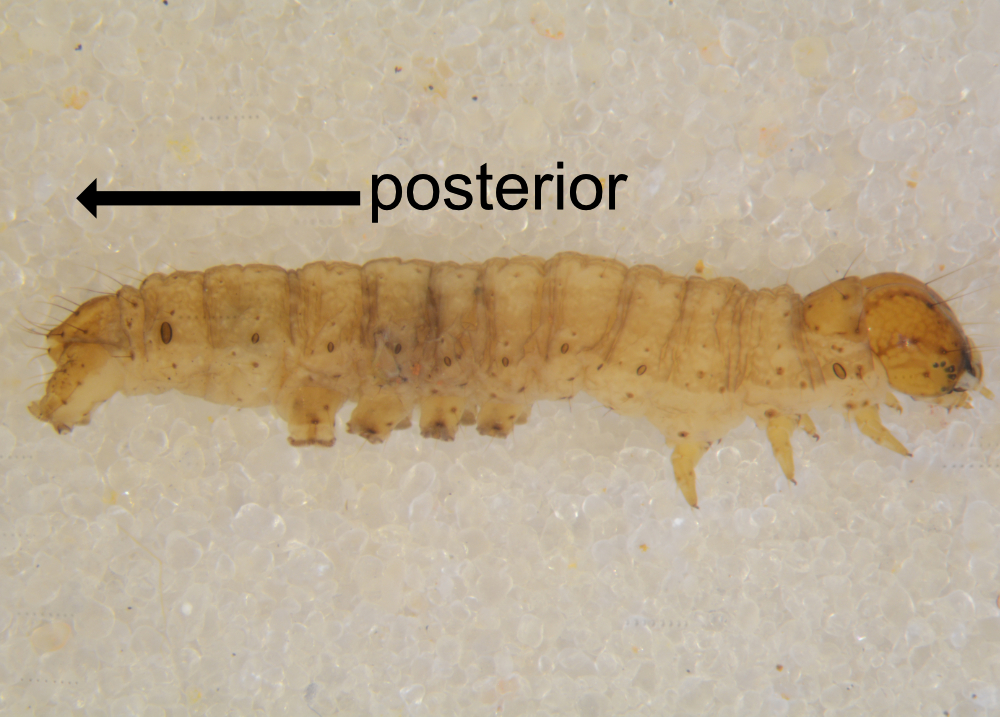 parts which are pale brown where usually withdrawn into segment 2, eyes black; cervical shield darker than rest of body with dorsal white line less prominent than on other segments, the subdorsal lines more prominent. All prolegs now fully developed.
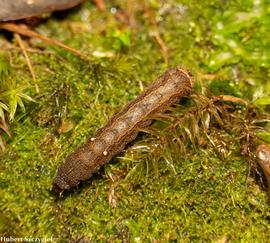
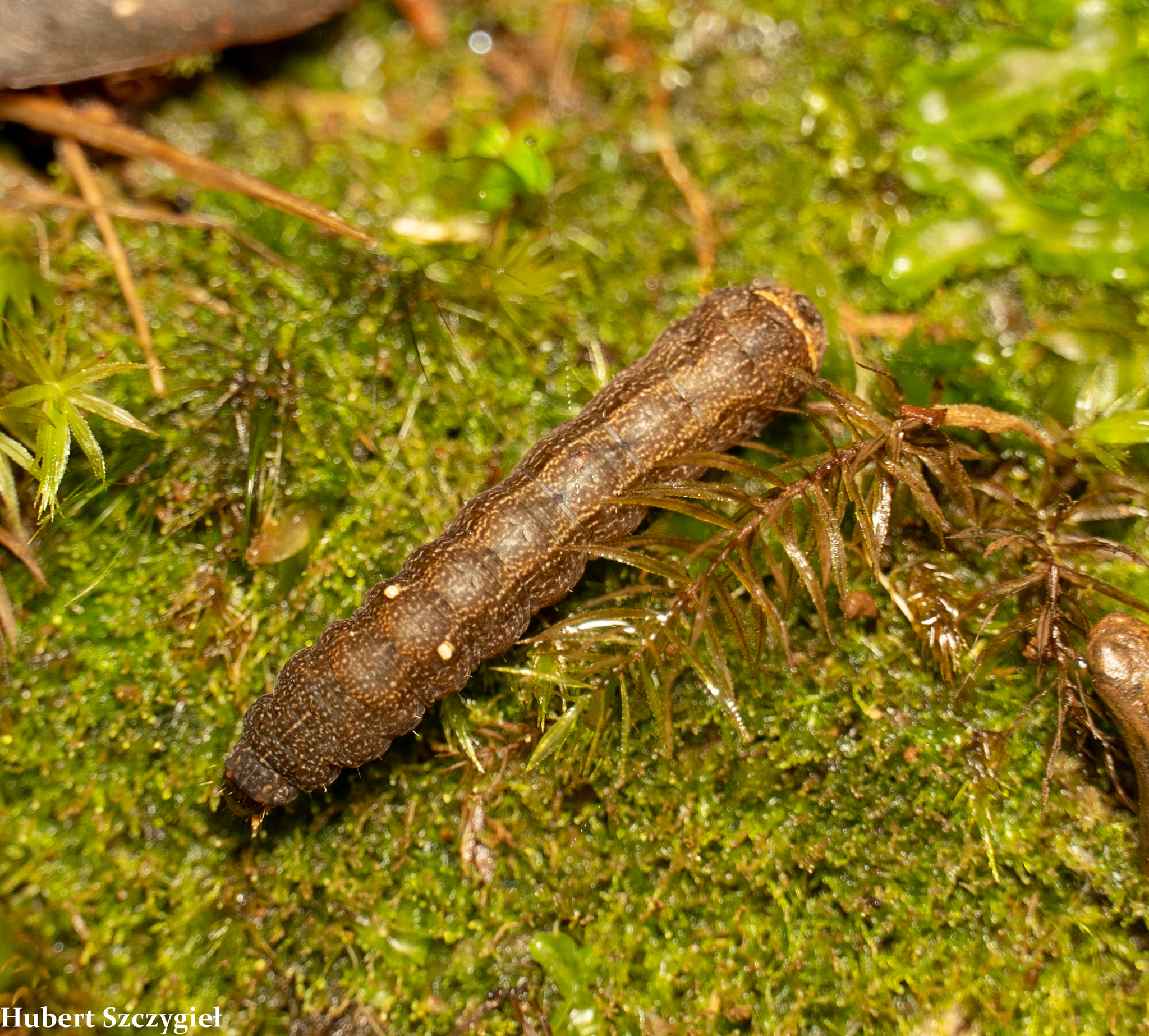
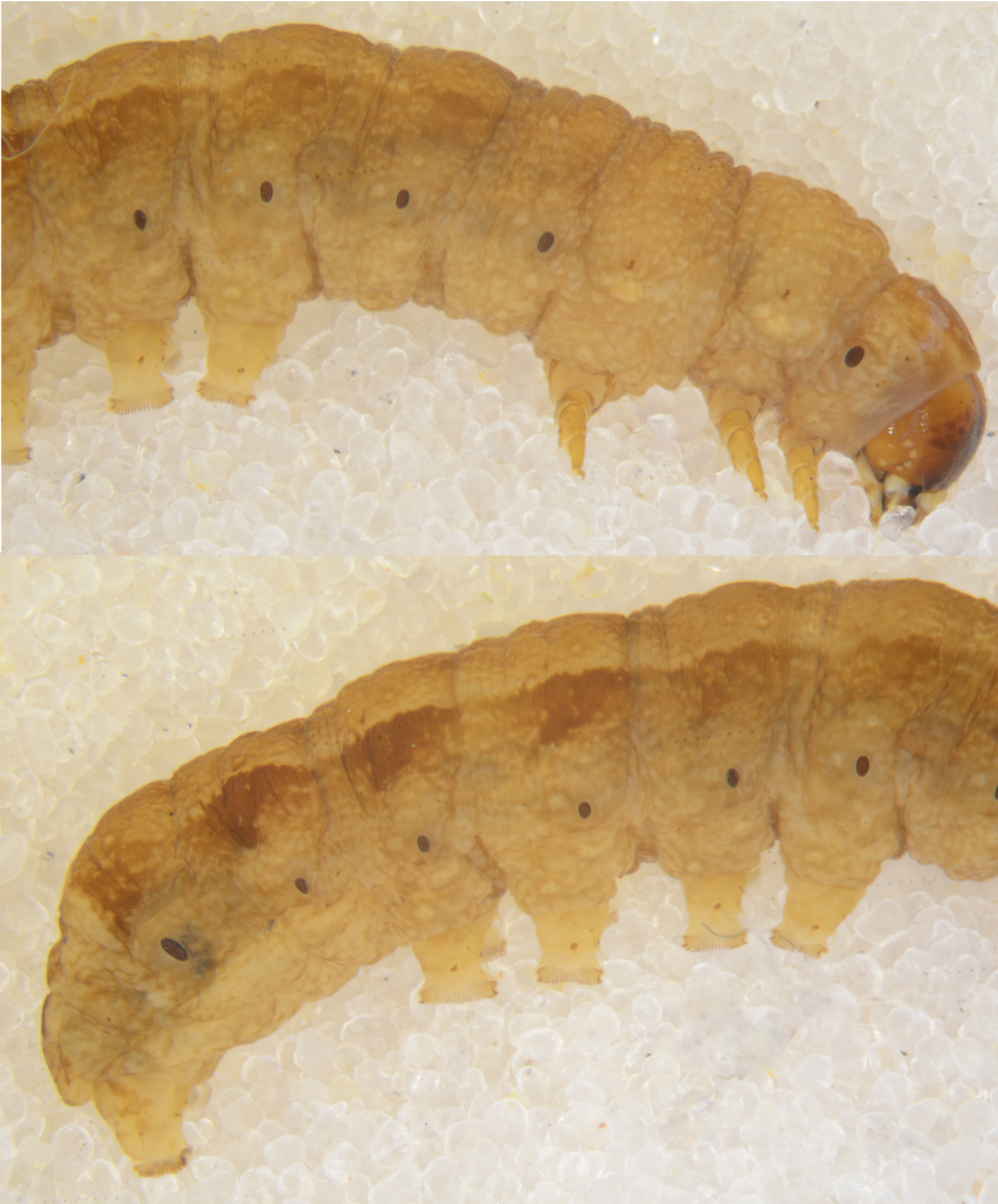
4th [instar]: 15–17 mm; much more mottled and variegated than preceding [instar] with black, browns, olivaceous, yellowish and whitish, the darker colors predominating; two more or less conspicuous sub-dorsal rows of black spots on segments 7–12, a broad paler region on dorsum between these, in the middle of which is a series of obscure lozenge-shaped darker spots; head mostly black except the periphery (portion covered when retracted) which is pale brown; two conspicuous whitish subdorsal spots on segment 6; posteriorposterior:
the 'tail' end of an organism, as opposed to the anterior or 'head' end of an organism sub-dorsal parts of segment 12 and upper parts of segment 13 yellowish; spiracles black, a yellowish streak below them; tubercles not conspicuous, same color as place where situated, hairs short; 12th segment quite swollen.
5th and 6th [instars]: very similar to fourth [instar], but usually darker, almost black. When full-grown 26–32 mm long. When disturbed the caterpillars drop from the leaf where feeding and mostly lie straight and rigid, feigning death. When smaller they dropped and curled up when disturbed."
Adults of Athetis thoracica could be confused with several other non-native noctuids in Hawaiʻi, including Elaphria nucicolora and Amyna natalis but can be differentiated based on its larger size and dark scaling along the hindwinghindwing:
the back wing of an insect; the wing attached to the third segment of the thorax (the metathorax) veins.
Globally, Athetis thoracica occurs throughout much of tropical Asia, Australia, and the Pacific, though its exact native range is unclear.
In Hawaiʻi, it is widely distributed species and is known from Kauaʻi, Oʻahu, Molokaʻi, Lānaʻi, Maui, and Hawaiʻi island from sea level to ca. 1500 meters elevation. It occurs in virtually all habitat types except for subalpine shrubland and desert.
Larvae of Athetis thoracica are broadly polyphagous, having been recorded to feed on Commelina spp., Ipomoea spp., Syzygium spp., Portulaca spp., Nicotiana spp., Camellia spp., as well as unidentified grasses and beans (Swezey 1908Swezey 1908:
Swezey OH. 1908. Life-History of Caradrina reclusa Walker. Proceedings of the Hawaiian Entomological Society. 2(1):3–5., Zimmerman 1958Zimmerman 1958:
Zimmerman EC. 1958. Insects of Hawaii, Volume 7. Macrolepidoptera. University of Hawaii Press, Honolulu. 542 pp.).
The biology of this species was described in detail by Swezey (1908)Swezey (1908):
Swezey OH. 1908. Life-History of Caradrina reclusa Walker. Proceedings of the Hawaiian Entomological Society. 2(1):3–5..
Eggs are laid singly or in small clusters of up to eight, often in neat rows along leaves or other surfaces. One female studied by Swezey (1908)Swezey (1908):
Swezey OH. 1908. Life-History of Caradrina reclusa Walker. Proceedings of the Hawaiian Entomological Society. 2(1):3–5. laid 216 eggs total. The egg is hemispherical, ribbed meridionally with about 30 ribs, ten of which reach the upper pole. When first laid, eggs are entirely pale green, with reddish markings appearing soon after. Eggs hatch in about 5 days.
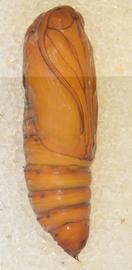
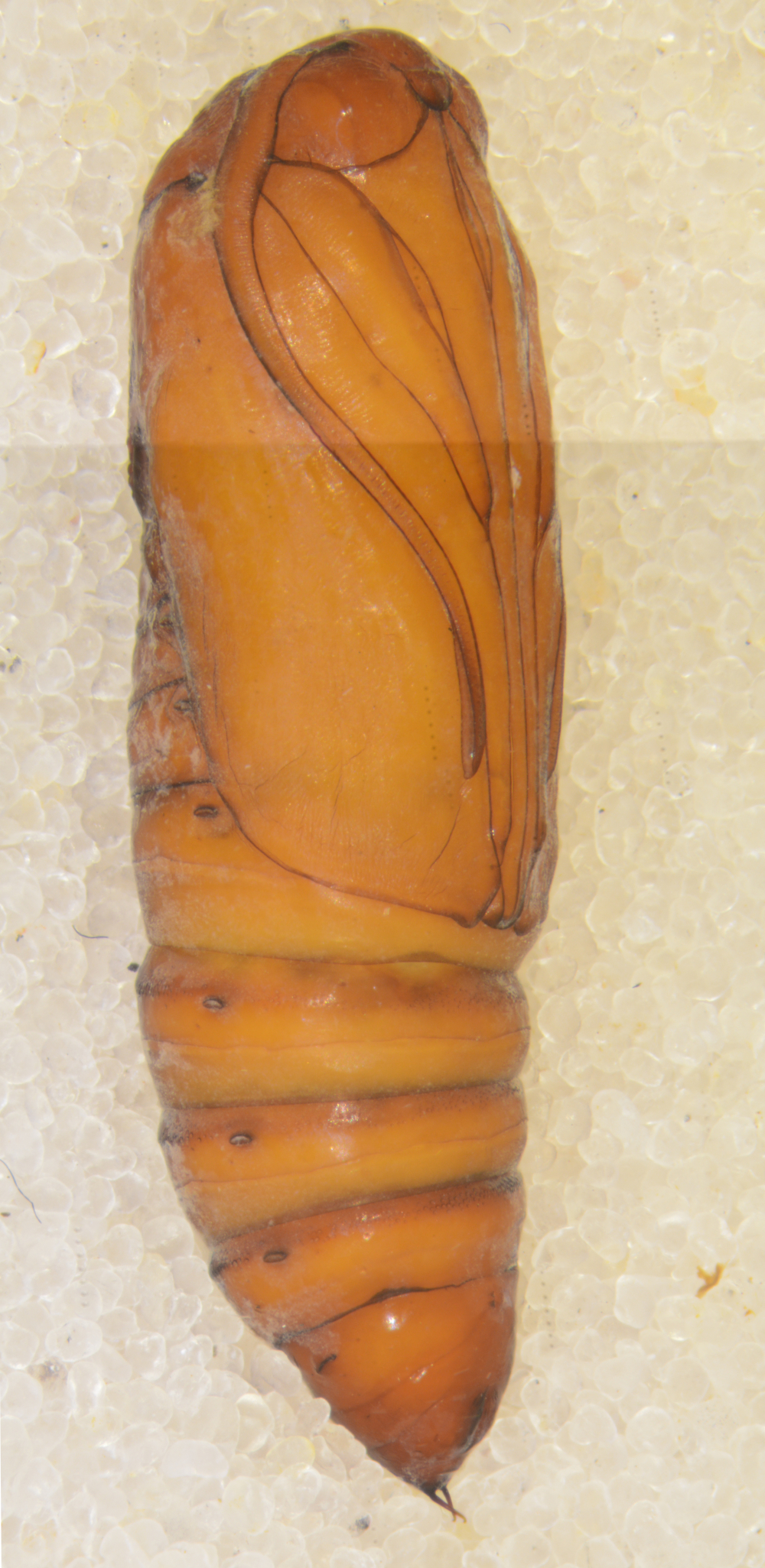
There are six larval instars, each occurring at intervals of 3–9 days, usually about 4 days. The caterpillars become full grown in 30–40 days. The pupa is formed in the soil, an inch or two below the surface. The pupal period lasts 12–14 days.
Author: Kyhl A. Austin
Content last updated May 2026
idtools.org