ADVENTIVE
Argyrogramma verruca (Fabricius, 1794)
Higher taxonomy: Noctuidae: Plusiinae: Argyrogrammatini
Common name: golden looper
Argyrogramma verruca is an uncommon non-native noctuid of American origin in Hawaiʻi. It is only known from a handful of specimens from Kauaʻi, Oʻahu, Maui, and Hawaiʻi island. The earliest record is from 1999 (Austin and Rubinoff 2022Austin and Rubinoff 2022:
Austin KA, Rubinoff D. 2022. Eleven new records of Lepidoptera in the Hawaiian Islands including corrections to the Hawaiian terrestrial arthropod checklist. Bishop Museum Occasional Papers. 142:49–74.). It does not appear to be a significant pest but could be encountered in agricultural settings or at ports.
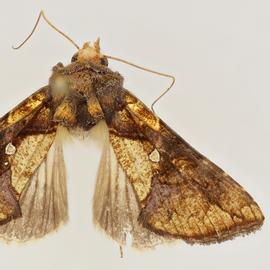
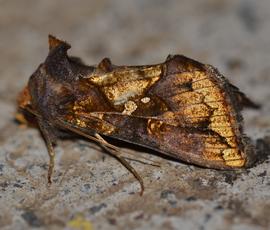
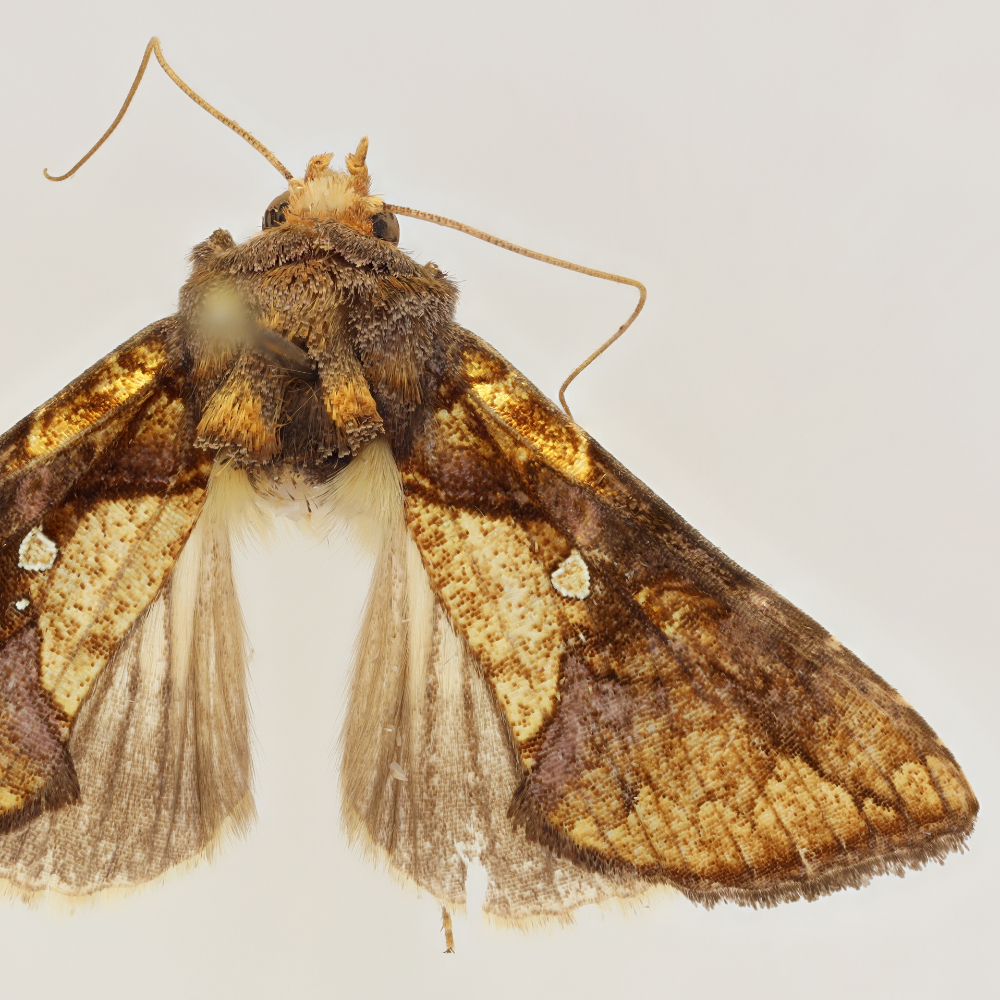
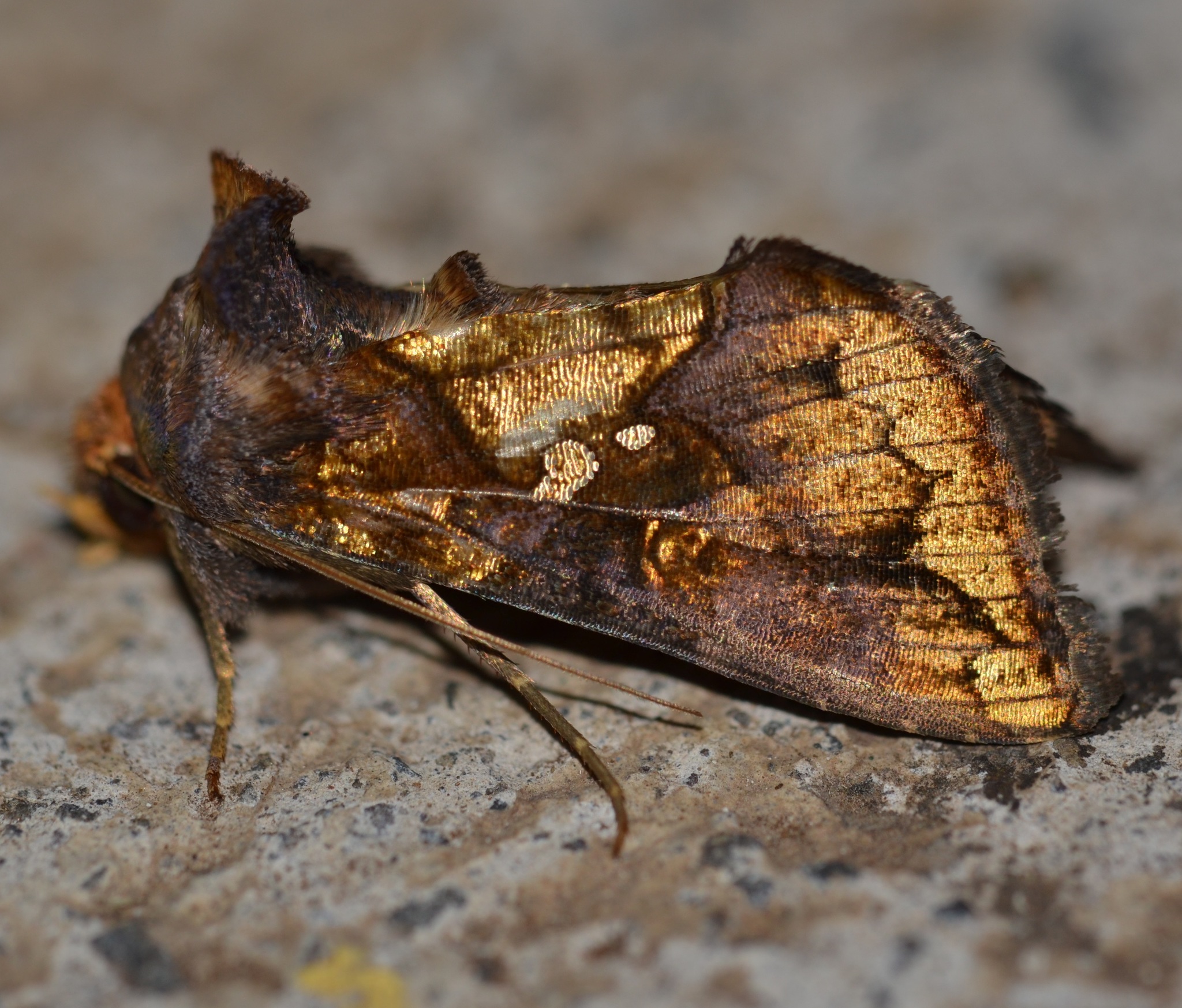
Adults of Argyrogramma verruca are medium-sized (forewing lengthforewing length:
the distance of the forewing in a straight line from the base to the tip of the apex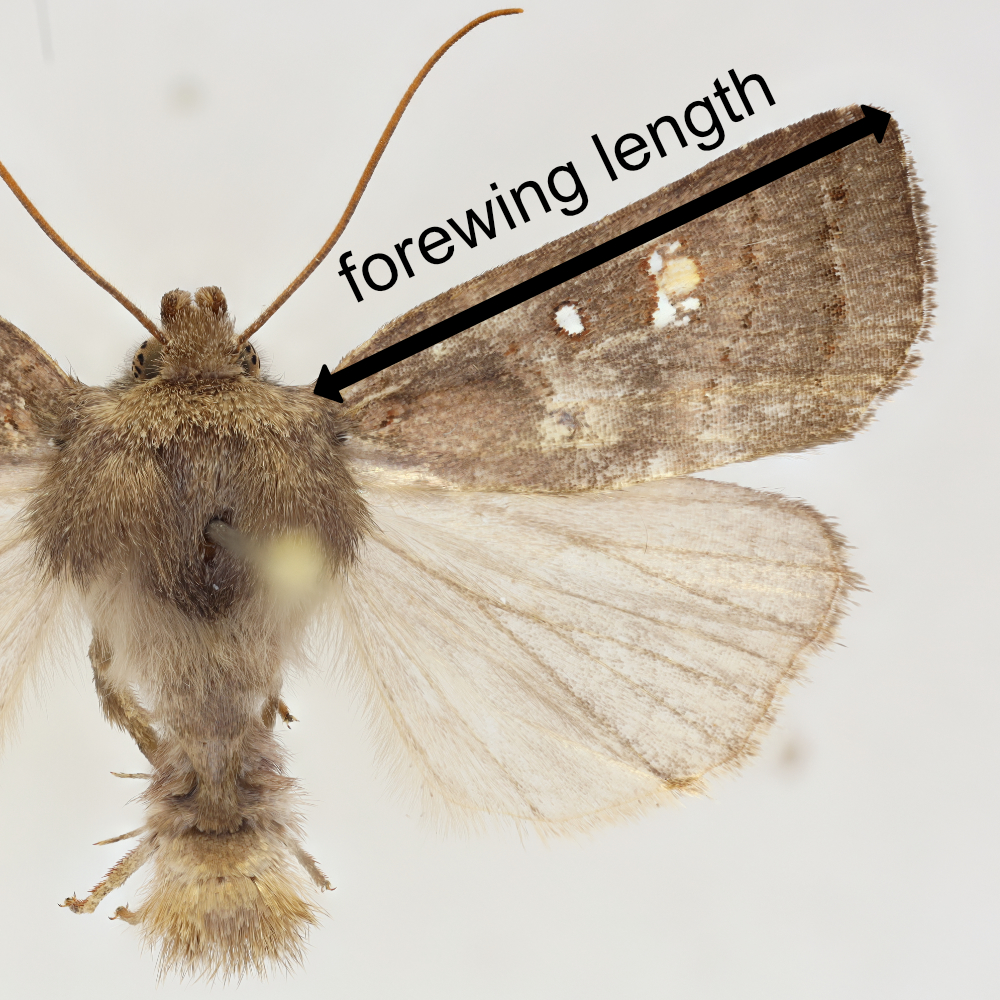 12–15 mm), typical plusiines with iridescent gold scales across much of the forewingforewing:
the front wing of an insect; the wing attached to the second segment of the thorax (the mesothorax)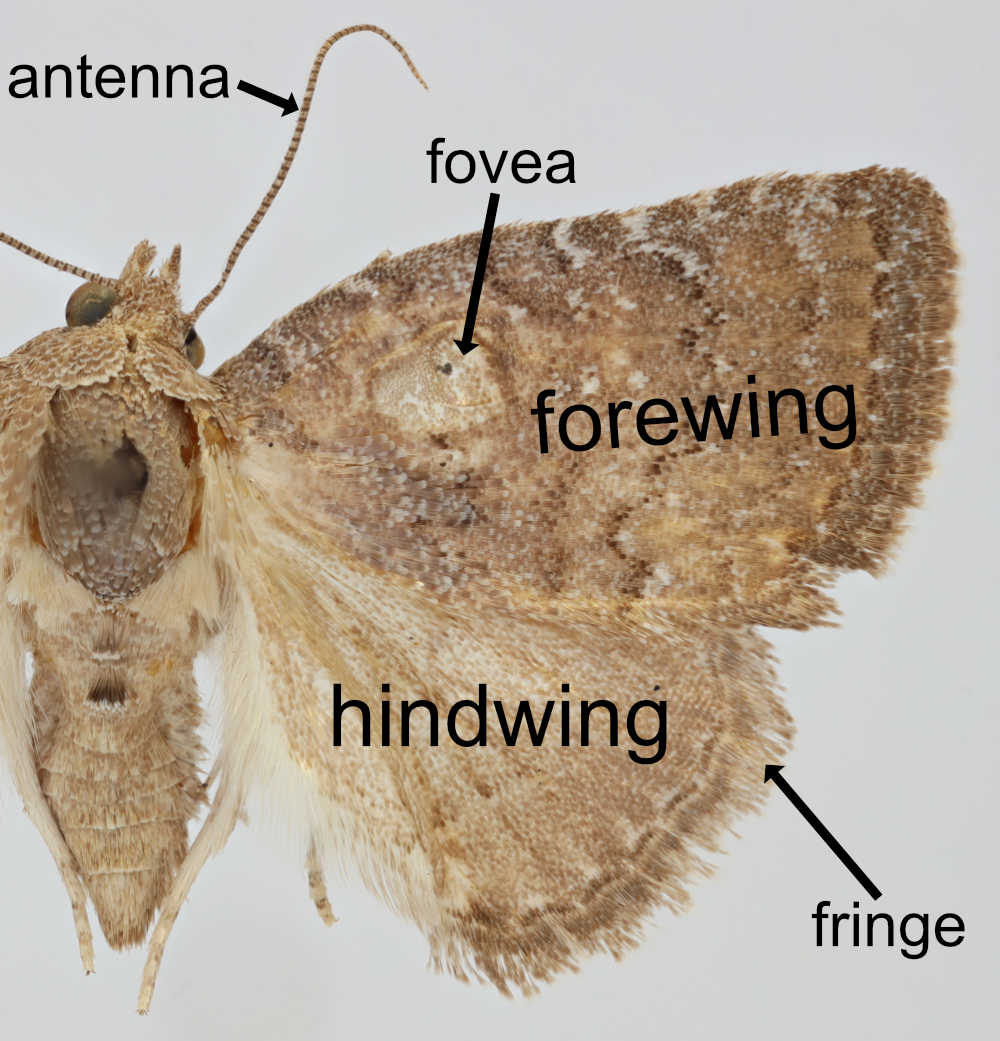 . The stigmastigma:
a distinctive metallic, often silver or gold-colored, marking on the forewing in many species of Plusiinae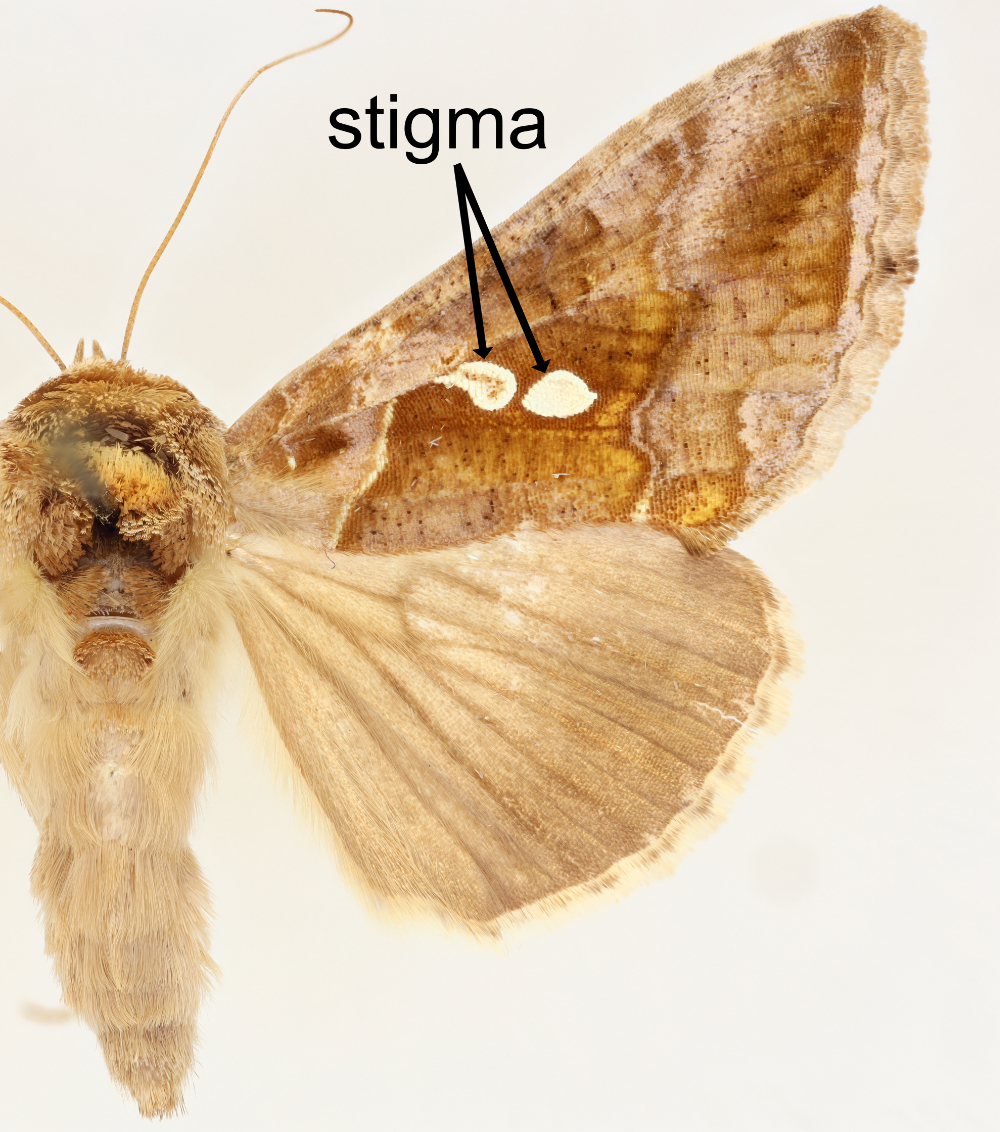 is variable, but divided, often with only the more basalbasal:
the part of an appendage nearest to where it connects to the body; often referred to as 'proximal'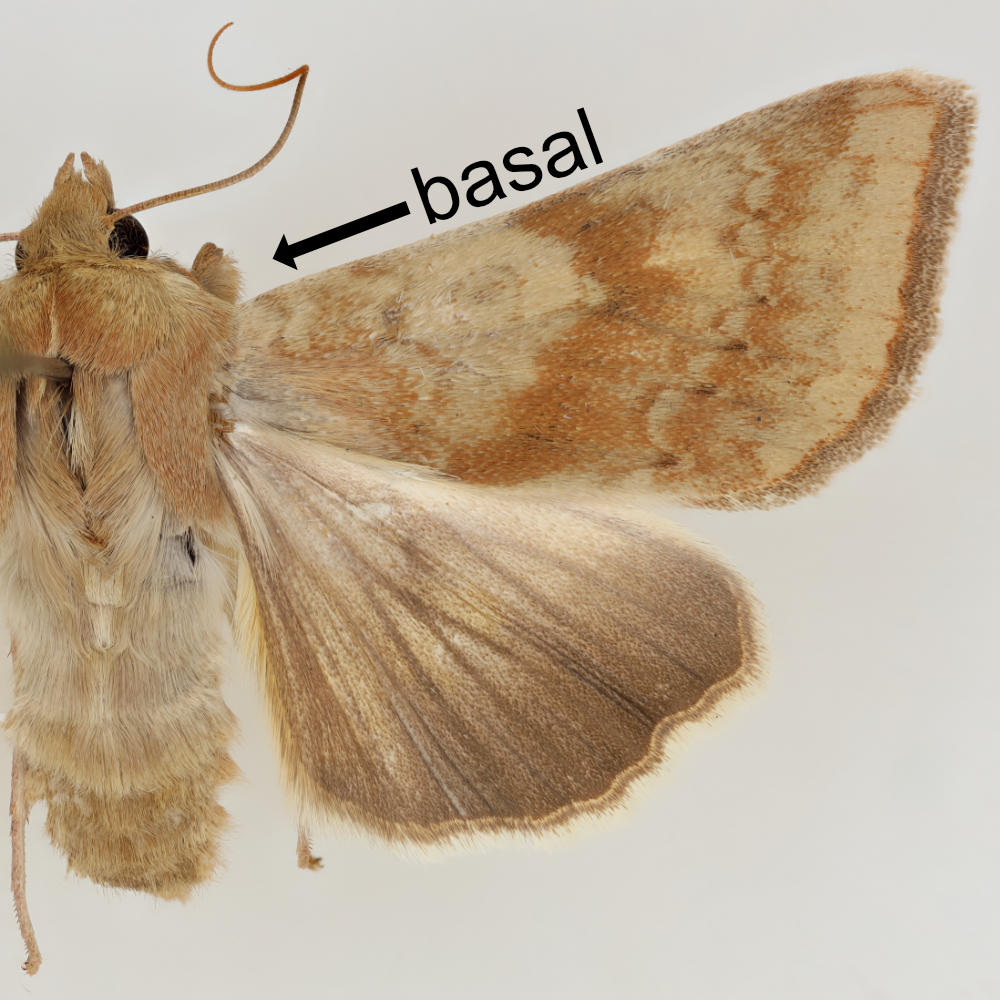 portion apparent and the distaldistal:
towards the free end of an appendage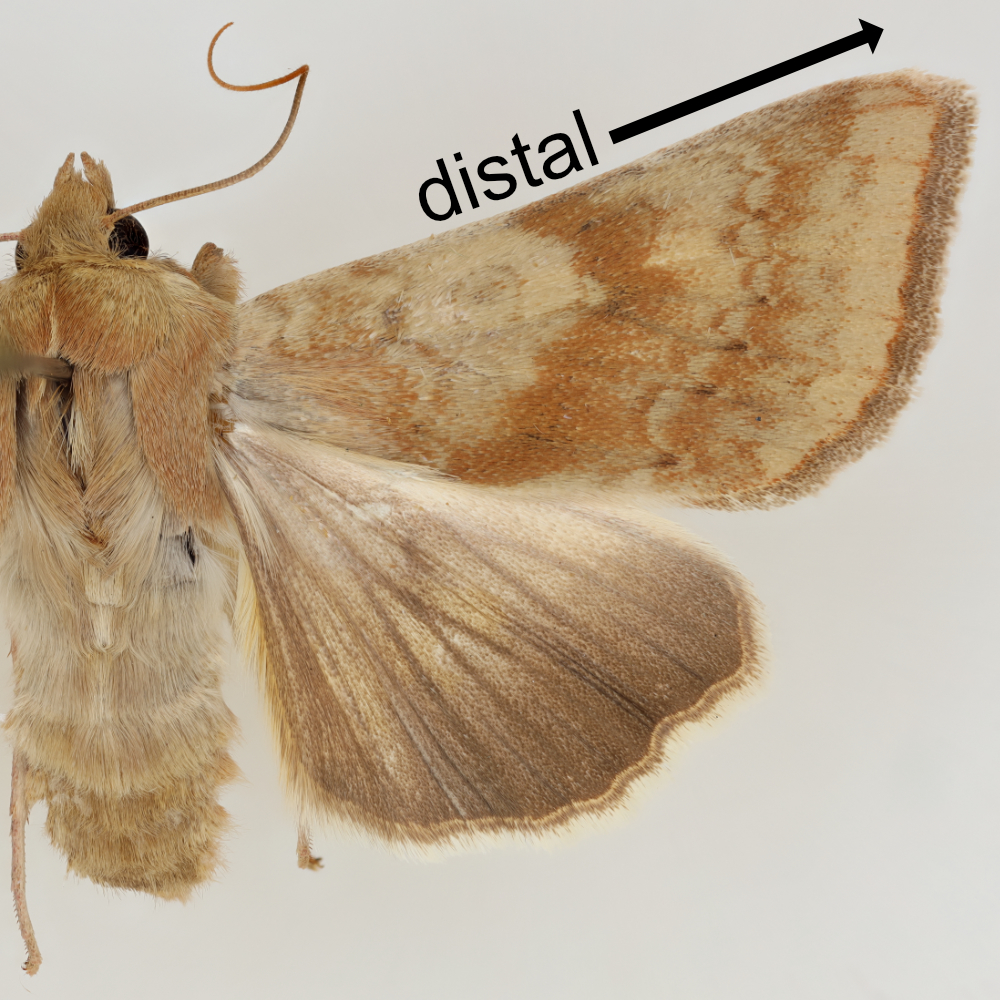 portion largely obscured. A brassy purplish-gold wash of scales is often visible along the distaldistal:
towards the free end of an appendage margin of the postmedial linepostmedial line:
a thin, transverse line located distal to the reniform spot, typically on the distal third of the forewing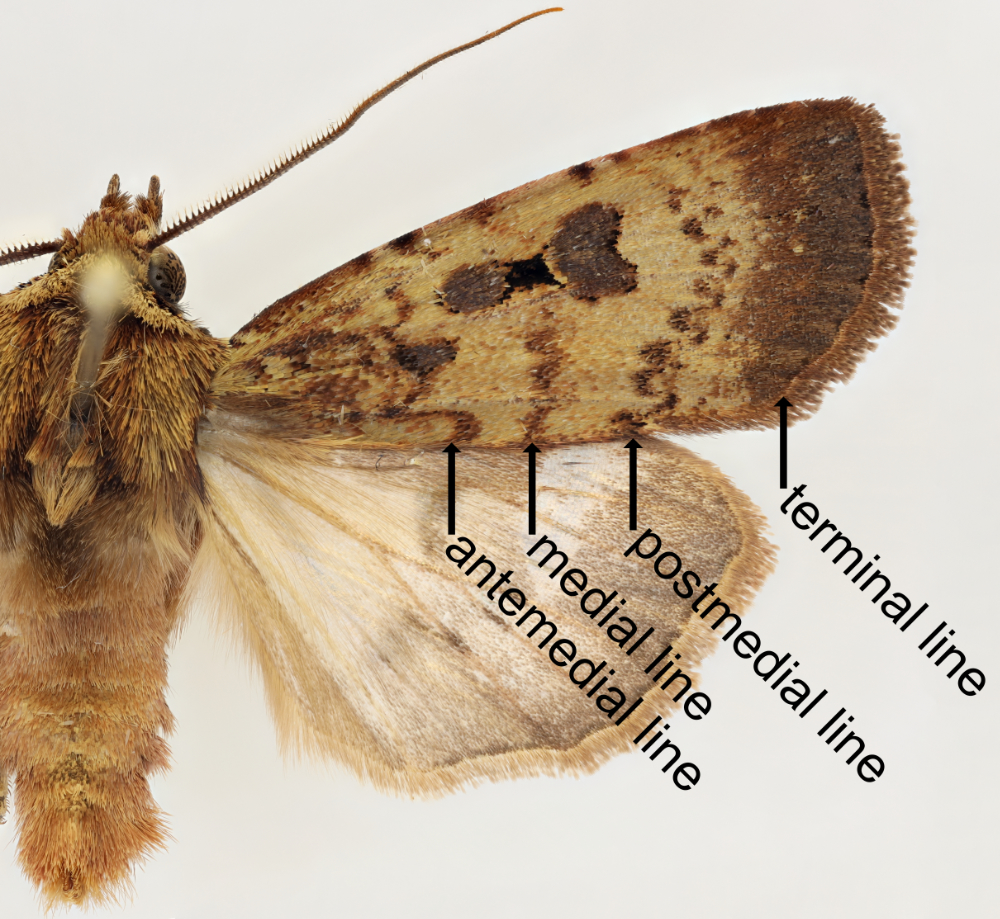 , near the termentermen:
distal margin of the wing where the fringe is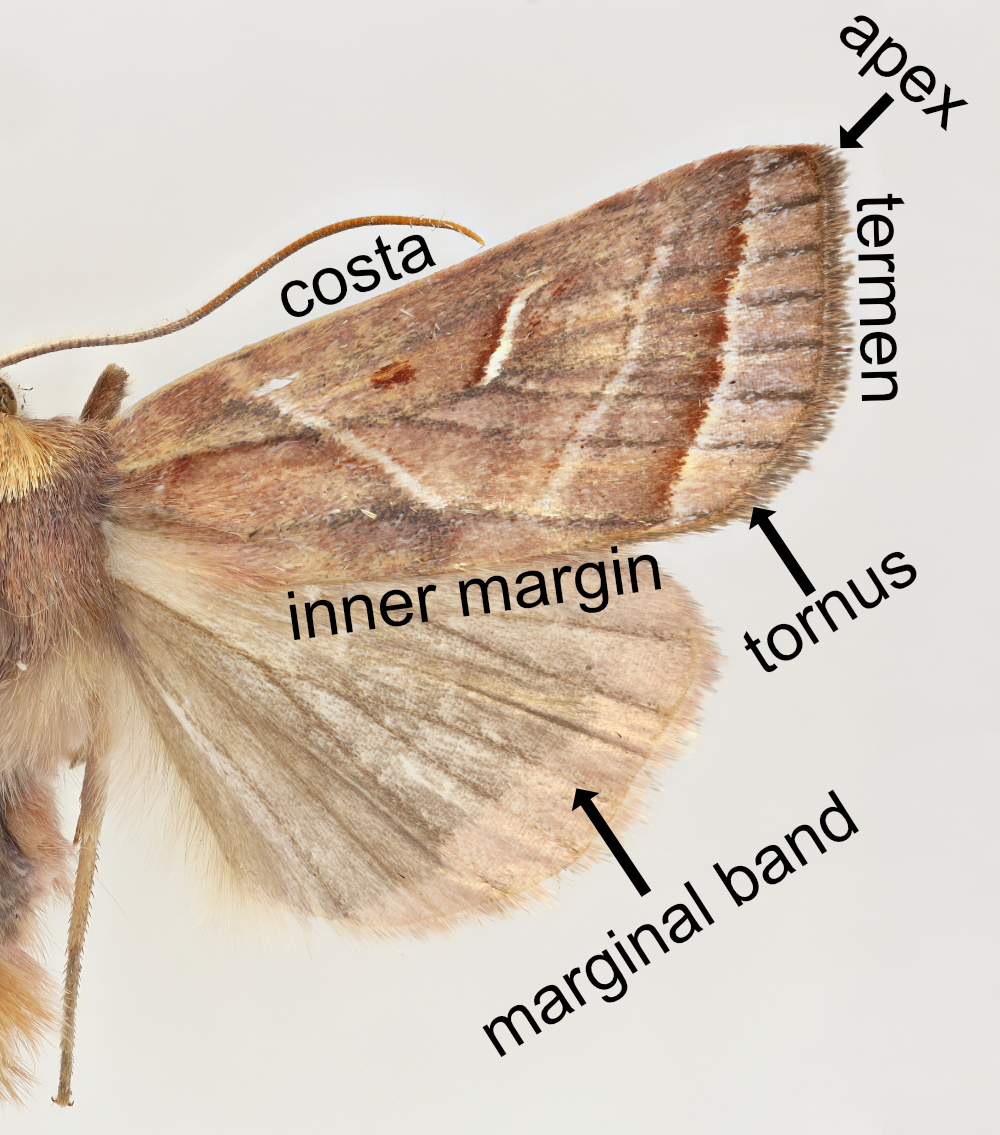 . The hindwingshindwing:
the back wing of an insect; the wing attached to the third segment of the thorax (the metathorax)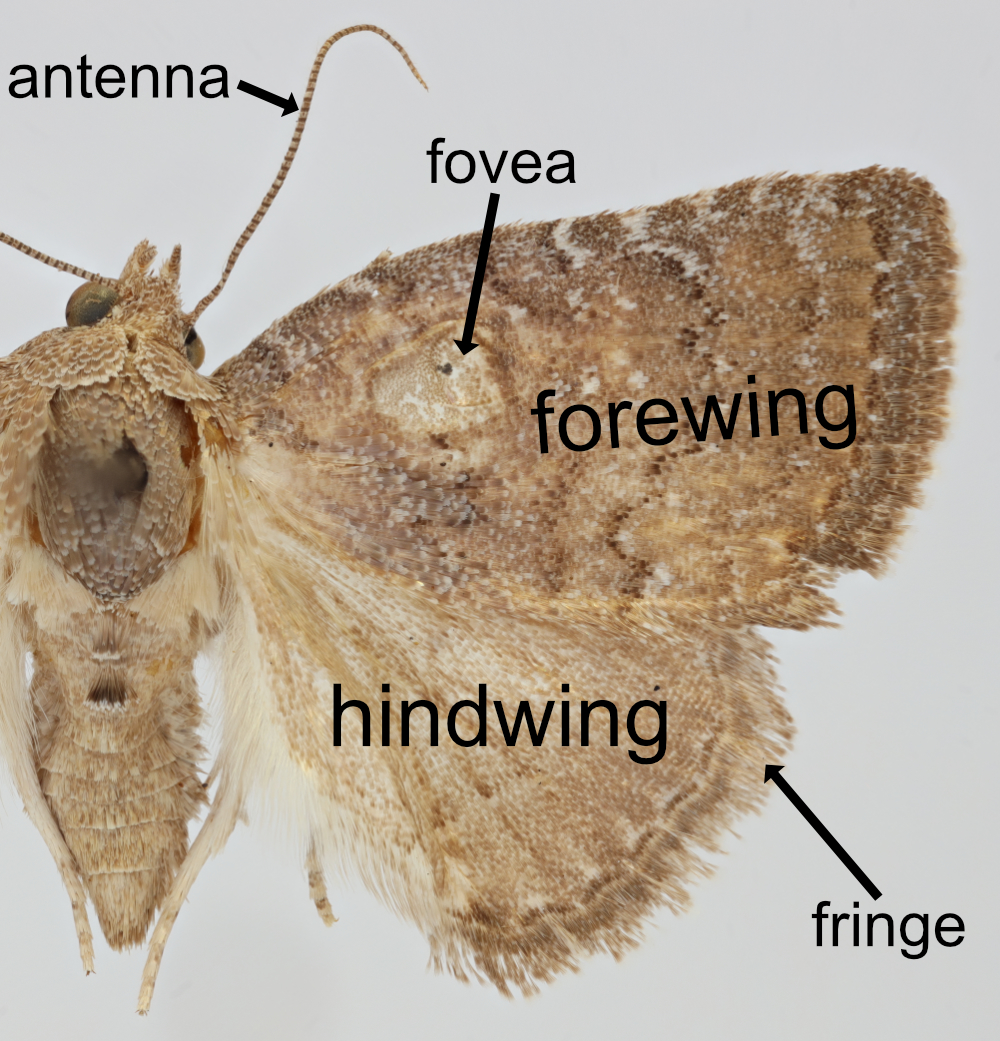 are brown, paler basally.
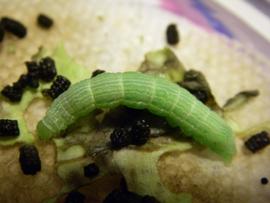
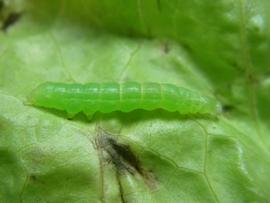
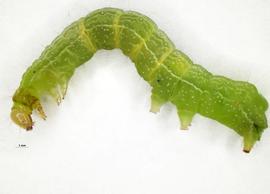
Larvae of Argyrogramma verruca are described in Lafontaine and Poole (1991)Lafontaine and Poole (1991):
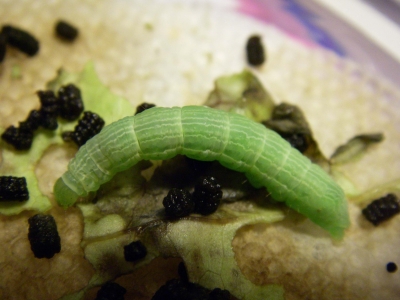
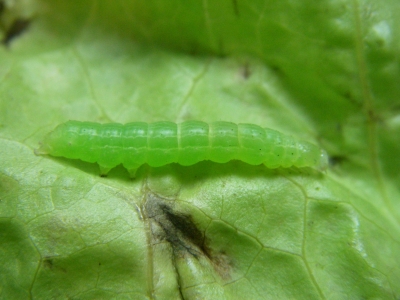
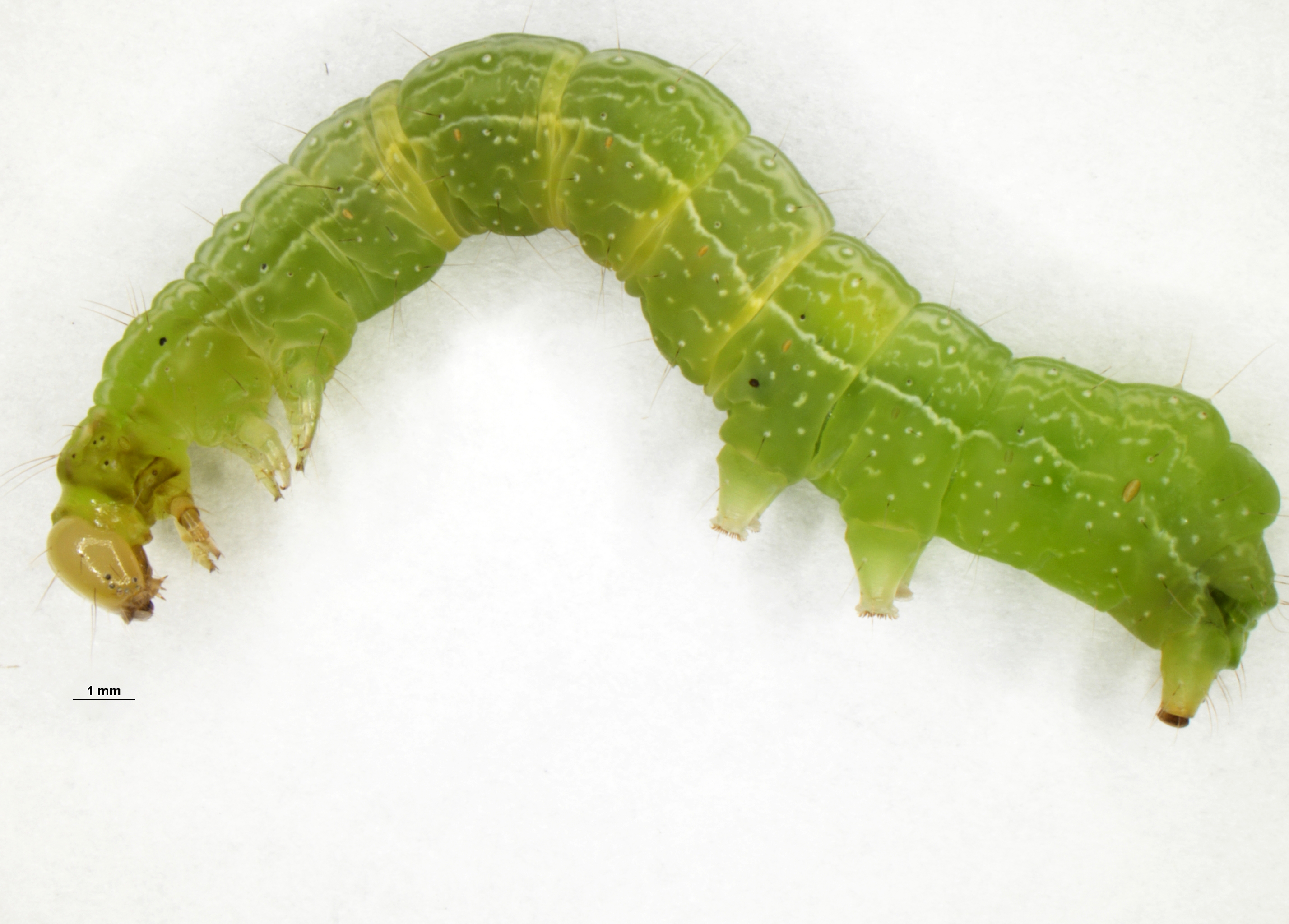
Lafontaine JD, Poole RW. 1991. The moths of America north of Mexico. Fascicle 25.1. Noctuoidea, Noctuidae (part), Plusiinae. The Wedge Entomological Research Foundation. 385 pp. . Like all species in Argyrogrammatini, the larva of A. verruca can be recognized by the peglike vestigial prolegs on A3–4. This will rule out Lophoplusia spp. and Megalographa biloba, both of which completely lack prolegs on A3–4.
The internal ridges of the mandible in A. verruca end in a process before the cutting edge of the mandible, unlike those of Trichoplusia ni. Separating A. verruca from Chrysodeixis eriosoma and Ctenoplusia albostriata may require rearing to adulthood or sequencing DNA.
Adults of Argyrogramma verruca could be confused with other Plusiinae in Hawaiʻi, especially Chrysodeixis eriosoma and Megalographa biloba. The postmedial linepostmedial line:
a thin, transverse line located distal to the reniform spot, typically on the distal third of the forewing in A. verruca is much more strongly bent than in C. eriosoma and reaches the apexapex:
the point furthest from the base; the apex of the wing may be rounded, pointed, or falcate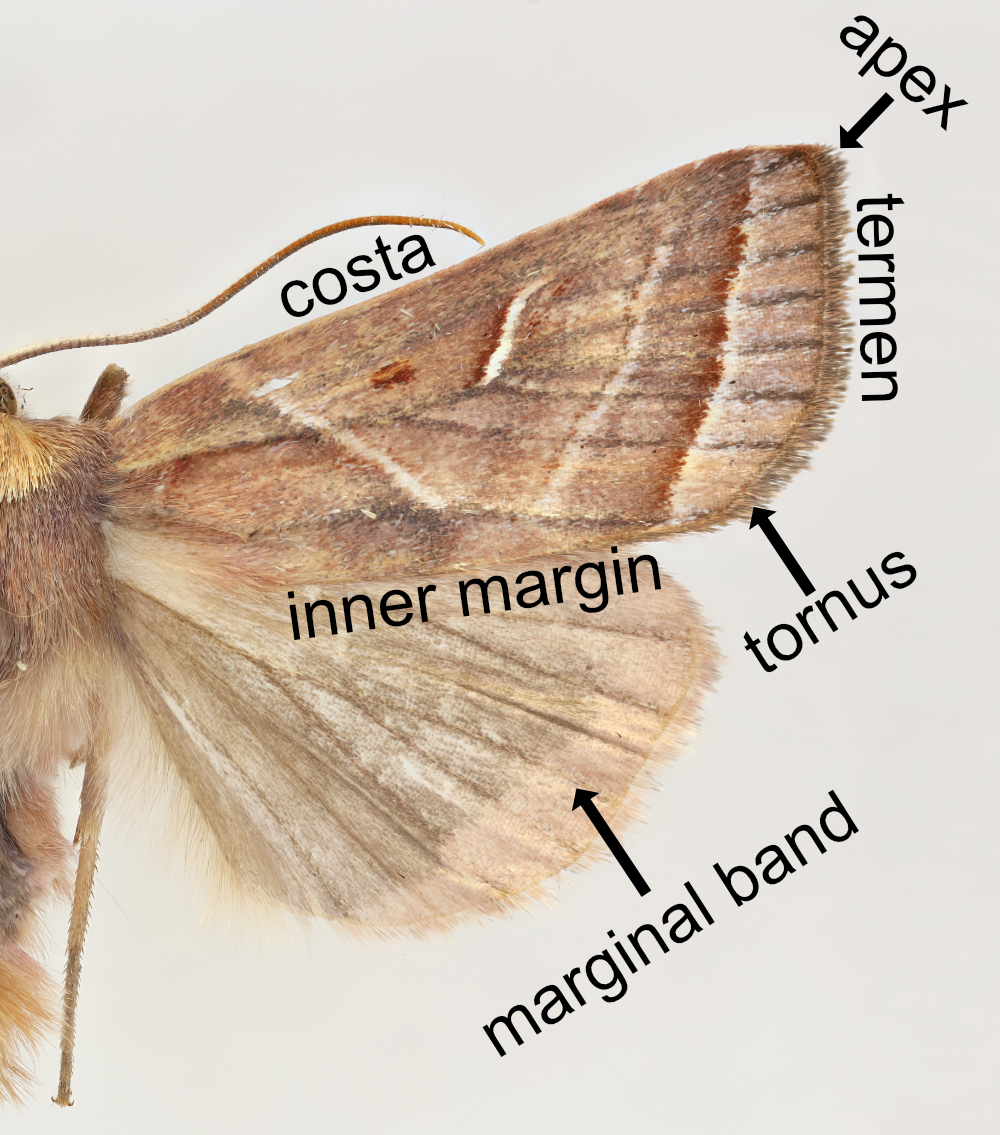 of the stigmastigma:
a distinctive metallic, often silver or gold-colored, marking on the forewing in many species of Plusiinae. The shape of the stigmastigma:
a distinctive metallic, often silver or gold-colored, marking on the forewing in many species of Plusiinae in M. biloba is highly distinct and is never divided like in A. verruca.
Argyrogramma verruca is widely distributed in tropical and subtropical regions of the Americas (Lafontaine and Poole 1991Lafontaine and Poole 1991:
Lafontaine JD, Poole RW. 1991. The moths of America north of Mexico. Fascicle 25.1. Noctuoidea, Noctuidae (part), Plusiinae. The Wedge Entomological Research Foundation. 385 pp. ).
In Hawaiʻi, it is known from Kauaʻi, Oʻahu, Maui, and Hawaiʻi island with the earliest record from 1999 (Austin and Rubinoff 2022Austin and Rubinoff 2022:
Austin KA, Rubinoff D. 2022. Eleven new records of Lepidoptera in the Hawaiian Islands including corrections to the Hawaiian terrestrial arthropod checklist. Bishop Museum Occasional Papers. 142:49–74., 2023, 2025). It appears to be largely restricted to residential areas, especially at lower elevations.
The larvae of Argyrogramma verruca feed on a wide range of herbaceous plants and are sometimes a minor pest of various garden crops (Lafontaine and Poole 1991Lafontaine and Poole 1991:
Lafontaine JD, Poole RW. 1991. The moths of America north of Mexico. Fascicle 25.1. Noctuoidea, Noctuidae (part), Plusiinae. The Wedge Entomological Research Foundation. 385 pp. ).
Author: Kyhl A. Austin
Content last updated May 2026
idtools.org