ADVENTIVE
Arcte coerula (Guenée, 1852)
Higher taxonomy: Noctuidae: Dyopsinae
Common name: ramie moth
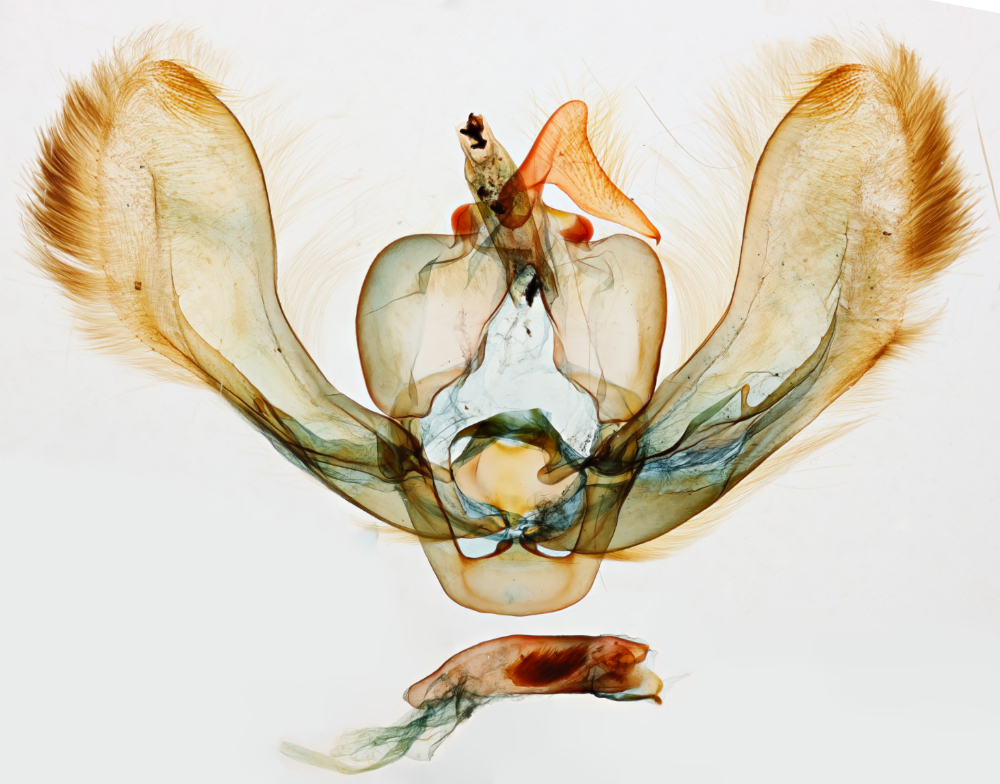
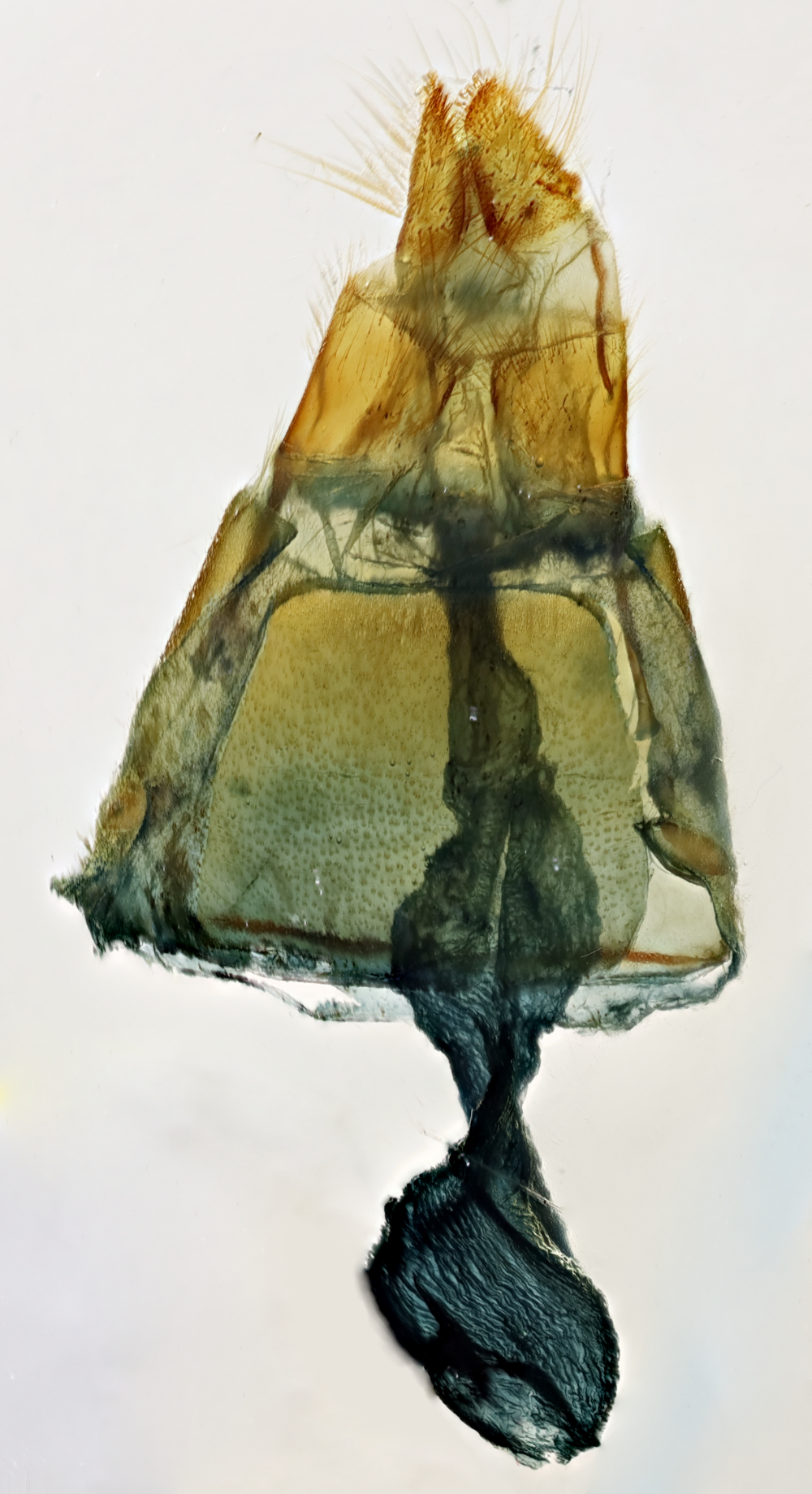
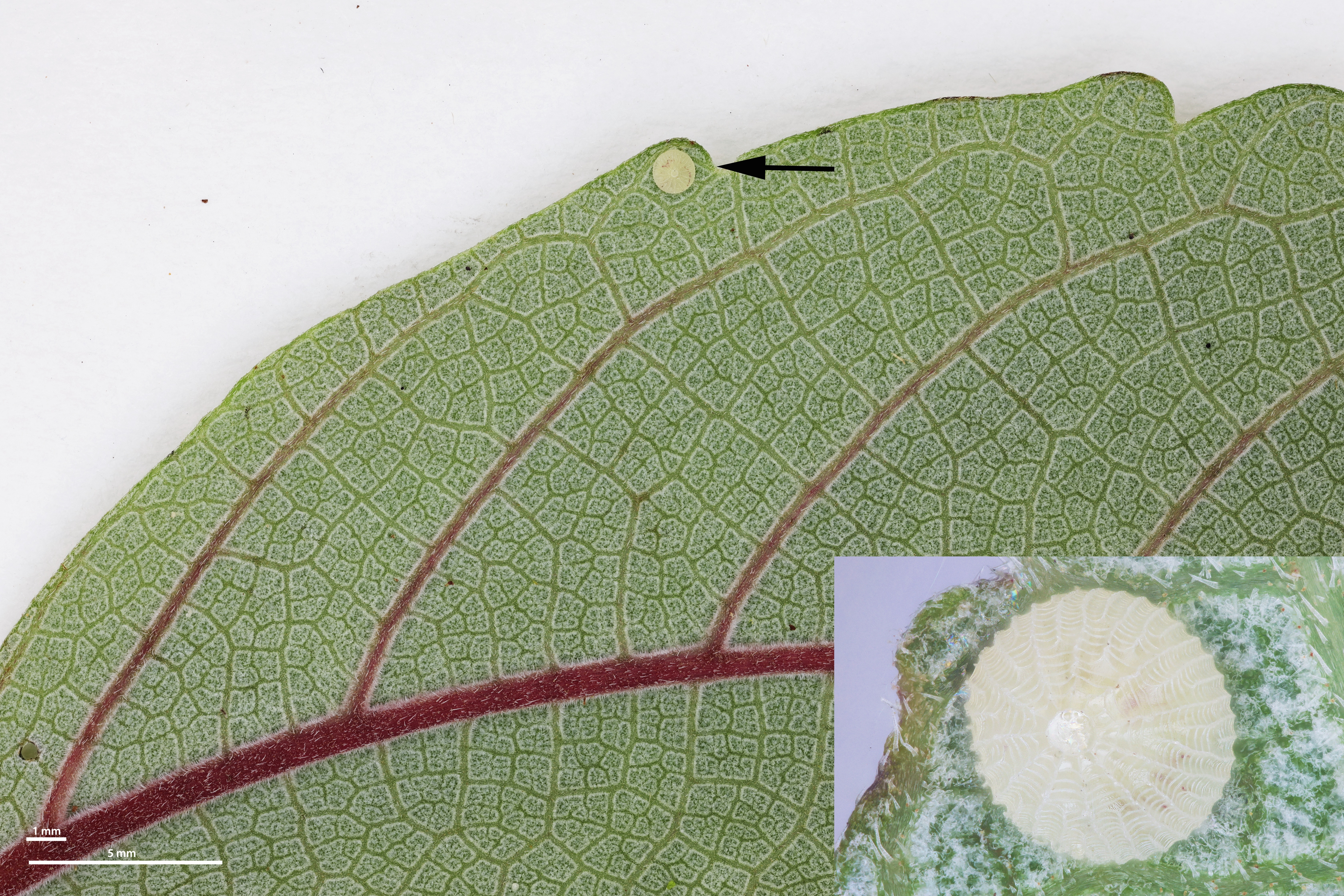
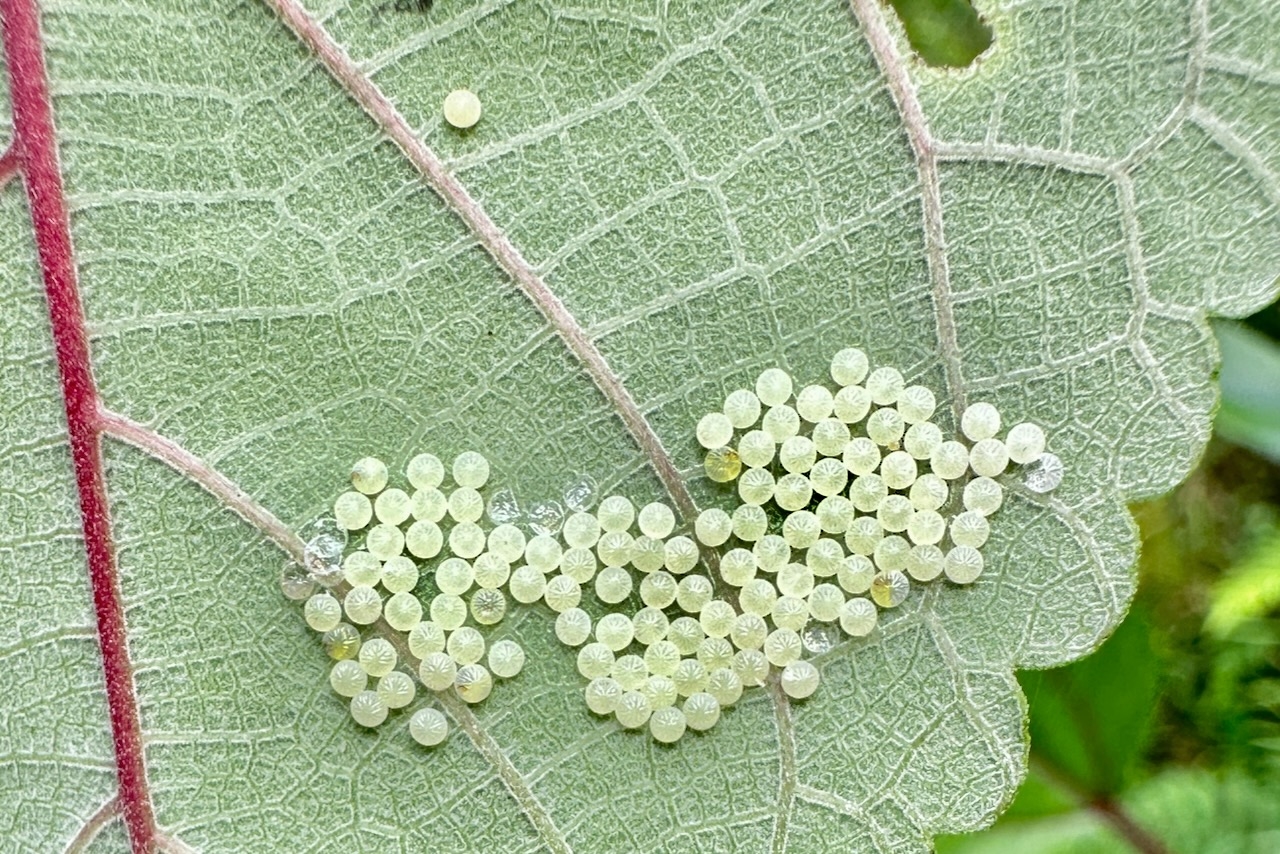
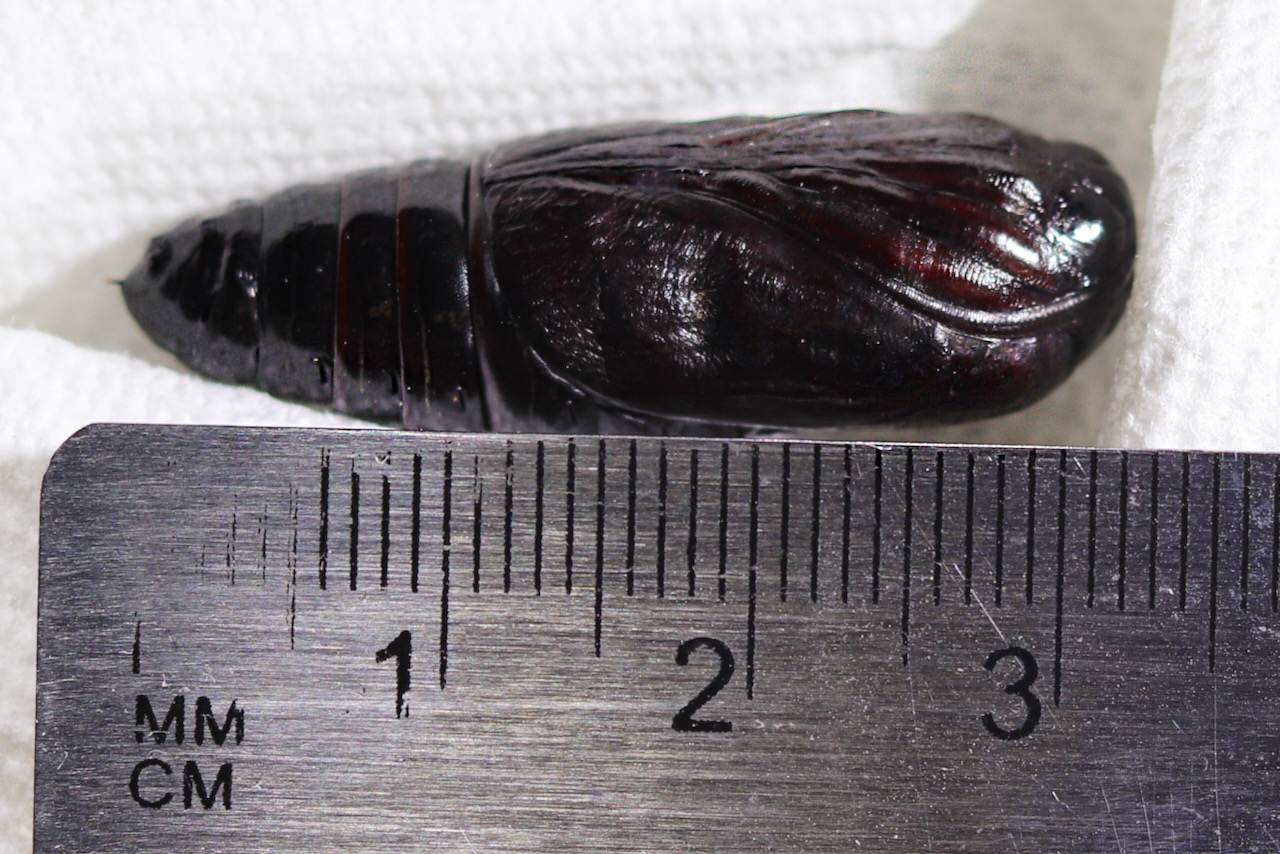
The ramie moth (Arcte coerula) is a recently introduced invasive species from southeast Asia, which feeds on māmaki (Pipturus albidus (Hook. & Arn.) A.Gray ex H.Mann) and other Urticaceae in Hawaiʻi. It was first detected in 2018 on Maui and 2020 on Hawaiʻi island (Au and Wright 2022Au and Wright 2022:
Au MG, Wright AG. 2022. Ramie moth, Arcte coerula (Lepidoptera: Noctuidae): A new invasive pest in Hawaii on endemic plants. Proceedings of the Hawaiian Entomological Society. 54:63–76.). It appeared on Oʻahu in 2024 where it quickly spread island-wide (Au in press). Great care should be taken to prevent it from spreading to additional islands. It is likely to spread as eggs or young larvae on cultivated māmaki plants.
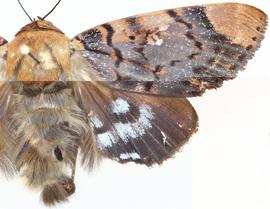
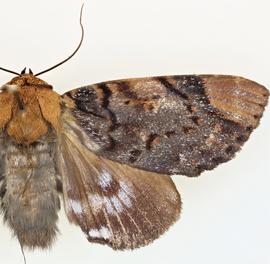
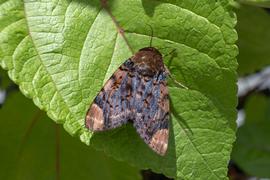
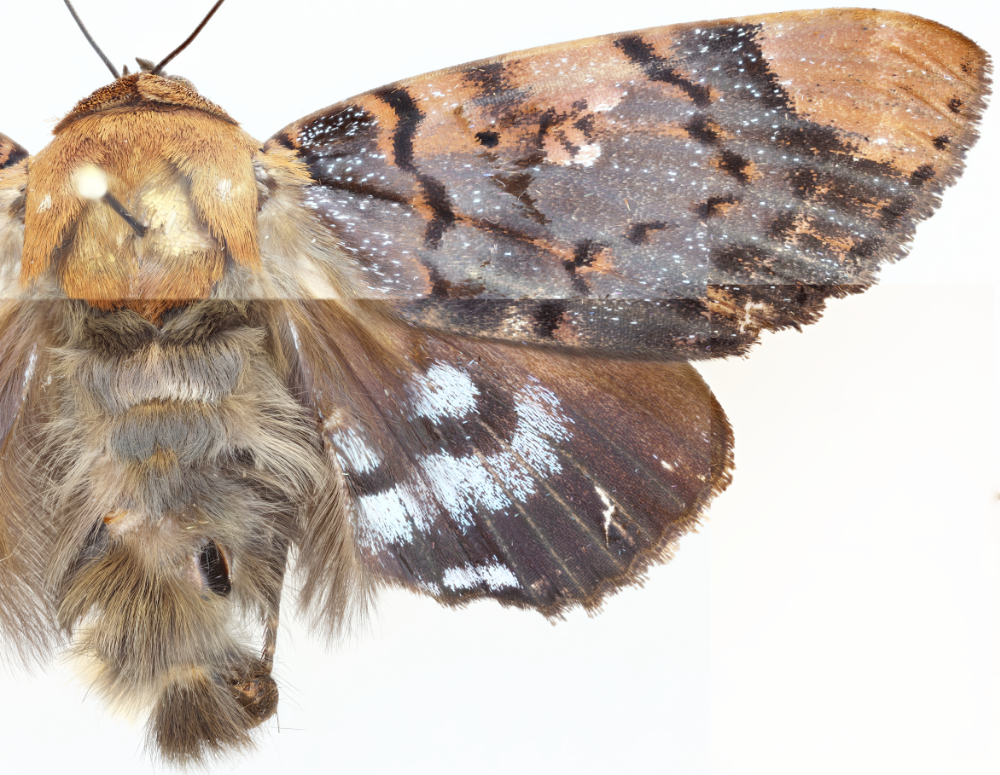
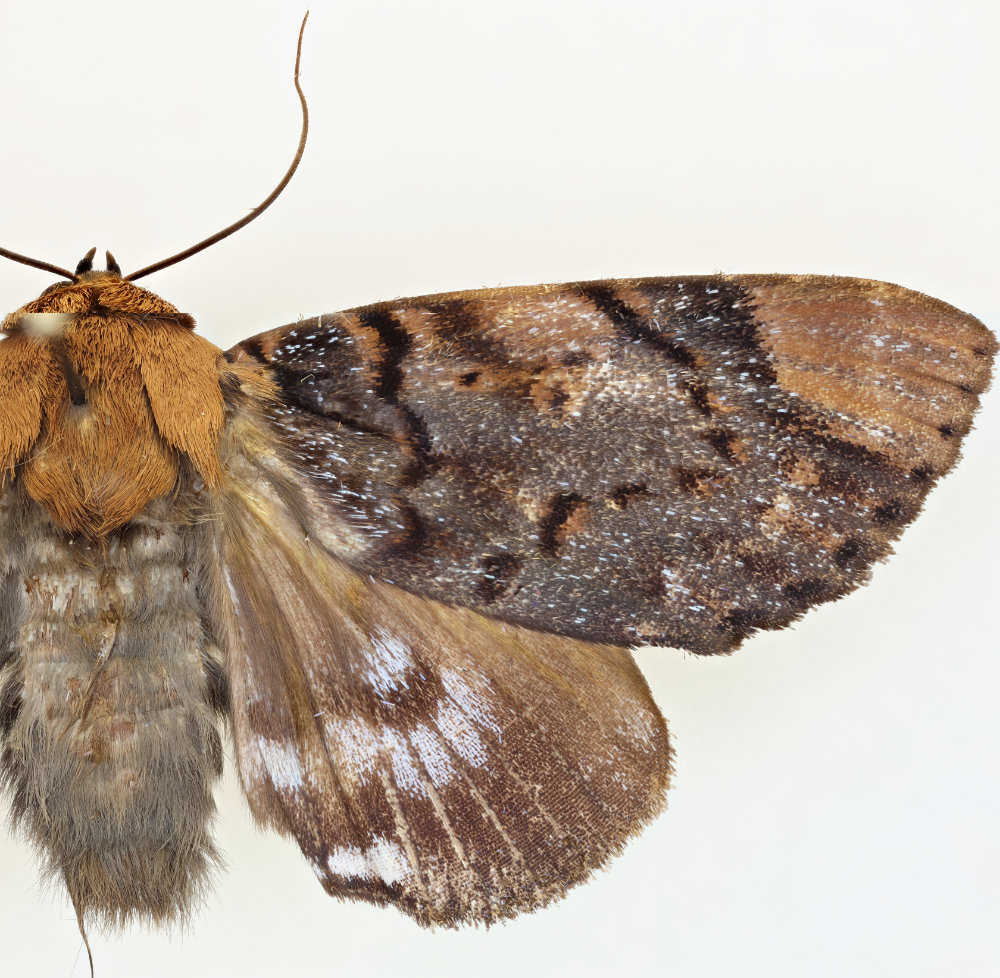
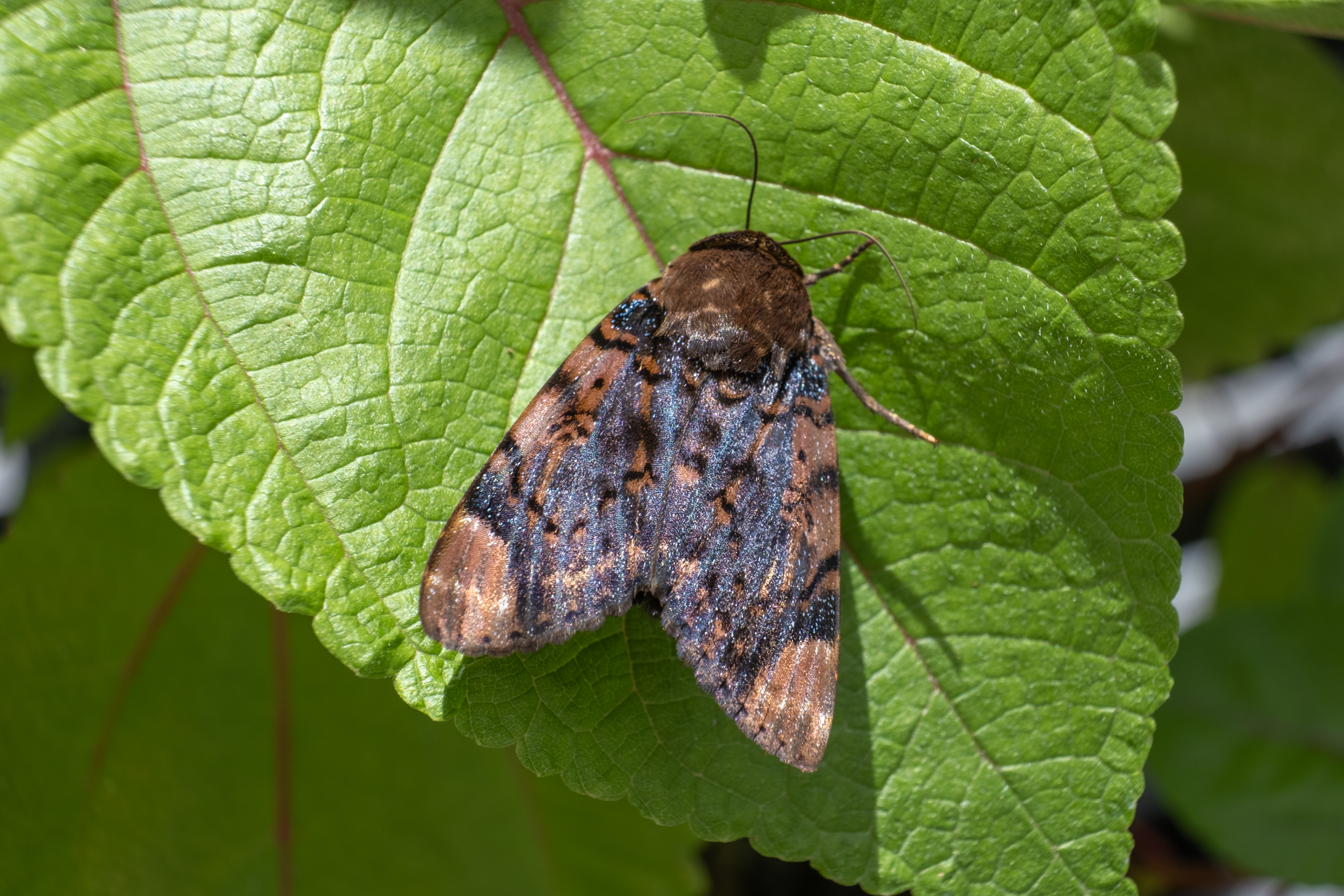
Arcte coerula is the largest noctuid in Hawaiʻi, with a forewing lengthforewing length:
the distance of the forewing in a straight line from the base to the tip of the apex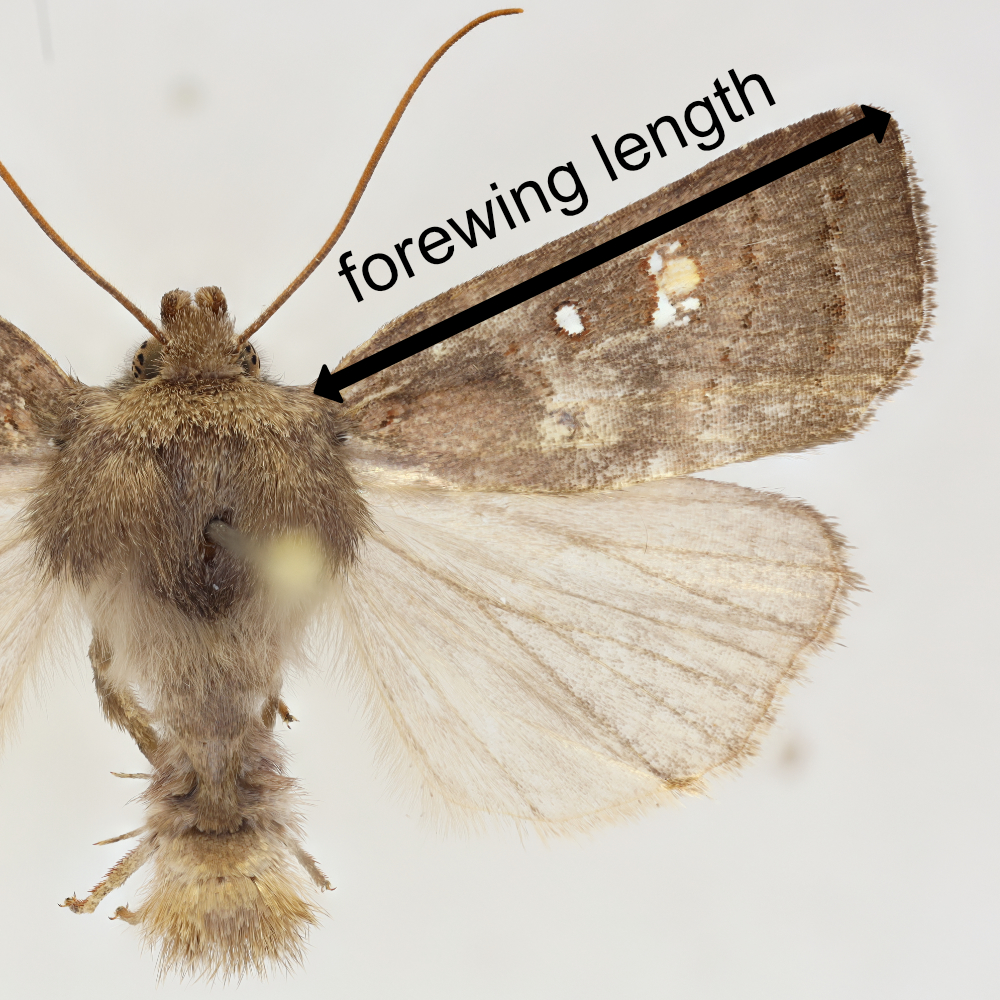 of 22–36 mm (Au and Wright 2022Au and Wright 2022:
Au MG, Wright AG. 2022. Ramie moth, Arcte coerula (Lepidoptera: Noctuidae): A new invasive pest in Hawaii on endemic plants. Proceedings of the Hawaiian Entomological Society. 54:63–76.). The head is dark brown, the forewingsforewing:
the front wing of an insect; the wing attached to the second segment of the thorax (the mesothorax)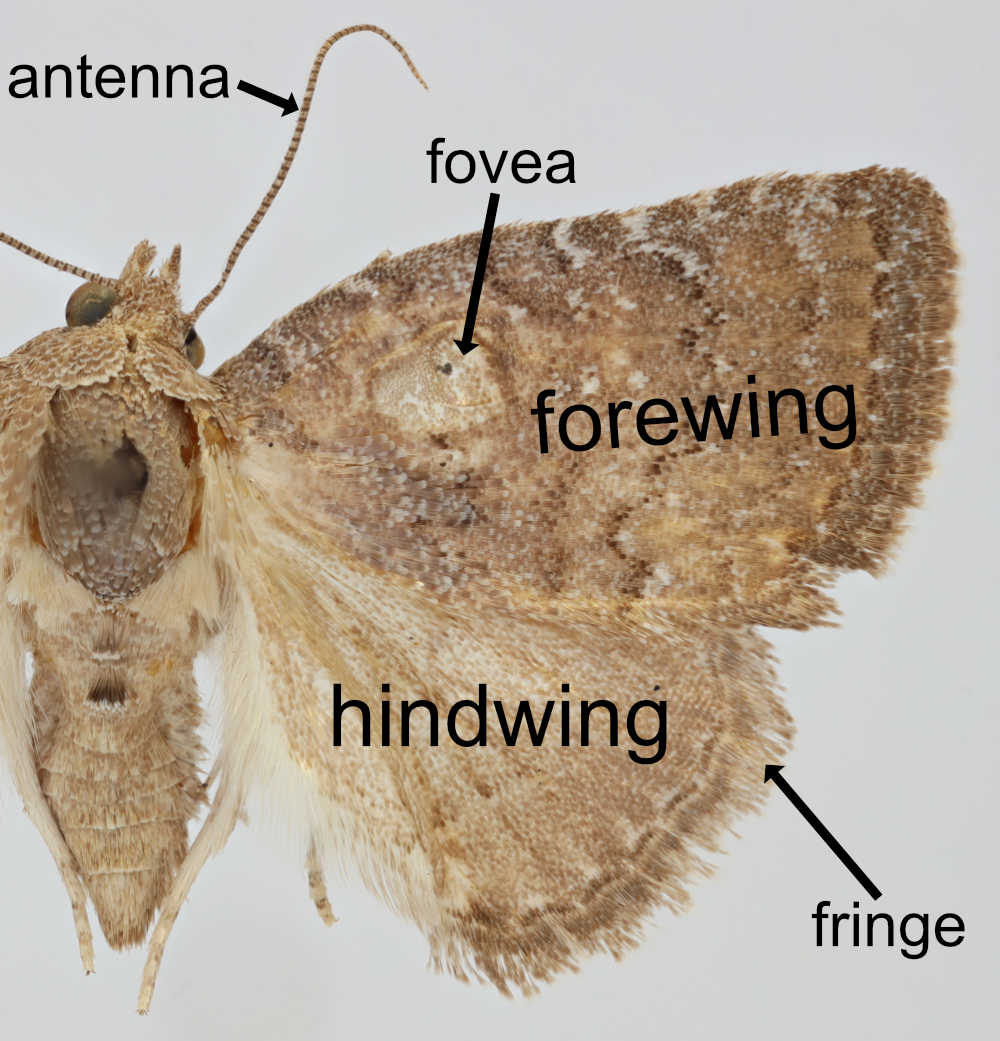 are primarily dark gray, with wavy black antemedial and postmedial linespostmedial line:
a thin, transverse line located distal to the reniform spot, typically on the distal third of the forewing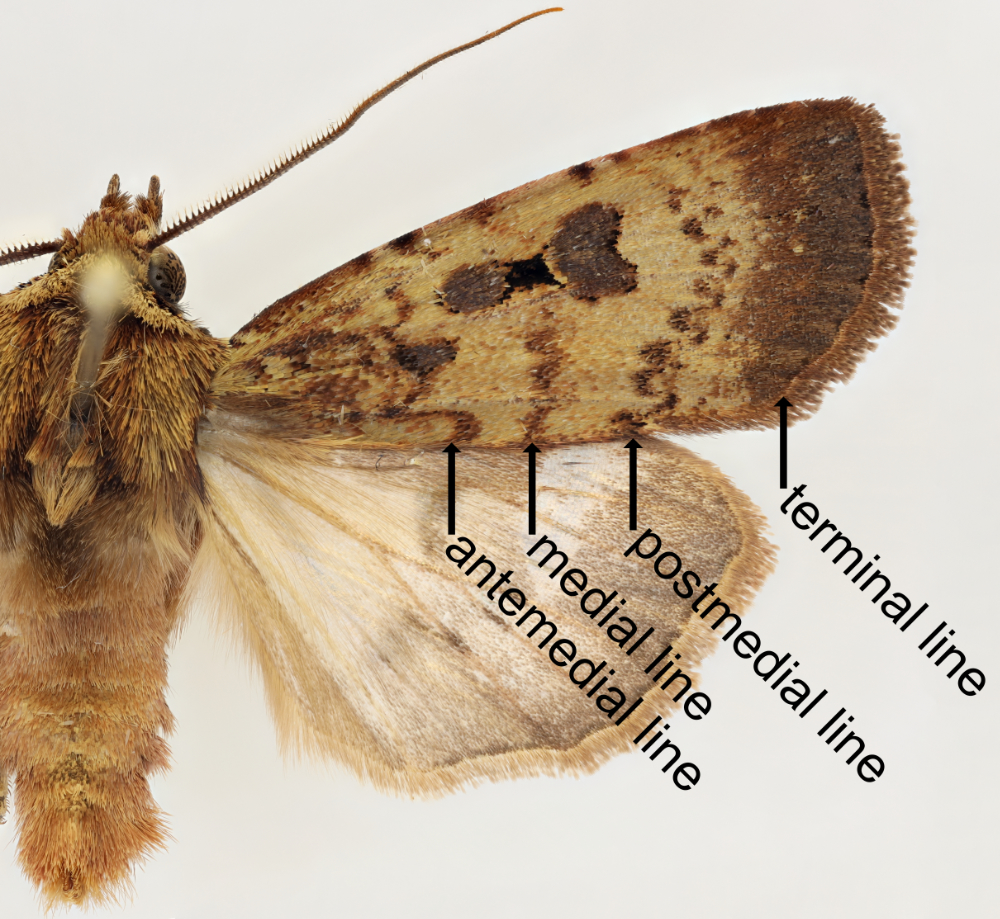 , brown patches along the costa, and metallic blue scales scattered across the forewingforewing:
the front wing of an insect; the wing attached to the second segment of the thorax (the mesothorax). The hindwinghindwing:
the back wing of an insect; the wing attached to the third segment of the thorax (the metathorax)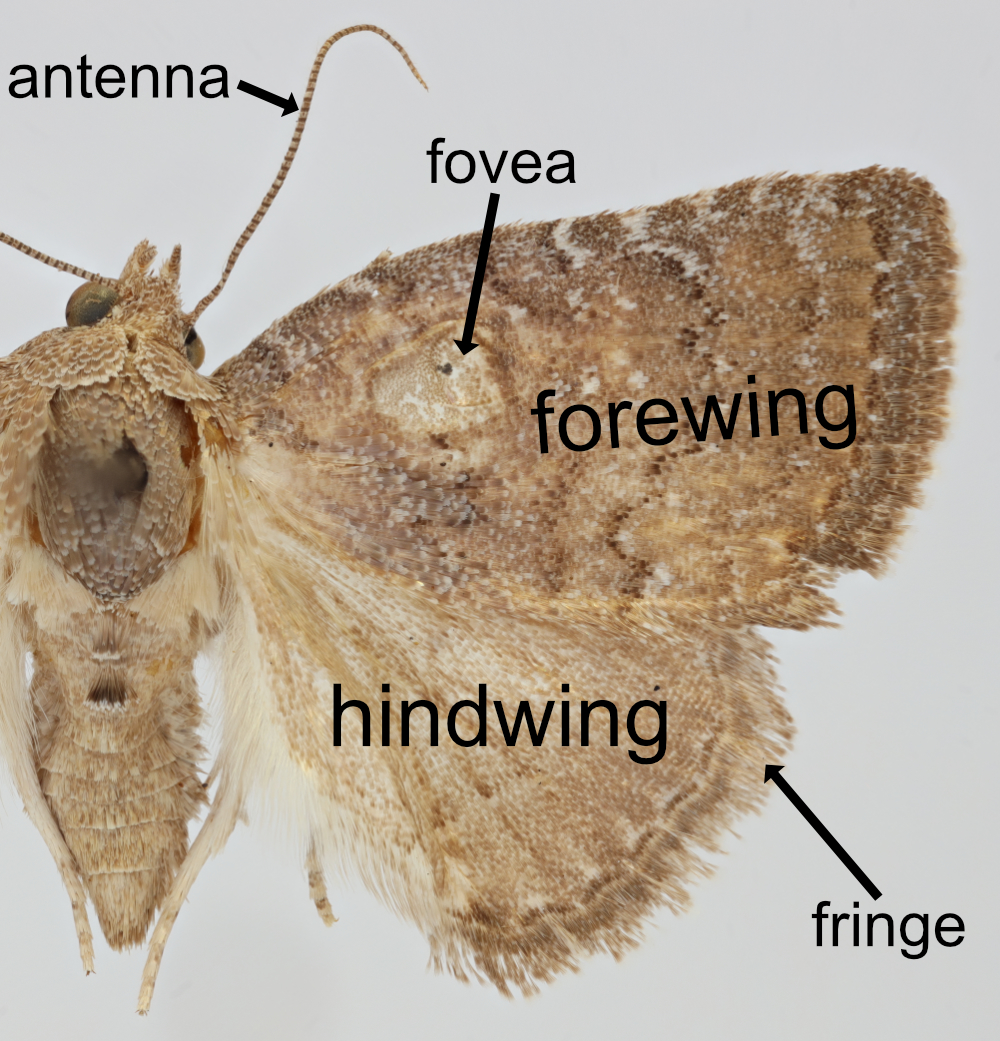 is black with wide bands of metallic silvery-blue scales.
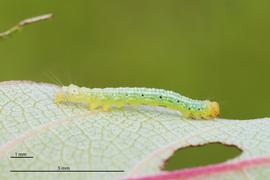
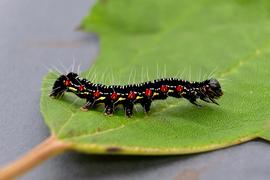
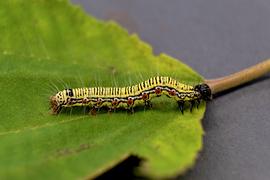
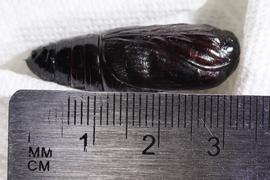
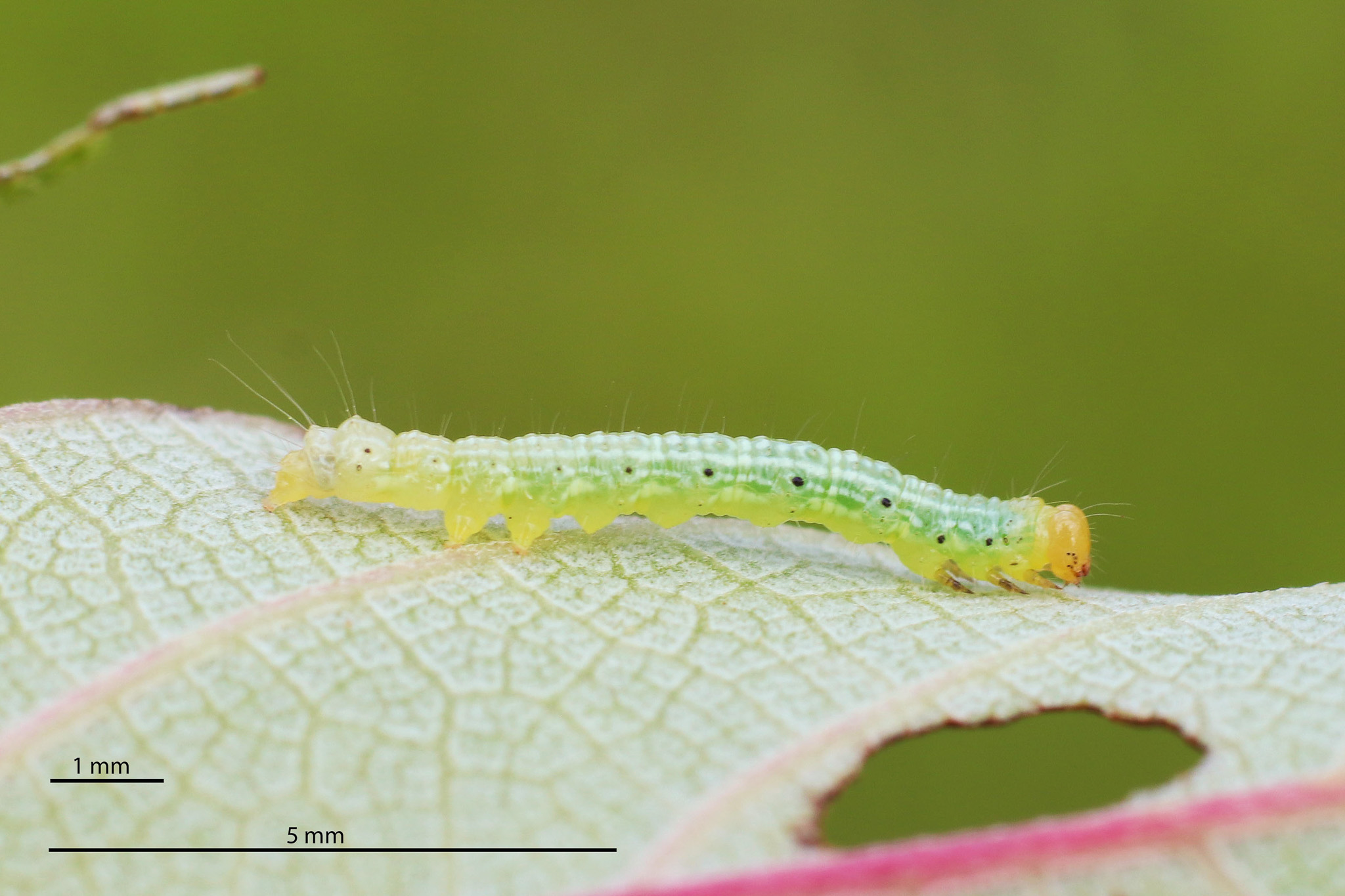
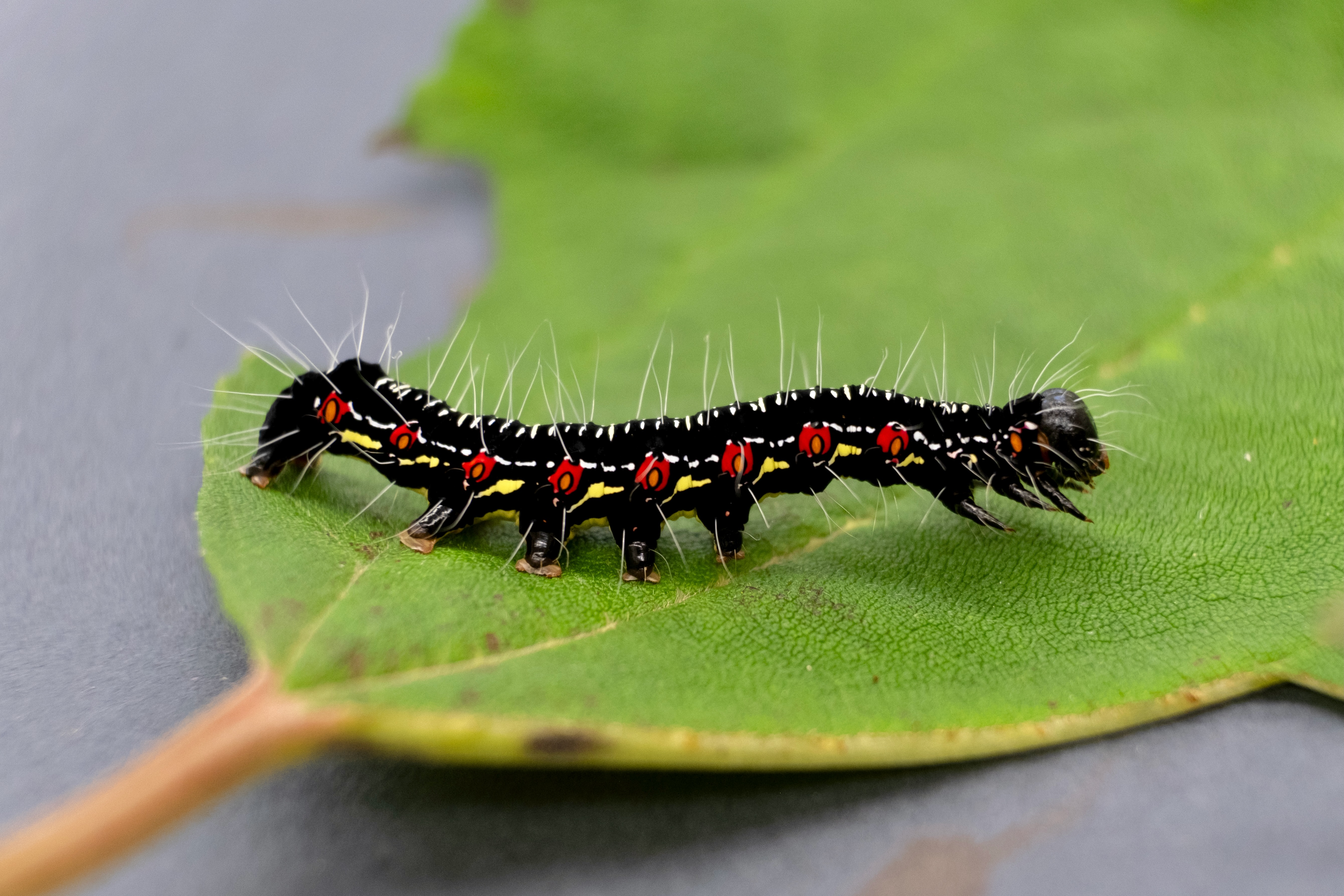
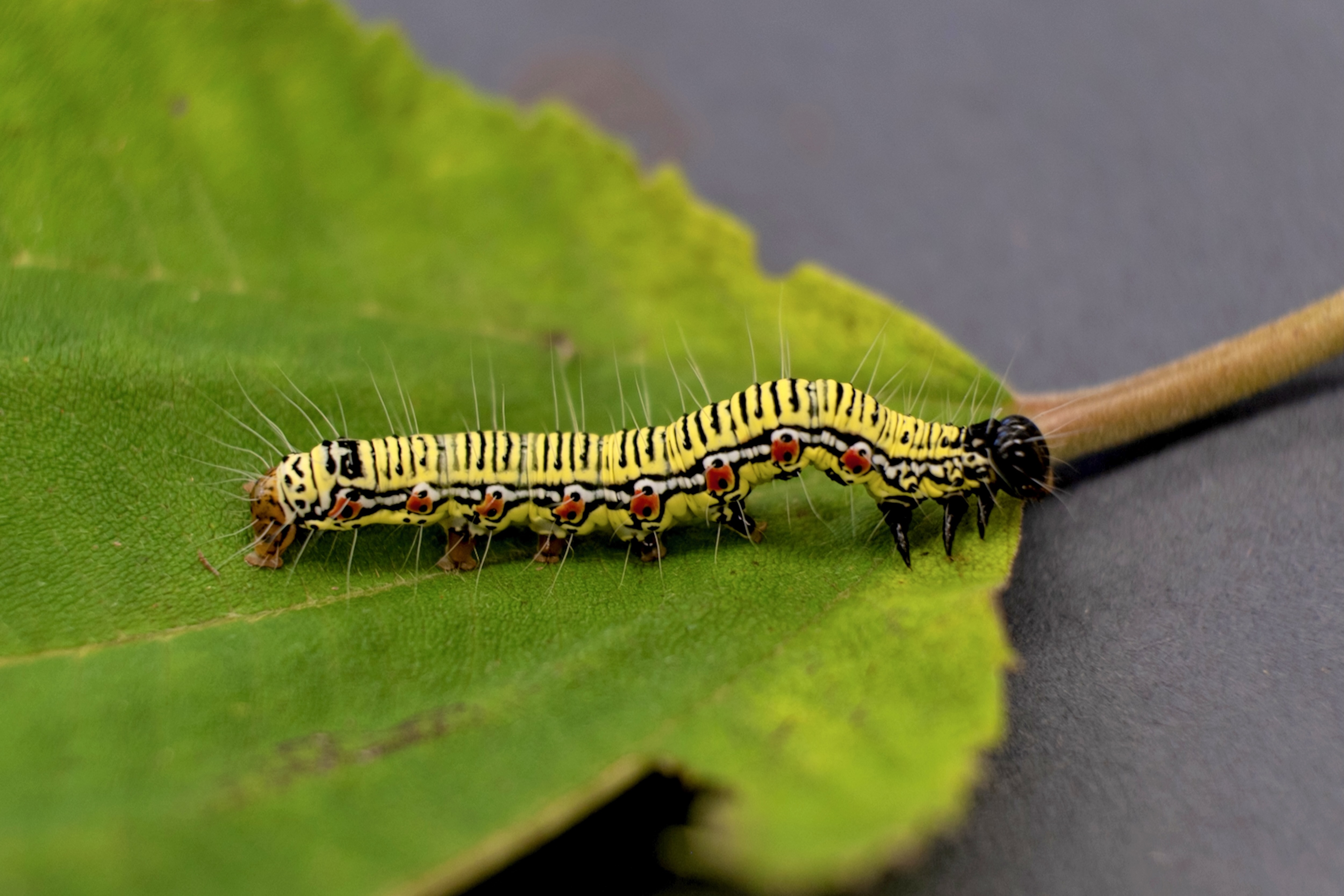
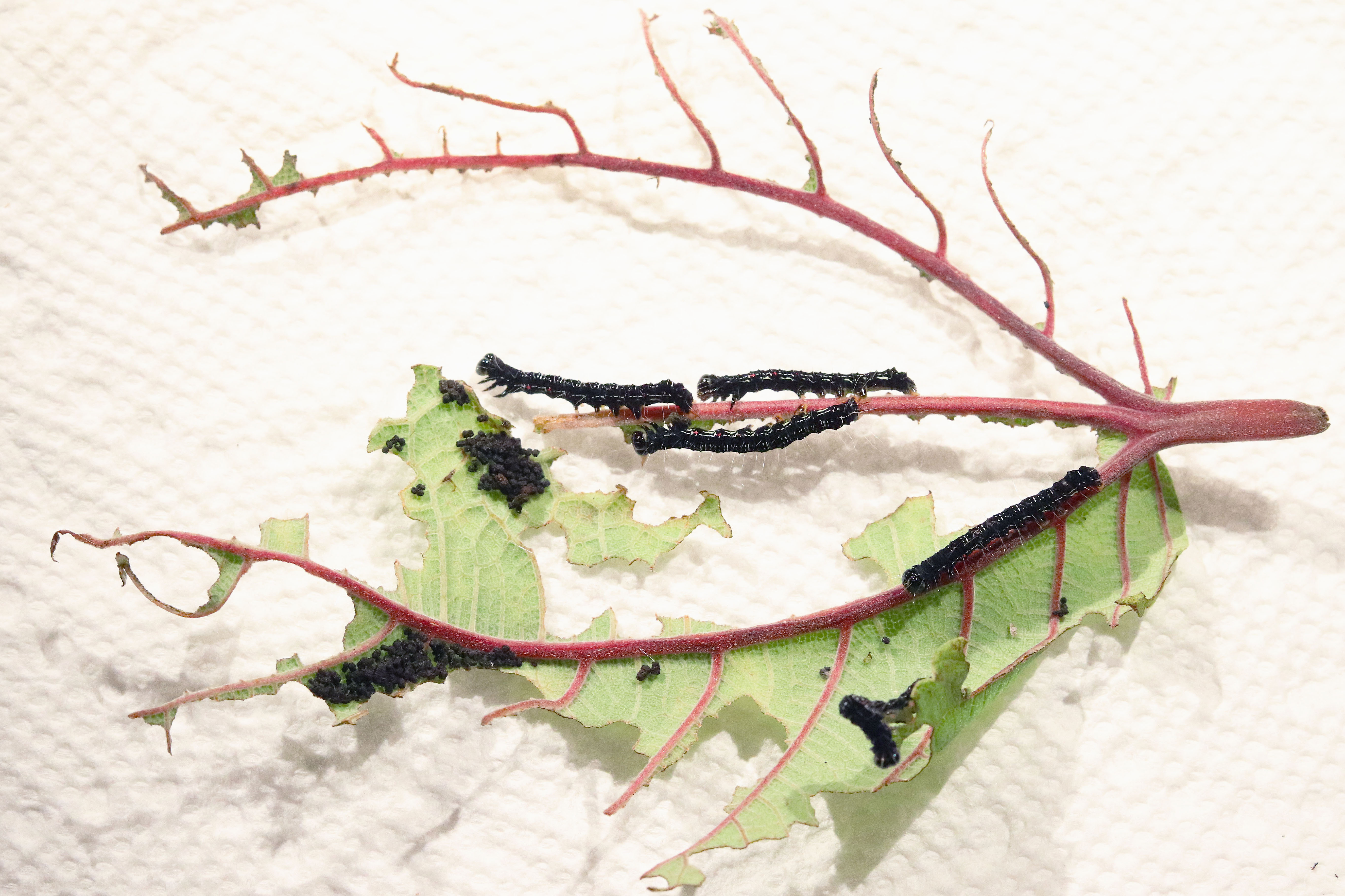
Young larvae of Arcte coerula are green or yellow, with black markings around the spiracles. As they mature, the coloring becomes progressively blacker, often with patches of red and yellow along the body.
Adults of Arcte coerula are unlikely to be confused with any noctuid in Hawaiʻi due to their large size, but they superficially resemble black witch moths (Ascalapha odorata) (Linnaeus, 1758) (Erebidae), another large moth in Hawaiʻi. They can be separated by the shape of the wings and the distinctively silvery-blue scales in A. coerula.
Mature larvae of A. coerula are fairly distinctive, but immature larvae could be confused with young larvae of native nettle-feeding caterpillars such as Udea stellata Butler, 1883 (Crambidae) and Vanessa tameamea (Eschscholtz, 1821) (Nymphalidae). Neither of these species have the distinctive black markings around the spiracles present in A. coerula nor do they display the same defensive behavior when disturbed (see Biology section below).
The current range of Arcte coerula includes much of South Asia, East Asia, Southeast Asia, Australia, and Melanesia. It is unclear how much of this area is within the native range of A. coerula and how much has been aided by human-mediated dispersal.
In Hawaiʻi, A. coerula is currently known from Oʻahu, Maui, and Hawaiʻi island where it has been found from sea level to ca. 4000 ft in elevation.
Larvae of Arcte coerula feed on plants in the nettle family (Urticaceae). They have been recorded feeding on Boehmeria spp., Cypholophus spp., Debregeasia spp., Girardinia spp., and Pipturus spp. (Jackson and Mua 2016Jackson and Mua 2016:
Jackson G, Mua M. 2016. Fact sheet—ramie moth (358). Lucid—Pacific Pests, Pathogens & Weeds.). Robinson et al. (2001)Robinson et al. (2001):
Robinson GS, Ackery PR, Kitching IJ, Beccaloni GW, Hernández LM. 2001. Hostplants of the moth and butterfly caterpillars of the Oriental Region. Kuala Lumpur, Malaysia, Southdene Sdn Bhd. 774 pp. listed Vitis sp. (Vitaceae) and Trema tomentosa (Roxb.) H.Hara (Cannabaceae) as additional hosts, but this requires verification. In Hawaiʻi, they have only been recorded on māmaki (Pipturus albidus) (Au and Wright 2022Au and Wright 2022:
Au MG, Wright AG. 2022. Ramie moth, Arcte coerula (Lepidoptera: Noctuidae): A new invasive pest in Hawaii on endemic plants. Proceedings of the Hawaiian Entomological Society. 54:63–76.), but other suitable native hosts exist (e.g., Boehmeria grandis (Hook. & Arn.) A.Heller, Touchardia latifolia Gaudich., Touchardia sandwicensis (Wedd.) Magnacca, and Urera kaalae Wawra).
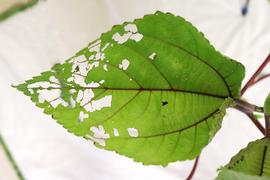
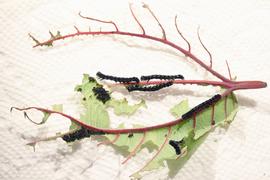
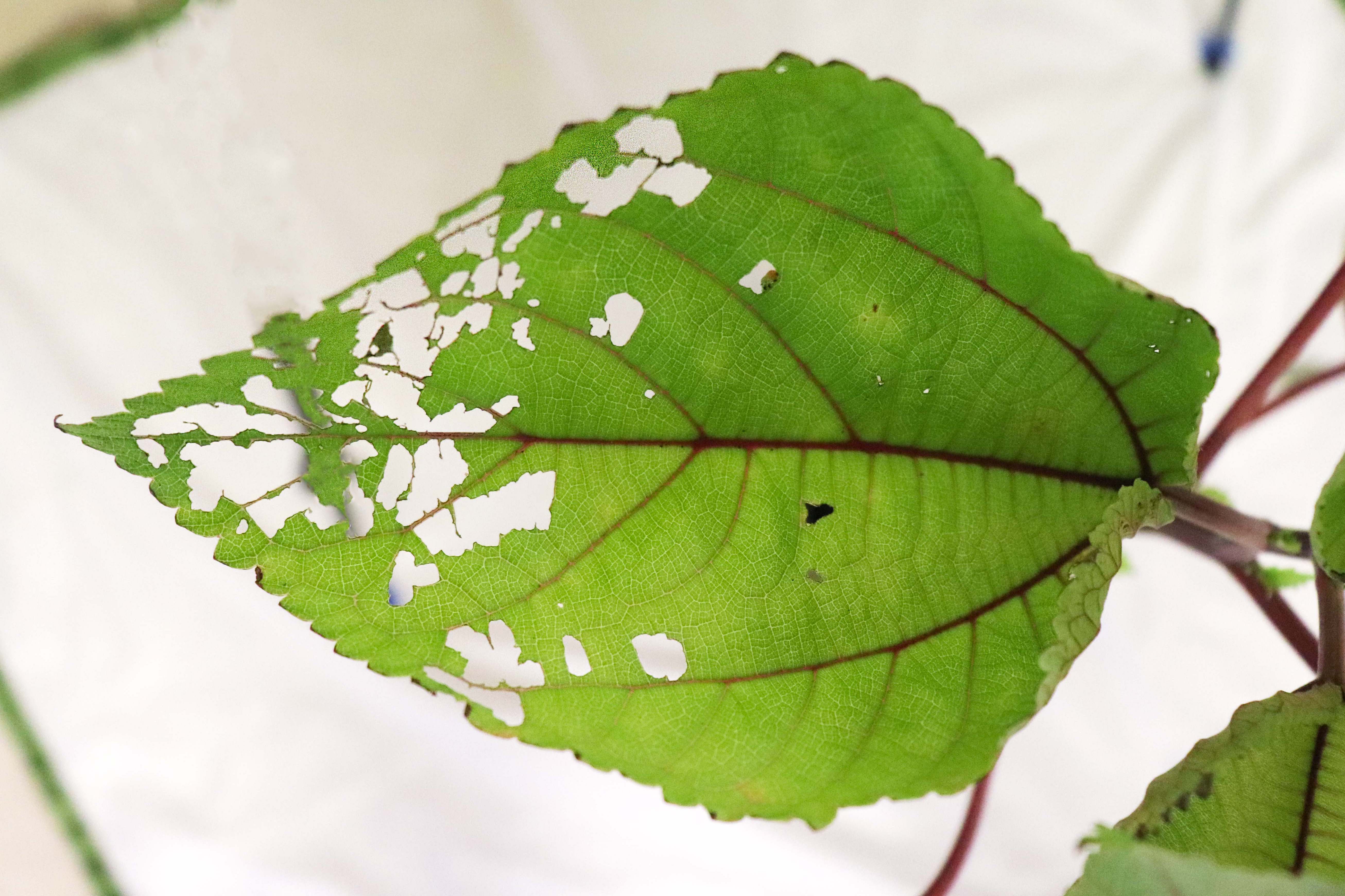
Larvae strip entire leaves except for the main veins, causing massive defoliation of plants, which can be fatal for young plants (Au and Wright 2022Au and Wright 2022:
Au MG, Wright AG. 2022. Ramie moth, Arcte coerula (Lepidoptera: Noctuidae): A new invasive pest in Hawaii on endemic plants. Proceedings of the Hawaiian Entomological Society. 54:63–76.).
When disturbed, young larvae will drop from leaves. More mature larvae will adopt a more aggressive defense: the larva rears up its head and legs, thrashes around, and regurgitates a green liquid to defend itself (Au and Wright 2022Au and Wright 2022:
Au MG, Wright AG. 2022. Ramie moth, Arcte coerula (Lepidoptera: Noctuidae): A new invasive pest in Hawaii on endemic plants. Proceedings of the Hawaiian Entomological Society. 54:63–76.).
Author: Kyhl A. Austin
Content last updated May 2026
idtools.org