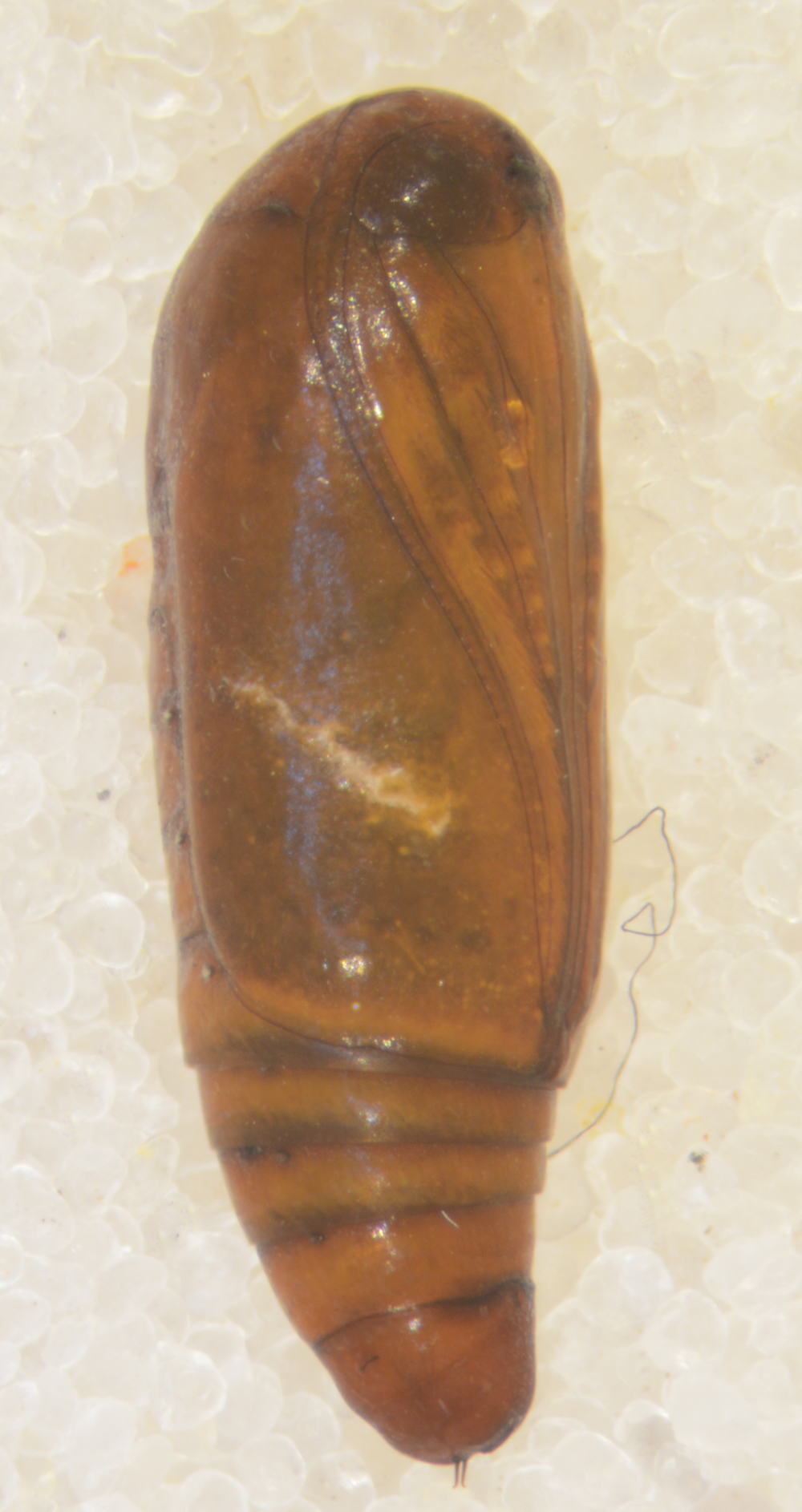
ADVENTIVE
Amyna natalis (Walker, 1858)
Higher taxonomy: Noctuidae: Bagisarinae
Common name: ʻilima moth, ʻuhaloa moth
Amyna natalis is an introduced species that is relatively common in dry forests in Hawaiʻi where it feeds on ʻilima (Sida fallax Walp.), ʻuhaloa (Waltheria indica L.), and related plants in the family Malvaceae.
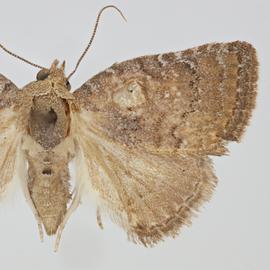
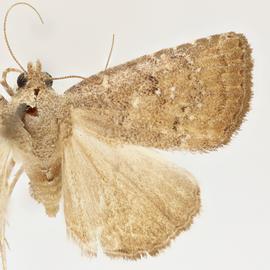
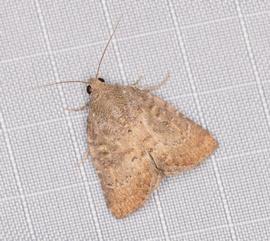
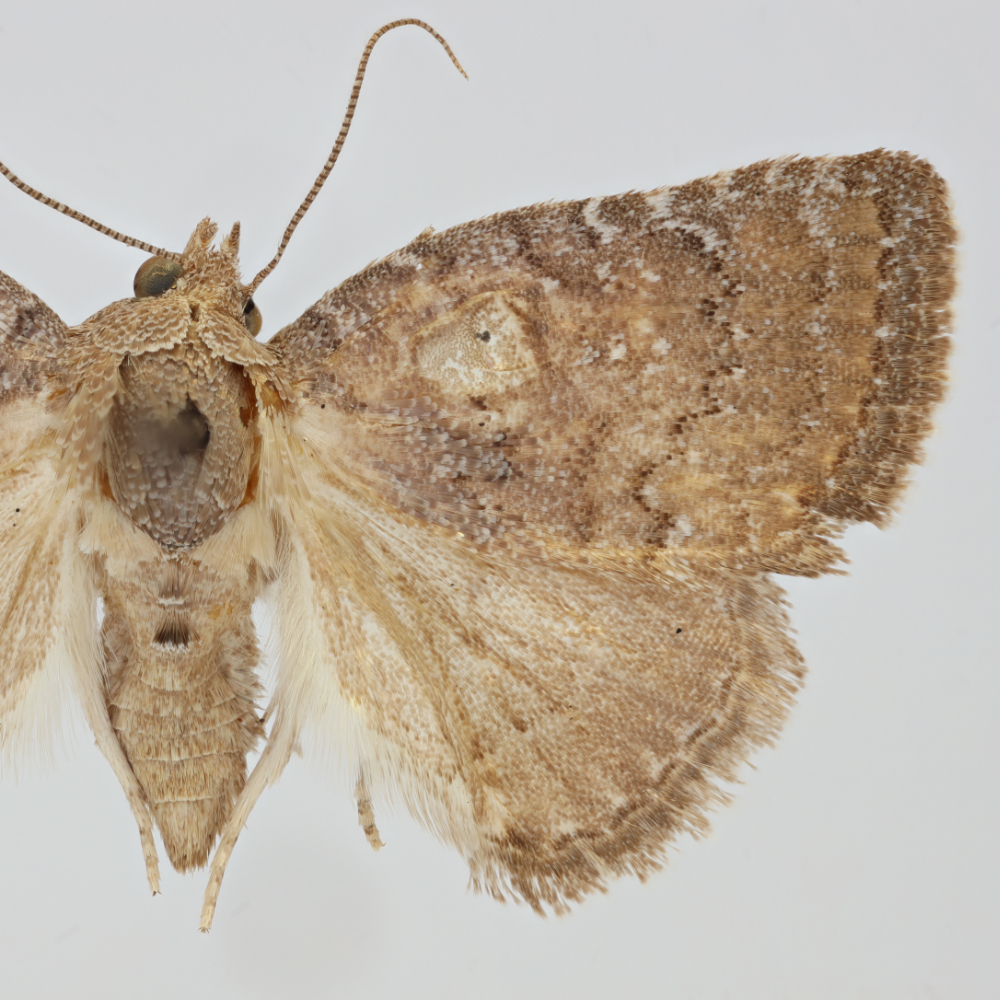
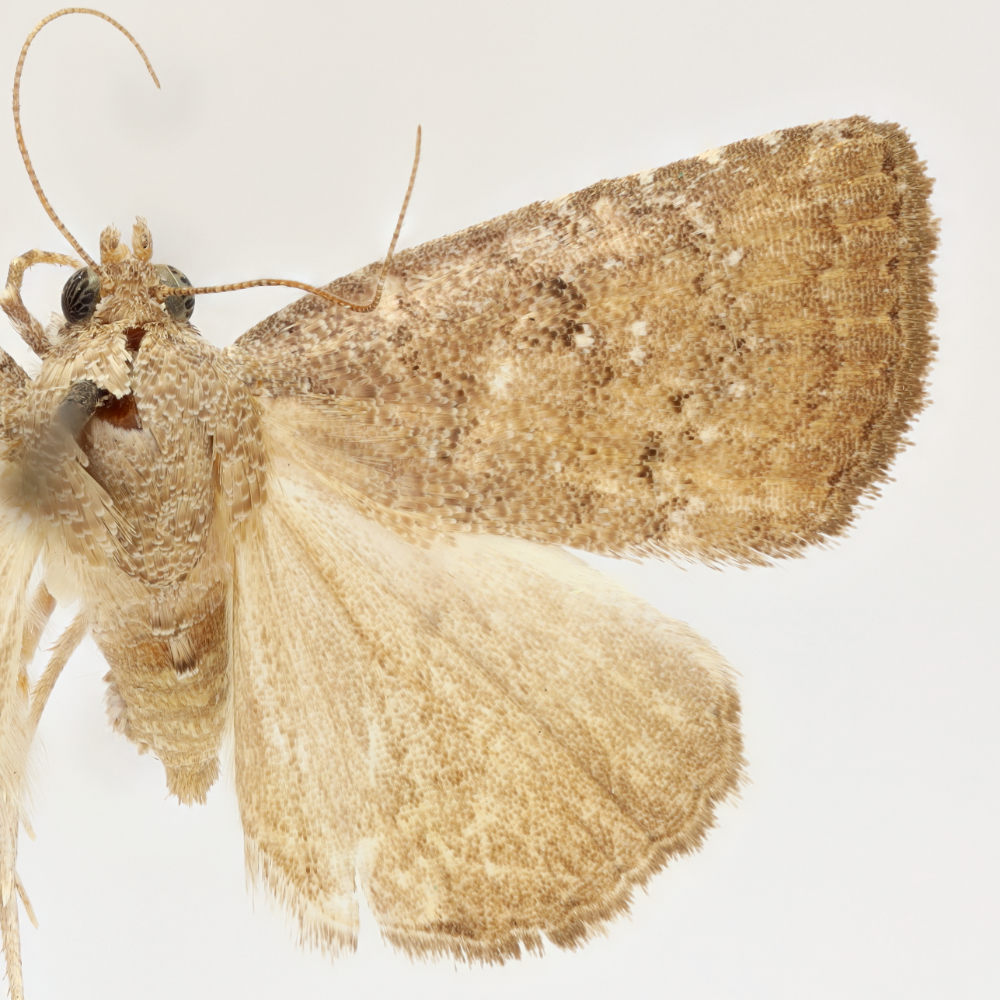
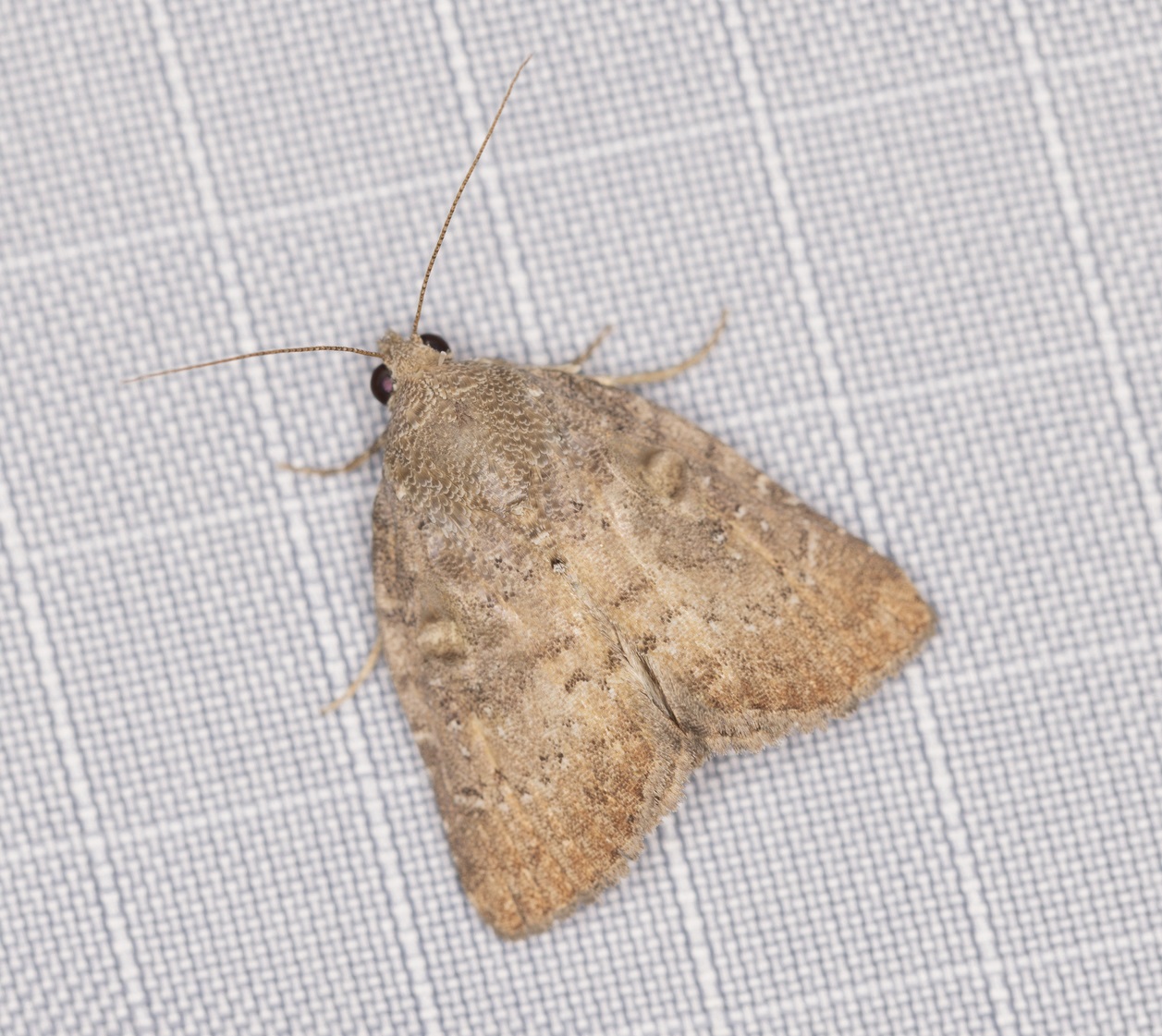
Amyna natalis is a relatively small noctuid (forewing lengthforewing length:
the distance of the forewing in a straight line from the base to the tip of the apex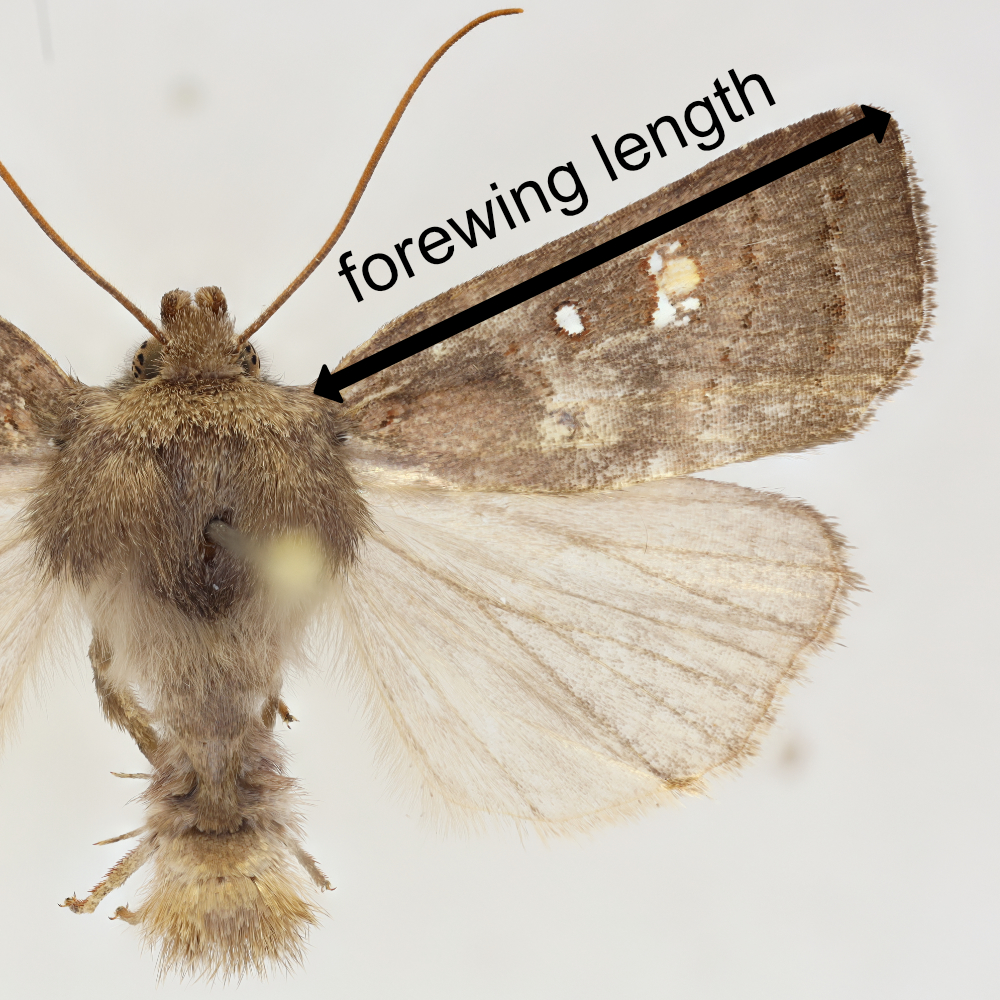 8–11 mm). The forewingforewing:
the front wing of an insect; the wing attached to the second segment of the thorax (the mesothorax)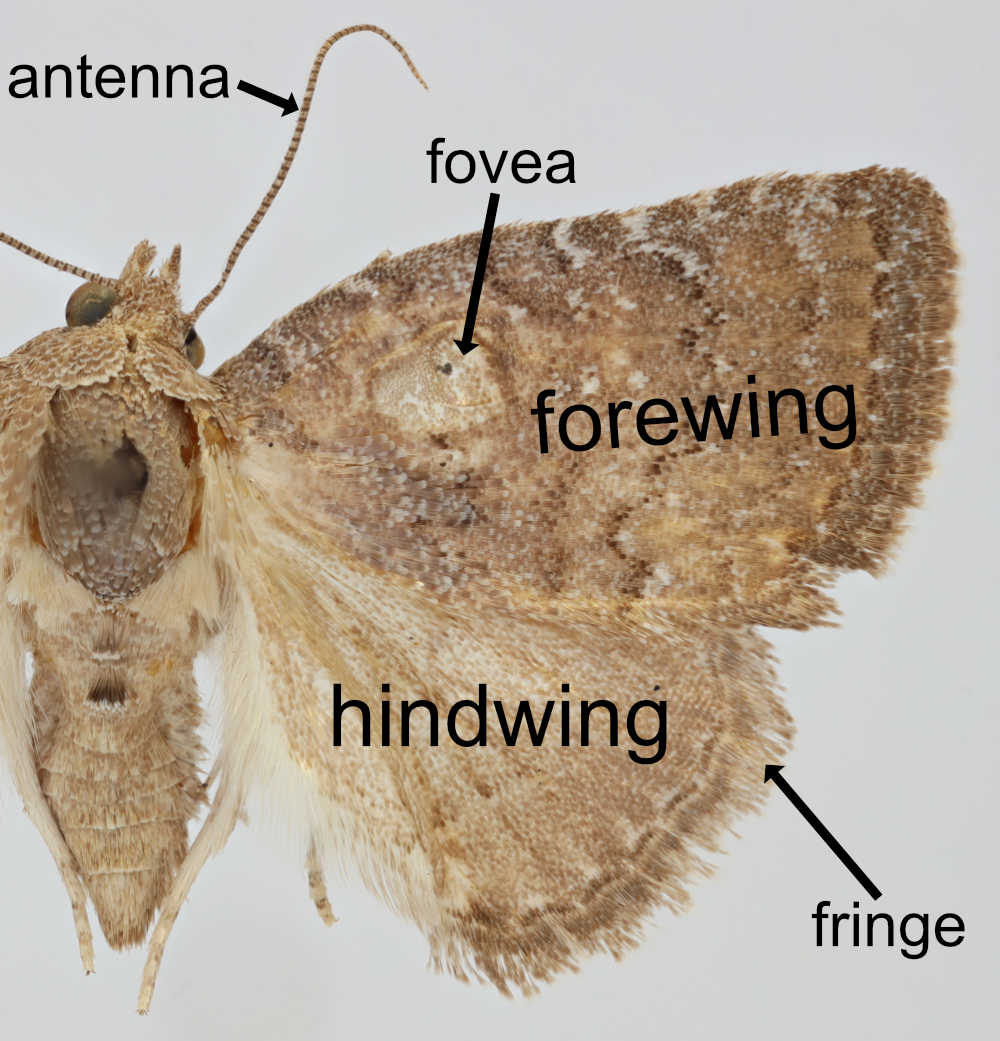 is pale brown, with indistinct, undulating antemedial and postmedial lines, an indistinct, pale yellow 8-shaped reniform spotreniform spot:
a spot, often broad bean- or kidney-shaped, found at the distal end of the discal cell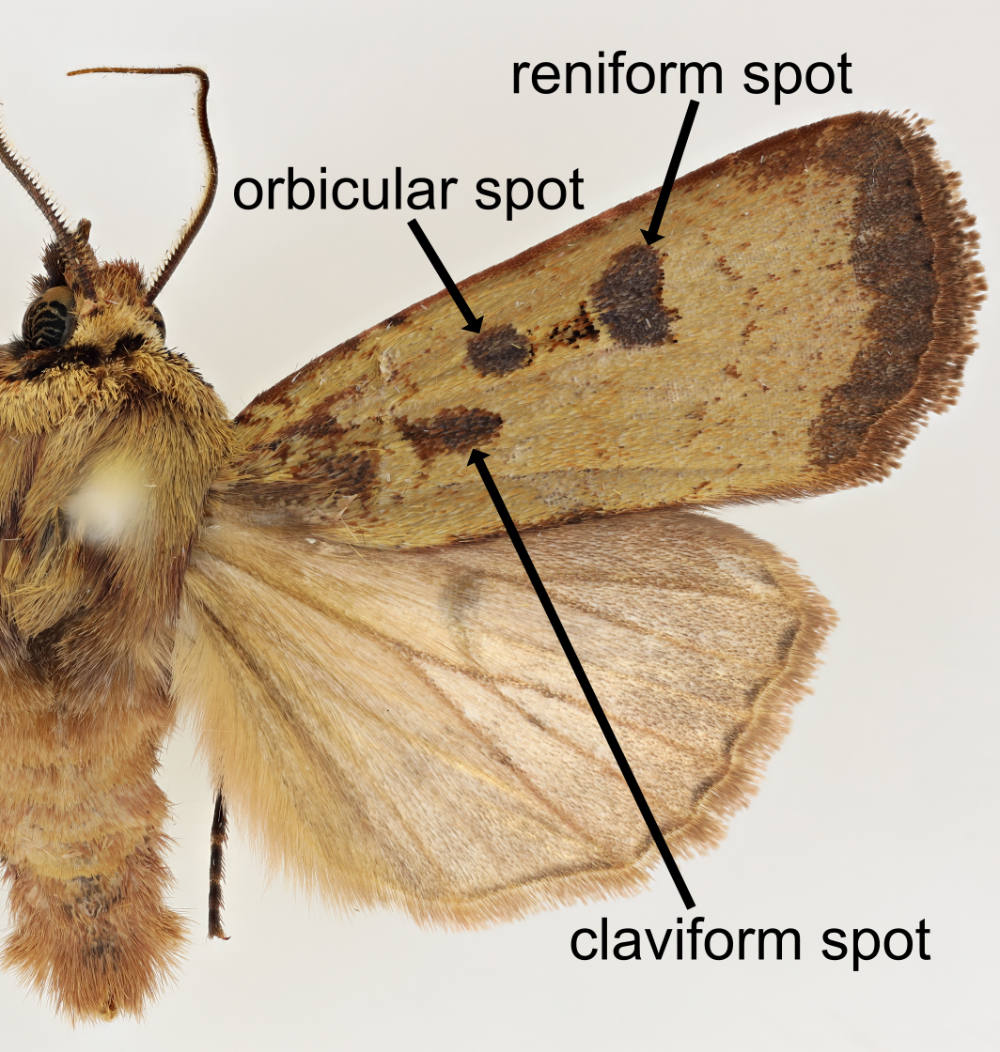 . Males have a conspicuous foveafovea:
a modified area on the male forewing; it often appears as a large, raised pit or depression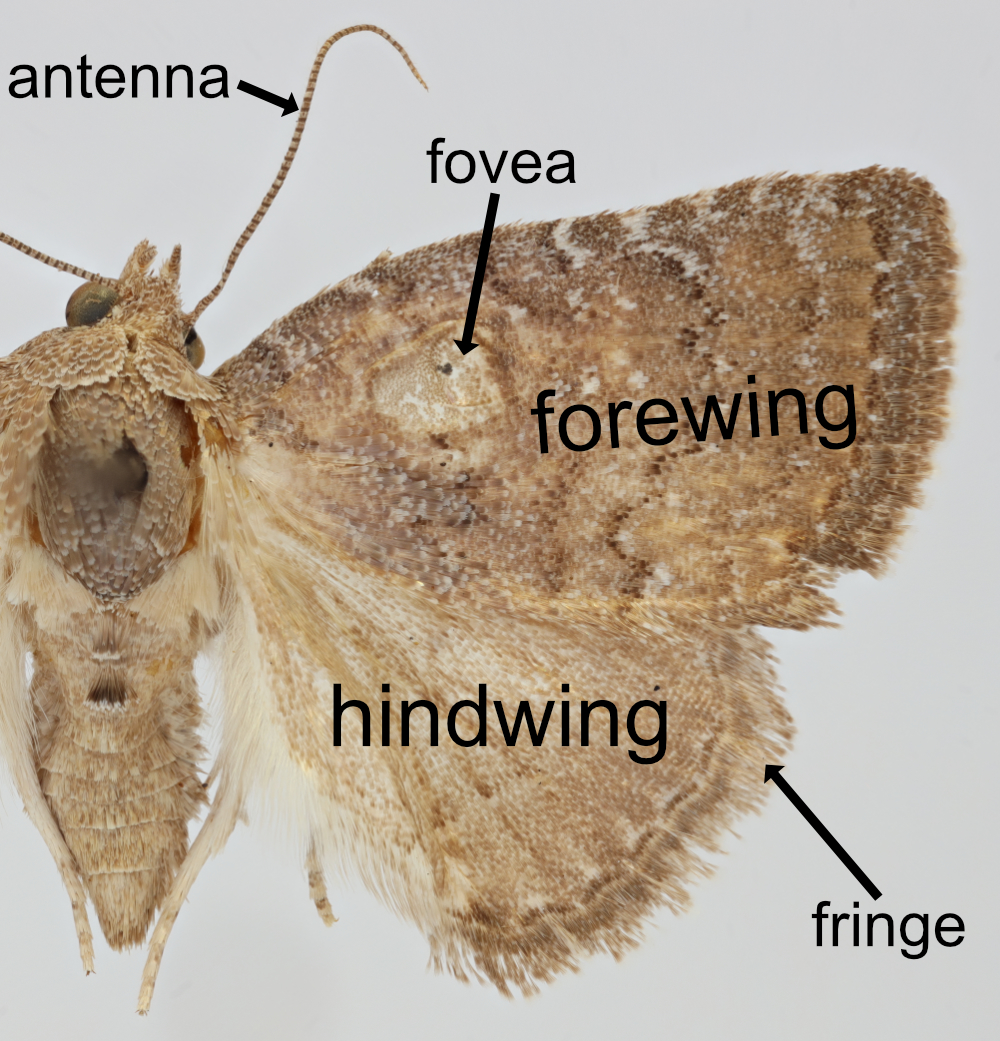 on the forewingforewing:
the front wing of an insect; the wing attached to the second segment of the thorax (the mesothorax), which is used in sound production (Heller and Achmann 1993Heller and Achmann 1993:
Heller K-G, Achmann R. 1993. The ultrasonic song of the moth Amyna natalis (Lepidoptera: Noctudidae: Acontiinae). Bioacoustics. 5(1–2):89–97.). The hindwinghindwing:
the back wing of an insect; the wing attached to the third segment of the thorax (the metathorax)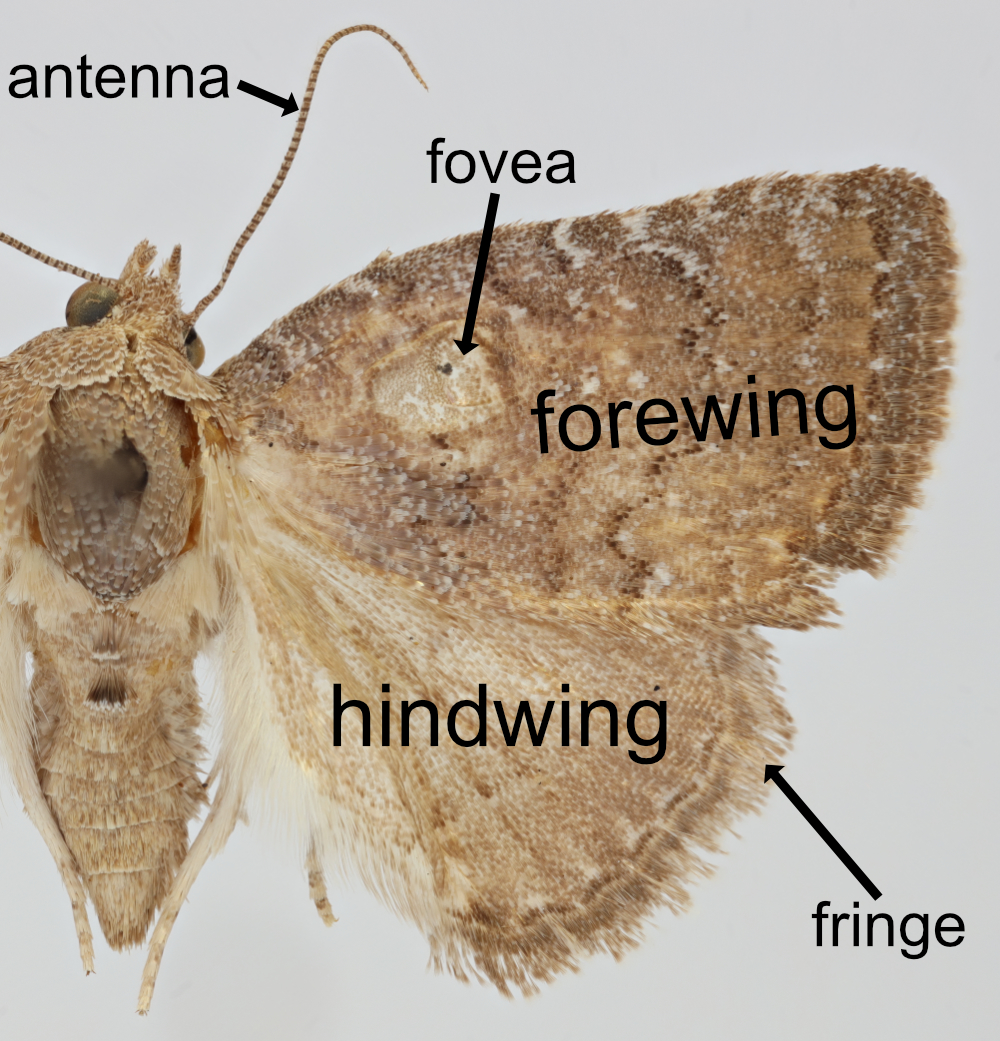 is light brown.
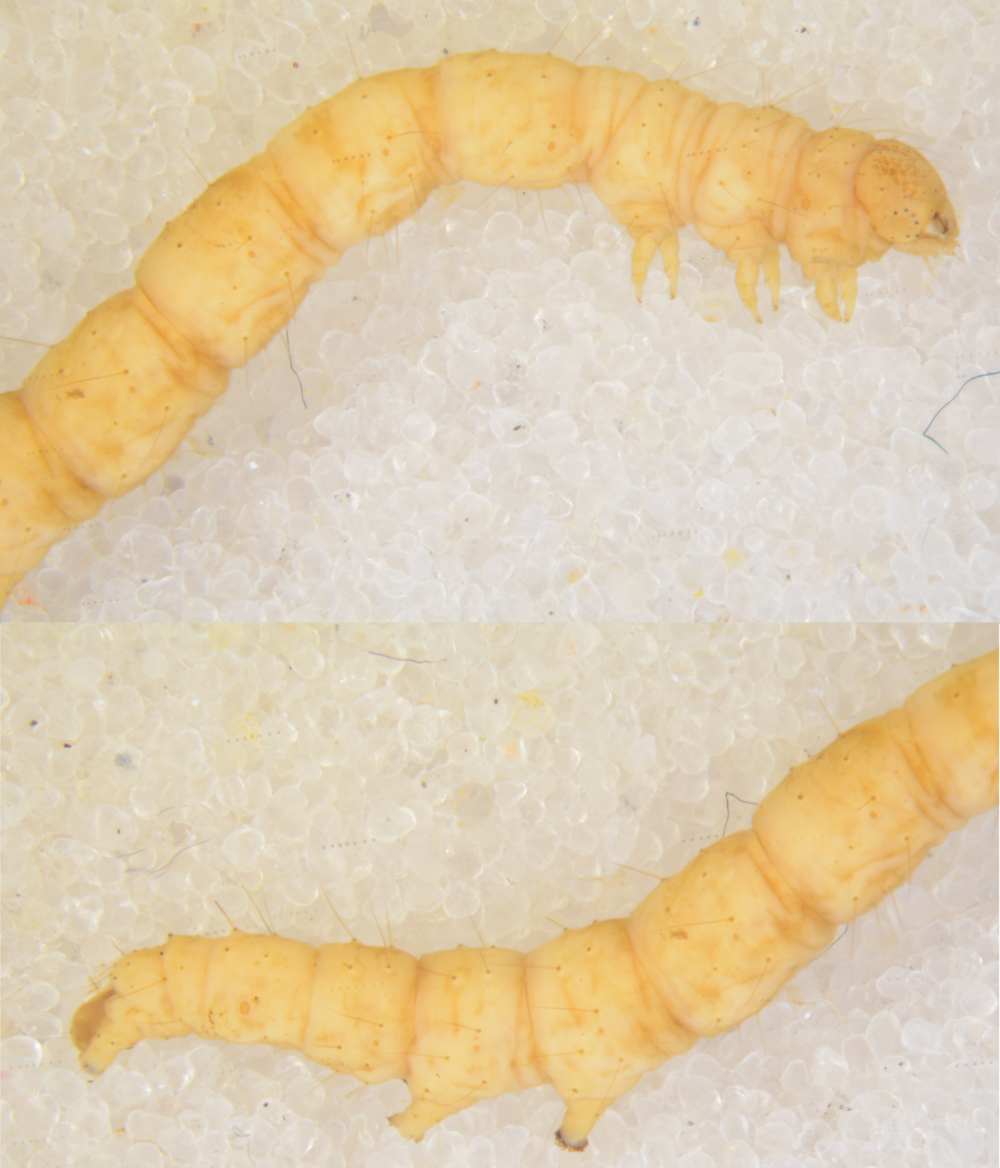
The larva of A. natalis was described by Gardner (1941)Gardner (1941):
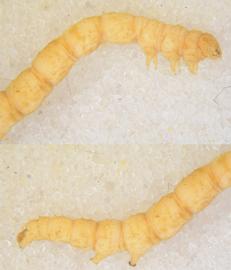
Gardner JCM. 1941. Immature stages of Indian Lepidoptera, II. Noctuidae. Hypsidae. Indian Forest Records, Entomology (New Series). 6(8). Manager of Publications, Government of India, Delhi. as having the head green and its granules well defined and blackish. The body is pale green with indistinct lighter and darker lines dorsally and a whitish subspiracular one. The spiracles are pale with black rims. Only two pairs of abdominal prolegs are present, which will separate all other noctuids in Hawaiʻi (which have four pairs) except Plusiinae.
The small size and the presence of a distinct foveafovea:
a modified area on the male forewing; it often appears as a large, raised pit or depression on the male forewingforewing:
the front wing of an insect; the wing attached to the second segment of the thorax (the mesothorax) should render Amyna natalis immediately recognizable in Hawaiʻi. Females of two other small species, Elaphria nucicolora and Mythimna scottii, could be confused with A. natalis, but both species have narrower forewingsforewing:
the front wing of an insect; the wing attached to the second segment of the thorax (the mesothorax) and much paler hindwingshindwing:
the back wing of an insect; the wing attached to the third segment of the thorax (the metathorax). Larvae are similar to Eublemma accedens (Felder and Rogenhofer, 1874) (Erebidae), which also feed on Waltheria indica in Hawaiʻi but have pale body setae (Beardsley 1982Beardsley 1982:
Beardsley JW. 1982. A key to the late instar larvae of some Hawaiian Noctuidae. Proceedings of the Hawaiian Entomological Society. 24(1):37–49.).
Amyna natalis is widespread in tropical Asia, southeast Asia, and Australia.
An introduced species in Hawaiʻi, A. natalis was first detected on Oʻahu in 1945 (Zimmerman 1958Zimmerman 1958:
Zimmerman EC. 1958. Insects of Hawaii, Volume 7. Macrolepidoptera. University of Hawaii Press, Honolulu. 542 pp.) but has since been found on all of the main Hawaiian Islands as well as Nihoa (Nishida 2002Nishida 2002:
Nishida GM. 2002. Hawaiian terrestrial arthropod checklist. Fourth Edition. Bishop Museum Technical Report 22. 313 pp., Giffin and Rowe 2007Giffin and Rowe 2007:
Giffin JG, Rowe RM. 2007. Survey of Hawaiʻi Volcanoes National Park Kahuku Unit, Hawaiʻi. Prepared for the USGS Pacific Island Ecosystems Research Center. 14 pp. + Appendix., Howarth et al. 2012Howarth et al. 2012:
Howarth FG, Preston DJ, Pyle R. 2012. Surveying for terrestrial arthropods (insects and relatives) occurring within the Kahului Airport Environs, Maui, Hawai‘i: Synthesis report. Final report submitted to EKNA Services Inc. and State of Hawaiʻi, Department of Transportation, Airports Division. Bishop Museum Technical Report 58. 215 pp., Austin and Rubinoff 2022Austin and Rubinoff 2022:
Austin KA, Rubinoff D. 2022. Eleven new records of Lepidoptera in the Hawaiian Islands including corrections to the Hawaiian terrestrial arthropod checklist. Bishop Museum Occasional Papers. 142:49–74.). It is also now adventive on some other Pacific Islands. In Hawaiʻi, it is most common in low elevation dry forests where its host plants can be found.
Amyna natalis is strongly associated with plants in the family Malvaceae. In Hawaiʻi, this includes Abutilon spp., Sida spp. and Waltheria indica L. It has also been recorded on soybean (Glycine max (L.) Merr.), Amaranthus spp., and Crotalaria spp. (Common 1990Common 1990:
Common IFB. 1990. Moths of Australia. Melbourne University Publishing. 535 pp., Robinson et al. 2001Robinson et al. 2001:
Robinson GS, Ackery PR, Kitching IJ, Beccaloni GW, Hernández LM. 2001. Hostplants of the moth and butterfly caterpillars of the Oriental Region. Kuala Lumpur, Malaysia, Southdene Sdn Bhd. 774 pp., Meena et al. 2017Meena et al. 2017:
Meena AK, Nagar R, Swaminathan R. 2017. Occurrence of genus Amyna (Noctuidae: Bagisarinae) among the semilooper complex infesting soybean at Udaipur. Journal of Entomology and Zoology Studies. 5:949–953.).
Author: Kyhl A. Austin
Content last updated May 2026
idtools.org