ADVENTIVE
Agrotis ipsilon (Hufnagel, 1766)
Higher taxonomy: Noctuidae: Noctuinae: Noctuini
Common names: greasy cutworm, ipsilon dart, black cutworm, dark sword-grass
Agrotis ipsilon is a globally distributed migratory pest of countless crops. It is present on nearly all of the Hawaiian Islands, including most of the remote Northwestern Hawaiian Islands. It was first reported in Hawaiʻi by Butler (1879)Butler (1879):
Butler AG. 1879. On heterocerous Lepidoptera collected in the Hawaiian Islands by the Rev. T. Blackburn. Entomologist's Monthly Magazine. 15:269–273. as Agrotis suffusa. It is likely to be encountered in both agricultural settings, natural settings, and at ports.
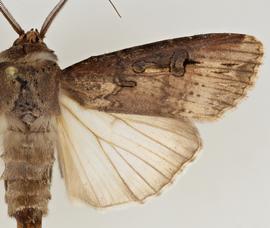
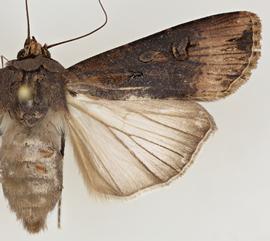
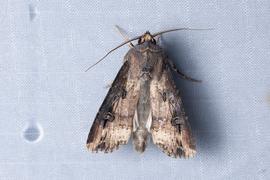
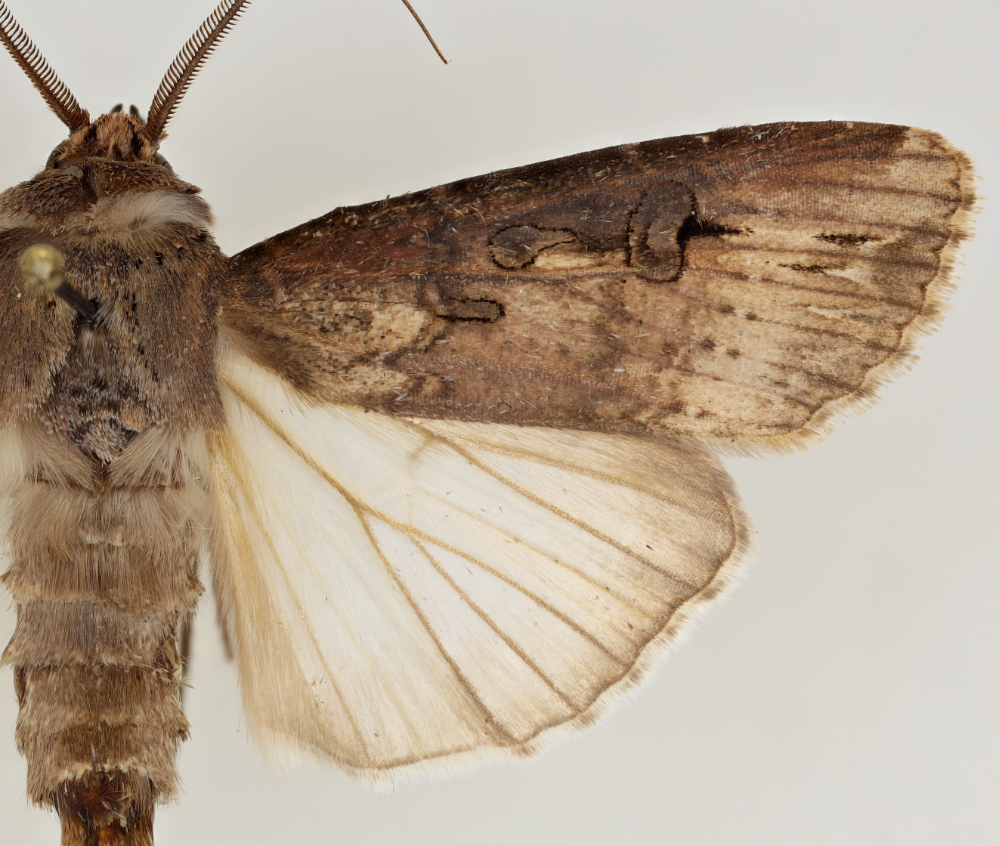
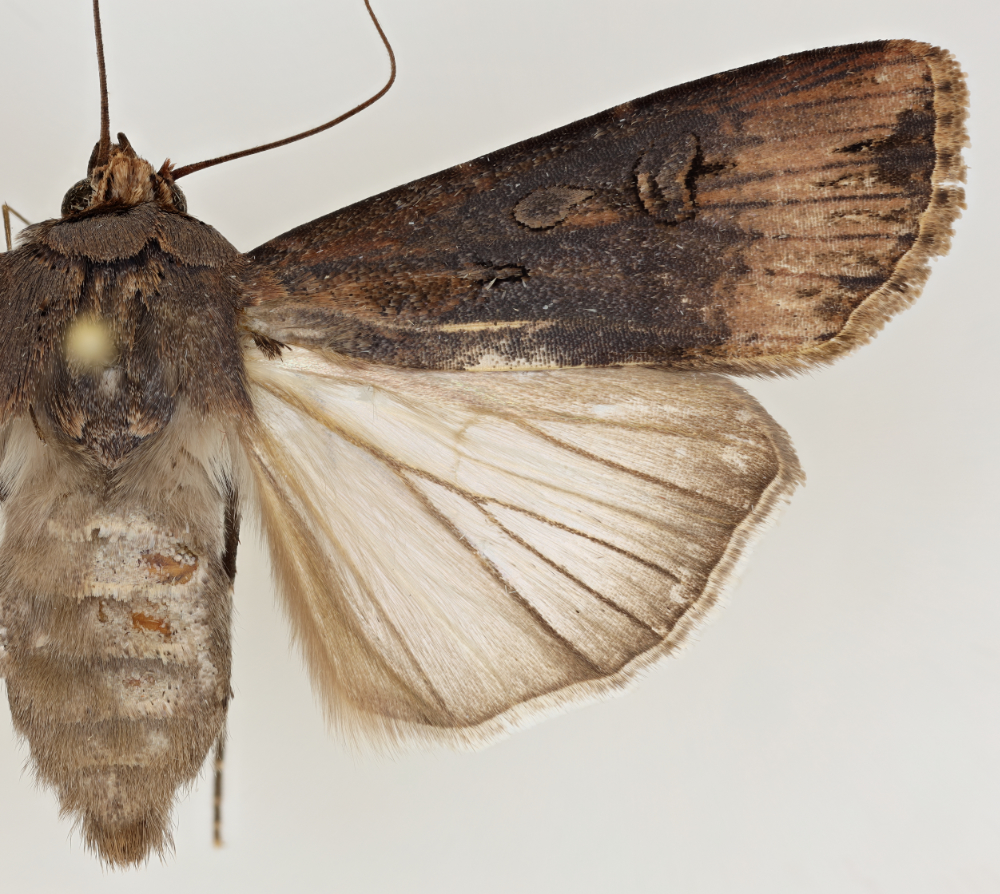
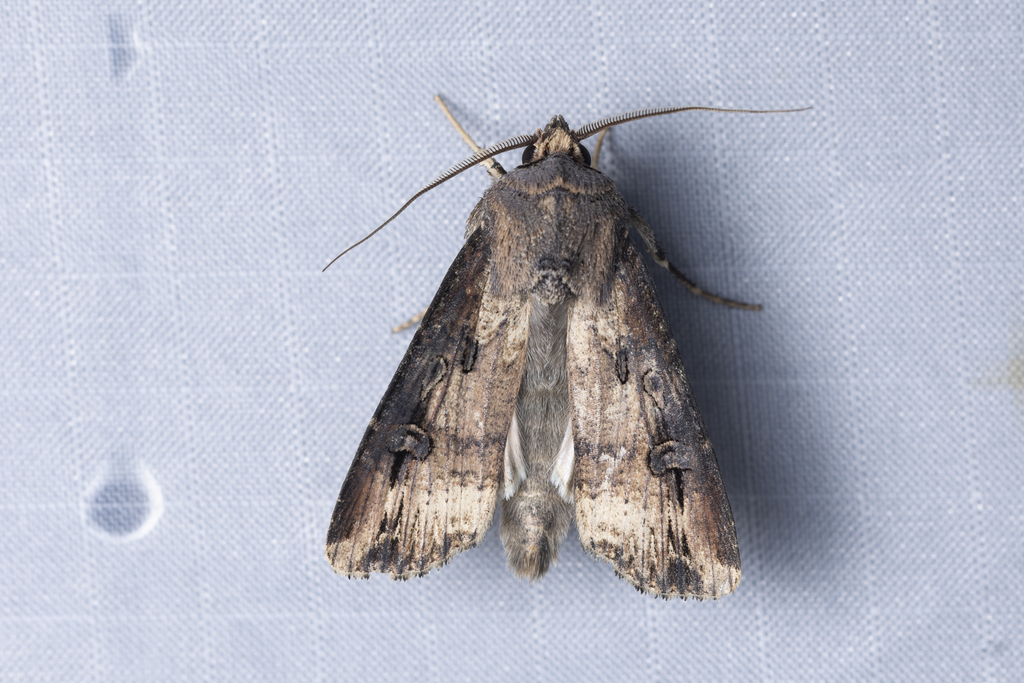
Agrotis ipsilon is a medium- to large-sized noctuid (forewing lengthforewing length:
the distance of the forewing in a straight line from the base to the tip of the apex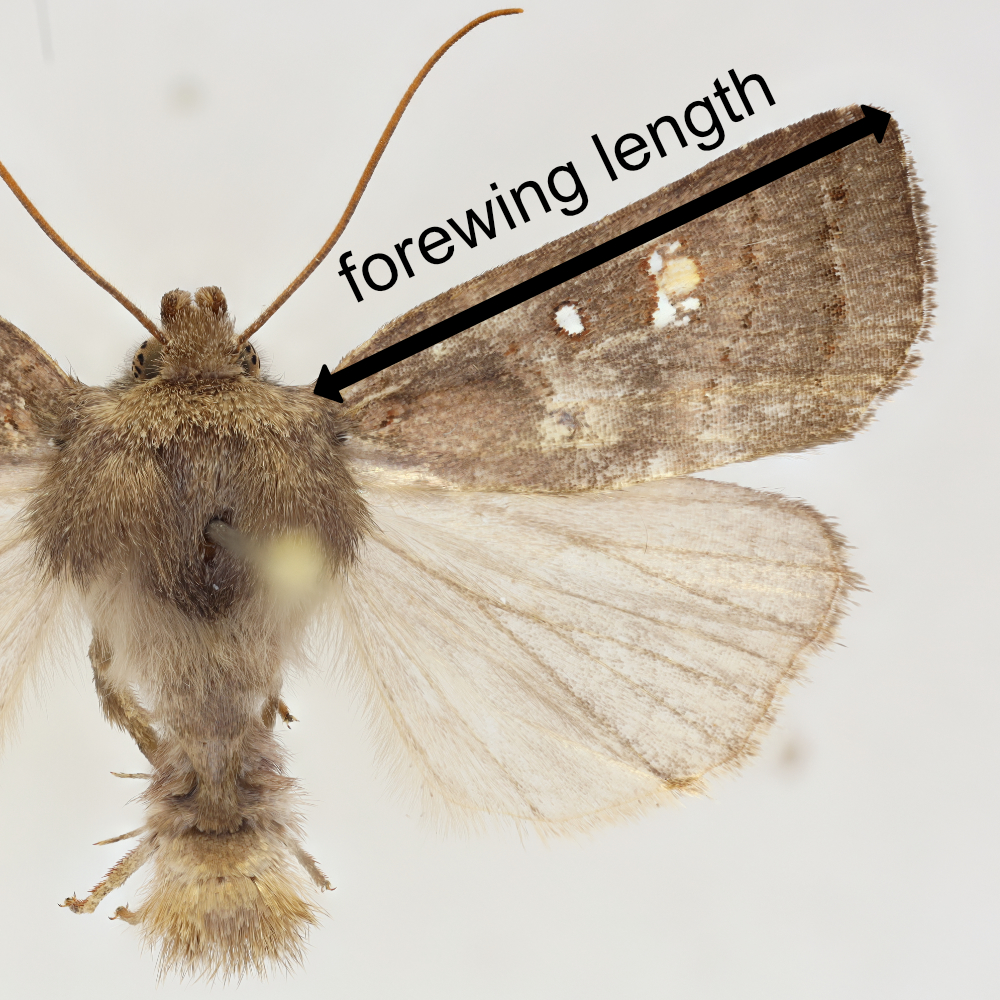 18–24 mm). It can best be recognized by the distinctive black, wedge-shaped mark on the outer side of the reniform spotreniform spot:
a spot, often broad bean- or kidney-shaped, found at the distal end of the discal cell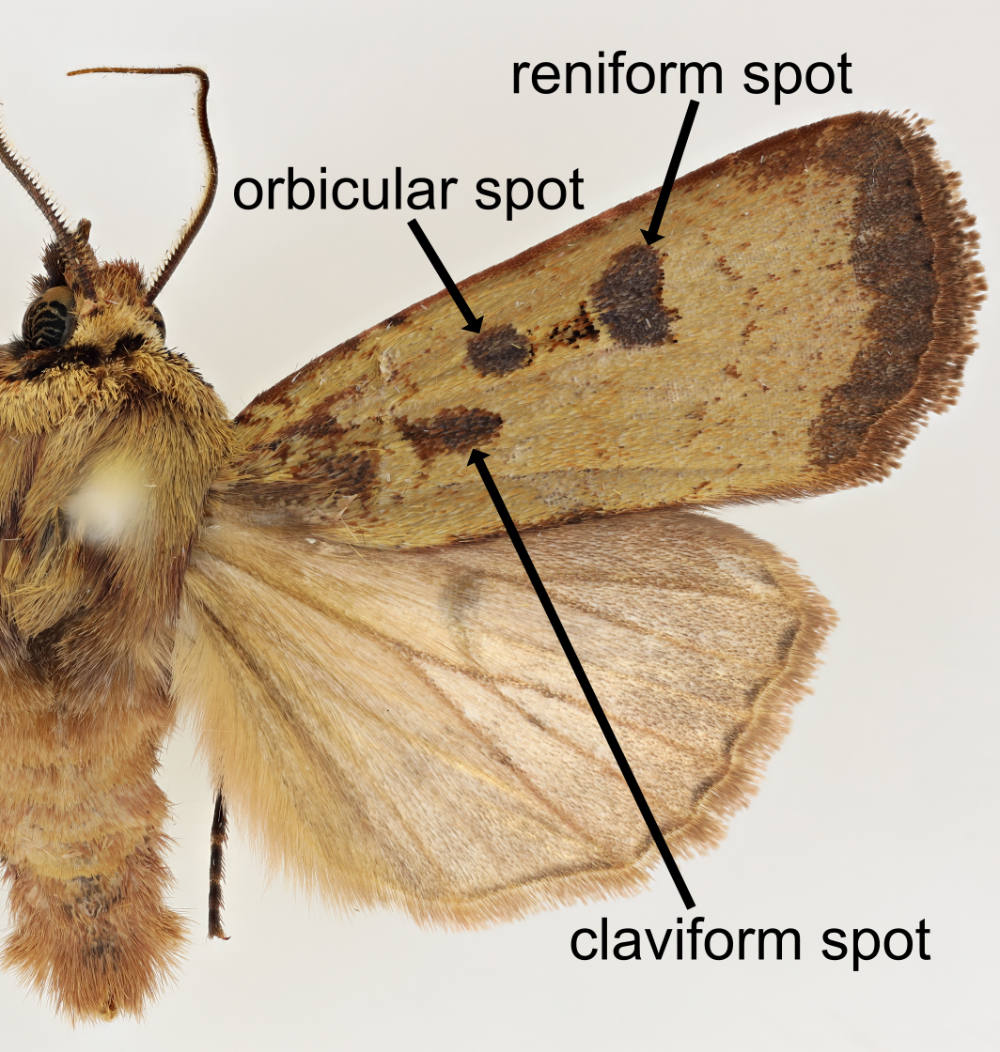 that extends to the postmedial linepostmedial line:
a thin, transverse line located distal to the reniform spot, typically on the distal third of the forewing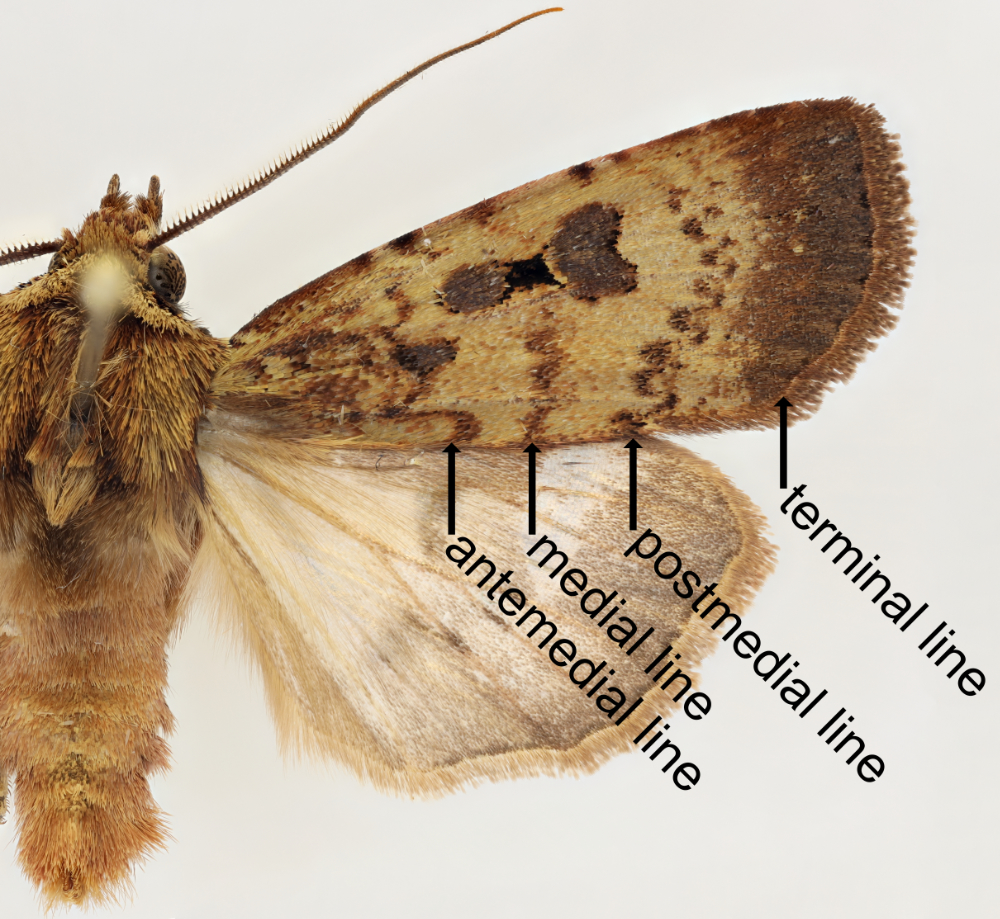 , and by the two sharp, wedge-shaped marks on the subterminal linesubterminal line:
a thin, transverse line situated near the distal end of the forewing between the postmedial and terminal lines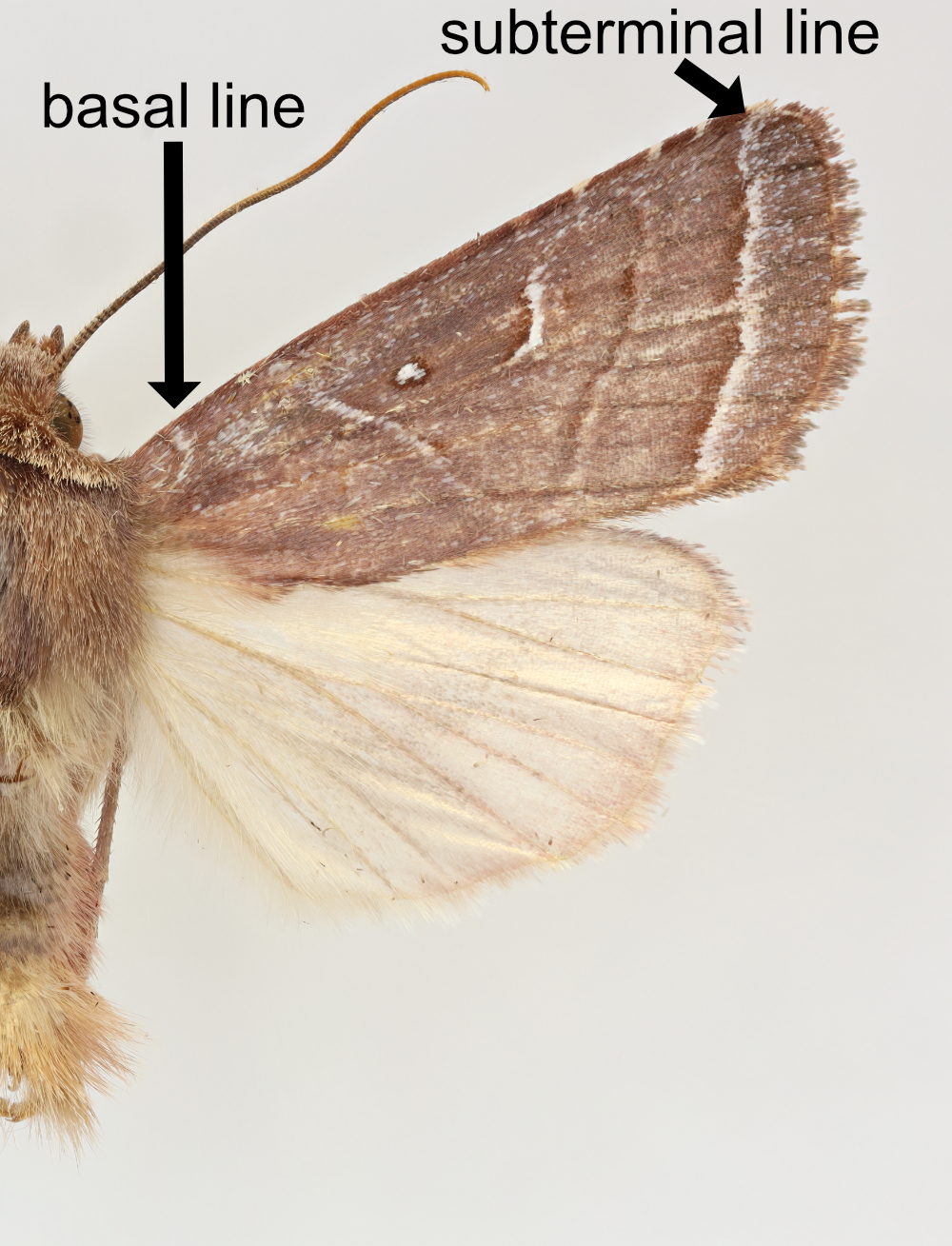 that project into the subterminal areasubterminal area:
the portion of the wing that is located between the postmedial and subterminal lines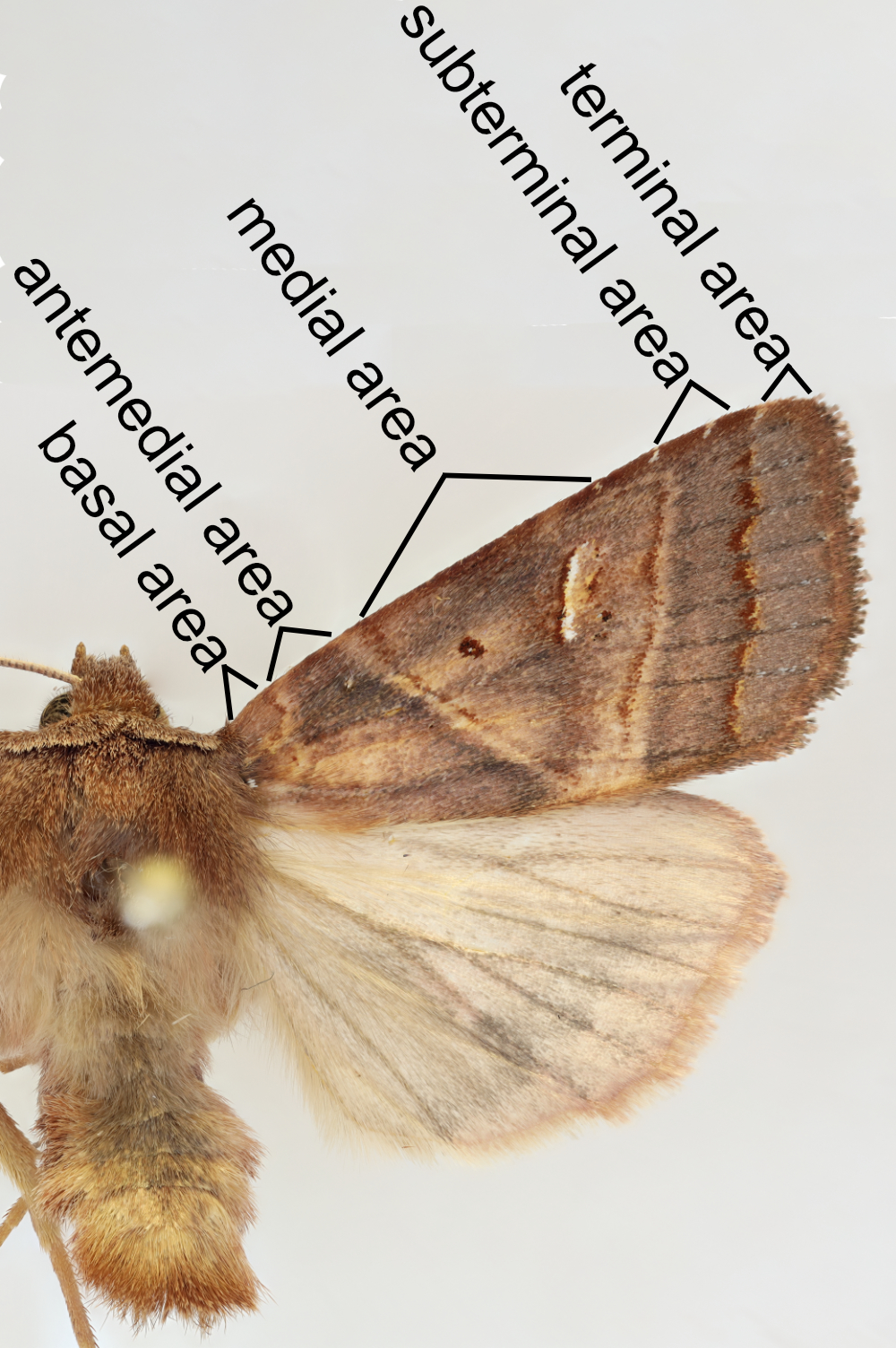 opposite the reniform spotreniform spot:
a spot, often broad bean- or kidney-shaped, found at the distal end of the discal cell. These marks persist even in badly rubbed specimens and allow A. ipsilon to be recognized at a glance (Lafontaine 2004Lafontaine 2004:
Lafontaine JD. 2004. The moths of America north of Mexico. Fascicle 27.1. Noctuoidea, Noctuidae (part), Agrotini. The Wedge Entomological Research Foundation. 385 pp. ).
Adults of A. ipsilon are sexually dimorphic in color: in males the forewingforewing:
the front wing of an insect; the wing attached to the second segment of the thorax (the mesothorax)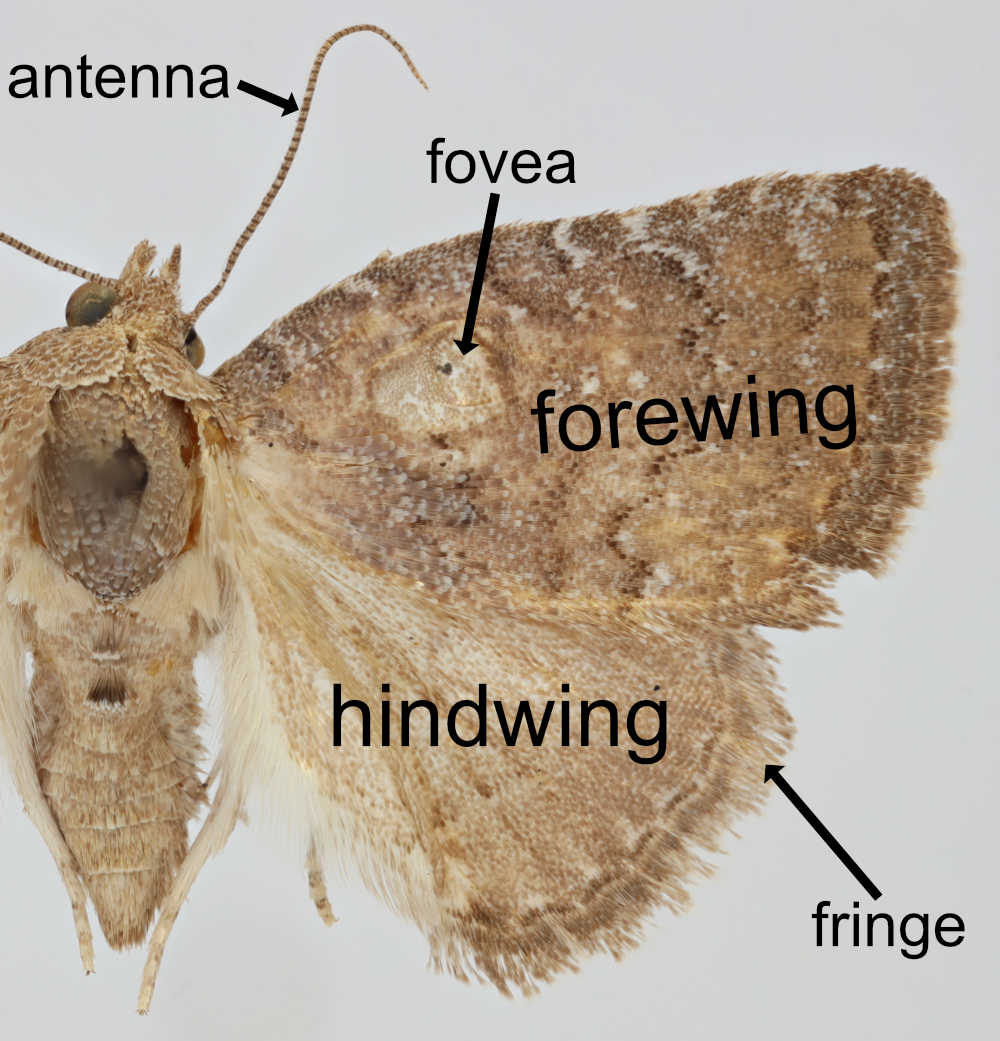 is brown, often with a slight reddish-brown tint, and the median areamedian area:
the portion of the wing between the antemedial and postmedial lines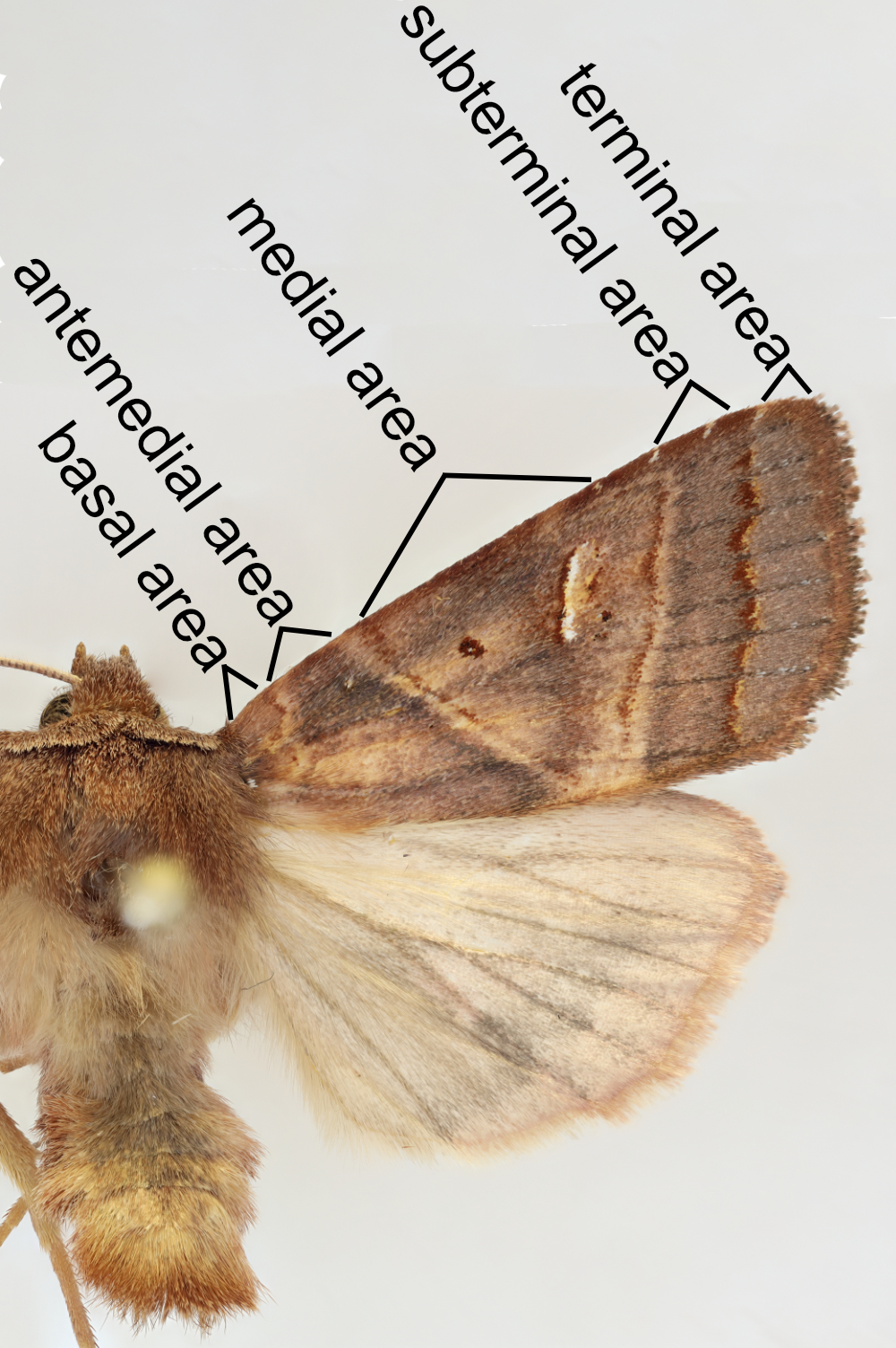 is slightly darker than the basalbasal:
the part of an appendage nearest to where it connects to the body; often referred to as 'proximal'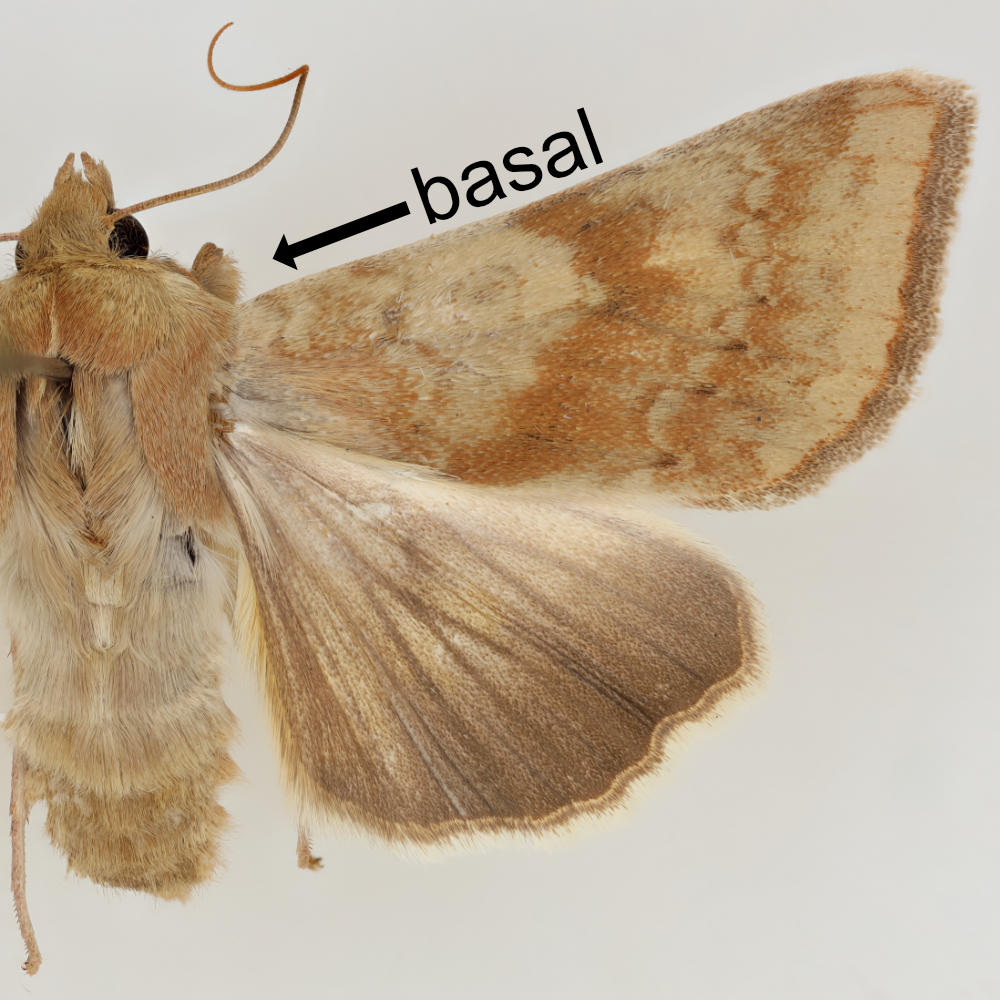 and subterminal areassubterminal area:
the portion of the wing that is located between the postmedial and subterminal lines. In females the median areamedian area:
the portion of the wing between the antemedial and postmedial lines is dark brownish black, sharply contrasting with the pale brown basalbasal:
the part of an appendage nearest to where it connects to the body; often referred to as 'proximal' and subterminal areassubterminal area:
the portion of the wing that is located between the postmedial and subterminal lines. The male antennaantenna:
a thin, paired, elongate, segmented sensory organ on the head that serves primarily for olfaction (smell) to find food and mates, but also aids in navigation and balance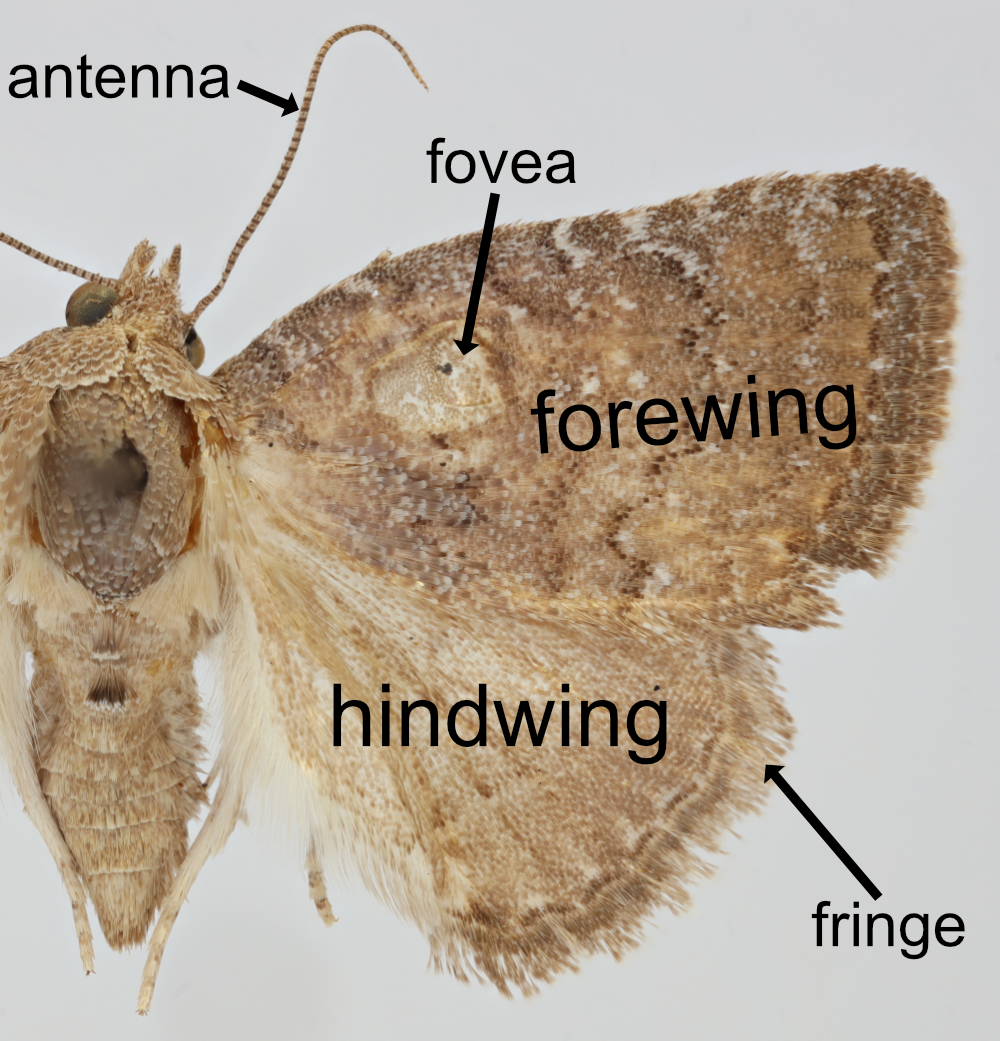 has the basalbasal:
the part of an appendage nearest to where it connects to the body; often referred to as 'proximal' half bipectinatebipectinate:
referring to a structure with two opposite margins toothed like a feather, typically refers to the antenna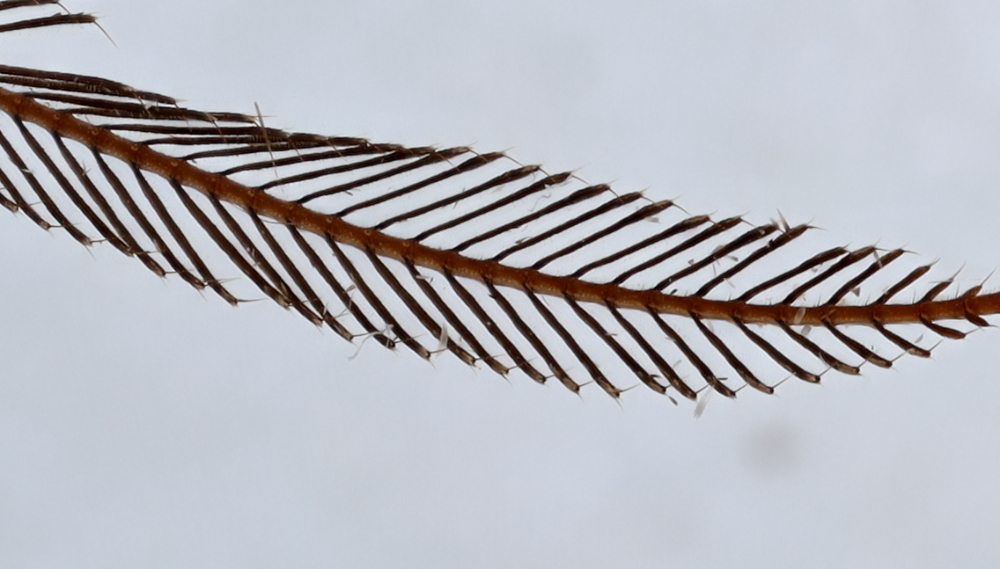 and the apical half filiformfiliform:
hair-like or thread-like, usually refers to an antenna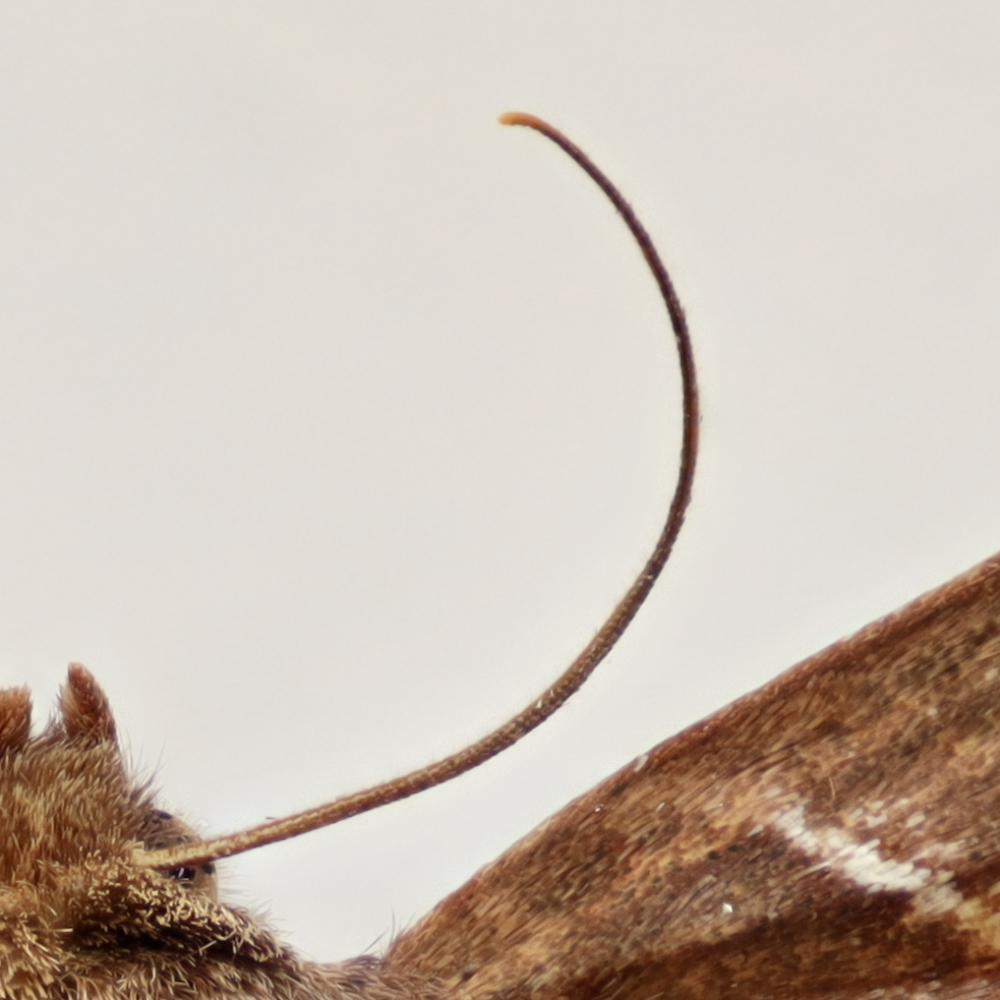 (Lafontaine 2004Lafontaine 2004:
Lafontaine JD. 2004. The moths of America north of Mexico. Fascicle 27.1. Noctuoidea, Noctuidae (part), Agrotini. The Wedge Entomological Research Foundation. 385 pp. ). This is true for some, but not all, native Hawaiian Agrotis spp.
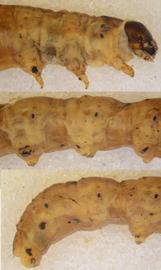
Larvae are described in Swezey (1909)Swezey (1909):
Swezey OH. 1909. Army worms and cut worms on sugar cane in the Hawaiian Islands. Report of the Work of the Experiment Station of the Hawaiian Sugar Planters' Association, 7. Honolulu. 31 pp. , Crumb (1929)Crumb (1929):
Crumb SE. 1929. Tobacco cutworms. Bulletin of the U.S. Department of Agriculture, 88. 179 pp., and CABI (2024)CABI (2024):
CABI. 2024. Agrotis ipsilon (black cutworm). CABI Compendium. 10.1079/cabicompendium.3801..
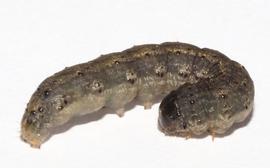
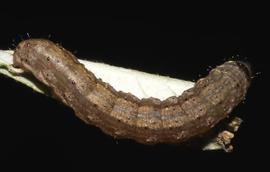
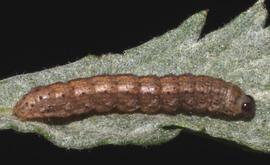
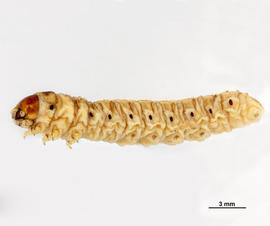
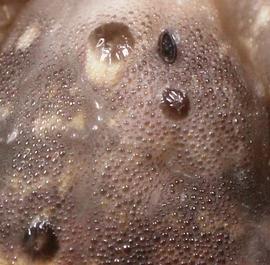
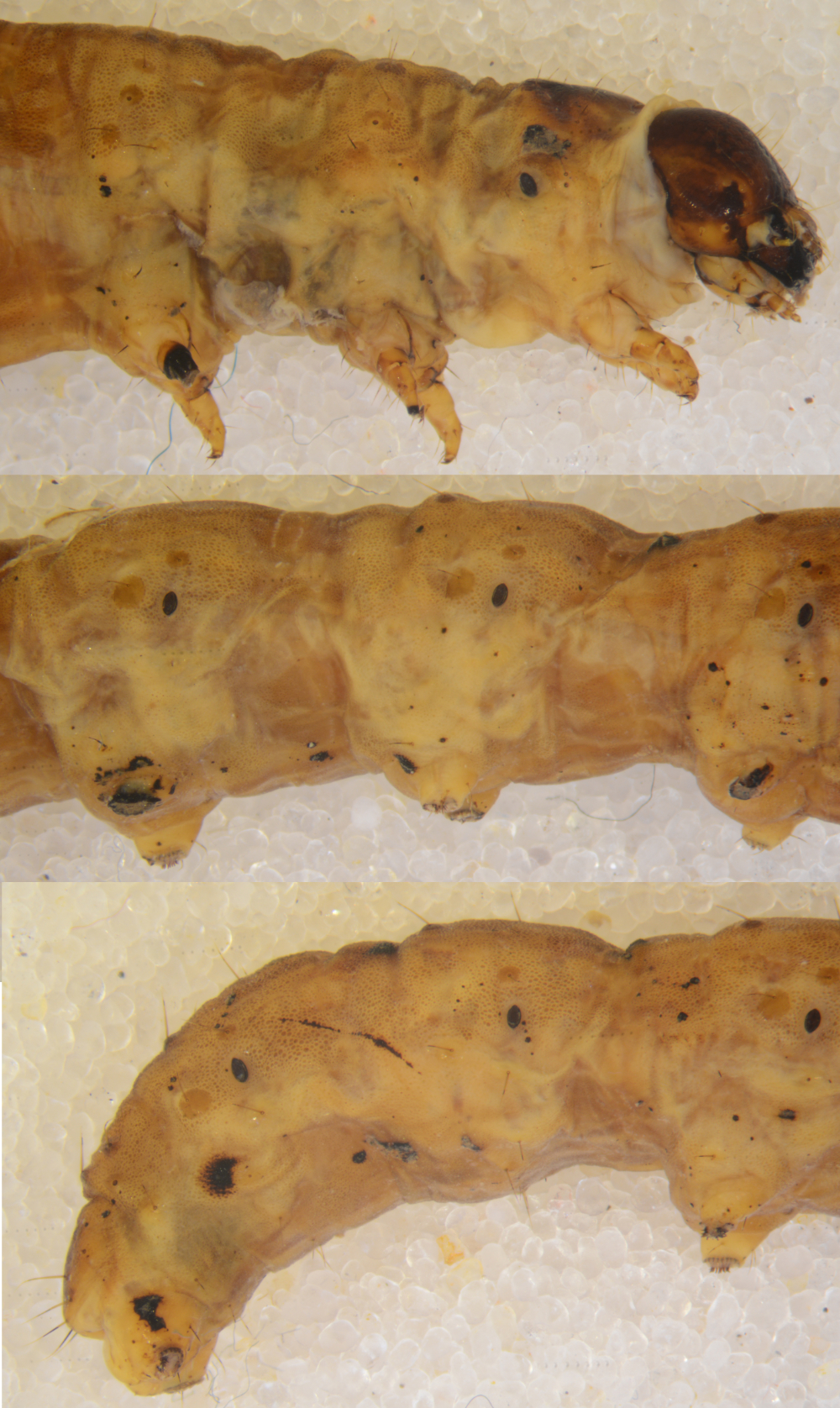
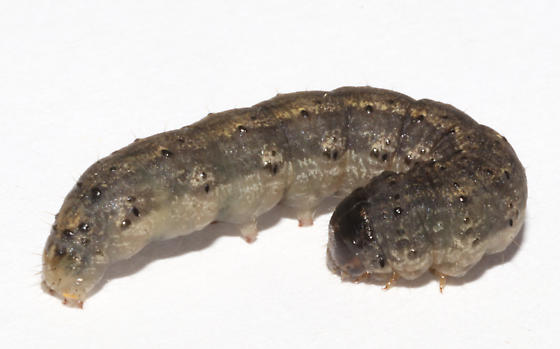
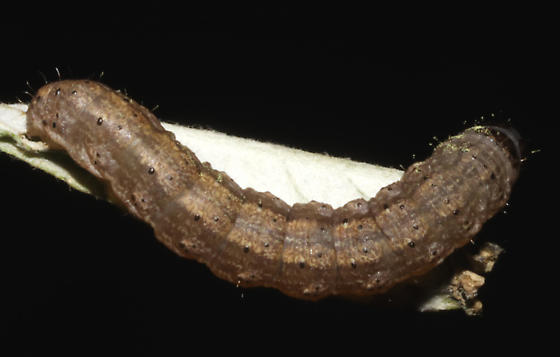
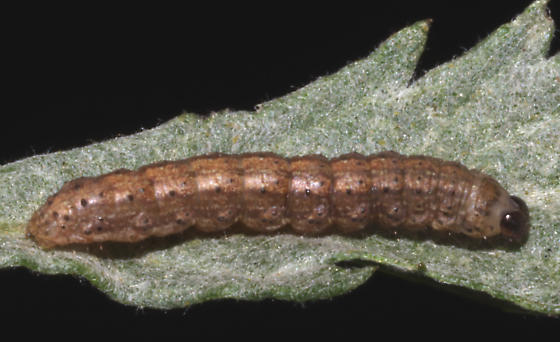
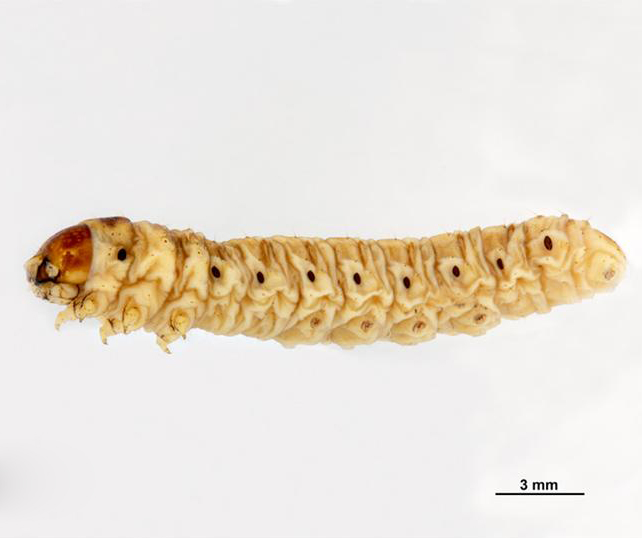
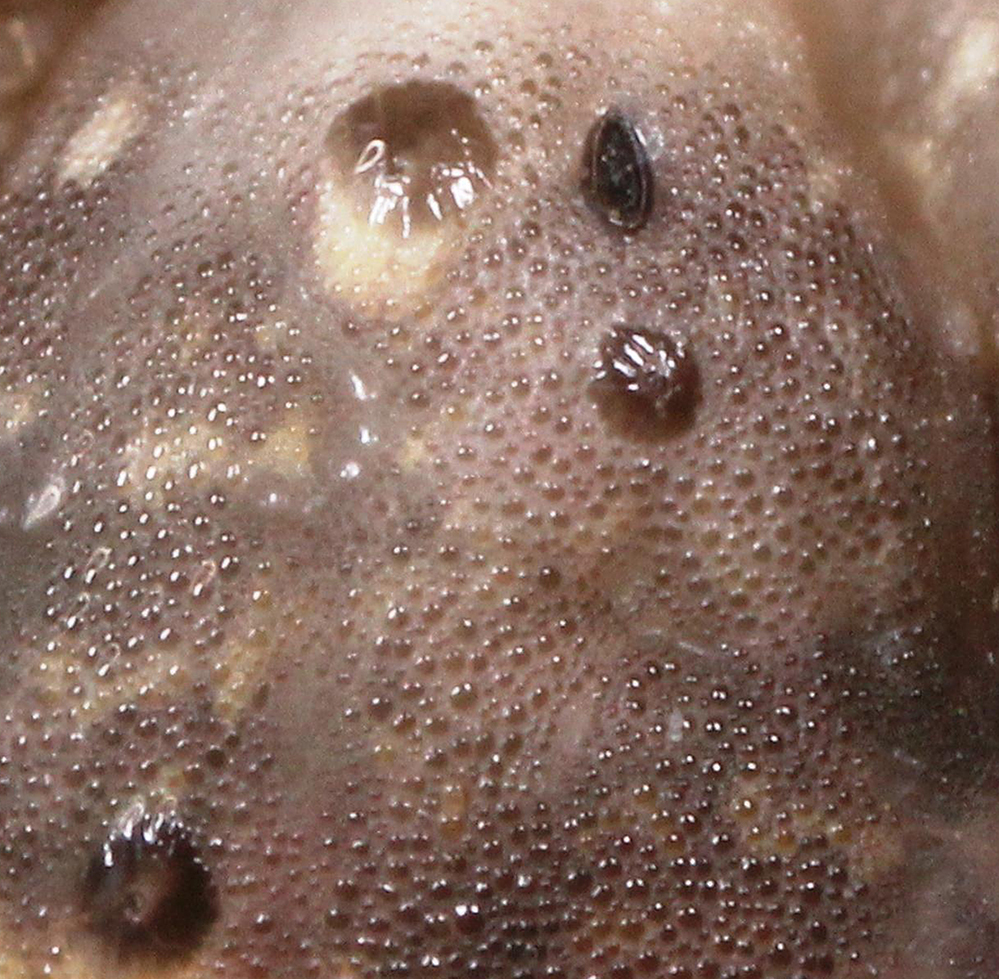
Larvae have isolated, raised, rounded granules of various sizes similar to those in Feltia subterranea. The D1 setae are half as long as the D2 setae. Larvae vary from gray to almost black and are essentially unicolorous dorsal to the spiracles (Lafontaine 2004Lafontaine 2004:
Lafontaine JD. 2004. The moths of America north of Mexico. Fascicle 27.1. Noctuoidea, Noctuidae (part), Agrotini. The Wedge Entomological Research Foundation. 385 pp. ).
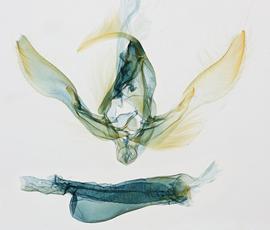
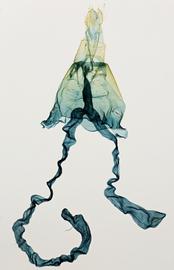
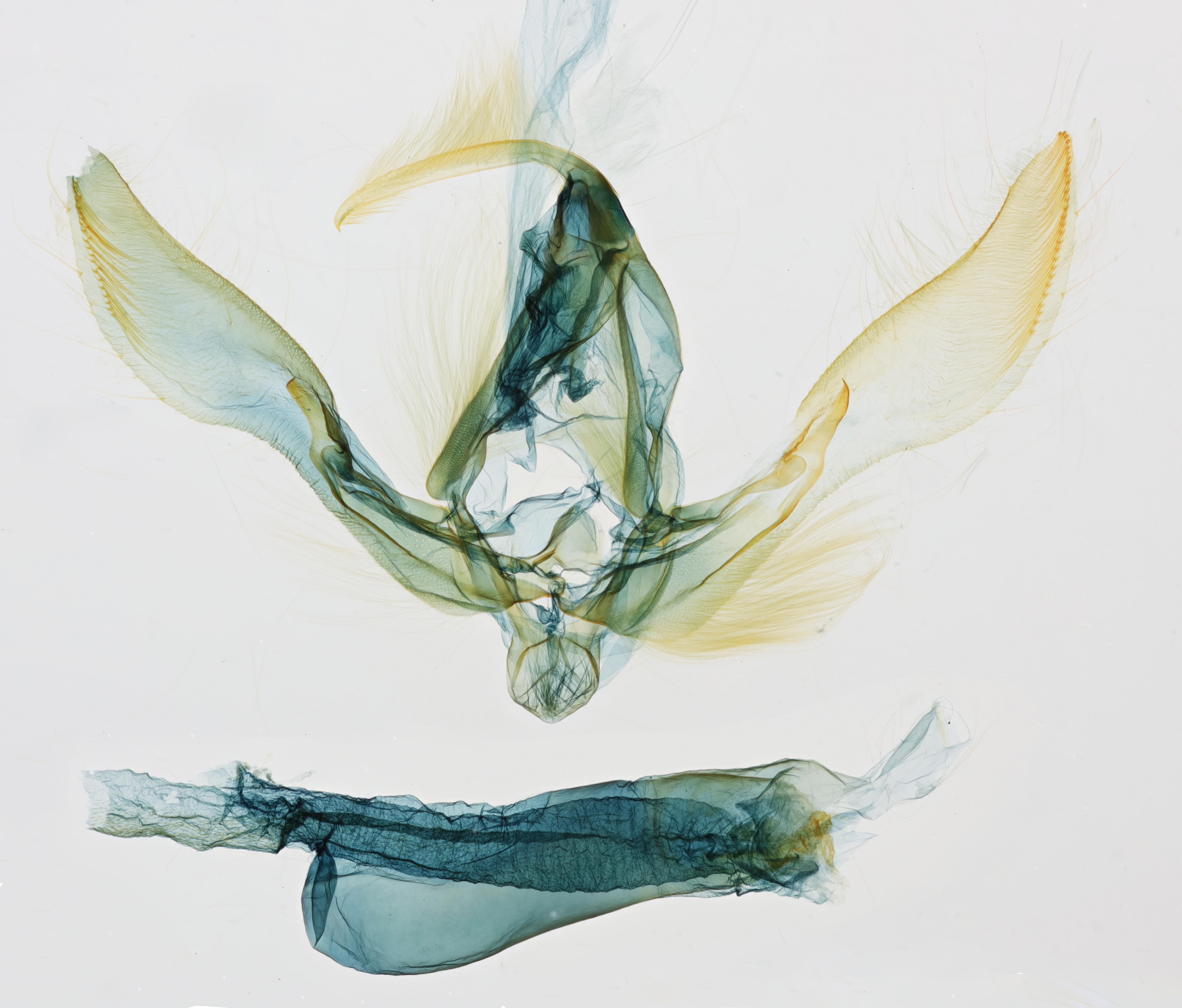
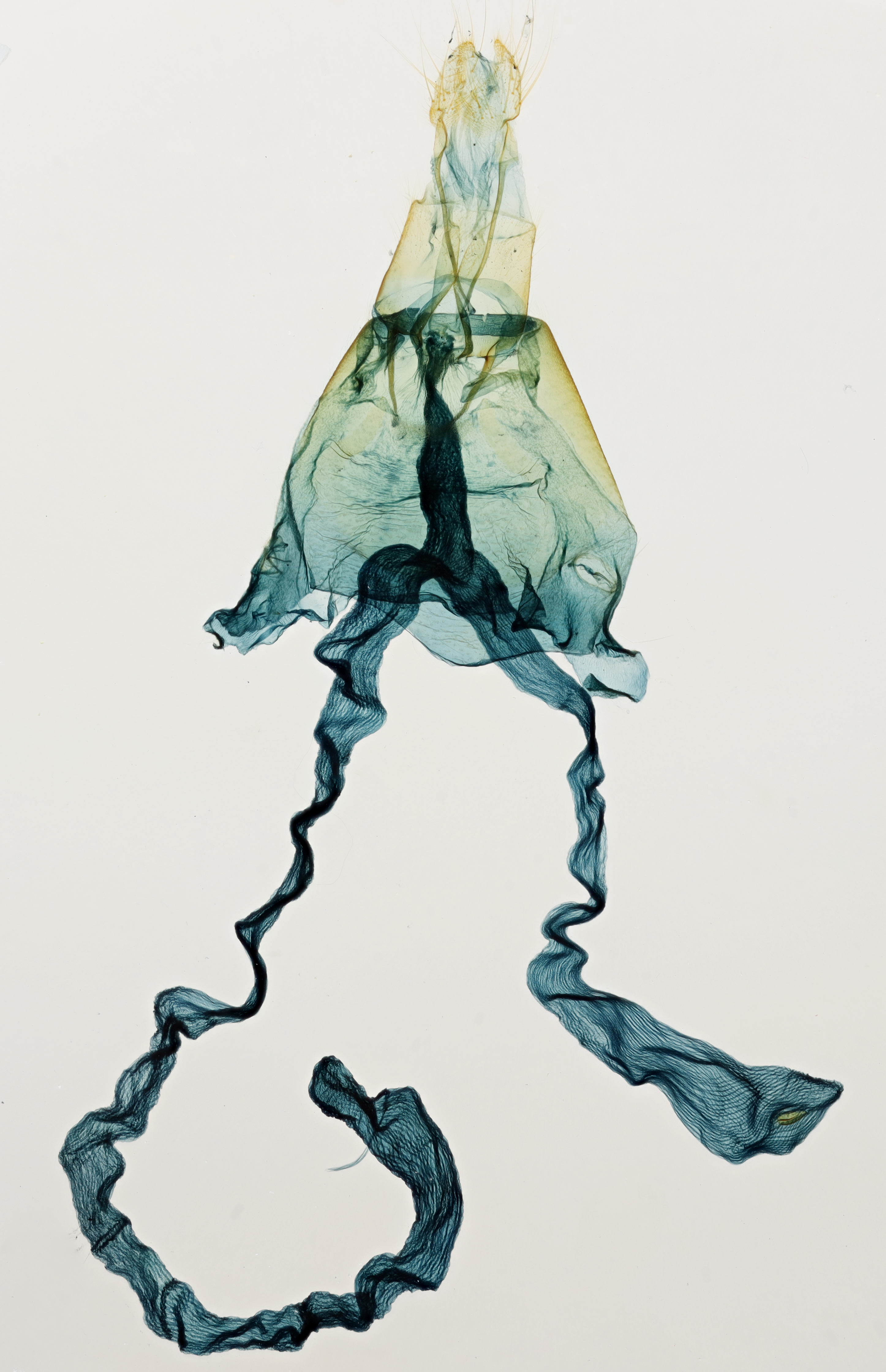
Agrotis ipsilon is most likely to be confused with some of the native Hawaiian Agrotis spp. or Feltia subterranea. They can be most easily distinguished from other Agrotis spp. in Hawaiʻi by the black, wedge-shaped mark on the outer side of the reniform spotreniform spot:
a spot, often broad bean- or kidney-shaped, found at the distal end of the discal cell and by the shorter appendix bursae in the female. From Feltia subterranea, it can be distinguished by its larger size, darker coloration, and larger orbicular and reniform spotsreniform spot:
a spot, often broad bean- or kidney-shaped, found at the distal end of the discal cell.
Agrotis ipsilon is distributed worldwide, occurring virtually everywhere except polar regions. Because of its migratory nature and pest status, its exact native range is unclear, but is likely very broad (although it is unlikely to be native to the Hawaiian Islands).
The earliest record from Hawaiʻi is by Butler (1879)Butler (1879):
Butler AG. 1879. On heterocerous Lepidoptera collected in the Hawaiian Islands by the Rev. T. Blackburn. Entomologist's Monthly Magazine. 15:269–273. but likely arrived earlier. In Hawaiʻi, it is known Kure Atoll, French Frigate Shoals, Kauaʻi, Oʻahu, Molokaʻi, Lānaʻi, Maui, and Hawaiʻi island. It occurs from sea level to over 2,000 meters elevation (UHIM collectionUHIM collection:
UHIM collection. Based on identified specimens in the collection of the University of Hawaii Insect Museum, Honolulu, HI).
The larvae of Agrotis ipsilon are broadly polyphagous and are known to feed on more than 100 different species in 40 different families (Zimmerman 1958Zimmerman 1958:
Zimmerman EC. 1958. Insects of Hawaii, Volume 7. Macrolepidoptera. University of Hawaii Press, Honolulu. 542 pp., CABI 2024CABI 2024:
CABI. 2024. Agrotis ipsilon (black cutworm). CABI Compendium. 10.1079/cabicompendium.3801.). They are particularly bad pests of garden vegetables, especially Brassicaceae, Fabaceae, and Solanaceae.
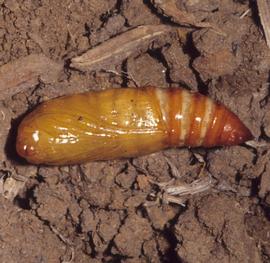
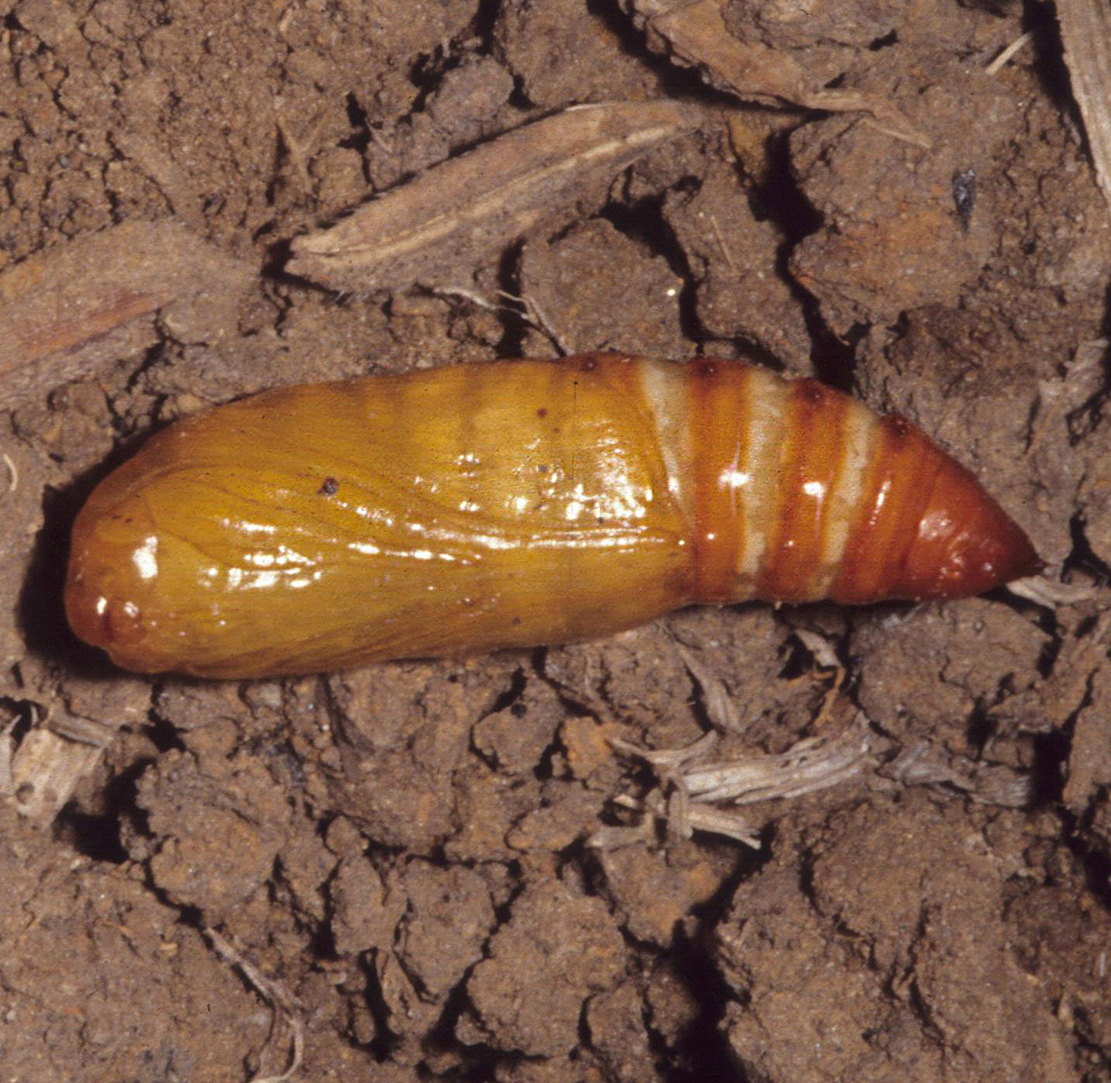
The immature stages and life history of A. ipsilon were described in detail by Crumb (1929)Crumb (1929):
Crumb SE. 1929. Tobacco cutworms. Bulletin of the U.S. Department of Agriculture, 88. 179 pp.. The larvae of A. ipsilon prefer rich moist soils, even muck, and frequently build subterranean tunnels from which they forage at night to feed. The larva prefers herbaceous, broad-leaved plants to shrubs and grasses, but a wide range of plants are eaten by the larvae, including asparagus (Asparagus officinalis L.), bean (Phaseolus spp.), beet (Beta vulgaris L.), cabbage (Brassica oleracea L.), carrot (Daucus carota L.), cauliflower (Brassica oleracea L.), corn (Zea mays L.), cotton (Gossypium spp.), cranberry (Vaccinium macrocarpon Aiton), lettuce (Lactuca sativa L.), onion (Allium spp.), potato (Solanum tuberosum L.), strawberry (Fragaria × ananassa Duchesne), sugar beet (Beta vulgaris L.), sugarcane (Saccharum officinarum L.), sunflower (Helianthus annuus L.), tobacco (Nicotiana spp.), tomato (Solanum lycopersicum L.), and turnip (Brassica rapa L.). Most of the economic losses in North America are associated with corn, cotton, tobacco, and vegetable crops (Lafontaine 2004Lafontaine 2004:
Lafontaine JD. 2004. The moths of America north of Mexico. Fascicle 27.1. Noctuoidea, Noctuidae (part), Agrotini. The Wedge Entomological Research Foundation. 385 pp. ).
The life cycle of A. ipsilon in Hawaiʻi was described by Swezey (1909)Swezey (1909):
Swezey OH. 1909. Army worms and cut worms on sugar cane in the Hawaiian Islands. Report of the Work of the Experiment Station of the Hawaiian Sugar Planters' Association, 7. Honolulu. 31 pp. . Control methods are outlined in CABI (2024)CABI (2024):
CABI. 2024. Agrotis ipsilon (black cutworm). CABI Compendium. 10.1079/cabicompendium.3801..
Author: Kyhl A. Austin
Content last updated May 2026
idtools.org