Weed
common gorse, furze, gorse, whin
True seedTrue seed:
A mature fertilized ovule consisting of an embryo, with or without and external food reserve (e.g., endosperm) enclosed by the testa.
OvateOvate:
Egg-shaped with basal end the broadest.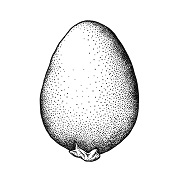 to triangular
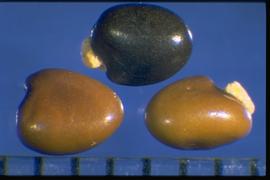
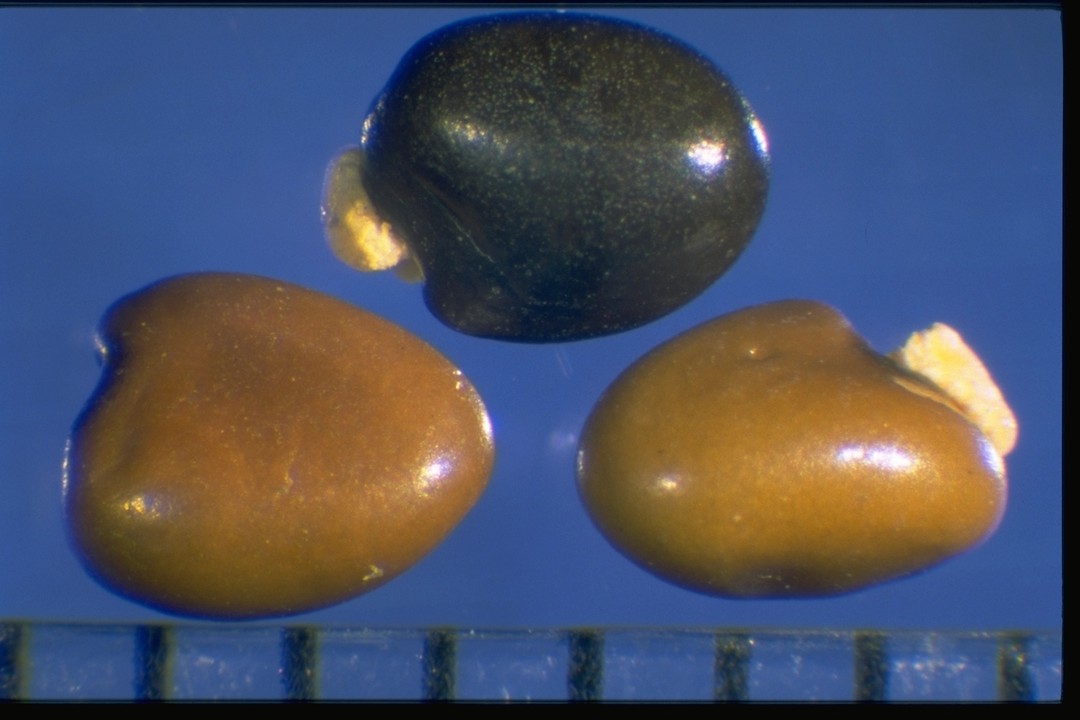
Brown to black
Smooth to smooth-glossy
CaruncleCaruncle:
An appendage or outgrowth of the outer integument of the seed, e.g. leafy spurge.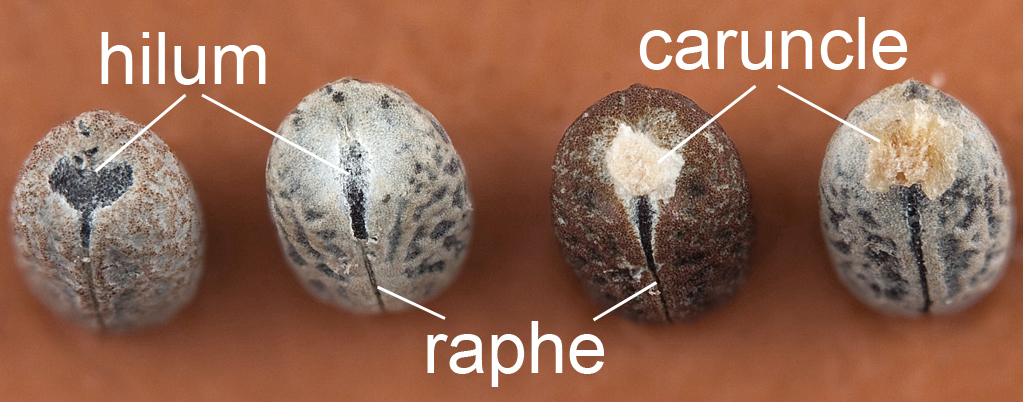 (arilAril:
An outgrowth of the ovule or funiculus.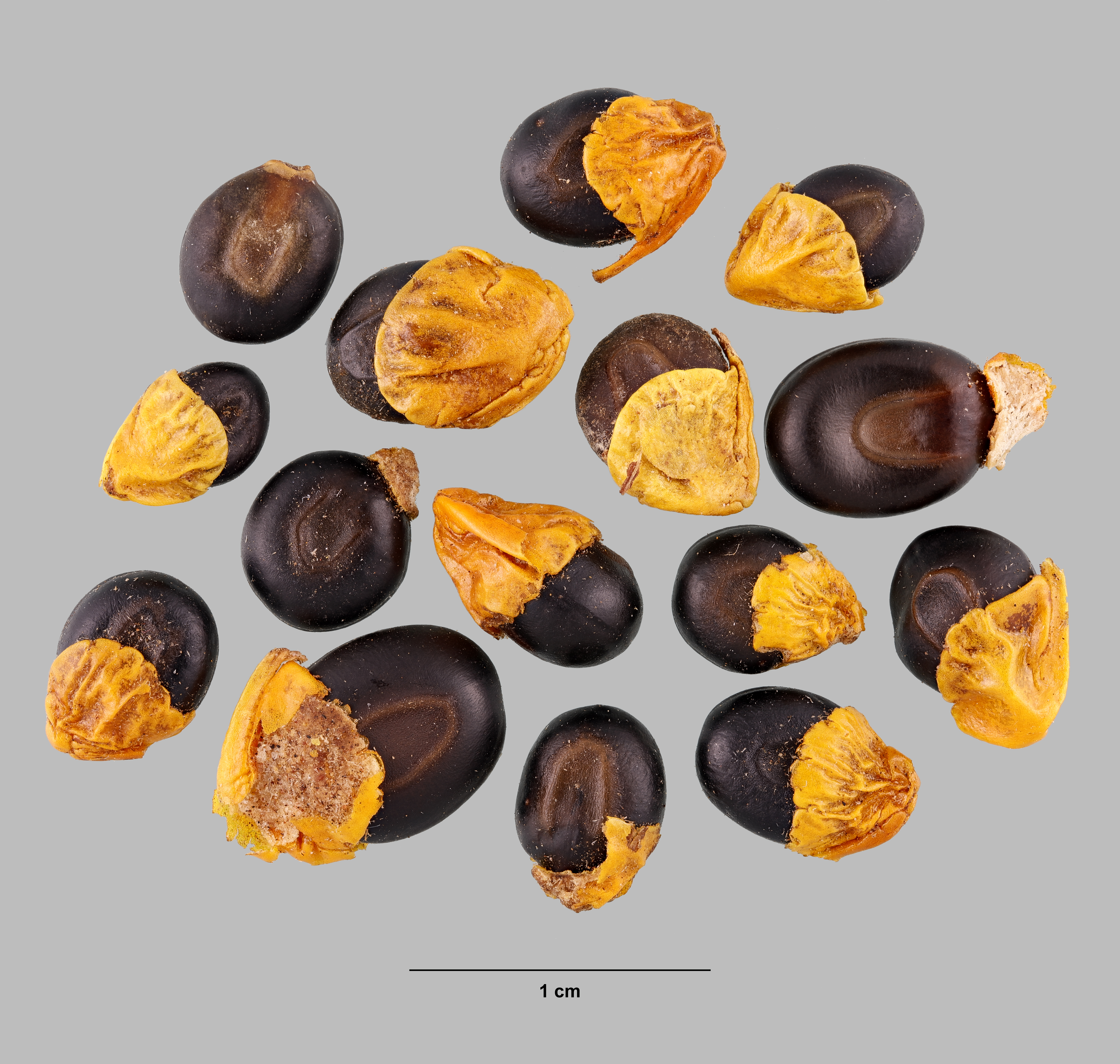 ) present in hilumHilum:
The scar on the seed coat at the place of its detachment from the seed stalk (funiculus).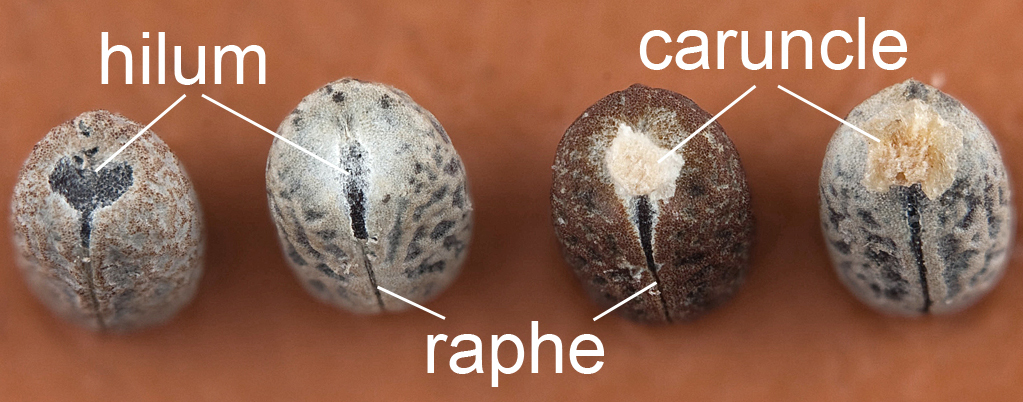 area.
area.
RadicleRadicle:
The rudimentary root of the embryo, developing into the primary root after emergence from the seed coat.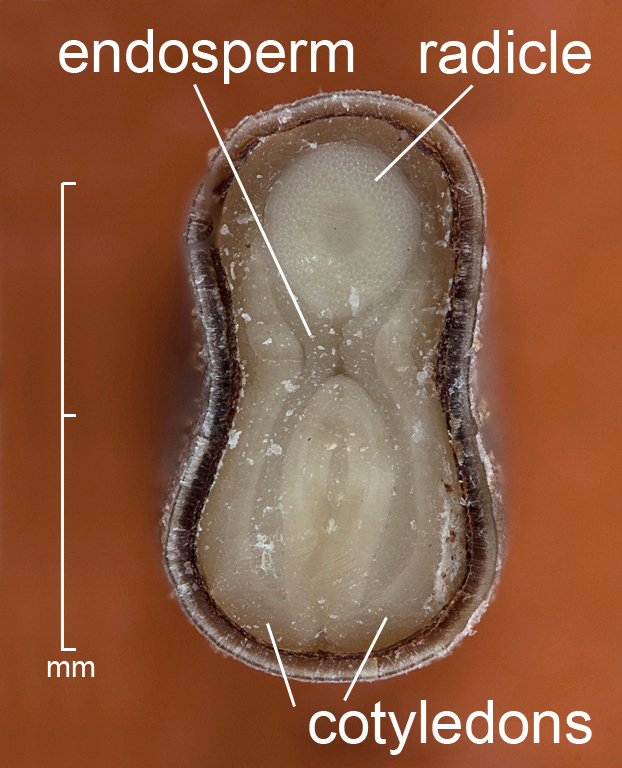 lobe is slightly shorter than the cotyledonCotyledon:
The modified storage leaf or pair of leaves of an embryo and seedling (see primary leaf).
lobe. HilumHilum:
The scar on the seed coat at the place of its detachment from the seed stalk (funiculus). area is between the lobes, covered with a large corky caruncleCaruncle:
An appendage or outgrowth of the outer integument of the seed, e.g. leafy spurge. (arilAril:
An outgrowth of the ovule or funiculus.), and can appear wing-like at times.
State Noxious Weed: California, Hawaii
Not included
For more information, see ISMA fact sheet.
Fabaceae
Ulex europaeus L.