Weed
cattail grass, Queensland pigeon grass
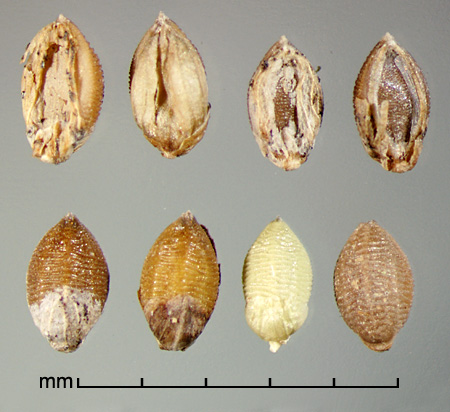
FloretFloret:
A small flower in a clustered inflorescence (e.g., sunflower, grasses). In grasses, a floret consists of the lemma, palea, stamens, and pistil.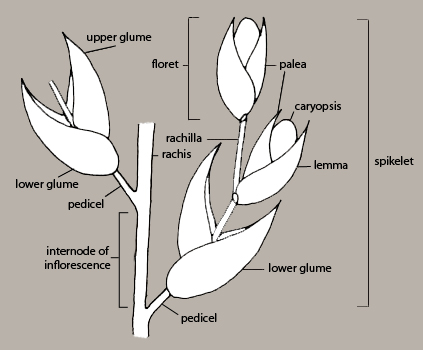
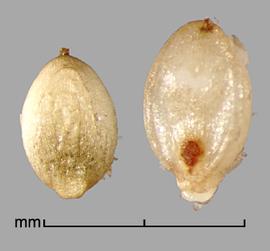
OvalOval:
Broadly elliptic.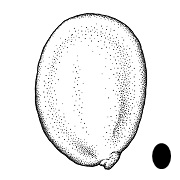
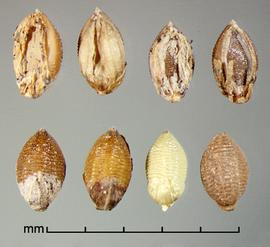
Yellow to dark brown
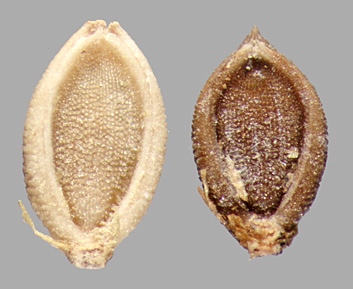
LemmaLemma:
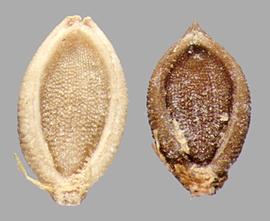
One of two bracts of the grass floret; it is located on the side nearest the embryo and opposite the rachilla.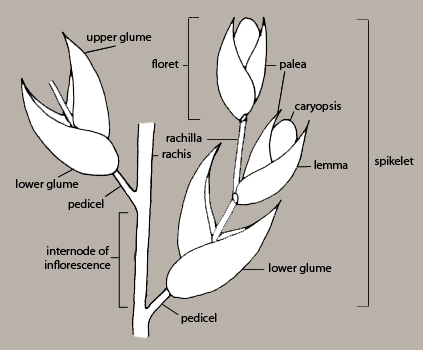 and paleaPalea:
One of the thin bracts of grass floret enclosing the fruit (caryopsis) that is located on the side opposite the embryo.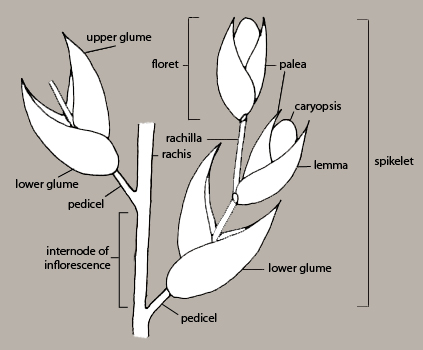 surfaces are uniformly covered with rows of stipplesStipples:
Numerous small dots or specks.
.
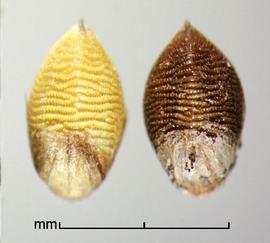
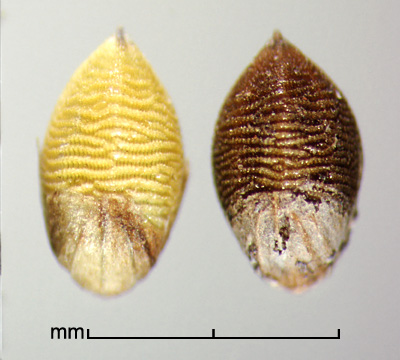
Covered with transverseTransverse:
Set crosswise, crossing or at right angles.
ridges of stipplesStipples:
Numerous small dots or specks.
Covered with longitudinal lines of stipplesStipples:
Numerous small dots or specks.
The shiny margins of the paleaPalea:
One of the thin bracts of grass floret enclosing the fruit (caryopsis) that is located on the side opposite the embryo. are covered by the lemmaLemma:
One of two bracts of the grass floret; it is located on the side nearest the embryo and opposite the rachilla..
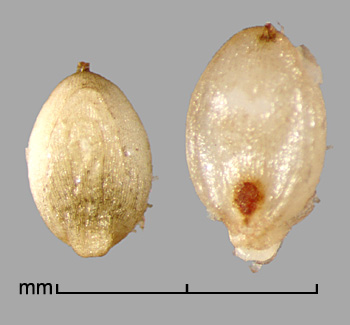
FloretFloret:
A small flower in a clustered inflorescence (e.g., sunflower, grasses). In grasses, a floret consists of the lemma, palea, stamens, and pistil. often covered with papery glumesGlume:
The pair of chaffy bracts that occur at the base of a grass spikelet, often completely enclosing it.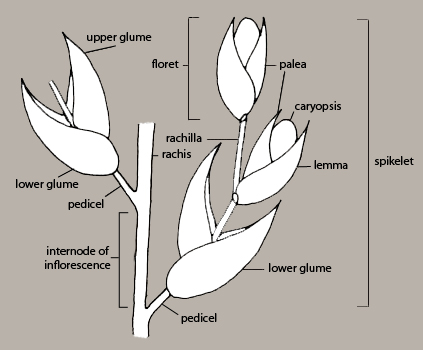 .
.
Federal
Learn more on ITP's Federal Noxious Weed Disseminules tool.
Not included
Poaceae
Setaria pumila (Poir.) Roem. & Schult. subsp. pallidefusca (Schumach.) B.K. Simon
Panicum pumilum auct. non Poir.
Setaria glauca (L.) P. Beauv. var. pallidifusca (Schumach.) T. Koyama, orth. var.
Setaria glauca (L.) P. Beauv. var. pallidefusca (Schumach.) T. Koyama
Setaria pallidefusca (Schumach.) Stapf & C.E. Hubbard
Setaria pallidifusca (Schumach.) Stapf & C.E. Hubbard, orth. var.
Setaria pumila (Poir.) Roem. & Schult. ssp. pallidifusca (Schumach.) B.K. Simon, orth. var.