Agricultural, Revegetation or Rangeland
little bluestem
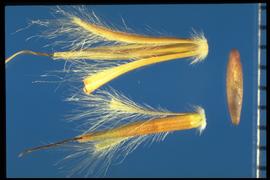
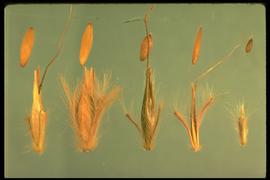
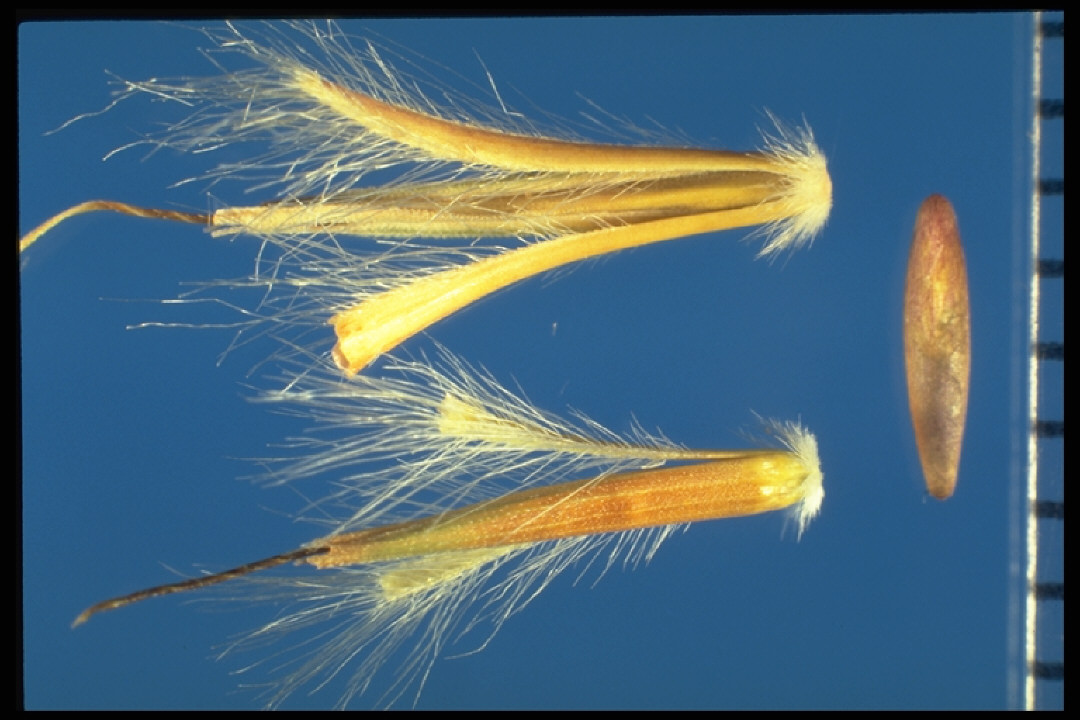
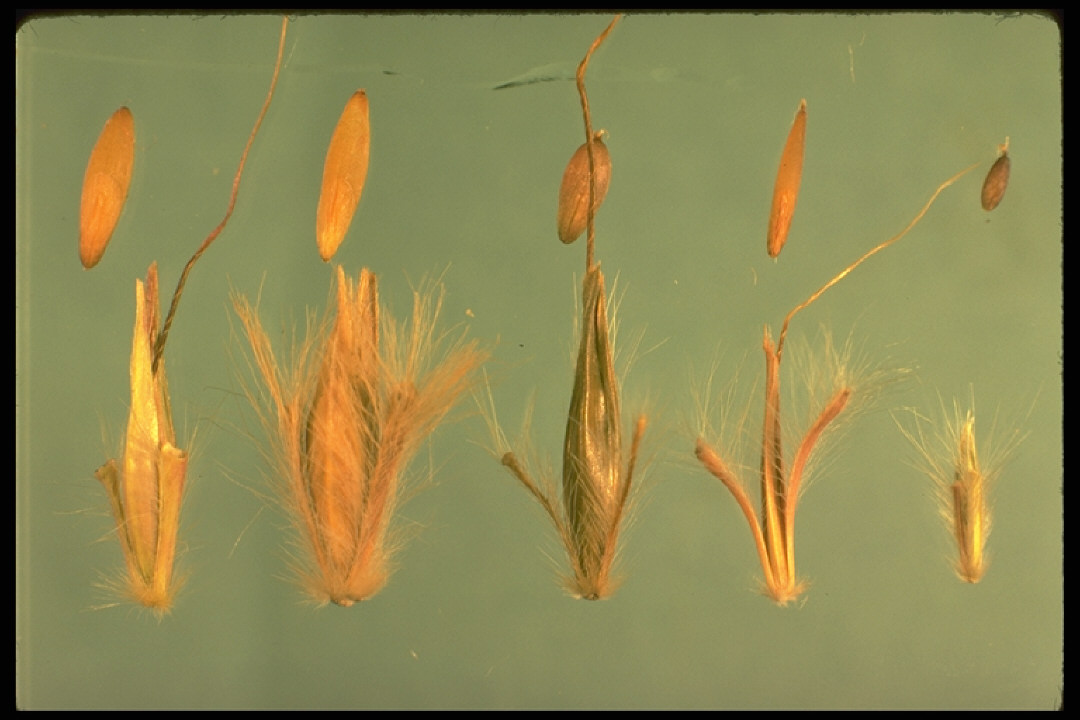
SpikeletSpikelet:
One or more florets that are subtended by a pair of bracts called glumes. Spikelets are pedicellate if located on a pedicle and sessile if attached directly to the rachis. Often spikelets with single florets have remnants of a second floret, usually a lemma.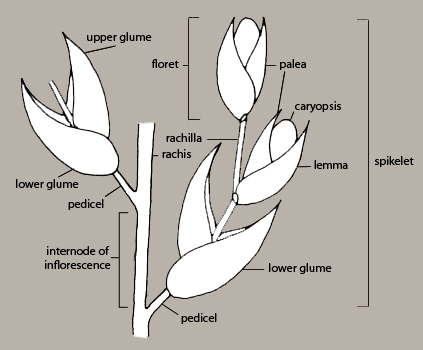
Lanceolate
Brown
Smooth
Covered by glumesGlume:
The pair of chaffy bracts that occur at the base of a grass spikelet, often completely enclosing it.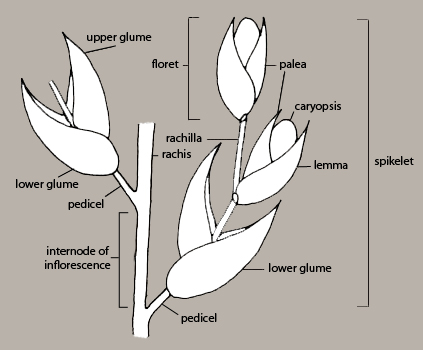
Covered by glumesGlume:
The pair of chaffy bracts that occur at the base of a grass spikelet, often completely enclosing it.
Rachis segmentRachis segment:
A segment of the central axis of the inflorescence (rachis). In some species (e.g. Andropogon) separation of the sessile spikelets occurs when the rachis disarticulates at the spikelet bases leaving the segment of the rachis between spikelets attached to the lower spikelet.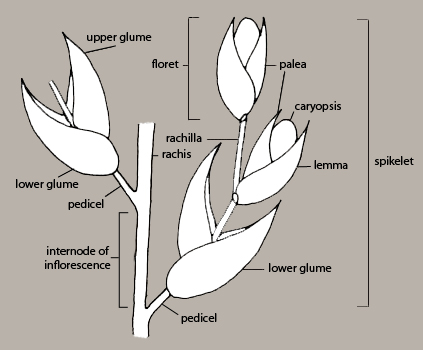 and pedicelPedicel:
The stalk within an inflorescence supporting a single flower or spikelet.
present.
Dorsal glumeGlume:
The pair of chaffy bracts that occur at the base of a grass spikelet, often completely enclosing it. is longitudinally convex. Appendages are hairy. PedicelPedicel:
The stalk within an inflorescence supporting a single flower or spikelet.
never bears a fertile spikeletSpikelet:
One or more florets that are subtended by a pair of bracts called glumes. Spikelets are pedicellate if located on a pedicle and sessile if attached directly to the rachis. Often spikelets with single florets have remnants of a second floret, usually a lemma., only a small vestige of one. An awnAwn:
A narrow, bristle-like organ, as on the glumes or lemmas of grasses (Poaceae).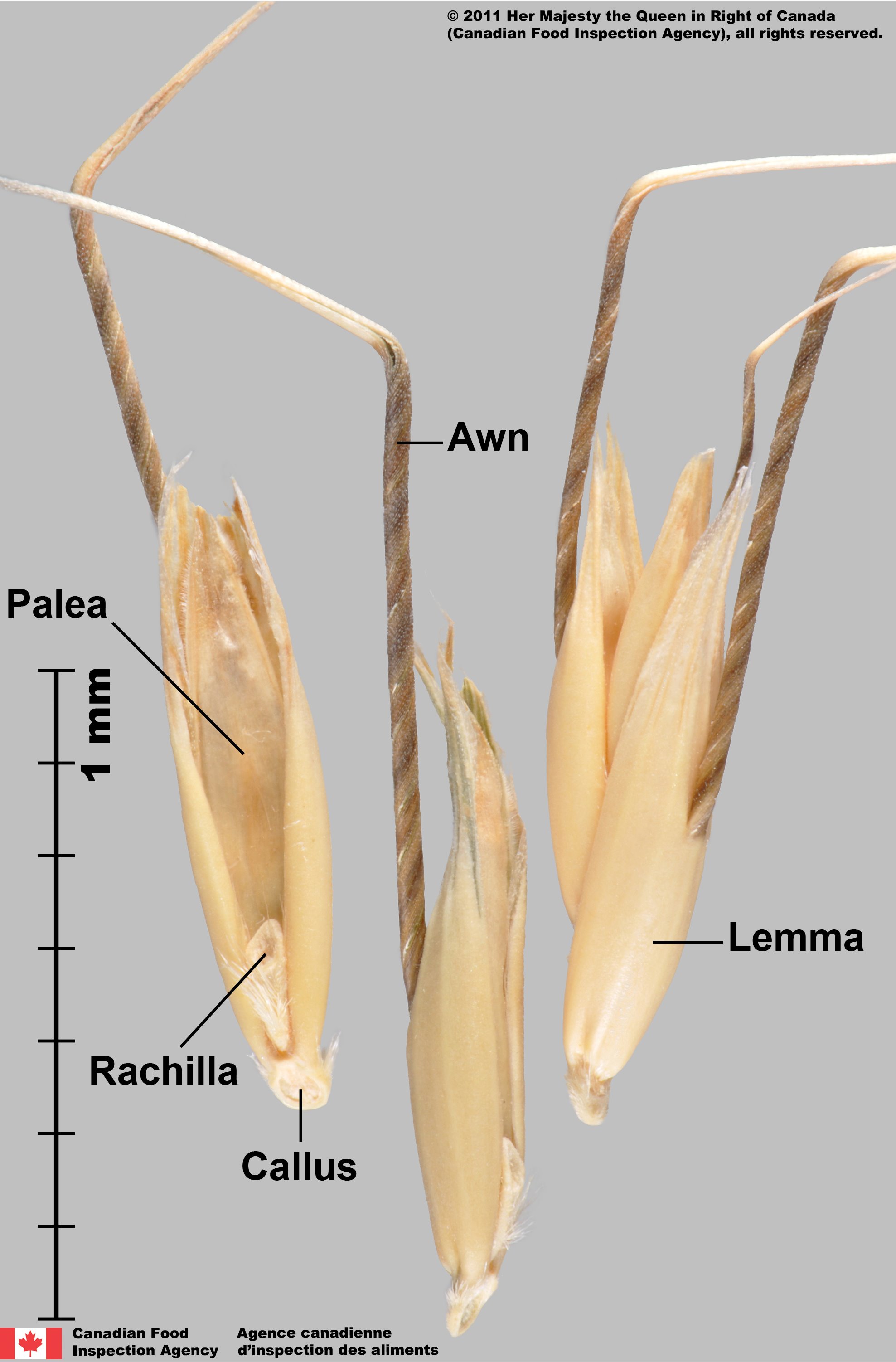 from the lemmaLemma:
One of two bracts of the grass floret; it is located on the side nearest the embryo and opposite the rachilla.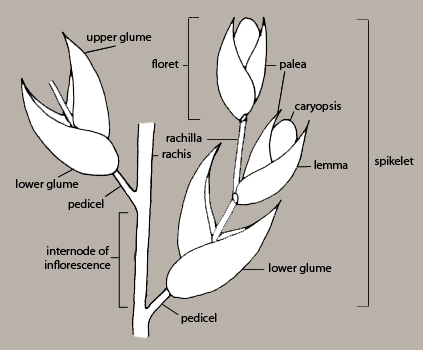 protrudes out through the tips of the glumesGlume:
The pair of chaffy bracts that occur at the base of a grass spikelet, often completely enclosing it..
Not listed
Included
Poaceae
Schizachyrium scoparium (Michx.) Nash