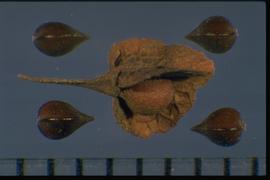
Weed
clustered dock, sharp dock
AcheneAchene:
A dry, hard, one-chambered, one-seeded indehiscent fruit, as in buckwheat (Fagopyrum) or sunflower (Helianthus). The fruit wall is not united with the seed coat.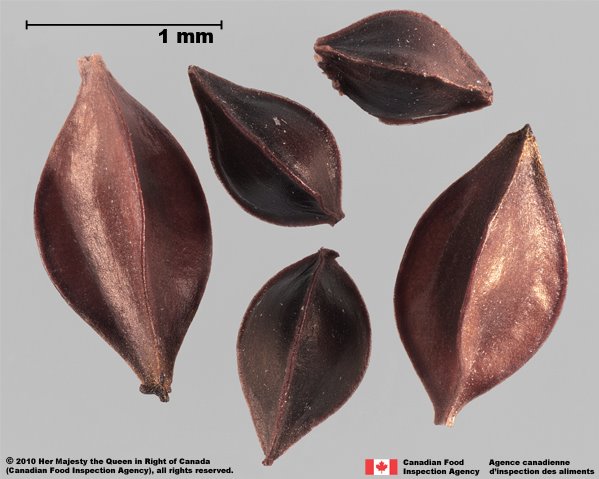
ObovateObovate:
Inverted egg shaped with apical end the broadest.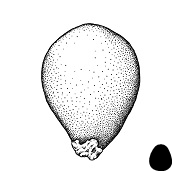 , triangular in cross section
Dark brown
Smooth
AcheneAchene:
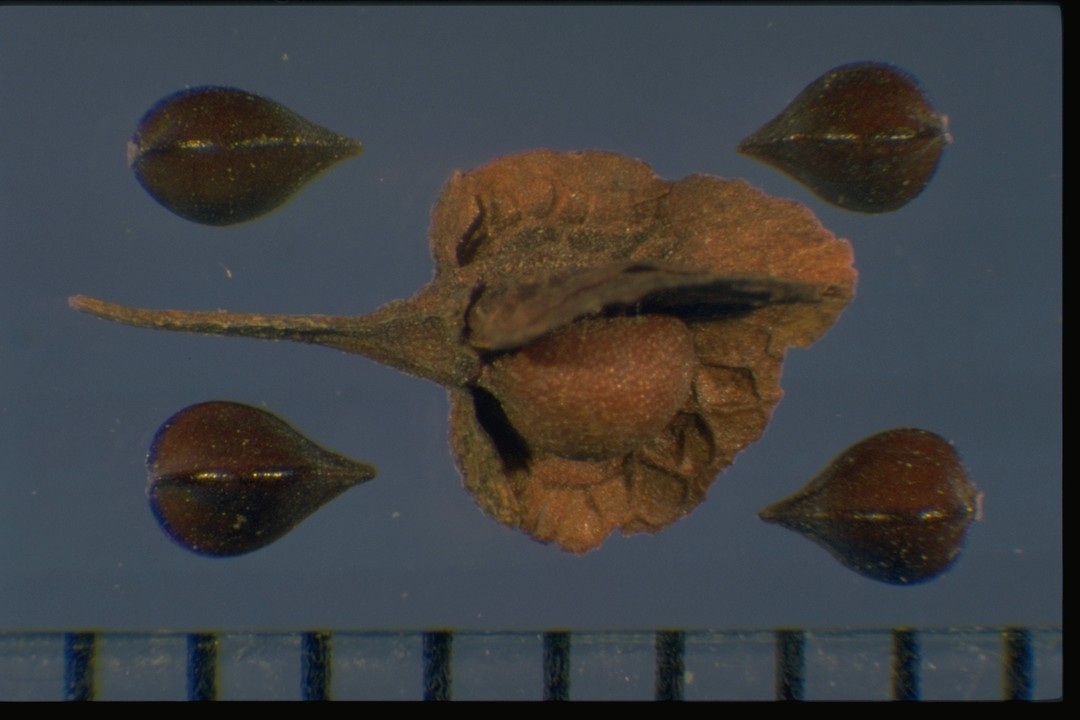
A dry, hard, one-chambered, one-seeded indehiscent fruit, as in buckwheat (Fagopyrum) or sunflower (Helianthus). The fruit wall is not united with the seed coat. recurved at apexApical:
The distal end of the fruit or seed away from the point of attachment or attachment scar.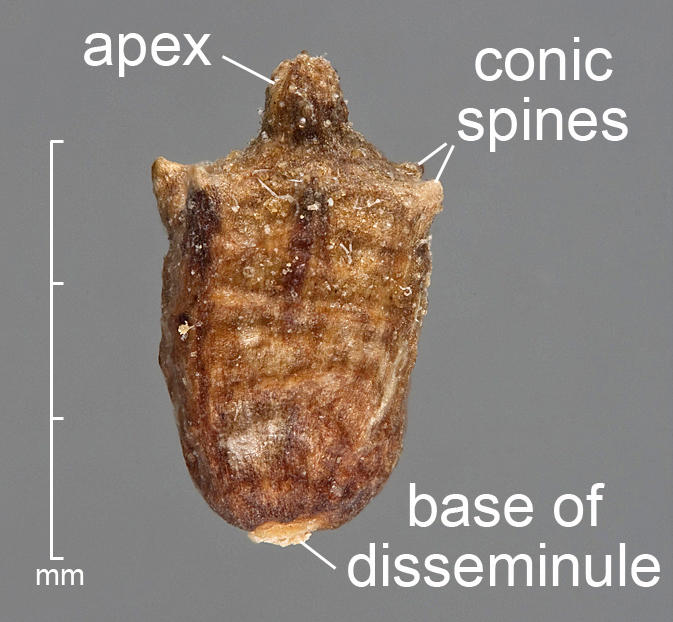 but not at base. Calyx margins wavy.
AcheneAchene:
A dry, hard, one-chambered, one-seeded indehiscent fruit, as in buckwheat (Fagopyrum) or sunflower (Helianthus). The fruit wall is not united with the seed coat. ridges are minutely rounded and not sharp-edged. AcheneAchene:
A dry, hard, one-chambered, one-seeded indehiscent fruit, as in buckwheat (Fagopyrum) or sunflower (Helianthus). The fruit wall is not united with the seed coat. ridges recurve as they approach the apexApical:
The distal end of the fruit or seed away from the point of attachment or attachment scar. but not the base. Large spongy callosities appear on the calyx lobes. The lobes have moderately wavy margins.
State Noxious Weed: Alabama, Arkansas, Connecticut, Florida, Georgia, Kansas, Louisiana, Mississippi, Missouri, Nebraska, Oklahoma, South Carolina, Tennessee, Texas, Washington
Not included
For more information, see ISMA fact sheet, Rumex spp.
Polygonaceae
Rumex conglomeratus Murray