Weed
purple locoweed, stemless loco, white woollyloco, whitepoint locoweed, Lambert's crazyweed, Lambert's locoweed, purple loco
True seedTrue seed:
A mature fertilized ovule consisting of an embryo, with or without and external food reserve (e.g., endosperm) enclosed by the testa.
OvalOval:
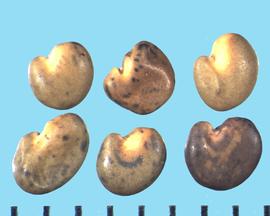
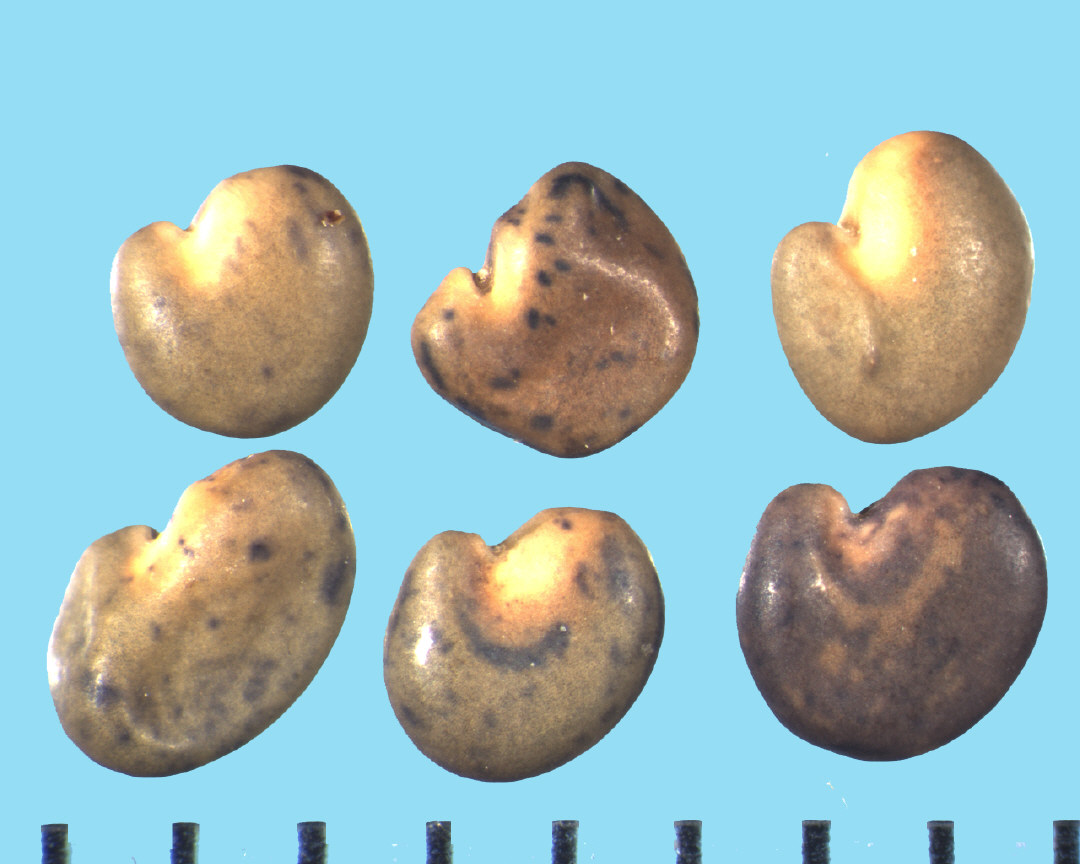
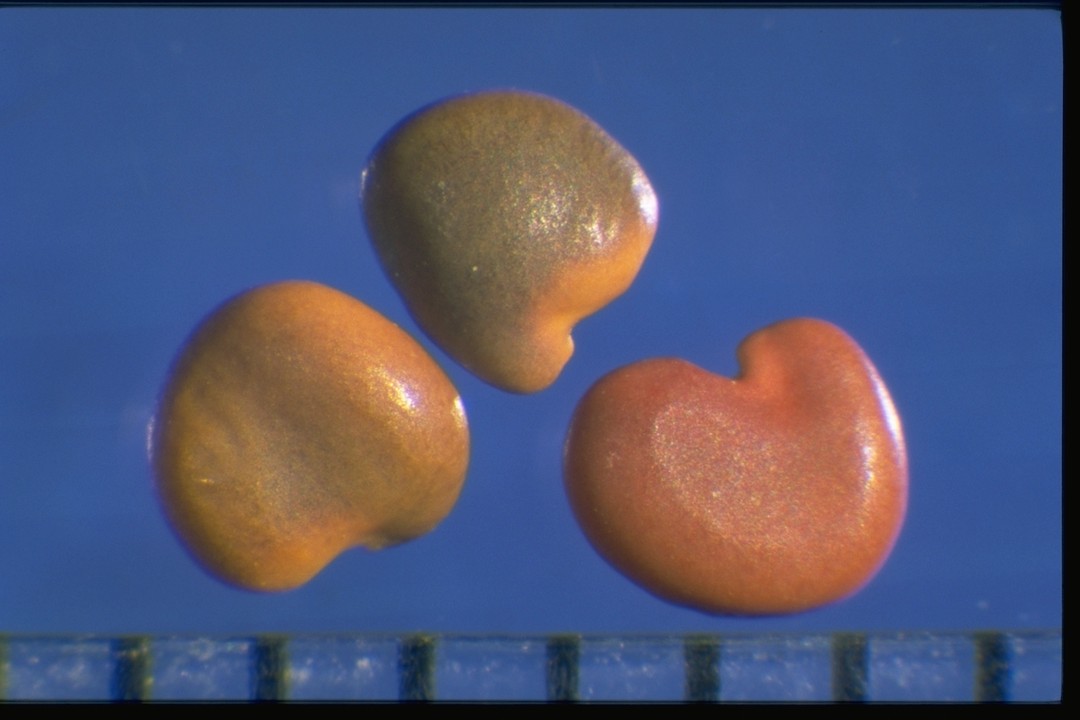
Broadly elliptic.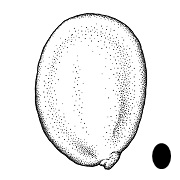 to mitten shaped, with divergent radicleRadicle:
The rudimentary root of the embryo, developing into the primary root after emergence from the seed coat.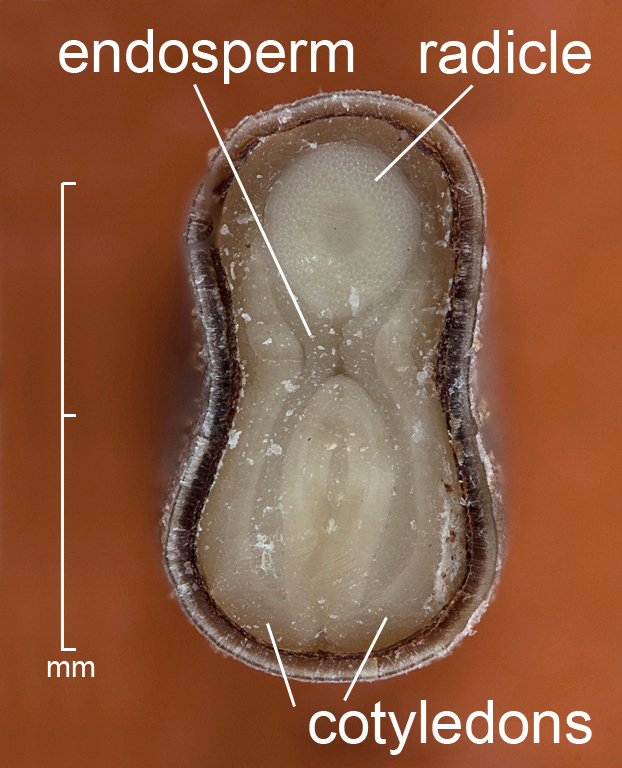
Olive-green to brown
Dull
HilumHilum:
The scar on the seed coat at the place of its detachment from the seed stalk (funiculus).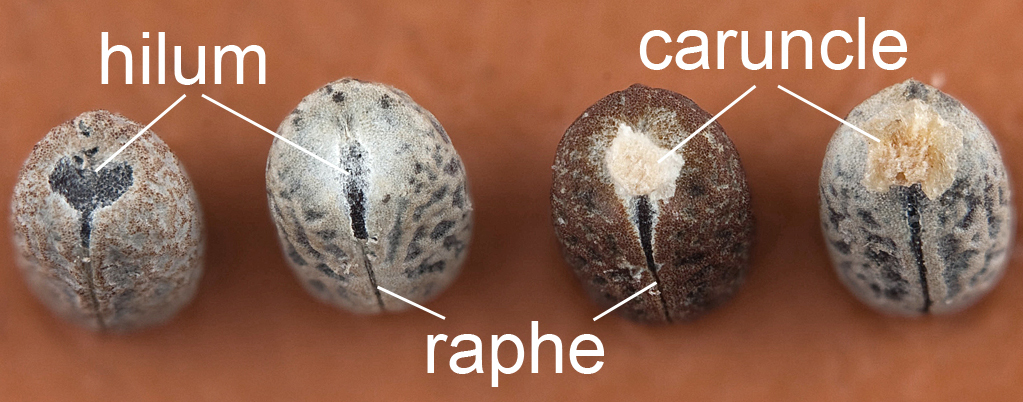 is in cleft in seed margin.
RadicleRadicle:
The rudimentary root of the embryo, developing into the primary root after emergence from the seed coat. lobe approximately equal in length to the cotyledonCotyledon:
The modified storage leaf or pair of leaves of an embryo and seedling (see primary leaf).
lobe. Shape variable from ovalOval:
Broadly elliptic. to "human" heart-shaped to mitten-shaped. Tops of the cotyledonary and radicleRadicle:
The rudimentary root of the embryo, developing into the primary root after emergence from the seed coat. lobes are often lighter-colored.
State Noxious Weed: Hawaii
Not included
Fabaceae
Oxytropis lambertii Pursh