Weed
Cape tulip
True seedTrue seed:
A mature fertilized ovule consisting of an embryo, with or without and external food reserve (e.g., endosperm) enclosed by the testa.
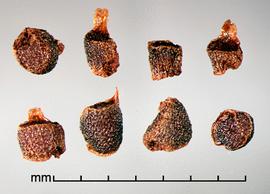
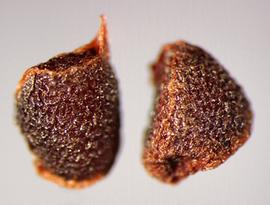
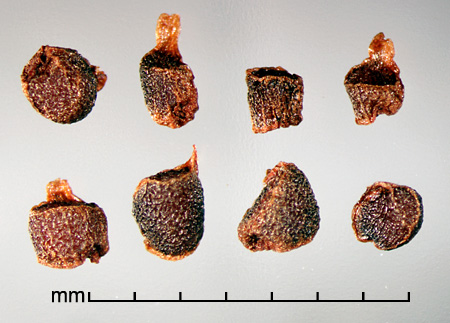
Blocky
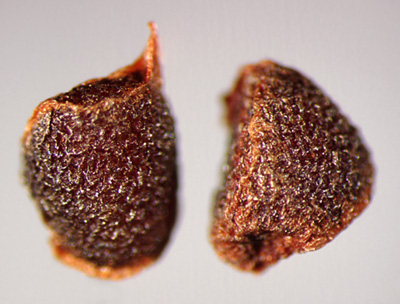
Dark brown
RugoseRugose:
Having veinlets sunken and areas in between raised. Wrinkled.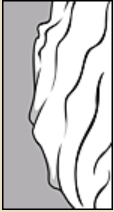
HilumHilum:
The scar on the seed coat at the place of its detachment from the seed stalk (funiculus).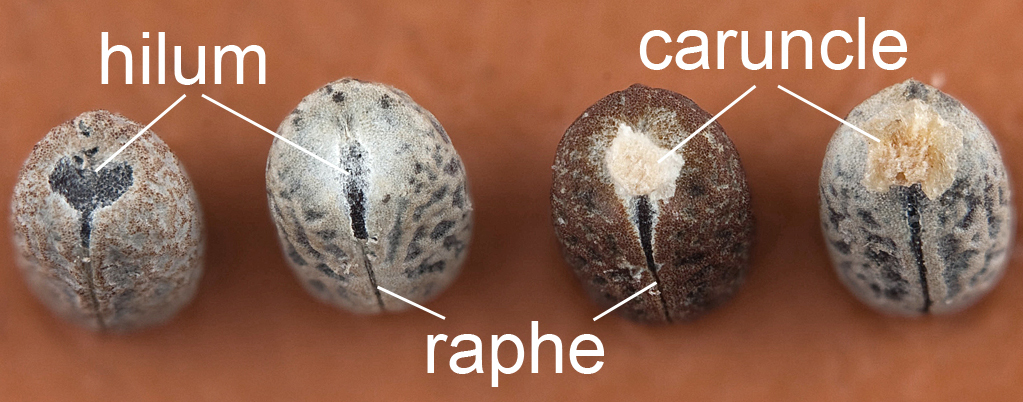 is on margin of base surface.
SpikeSpike:
Has a strong central axis (rachis) on which flowers or spikelets are directly attached (sessile), e.g. wheatgrasses.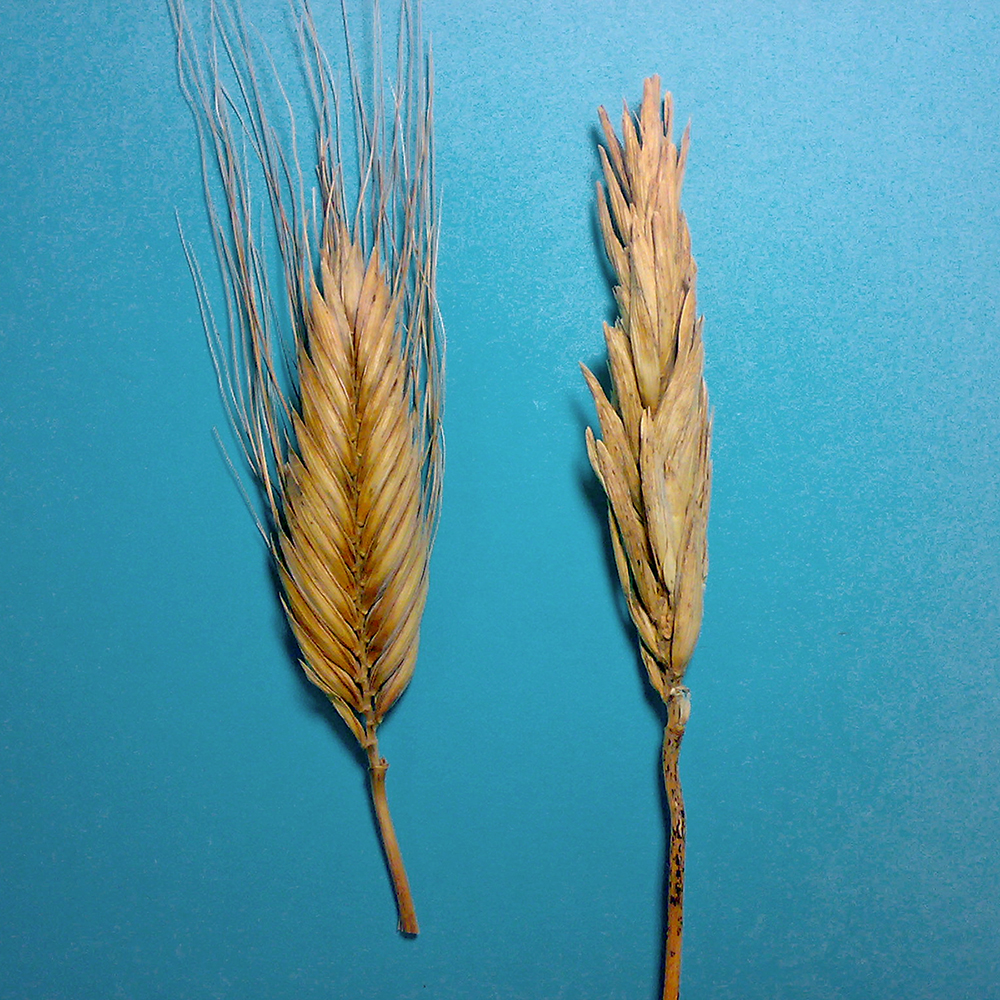 arising from the margin of apexApical:
The distal end of the fruit or seed away from the point of attachment or attachment scar.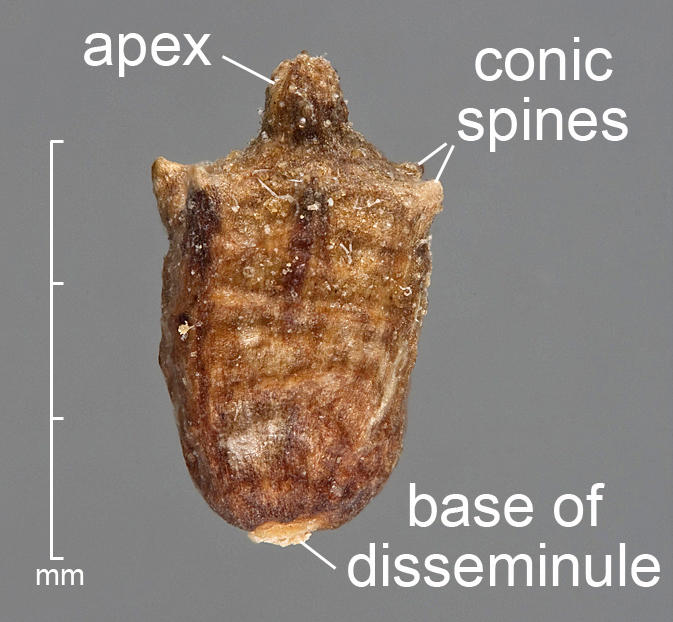 flat surface.
Federal
Learn more about Moraea spp. on ITP's Federal Noxious Weed Disseminules tool.
Not included
Iridaceae
Moraea collina Thunb.
Homeria collina (Thunb.) Salisb.