Melastoma malabathricum

Species category

Weed

Common name

Malabar melastome

Diagnostic characters

Planting unit

True seedTrue seed:
A mature fertilized ovule consisting of an embryo, with or without and external food reserve (e.g., endosperm) enclosed by the testa.

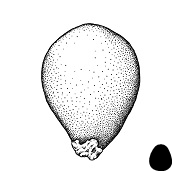
Shape

ObovateObovate:
Inverted egg shaped with apical end the broadest.
Size

  • Length 0.5–0.8 mm
  • Width 0.4–0.6 mm
  • Thickness 0.3–0.4 mm

Color

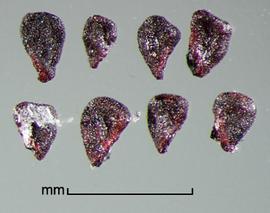
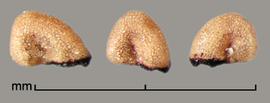
Light brown to black

Texture

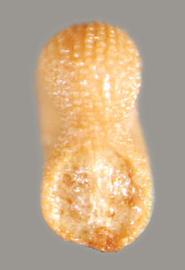
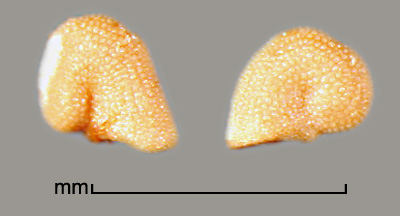
Covered with concentric rows of tubercles

Other structures

HilumHilum:
The scar on the seed coat at the place of its detachment from the seed stalk (funiculus).
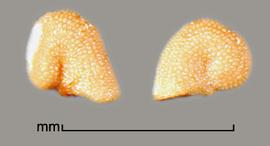
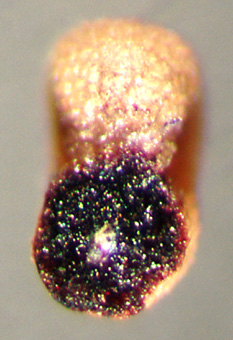
is large, wide, and round structure just lateral to the base.

Identification notes

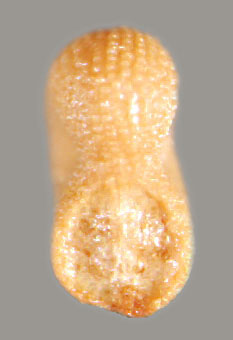
Seed embryoEmbryo:
A rudimentary plant contained in a seed, usually consisting of a more or less differentiated axis and attached cotyledon(s).
lays in a partial coil with the wide end terminating in back of the hilumHilum:
The scar on the seed coat at the place of its detachment from the seed stalk (funiculus).
. External hilumHilum:
The scar on the seed coat at the place of its detachment from the seed stalk (funiculus).
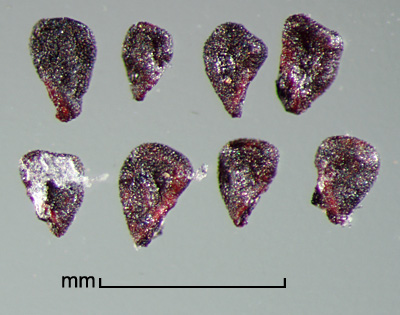
area is black. Immature and aborted seeds may be dark brown to black in color.

Noxious weed seed categories

State Noxious Weed: Hawaii
Federal

Learn more on ITP's Federal Noxious Weed Disseminules tool.

AOSA examination list

Not included

Nomenclature

Family

Melastomataceae

Valid name

Melastoma malabathricum L.
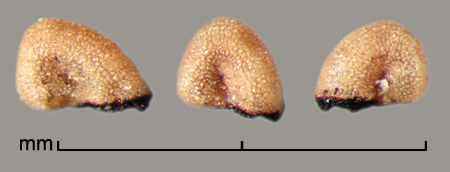
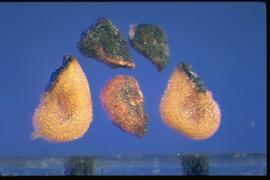
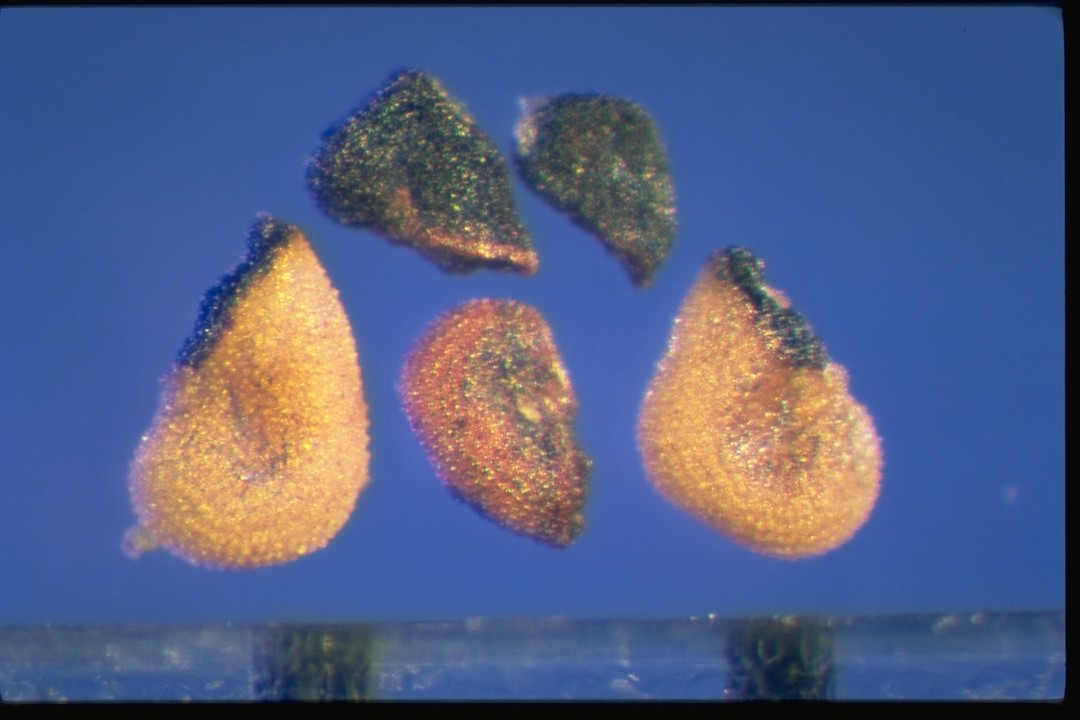
 Melastoma malabathricum.  Immature and aborted seeds are dark brown to black in color. Photo by Julia Scher, USDA-APHIS-PPQ.
Melastoma malabathricum. Immature and aborted seeds are dark brown to black in color. Photo by Julia Scher, USDA-APHIS-PPQ.
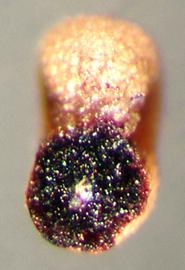
 Melastoma malabathricum.  Hilum is wide and round and is lateral to the base of the seed. Photo by Julia Scher, USDA-APHIS-PPQ.
Melastoma malabathricum. Hilum is wide and round and is lateral to the base of the seed. Photo by Julia Scher, USDA-APHIS-PPQ.
 Melastoma malabathricum.  The seed embryo lies in a partial coil with the wide end terminating in the back of the hilum. Photo by Julia Scher, USDA-APHIS-PPQ.
Melastoma malabathricum. The seed embryo lies in a partial coil with the wide end terminating in the back of the hilum. Photo by Julia Scher, USDA-APHIS-PPQ.
 Melastoma malabathricum . Seeds are covered with concentric rows of tubercles. Photo by Julia Scher, USDA-APHIS-PPQ.
Melastoma malabathricum. Seeds are covered with concentric rows of tubercles. Photo by Julia Scher, USDA-APHIS-PPQ.
 Melastoma malabathricum.  The seed embryo lies in a partial coil with the wide end terminating in the back of the hilum. Photo by Julia Scher, USDA-APHIS-PPQ.
Melastoma malabathricum. The seed embryo lies in a partial coil with the wide end terminating in the back of the hilum. Photo by Julia Scher, USDA-APHIS-PPQ.
 Melastoma malabathricum.  Light brown to black seeds.
Melastoma malabathricum. Light brown to black seeds.
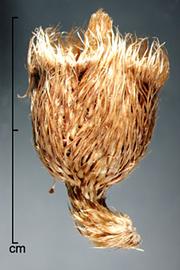
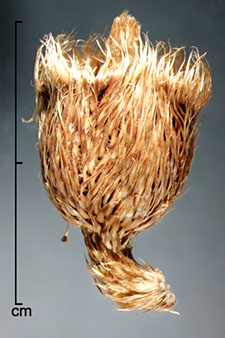
 Melastoma malabathricum.  Seed capsules. Photo by Julia Scher, USDA-APHIS-PPQ.
Melastoma malabathricum. Seed capsules. Photo by Julia Scher, USDA-APHIS-PPQ.
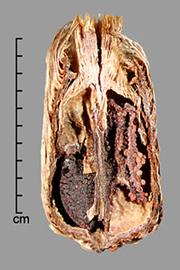
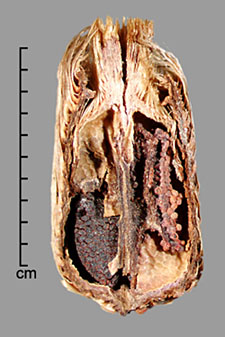
 Melastoma malabathricum.  Young seed in capsule. Photo by Julia Scher, USDA-APHIS-PPQ.
Melastoma malabathricum. Young seed in capsule. Photo by Julia Scher, USDA-APHIS-PPQ.