Weed
aroma
True seedTrue seed:
A mature fertilized ovule consisting of an embryo, with or without and external food reserve (e.g., endosperm) enclosed by the testa.
ObovateObovate:
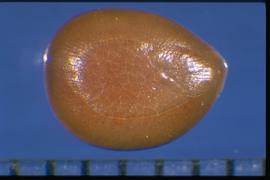
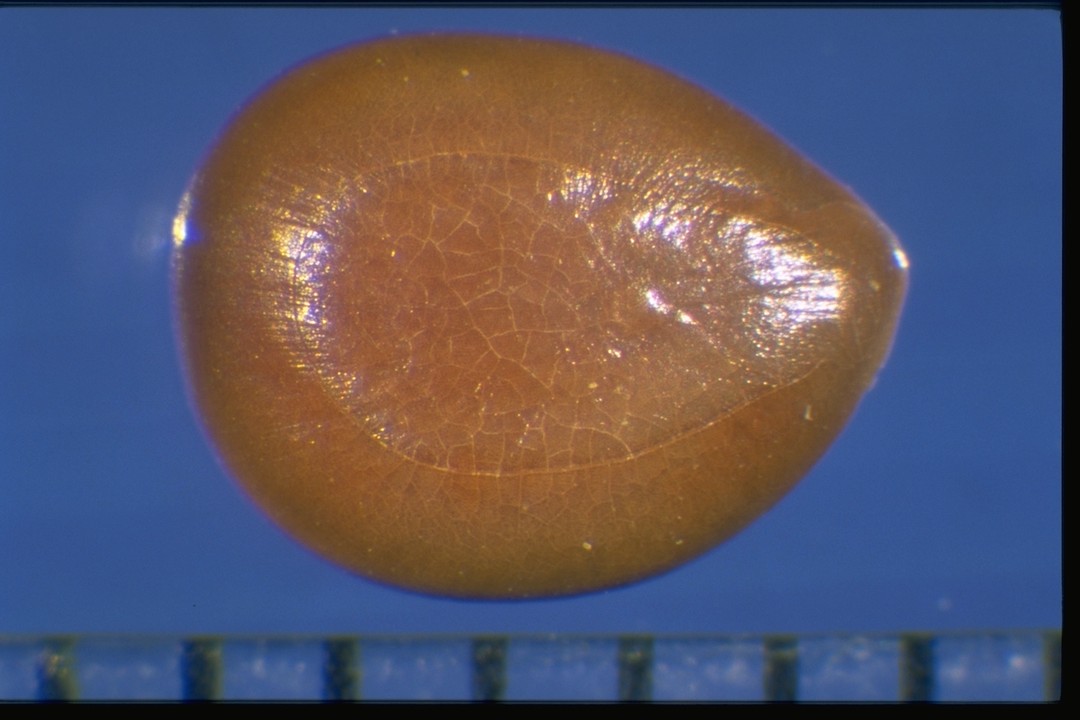
Inverted egg shaped with apical end the broadest.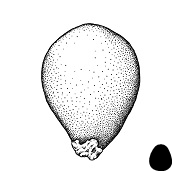
Reddish-brown to brown
Smooth and glossy with a pleurogram following the inside of the margin. The area within the pleurogram appears cracked.
HilumHilum:
The scar on the seed coat at the place of its detachment from the seed stalk (funiculus).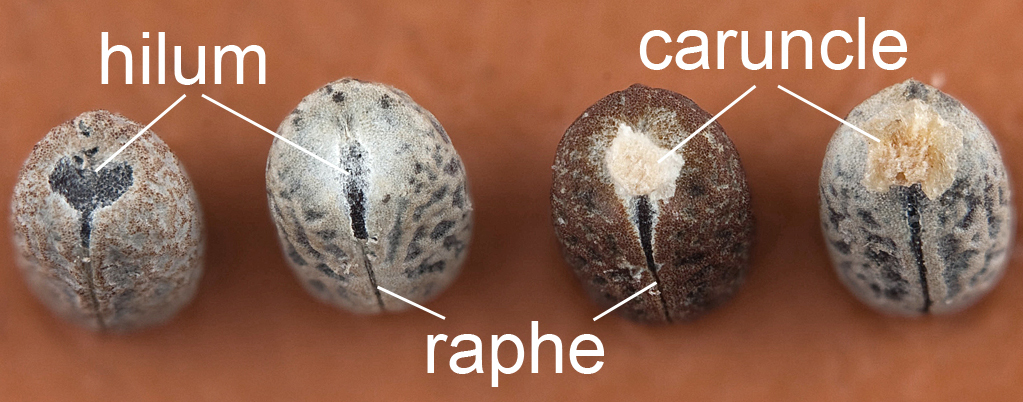 is on the pointed end.
The flat surface of the seed has a pleurogram line that curves with the seed margin. The area within this pleurogram (known as the areola) is cracked on the surface. The seed is waxy-glossy.
State Noxious Weed: Hawaii
Not included
Fabaceae
Dichrostachys cinerea (L.) Wight & Arn.
Cailliea glomerata (Forssk.) J.F. Macbr.
Dichrostachys nutans Benth.