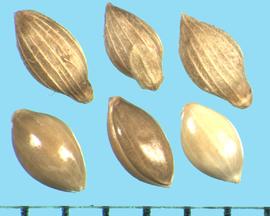
Revegetation or Rangeland, Weed
deertongue
FloretFloret:
A small flower in a clustered inflorescence (e.g., sunflower, grasses). In grasses, a floret consists of the lemma, palea, stamens, and pistil.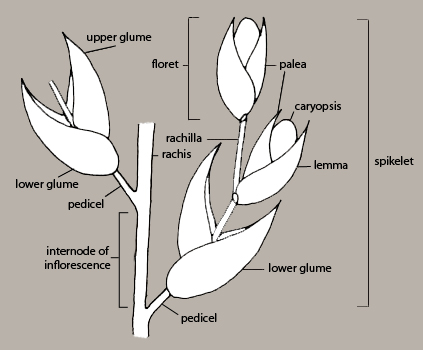
EllipticElliptic:
Outline of an ellipse; greatest width midway sloping to an equally pointed apex and base.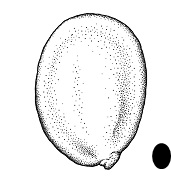
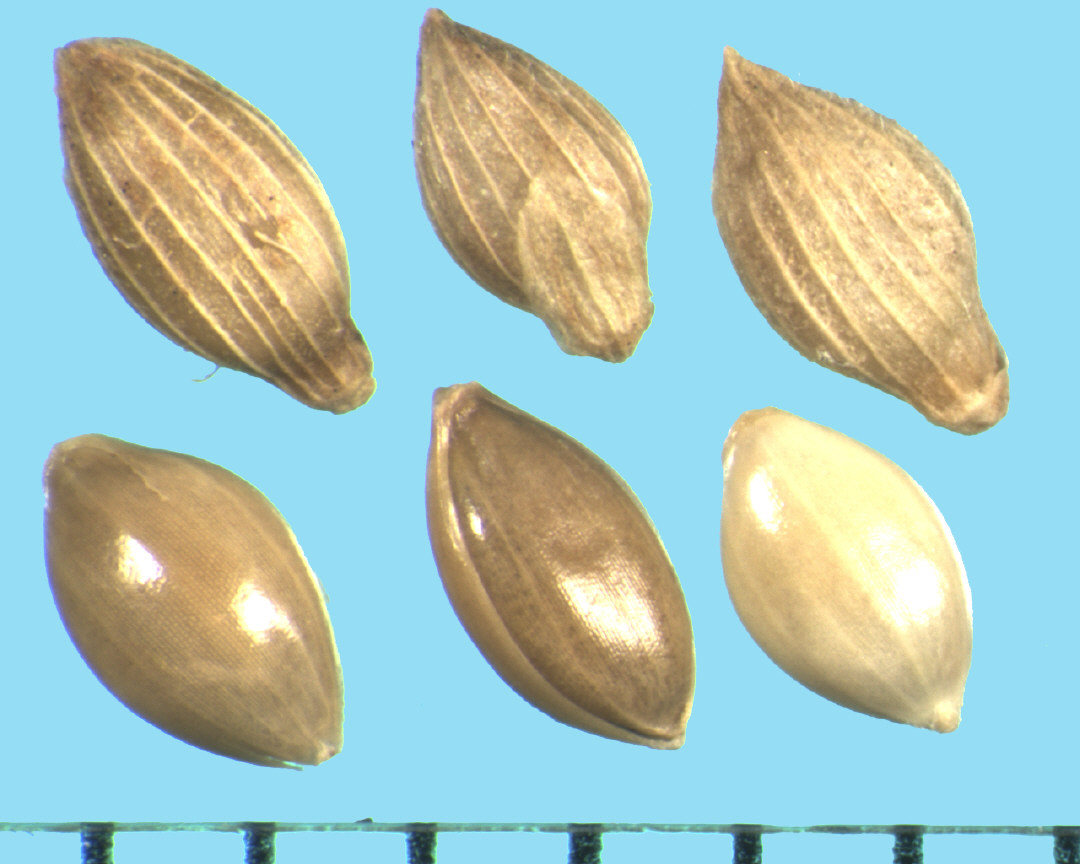
Light brown
Shiny with fine reticulations
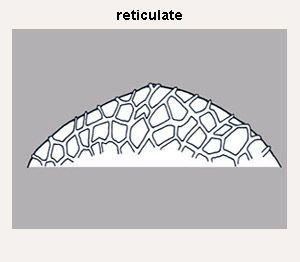
Shiny with longitudinal reticulationReticulated:
Resembling a net or network, especially having veins, fibers, or lines crossing the surface.
 lines
lines
Shiny with longitudinal reticulationReticulated:
Resembling a net or network, especially having veins, fibers, or lines crossing the surface.
lines; lateral area beyond paleaPalea:
One of the thin bracts of grass floret enclosing the fruit (caryopsis) that is located on the side opposite the embryo.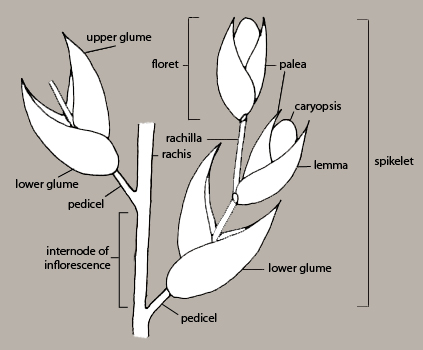 margin line is visible.
GlumesGlume:
The pair of chaffy bracts that occur at the base of a grass spikelet, often completely enclosing it.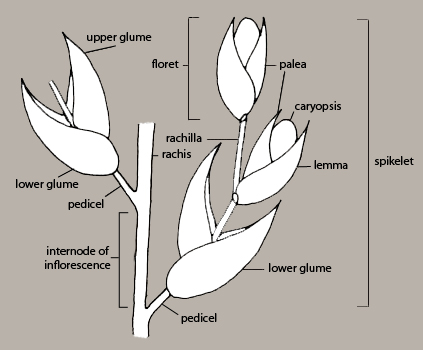 and sterile lemmaLemma:
One of two bracts of the grass floret; it is located on the side nearest the embryo and opposite the rachilla.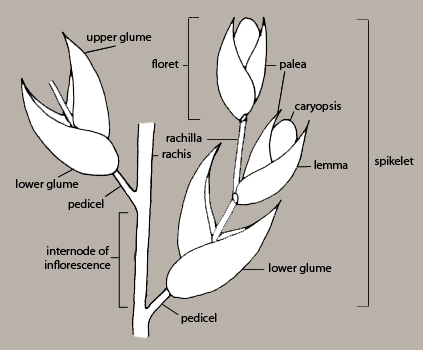 are strongly ribbed.
CallusCallus:
The hard base of grass florets or spikelets, just above the point of disarticulation.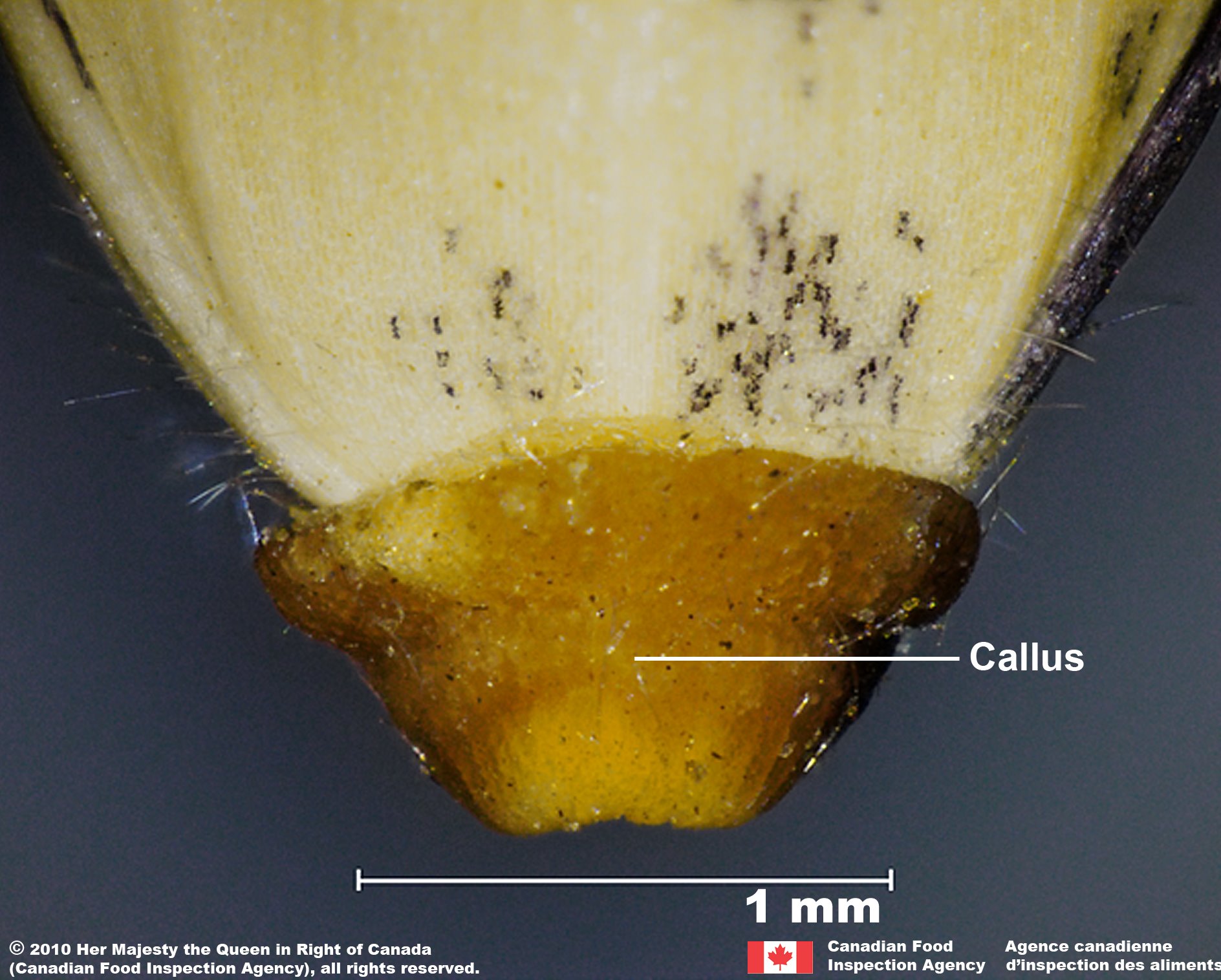 is small on the basalBasal:
The base of the fruit or seed opposite the apical end.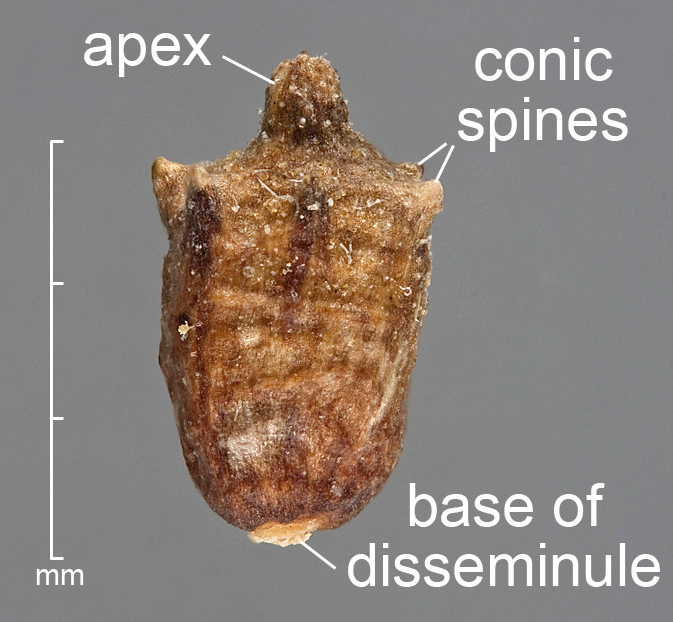 end.
end.
Not listed
Not included
Poaceae
Dichanthelium clandestinum (L.) Gould
Panicum clandestinum L.