Weed
rush skeletonweed
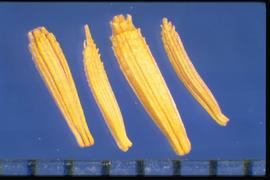
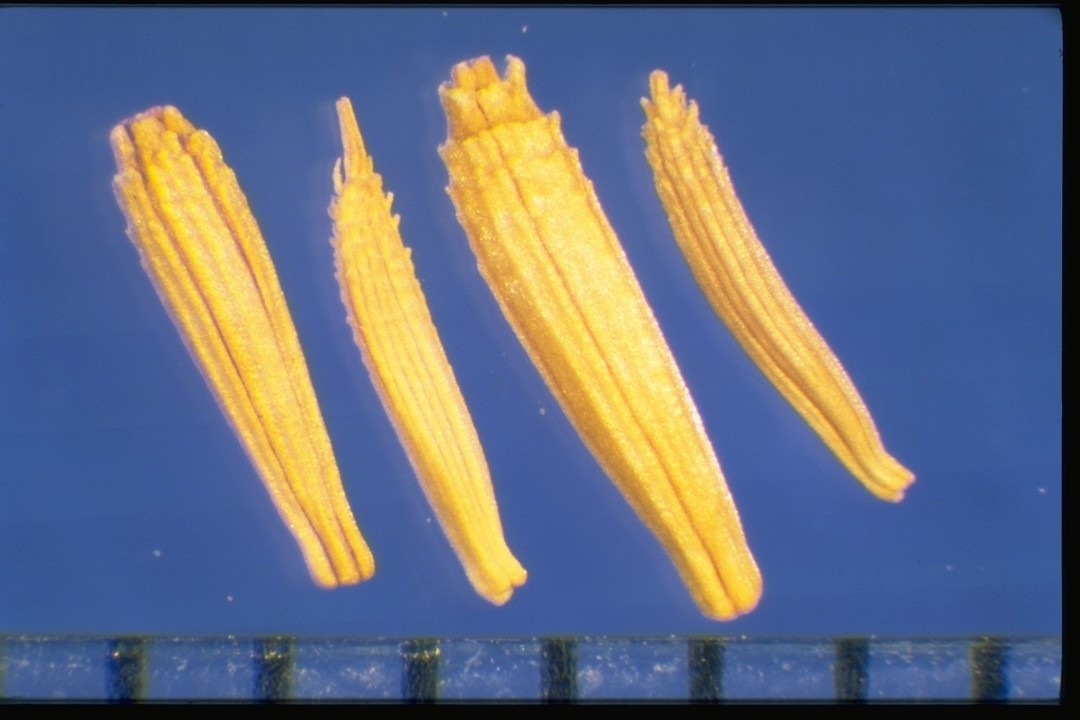
AcheneAchene:
A dry, hard, one-chambered, one-seeded indehiscent fruit, as in buckwheat (Fagopyrum) or sunflower (Helianthus). The fruit wall is not united with the seed coat.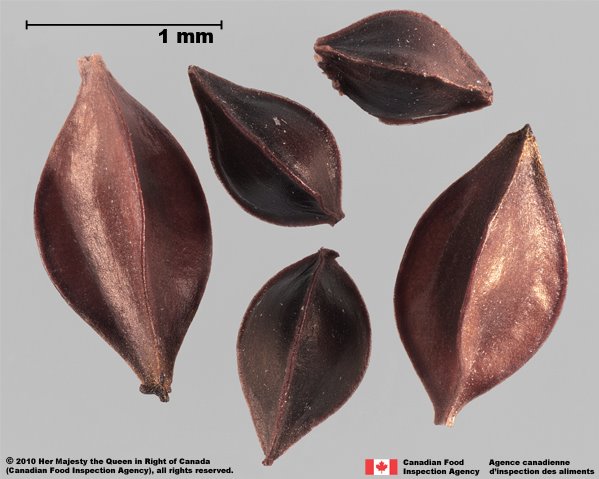
ObovateObovate:
Inverted egg shaped with apical end the broadest.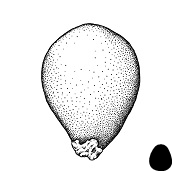
Light brown
Continuous longitudinal ribs; apicalApical:
The distal end of the fruit or seed away from the point of attachment or attachment scar.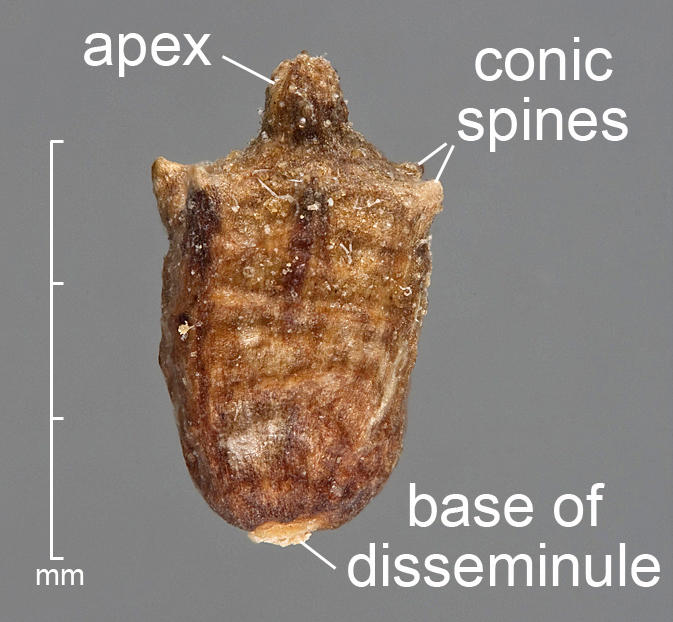 half is covered with spines.
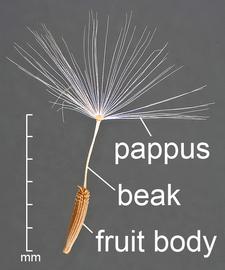
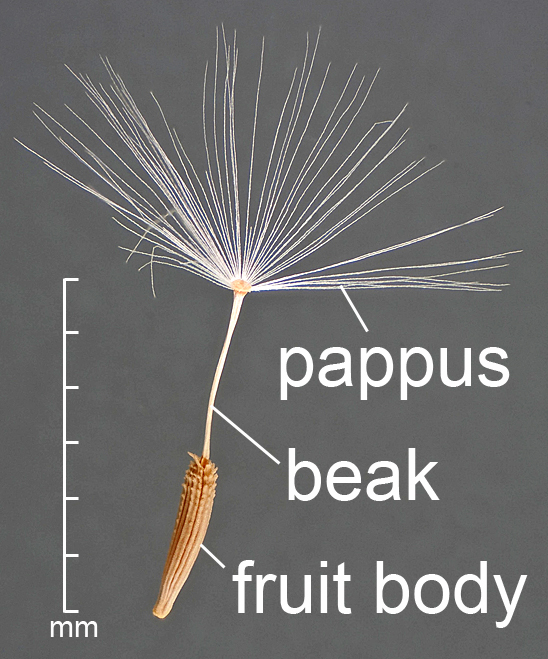
Long style is usually missing.
The long stylarStylar:
The end of the fruit or seed that contains the style or the apical end.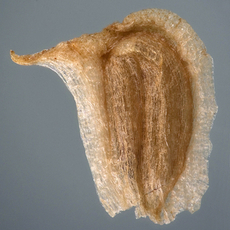 lobe is fragile and usually missing. The upper half of the acheneAchene:
A dry, hard, one-chambered, one-seeded indehiscent fruit, as in buckwheat (Fagopyrum) or sunflower (Helianthus). The fruit wall is not united with the seed coat. has rings of small spines which increase in size as the rings get closer to the apexApical:
The distal end of the fruit or seed away from the point of attachment or attachment scar..
State Noxious Weed: Arizona, California, Colorado, Idaho, Montana, Nevada, Oregon, Utah, Washington, Wyoming
Not included
For more information, see ISMA fact sheet.
Asteraceae
Chondrilla juncea L.