Agricultural
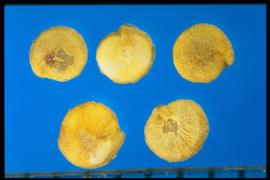
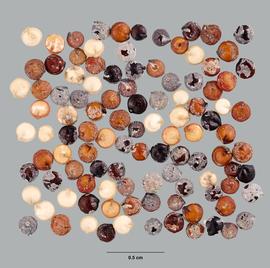
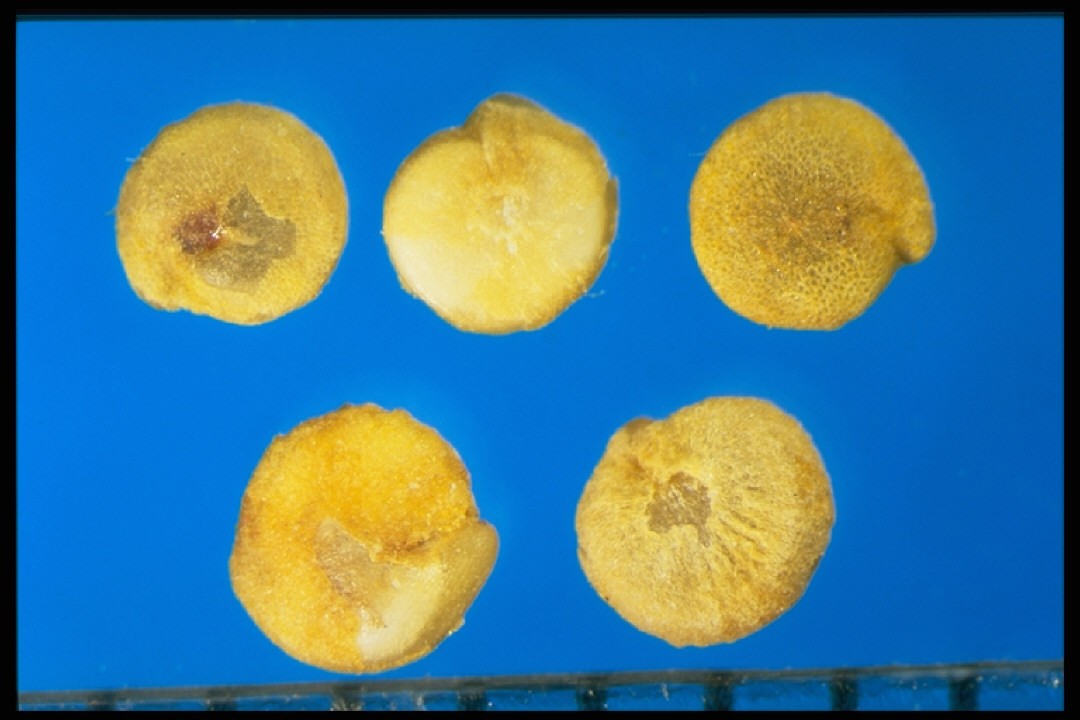
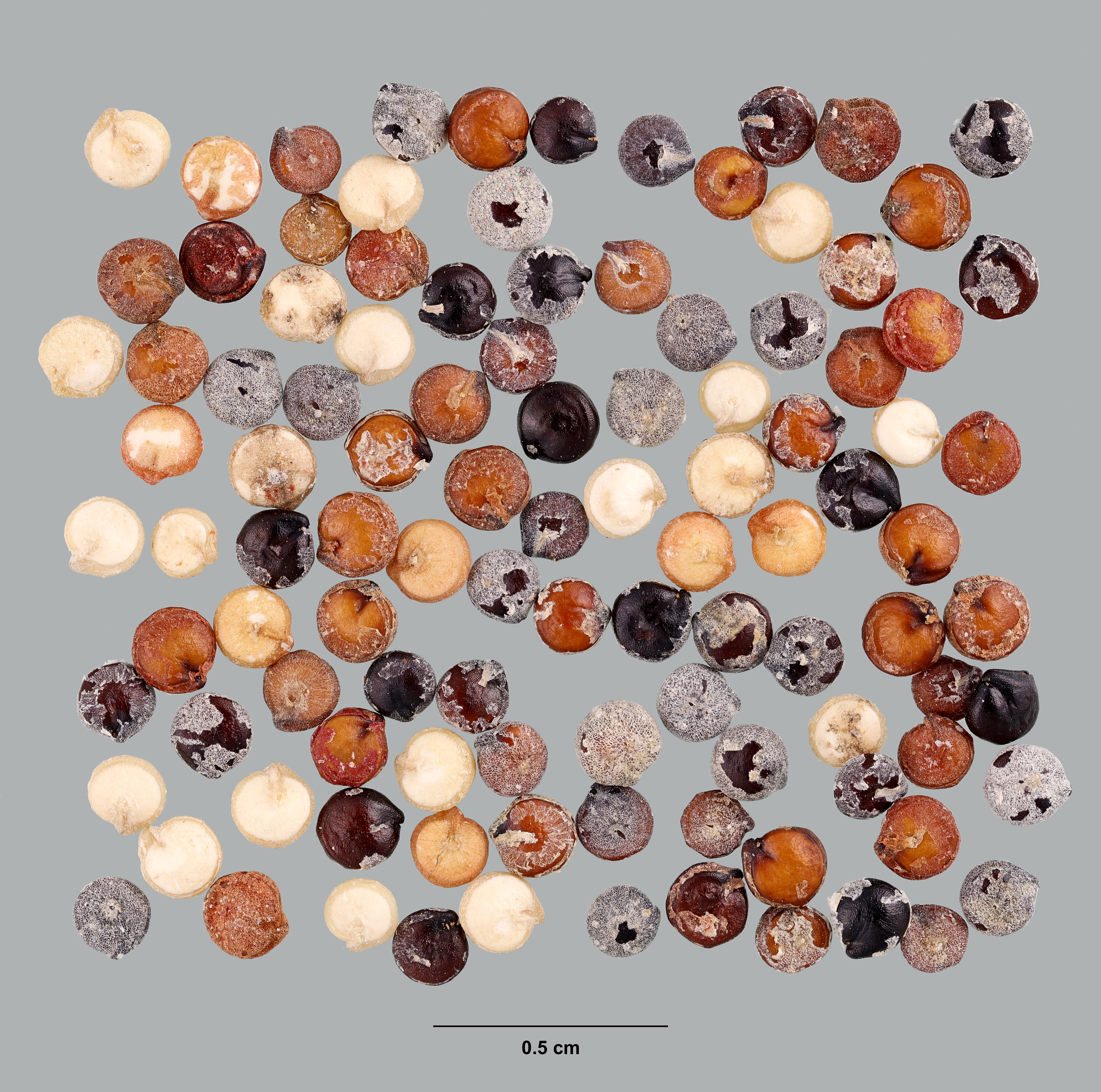
quinoa
True seedTrue seed:
A mature fertilized ovule consisting of an embryo, with or without and external food reserve (e.g., endosperm) enclosed by the testa.
LenticularLenticular:
Lens-shaped, circular in outline with convex sides.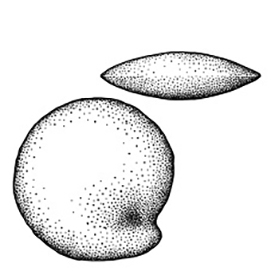
Light brown
Seed and pericarpPericarp:
Fruit wall; derived from the ovary wall.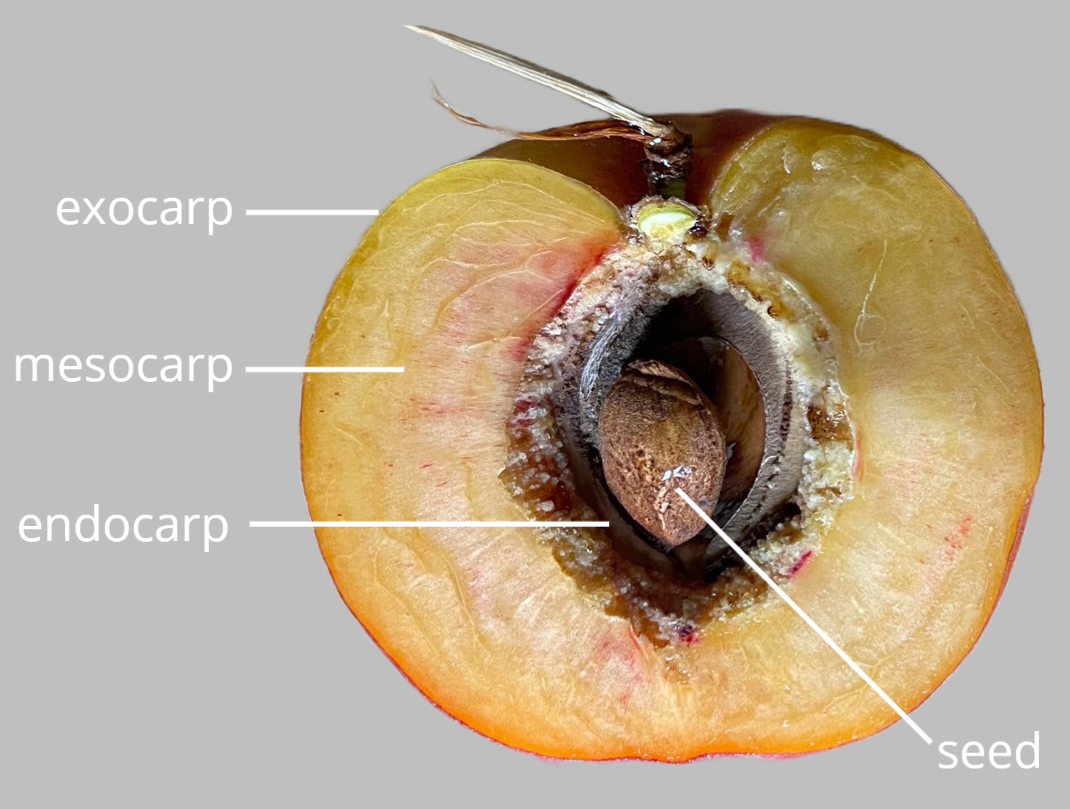 are reticulate.
Often, the pericarpPericarp:
Fruit wall; derived from the ovary wall. is present.
If the pericarpPericarp:
Fruit wall; derived from the ovary wall. (fruitFruit:
A mature ovary and any associated parts.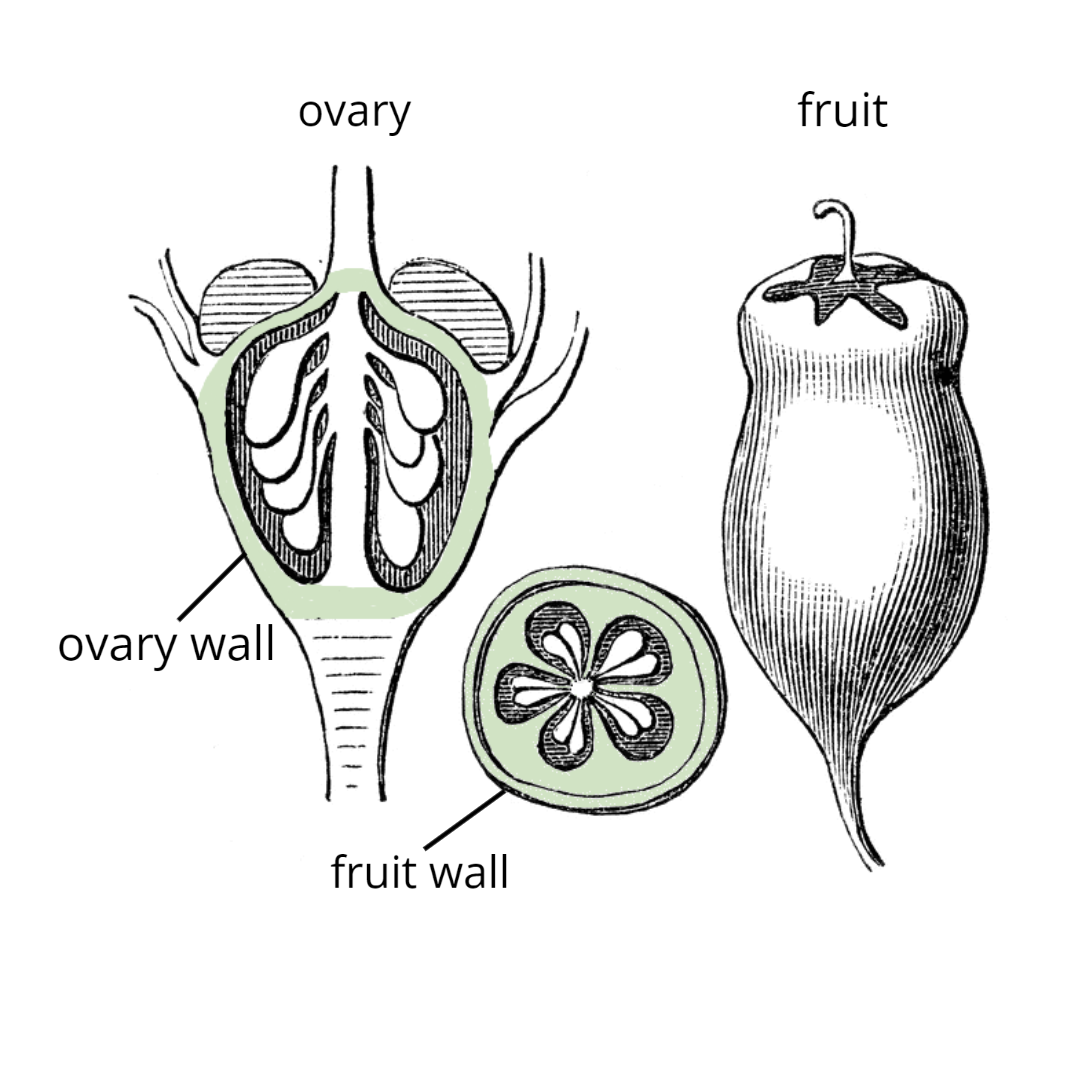 coat) is present, the unit may be referred to as a nutletNutlet:
A small, dry, indehiscent carpel of a fruit, usually composed of one quarter of the fruit with each enclosing a single seed (e.g. mints).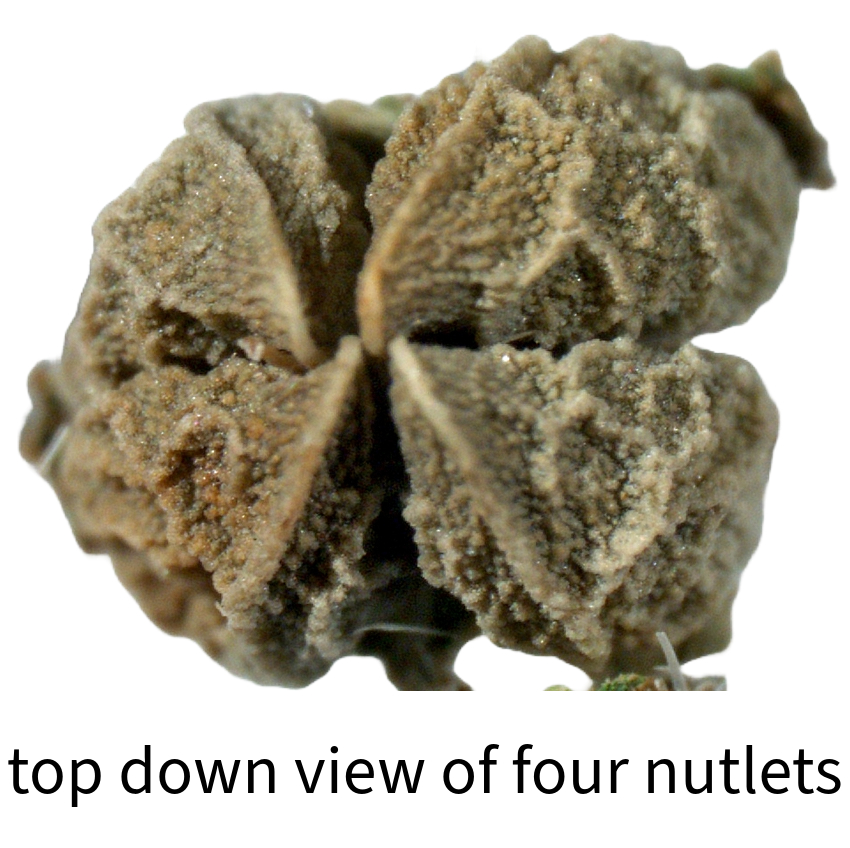 . The seed does not have a black testaTesta:
The protective covering of a seed usually composed of the inner and outer integuments. Also called a seed coat.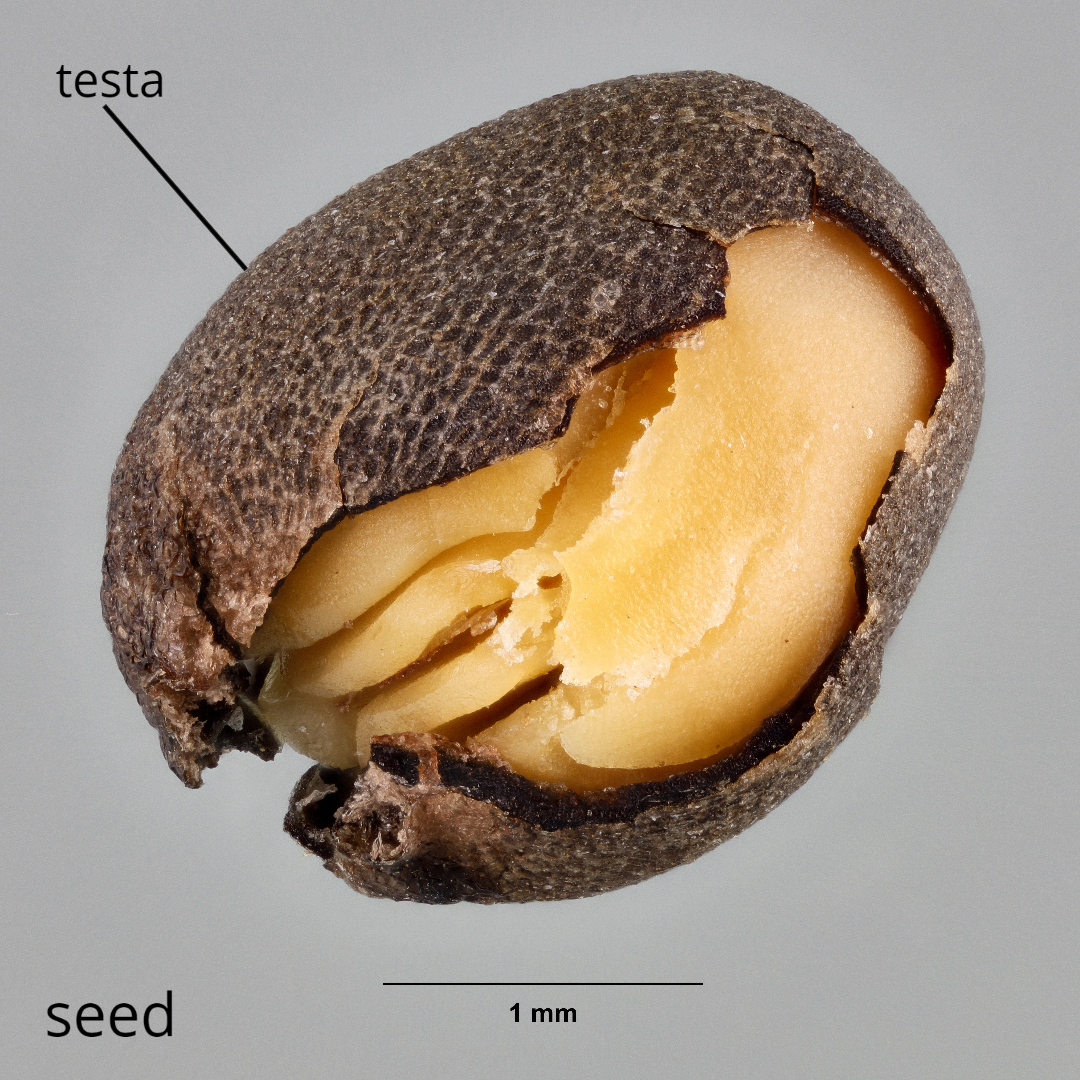 as found in the other Chenopodium spp. The linear embryoEmbryo:
A rudimentary plant contained in a seed, usually consisting of a more or less differentiated axis and attached cotyledon(s).
is coiled at the seed margin.
Not listed
Not included
For more information, see ISMA fact sheet, Chenopodium spp.
Chenopodiaceae
Chenopodium quinoa Willd.