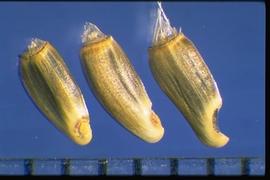
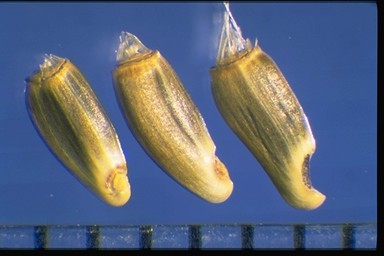
Weed
spotted knapweed, centaurée maculée ou tachetée, kleinköpfige Rispen-Flockenblume, centáurea-manchada
AcheneAchene:
A dry, hard, one-chambered, one-seeded indehiscent fruit, as in buckwheat (Fagopyrum) or sunflower (Helianthus). The fruit wall is not united with the seed coat.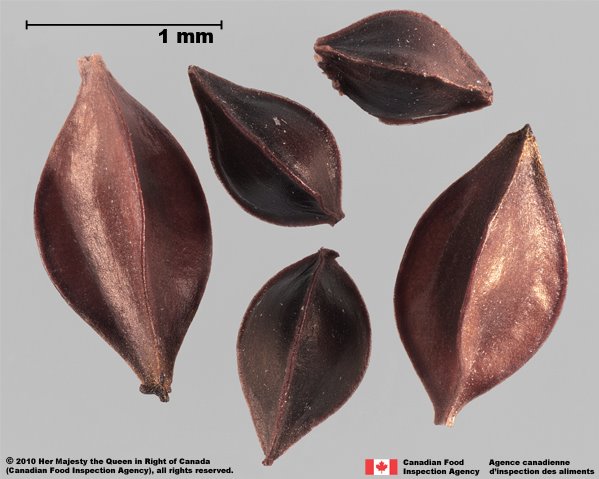
ObovateObovate:
Inverted egg shaped with apical end the broadest.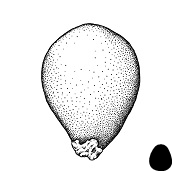
Dark brown; yellow longitudinal lines on the collar and base.
Smooth
PappusPappus:
Modified calyx in Asteraceae, composed of hairs, bristles, awns, or scales. The pappus-like structure attached to milkweed seeds is termed a coma. 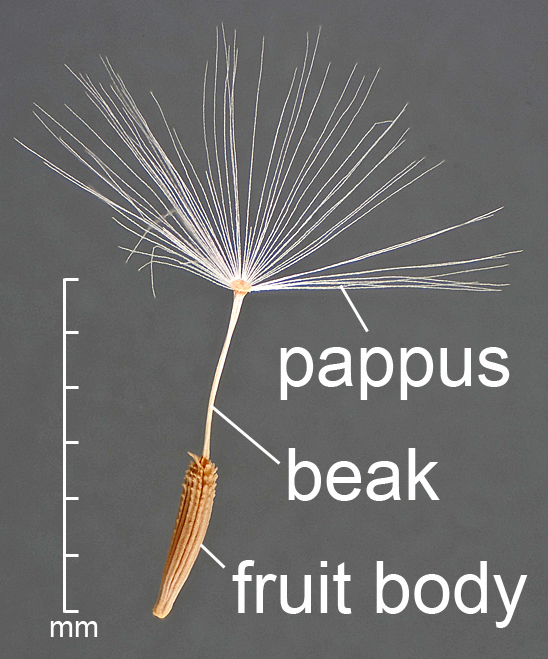 when present is short, slender and erect. Scar is lateral.
Surface colors rather blotchy, not uniform. Scar notch is lateral to the base, quite long but not deep.
State Noxious Weed: Arizona, Colorado, Idaho, Michigan, Montana, Nebraska, Nevada, North Dakota, Oregon, South Dakota, Utah, Washington, Wisconsin, Wyoming,
Not included
For more information, see ISMA fact sheet.
Asteraceae
Centaurea australis Pančić ex A. Kern.
Centaurea biebersteinii DC.
Centaurea maculosa Lam. subsp. micranthos Gugler
Centaurea stoebe L. subsp. australis (Pančić ex A. Kern.) Greuter
Centaurea stoebe L. subsp. micranthos (Gugler) Hayek