Pennisetum polystachion

Species category

Weed

Common name

mission grass

Diagnostic characters

Planting unit

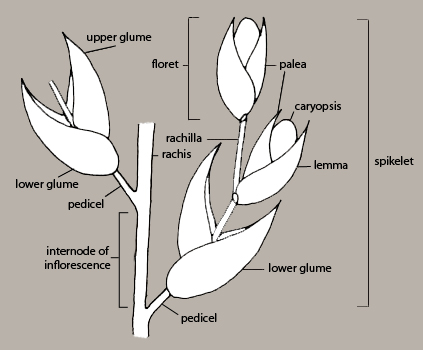
FloretFloret:
A small flower in a clustered inflorescence (e.g., sunflower, grasses). In grasses, a floret consists of the lemma, palea, stamens, and pistil.
Shape

Lanceolate

Size

  • Length 2–2.3 mm
  • Width 0.5–0.8 mm
  • Thickness 0.3–0.8 mm

Color

Light brown

Texture

Shiny and smooth

Lemma

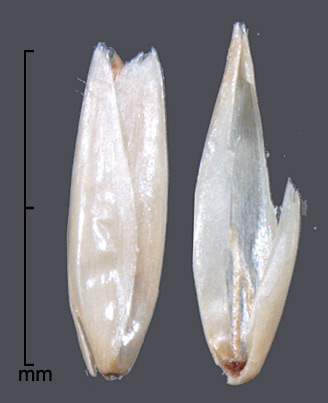
Shiny, smooth with no visible veins

Palea

Dull

Other structures

CaryopsisCaryopsis:
The single-seeded fruit or grain of the grass family (Poaceae); the fruit wall (pericarp) is united with the seed coat (testa).
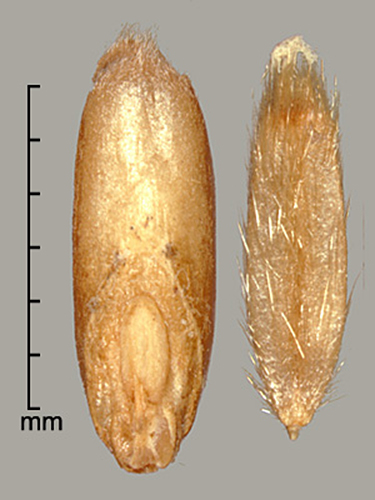
has an inconspicuous embryoEmbryo:
A rudimentary plant contained in a seed, usually consisting of a more or less differentiated axis and attached cotyledon(s).
.

Identification notes

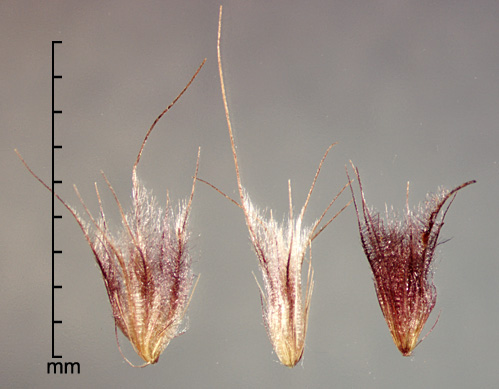
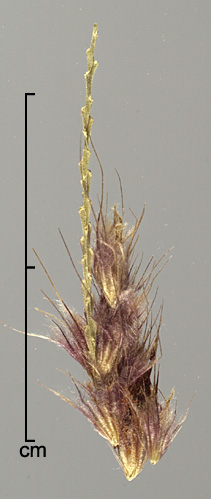
Unconditioned seed may have feathery filaments attached to the callusCallus:
The hard base of grass florets or spikelets, just above the point of disarticulation.
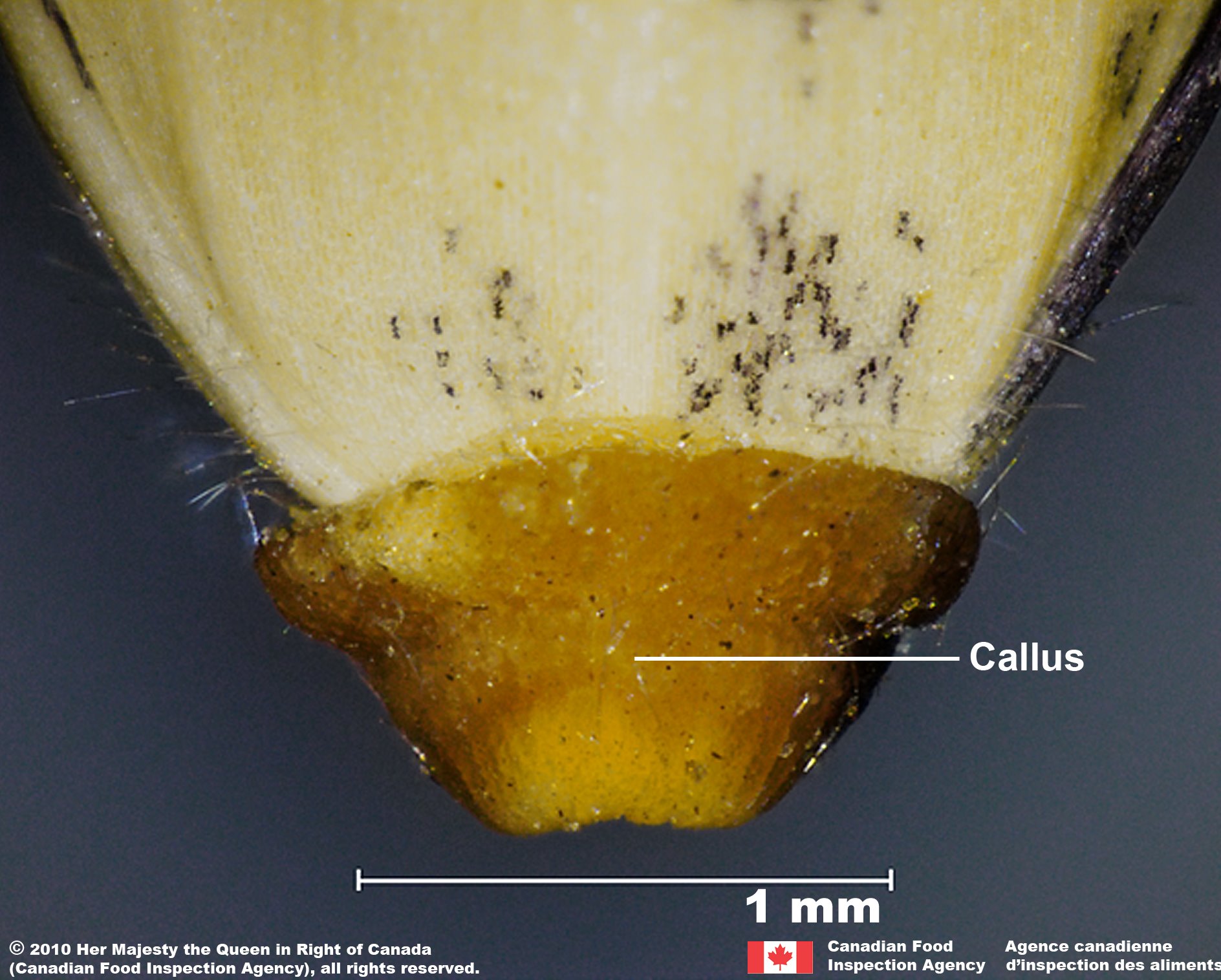
.

Noxious weed seed categories

Federal

Learn more on ITP's Federal Noxious Weed Disseminules tool.

AOSA examination list

Not included

Nomenclature

Family

Poaceae

Valid name

Pennisetum polystachion (L.) Schult.

Synonyms

Cenchrus polystachios (L.) Morrone
Pennisetum polystachyon (L.) Schult., orth. var.
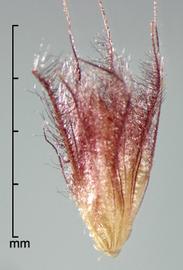
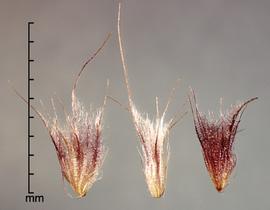
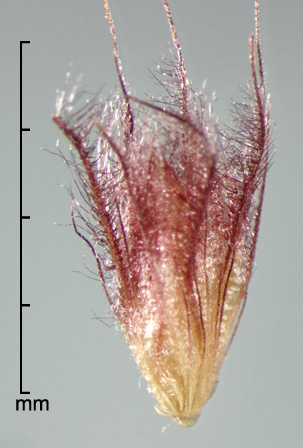
 Pennisetum polystachion.  Unconditioned seeds with feathery filaments attached to the callus. Photo by Julia Scher, USDA-APHIS-PPQ.
Pennisetum polystachion. Unconditioned seeds with feathery filaments attached to the callus. Photo by Julia Scher, USDA-APHIS-PPQ.
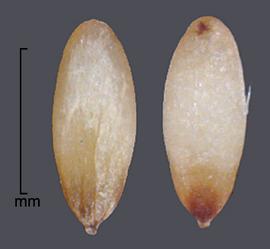
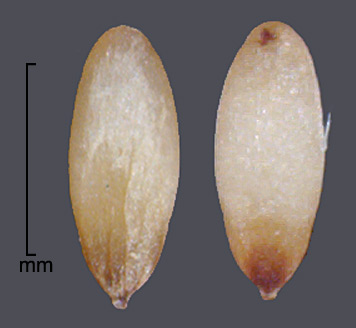
 Pennisetum polystachion.  Florets with a caryopsis that has an inconspicuous embryo. Photo by Julia Scher, USDA-APHIS-PPQ.
Pennisetum polystachion. Florets with a caryopsis that has an inconspicuous embryo. Photo by Julia Scher, USDA-APHIS-PPQ.
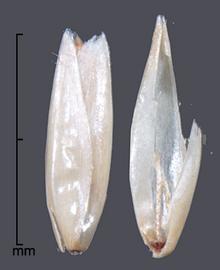
 Pennisetum polystachion.  Florets. Photo by Julia Scher, USDA-APHIS-PPQ.
Pennisetum polystachion. Florets. Photo by Julia Scher, USDA-APHIS-PPQ.
 Pennisetum polystachion.  Unconditioned seeds with feathery filaments attached to the callus. Photo by Julia Scher, USDA-APHIS-PPQ.
Pennisetum polystachion. Unconditioned seeds with feathery filaments attached to the callus. Photo by Julia Scher, USDA-APHIS-PPQ.
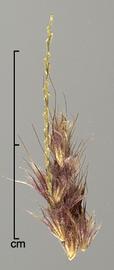
 Pennisetum polystachion.  Unconditioned seeds with feathery filaments attached to the callus. Photo by Julia Scher, USDA-APHIS-PPQ.
Pennisetum polystachion. Unconditioned seeds with feathery filaments attached to the callus. Photo by Julia Scher, USDA-APHIS-PPQ.
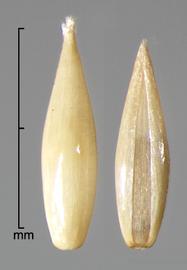
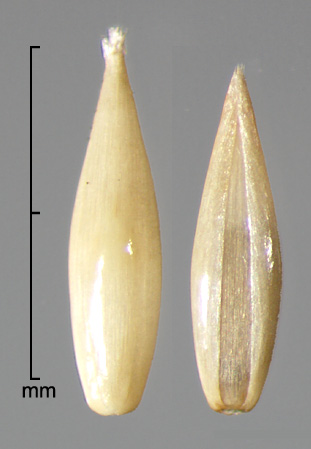
 Pennisetum polystachion.  Florets with a smooth, shiny lemma. Photo by Julia Scher, USDA-APHIS-PPQ.
Pennisetum polystachion. Florets with a smooth, shiny lemma. Photo by Julia Scher, USDA-APHIS-PPQ.