Revegetation or Rangeland, Turf
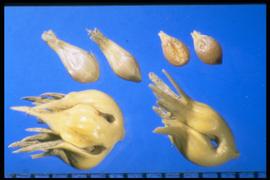
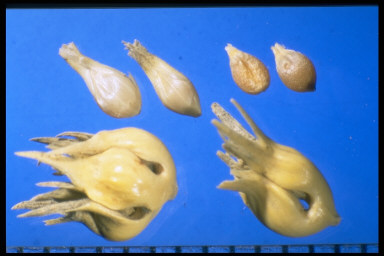
buffalograss
BurrBurr:
Has spikelets or flowers that are compressed closely together by lacking a central axis. The spikelet glumes are hard and pointed, e.g. buffalograss.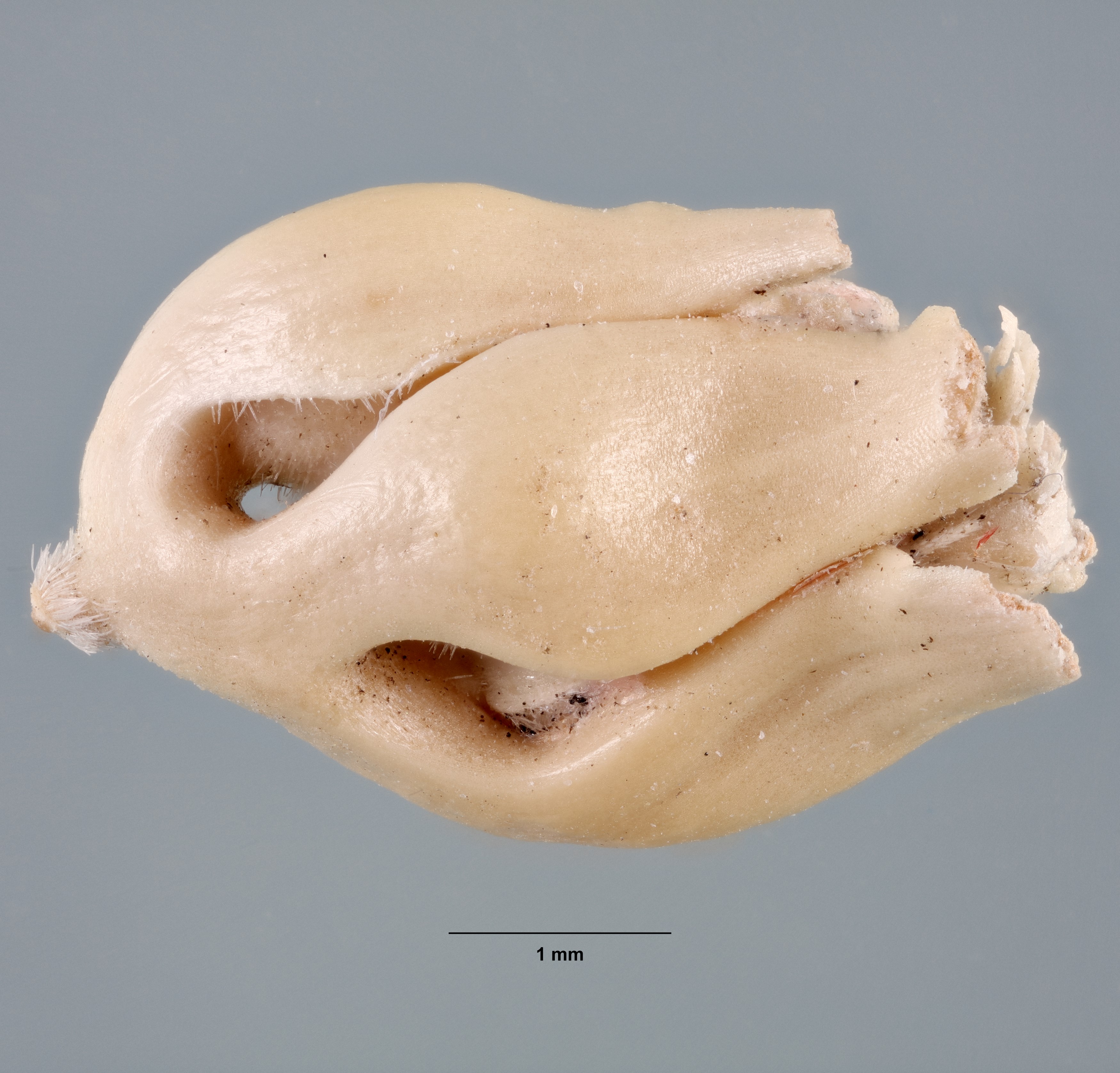
Globose
Brown
Smooth
Not visible in most seed unitsSeed unit:
The structure usually regarded as a seed in planting practices and in commercial channels, consisting of a true seed with or without accessory structures, as defined in Section 2.6 of the AOSA Rules. See also true seed.
; thin and papery.
Not visible in most seed unitsSeed unit:
The structure usually regarded as a seed in planting practices and in commercial channels, consisting of a true seed with or without accessory structures, as defined in Section 2.6 of the AOSA Rules. See also true seed.
; thin and papery.
Compressed glumesGlume:
The pair of chaffy bracts that occur at the base of a grass spikelet, often completely enclosing it.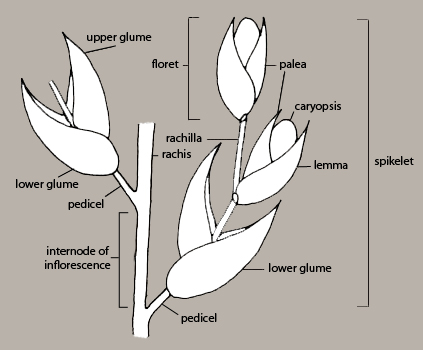 with curved apicalApical:
The distal end of the fruit or seed away from the point of attachment or attachment scar.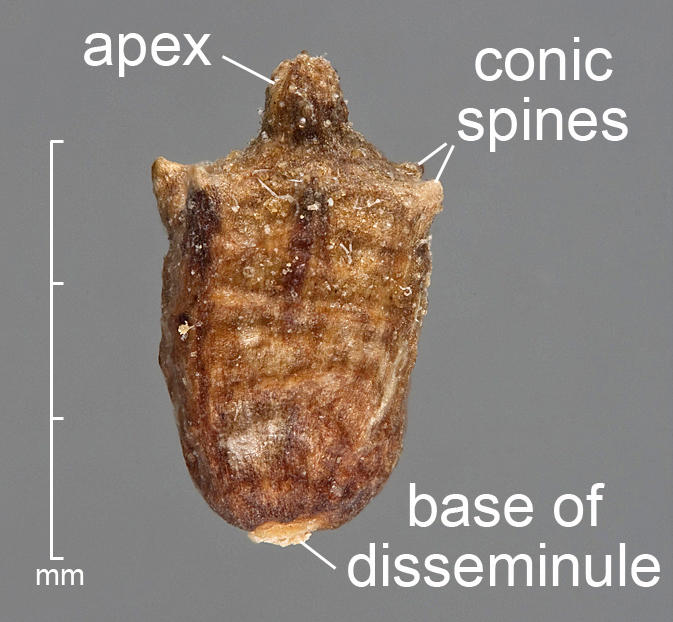 points
This seed unitSeed unit:
The structure usually regarded as a seed in planting practices and in commercial channels, consisting of a true seed with or without accessory structures, as defined in Section 2.6 of the AOSA Rules. See also true seed.
is a collection of spikeletsSpikelet:
One or more florets that are subtended by a pair of bracts called glumes. Spikelets are pedicellate if located on a pedicle and sessile if attached directly to the rachis. Often spikelets with single florets have remnants of a second floret, usually a lemma.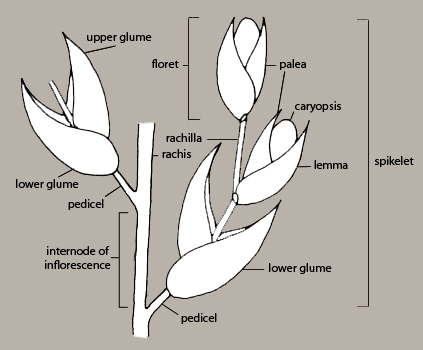 that are compressed together into a ball or burrBurr:
Has spikelets or flowers that are compressed closely together by lacking a central axis. The spikelet glumes are hard and pointed, e.g. buffalograss.. Seldomly are the floretsFloret:
A small flower in a clustered inflorescence (e.g., sunflower, grasses). In grasses, a floret consists of the lemma, palea, stamens, and pistil.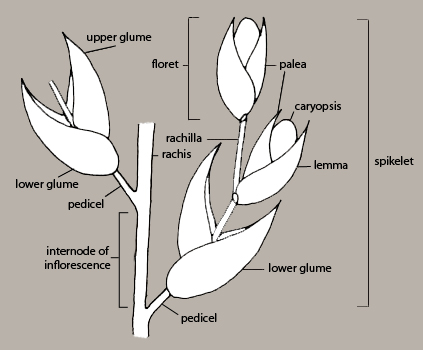 and caryopsisCaryopsis:
The single-seeded fruit or grain of the grass family (Poaceae); the fruit wall (pericarp) is united with the seed coat (testa).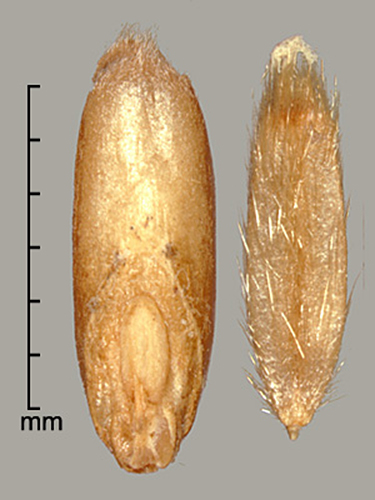 naturally extracted from the spikeletsSpikelet:
One or more florets that are subtended by a pair of bracts called glumes. Spikelets are pedicellate if located on a pedicle and sessile if attached directly to the rachis. Often spikelets with single florets have remnants of a second floret, usually a lemma. in the burrBurr:
Has spikelets or flowers that are compressed closely together by lacking a central axis. The spikelet glumes are hard and pointed, e.g. buffalograss.. The burrBurr:
Has spikelets or flowers that are compressed closely together by lacking a central axis. The spikelet glumes are hard and pointed, e.g. buffalograss. can be referred to as a compressed inflorescenceInflorescence:
The flowering structure of a plant (e.g., umbel, spike or panicle).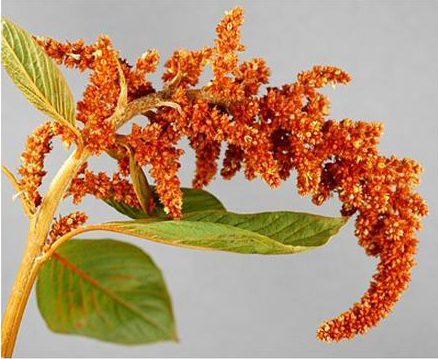 . The outer structures seen in the burrBurr:
Has spikelets or flowers that are compressed closely together by lacking a central axis. The spikelet glumes are hard and pointed, e.g. buffalograss. are the thick, hard, pointed lower glumesGlume:
The pair of chaffy bracts that occur at the base of a grass spikelet, often completely enclosing it.. The lemmaLemma:
One of two bracts of the grass floret; it is located on the side nearest the embryo and opposite the rachilla.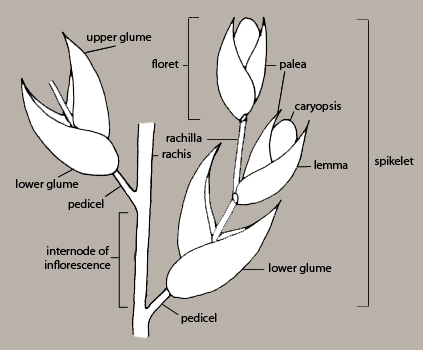 and paleaPalea:
One of the thin bracts of grass floret enclosing the fruit (caryopsis) that is located on the side opposite the embryo.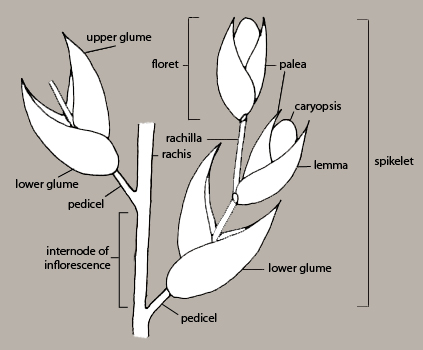 of an extracted floretFloret:
A small flower in a clustered inflorescence (e.g., sunflower, grasses). In grasses, a floret consists of the lemma, palea, stamens, and pistil. are thin and papery.
Not listed
Included
Poaceae
Bouteloua dactyloides (Nutt.) J.T. Columbus
Buchloe dactyloides (Nutt.) Engelm.
Bulbilis dactyloides (Nutt.) Raf. ex Kuntze
Sesleria dactyloides Nutt.