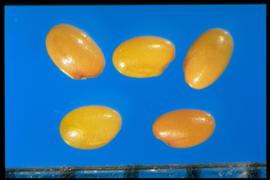
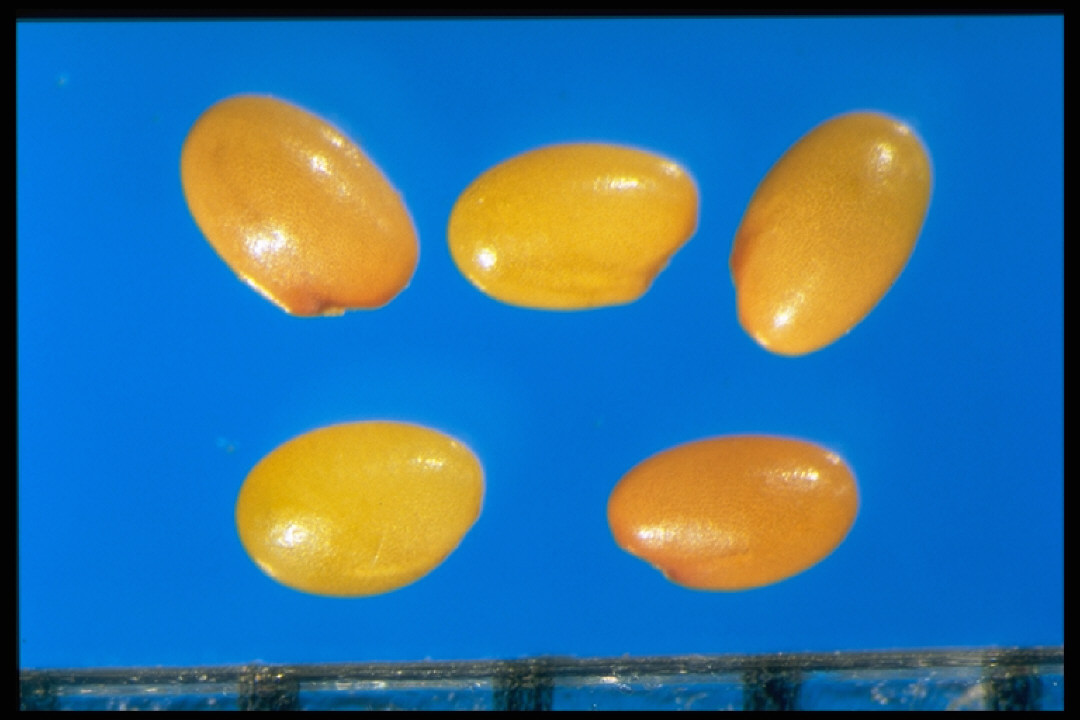
Agricultural
field clover, large hop clover, lesser hop clover, big hop clover, low hop clover
True seedTrue seed:
A mature fertilized ovule consisting of an embryo, with or without and external food reserve (e.g., endosperm) enclosed by the testa.
OvalOval:
Broadly elliptic.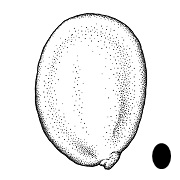
Light yellowish-tan to brown
Shiny and smooth
RadicleRadicle:
The rudimentary root of the embryo, developing into the primary root after emergence from the seed coat.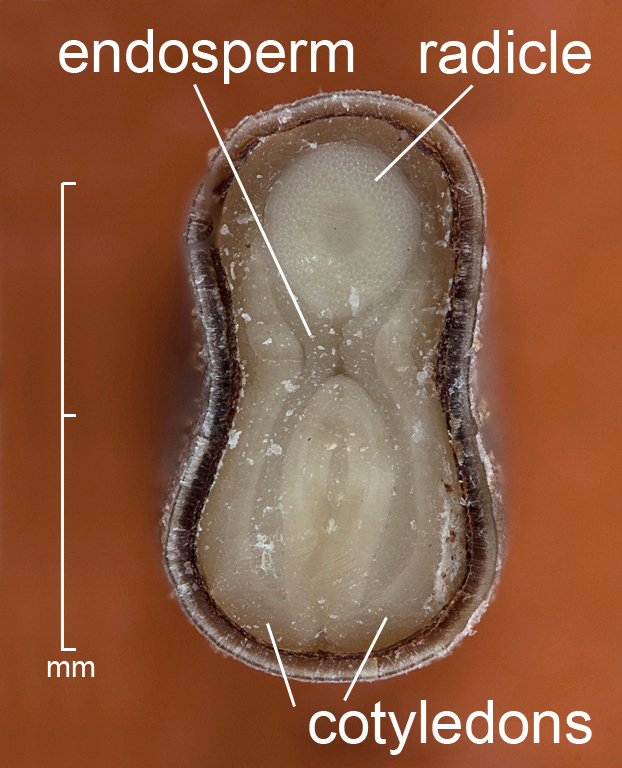 is inconspicuous and slightly shorter than cotyledonsCotyledon:
The modified storage leaf or pair of leaves of an embryo and seedling (see primary leaf).
.
Tip of radicleRadicle:
The rudimentary root of the embryo, developing into the primary root after emergence from the seed coat. is flattened to seed and not divergent. HilumHilum:
The scar on the seed coat at the place of its detachment from the seed stalk (funiculus).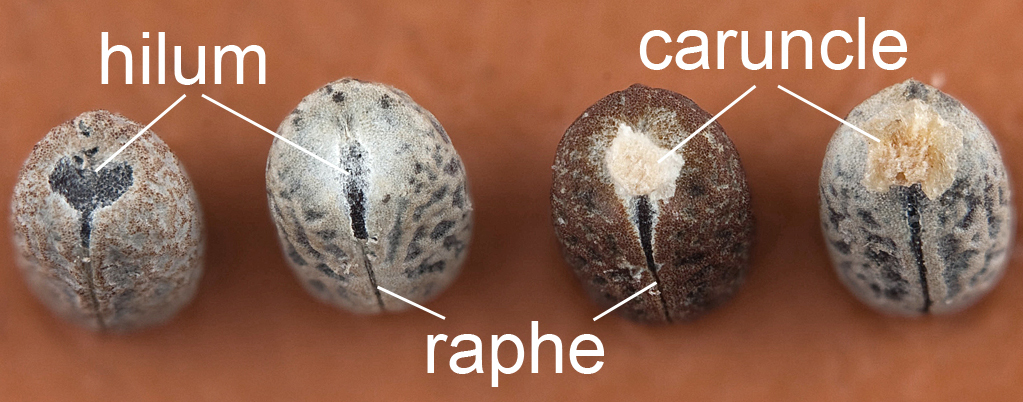 scarcely indented and small. Seeds narrowly ovalOval:
Broadly elliptic. and slightly smaller than T. dubium. RadicleRadicle:
The rudimentary root of the embryo, developing into the primary root after emergence from the seed coat. and cotyledonary lobe approximately parallel.
Not listed
Not included
Fabaceae
Trifolium campestre Schreb.
Trifolium procumbens L., nom. utique rej.