Weed
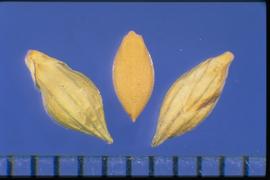
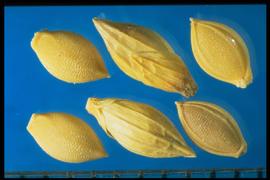
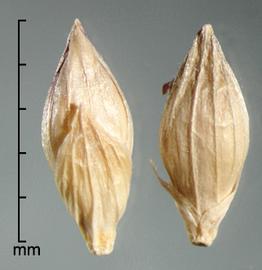
Texas signalgrass
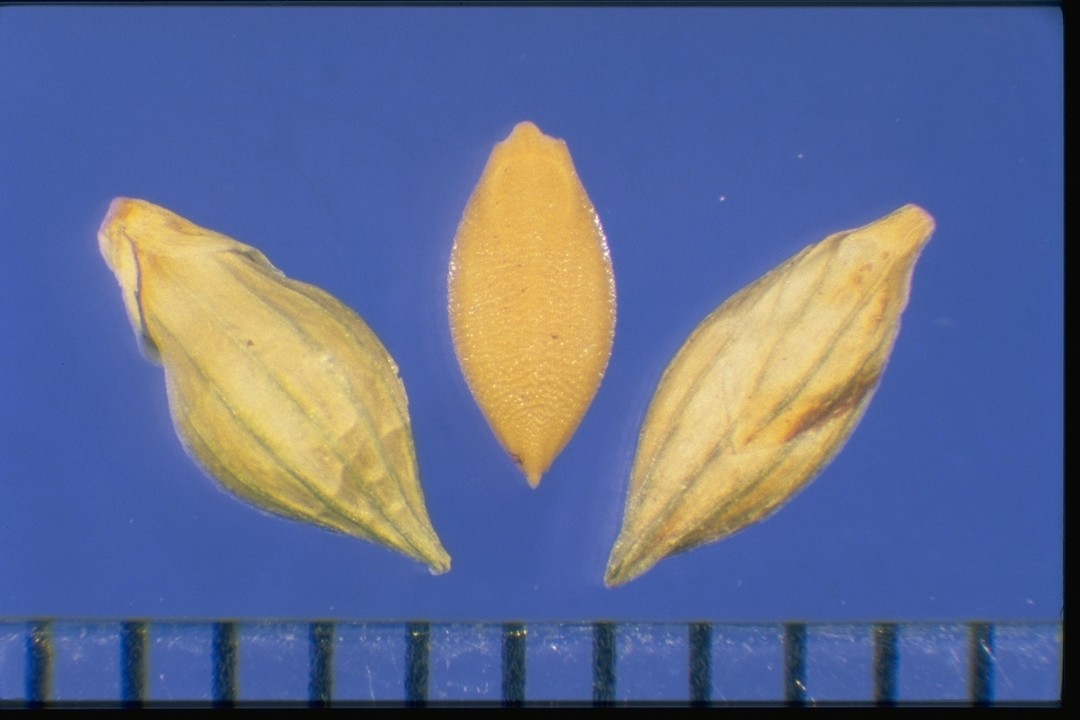
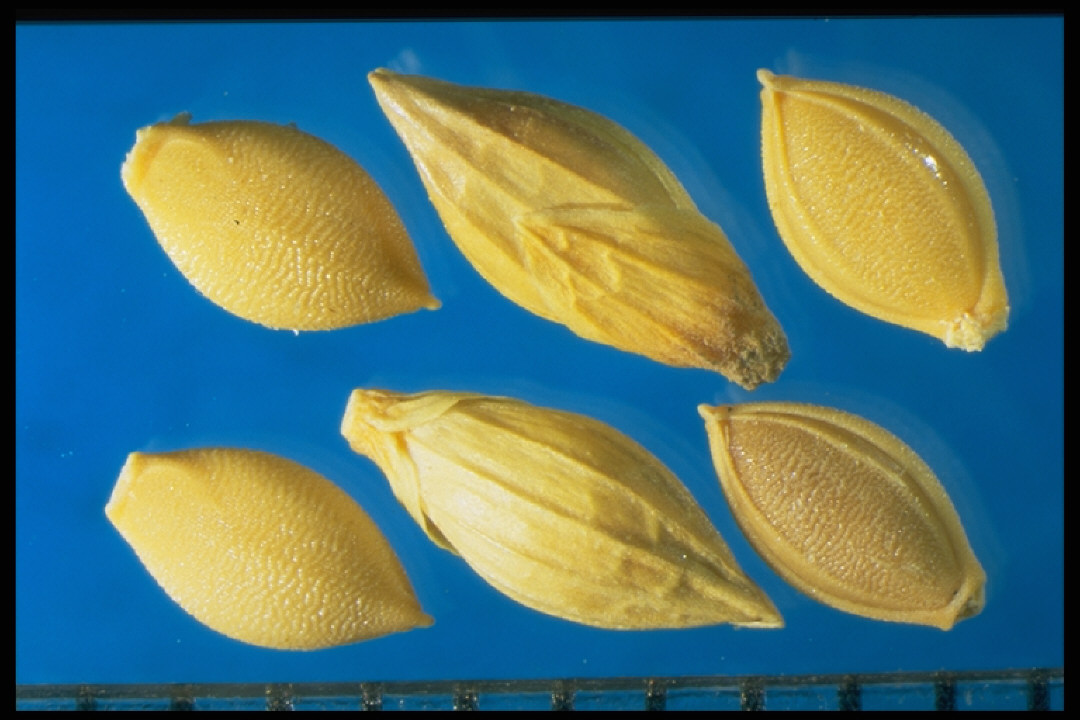
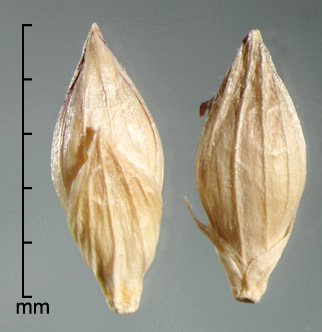
SpikeletSpikelet:
One or more florets that are subtended by a pair of bracts called glumes. Spikelets are pedicellate if located on a pedicle and sessile if attached directly to the rachis. Often spikelets with single florets have remnants of a second floret, usually a lemma.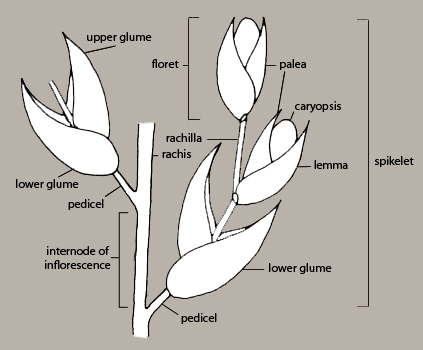
OvalOval:
Broadly elliptic.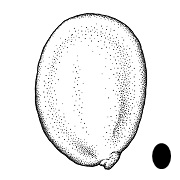
Light brown
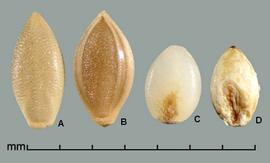
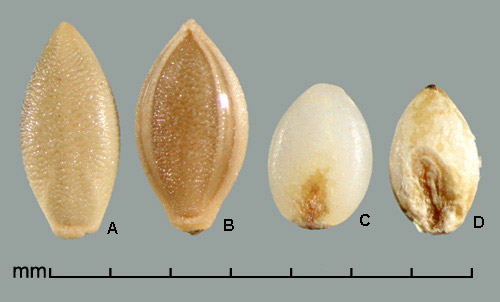
The lemmaLemma:
One of two bracts of the grass floret; it is located on the side nearest the embryo and opposite the rachilla.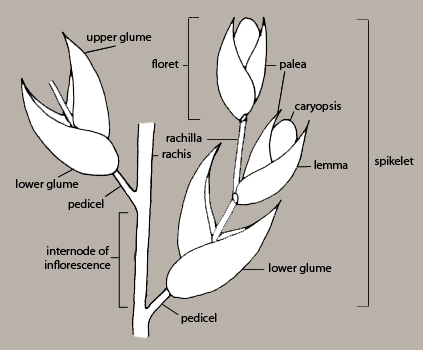 and paleaPalea:
One of the thin bracts of grass floret enclosing the fruit (caryopsis) that is located on the side opposite the embryo.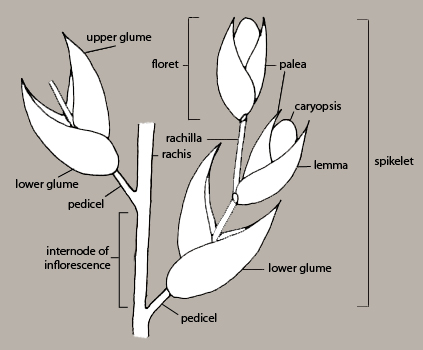 have transverseTransverse:
Set crosswise, crossing or at right angles.
rough ridges. The outer paleaPalea:
One of the thin bracts of grass floret enclosing the fruit (caryopsis) that is located on the side opposite the embryo. margins are shiny.
Hard
Hard
Short and long glumesGlume:
The pair of chaffy bracts that occur at the base of a grass spikelet, often completely enclosing it.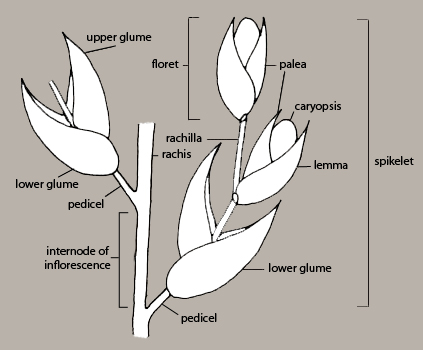 and a sterile lemmaLemma:
One of two bracts of the grass floret; it is located on the side nearest the embryo and opposite the rachilla. are present.
Seed unitSeed unit:
The structure usually regarded as a seed in planting practices and in commercial channels, consisting of a true seed with or without accessory structures, as defined in Section 2.6 of the AOSA Rules. See also true seed.
can be a spikeletSpikelet:
One or more florets that are subtended by a pair of bracts called glumes. Spikelets are pedicellate if located on a pedicle and sessile if attached directly to the rachis. Often spikelets with single florets have remnants of a second floret, usually a lemma., floretFloret:
A small flower in a clustered inflorescence (e.g., sunflower, grasses). In grasses, a floret consists of the lemma, palea, stamens, and pistil.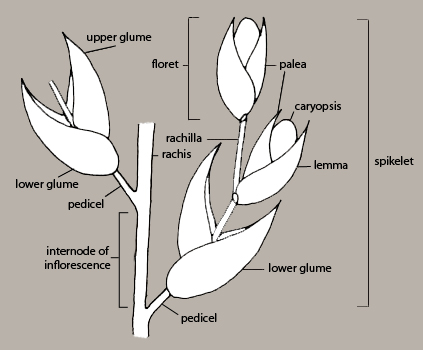 , or caryopsisCaryopsis:
The single-seeded fruit or grain of the grass family (Poaceae); the fruit wall (pericarp) is united with the seed coat (testa).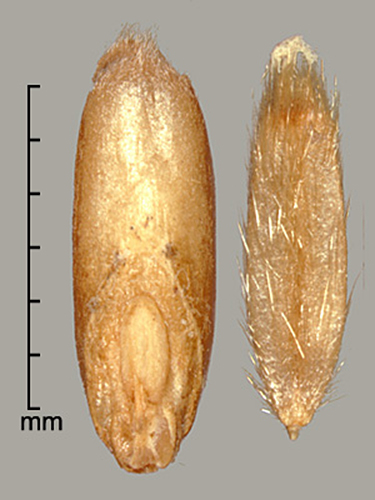 . SpikeletSpikelet:
One or more florets that are subtended by a pair of bracts called glumes. Spikelets are pedicellate if located on a pedicle and sessile if attached directly to the rachis. Often spikelets with single florets have remnants of a second floret, usually a lemma. consists of (in order) a short clasping glumeGlume:
The pair of chaffy bracts that occur at the base of a grass spikelet, often completely enclosing it., a long glumeGlume:
The pair of chaffy bracts that occur at the base of a grass spikelet, often completely enclosing it., a long sterile lemmaLemma:
One of two bracts of the grass floret; it is located on the side nearest the embryo and opposite the rachilla., a hard fertile lemmaLemma:
One of two bracts of the grass floret; it is located on the side nearest the embryo and opposite the rachilla., a hard paleaPalea:
One of the thin bracts of grass floret enclosing the fruit (caryopsis) that is located on the side opposite the embryo., and finally the caryopsisCaryopsis:
The single-seeded fruit or grain of the grass family (Poaceae); the fruit wall (pericarp) is united with the seed coat (testa).. PaleaPalea:
One of the thin bracts of grass floret enclosing the fruit (caryopsis) that is located on the side opposite the embryo. is transversely rough between its margin ridges and shiny smooth outside the ridges. GlumesGlume:
The pair of chaffy bracts that occur at the base of a grass spikelet, often completely enclosing it. and sterile lemmaLemma:
One of two bracts of the grass floret; it is located on the side nearest the embryo and opposite the rachilla. are smooth and papery. GlumesGlume:
The pair of chaffy bracts that occur at the base of a grass spikelet, often completely enclosing it. have strong longitudinal nerves.
State Noxious Weed: Florida, Georgia, North Carolina
Not included
Poaceae
Urochloa texana (Buckley) R.D. Webster
Brachiaria texana (Buckley) S.T. Blake
Panicum texanum Buckley