Rhaponticum repens

Species category

Weed

Common name

hardheads

Diagnostic characters

Planting unit

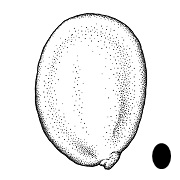
AcheneAchene:
A dry, hard, one-chambered, one-seeded indehiscent fruit, as in buckwheat (Fagopyrum) or sunflower (Helianthus). The fruit wall is not united with the seed coat.
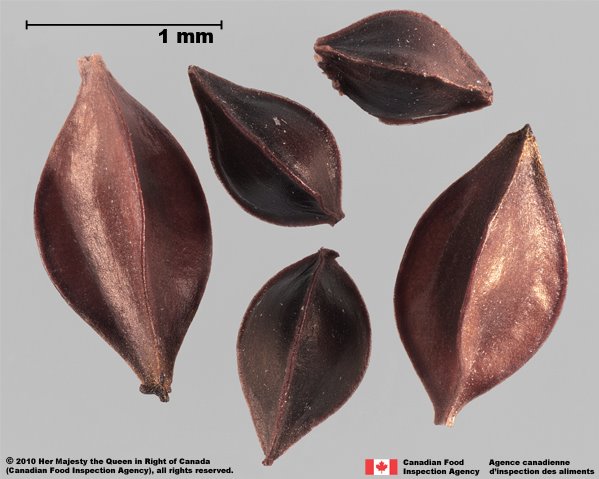
Shape

OvalOval:
Broadly elliptic.
to obovateObovate:
Inverted egg shaped with apical end the broadest.
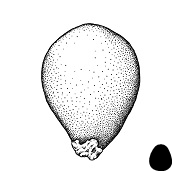
, broad and compressed

Size

  • Length 3 mm
  • Width 1.5 mm
  • Thickness 1 mm

Color

Ivory and occasionally green or yellow tinged

Texture

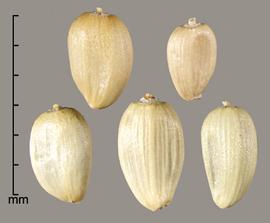
Smooth

Other structures

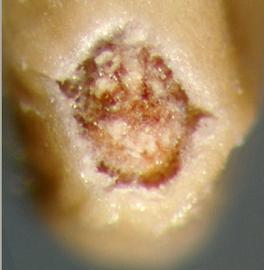
StylarStylar:
The end of the fruit or seed that contains the style or the apical end.
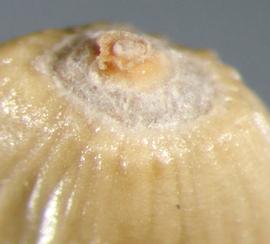
lobe present.

Identification notes

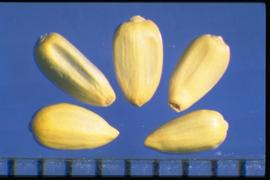
ObovateObovate:
Inverted egg shaped with apical end the broadest.
, semi-compressed longitudinally. Margin continually curved at both ends of the acheneAchene:
A dry, hard, one-chambered, one-seeded indehiscent fruit, as in buckwheat (Fagopyrum) or sunflower (Helianthus). The fruit wall is not united with the seed coat.
with no angular shoulder at the stylarStylar:
The end of the fruit or seed that contains the style or the apical end.
end. Immature seeds can be confused with Grindelia squarrosa.

Noxious weed seed categories

State Noxious Weed: Alaska, Arizona, California, Colorado, Connecticut, Georgia, Hawaii, Idaho, Illinois, Iowa, Kansas, Louisiana, Michigan, Minnesota, Montana, Nebraska, New Mexico, Nevada, North Dakota, Ohio, Oklahoma, Oregon, South Dakota, South Carolina, Texas, Utah, Washington, Wisconsin, Wyoming 

Learn more on ITP's Federal Noxious Weed Disseminules tool.

AOSA examination list

Included

Nomenclature

Family

Asteraceae

Valid name

Rhaponticum repens (L.) Hidalgo

Synonyms

Centaurea repens L.
Acroptilon repens (L.) D.C.
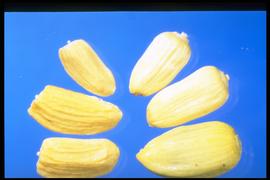
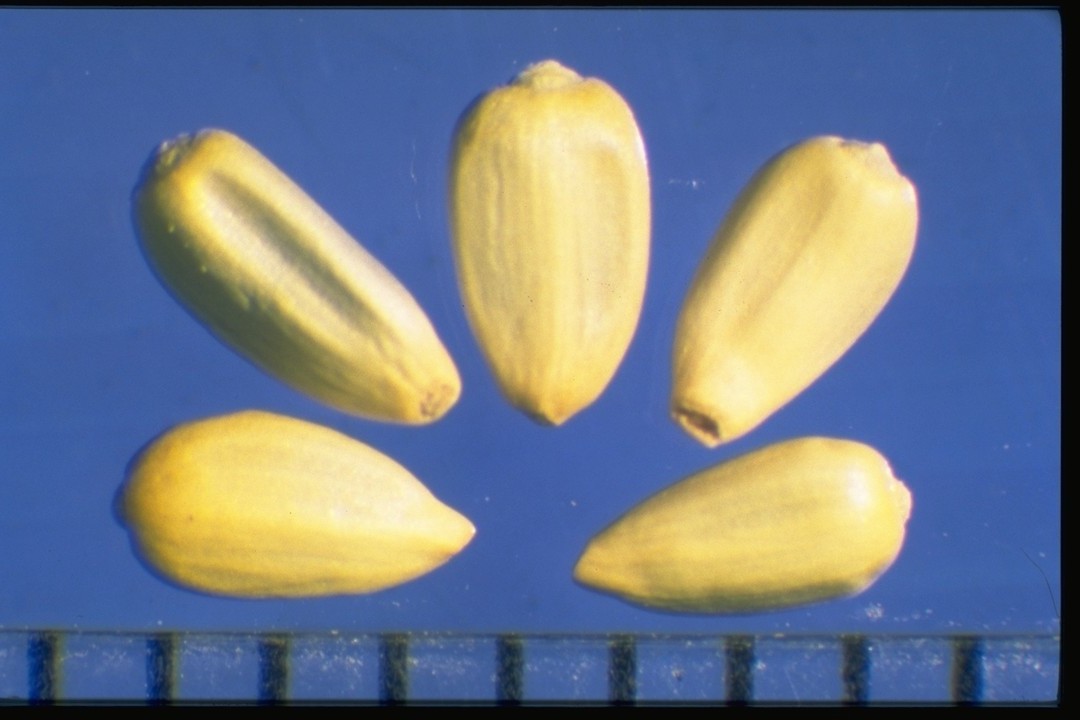
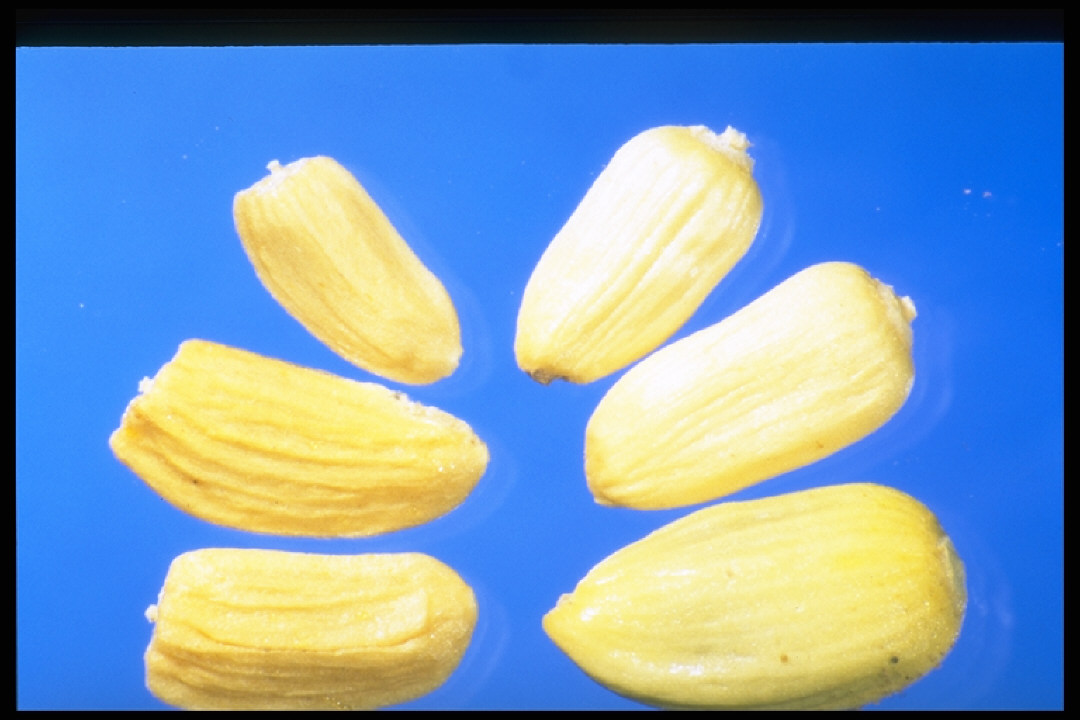
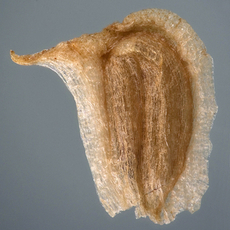
 Rhaponticum repens.  Achenes with the margin continually curved at both ends of the achene, with no angular shoulder at the stylar end.Photo by Julia Scher, USDA-APHIS-PPQ.
Rhaponticum repens. Achenes with the margin continually curved at both ends of the achene, with no angular shoulder at the stylar end.Photo by Julia Scher, USDA-APHIS-PPQ.
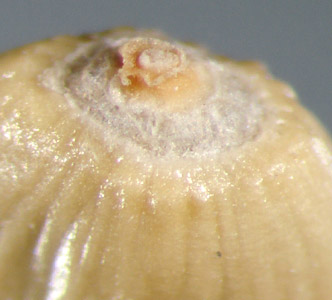
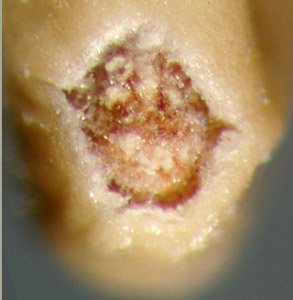
 Rhaponticum repens.  Stylar lobe.Photo by Julia Scher, USDA-APHIS-PPQ.
Rhaponticum repens. Stylar lobe.Photo by Julia Scher, USDA-APHIS-PPQ.
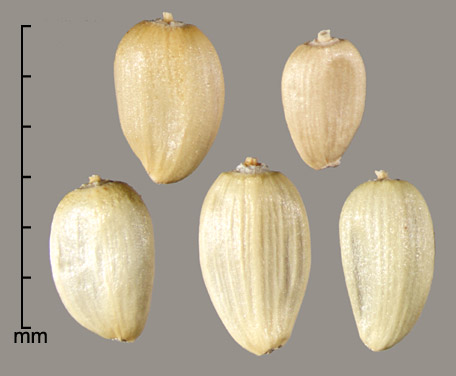
 Rhaponticum repens.  Smooth achenes.Photo by Julia Scher, USDA-APHIS-PPQ.
Rhaponticum repens. Smooth achenes.Photo by Julia Scher, USDA-APHIS-PPQ.
 Rhaponticum repens.  Achenes that are obovate and semi-compressed longitudinally. Photo courtesy of Colorado State University, Department of Soil and Crop Sciences.
Rhaponticum repens. Achenes that are obovate and semi-compressed longitudinally. Photo courtesy of Colorado State University, Department of Soil and Crop Sciences.
From Left to Right: 1.  Grindelia squarrosa  2.  Rhaponticum repens.   Grendalia squarrosa  on the left has more distinct longitudinal ridges and squared shoulders at the stylar end.  Rhaponticum repens  is smoother and rounded shoulders.
From Left to Right: 1. Grindelia squarrosa 2. Rhaponticum repens. Grendalia squarrosa on the left has more distinct longitudinal ridges and squared shoulders at the stylar end. Rhaponticum repens is smoother and rounded shoulders.