Weed
false daisy
AcheneAchene:
A dry, hard, one-chambered, one-seeded indehiscent fruit, as in buckwheat (Fagopyrum) or sunflower (Helianthus). The fruit wall is not united with the seed coat.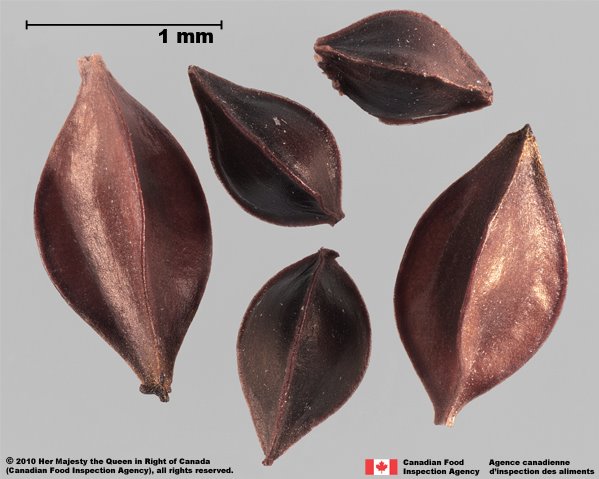
ObovateObovate:
Inverted egg shaped with apical end the broadest.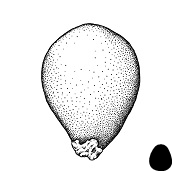
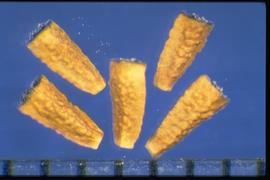
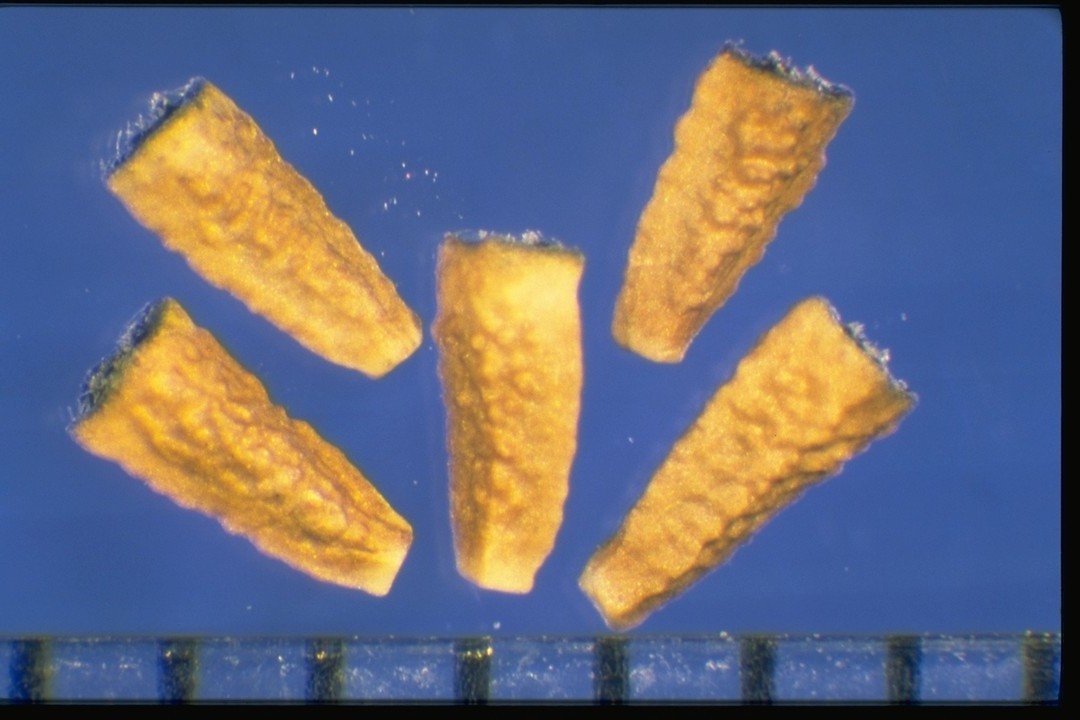
Light brown
Surface is covered with large, rounded and irregular tubercles.
Both the basalBasal:
The base of the fruit or seed opposite the apical end.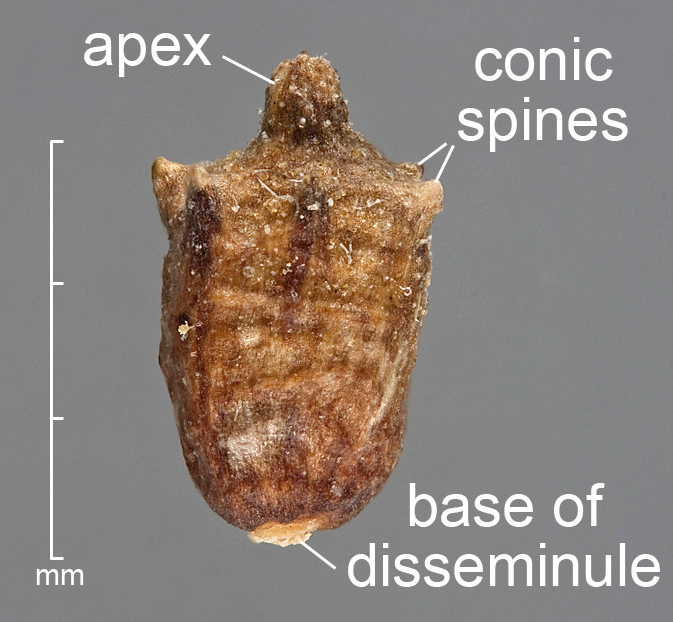 and apicalApical:
The distal end of the fruit or seed away from the point of attachment or attachment scar.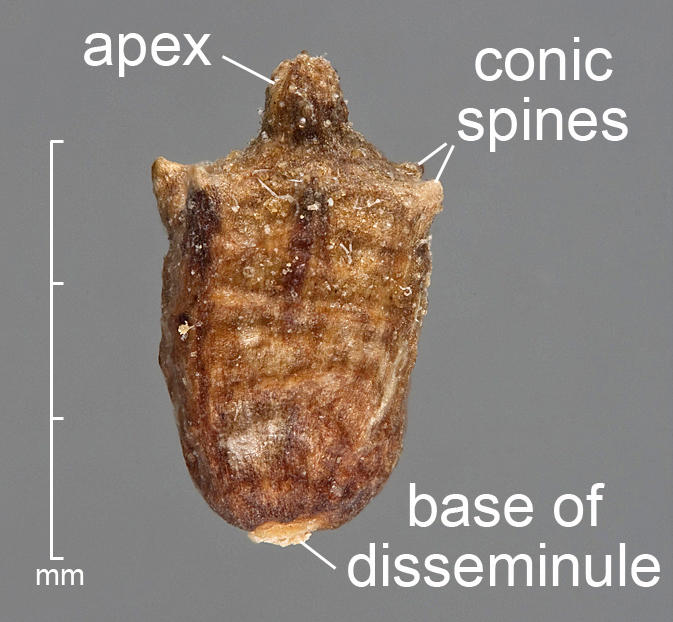 ends are truncated.
ApicalApical:
The distal end of the fruit or seed away from the point of attachment or attachment scar. end is wider than basalBasal:
The base of the fruit or seed opposite the apical end. end. AcheneAchene:
A dry, hard, one-chambered, one-seeded indehiscent fruit, as in buckwheat (Fagopyrum) or sunflower (Helianthus). The fruit wall is not united with the seed coat. has four longitudinal corners, appearing somewhat square in cross-section.
State Noxious Weed: Oklahoma
Not included
Asteraceae
Eclipta prostrata (L.) L.
Eclipta alba (L.) Hassk.
Eclipta erecta L.
Verbesina alba L.
Verbesina prostrata L.