Shrub or Tree
chokecherry, common chokecherry, Virginia chokecherry
PitPit:
The hard, stony inner portion of a fruit formed from a thickened, lignified endocarp that surrounds and protects one or more seeds. Pits occur in certain fleshy or dry indehiscent fruits; when the outer layers of the fruit (such as the mesocarp or a fibrous husk) are removed or break apart, the pit remains as the durable seed‑enclosing unit.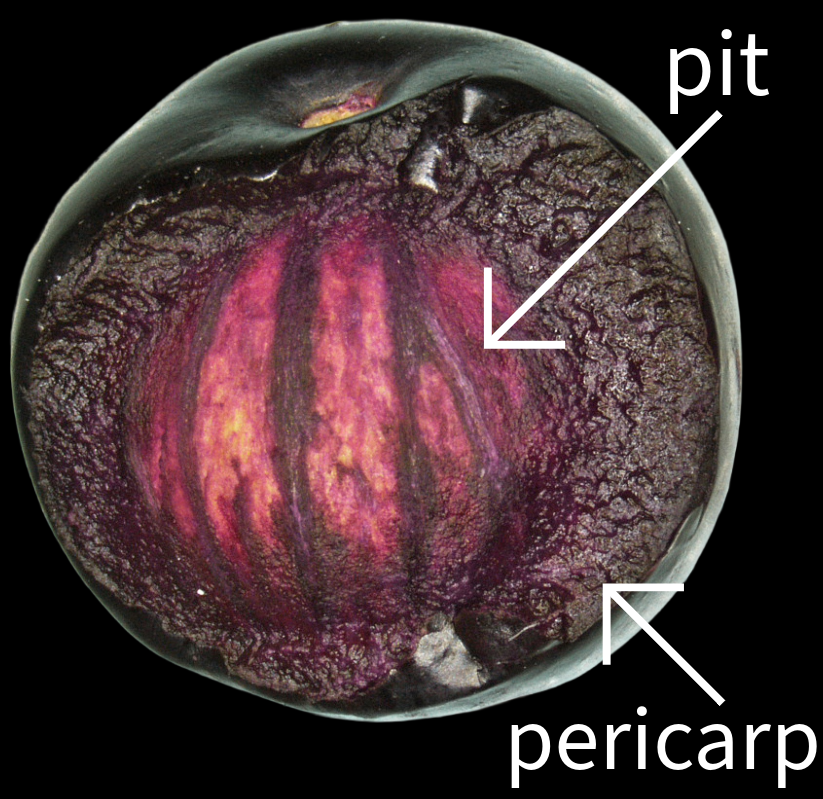
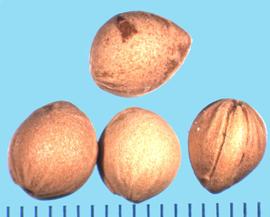
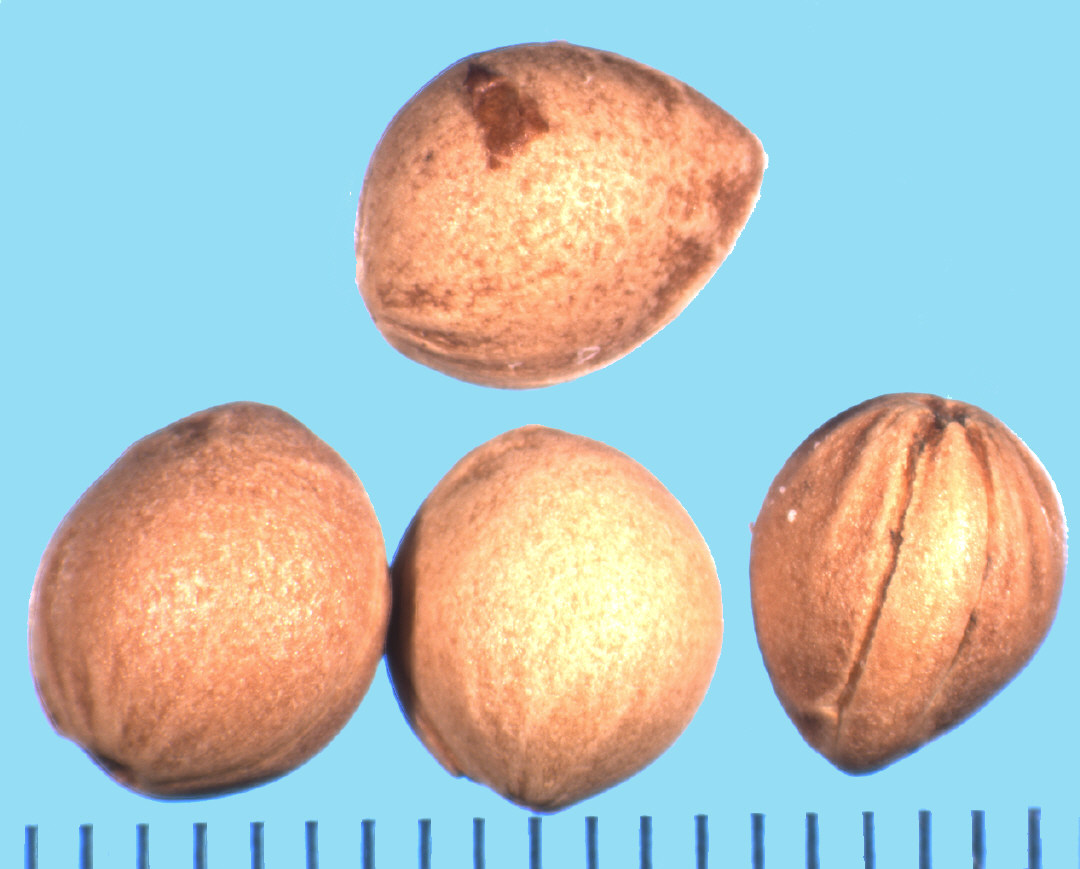
Globose
Brown
Rough
Scar at the basalBasal:
The base of the fruit or seed opposite the apical end.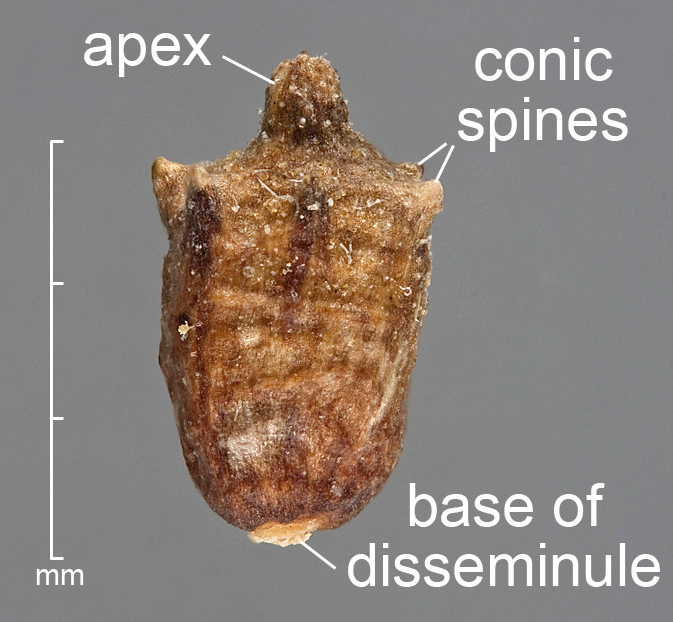 end
end
Longitudinal grooves extending from apexApical:
The distal end of the fruit or seed away from the point of attachment or attachment scar.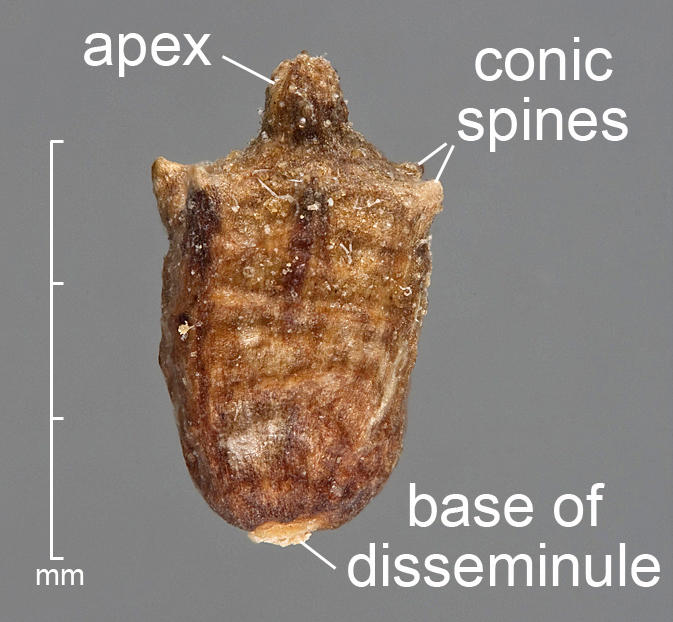 to base. The seed type, a "pitPit:
The hard, stony inner portion of a fruit formed from a thickened, lignified endocarp that surrounds and protects one or more seeds. Pits occur in certain fleshy or dry indehiscent fruits; when the outer layers of the fruit (such as the mesocarp or a fibrous husk) are removed or break apart, the pit remains as the durable seed‑enclosing unit.", is a seed enclosed in the hard inner part (endocarp) of the fruitFruit:
A mature ovary and any associated parts.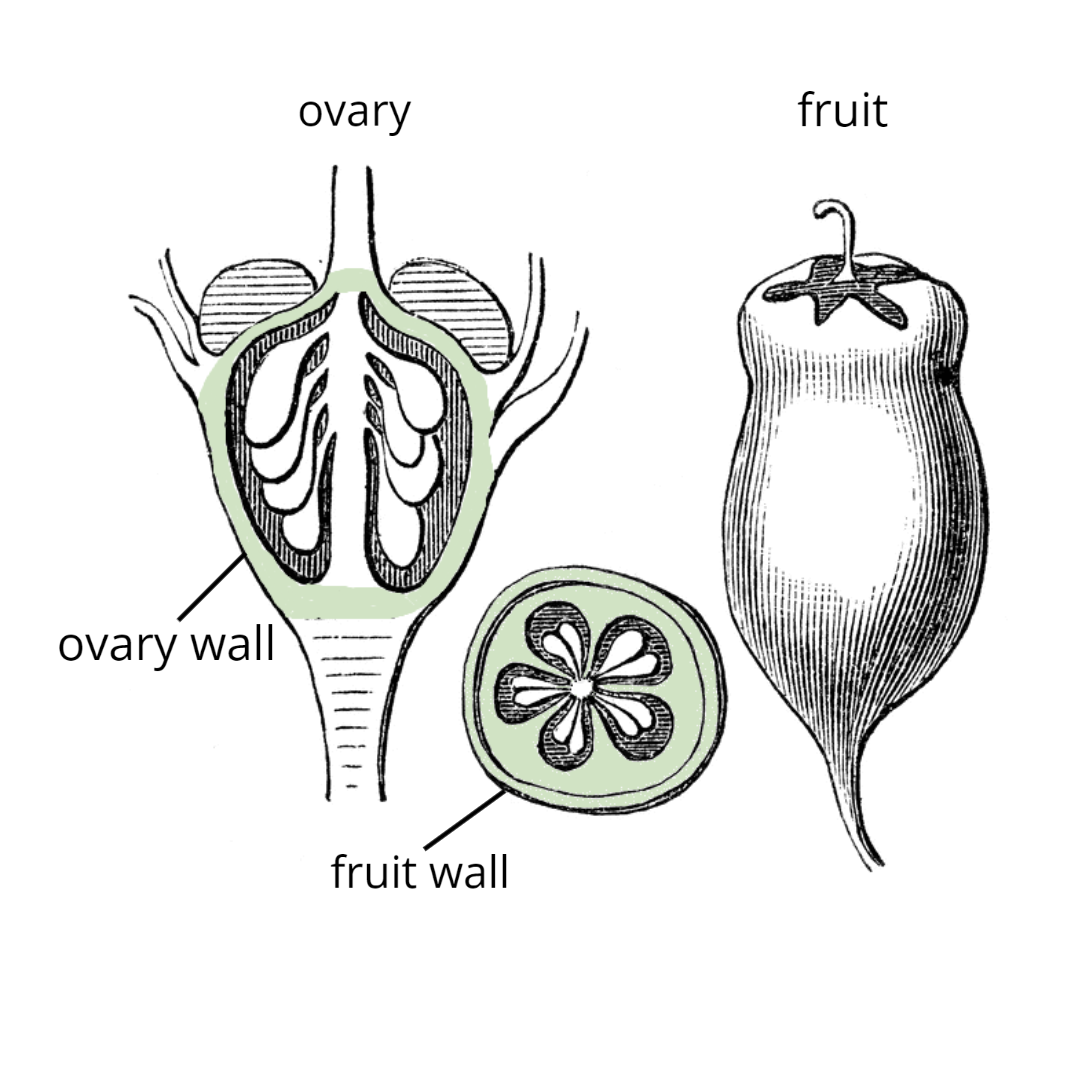 coat.
coat.
Not listed
Not included
Rosaceae
Prunus virginiana L.