Weed
ovateOvate:
Egg-shaped with basal end the broadest.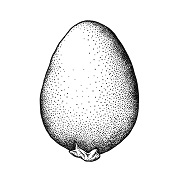 goatgrass
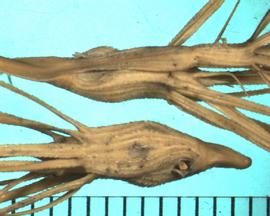
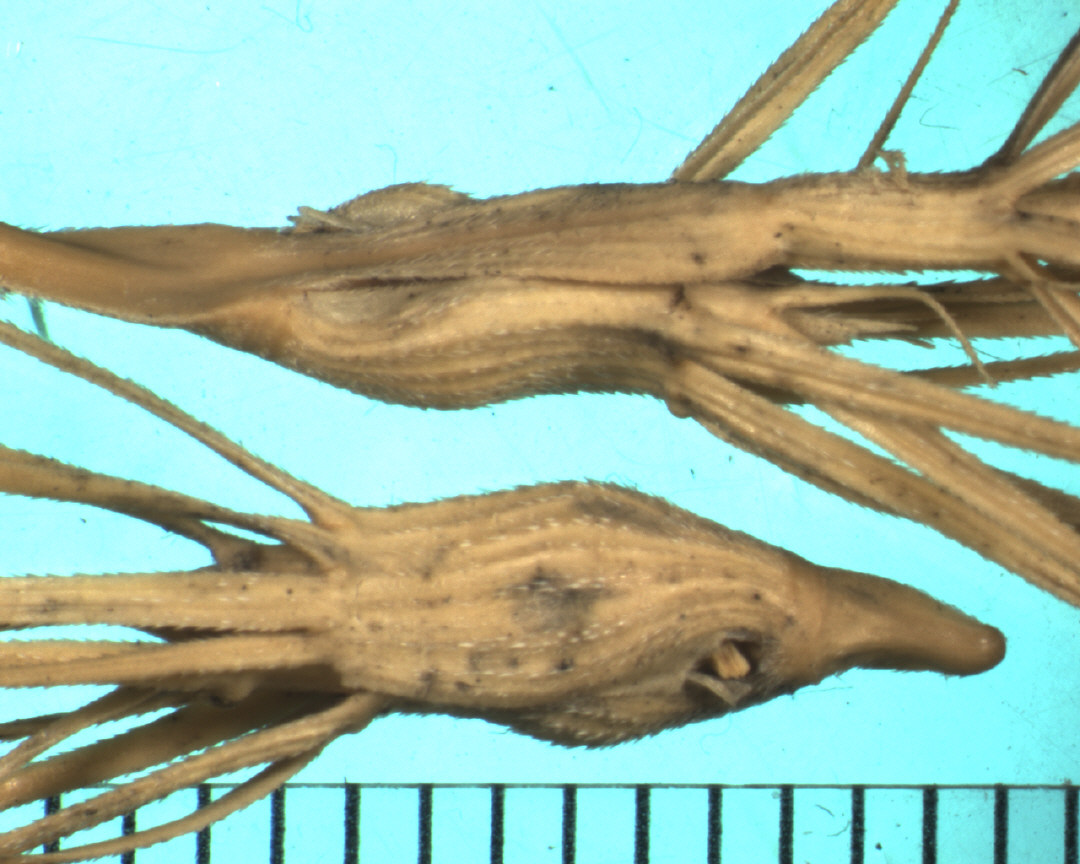
Rachis segmentRachis segment:
A segment of the central axis of the inflorescence (rachis). In some species (e.g. Andropogon) separation of the sessile spikelets occurs when the rachis disarticulates at the spikelet bases leaving the segment of the rachis between spikelets attached to the lower spikelet.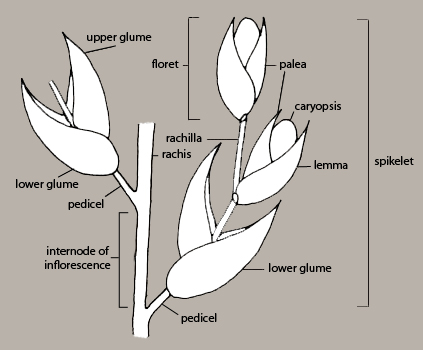
Diamond
Brown
Ribs are longitudinal and spiny
Not visible
Not visible
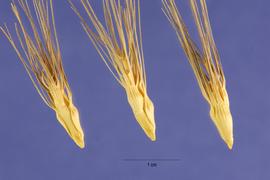
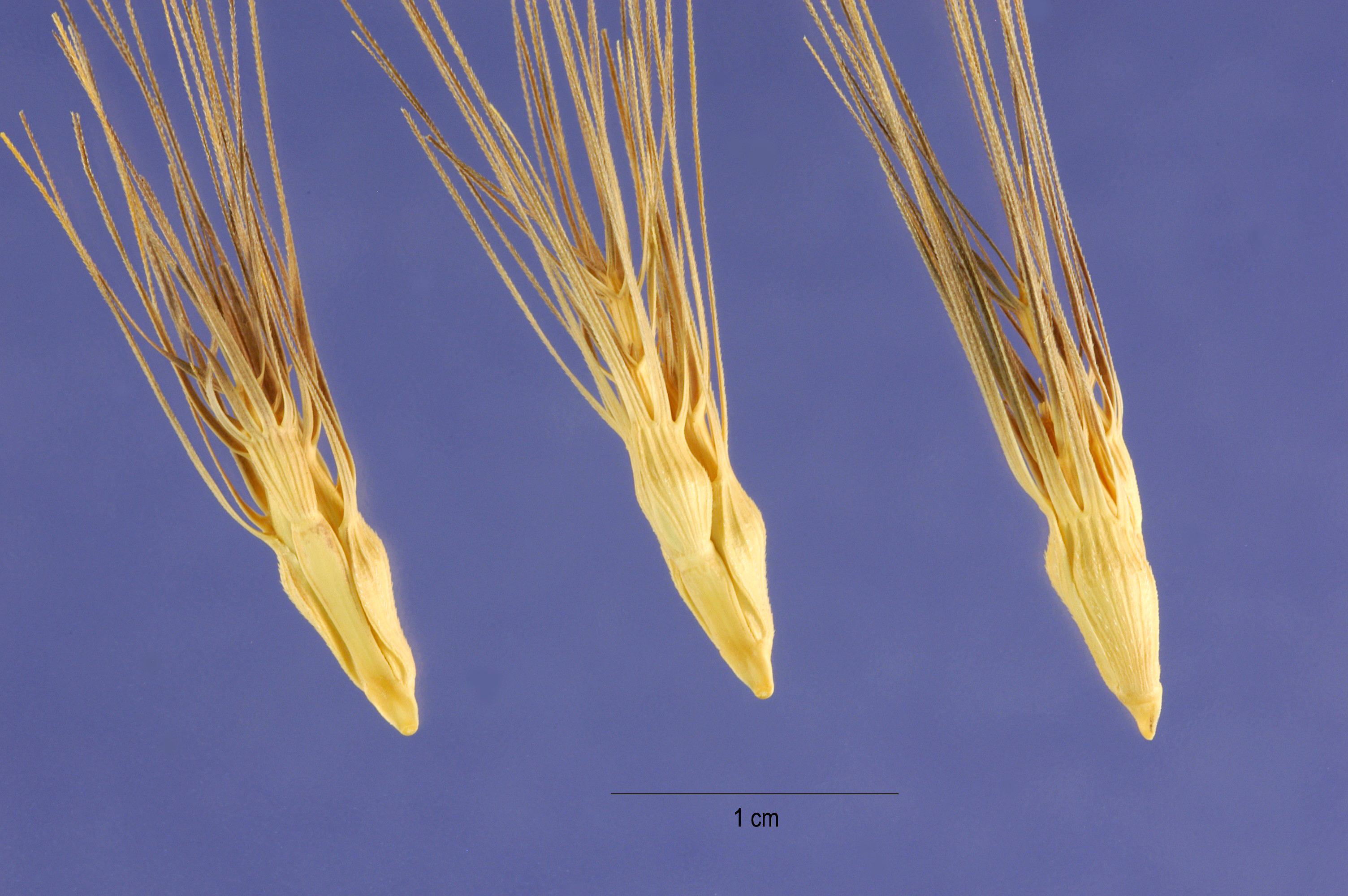
GlumesGlume:
The pair of chaffy bracts that occur at the base of a grass spikelet, often completely enclosing it.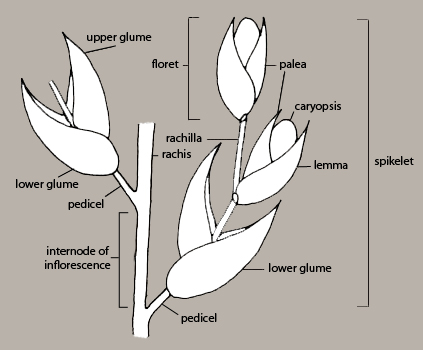 with long awnsAwn:
A narrow, bristle-like organ, as on the glumes or lemmas of grasses (Poaceae).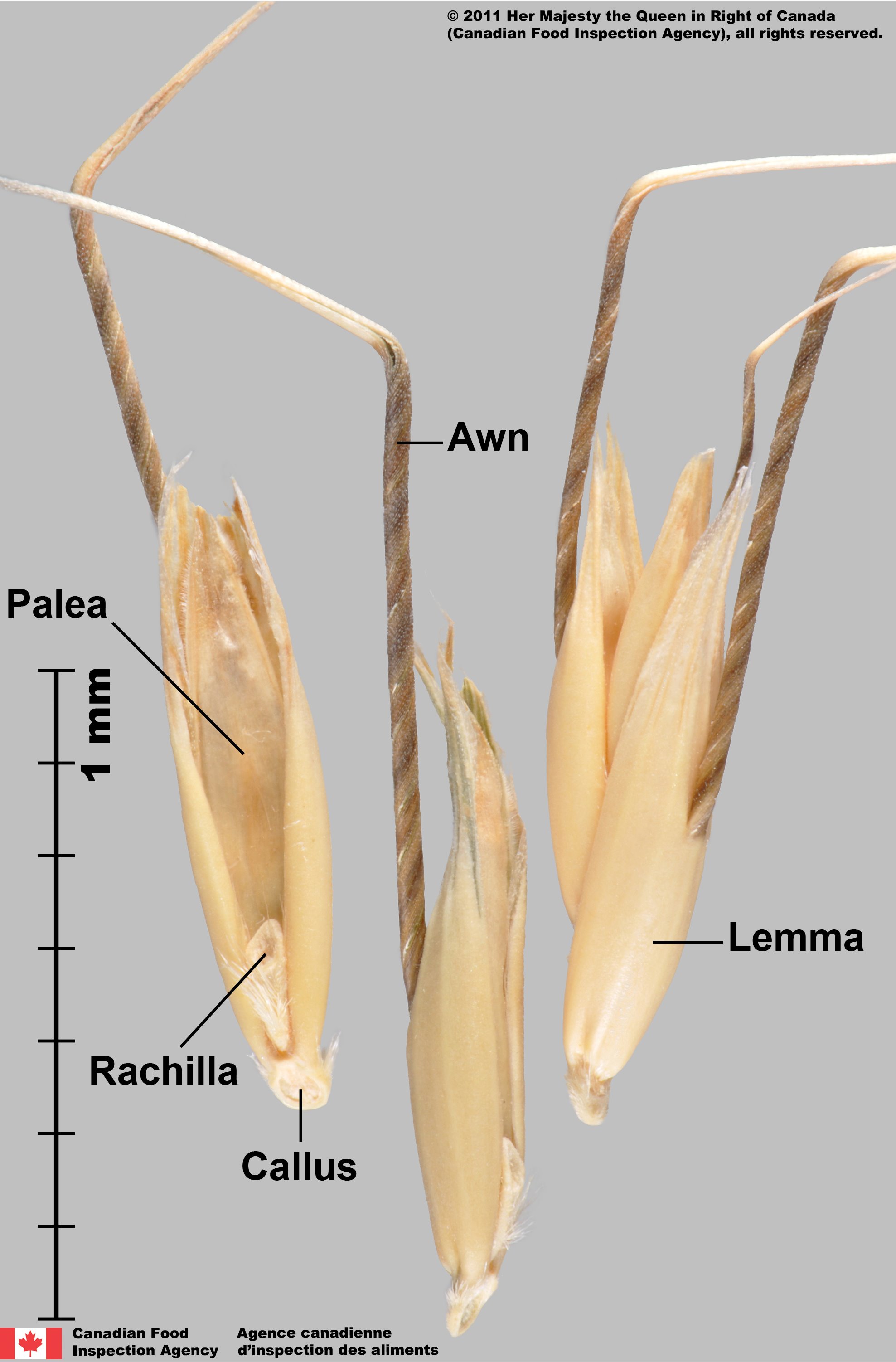
CaryopsisCaryopsis:
The single-seeded fruit or grain of the grass family (Poaceae); the fruit wall (pericarp) is united with the seed coat (testa).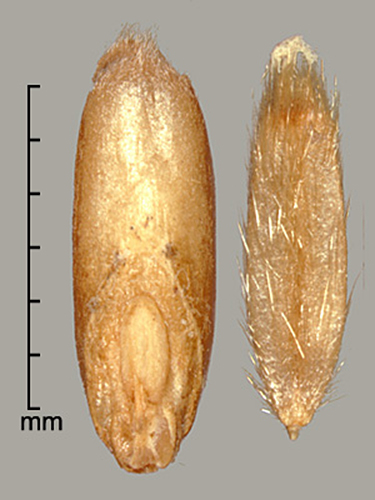 hidden within strong glumesGlume:
The pair of chaffy bracts that occur at the base of a grass spikelet, often completely enclosing it..
State Noxious Weed: Alabama, California, New Mexico, Oregon, Texas

Not included
Poaceae
Aegilops geniculata Roth
Aegilops ovata L. p.p.
Triticum ovatum (L.) Gren. and Godr. p.p.