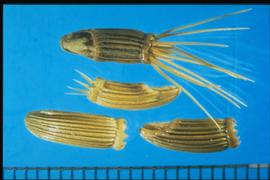
Weed
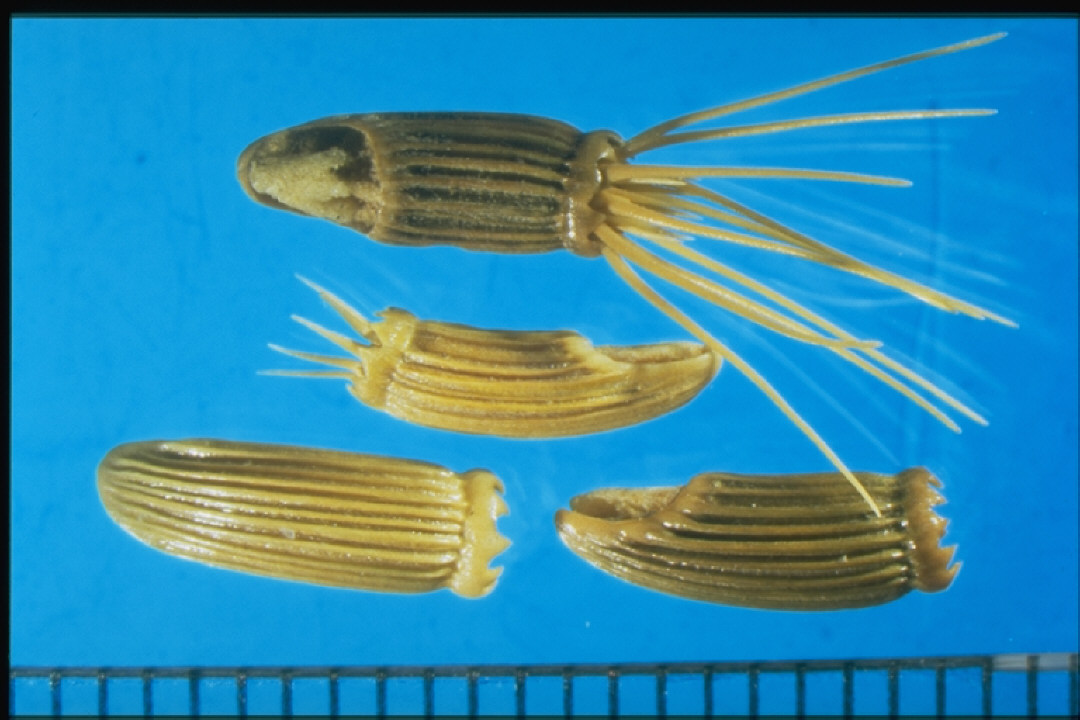
blessed thistle
AcheneAchene:
A dry, hard, one-chambered, one-seeded indehiscent fruit, as in buckwheat (Fagopyrum) or sunflower (Helianthus). The fruit wall is not united with the seed coat.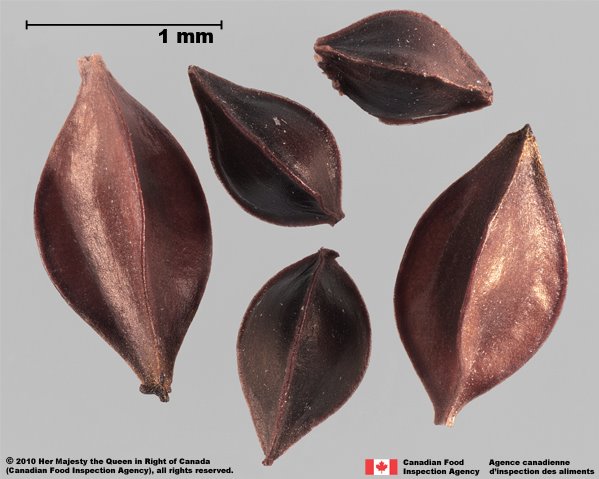
ObovateObovate:
Inverted egg shaped with apical end the broadest.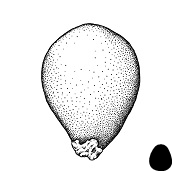 with lateral scars
Light to dark brown
Ribs are strong, longitudinal, and close.
PappusPappus:
Modified calyx in Asteraceae, composed of hairs, bristles, awns, or scales. The pappus-like structure attached to milkweed seeds is termed a coma. 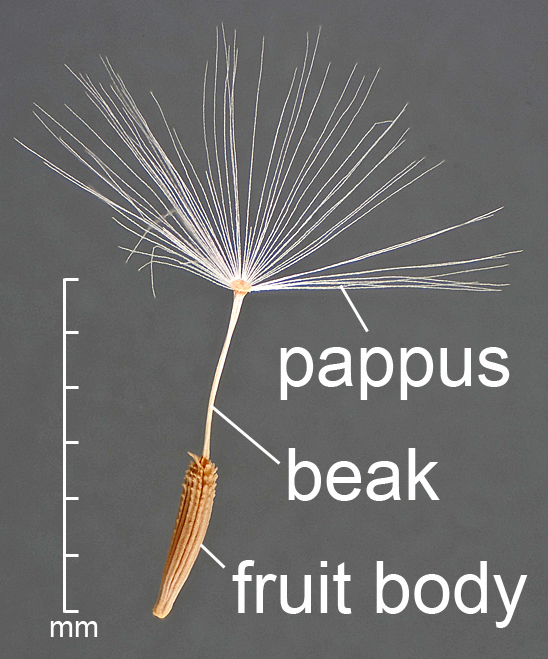 is strong and located on a large collar with a serrated edge. The scar is very large and lateral to the base.
Achene obovateObovate:
Inverted egg shaped with apical end the broadest. with a large lateral scar. Surface dark brown with numerous longitudinal ribs, which are large and close together. Lower margin of the apicalApical:
The distal end of the fruit or seed away from the point of attachment or attachment scar.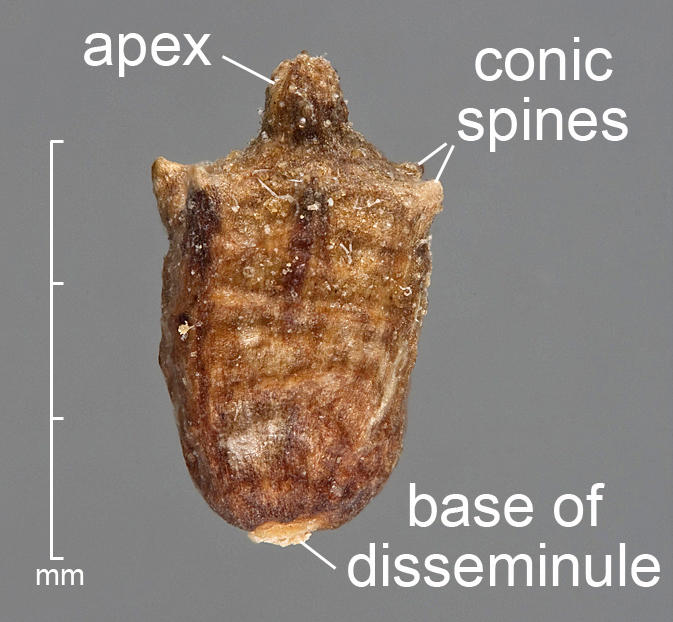 collar is deeply indented, whereas the upper margin has deep indentations. PappusPappus:
Modified calyx in Asteraceae, composed of hairs, bristles, awns, or scales. The pappus-like structure attached to milkweed seeds is termed a coma. often persists with both long and short bristles.
State Noxious Weed: Alabama, Florida, Georgia, Mississippi, North Carolina, South Carolina
Not included
Asteraceae
Cnicus benedictus L.
Centaurea benedicta (L.) L.
Cirsium pugnax Sommier & Levier