Flower, Weed
desert Indianwheat
True seedTrue seed:
A mature fertilized ovule consisting of an embryo, with or without and external food reserve (e.g., endosperm) enclosed by the testa.
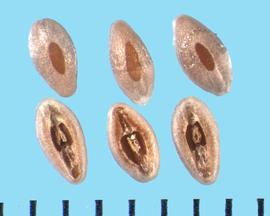
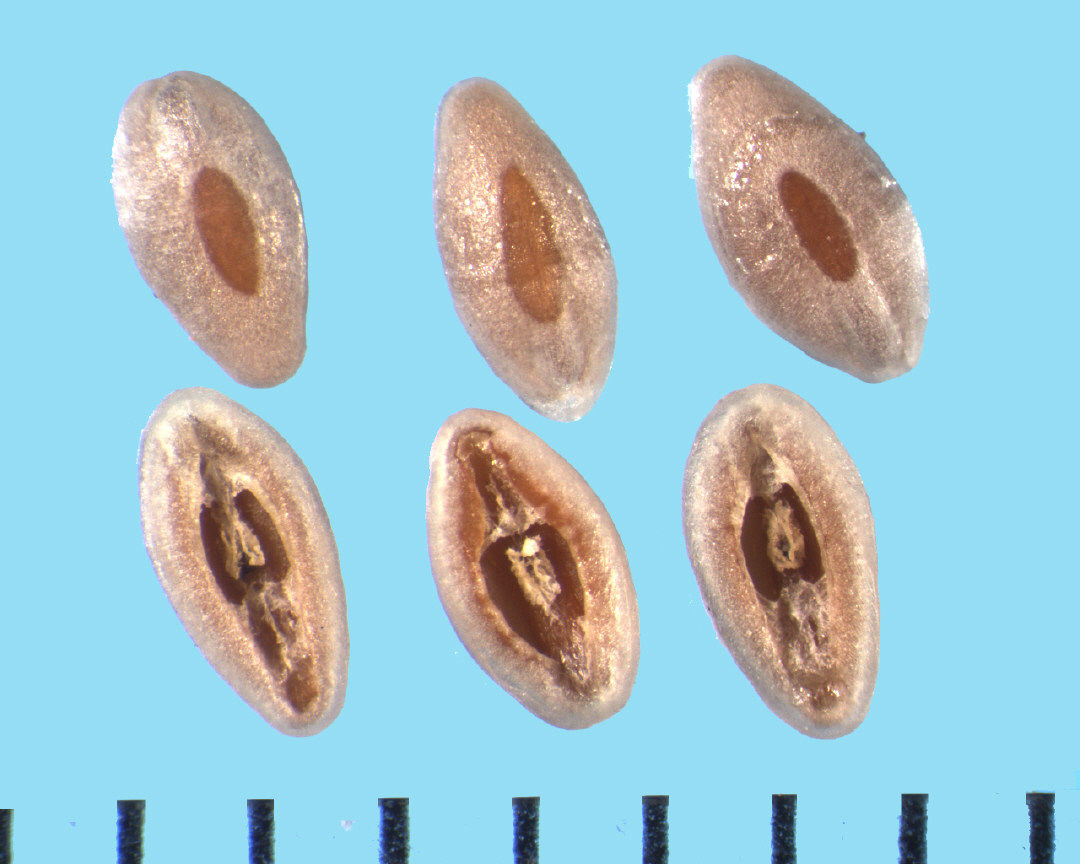
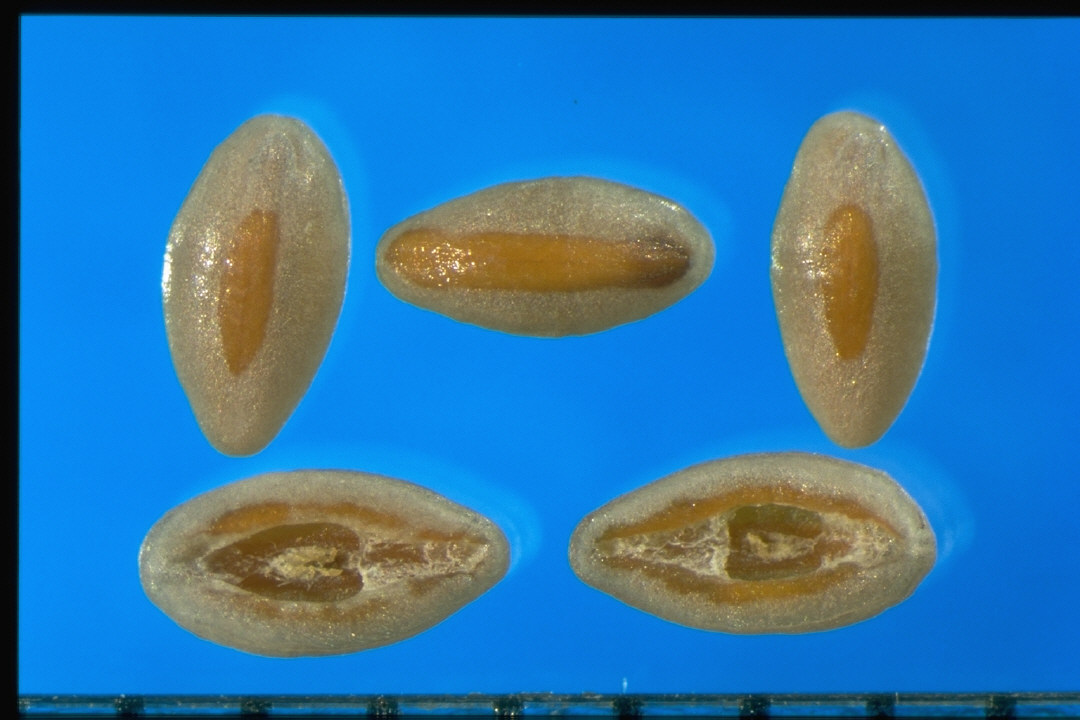
OvalOval:
Broadly elliptic.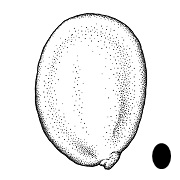
Gray brown with light brown in the center
Finely grained
DorsalDorsal:
Upper side or back of a seed or fruit.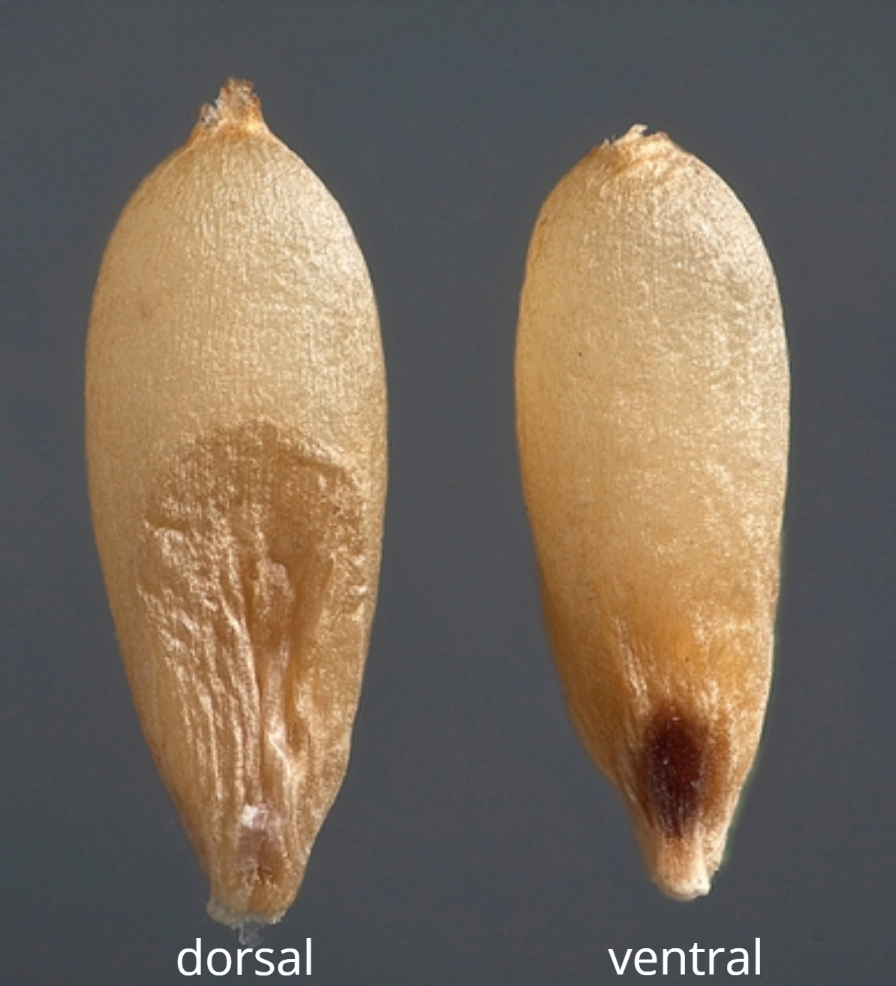 side rounded and ventralVentral:
Adaxial; of the side of an organ facing the axis (compare dorsal).
side concave
Brown longitudinal bar on dorsalDorsal:
Upper side or back of a seed or fruit. side and V-shaped bars on ventralVentral:
Adaxial; of the side of an organ facing the axis (compare dorsal).
cavity.
State Noxious Weed: Alaska, Connecticut, Mississippi, Washington
Not included
Plantaginaceae
Plantago ovata Forssk.
Plantago brunnea Morris
Plantago fastigiata Morris
Plantago gooddingii A. Nelson & Kennedy
Plantago insularis Eastw.
Plantago insularis Eastw. var. fastigiata (Morris) Jeps.
Plantago insularis Eastw. var. scariosa (Morris) Jeps.
Plantago minima A. Cunn.