Weed
barbed goatgrass
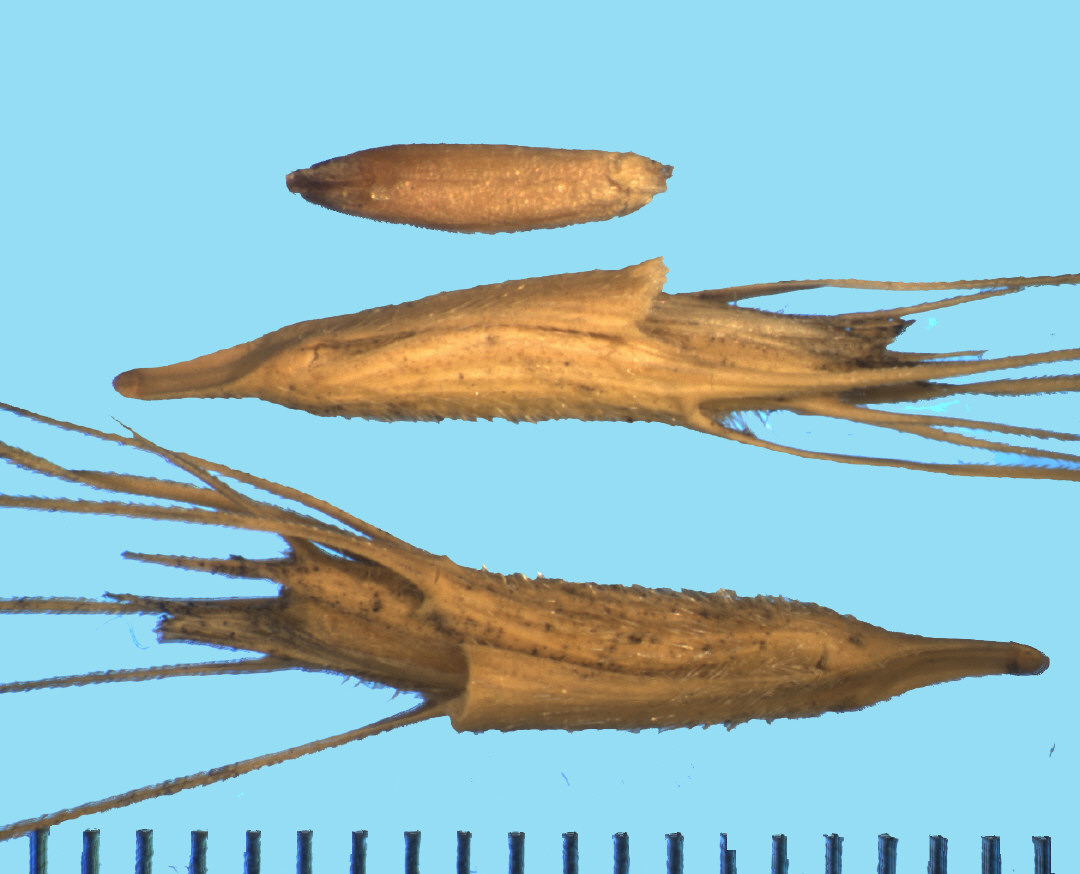
Rachis segmentRachis segment:
A segment of the central axis of the inflorescence (rachis). In some species (e.g. Andropogon) separation of the sessile spikelets occurs when the rachis disarticulates at the spikelet bases leaving the segment of the rachis between spikelets attached to the lower spikelet.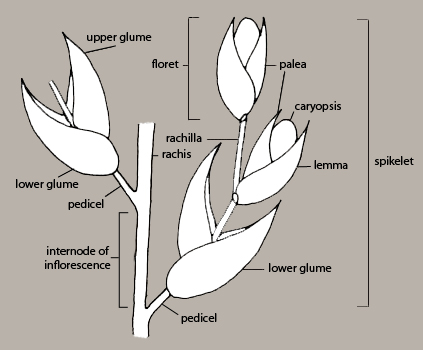
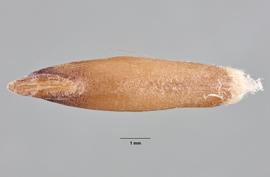
Cylindrical and linear
Brown
Ribs are longitudinal and spiny. Finely pubescentPubescent:
Having hairs.
.
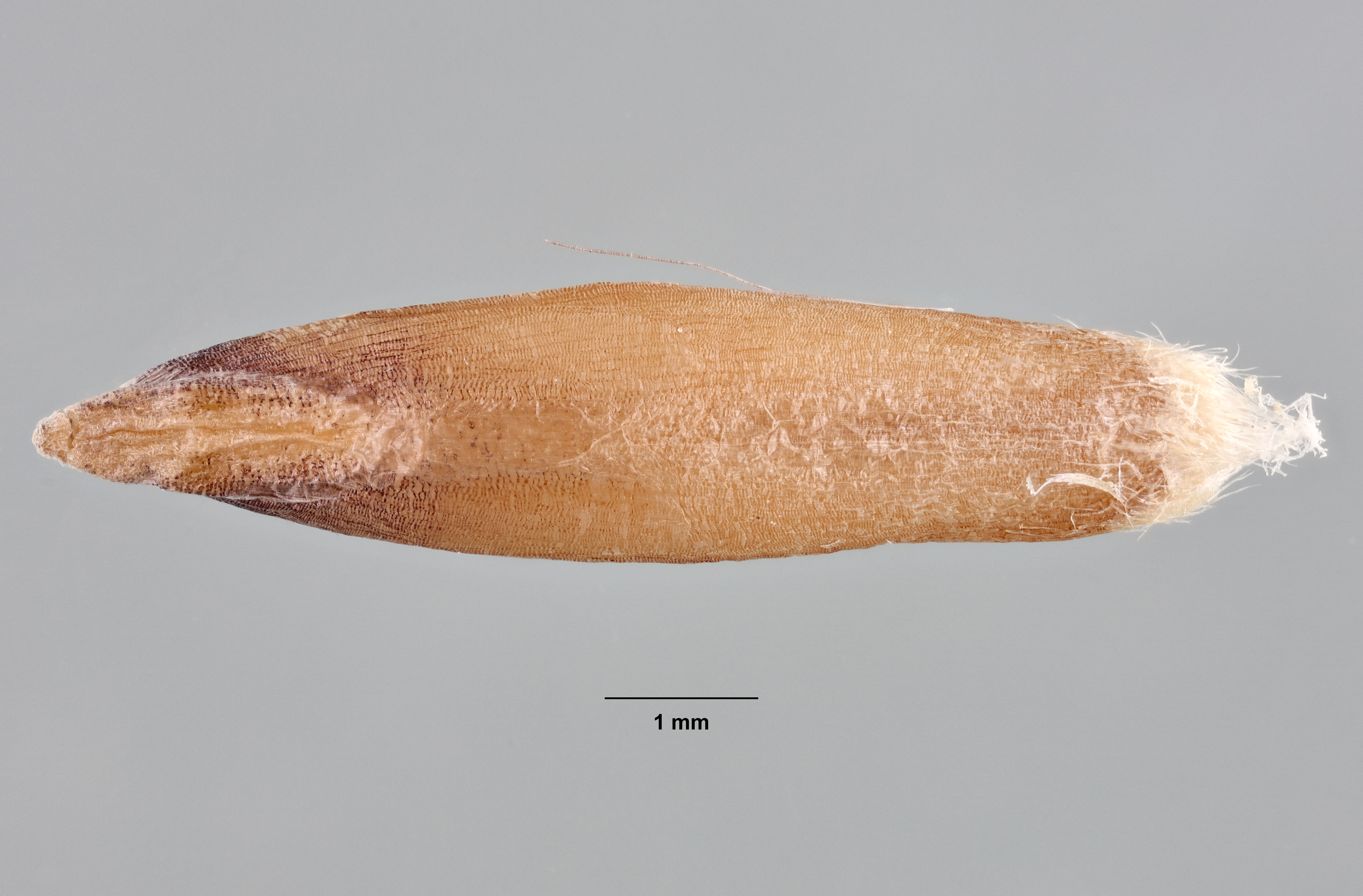
Not visible. Embedded in spikeletSpikelet:
One or more florets that are subtended by a pair of bracts called glumes. Spikelets are pedicellate if located on a pedicle and sessile if attached directly to the rachis. Often spikelets with single florets have remnants of a second floret, usually a lemma.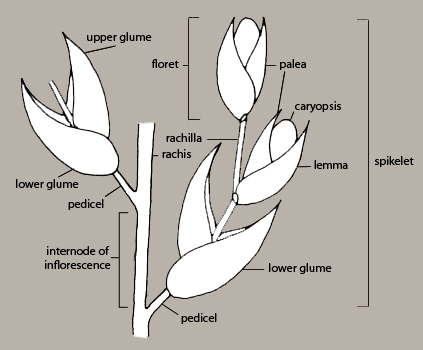 . Tissue-like.
Not visible. Embedded in spikeletSpikelet:
One or more florets that are subtended by a pair of bracts called glumes. Spikelets are pedicellate if located on a pedicle and sessile if attached directly to the rachis. Often spikelets with single florets have remnants of a second floret, usually a lemma.. Tissue-like.
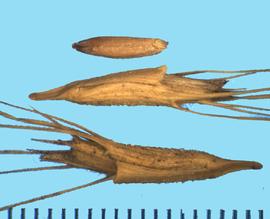
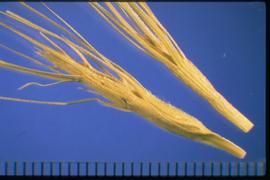
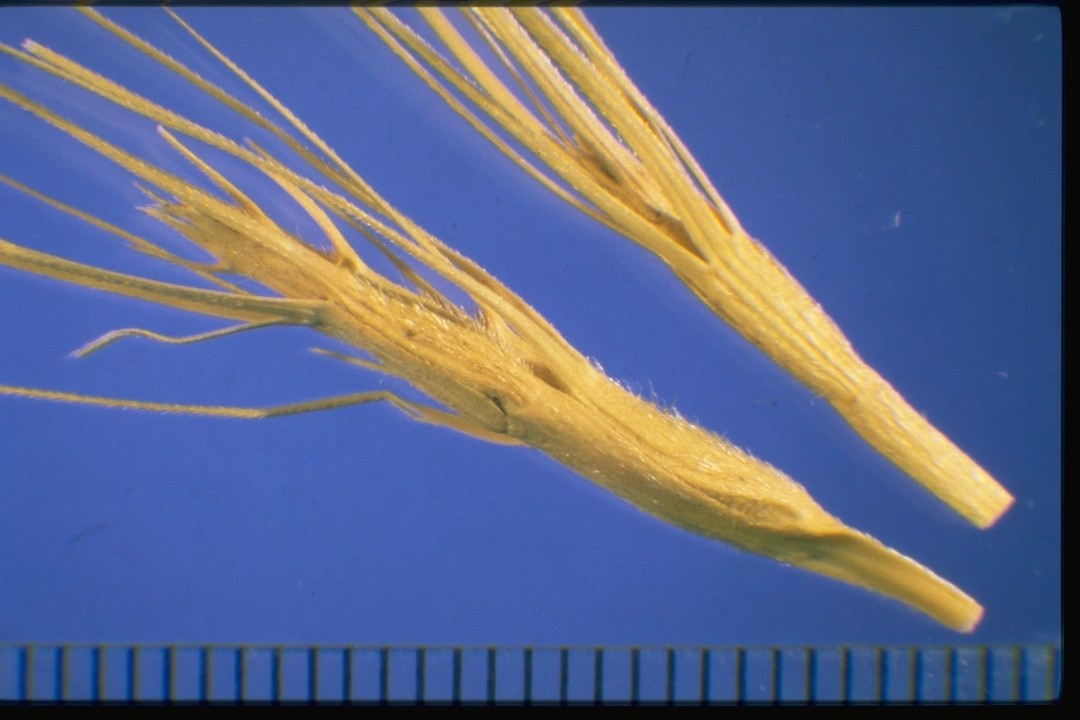
GlumesGlume:
The pair of chaffy bracts that occur at the base of a grass spikelet, often completely enclosing it.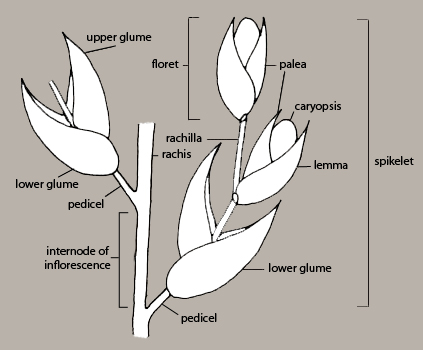 terminate with long spiny awnsAwn:
A narrow, bristle-like organ, as on the glumes or lemmas of grasses (Poaceae).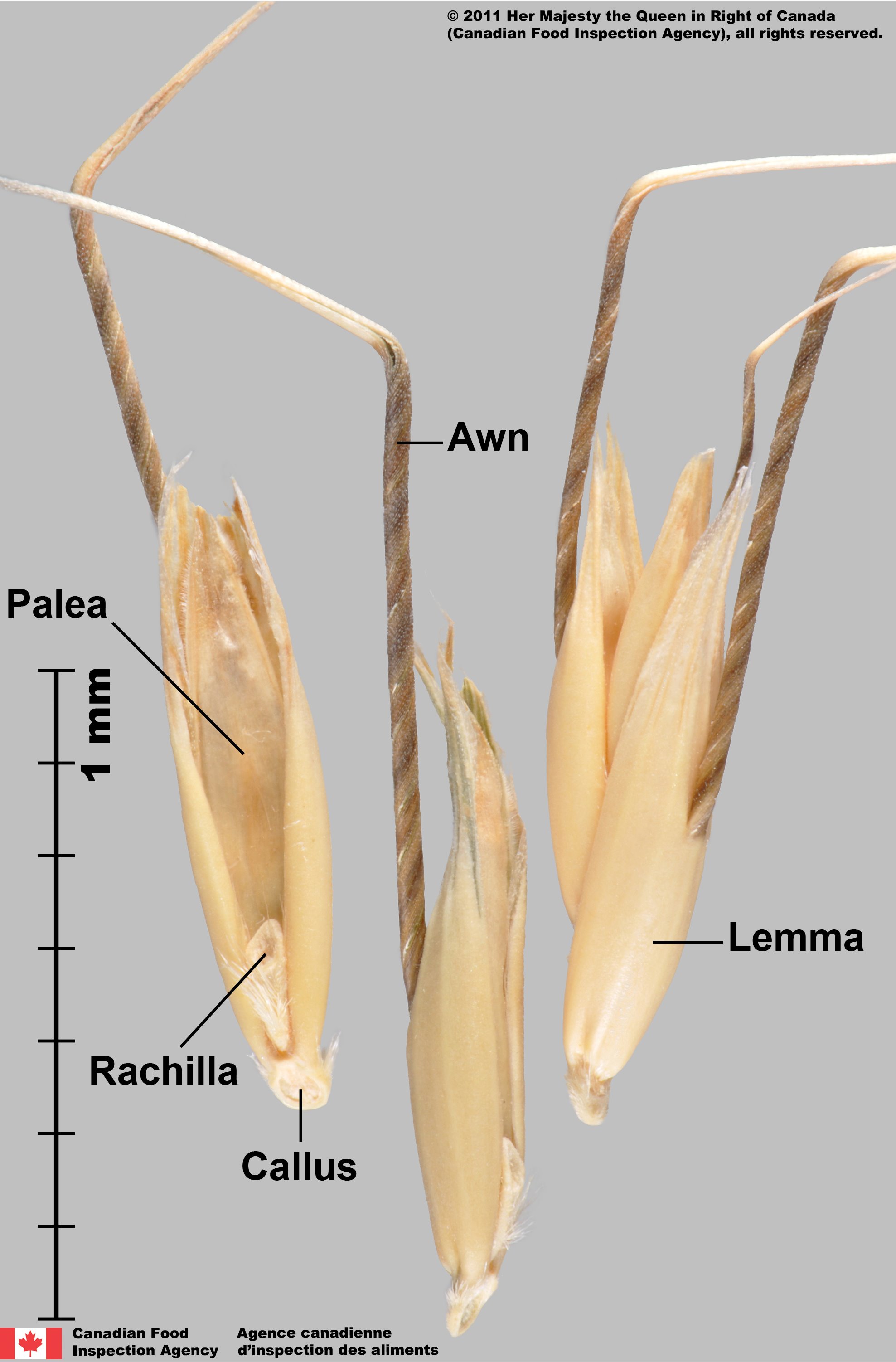 .
.
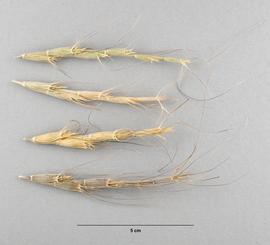
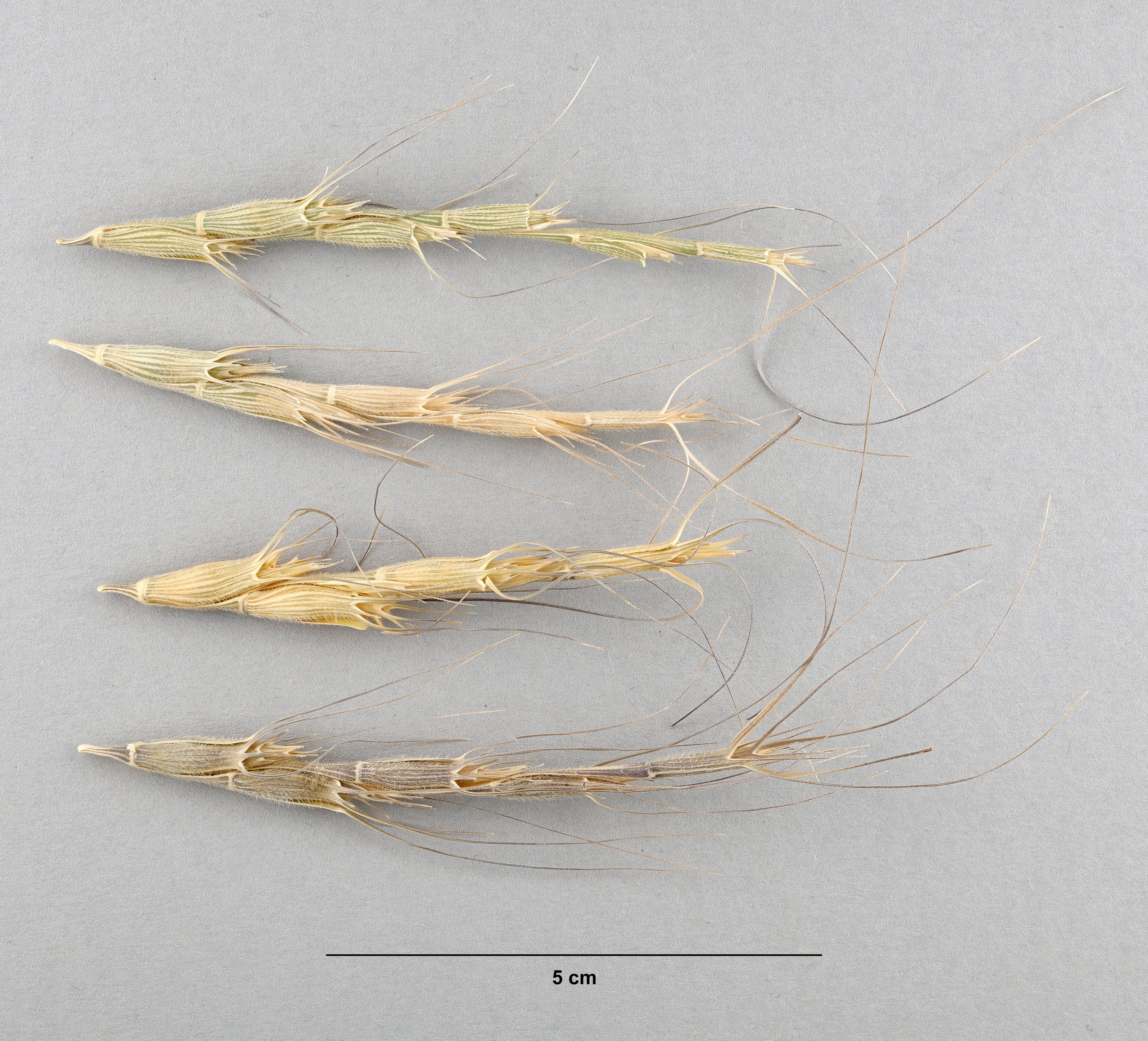
The cylindrical spikeSpike:
Has a strong central axis (rachis) on which flowers or spikelets are directly attached (sessile), e.g. wheatgrasses.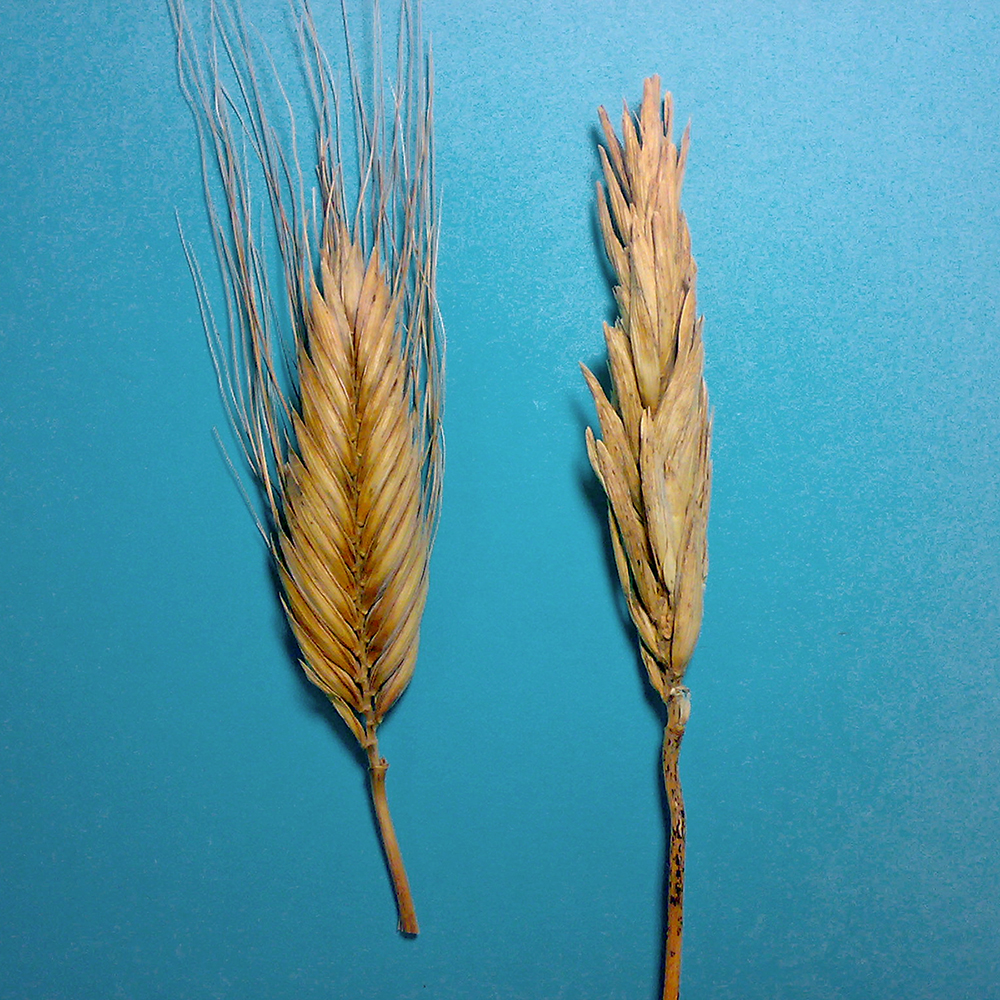 breads transversely between spikeletSpikelet:
One or more florets that are subtended by a pair of bracts called glumes. Spikelets are pedicellate if located on a pedicle and sessile if attached directly to the rachis. Often spikelets with single florets have remnants of a second floret, usually a lemma. positions. The segments are associated with long awnsAwn:
A narrow, bristle-like organ, as on the glumes or lemmas of grasses (Poaceae).. The spikeletsSpikelet:
One or more florets that are subtended by a pair of bracts called glumes. Spikelets are pedicellate if located on a pedicle and sessile if attached directly to the rachis. Often spikelets with single florets have remnants of a second floret, usually a lemma. containing the floretsFloret:
A small flower in a clustered inflorescence (e.g., sunflower, grasses). In grasses, a floret consists of the lemma, palea, stamens, and pistil.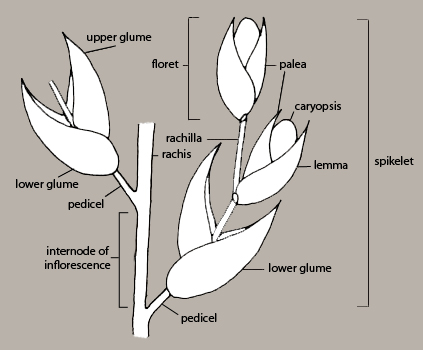 are very closely embedded in the spikeSpike:
Has a strong central axis (rachis) on which flowers or spikelets are directly attached (sessile), e.g. wheatgrasses. segments.
State Noxious Weed: Alabama, California, Hawaii, Nevada, New Mexico, Oregon, Texas

Not included
Poaceae
Aegilops triuncialis L.
Aegilops squarrosa L.
Triticum persicum (Boiss.) Aitch. & Hemsl.
Triticum triunciale (L.) Raspail