Agricultural, Revegetation or Rangeland
orchardgrass
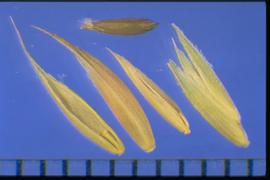
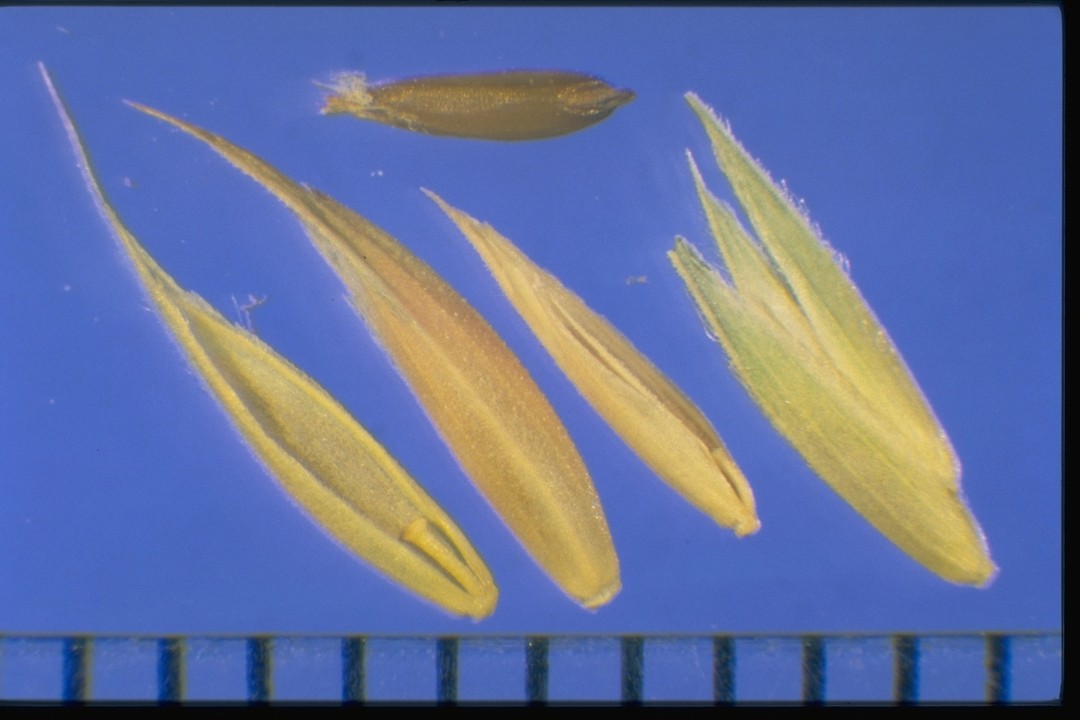
FloretFloret:
A small flower in a clustered inflorescence (e.g., sunflower, grasses). In grasses, a floret consists of the lemma, palea, stamens, and pistil.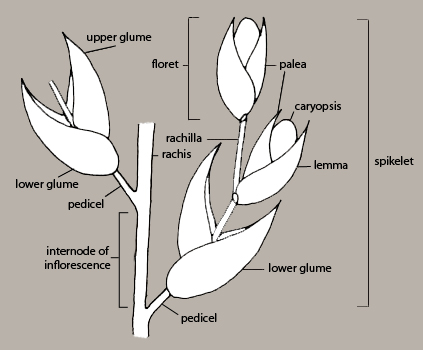
Curved lanceolate
Light brown
Smooth with a keel nerve strongly ciliate towards the apexApical:
The distal end of the fruit or seed away from the point of attachment or attachment scar.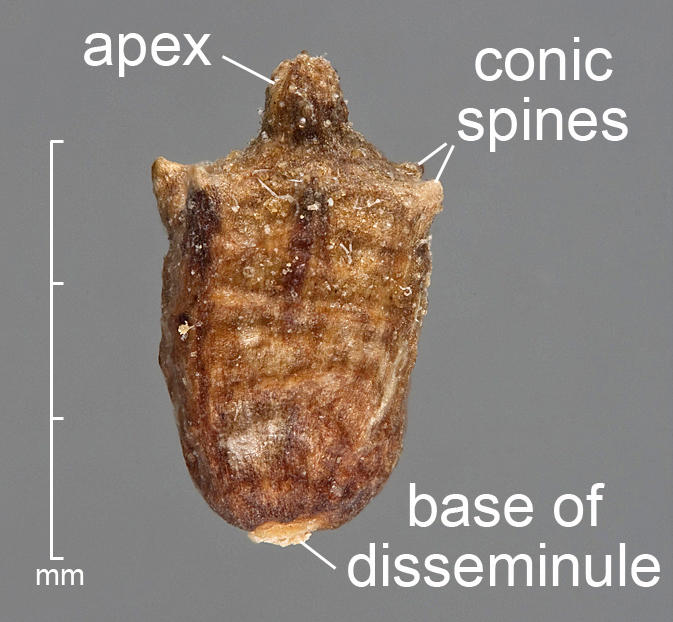 .
.
Keeled with a consistent bend to the apicalApical:
The distal end of the fruit or seed away from the point of attachment or attachment scar. end
Margins in close proximity to lemmaLemma:
One of two bracts of the grass floret; it is located on the side nearest the embryo and opposite the rachilla.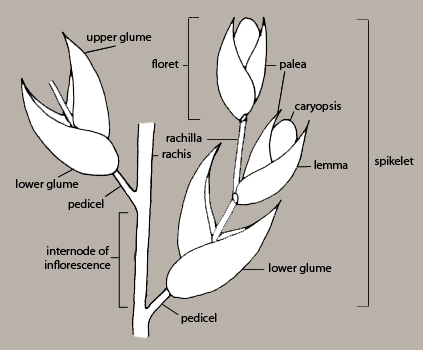 margins
RachillaRachilla:
The axis of a spikelet.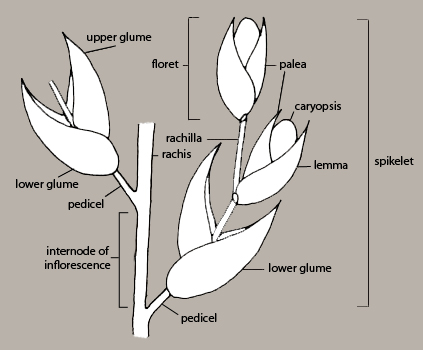 with a disc on the apexApical:
The distal end of the fruit or seed away from the point of attachment or attachment scar.; callusCallus:
The hard base of grass florets or spikelets, just above the point of disarticulation.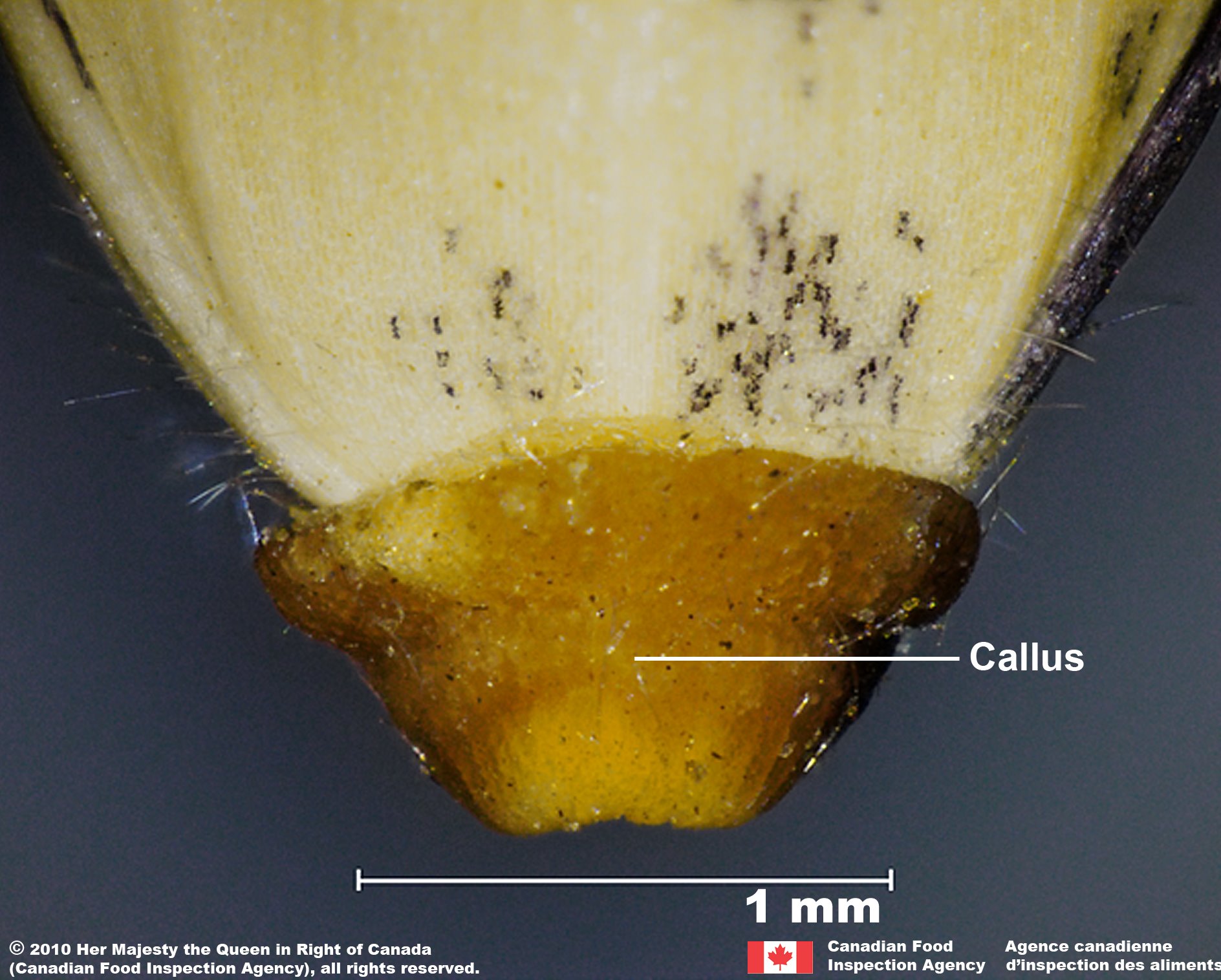 is a disc squared with the base.
Double floretsFloret:
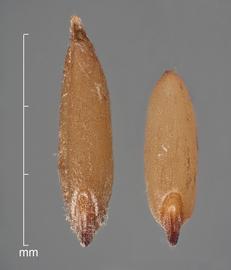
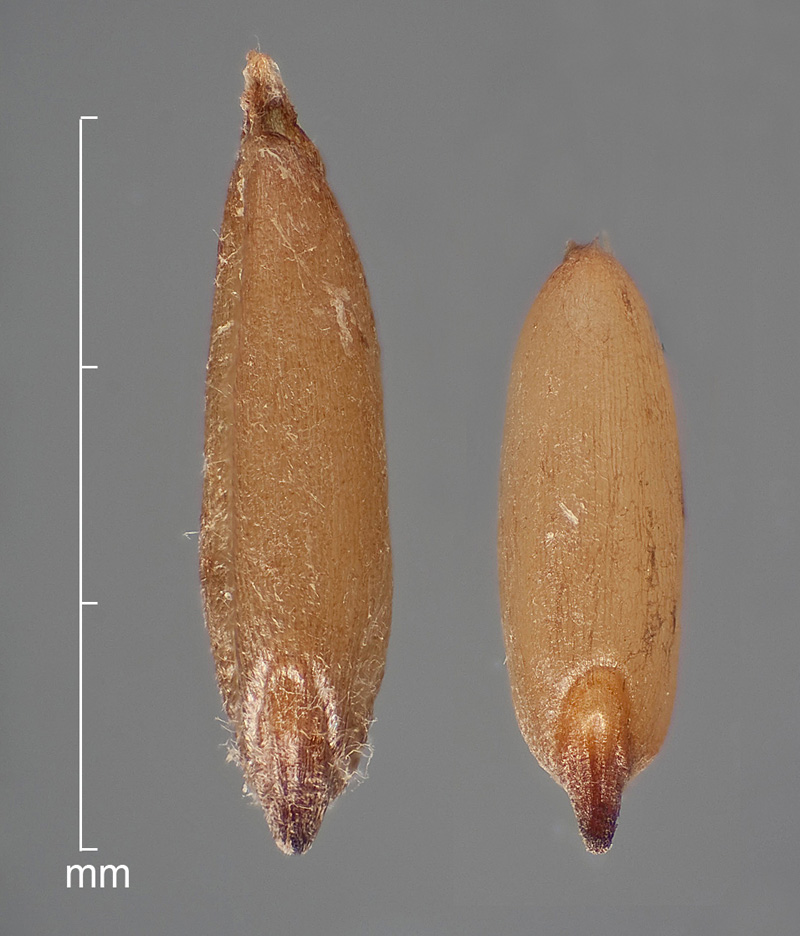
A small flower in a clustered inflorescence (e.g., sunflower, grasses). In grasses, a floret consists of the lemma, palea, stamens, and pistil. appear frequently. CaryopsisCaryopsis:
The single-seeded fruit or grain of the grass family (Poaceae); the fruit wall (pericarp) is united with the seed coat (testa).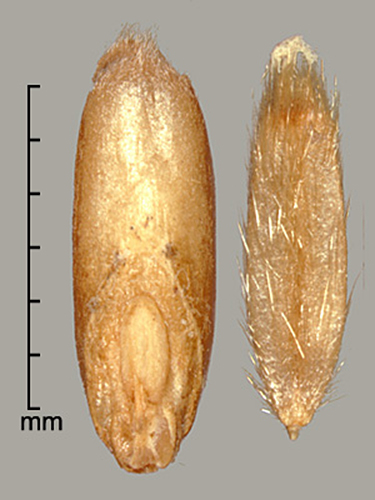 is markedly shorter than the paleaPalea:
One of the thin bracts of grass floret enclosing the fruit (caryopsis) that is located on the side opposite the embryo.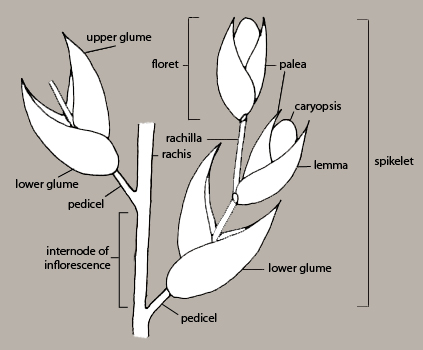 , triangular in cross section, and has a plastic or soft texture.
Seeds of this species are considered noxious only as a contaminant. Check individual states for interpretations.
State Noxious Weed: Delaware, Maryland, New Hampshire, New Jersey, Pennsylvania, Virginia, West Virginia
Included
For more information, see ISMA fact sheet.
Poaceae
Dactylis glomerata L.