Weed
orange hawkweed
AcheneAchene:
A dry, hard, one-chambered, one-seeded indehiscent fruit, as in buckwheat (Fagopyrum) or sunflower (Helianthus). The fruit wall is not united with the seed coat.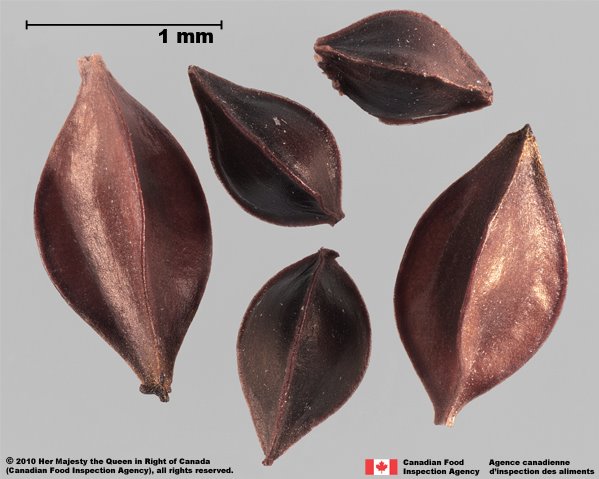
ObovateObovate:
Inverted egg shaped with apical end the broadest.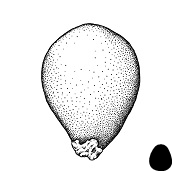 to rectangular
Black
Rough and ribbed
Thin longitudinal ribs; long pappusPappus:
Modified calyx in Asteraceae, composed of hairs, bristles, awns, or scales. The pappus-like structure attached to milkweed seeds is termed a coma. 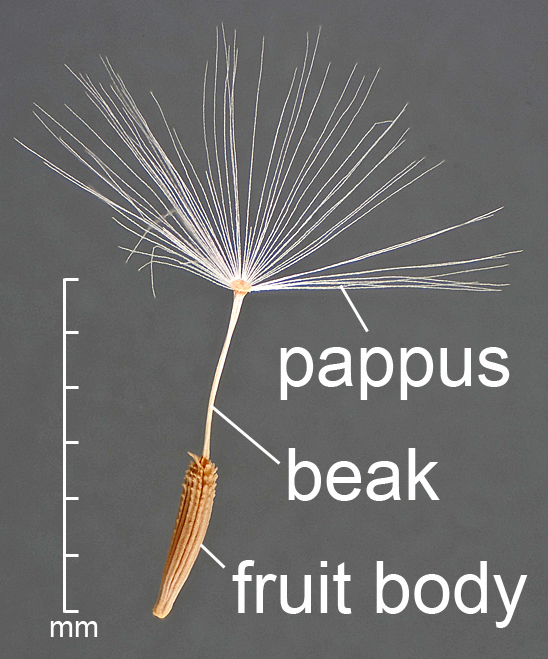 or remnants at collar.
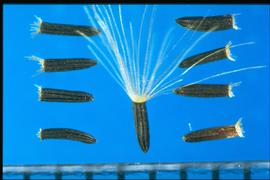
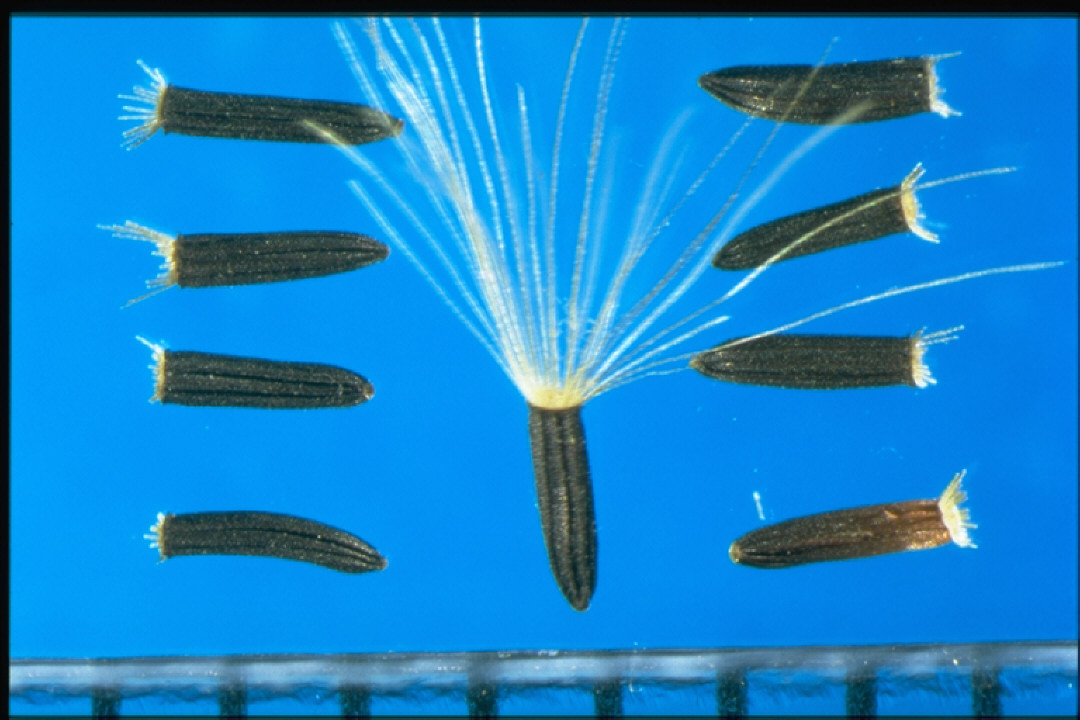
AcheneAchene:
A dry, hard, one-chambered, one-seeded indehiscent fruit, as in buckwheat (Fagopyrum) or sunflower (Helianthus). The fruit wall is not united with the seed coat. is rectangular with a pointed basalBasal:
The base of the fruit or seed opposite the apical end.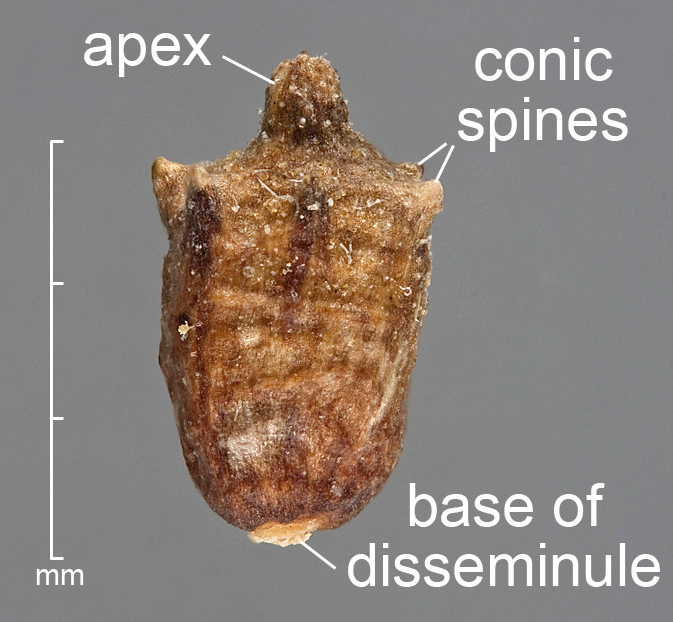 end and sometimes curved. Surface is black with five to six strong, rough longitudinal ribs with broad interspaces. PappusPappus:
Modified calyx in Asteraceae, composed of hairs, bristles, awns, or scales. The pappus-like structure attached to milkweed seeds is termed a coma. long but usually broken off, leaving short stubble on the apicalApical:
The distal end of the fruit or seed away from the point of attachment or attachment scar.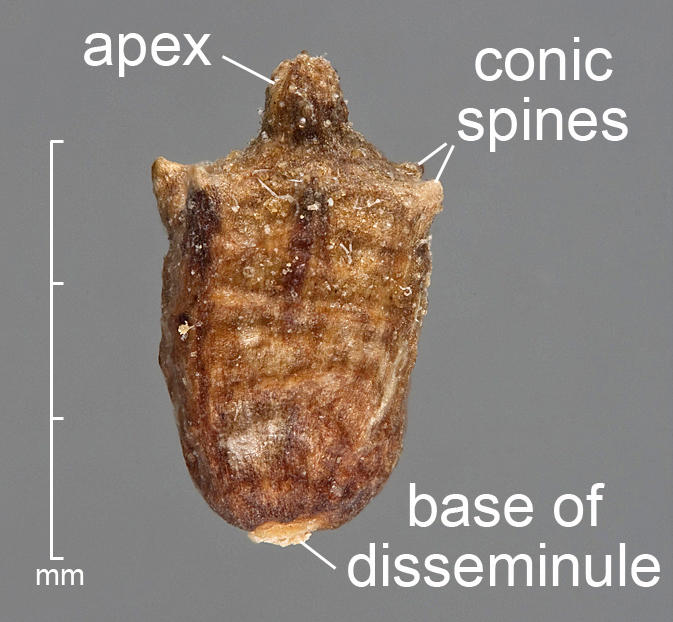 rim. Scar basalBasal:
The base of the fruit or seed opposite the apical end..
State Noxious Weed: Alaska, Montana, West Virginia, Wyoming
Not included
Asteraceae
Hieracium aurantiacum L.
Pilosella aurantiaca (L.) F.W. Schultz & Sch. Bip.