Revegetation or Rangeland
tall oatgrass
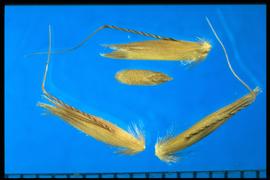
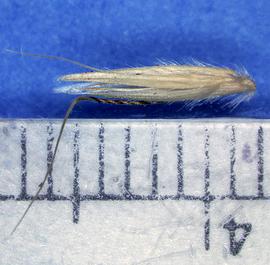
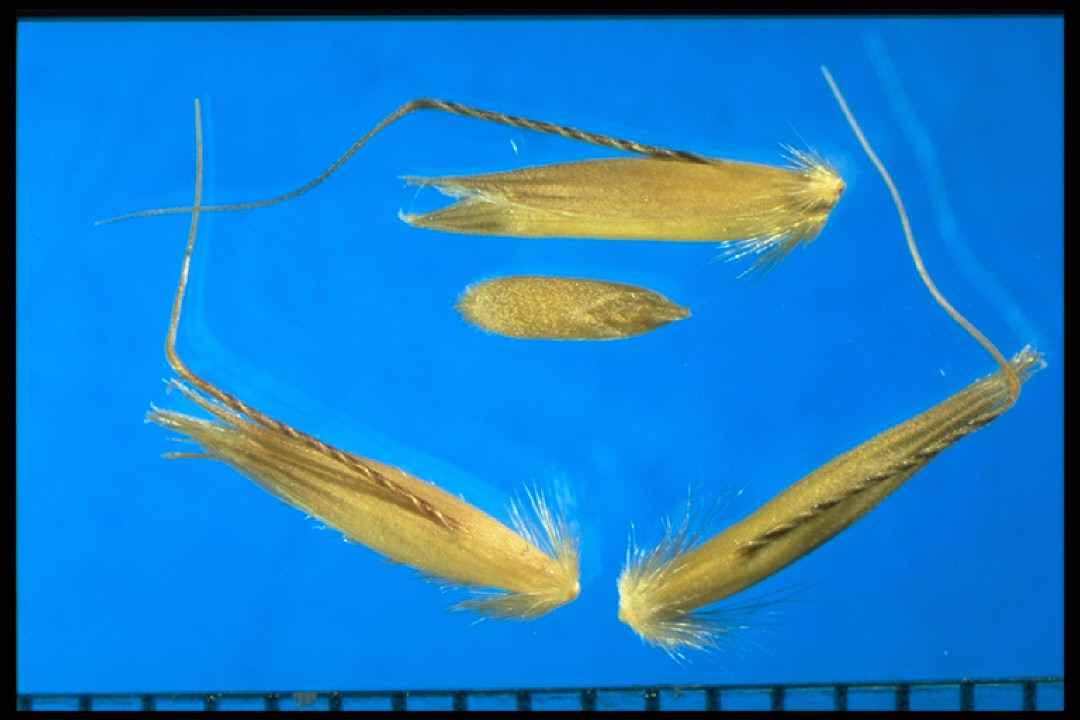
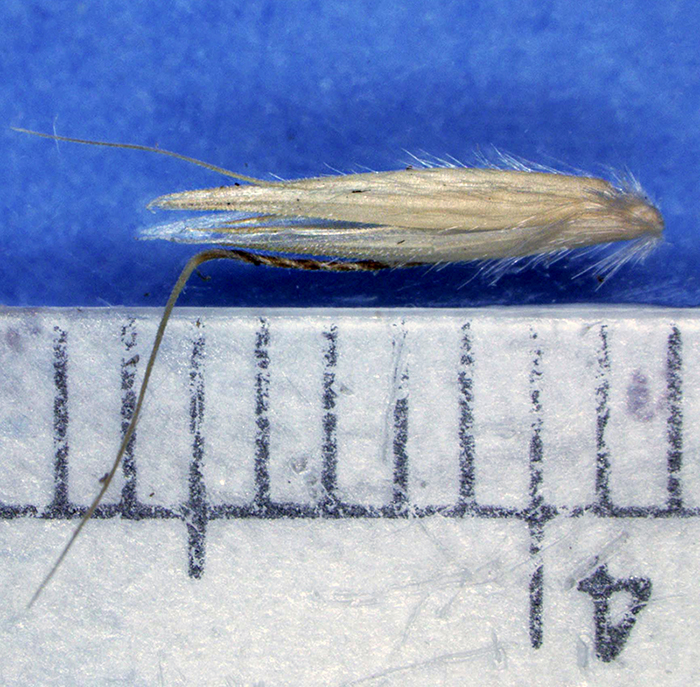
FloretFloret:
A small flower in a clustered inflorescence (e.g., sunflower, grasses). In grasses, a floret consists of the lemma, palea, stamens, and pistil.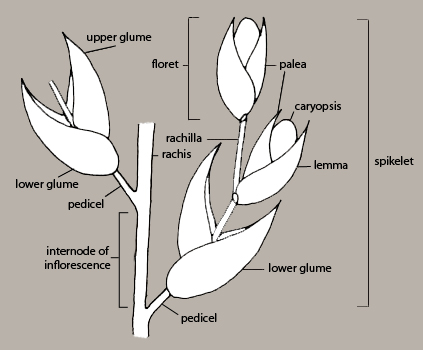
Lanceolate
Yellow
ScabrousScabrous:
Rough to the touch, covered with minute points of very short, stiff hairs.
across the tip of the lemmaLemma:
One of two bracts of the grass floret; it is located on the side nearest the embryo and opposite the rachilla.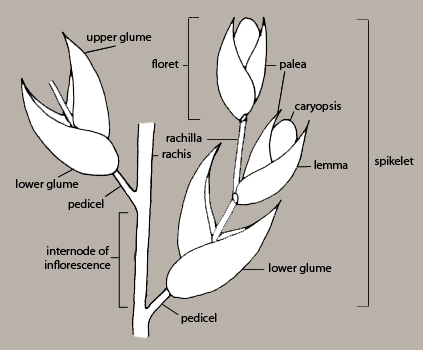 and scattered long hairs
Papery with nerves green near the distal end
Papery mostly obscured by enfolding lemmaLemma:
One of two bracts of the grass floret; it is located on the side nearest the embryo and opposite the rachilla.
Long geniculateGeniculate:
Bent at a sharp angle.
awn and strong bristles surrounding callusCallus:
The hard base of grass florets or spikelets, just above the point of disarticulation.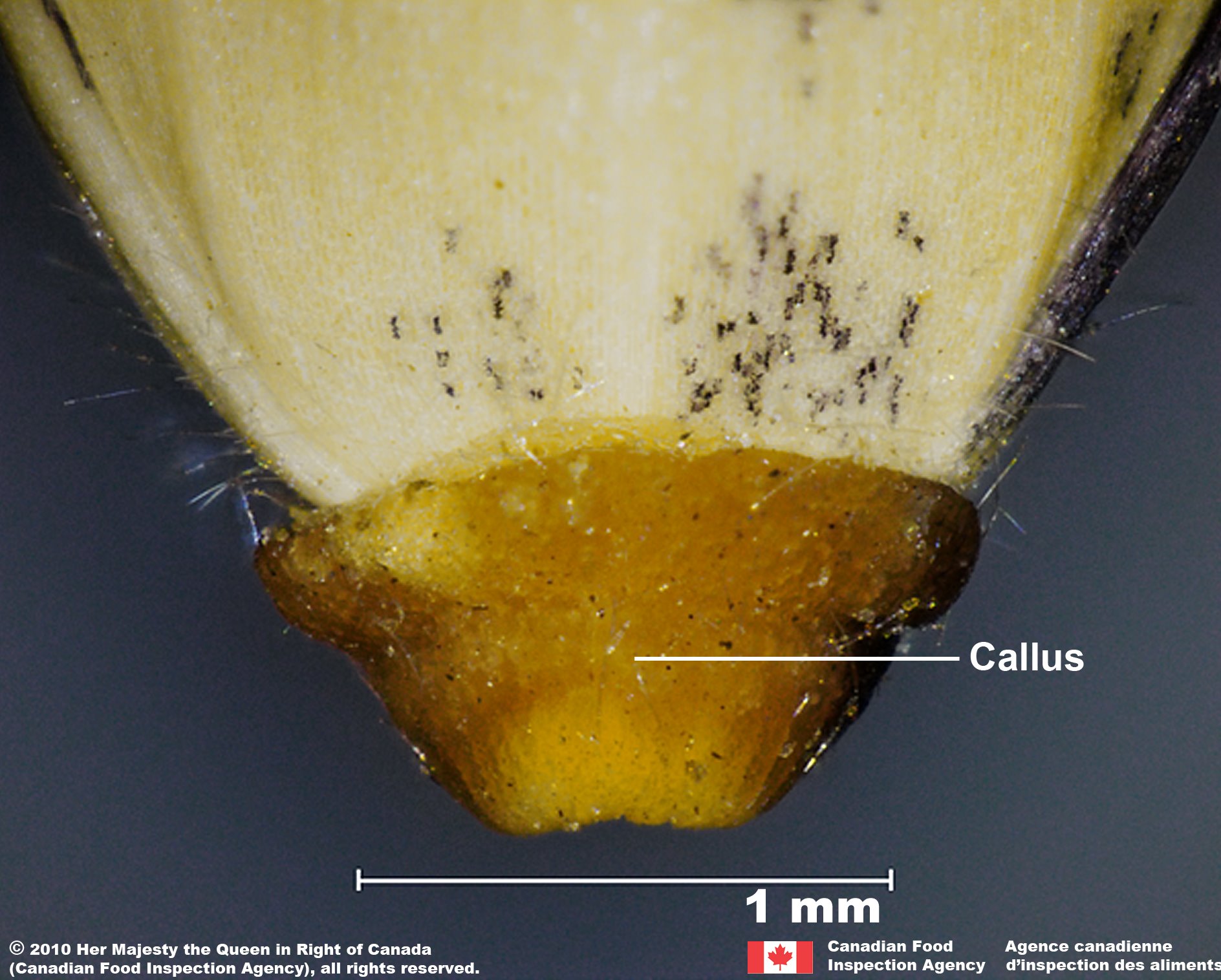 .
.
PaleaPalea:
One of the thin bracts of grass floret enclosing the fruit (caryopsis) that is located on the side opposite the embryo.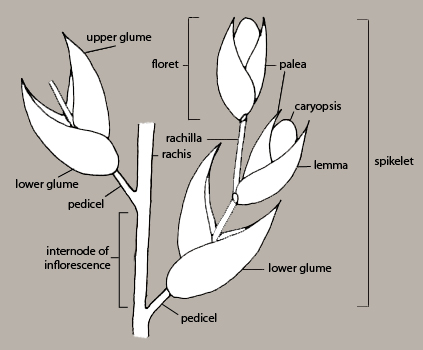 tend to spread away from the lemmasLemma:
One of two bracts of the grass floret; it is located on the side nearest the embryo and opposite the rachilla. at the distal end. Hulled caryopsesCaryopsis:
The single-seeded fruit or grain of the grass family (Poaceae); the fruit wall (pericarp) is united with the seed coat (testa).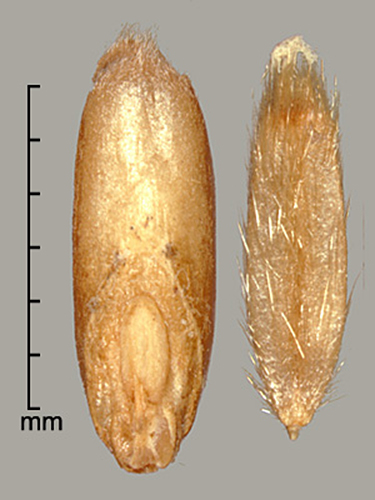 are approximately four to five mm long and nearly cylindrical in shape. FloretsFloret:
A small flower in a clustered inflorescence (e.g., sunflower, grasses). In grasses, a floret consists of the lemma, palea, stamens, and pistil. and caryopsesCaryopsis:
The single-seeded fruit or grain of the grass family (Poaceae); the fruit wall (pericarp) is united with the seed coat (testa). are not very different from species of the same genus.
Not listed
Included
Poaceae
Arrhenatherum elatius (L.) P. Beauv. ex J. Presl & C. Presl